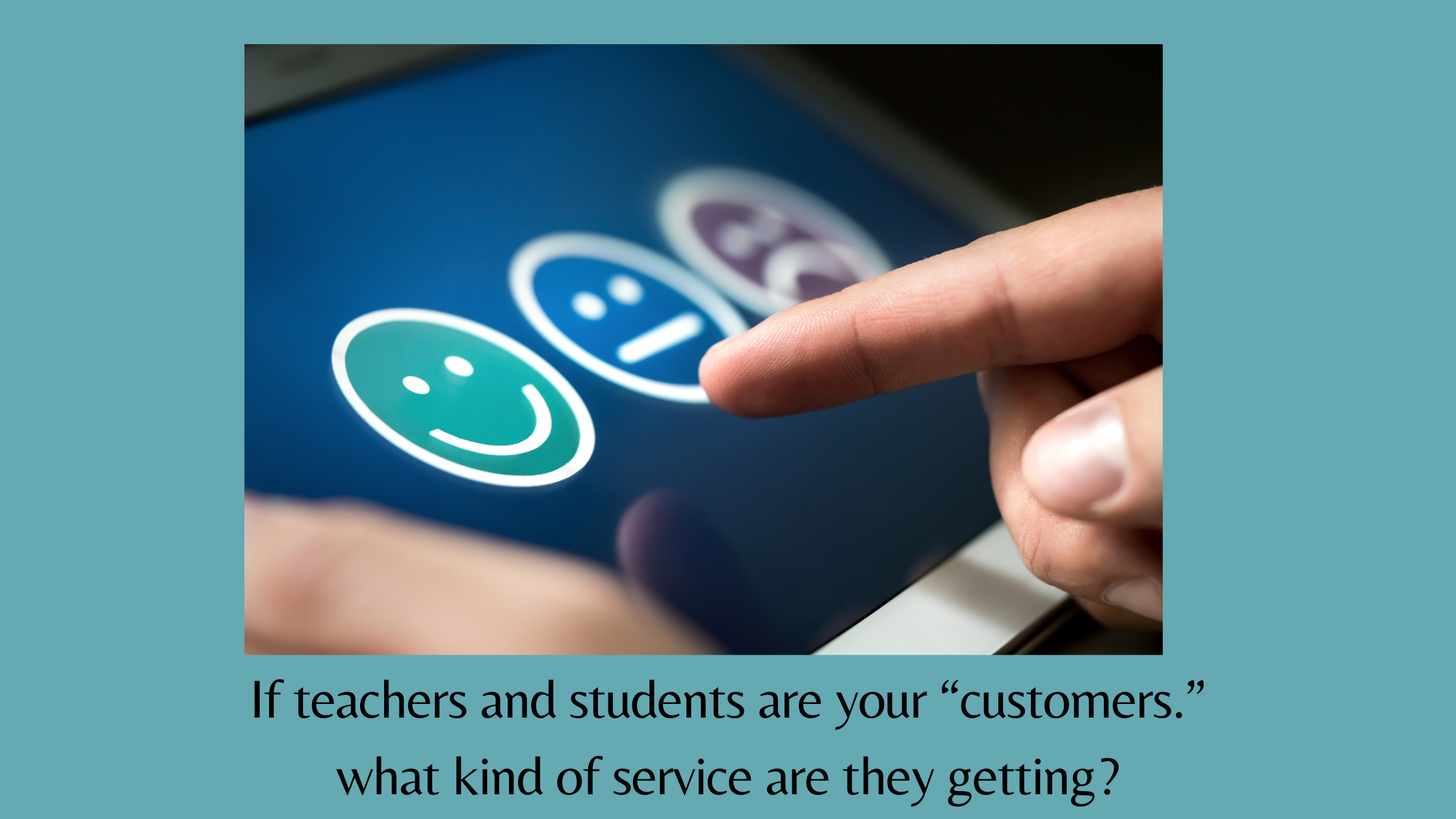
Do you see your teachers as colleagues or customers? What about students? Did those questions have you considering something you haven’t?
Whether or not you see them that way, teachers and students play dual roles in your library and in its success because teachers are both colleagues and customers and students are both patrons and customers. they are your customers as well as your colleagues and students.
Recognizing this duality may how you approach them and help them see your library seen as the invaluable resource it is. When you are dealing with customers, you want to give them the best service possible, meet their needs, and ensure they keep coming back. And you want them to give you great reviews to others who are interested in coming by.
In her SmartBrief article, The leadership blind spot that’s quietly killing revenue, Jeannie Walters states that “Many leaders think customer experience is someone else’s job.” It’s not – it’s ours. And unlike customer relations, it is proactive. It is what you think about before there is a problem, not what you do after there’s an issue.
She recommends businesses make three shifts to movie to a customer service approach. I’ve revised them to show how we can adapt this for our work.
- They define what success looks like for the customer, not just the organization – There are numerous data points which you and the teachers you support are expected to reach, but teaching is more than that. Before you start collaborating, think about the different results the teacher looking for from this learning experience. Is it only the grade that will make the student feel successful? Or is there something to be learned from the process. Also, is this a project special to the teacher or connected to state mandated benchmark. Knowing this, having a good relationship with the teacher, will help you support them. Listen carefully and ask questions so that you can shape the project and bring them the satisfaction of having attained their goals.
- They make the customer’s voice a leadership-level input – What the teacher or student tells you will reveal what they most need and where you can help. Even if you think you know a lot about the topic or lesson, try not to talk so much. (A tough one for me.) We need to hear what our “customers” are looking for. Ask questions from the teacher before going into action. Have a class discussion to elicit where students are with the assignment. Do they hate it before it starts? How can you shift it? Where can it be connected to students life experiences? And show them (teachers and students) that there answers are important by following through and incorporating what they tell you.
- They treat consistency as a competitive advantage – One good project followed by poor or mediocre ones doesn’t build a good relationship. You want to create a situation where good is repeated or improved on. At the end of the project, consider doing a mini survey. This will give you an opportunity to learn what your customers like best about the project, what did they wished had gone better, and where they might have struggled or felt successful during the project. Go a step further and score yourself, keeping track of the feedback, good and bad.
Before you put this into action, be proactive yourself. What could you learn from this approach? How could it help you grow as a leader? As Ranganathan says in his fifth law of library sciences, “Libraries are growing organisms.” So are leaders. Grow a little each day and your “customers” will not only come back for more—they’ll tell everyone (including administrators!) about what you bring to the school.

