The 5th Law of Library Science

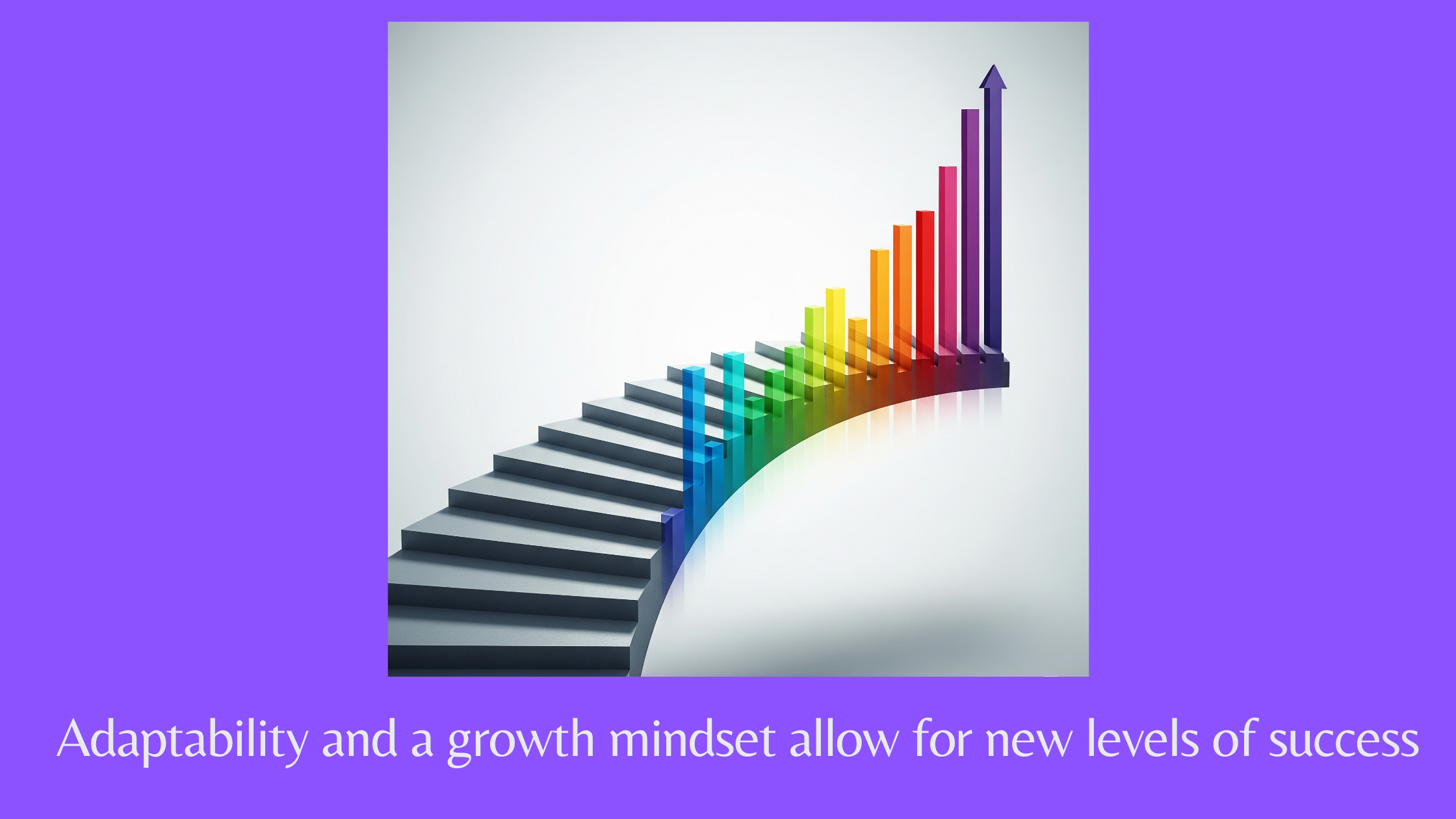
In 1969, Laurence J. Peter proposed what has become known as “The Peter Principle.” It basically states that in the work world people rise to their level of incompetence. They get to the highest position possible and from there, don’t have the skills to advance further. By contrast, in his SmartBriefs article Avoiding the Peter Principle, Paul Thornton says, “Effective leaders do the opposite; they continue to learn and adapt.”  The key, he writes, is adaptability and growth mindset.

To do this, he has several recommendations and I’ve added my usual comments aligning them with working in a school library. I’m saving the connection to the title until the end of this blog. Many of you will have figured it out.

Keep learning – Most of you do this every day as you discover new tools and sources. Thornton points to the value of learning from experience. He says, leaders “see mistakes, feedback and unexpected outcomes as data and ask, “What can I learn?”’ As we tell our students, FAIL can be thought of as an acronym for “First Attempt In Learning.” One more way to keep learning is to be open to learning from your students. They live at technology’s edge. When I was working as a high school librarian, my library council was a font of information. And they loved that they were teaching me. Consider keeping track of what you learn each day. Much is added to our store of knowledge that we don’t realize has occurred. By recording it, you see where and how you acquired the information. The log will also help when you do your regular report to your principal.

Keep adapting – Paraphrasing Darwin, “it’s not the fittest who survive—it’s the most adaptable.” When things go wrong with technology and it’s crunch time, you adapt. When your principal makes a change in your schedule, you adapt. Thornton identifies these traits in leaders who cannot adapt:

  • They dismiss evidence, trends or feedback that suggest a different approach is needed.
  • They become defensive when challenged.
  • They hide behind rules and policies instead of exercising judgment.
  • They discourage experimentation and punish mistakes. 

Unfortunately, if it’s the administration that has those traits, we must adapt by developing strategic plans to move them off their negative mindset.

The payoff – As Thornton rightly says about those who keep learning and adapting, “They spot opportunities more quickly, respond faster to changing circumstances and make smarter decisions.” Equally important for us, he says, “In addition, people are more willing to follow leaders who demonstrate a commitment to learning and the courage to keep evolving.”

And now to turn back to the title of this blog. If you have a degree in Library and Information Science, you learned about S. J. Ranganathan who in 1931 published The 5 Laws of Library Science which are:

1. Books Are For Use
2. Every Reader His/Her Book
3. Every Book Its Reader
4. Save The Time Of The Reader
5. The Library Is A Growing Organism

All are still valid, but in this case, it’s the fifth law we must remember. An organism that isn’t growing is dying. We need to use every tool and skill we have to keep growing, adapting, and learning. When we do this, we continue to rise and live into our Vision.


Three Steps to Handle Pressure

Leaders are always dealing with pressure. It goes hand in hand with working toward a powerful Vision. But the short-term pressures can be unendingly draining. Every day as you walk into your school, you wonder what new situation is going to hit the fan. The anxiety often pervades your time with family and friends. If you live where you work, even shopping can be a challenge.

It’s unhealthy to live that way, and it keeps you from being your best, not only with students and teachers but outside of school. You need a way to deal with pressure that will help you thrive rather than feeling as though you’re clinging to each day with your finger tips.

We can’t control what happens. We can only control how we deal with it. Our focus must be on our Mission (purpose) and Vision (ultimate goal). In her article Under Pressure As A Leader: Three Tips On How to Succeed, LaRae Quy (who I’ve referenced before)offers these tips to achieve that:

  1. Plan for the worst – This doesn’t mean preparing for doom. It is anticipating what might happen and how you will respond. Quy suggests you ask yourself, “How would I respond if…” [then} Work through potential work scenarios using visualization.” For example, what would you do if you’re greeted by a parent as you enter the school, brandishing a book from your library and calling it filth. Your first step is acknowledging their concern then lowering their tone. Say something like, “I understand you are concerned about your child. Let’s go into the library and work on fixing this.” You can be prepared by having the Action Toolkit from Unite Against Book Bans and other additional resources from AASL and your state school library association.
  2. Follow all leads – Then we’re in a challenging place or faced with a difficult situation, we tend to do what is most familiar. But is that the best choice? Is there something new you could try. Back to the original example, you have a method of handling that potential book banner. Has anything changed since you made that plan? Are there people who can help you come up with other methods? Start with your Personal Learning Network (PLN). Ask what they have done to deal with confrontations or any other issues putting pressure on you. What helped them build support with parents. If the book banner plans on attending a Board meeting, will any of your potential advocates be there to speak up for the library.
  3. Think of the long term – This is why having Mission and Vision is key. It can help you remember what you’re striving for when the moment is challenging. Focusing on what’s immediately in front of us can cause narrow thinking which leads to mistakes that affect the future. Don’t do something today that is against your values, even if it alleviates the immediate pressure. It will come back to bite you. As Quy says, “Focusing on the long term helps us develop better coping and decision-making skills, as we rely more on cognitive strategies, such as self-control and problem-solving, rather than impulsive emotional reactions.”

To add to Quy’s tips, I want you to remember the lesson of the redwood trees. They have shallow roots yet manage to stand tall in the heavy winds. They do it by intertwining their roots with other redwoods. Don’t go it alone. We are stronger together and when there are people around you who understand the pressure you’re under, it’s not quite as bad.

The Three Priority Rule

We are all busy. Too busy. And nothing suggests this is going to change. The question becomes: What can we do so that at the end of the day, we feel like we spent our time well?

In his article “The Great Busyness Delusion: Confusing Motion with Movement,” Brendan Keegan recounts a conversation with a friend. He’d asked her what she accomplished that day. After talking for fifteen minutes about the things she’d done, he asked again, “But what did you accomplish?” Like many of us, she’d confused being busy with being productive.

Keegan goes on to write: “Busy is sitting in meetings as the twelfth participant. Productive is structuring your day so you don’t need to. Busy is attending every meeting. Productive is questioning which meetings need to exist. Busy is multitasking. Productive is intentional tasking.”

How do we switch busy to productivity? Keegan proposes a “Three Priority Rule.” At the beginning of each day – or whenever you’re doing your planning – Keegan says, “identify the three most important things you need to accomplish. Everything else is secondary. If you can’t complete those three things because you’re too busy with other activities, you’re not busy — you’re distracted.”

So how do you reduce the list of tasks you have been doing so you can focus on your three priorities? Here are his recommendations along with my usual comments:

The Unnecessary Email Flow – Does your inbox gets filled right after you finish going through and deleting stuff? Guess what? You don’t have to open every email before deleting it. You also don’t need to go back several times a day to see what has come in. Instead, if it’s a priority, do email first thing when you get in, otherwise, save it for the end of the day. Where can you cut back on this repetitive and draining task.

The Multitasking Myth – Keegan says, “Studies show that multitasking can reduce productivity by up to 40%.” When it comes to your priorities, don’t work distracted. Keep your focus on what needs to be done now. This is also true for non-priorities. For example, don’t review your email while you are on a call. It lowers your effectiveness and adds to your stress. How can you eliminate distractions so you do one thing at a tme?

The Urgency Trap – We tend to act as though every task is equally urgent. They’re not. As Keegan notes, “Real productivity isn’t about doing more things; it’s about doing the right things well,” and “It’s not about being busy; it’s about being effective.” Working with students and teachers are high priority. Knowing and focusing on our Mission are high priorities. What are you doing that’s taking you away from that?

Breaking the Busyness Cycle – Keegan recommends asking yourself different questions to help you see how you are moving forward: “What did you accomplish?” and “What problems did you solve?” Either of these will help you see where you may have gotten off track and help you get back to focusing on your Mission and priorities. You probably won’t like your answers to these when you first start, but over time you’ll see a change in how you use your time and focus.

Before starting on this, think about when you like to plan. Do you prefer to determine your priorities at the start of the day, before you leave or maybe as you commute (in either direction). Make sure you write them down in a place you can find them. Then, before making the next set, ask yourself if you accomplished what you set out to do. If not, what distracted you? What could you do differently the next time?

One of my three priorities for today was doing this blog. And now I’ve accomplished that.. What’s on your list?

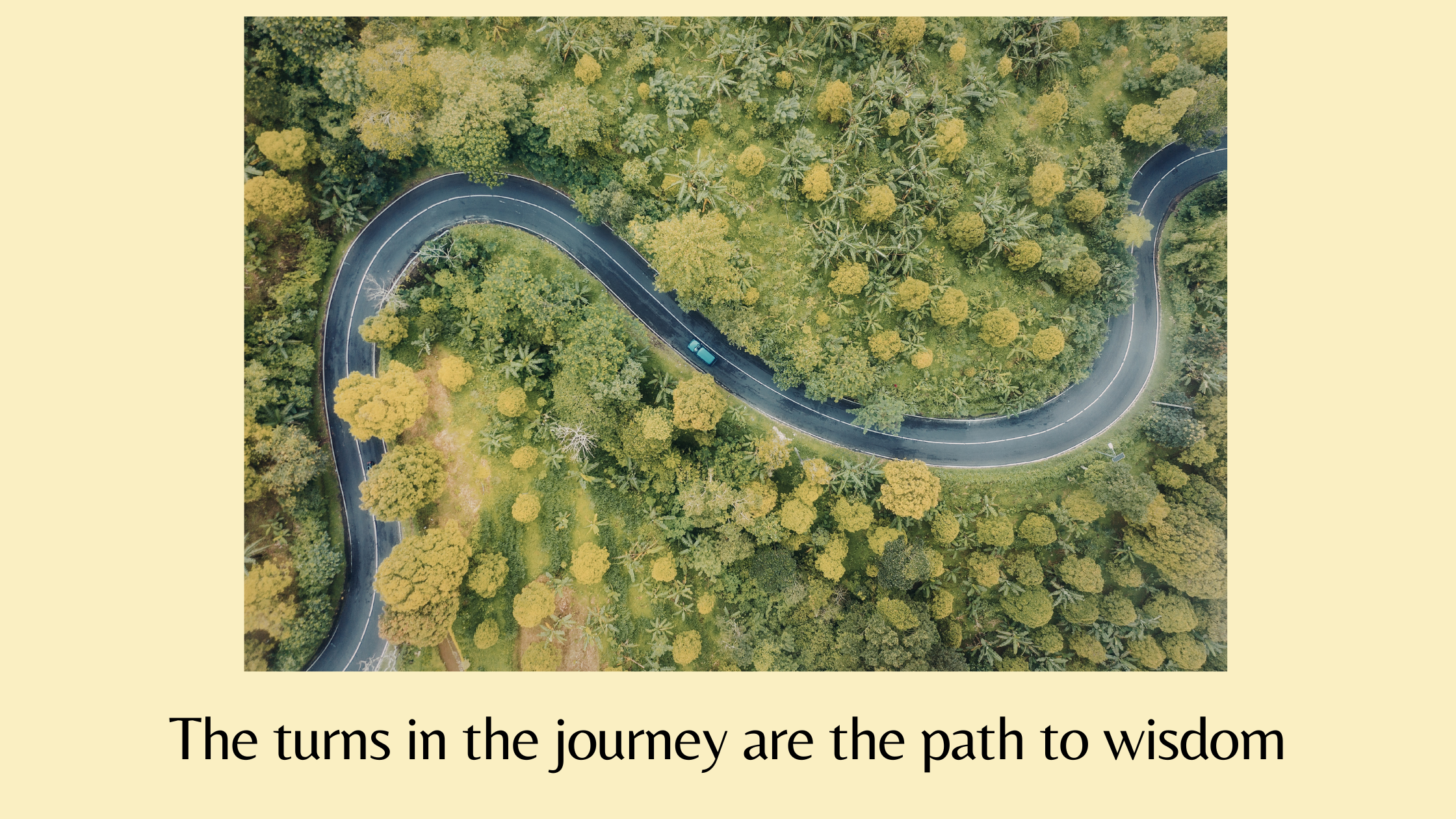
The Journey to Wisdom

The Cambridge English Dictionary defines Wisdom as: the ability to use your knowledge and experience to make moral decisions and judgments.” The key here is that wisdom doesn’t come overnight. It is important for us to remember that and embrace the journey.

This message is embedded in our fairy and folk tales. As Jonny Thomson explains in “The 3 colors: What folktales teach about how to grow wise, wisdom as the result of going through three phases. As school librarians we are familiar with the tales, but perhaps we didn’t see the importance of them. Thomson points out how well-known stories show a journey to wisdom through The Red, The Black, and The White. As always in sharing his perceptions, I will add my comments on how they pertain to our daily world.

The Red — Tomson says, “The Red is ambition. It’s life force, ego, desire, and the courage to go beyond the comfortable.” This is what powers us. We enter the profession full of energy, determined to put the library in a central position in the school community. To be successful, we read widely and enthusiastically bring new tech, the best books, and the best new ideas to our library. Because of our enthusiasm, we step out of our comfort zone to speaking up and out for the library. We include helpful information on our website with a section for parents. We are members of our state and national associations and maybe run for office and/or serve on committees. We are visible in the outside community. All are strong positives. It takes an enormous amount of time and effort, but we do it.

And then comes…

The Black – The Black is failure. When our great ideas and plans crash and burn. Thomson says, “It’s when a relationship hits a wall, a career hollows you out, or a depression greys the hues of the world.” There are so many of us living in The Black, particularly with all the politics surrounding library programs. While we tell our students the acronym for FAIL is “First Attempt In Learning,” we can forget that this also pertains to us, particularly late in our career. Even folktales teach us to expect it. It is a life lesson we need to accept is as true for ourselves as it is for our students.

Because without The Black, we cannot get to…

The White – Congratulations! You have reached final stage, The White (and probably have the white hair to prove it.) Thomson quotes from a book by Martin Shaw (The Liturgies of the World) “The White is that precious ground of eldership, of carrying the ability to bless, to raise up others, to encourage.” (Think Gandalf, for my Lord of the Rings fans). You are mentoring new librarians. Some of you, like me, maybe teaching pre-service school librarians. You’re finding ways to give back and guarantee the future. When new initiatives comes down from on high, you don’t panic. You may think, “Here we go again,” but you know how to handle it. You have done it before.

Thinking of these stages, as yourself: Where are you on your journey? And what does this stage need? If you are in The Red many will be benefitting from your energy. If you are in The Black your PLN, Professional Learning Network is there to support you. And if you are in The White, we are so glad to have you. Always remember the resources and encouragement that is there for you wherever you might be.