Presenting… You!

School is out for the summer, but school librarians (and teachers) don’t just work ten months of the year. Summer is time for rejuvenating, updating lessons, and other plans to prepare yourself for the start of school in the fall. In addition to those projects, whether you are an experienced librarian, new on the job, or starting in a new school or grade level, this is a good time to look for ways to use the time to address how your community sees you.

We develop opinions about others based on the behaviors others exhibit. While you are making these assessments, your colleagues, students, and administrators are doing the same thing for you. In her SmartBrielf article, Hidden behaviors that shape how colleagues and managers see you, Anne-Maartje Oud addresses seven ways we are unknowingly sending a message about who we are and what we care about. Here are her seven, along with my usual comments on how these play out in our education world.

  1. Are you present? – Whether it’s a professional development session or a faculty meeting, have you already decided it’s really meant just for the teachers? If you are tuned out, your colleagues (and principal) are likely to notice. Even if you are correct as to the intended audience, listen for upcoming changes being planned. Learn what is important to the faculty and consider ways to support them. This is how you get ahead of what teachers will need and what your principal is looking for.
  2. What is your body language? Do you fidget? Check your watch to see how much longer this meeting/conversation/presentation will last? You are telling others you aren’t interested in what is being said. This can have an especially negative impact in a one-on-one discussion. Rather than show impatience, if you are pressed for time, tell them, and ask to speak with them as soon as possible in the future. Oud says to maintain a “steady eye contact and …pause without filling the silence.” Also, “small signals, like nodding while someone explains something, encourages people to keep sharing their thoughts.”
  3. How do you treat others? – Gossip is, unfortunately, a major form of communication in schools. Don’t engage in it. Mostly, it’s biased and especially damaging toward the administration. When a negative comment about a teacher is repeated, not only can it alienate the teacher, but if you are found to be the one saying it, it will also show you aren’t trustworthy. You have heard the expression, “Little pitchers, big ears.” Students are also listening. You don’t want them repeating what you said about a teacher, student or administrator. –Always assume someone is listening.
  4. Are you all about work? And only about work? You need to diversify your time. Yes, you are very busy. On the other hand, we are about relationship building. Do you eat lunch with teachers? You might not be able to do it every day but try to do it occasionally. It creates a bond. (But remember #3 – no gossiping when you do.)
  5. Are you consistent? – Do you keep your word? When you tell someone you will send them a copy of a document you got at a conference or forward them resource links to help them with a project, do you get it to them quickly or do they need to ask for it? Unfortunately, they probably won’t, and they will lose trust in what you say. A relationship building opportunity hays been lost.
  6. Do you ask questions? – To ask meaningful questions, you need to be listening. We know how important this is when we work with students. It’s just as important when dealing with our colleagues. Showing you are focused on what they are saying builds connections and strengthens the relationship. And you may learn something you missed or discover a new place where you can offer support..
  7. How do you deal with feedback? – Sure we want the positive feedback. Negative feedback is hard to hear, but we aren’t going to improve without it. I always liked asking teachers what I could have done better. You probably did well, but we all need to grow. Remember Ranganathan’s quote, “The library is a growing organism.” If we are not growing, we are dying.

You probably do some of these behaviors better than others. Summer is the perfect time to work on where you feel weaker by practicing with friends and family. And consider where and when, come the fall, you want to be able to be stronger at presenting yourself to your colleagues, students and administrators. Present yourself as the leader you are!

Get A Little Help From Your Friends

I am back from my annual refresher. To be more exact, I had my usual exhilarating time at the ALA Conference held this year in Chicago. The programs were motivating, informative, and a sparking reflection of the impact libraries make every day. As good as the sessions were, my favorite part is getting to see my school library friends from around the country and the never ending opportunity to make new friends.

The Beatles had it right when they wrote that we get by with a little help from our friends (although they were talking about drugs). Your colleagues, near and far, are one of your best resources when you are struggling with a problem, need to get information fast, or want to talk with someone who understands your commitment and challenges.  Especially if you are the only librarian in your school (or schools). The PLN (Professional or Personal Learning Network) you create and continue to grow is always there for you.

Kristin Hendrix has a similar view in her article, Why you need to stop networking and start building community.” Although she is speaking to the business world, there is much that applies to our education community. One of her points is to recognize that “We Have More Help Than We Realize” and recommends we should “Engage Well.”  Then, once you know what you need, “Be Intentional About the Ask.”

For “Engage Well,” Hendrix says it’s important to know the strengths of the different people in your PLN. You may have some who have expertise in AI. Others are working at the level to which you have recently reached. Which ones are great at creating displays using Canva or are always up on the latest tech tools? Hopefully, you have a store of those in you PLN who can reach out to with a question or problem you have.

To “Be Intentional About the Ask,” think carefully about what you really want to know. It’s so easy to give too much surrounding story. Instead, identify your purpose, why it’s important to you, and what you most hope to receive. This will keep the conversation focused and honor both of your time

Hendrix also provides five prompts to keep you on track when finding these professional friends. I’m listing her first four and adding one of my own:

CONNECT – This is how you grow your PLN. Identify the people most likely to provide the various types of help and advice you need or are likely to need. Conversely, be available to those who need your areas of expertise.

PEOPLE –  Who are the people you want to talk to? One way to identify them and their strengths is by belonging to social media platforms related to libraries. Comment on Substack posts, follow a chain on Reddit, or join a Facebook group or other social media directed to librarians. (The School Librarian’s Workshop Facebook group is, of course, my recommendation.) Read their posts and respond. Eventually some may become friends, not just colleagues.

ACTIVATE – Time for a plan. Who do you want to approach with your concern? Is the more than one person or are you asking the PLN as a group? Are there parts to your plan that require different members of your PLN. Think about who the right people would  be to approach and reach out. Email if you have that contact information, a DM if this is someone you don’t know well. Be professional and personable.

FEEDBACK – Ask a question that’s as clear and focused as possible so you get feedback you can use. Vague questions get vague responses, which can be frustrating both for you and the person you’re talking to. Prepare in advance (part of ACTIVATE) so that this time strengthens this professional relationship.

Hendrix’s fifth prompt is Negotiate, but for us, I would change that to GRATITUDE. Let those who helped you know how much you appreciate their support. Tell them what you learned, how you applied it and, if possible, what the results were.

And be ready to give back by supporting others. You never realize how much you’ve learned until someone comes to you because they see you as an expert in the field.

Remember redwood trees grow tall even though their roots are shallow. They survive the strong winds by entwining their roots with other redwoods. Our community of librarians lets us all grow and thrive. With a little help from your friends, you’ll continue to grow as a leader.

Advocacy Can Happen Anywhere

I’m getting ready to leave for the ALA Conference in Chicago this Thursday. I love going to conferences for many reasons. It’s a place where I get to share what I know and learn more from current and upcoming leaders, and it’s an opportunity to see so many of my colleagues and friends. Like me, they are strong library advocates.

As advocates and leaders, they have proved themselves valuable to their professional community, their students, teachers and administrators, and they continually integrate themselves into their community at large. All this is exemplary. It helps make the library visible, vital, and worthy of ongoing support.

There is, however, more that can be done, and the good news is, it takes almost no extra effort.

The more people are aware of school libraries and how they contribute to the success of students, the more advocates we have. Have you ever considered being an advocate in places outside your school? With people other than the most obvious community?

During the course of the day, we frequently interact with people we don’t know or don’t usually see. It could be in while waiting in a line. It might be with a bank clerk. Each of these encounters can become a unique opportunity to talk about libraries and school libraries in particular.

Here’s an example: I was reading in my e-reader while waiting for my number to be called at the deli. Someone noticed and commented that it must be a good book, and my advocacy began. I replied that I’m a librarian and so am a lifelong reader and learner. From there I might ask anything from what they like to read or if they remember their school library.

I’m always so pleased when their feelings are positive. If they mention “shushing,” I share about how much school libraries have changed. From here I can go almost anywhere. Graphic novels, maker spaces, internet awareness. Sometimes I ask about their favorite childhood book. I can usually join in as I probably read it. From there it isn’t long before we’re talking about the challenges of libraries today and the increase in book banning.

And even if they aren’t sure about this, even they are concerned about the availability of inappropriate books, I have the opportunity to tell them that parents can let the librarian know what they don’t want their kids reading, and the librarian will support that decision. I don’t try to dissuade them from their opinion. Instead, I remind them that some parents might approve of their kids reading “those” books so they should not be banned. I always end by saying that libraries need to be safe and welcoming spaces for everybody.

Sometimes their comments give me an opportunity to talk about how many schools don’t have librarians or libraries. Then there is no one to support either the students or the concerns of parents. And sometimes… we just talk about the magic of a good book, which is wonderful, too.

Libraries need everyone’s awareness. If you look, you’ll find openings all around where you can use to advocate for school libraries and librarians. Once you get started, it’s easy, and the ripple effects may be more impactful than you can imagine. Think of birds unknowingly dropping seeds into the grass. Some might grow; some might not. You never know how many of the seeds you dropped will bear fruit.

And if you’re going to Chicago for ALA, I hope our paths cross. If you see me, please introduce yourself to me or send me a message through Facebook so we can look for one another!

Stop Getting In Your Way

How many times have you felt overworked, overwhelmed and unsuccessful? For many of us this happens often. We have so much to do and there’s so much left undone. But what if… we were part of the problem? We know that our thoughts are powerful, but if they’re sabotaging you, then they need to change.

In her article for SmartBrief, Amber Johnson write about , “The 10 mental traps that sabotage your success.” After working with business leaders she discovered how we get in our own way, and sabotage our success. She writes, “We’re seeing obstacles when an overpass has already been created. Often, it’s our thinking that is actively creating the obstacles.” Her ten traps (and my suggestions) are:

  1. Avoidance – The talk with the teacher who keeps “forgetting” to show when their class is scheduled is not going to be easy, so you put it off. It keeps happening, making you more frustrated. Planning the PD for teachers you promised your principal will take lot of work. You put it off, and as the date approaches your stress level increases. These become missed opportunities and bigger problems. Do the hard one first.
  2.  Making everything about us – Johnson refers to taking “other people’s moods, decisions or feedback personally when it often has nothing to do with us at all.” Just because teachers are having a gripe session, doesn’t mean they are complaining about you and/or the library specifically.
  3. Perfectionism paralysis – Between Avoidance and Making Everything About You, this is an easy trap to fall into. Johnson recommends asking yourself: “What am I not starting because I’m waiting for the perfect moment? What do I keep tweaking instead of seeking feedback?” The good plan you do today beats the perfect plan you’ll never start.
  4. Catastrophic thinking – A never ending loop of thinking of all the possible problems and ways things can go wrong can stop us as much as perfectionism. We are so afraid of what might happen, we do nothing. Instead, try to end the loop by thinking of a positive possible result and the importance of getting there.
  5. Comparison trap – Are you measuring yourself based on what another librarian is doing? Or what your predecessor did? How about the perfect video you saw online. This is another thought process that will keep you from seeing what you’re doing well. Gauge your success by your learning and growth, not by looking at others.  Besides, you are probably doing somethings better than that other librarian.
  6. All-or-nothing mindset – This one is pulls in parts of  #3 and #4, it results in #1. If we can’t do it completely, we don’t do it all. Johnson suggests looking at what can happen no matter what. She suggests you ask, “What partial solutions would still be beneficial? What’s worth trying because we’ll learn along the way?”
  7. Ruminating on past mistakes –You made a bad mistake in the past. It was embarrassing. But you learned from it. Remember “FAIL” can stand for First Attempt in Learning.” Don’t let it keep you for trying it again or trying new things.
  8. Assuming we know what others think – The body language you think is about you could be about something else entirely. (See #2). Your hesitancy in talking or working with this person adds to your stress, self-sabotaging thoughts, and keeps you from being the leader you need to be,
  9. Staying in our comfort zone – This is one I talk about often. If you stay in your comfort zone you aren’t growing. And if you aren’t growing, you are dying. You and your program must be seen as a dynamic force that is integral to your school community’s needs and wants.
  10. “The way we’ve always done it” thinking– Back to #9. Yes, it’s easier to go with the tried and true. If our industry had done that, we would still have card catalogs and use only Dewey for cataloging. We need to lead the way. Keep up with what’s happening in our field – and what is happening in teachers’ and administrators’ fields. Know what the kids are interested in and you’ll find new ways to grow and lead.

Being a school librarian can and often is exhausting. But its also exhilarating. We touch so many lives over the years. When we look at where our thoughts stop us —even lie to us—we can push past the self-sabotage and be the Leader they need.

Slow and Mindful is More Powerful Than You’d Think

You know it’s important that your school community sees your contribution as invaluable. To continue to bring value to your school, are you always looking for what you can develop next?. Maybe you heard about some great programs other school librarians have developed. What about maker spaces, gentrification. There are a lot of choices. But where are you going to find time to add the research and development necessary in your jam-packed day?

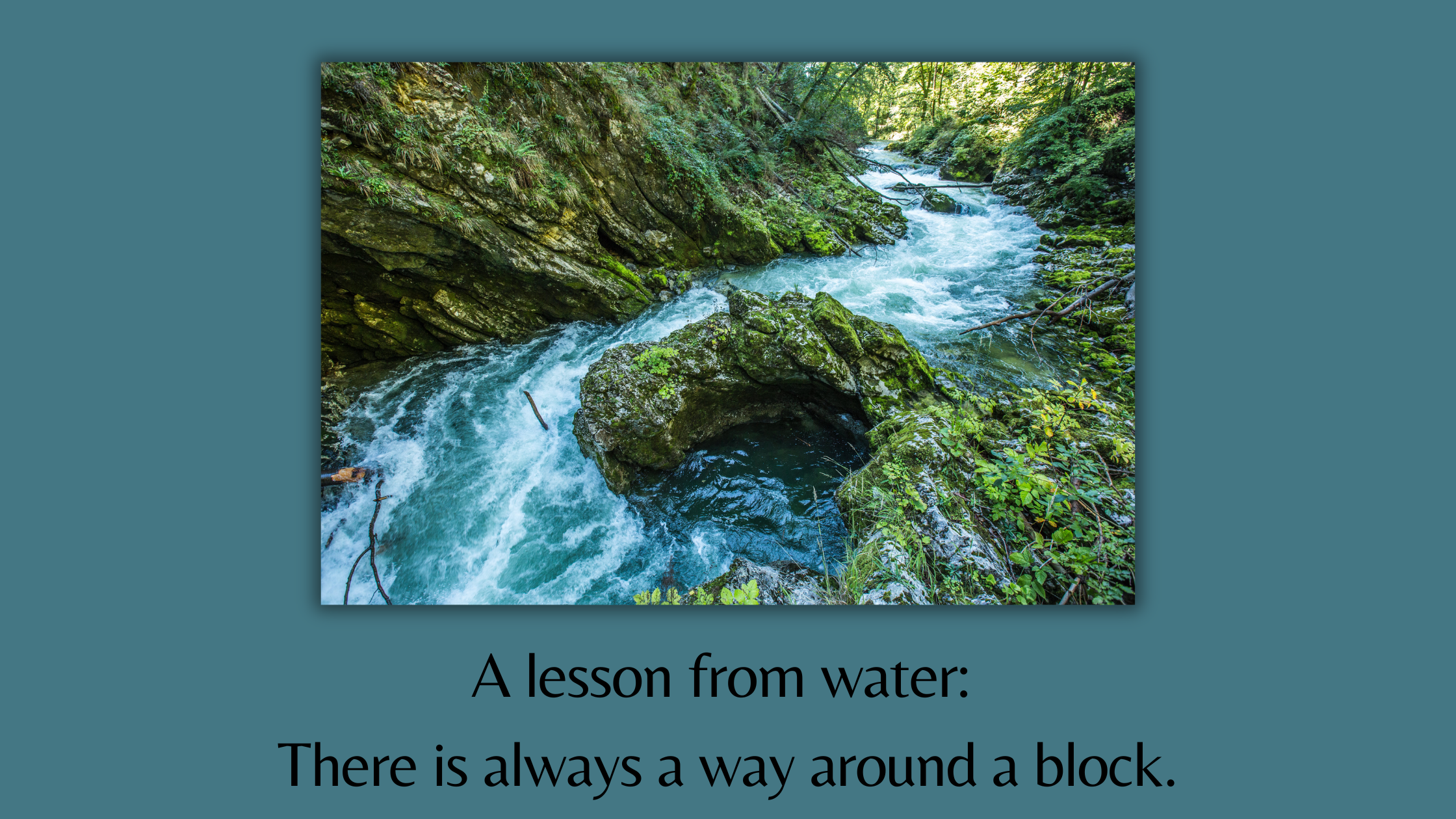
Good news. You don’t need to get overwhelmed by a large-scale project. You can take a much easier approach, and Julie Winkle Giulioni tells you how. The title of her blog article, Water Always Finds a Way – And So Do Good Leaders gives away the secret. It’s not about working hard to move big obstacles out of our path. Forward motion followed by consistency will make the impact you want/

The All-Or-Nothing Trap – We have all read about these leaders who came on the scene, scrapped whatever was in place, and rebuilt this incredible business from the ground up. Giuliani says that way lies paralysis. You figure you can’t do that, so you do nothing. Slow isn’t the opposite of bold. Methodical steps get you where you want to go, usually with less stress and frequently with more connections and support made along way.

The Approach I Thought Was “All Wet” – Giulioni recalls a manager she thought didn’t have enough drive. Instead, the manager “spent time engaging in conversations, building relationships, [and]shifting perspectives.” Sound familiar? We’re in a relationship business. Consider how those activities fit in our inserting the library into the daily needs of our teachers and administrators.

Reflecting on the manager’s actions, Giulioni realized the success achieved was much like what she had observed on a trip to the Costa Rican rainforest. Although it was the giant waterfall that captured attention, it was the rivulets that carved the terrain. It did so “over millions of years. working around barriers, exploiting soft spots and carving deeper wherever it found opportunity. Persistent. Patient. Purposeful. And, as a result, powerful.”

To be powerful, take these three lessons from water:

  • Bypass the boulder – Boulders don’t move easily, but “there’s almost always a crevice nearby to start working your way through.” Is your principal ever going to listen to your goals for the library? Maybe not But working with teachers who are enthusiastic about what you are doing, and what the kids are learning will bring it to their attention, particularly when they hear about it from others then come in to observe a lesson. Is it a teacher who feels their class is too important to “waste it” on library time? Move around that teacher and work with those who are enthusiastic the benefits.
  • Start small – It only needs to be one teacher with whom you start. It won’t overwhelm you, will lower the stakes on success as well as give you the early success that will keep you inspired to continue. If you can, within this project, find something the principal is interested in and send any brief articles that would capture their attention. Aim for once a week but not on a schedule.
  • Measure momentum, not magnitude – The water keeps flowing, and you need to do the same. Slowly, but continually keep going. Little by little your “flowing water” will create the changes you are working for. As Giulioni says, “Consistent, purposeful action compounds over time in ways that single bold gestures rarely do.”

I know it’s hard to keep going between the demands of the job and the outside forces adding stress. But we can’t afford to do nothing. That way leads to librarians being removed from their positions and too much is at stake to our communities. You can be a bold leader without making constant giant changes. Just be like water: Persistent. Patient Purposeful.

Silence is Golden

Librarians have been fighting the stereotype of the “shushing librarian” for years, but silence can be a powerful tool. As one who was called a “chatterbox” as a child and still talks a lot, this is still one I’m learning to use better and more often. Is it one you could use to better incorporate it into your leadership toolbox.

In his blog article, “The Power of Silence: How to Use Pauses Effectively When You Speak,” Gary Genard focuses on public speaking, however it’s more than that. You also want to remember this when leading students through a learning opportunity, when you have a meeting with the principal, or work with teachers as you collaboratively or corporately plan a research project.

When you are involved in any of those activities, you might discover you have a lot to say, but Genard cautions, “you need to provide audiences with an occasional oasis, i.e., a place of refreshment and recuperation. Without these stopping places, your narrative may begin to feel like a long trek across a featureless desert.” As a result, your audience stops listening in part because they don’t feel they have a part to play in the conversation. Genard offers these four reasons to employ the “power of the pause.”

  1. To separate the main segments. – Whatever you are trying to impart has sections that build on each other. Body language is always an important communicator. When you pause, you are saying, “I have completed the first part of what I want you to know. Here comes the next part.” You also invite comments on what you’ve said already.
  2. To let something sink in. – What you are saying is familiar to you, but new to your audience. They need time to absorb and consider it. Even if it’s something they have heard before, you want to be certain they understand how it fits in with what you will say next. This is true whether you are working with a students, teachers, or speaking to the principal. It gives them time to raise questions and make points of their own which lets you know if you’re being understood.
  3. As transitions. – Genard says, “while we know how the elements of our presentations fit together, the audience doesn’t.” In addition to giving your audience time to process what you just said, the pause is a reassurance that you will connect it to your purpose –and theirs.
  4. To help listeners stay tuned. – You don’t want to lose your audience. Every school librarian knows how quickly students can become disengaged. When you take too long, their attention wanders. Pauses bring them back to where you are leading them. You certainly don’t want the principal’s mind to think about non-library issues, nor do you want teachers to feel you aren’t listening to them. A moment of silence actually pulls them into the moment with you.

In his conclusion, Gerard adds Two More Ways Pauses Help You In a Speech – First, the pause turns your “speech” into a conversation. As noted, when talking to teachers and the principal, the pause shows them you seriously consider what they bring to the subject and discussion.  Second, the pause slows you down so you aren’t rushing through what you are saying. It shows your confidence in what you are communicating and makes them open to trusting you.

As a result of your pauses, Gerard says, “Your audience will gain sustenance not only from your content, but from your credibility, confidence, and as the icing on the cake, your leadership.” The word “leadership” is at the heart of this. In all our interactions, we need to be seen as strong leaders.  Our silence can speak to it.

Small Steps to Success

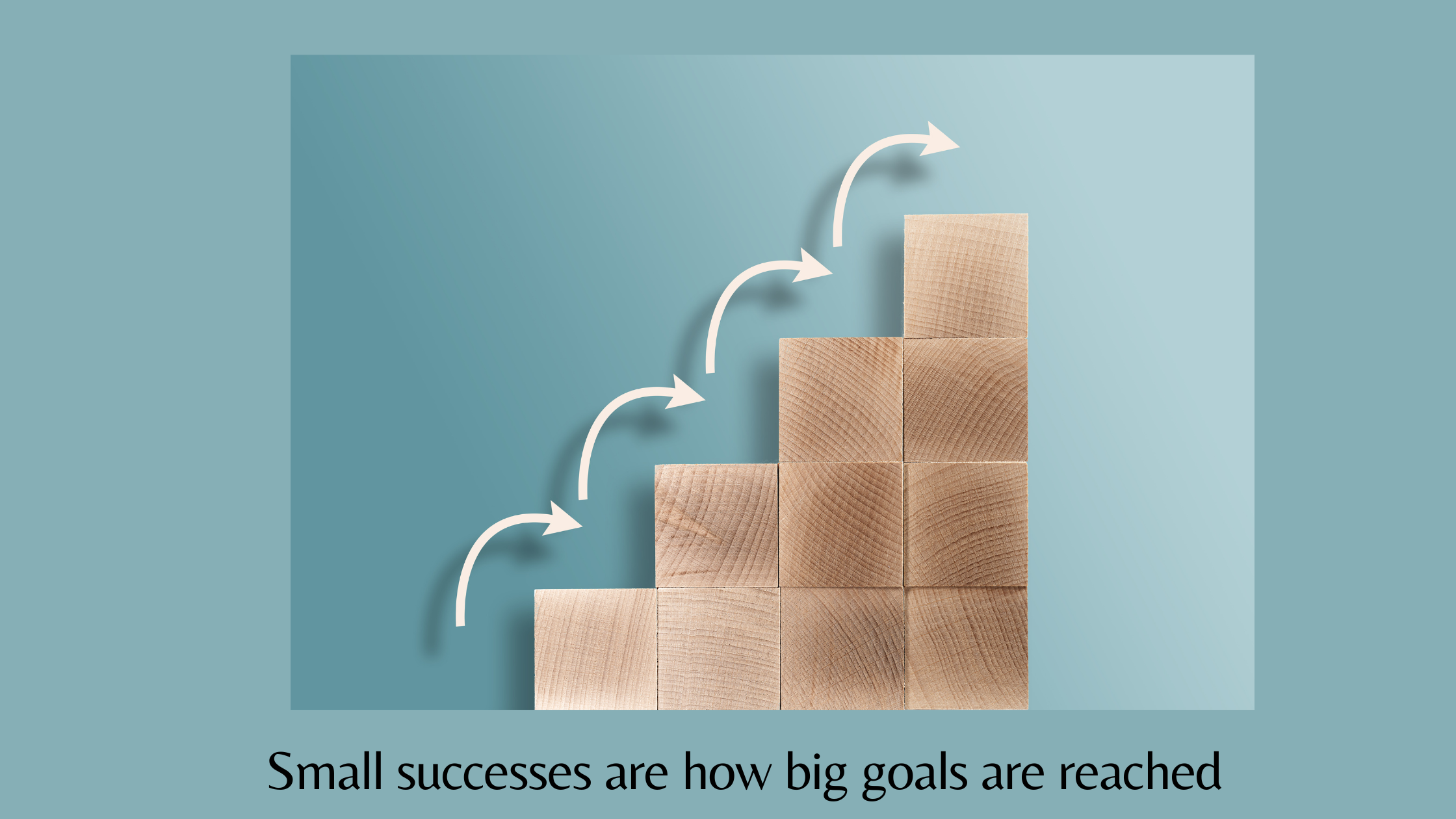
Have you been searching for a big breakthrough idea that will get your school community to recognize how essential you are? At the same time are you wondering where you would find the time to implement it? Big goals take a while before you reach success, and that can make them challenging to start. How do you get going and keep going?

Lisa Broderick in her Smart Brief’s article “Use ‘micro-measurements’ to achieve success” lists six questions you can ask yourself to help see the progress you’re making. Here they are along with my comments explaining how they slowly bring the success you crave and need.

  • “Did I listen today?” – Active listening requires you to focus on what the speaker is saying whether it’s a teacher, a student, or the principal. When you actively listen, you are able to hear undercurrents. You might notice the speaker is confused, stressed, or imparting important information. As a result, you are able to reply to the underlying message as well as its content. When the person feels heard, they are more likely to accept your answer. In the process you build trust and improve your relationship. You may also have a chance to hear how what is happening in your library is making a positive impact.
  • Did I make eye contact during meetings?” – Not just at department meetings or post-observation meetings. In all your meetings whether in the hall or a question from a student, you move closer to success when you make eye contact. It shows your interest in the speaker as a person. In a world that lives on text messages and email, eye contact stands out as a human-to-human contact.  As with listening, it builds the trust that leads to future connections which can lead to feedback that helps you move forward.
  • “Did I appreciate someone?”  – Sending a “good job” message is nice, but it’s not really appreciating someone. Be specific.  What did they do that made a contribution? The more specific you are, the more the person will value and appreciate what you said. If you have the time, a handwritten note is even better.  They are so rare, their impact is enlarged. We tend to like and want to be with people who like us. Again, this will start a relationship which is key to your success as a librarian.
  • “Did I take care of myself?” – Why is this here? Because in order to do any one of these questions (or take the ongoing time needed to achieve big goals) you need to be in a good place mentally. When you are overworked, overwhelmed, and stressed out, you are not likely to do any of this. What do you do to relax? (Do you remember how to do it?) Some of you are crafters. Make time to do some work on that unfinished project. I have friends who love to cook. If you are like me, you need to take a walk. These activities are not time wasters. They are success builders. Think of how you feel after you have spent time doing things you love.  Note: taking a nap can be taking care of yourself.
  • “Did I reach out to a former colleague?” – Doing so build success in several ways. Renewing good memories is soothing (and is taking care of yourself). It’s also helpful because the former colleague can be just the person to give you deeper insight and encouragement on that great idea you have been looking for and how to manage it.  Your PLN is a powerful source of information, inspiration, and connection to others.
  • “Did I take a small step toward my next big opportunity?” – Success frequently comes by your willingness to step out of your comfort zone. I left a job and tenure to take on a new position almost an hour away from my home. It was one of the best decisions I ever made. That new big goal – what’s one step you can take today? These will add up. You can also consider volunteering in your state school library association. It will expand your knowledge and your PLN. Submit a proposal to lead a presentation at your next library conference.  Even if it’s turned down, you will have learned from the experience and will do better next time.

Brodericks’s closing suggestion is to “try it for one week. Pick one question. Write it down. Score yourself 1–10 each night.”  Hopefully you’ll start to see the incremental changes. Small steps that lead to big changes and results.

Look at all you have learned and accomplished since you became a librarian. Add a small step. This is how you get closer to your Vision.  You don’t have to get there today or even tomorrow. Just keep moving in the right direction.

Spreading Joy

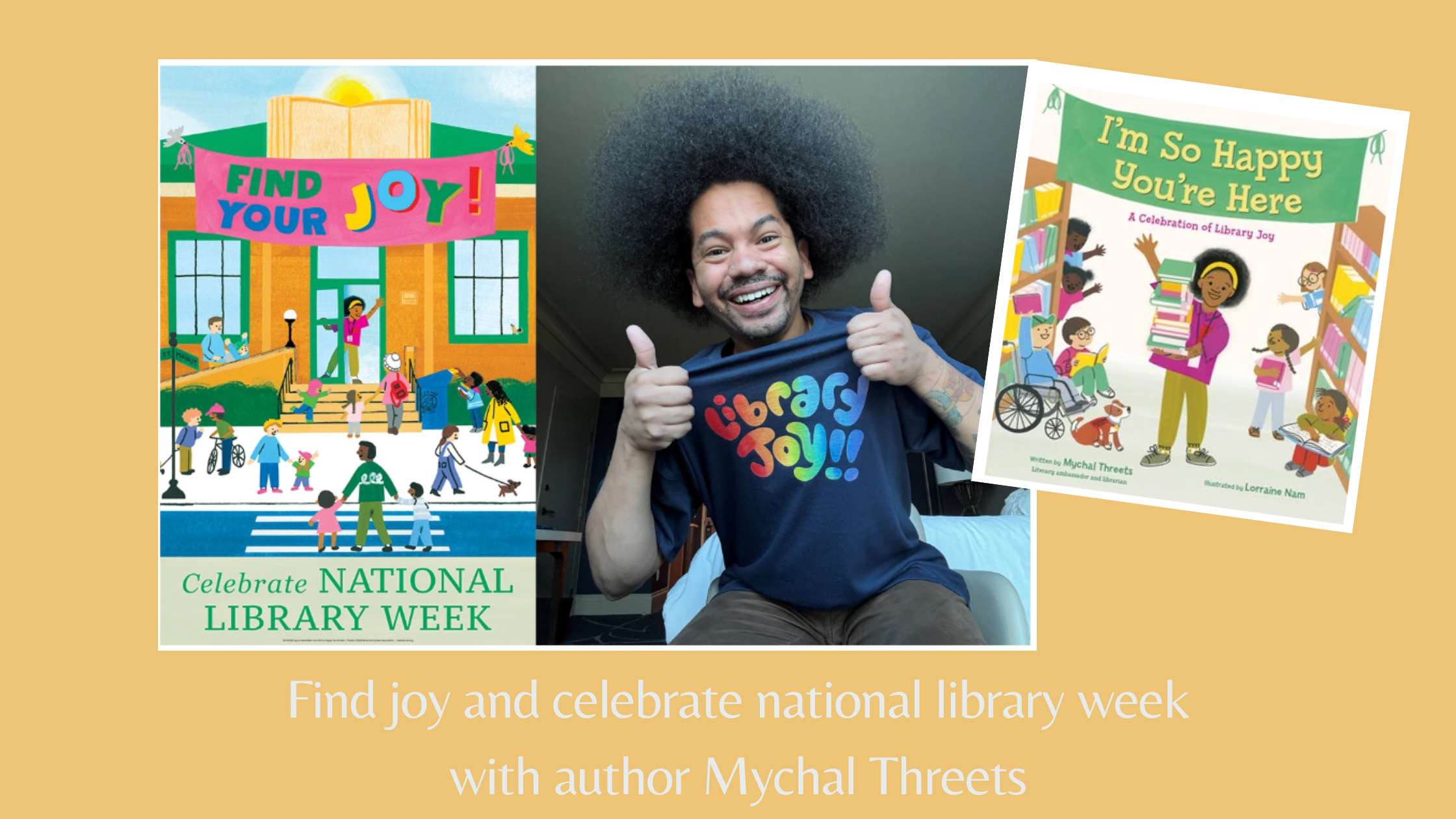
It’s National Library Week and the theme is FIND YOUR JOY embodied so wonderfully by “The Internet Librarian” and children’s book author Mychal Threets (and expressed in his book I’m So Happy You’re Here – A Celebration of Library Joy.). In recognition of his joyful advocacy and dedication to library life, Mychal has been honored with numerous awards: the 2024 I Love My Librarian Award from the American Library Association, inclusion in School Library Journal’s 2024 Movers and Shakers, TIME Magazine’s 2024 Next Generation Leaders, a 2024 Webby Award for Social Impact, and a spot on TIME’s inaugural 2025 list of 100 Creators.

Joy isn’t a topic we hear about much these days. But it should be and it can be, no matter how challenging it feels for us and the people we serve. Can you think of at least a few of those moments now?  A student getting excited about a book you showed them or finding just what they needed for a research project. A teacher realizing that your collaboration lead to a greater success than they anticipated. Maybe your principal being grateful for information you gave them that they were able to use at a school committee meeting.

Unfortunately, most days joy is far from what you are feeling and hard to connect to. But joy can be a powerful tool and finding ways to tap into it can turn difficult situations around. In her SmartBrief article “The joy gap: What’s missing in the modern workplace, Amy Leneker takes up the challenge of changing our environment. She offers these insights on joy.

The Myth that Widens the Joy Gap Leneker begins with myth that, “Stress is the price we pay for success.” Even before politics became a more common part of our library lives, we experienced stressed. We serve students, teachers, and the administration. Ours is a high pressure career, but if we lose our joy in what we do, we lose our “Why” for becoming a librarian, and are less successful in what we do. Leneker points to neuroscience studies showing that when the brain is stressed it has “less capacity for creativity, learning, connection and strategic thinking.” Each of these abilities is critical to being successful and serving your library community. Its time find our way back to looking forward to coming to work each day, or as many days as possible.

Where Joy Actually Comes From – Quoting Catherine Price, author of The Power of Fun, Leneker share that fun comes from a connection between playfulness, connection and flow. It is a“lighthearted attitude, creating a special, shared experience with others and committing to being active, engaged and present.” This is something that is very inline with creating a space that is welcoming to all. Bright colors, relevant topics, ways to have fun with what students are there to learn brings joy into the library and people’s days. We can share our successes and wins and encourage others to share theirs. And, instead of watching body language to recognize when someone is depressed or worried look for signs of happiness and joy in others then ask them what has put that smile on their face. Joy reigns when it is shared.

Science-backed practice – New and Good – It’s not surprising that sharing good news “triggers dopamine…improving mood and openness. Hearing others’ good news has a similar effect.” Yet most us of start conversations with what’s going wrong. Leneker suggests setting the tone of a situation by starting with some positivity. Asking, “What’s good today?” Or asking about a hobby, movie or favorite thing of the person you’re talking to will immediately bring more joy to your relationships and connections.

Start with Simple, Low-effort Wins – Small moments the bring joy can have long lasting results. Smiles, appreciation, meaningful compliments even when you are just passing someone in the hall has an impact. Start meetings discussing achievements, congratulate students and teachers at the beginning of a lesson. Leneker says to consider looking at where success and joy might have a place in your Mission Statement of Vision. “Our library is a place of joy where…”

Closing the Joy Gap Is a Leadership ChoiceLeneker says, “The joy gap isn’t inevitable. It’s the result of cultural choices.” Instead of trying to work harder, focus on the joy of learning, growing, and living. Spread the message as you go through the day. We tend to avoid people who are stressed and always busy. That won’t strengthen and build our relationship with teachers. How many students have avoided asking you questions because you seemed too busy or serious? Start with joy and see where it takes you.

My tip? Create a Joy Journal. Note when you have a “win.” Keep track when something or someone makes you laugh. Take time to notice something that brought lightness to your day. There is truth in the saying “laughter is the best medicine.” Look for ways to bring and encourage joy and watch what blooms.

Six Steps to Improve Your Active Listening

Can you hear me now? A familiar question when one is presenting and you’re worried if there’s a problem with the equipment. But the question is even more important when we are communicating with others. Active listening builds trust, and, as you know, trust is the foundation of relationships which we need with students, teachers, administrators and more.

Communication consists of three parts: the sender, the message, and the receiver. Once the message reaches the receiver, the process is reversed. The receiver becomes the sender, a new message is sent, and the former sender is now the receiver. When this works perfectly, the parties involved get and give the necessary information. However, all too often, there is static on the line affecting one or more of the three parts. By learning to be an active listener you eliminate or at least minimize this static.

In his blog article Why Active Listening May Be the Most Underrated Leadership Skill, John Mattoneprovides six steps to ensure you are really listening. Here are his recommendations, along with my comments on how it plays out in our library world:

  1. Listening Fully – This seems obvious, but Mattone explains this means, “giving your complete attention, reducing personal bias, and processing what the speaker intends to communicate.” You probably are seeing the problem already. In your overly busy day, you have multiple demands coming at you almost simultaneously. Also consider Mattone’s reference to reducing personal bias. Is the student always a pest, nitpicking details to delay getting to work? Is the teacher one who invariably rejects all your help? (Maybe that’s because you aren’t listening fully?) No matter the sender or the method, it is vital that you fully listen to the message you are being given. While it is most apparent in your verbal communication, your emails and texts also need your attention.
  2. Observing Nonverbal Cues – We communicate on the subconscious level in our nonverbal cues. Our body language conveys an enormous amount of information. Starting with our lips, eyes, and brows, moving down to our shoulders, and our posture in general, we are sending information. In your next conversation, notice the ones you are being sent. Does the sender seem nervous or self-assured? When you’re having a meeting with your principal, do they seem engaged, rushed, or concerned? By noticing these cues, you can give better responses. Need practice? The next time you’re in the supermarket or other public places observe the people you pass and see if you can determine what messages they are sending.
  3. Staying Present and Attentive – Mattone says, “Leaders must quiet internal noise, avoid mental drift, and stay centered so the person speaking feels valued.” While the student or teacher is talking, is your mind wandering? We have so much to do, we often are multi-tasking even in the middle of a conversation. Stay present as much as possible. Keep this in mind when during casual interactions. Watch and listen when you sign in or out. Observe and interact with students as they come in for a class. You can anticipate how a student or the class will respond to the learning experience and make adjustments when needed.
  4. Summarizing Key Points – When you do this after the other person finishes speaking, you demonstrate you have been listening. It is also an opportunity to identify what you might have misunderstood. As Mattone points out, “When leaders reflect back what they heard, they confirm accuracy and demonstrate respect for the speaker.” The summary allows both the receiver and you a chance to expand or focus on the essentials of the communication. (For those comfortable with AI – Gmail and other email services frequently include summary points of what was included in the exchange. It’s a helpful addition.)
  5. Asking Open-Ended Questions – Open-ended questions stimulate deeper thought into the desired outcomes along with the possibility of revising some of what a teacher wants or helping a student see what they need to do to pursue their investigation. In a conversation with your principal, it alerts you to their goals giving you the ability to tie your plan to their needs. Mattone says these questions, “uncover insights that support better coaching and developmental outcomes.”
  6. Maintaining Eye Contact – While only possible during face-to-face communication, this is a core component of Active Listening. It shows you are solely focused on the speaker. In Matton’s words, “It signals attentiveness, interest, and credibility.” He continues, “When leaders maintain appropriate eye contact, they communicate respect and commitment, reinforcing trust in the relationship and helping the other person feel fully heard.”

Active Listening isn’t an easy skill to master, but it is one you need in your leadership toolkit. You won’t always do it, but the more you are aware of it, the better you’ll get. Do you hear me?

The Getting Is In The Giving

This is the season both for giving and receiving. When we stop to consider, there are so many ways to give, and each one brings a reward. Finding ways to give to those in your community brings returns many times over in the value placed on you and your library program. When you think about how you contribute, most of us focus on the roles the library offers to students and teachers. While that is vital, the underlying perspective others have about you and the library comes from the one-on-one ways in which you give.

In his article for Rolling Stones, The Courage to Give in a Take-First Economy, Chris Schembra observes that our fast-paced, reactionary world has caused leaders to become short-term thinkers rather than long term visionaries. This does not serve us in building the connections and relationships we need to demonstrate how much we are worth to teachers, students, and administrators. To reverse the trend of fast responses, Schembra proposes five steps for those in the business world which apply to us in education as well. Here they are with my usual additions to make it more relevant to how we interact with our community.

  1. Pause – One of the bracelets I wear on my wrist and see frequently, reminds me to breathe. We move so frequently on auto-pilot, we don’t take time to think. As Schembra says, “This is why the pause is no longer a luxury; it’s a discipline.” He refers to it as “micro-courage” (and courage is on another bracelet I wear). We need the time to consider what the individual we are responding to needs, how fast, and what is the best way to give it to them. We also need to pause to better form our response rather than reacting quickly.
  2. Ask Better Questions – Be sure you and they know what is really being asked and required. A teacher or student may ask for something they think will answer their need. If you listen for the purpose of the request, you can ascertain whether something else will provide a better solution. When you do this, you are tuning into them, seeing them as an individual, not a problem to solve. Scherma says, “…extraordinary leaders aren’t interesting. They’re interested.”
  3. Collective Momentum – This is a reminder that we all do better when we do it together. We are not in competition. When we strive for connection and collaboration, we discover the truth of Mudita, “a Buddhist principle, means taking genuine joy in the success of others.” When you help someone, it brings an inner smile to you both and joy in seeing how happy the other person is. A specific complement can also do the same.
  4. Generosity in Action – We don’t admire the takers. We admire the givers. When your report to your principal promotes a teacher’s learning project with students, the principal becomes aware of the connections you create. They are also likely to let the teacher know about it which supports the possibility of future collaborations. Generosity can also be as small as having coffee and snacks available in your office for teachers when they need a break. And if they come to you for that break, don’t ask questions until they are willing to share. Sometimes they desperately need that quiet moment, a pause in the pressures of the day.
  5. Appreciation – Scherma notes, and it has been my experience as well, that, “A sincere, specific thank you, in my experience, increases engagement.” Taking time in a world that rushes from one thing to the next to stop and offer a meaningful acknowledgement goes a long way. And, if you’re so inclined, consider dropping off a handwritten thank you note to a teacher or principal. You can even do thank you notes to students for how well they helped someone or contributed to a lesson. It feels so good to receive one and it is long remembered.

In his Final Thoughts – Scherma concludes, “Givers build deeper customer loyalty.” When we build customer loyalty in our world, we build trust and ever-increasing connections and relationships with our students, teachers, principals, and even parents. As a result, the library thrives and is regarded as invaluable. Giving (along with last week’s gratitude) is a vaulable feel-good tool in our leadership arsenal.