ON LIBRARIES: Keep Your Communication Channels Clear

Clear communication is critical in building relationships, and you need these relationships to develop advocates for your program. As a leader, you will communicate with many people in many situations from one-on-one to (eventually) large groups (more about this in my blog on Space Relations). You also communicate with yourself, often as the initial step in reaching others. Communication is a giant topic with extensive subtopics.

In an online article, Marlene Chism identifies three communication mistakes which are at play in any professional situation. She states that “one of the most valuable tools leaders have for driving results and improving performance is conversation.” No matter what channel you choose and no matter your message, there are always three parts: the sender, the message, and the receiver.  If any part is muddled the message won’t get through. 

Obviously, you are the sender.  Unless you are speaking for a group and haven’t made it clear that you are presenting information that is not necessarily your own belief, there is rarely any confusion about the sender.

The message is another matter.

Aside from the need to tailor the message to the medium and the receiver (which I’ll discuss another time), you need to be sure you are not inadvertently bringing confusion. To ensure message clarity, you must avoid mistakes that can affect all communication no matter which method/medium you use.

Lack of focus is the first blunder.  Are you trying to communicate so much that the channel is completely clogged?  If the receiver can’t make sense of where you are going, they often stop listening. Too many examples and too much background information become overwhelming to the person you are addressing.

School librarians often make this mistake in speaking with their administrator.  They are so anxious to be sure the principal understands the basis for the proposal and to demonstrate they have fully thought it out, that not much of the goal gets through.  Administrators are drowning in details as is. They don’t want or need to assimilate all of yours.

To fix this, identify the bottom line.  State what you want from the principal and for what purpose.  Consider it an elevator speech—no longer than a minute.  Then say, “If you need more information, I will gladly supply it.”

Many of us have this same problem with the conversations in our heads. School librarians wear many hats and sometimes it seems they all require attention at once.  In an effort to take care of all it, your brain swirls thinking of one thing then another without following any one them all the way through. It’s exhausting and non-productive.  A solution to this is to stop, separate all the responsibilities and assign priorities to your tasks. Then work your way through them.

Chism refers to meetings that don’t get anywhere. You probably have attended way too many of these. In Leading for School Librarians I discuss “Making Meetings Matter.”  Among the suggestions are for the leader to learn the purpose and intended results, create and send out an agenda in advance and invite feedback from those who will attend, review the goals so everyone knows where you are heading, and close with action steps that need to be taken before the next meeting.  Focus is what makes the meeting productive.

Putting Tasks before Context is the second block to effective communication. If you start dealing with the details before you have explained and solidified the overall plan, no one will understand where you are going. This is related to lack of focus, but in this case, it is about the sequence.

Back to that conversation with your principal.  If you want to launch a Makerspace or a school-wide reading program, don’t begin with the activities you will include in the Makerspace or how you are getting stakeholders to participate.  Start with the goal – why you need the Makerspace.

It’s similar to creating a strategic plan.  First, you look to your Mission and Vision (hopefully you have them for your library).  Then identify two or three goals that will meet a need and promote that Mission and Vision.  Only then do you develop the action steps for each goal.  You need to know the “why” before you begin the “do.”

The same is true for how you are communicating with yourself.  If the to-do list you create in your head or on paper has you going from one thing to next like the Energizer Bunny, you may get them done, but they won’t add up to solid progress because they were not the outgrowth of a solid plan.  It all becomes busy work. You need to talk to yourself – clearly – about why something needs doing and how it relates to the bigger picture before scurrying around to get it done.

Lack of a “By When” is the final communication error.  Whether it’s you, a teacher with whom you are collaborating, or someone on a committee you are leading, if there’s no set completion date people assume they have loads of time.  Time enough to forget about the task.  Anything that is accomplished tends to be slipshod. If you have not communicated any urgency or priority level, the individual/s is left to assign it themselves.  Your listeners have no idea of the task’s relative importance.

In our internal communication, we plan something in our heads (or on our to-do list) without a due date to give ourselves an out. It keeps us from being accountable. You don’t have to meet your self-assigned deadline, but you do need to know if you missed it – and why.

Focus, Context, and Due Dates will keep your Communications clear.  And being a good communicator is an essential quality of a leader.

ON LIBRARIES: Space Relations

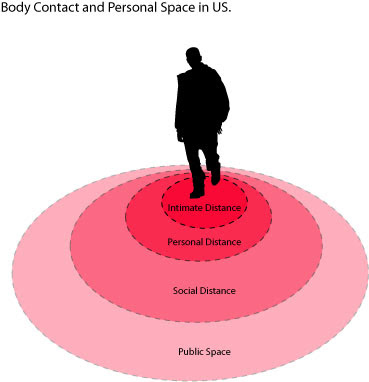
Whether or not we consciously recognize them, we maintain four zones of space in our communications with others: Public, Social, Personal, and Intimate, and this space is important to the success of our relationships. Artists are well aware of the importance of what they call negative space, referring to the area where there are no people or objects.  Negative space exists in relationships too, and, just as in art, it carries messages.  In an article entitled An Update on Proxemics, Nick Morgan explains why the term and the concept, created by Edward T. Hall, still has relevance. The space we maintain from others reflects the zone of our interactions and our connection.

In Public Space, we are twelve feet or more from the speaker.  It includes listening to a lecture or other situation where someone is usually addressing an audience of a number of people.  We are not always mindful of what is being said in public space.  You probably have noticed how many people check their cell phones – or check out completely – during a lecture of any sort. Ask the kids who sit in the back of the room.

For the person doing the speaking, the challenge in this zone is to keep the listeners engaged. If you are the one who is making the presentation, it’s important to recognize this reality and know how to draw your audience in.  Telling stories about your experience as it relates to the topic is one way. It makes it personal.  Moving away from the podium, if you can, temporarily alters the distance and can build a connection.

Social Space varies from four to twelve feet. It is what exists, for example, when we dine in a restaurant. As with Public Space, there is a mental space between us and the other diners in the room.  Unless they become loud, we are aware of then only in the most superficial way.  You might overhear a conversation that is interesting, but it is hard to concentrate on it so you tend to shift your focus.

In the education setting, you are most likely to deal with it in the teacher’s lunchroom. Each group has its own conversation taking place.  If you are alert, you might discover what unit a teacher is working on or planning.  Then you can speak to the teacher to supply the right information to make the project more successful. It can be the beginning of developing a collaborative relationship. And it’s an excellent reason to make it a practice to get out of your library for lunch.

The distance in Personal Space ranges from four feet to eighteen inches, and we are always aware of who is in this space. It’s bred into us as a matter of survival. We also need to be extra mindful here because subtle differences in how we define Personal Space can cause problems. Over time you can fine-tune your senses to be aware of how the person you are speaking with is reacting your distance.  In general, they will instinctively define it for you, taking a step back if you are too close or stepping forward if they sense you are too far.

When having a conversation in Personal Space, always be sure to accept the other person’s boundaries.  Don’t move forward if they have moved back.  It will feel to them as though you are encroaching. Accept the negative space. If you are uncomfortable with how close someone is, you can move back, but know they may read it as you trying to distance yourself from them.

Intimate Space is from eighteen inches to zero. Again, there are cultural differences as well as gender ones which make this acceptable or uncomfortable.  Unsurprisingly, women tend to prefer more distance in these situations than men, particularly in conversations with the opposite gender.  If you are a man, it is wise to be aware that moving too close here or in Personal Space may make a woman feel anxious or concerned, which can ultimately block effective communication.

As I’ve mentioned in the past, most of our communication is nonverbal.  The fours zones of space are another form of non-verbal communication. Most of our conversations, particularly the important ones, occur in the Personal and Intimate Spaces. Being aware of what the other person(s) is communicating in the negative space of body language can make the difference between a successful and an unsuccessful attempt at building a relationship.  And we must never forget that we are in the relationship business.


ON LIBRARIES: The Art of Communication

the-art-of-communucationI often say “We are in the relationship business” What goes along with this is without communication you can’t develop a relationship.  That shouldn’t be a challenge.  After all, we are always communicating, aren’t we?  Not necessarily the message we want.

Communication has three distinct elements:

  • the sender,
  • the message, and
  • the receiver.

If you remember the game of telephone you played as a kid, messages can easily become distorted, and in real life that distortion can occur within any of these three elements. In order to communicate effectively you need to be aware of how this happens and what you can do to prevent it. It is your responsibility to make sure the message is sent on a “clear channel.”Vector businessman online communicatiion connection business

Assume you are the sender.  Before you do anything you need to identify your receiver, your audience.  Is it your principal?  A teacher?  A parent?  Next you must consider what your message is.  Are you reporting something to your principal?  Offering help to a teacher? Responding to a parent query?

To be sure your message will not be garbled as it is received you must be sure it is in language the receiver understands.  Educators have jargon they use so frequently they are not always aware they are using it.  Scaffolding and differentiated instruction are quite specific terms for educators, but would parents understand them? Librarians have their own jargon as well.  We talk about information literacy and digital citizenship and don’t stop to think that not even our principals or teachers fully understand what we mean.

In communicating, it’s important you don’t make assumptions.  You might say, “Our teaching of information literacy ensures students are able to identify their need for information, locate relevant facts, evaluate them, and use them to communicate effectively.”  In essence you included the definition without either insulting someone who knows what it means or using a term they didn’t understand.

illusionYour next challenge is to select the right medium for the message. In the previous century, your choices were limited.  Do you want to talk to the receiver (in person or the telephone) or write to them (memo, report, or letter)? Today you have an array of options. To some extent it depends on what the message is, but there is a further consideration.  What is the users preferred source of communication?

If your principal wants e-mails, use that.  If he or she is a technophobe (getting rarer) schedule a meeting. Do the parents in your school use Twitter?  If they don’t it’s not a good medium for communicating with them. Do they go to your library website, your blog, or only like the print or emailed newsletters?  You need to take your message to where they are.

Besides language, the structure of the message is critical.  When you are tweeting you are limited to 140 characters. Conversations, emails, and memos have not such limit. It must be self-imposed.  Most of you are aware that text messages need to be fairly short and emails should also be brief.  If they are too long people skip some of the last part of the message. I work to keep these blog posts to a specific length and no longer, knowing they are being read on devices more than computer screen.

What isn’t as well recognized is how to craft a message, oral or written, to an administrator, and this works for others as well. We have a tendency to provide “background” so the receiver knows we are well versed in the topic and have done research, when appropriate, to be certain that what we are proposing is the best course of action. By the time the recipient gets your point, they have become lost in the verbiage.

As journalists have always known, “Don’t bury the headline.”  Lead with it. Give one or two supporting statements.  Particularly if the message is directed to your administrator let him or her know that if more information is needed, you will be glad to provide it. The same is true if you have a face-to-face meeting. Start with what you are seeking.

Note how this and all my blogs are written.  I keep paragraphs to a few lines.  Too large a block of text tends not to be read.  In my presentations I almost never have a PowerPoint slide with a lot of text.  It doesn’t work in today’s world.

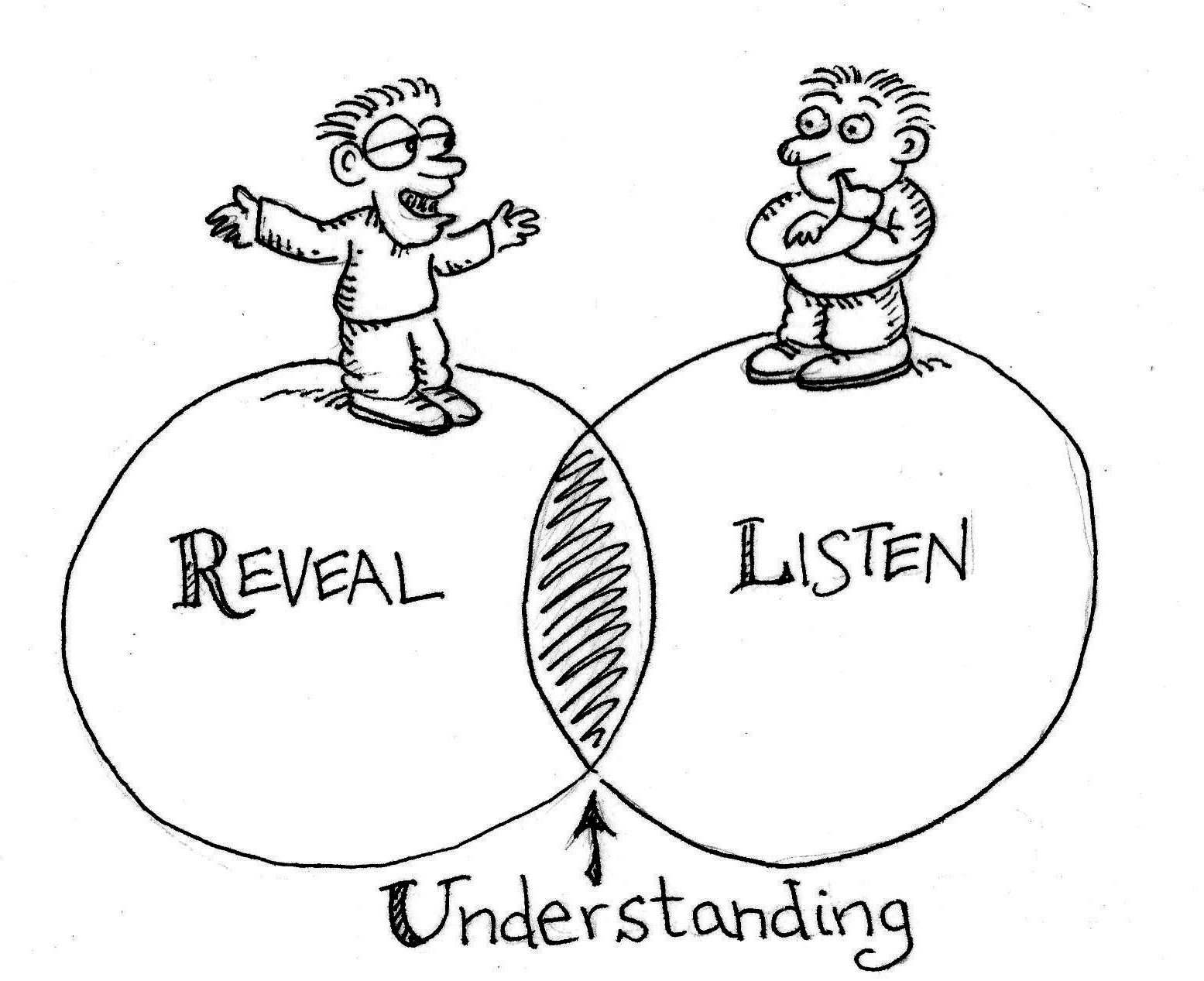
Once you have “sent” your message, you may become the receiver. When you are on the other end you must do what you can to be certain you heard the message correctly. This means engaging in active listening and restating in your words what you understood.understanding

Although the focus here is on verbal/written communication, never forget the presence of nonverbal communication. Any written messages should be proofread.  We hit send (or replay all!) too fast. It’s not serious when dealing with your friends, but when communicating with administrators, teachers, and parents it communicates a message about your skills and how much you care about what you are saying.  When it’s important, I create my emails in Word first and then do a copy/paste.

non-verbalWhen you are speaking to someone, watch their non-verbal communication.  Are they subtly checking the time? Are their eyes glazing over?  Do you need to rephrase for their understanding or is it time to bring the conversation to an end?  Stay aware.

Good communication skills can be learned and can always be improved.  Practice makes perfect – or at least better.  How well do you communicate?  What’s your best medium?  What do you need to work on?

ON LIBRARIES: You and Your Tech Department

library computersNo one in the school system uses more technology than you do. The computer/tech teachers come close, but they rarely use as broad a range as you.  From your automated system to your databases, to the various resources and apps you incorporate into your teaching, you are constantly accessing different technologies. You may have a website you maintain for the library. If your district permits it, you might have a Twitter account and use Pinterest and/or Instagram.  Technology is intrinsic to almost everything you do.

And then there is the Tech Department that manages and controls access to all the tech in the district.  It can be a love/hate relationship between the two of you.  Depending on how you are handling it, sometimes it’s all hate.  Unfortunately for you, you can’t afford to let that happen.  The tech department is too powerful, and if you can’t

Tug of War

turn the relationship around, the Tech people will be a constant road block.

From the Tech Department’s Perspective

To change your mindset, look at the issue from the Tech Department’s point of view. There are a limited number of them and the faculty and administration are always needing them to attend to an issue immediately. When everything is functioning properly, no one ever praises them.  As soon as something goes wrong, blame is heaped on them.

They are charges with safeguarding the integrity of the system, but students are forever trying to get around any firewalls they construct.  Teachers (and rarely students) don’t always think before opening emails and inadvertently download malware and viruses.  The bandwidth is limited and too many people want to stream videos.  They are in a no-win situation.

Then you come along.  The school year starts and you need them to get any newly-purchased database uploaded to all your computers. You want students in the incoming class entered into your automated system.  New teachers need to be entered as well.  If your ILS system has had an upgrade, you want the tech department handling that immediately as well.

disagreeResearch projects during the year may have you making quick calls to the tech department to open a site the filter has blocked. You may need them in order to make modifications to your website.  They try to keep everything organized and handled in order by requiring you to fill out a ticket, but you want them to realize you have immediate needs and can’t wait for them to get around to dealing with it.  By the time they open the blocked site, the kids are through with the project.

Going from Hate to Partner

How can you turn this around?  You need to start building a relationship with the Tech Department and the best time to do it is when things slow down.  If at all possible, set up a meeting with them during the summer to discuss how you can help each other.  And bring food to the meeting.

Make a list of the jobs you need the Tech Department to do and put them in approximate chronological order.  Ask if you can be “trained” in doing some of them yourself so as not to strain the department’s limited resources.  In my last library situation, we loaded all the new students and teachers into our system.

Let them know whenever a research project comes up, you will explore potential sites ahead of time to identify which ones might be blocked so the Tech Department has advanced warning and has time to unblock them.  That said, see if they can find a way to “fast track” any requests from you to open sites if some are discovered while the assignment is underway.  Explain why it is so important while showing you recognize their concerns and problems.handshake

Find out if the head of the Tech Department is a member of ISTE.  If you are as well, you can use that as a common bond for discussion.  You might even attend the ISTE conference together. When you come across articles or resources you think would be of interest to the Tech people, preferably online ones, send it to them.

If you haven’t done so already, see if you can get on the district’s Tech Committee.  You need to show your tech competence and that you recognize and value the service given by the Tech Department.  When you become part of their solution instead of being their major problem, you will have found a valuable ally in ensuring your program runs smoothly and meets the needs of students and teachers.