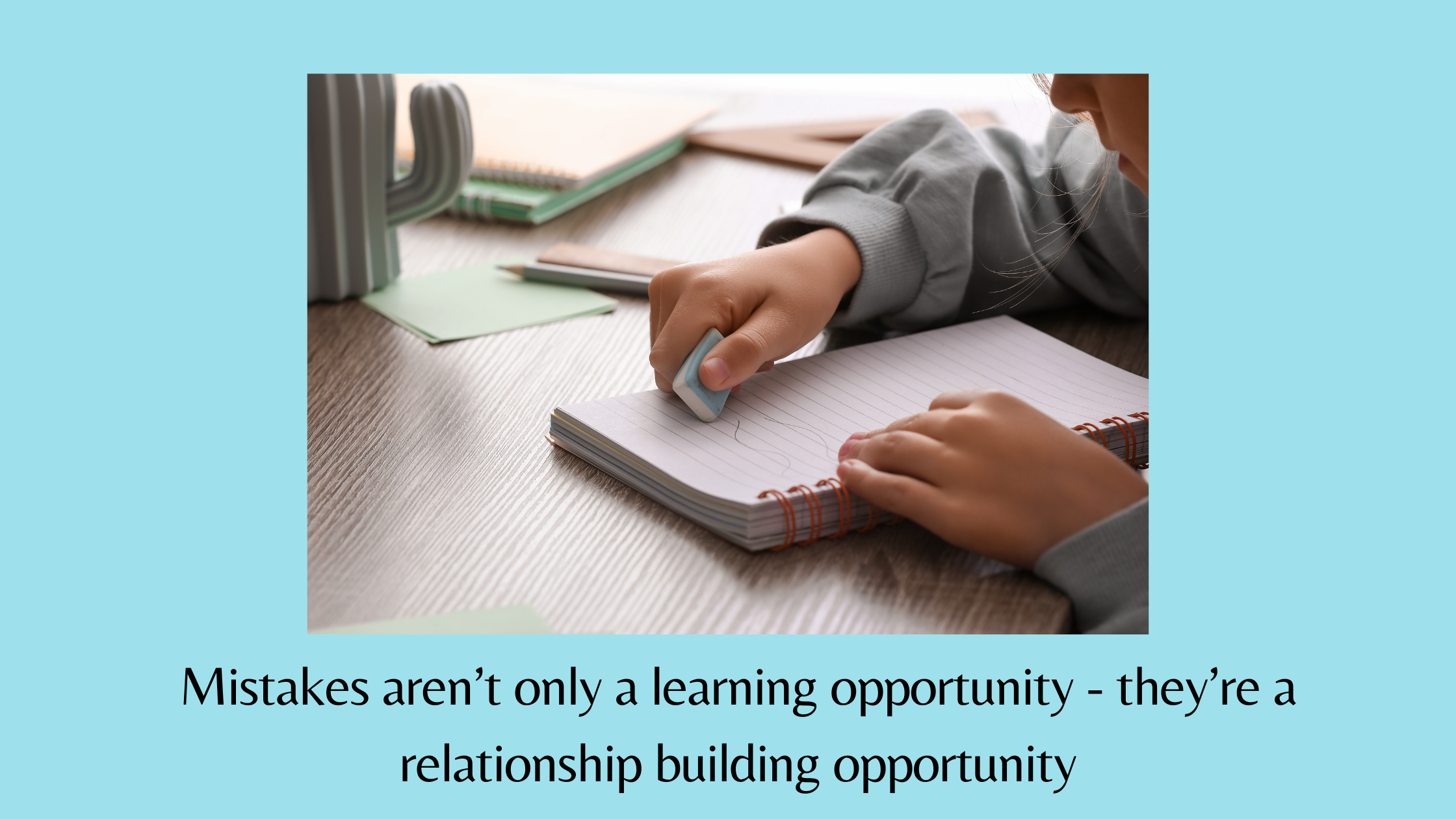
The fifth-grade class you are teaching begins working on the project and a student knocks over the display you had set up. The sound seems deafening. Was it an accident or intentional? What do you say? What do you do?
Can you put yourself in the student’s shoes? Think of how you respond when you make a foolish error. First, your brain begins its usual negative self-talk. Then you might try to cover it up or explain it away. The same thing is happening for the student. Your objective is to avoid losing the focus of the other students while getting the kid who acted out back on track and holding them responsible for their action.
Oh, and you only have a minute or two to respond.
Billy Dunn in his blog post, “The Day My 8-Year-Old Made Me a Better Leader,” offers a script to help you through moments like these. He recounts a time when his daughter played badly in her soccer game. How he handled it can guide you as you deal when students (and others) make mistakes. Here are his five steps along with my usual comments:
- A high form of leadership is restraint – His brain is telling him he is in big trouble and he’s wondering things like whether you will be informing his parents. Instead of launching a tirade into his behavior and extending the show for the rest of the class, keep your tone light-hearted. Say something like, “Well, that was loud. Now let’s get it fixed.” Remind the rest of the class to get back to work and have the student who knocked the display down help as you restore it. Dunn notes, “Correction delivered at the wrong time creates distance instead of trust.” You don’t want to escalate his actions. Working on putting the display back in order can calm him down and provide the quiet space for the others to resume what they were doing.
- Psychological safety precedes improvement – The student is anticipating your angry response, triggering the well-known freeze-flight-fight reaction. Dunn says, “Psychological safety…fuels innovation, trust, and growth.” It’s imperative that students feel safe in the library. You certainly don’t want them planning to “get even” for a punishment reaction from you or creating a situation that leads to more shame and guilt from his peers or teachers.
- Don’t be content with making a point. Make a difference – Dunn cautions not to “apply the right principles at the wrong moment.” By not lashing out at the student and creating a safe space as you put the display back together, you have an opportunity to talk the incident through. Can you learn what motivated the student? Gently ask if he has been having a bad day. Get the student to open up and recognize how he let an earlier situation cause him to act badly.
- The relationship is the gateway to greater performance – You now have begun the framework for building a relationship with this student, and building relationships is one of our primary focuses. Trust grows and develops over time. Because of how you handled the situation, the student’s behavior is likely to be different next time. Even better, instead of disastrous class period, you are creating a future library user. And you might have even watered some seeds of trusts with the students who witnessed how you handled the situation.
- Invest in your Emotional Intelligence – This situation affected not only the student involved but how the rest of the class saw you and the library. It required you to employ a high level of emotional intelligence. Dunn reminds us that emotional intelligence is not simply about recognizing emotions in others, it’s about our response to them. He concludes, “emotional intelligence is the discipline of putting relationship before reaction and people before impulse so that growth can follow.”
Because of the experience that inspired it, the five steps Dunn shares are focused on children, but the same is true for adults. Teachers can and will goof too. You may have set up a lesson for a class but the teacher never came. It would be easy to point out to the teacher how much time and effort you invested, but that will get you the opposite results of what you want. Instead, recognize it was not likely the teacher’s intention to forget to bring their class. Something must have happened to cause it. Don’t just accept the teacher’s apology, use these steps: Restraint. Make Psychologically Safe to go beyond the apology. Make a Difference with how you connect and remember the importance of relationships to create Greater Performance and Emotional Intelligence so you can discover what really happened and grow for the future.
Building relationships is not only about what you do. It’s often about how and when you do it. In the midst of a mistake, it can be extremely powerful.

