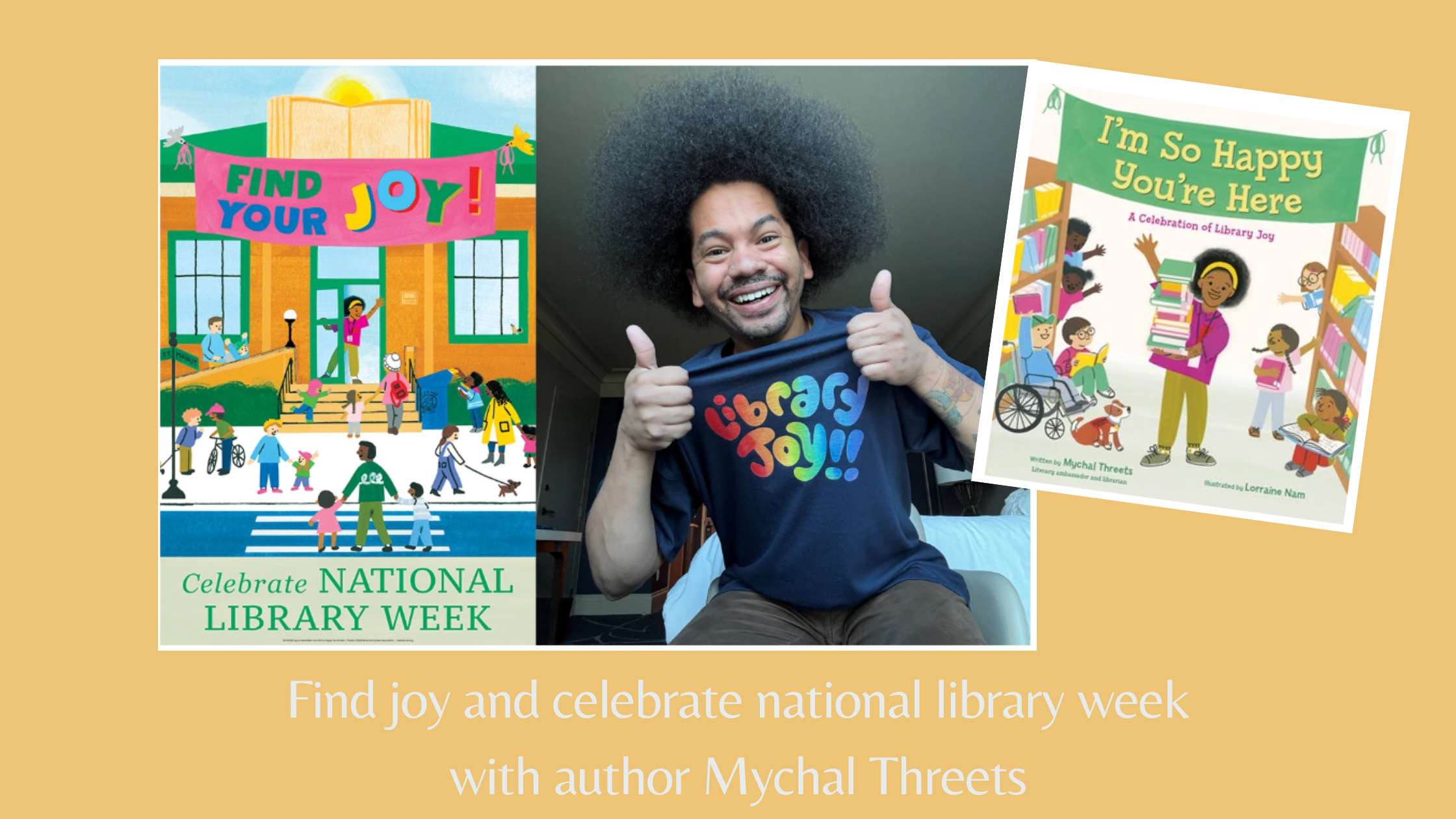
It’s National Library Week and the theme is FIND YOUR JOY embodied so wonderfully by “The Internet Librarian” and children’s book author Mychal Threets (and expressed in his book I’m So Happy You’re Here – A Celebration of Library Joy.). In recognition of his joyful advocacy and dedication to library life, Mychal has been honored with numerous awards: the 2024 I Love My Librarian Award from the American Library Association, inclusion in School Library Journal’s 2024 Movers and Shakers, TIME Magazine’s 2024 Next Generation Leaders, a 2024 Webby Award for Social Impact, and a spot on TIME’s inaugural 2025 list of 100 Creators.
Joy isn’t a topic we hear about much these days. But it should be and it can be, no matter how challenging it feels for us and the people we serve. Can you think of at least a few of those moments now? A student getting excited about a book you showed them or finding just what they needed for a research project. A teacher realizing that your collaboration lead to a greater success than they anticipated. Maybe your principal being grateful for information you gave them that they were able to use at a school committee meeting.
Unfortunately, most days joy is far from what you are feeling and hard to connect to. But joy can be a powerful tool and finding ways to tap into it can turn difficult situations around. In her SmartBrief article “The joy gap: What’s missing in the modern workplace, Amy Leneker takes up the challenge of changing our environment. She offers these insights on joy.
The Myth that Widens the Joy Gap – Leneker begins with myth that, “Stress is the price we pay for success.” Even before politics became a more common part of our library lives, we experienced stressed. We serve students, teachers, and the administration. Ours is a high pressure career, but if we lose our joy in what we do, we lose our “Why” for becoming a librarian, and are less successful in what we do. Leneker points to neuroscience studies showing that when the brain is stressed it has “less capacity for creativity, learning, connection and strategic thinking.” Each of these abilities is critical to being successful and serving your library community. Its time find our way back to looking forward to coming to work each day, or as many days as possible.
Where Joy Actually Comes From – Quoting Catherine Price, author of The Power of Fun, Leneker share that fun comes from a connection between playfulness, connection and flow. It is a“lighthearted attitude, creating a special, shared experience with others and committing to being active, engaged and present.” This is something that is very inline with creating a space that is welcoming to all. Bright colors, relevant topics, ways to have fun with what students are there to learn brings joy into the library and people’s days. We can share our successes and wins and encourage others to share theirs. And, instead of watching body language to recognize when someone is depressed or worried look for signs of happiness and joy in others then ask them what has put that smile on their face. Joy reigns when it is shared.
Science-backed practice – New and Good – It’s not surprising that sharing good news “triggers dopamine…improving mood and openness. Hearing others’ good news has a similar effect.” Yet most us of start conversations with what’s going wrong. Leneker suggests setting the tone of a situation by starting with some positivity. Asking, “What’s good today?” Or asking about a hobby, movie or favorite thing of the person you’re talking to will immediately bring more joy to your relationships and connections.
Start with Simple, Low-effort Wins – Small moments the bring joy can have long lasting results. Smiles, appreciation, meaningful compliments even when you are just passing someone in the hall has an impact. Start meetings discussing achievements, congratulate students and teachers at the beginning of a lesson. Leneker says to consider looking at where success and joy might have a place in your Mission Statement of Vision. “Our library is a place of joy where…”
Closing the Joy Gap Is a Leadership Choice – Leneker says, “The joy gap isn’t inevitable. It’s the result of cultural choices.” Instead of trying to work harder, focus on the joy of learning, growing, and living. Spread the message as you go through the day. We tend to avoid people who are stressed and always busy. That won’t strengthen and build our relationship with teachers. How many students have avoided asking you questions because you seemed too busy or serious? Start with joy and see where it takes you.
My tip? Create a Joy Journal. Note when you have a “win.” Keep track when something or someone makes you laugh. Take time to notice something that brought lightness to your day. There is truth in the saying “laughter is the best medicine.” Look for ways to bring and encourage joy and watch what blooms.

