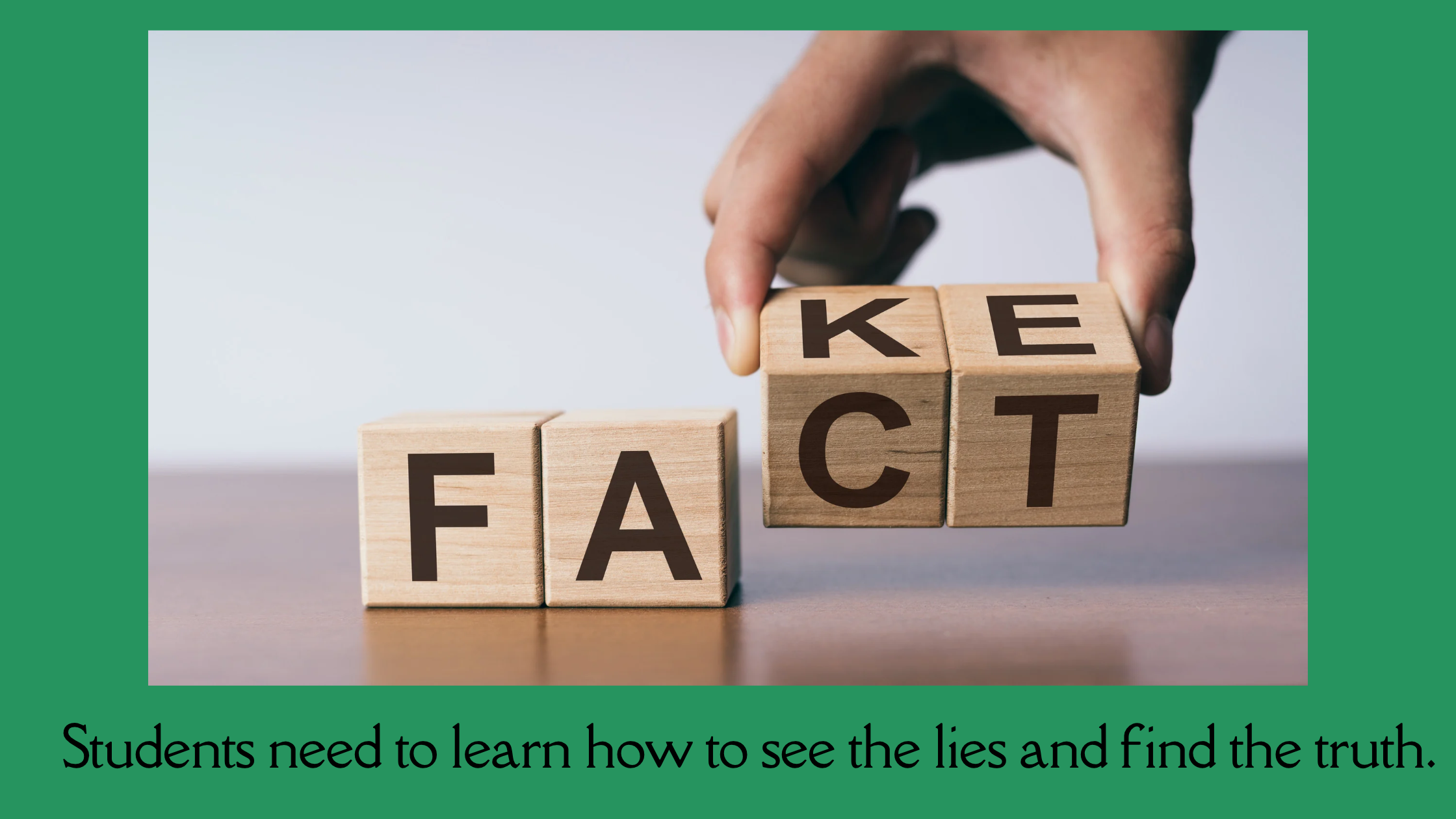
In the United States, tomorrow is Election Day. For the last several weeks, people in almost every state have been bombarded with news stories, social media posts, political advertisements, and opinions. Some of the information is accurate. Some is misleading. And some is completely false.
How can you know the difference? More importantly, how do your students know?
This has always been an important part of what school librarians teach, but artificial intelligence and social media algorithms have made the challenge even greater. AI can generate convincing images, videos, and articles that look authentic. Algorithms determine much of what we see online, often reinforcing our existing interests and beliefs rather than exposing us to different perspectives.
Recently, the American Association of School Librarians (AASL) commended The News Literacy Project for its partnership with the Connecticut Association of School Librarians (CASL). Through this collaboration, school librarians and educators have received free professional learning focused on news literacy, media literacy, civic reasoning, and effective instructional practices. AASL President April Dawkins recognized the partnership for strengthening students’ ability to think critically, ask questions, and become informed participants in their communities.
The need for this instruction is clear. According to a national survey reported by The News Literacy Project, 80% of teens say they encounter conspiracy theories on social media, while 94% believe schools should teach news literacy. Our students recognize they need help navigating today’s information environment.
As school librarians, we have the knowledge and skills to provide that help. But we need to go beyond teaching students how to find information. We must help them determine whether that information deserves their trust.
Where can you begin?
- Question the source. Teach students to ask who created the information, why it was created, and what evidence supports it. Is the source credible? Can the information be verified elsewhere? Remind students that a professional-looking website or convincing video doesn’t guarantee accuracy.
- Look beyond the headline. Headlines are designed to attract attention, and sometimes they exaggerate or misrepresent the actual story. Encourage students to read beyond the headline, check the publication date, and distinguish between news reporting, opinion, and advertising.
- Understand algorithms. Help students recognize that their social media feeds aren’t neutral collections of information. What they see is influenced by what they’ve previously watched, liked, and shared. Discuss how this can limit exposure to different perspectives and reinforce existing beliefs.
- Recognize AI-generated content. Show students examples of AI-created images or text. Discuss why these materials can be difficult to identify and why checking the original source matters more than relying on appearance alone.
- Make news literacy part of everyday learning. Collaborate with teachers to incorporate source evaluation into research assignments, current events discussions, and classroom projects. These skills shouldn’t be limited to one lesson or one subject.
We also need to model these behaviors ourselves. When you encounter a surprising headline or an emotionally charged story, do you stop to verify it before sharing? Students learn from what we do as well as what we teach.
The goal isn’t to tell students what to believe. It’s to give them the ability to investigate information, evaluate evidence, and reach informed conclusions independently. This is a lifelong skill with a lasting impact. Tomorrow’s election will come and go, but the need for news literacy won’t. Our students will continue encountering information that challenges their ability to distinguish fact from fiction. What are you doing to prepare them?

