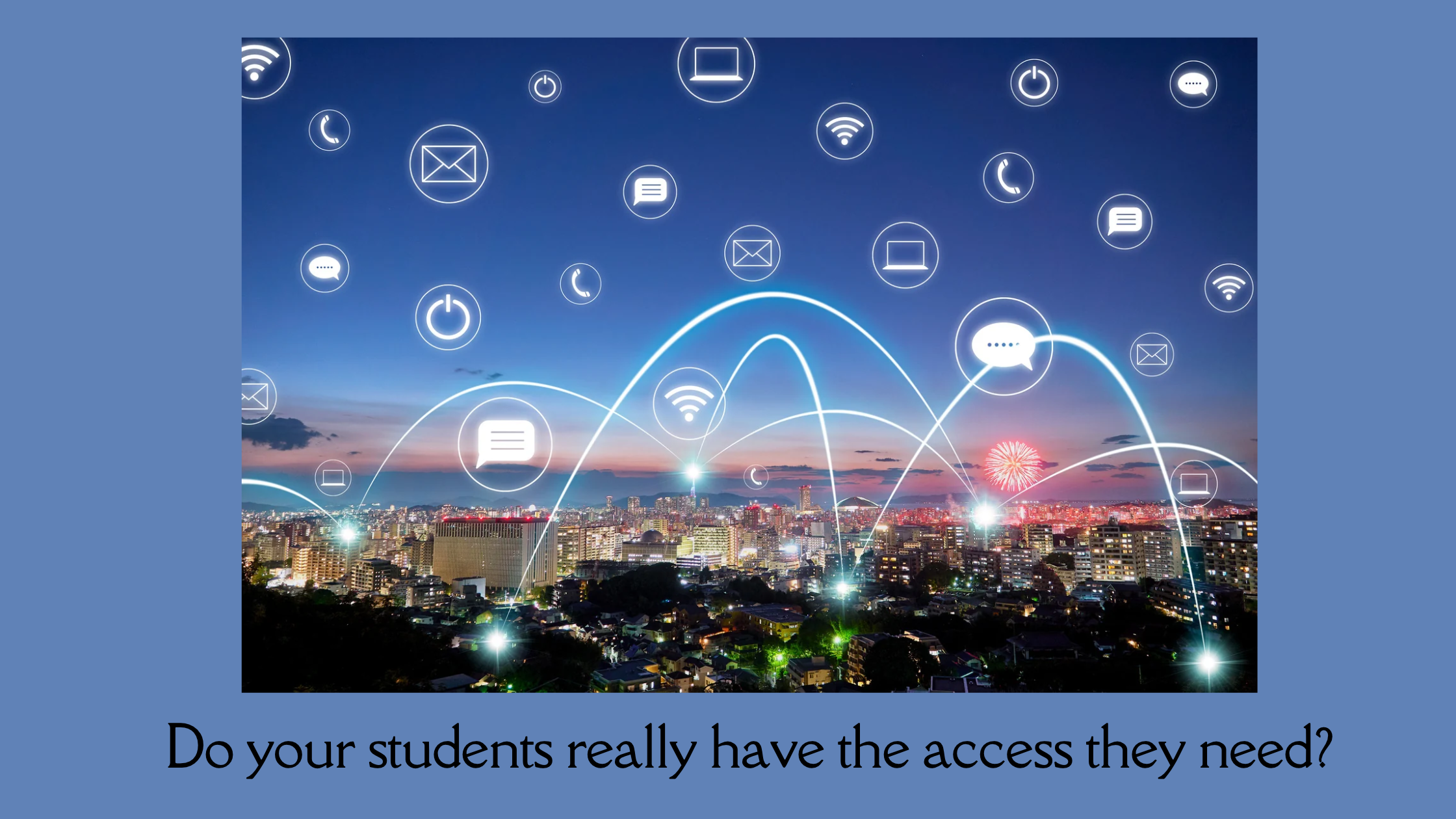
Connectivity Is An Equity Issue

Any school librarian who worked through the COVID-19 pandemic in 2020 knows that access to technology and reliable internet connectivity cannot be taken for granted. When learning moved online, the disparities became impossible to ignore. Having digital resources available didn’t mean every student could use them.

Imagine assigning students a research project that requires them to use online databases, watch instructional videos, or collaborate on a shared document. Now imagine that some of those students can’t access the internet. How can we expect students to succeed when they don’t have equal access to the tools they need?

For nearly 30 years, the federal E-Rate program has helped schools and libraries afford broadband internet access. But that support is now being challenged. On November 13, the American Library Association (ALA) reported that hundreds of library supporters have spoken out in defense of E-Rate as the Federal Communications Commission (FCC) is considering proposals that could eliminate or significantly limit the program.

According to ALA, more than 600 libraries, institutions, and individuals representing at least 44 states submitted comments supporting library E-Rate funding. Their message was clear: Affordable, reliable internet access is essential to the communities libraries serve.

For school librarians, this is more than a funding issue. It’s an equity issue.

We talk frequently about providing equitable access to information. We work to build diverse collections and ensure that students can find resources that meet their learning needs. But a database subscription has little value if students can’t access it. Digital learning opportunities become limited when schools lack adequate bandwidth. And when connectivity is inconsistent, teachers may be forced to abandon instructional activities they’ve carefully planned.

These challenges don’t affect every school equally. Schools with fewer financial resources may have less flexibility to compensate for lost funding. The result could be an even wider gap between students who have access to digital learning opportunities and those who don’t.

What can school librarians do?

  • Know your school’s connectivity needs. Talk with your technology department and administrators. Is the existing network meeting instructional demands? Are there recurring problems that interfere with teaching and learning? Understanding the situation helps you advocate from an informed position.
  • Document the impact. When connectivity problems disrupt a lesson or prevent students from accessing resources, keep track of what happened. Specific examples demonstrate why reliable internet access matters more effectively than general statements about technology.
  • Make the connection to learning. Help decision-makers understand how broadband supports the school’s educational goals. Explain how students use digital resources for research and why dependable access is necessary for instruction.
  • Stay informed and speak up. Follow developments affecting E-Rate and other technology funding programs. Share relevant information with administrators and your professional associations. ALA is encouraging library advocates to contact their congressional representatives about the proposed changes. Your knowledge of how connectivity affects students can contribute to those conversations.
  • Look for immediate solutions. While larger funding decisions are being made, work with colleagues to identify ways to reduce access barriers. Could resources be downloaded for offline use? Are alternative materials available when connections fail? These measures won’t replace reliable broadband, but they can help students continue learning.

As school librarians, we understand that access to information is fundamental to education. We also know that access means more than simply having resources available. Students must be able to use them. The debate over E-Rate is a reminder that the infrastructure supporting learning cannot be taken for granted. Equitable access to information requires equitable access to the technology that delivers it.

Leadership Doesn’t Happen In Isolation

School librarians often work independently. We collaborate with teachers, support students, and participate in school initiatives, but we may be the only person in the building (maybe even the district!) who fully understands the responsibilities and challenges of our position. That can make leadership a lonely undertaking.

Who do you turn to when you have a question, face a difficult decision, or need a fresh idea? If you’re the only school librarian in your building, the answer may not be someone down the hall. Because effective leadership doesn’t happen in isolation, we need colleagues who understand our work.

On October 28, the American Association of School Librarians (AASL) announced its commendation of School Librarians United, a podcast that provides school librarians with opportunities to learn, connect, and share professional experiences. In recognizing the podcast, AASL emphasized the importance of accessible professional learning and collaboration. Steve Tetreault, AASL Chapter Assembly Chair, noted that one of the profession’s greatest strengths is the ability to learn from and support one another.

This recognition highlights something every school librarian should remember: Professional connections aren’t simply nice to have. They’re essential to our effectiveness as educators and leaders. A professional learning network (PLN) gives us access to experiences beyond our own schools allowing us to discover solutions to challenges others have already faced, learn about emerging practices, and stay connected to developments in our profession.

Just as importantly, a strong network provides encouragement when the work becomes difficult. Sometimes knowing that others are facing similar challenges is enough to help us approach a problem with renewed confidence.

How can you build and strengthen your professional network?

  • Look beyond your building. Connect with school librarians in your district, region, or state. If there aren’t regular opportunities to meet, consider organizing an informal gathering or virtual conversation. Sharing experiences doesn’t require an elaborate program.
  • Participate in professional organizations. State and national library associations provide opportunities for professional development, advocacy, and collaboration. Attend meetings, join committees, and take advantage of the resources they offer. Your involvement strengthens both your knowledge and the profession.
  • Use online communities thoughtfully. Podcasts like School Librarians United and professional discussion groups make it possible to learn from colleagues regardless of location. Don’t limit yourself to listening or reading. You can also join over 18,000 professionals on the School Librarians Workshop Facebook group. Ask questions, share ideas, contribute your own experiences and get quick help from your peers.
  • Seek different perspectives. Connect with educators outside librarianship as well. Classroom teachers, technology specialists, administrators, and public librarians can introduce approaches you might not have considered. These relationships can lead to valuable collaborations.
  • Give as well as receive. A professional network is a community, not simply a source of answers. Share a successful lesson, recommend a useful resource, or offer encouragement to someone facing a challenge. Your experience may be exactly what another librarian needs.

Yes, building these connections takes time, and time is something none of us have in abundance. But professional networking doesn’t have to mean adding another major commitment to your schedule. One meaningful conversation or shared resource can make a difference.

Think about the people who have helped you become the librarian and leader you are today. What did you learn from them? How have those relationships influenced your work? Now consider whose professional journey you might help shape. Leadership grows through connection. Who is part of your network, and how are you helping one another become stronger leaders?

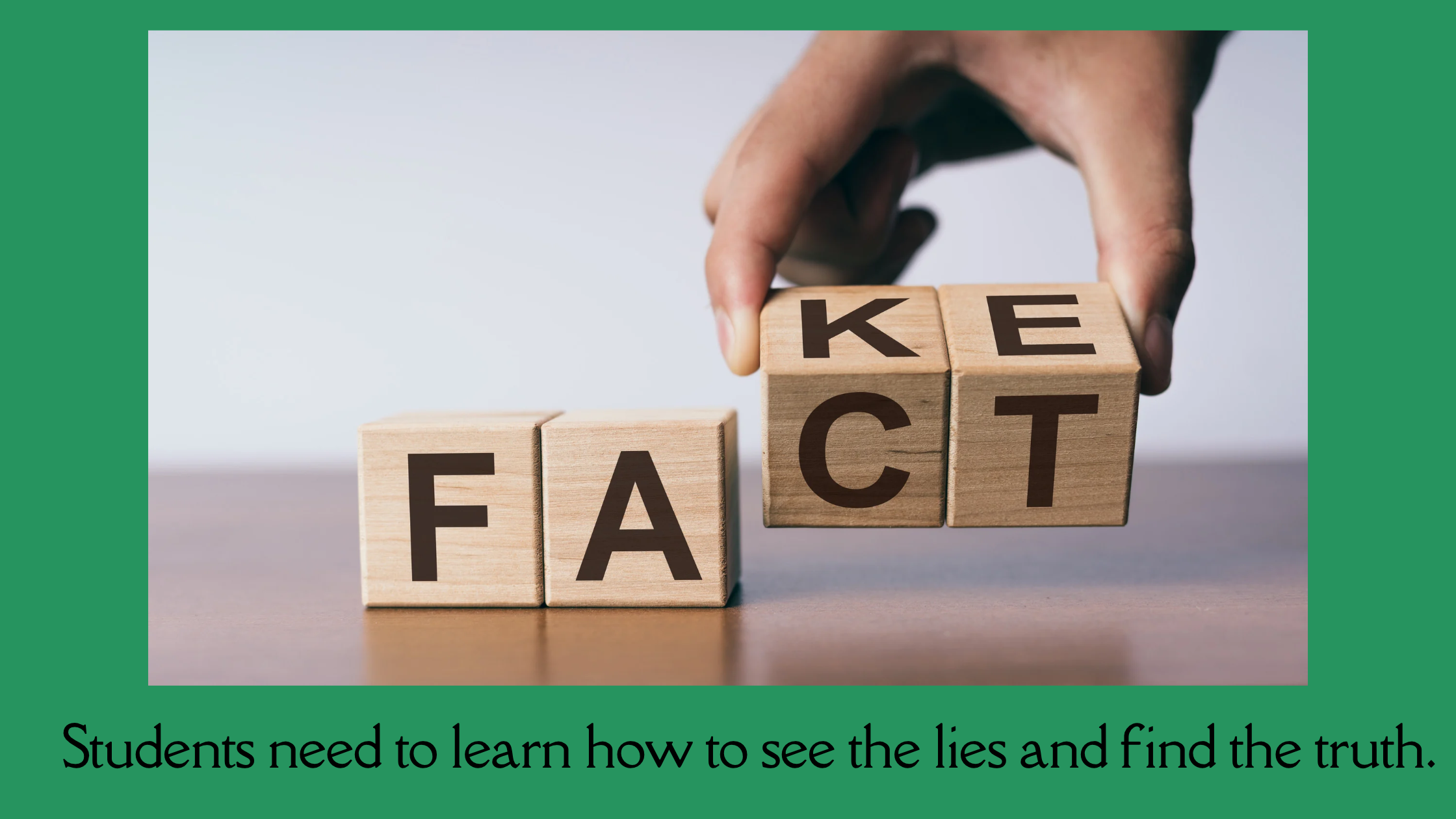
Can Your Students Tell Fact From Fiction

In the United States, tomorrow is Election Day. For the last several weeks, people in almost every state have been bombarded with news stories, social media posts, political advertisements, and opinions. Some of the information is accurate. Some is misleading. And some is completely false.

How can you know the difference? More importantly, how do your students know?

This has always been an important part of what school librarians teach, but artificial intelligence and social media algorithms have made the challenge even greater. AI can generate convincing images, videos, and articles that look authentic. Algorithms determine much of what we see online, often reinforcing our existing interests and beliefs rather than exposing us to different perspectives.

Recently, the American Association of School Librarians (AASL) commended The News Literacy Project for its partnership with the Connecticut Association of School Librarians (CASL). Through this collaboration, school librarians and educators have received free professional learning focused on news literacy, media literacy, civic reasoning, and effective instructional practices. AASL President April Dawkins recognized the partnership for strengthening students’ ability to think critically, ask questions, and become informed participants in their communities.

The need for this instruction is clear. According to a national survey reported by The News Literacy Project, 80% of teens say they encounter conspiracy theories on social media, while 94% believe schools should teach news literacy. Our students recognize they need help navigating today’s information environment.

As school librarians, we have the knowledge and skills to provide that help. But we need to go beyond teaching students how to find information. We must help them determine whether that information deserves their trust.

Where can you begin?

  • Question the source. Teach students to ask who created the information, why it was created, and what evidence supports it. Is the source credible? Can the information be verified elsewhere? Remind students that a professional-looking website or convincing video doesn’t guarantee accuracy.
  • Look beyond the headline. Headlines are designed to attract attention, and sometimes they exaggerate or misrepresent the actual story. Encourage students to read beyond the headline, check the publication date, and distinguish between news reporting, opinion, and advertising.
  • Understand algorithms. Help students recognize that their social media feeds aren’t neutral collections of information. What they see is influenced by what they’ve previously watched, liked, and shared. Discuss how this can limit exposure to different perspectives and reinforce existing beliefs.
  • Recognize AI-generated content. Show students examples of AI-created images or text. Discuss why these materials can be difficult to identify and why checking the original source matters more than relying on appearance alone.
  • Make news literacy part of everyday learning. Collaborate with teachers to incorporate source evaluation into research assignments, current events discussions, and classroom projects. These skills shouldn’t be limited to one lesson or one subject.

We also need to model these behaviors ourselves. When you encounter a surprising headline or an emotionally charged story, do you stop to verify it before sharing? Students learn from what we do as well as what we teach.

The goal isn’t to tell students what to believe. It’s to give them the ability to investigate information, evaluate evidence, and reach informed conclusions independently. This is a lifelong skill with a lasting impact. Tomorrow’s election will come and go, but the need for news literacy won’t. Our students will continue encountering information that challenges their ability to distinguish fact from fiction. What are you doing to prepare them?