Are You Making Reading Irresistible?

When was the last time you saw a student become so absorbed in a book that they didn’t want to put it down? Or watched a reluctant reader discover a story that made them eager to find another? These are moments school librarians treasure. But with everything happening in today’s school libraries, how much time are we devoting to creating them?

School libraries have become centers for technology instruction, research, media literacy, and creative learning. These programs are important and necessary. But sometimes, in our efforts to meet all these needs, we lose sight of one of our most fundamental responsibilities: helping students discover the joy of reading.

On November 13, the American Library Association (ALA) published an announcement titled “Activities and Ideas for School Librarians and Teachers,” introducing 50 Library Lessons and Ideas by award-winning school librarian Lucas Maxwell. The book offers creative, inexpensive activities designed to encourage reading for pleasure. From book clubs and student book awards to literary games and scavenger hunts, Maxwell shows that reading engagement doesn’t have to depend on elaborate programs or expensive resources.

The underlying message is worth remembering. Reading should be something students want to do, not simply another assignment they have to complete. We know that reading supports academic success, strengthens vocabulary, and helps students develop empathy. But students aren’t necessarily thinking about those benefits when they choose a book. They’re looking for something that captures their interest, makes them laugh, or takes them somewhere they’ve never been.

Our challenge is to help them find it. So how can you make reading irresistible in your library?

  • Make discovery part of the experience. Instead of relying solely on traditional book displays, create opportunities for students to encounter books they might otherwise overlook. Try a mystery book wrapped in paper with only a few clues about its contents, or invite students to recommend titles through brief, anonymous reviews.
  • Give students ownership. Let students help select books for displays, organize informal book discussions, or create their own reading challenges. Consider establishing a student book award where readers nominate titles and vote for their favorites. When students have a voice, they’re more likely to participate.
  • Connect reading to their interests. Graphic novels, manga, sports stories, and nonfiction about favorite hobbies can all provide entry points into reading. Don’t assume every student needs to begin with a traditional novel. Help them discover books that reflect what already excites them.
  • Make room for fun. Incorporate literary games, book-related trivia, or creative activities into library programming. Maxwell’s suggestions remind us that reading engagement can be playful. Sometimes an unexpected activity is all it takes to spark curiosity about a book.
  • Protect time for reading. With so many competing demands, students may have few opportunities to read simply for enjoyment. Work with teachers to create moments when students can choose their own books and read without an accompanying assignment or assessment.

These activities don’t need to become another overwhelming addition to your schedule. Start with something small and pay attention to how students respond. Their enthusiasm will help you determine what to try next.

A student who loves reading gains a source of pleasure, discovery, and lifelong learning. When we help students fall in love with reading, we open doors they may never have known existed—and give them the desire to keep opening new ones.

ON LIBRARIES – Reading Is Required

Between Makerspaces, STEAM, and integrating technology into the curriculum and our own lessons, we can lose sight of a common belief of librarians. It is necessary for us to keep a focus on recreational reading.

Frequently, pressure from the administration and the need to be considered relevant, rather than stodgy, that causes discussions on the importance of recreational reading to be pushed to a back burner. It’s not quite as challenging for elementary school librarians, but for middle and high school librarians championing reading may make you sound tied to the past.

Nothing can be farther from the truth, and we need to be leaders in spreading this understanding.

The challenge is to bring the message in a way that will get heard.  Two weeks ago I shared the Common Beliefs from our soon-to-be published national standards. The fourth one, as I noted, is, “Reading is the core of personal and academic competency.”

A few years ago, I was the AASL representative on ALA’s Committee on Literacy. One of the members shared this visual:

The House of Literacy has many rooms. There is digital literacy, health literacy, legal literacy, computer literacy, information literacy, and an ever-lengthening list of additional literacies.  But the entrance is through text literacy.

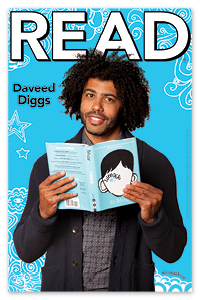
Poster available at the ALA store online

AASL had as a slogan, “Kids Who Read Succeed.”  We know this is true.  The benefits students get from reading impacts their entire life.   One reason the many research studies show the correlation between having a certificated school librarian and student achievement is because librarians guide students into becoming lifelong readers.

Although elementary librarians spend a greater portion of the time helping students find the “right book,” than do middle and high school librarians, all of us are hampered when there is a requirement for kids to read at their level.  It is acceptable to use leveled books in the classroom to discover if students are reading at their instructional level, but the recreational level is different and perhaps more important.


Poster available at the ALA store online

If a book interests a kid, the level should never be a consideration.   When students read below their reading level they develop fluency. When they choose to read a book that’s “too hard” as many have done with Harry Potter, they rise to the challenge, learn persistence, and are proud of their accomplishment.


When my now college professor son, was in fourth grade and not wanting to read, I gave him a sports fiction story that was one year below his instructional level.  He could read it rapidly and did.  He loved it and wanted more.  It was a while before I gave him a book that was more difficult.  To this day, he is a reader.

But why do readers succeed?  In my opinion, it’s because of the peripheral information barely noticed while reading which becomes absorbed into the readers’ knowledge base. For as long as the book lasts, you are walking in someone else’s shoes, living their life and during that time a unique type of learning occurs.

I loved historical fiction while I was growing up.  By the time I studied British history, I had an understanding of who Queen Elizabeth I was and the forces that drove her which went far beyond what was in my textbook. I discovered science fiction and began to speculate about life beyond Earth.  The prejudice experienced by some races from other planets helped me look at my own prejudices and laid the foundations for the tolerant adult I hope I have become. Whether I was discovering the work involved in running a farm or seeing slavery through the eyes of a main character, books opened me to the world.  By temporarily living these other lives, I developed empathy for others.

This isn’t limited to fiction. Those who prefer non-fiction expand their horizons as well. When a student reads a biography of a sports hero, he or she finds out about the challenges the player encountered and conquered on the way to achieving success.  Reading about how others dealt with setbacks and persevered becomes a life lesson.

An October 3, 2017 article written by Susan K. S. Grigsby in Improving Literacy and Communication Magazine entitled “Literacy Starts in the Library”  supports my viewpoint. The opening states, “Literacy is the foundation of everything we do for our learner,” and goes on to say, “When students are starting to read, they tap into one of the very things that makes us human: stories.”  This human connection only continues with students who become lifelong readers.

The article is worth your time and should be shared with your administrator as part of a discussion on how and why to increase students’ recreational reading at all levels. Share students’ comments about books they have loved.  Short videos capture the emotion and send a powerful message.

What are you doing to foster lifelong readers? What are your success stories with kids you have connected to the perfect book?