Working Together

To be truly successful as school librarians, we need to collaborate with our colleagues. Yet, because we have full schedules and so do teachers, many of us have found this an insurmountable challenge. It’s easy to fall into existing patterns and not go beyond what we have always done.

Collaboration needs us to extend beyond regular projects or limited to what has been previously done. Our students need it and our programs are better because of it. And doing so is part of our national standards. Collaborate is the fourth of the Shared Foundations in AASL’s National School Library Standards for Learners, School Libraries and Librarians. How School Librarians are to implement it is best shown in the framework on pages 84-85 of the Standards. Here you find:

Key Commitment: Work effectively with others to broaden perspectives and work toward common goals.”

Under

School Library Domains and Alignments: A. Think

The school library facilitates opportunities to integrate collaborative and shared learning by

  1. Partnering with other educators to scaffold learning and organize learner groups to broaden and deepen understanding.”

As a leader, grounded in your Vision and Mission, it’s part of your job to look for ways to connect with as many teachers as possible for the benefit of your students and the teachers. Finding the time won’t be easy, but you need to make the outreach a priority. Ken Blanchard in Playing Well with Others presents reasons why it is worth your extra effort.

When getting started at building relationships forming the basis for collaboration, I recommend reaching out to those with whom you already share a bond. But, as Blanchard points out, you can’t stop there. Playing well with others means finding places to form a connection. Those with different viewpoints are the very ones who can help us grow. In the process, you can form the start of a relationship leading to collaboration.

Blanchard discusses four benefits of working with others:

Learning–When we work with others, we learn: about them, ourselves, new ways to create. Like Blanchard, I have written a number of books with a co-author. We had some knowledge in common, but each of us had areas where we knew more than the other. Our combined strengths led to a better book and to me learning more than I expected during a venture where I was sharing what I knew.

Skill BuildingOne of the most vital skills in creating relationships is listening. You have to truly listen – and not just wait for your chance to talk—when you are working collaboratively. Related to Learning, there will always be skills where your partner is stronger and their knowledge will help you grow. Acknowledging what you each bring to the partnership strengthens it and leads to future collaboration.

Productivity—An obvious benefit. When work is divided, the load is lessened. While it seems at first that building relationships and creating collaboration increases in your work, ultimately you will be more productive and successful when you collaborate.

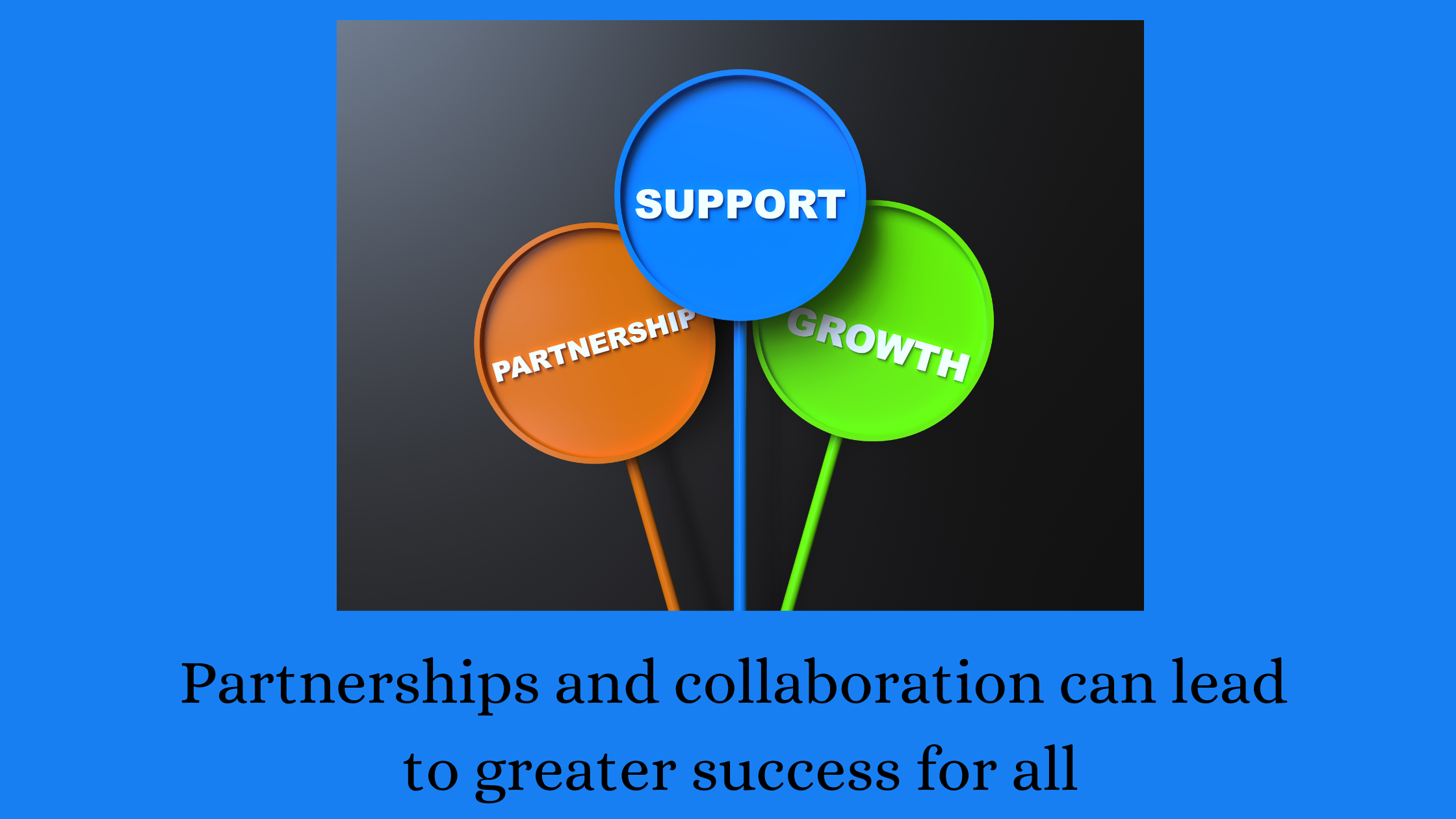
Networking Creating a network of teachers who understand and support the library is vital for your ongoing success. In addition, collaboration can extend to working with other librarians in your district (if you have them), public librarian, or a librarian at a local college. The larger your PLN, the more you grow, and the more you have to offer your teachers and students.

It’s simpler to work by yourself. You know what needs to be done. You have your own style and approach for doing it. Working with others seems be a way to slow things down. But as the saying goes, “To go fast, go alone. To go far go with others.” Thinking about this, realistically, how many teachers can you target for a collaborative project before the holiday break? Even one is a start. How many can you target from January to the end of the school year? What you learn from the first will help you reach the new ones with whom you plan to work.

The Power of Partnership

Getting teachers to collaborate with you can be a challenge. At the elementary level, you are their prep period, and they are perfectly happy to let you work with their students however you choose. At the high school level, you may never see them. And if they do come into the library, they know what they want and look to you for assistance, not collaboration. They don’t always see how your vision supports their goals.

If there is to be a change, chances are good that you must be the one to initiate it. It will take time and multiple steps to achieve your goal, but it will be worth it to everyone—especially the students. As you develop these partnerships, keep in mind your Mission and Vision. Look toward the relationships you have already built and focus on those who are most likely to be open to an overture from you. New relationships take longer but are just as worthwhile.

How you approach your teachers to begin the process is critical to your eventual success. Jim Knight offers Seven Principles for True Partnership. Although written to address to the business world, they are powerful reminders for us as well.

Equality – Although you are the one doing the initial heavy lifting, both parties must feel heard. No matter the teacher or what you see you bring to the project, it’s important that we “recognize the value and dignity of others.” This means listening without interrupting and correcting, which will likely cause them to withdraw. Be sure you show you recognize and value their interest in their students’ learning and the part they play in the success of your collaboration.

Choice – Rather than trying to find ways to impose your plan, look for ways to incorporate their ideas into the process as well as the final design. A partnership means there are contributions from both sides. Identify what you see as good ideas in what they proposed. Rather than thinking of it as selling your idea, approach it as how can you create something good together. It will be stronger for having input from both sides.

Voice – Give them room to react to your ideas. As with creating Equality, listen attentively. Make sure they know you hear and value their ideas. Sometimes a teacher’s idea of resources, essential questions, and other components seem off base. This may be a matter of newness, not ignorance. Are they concerned the scope is too large? Do they think it will be more work than they can handle? Pay attention to what they are saying and any other silent communication that suggests some resistance. If you spot that, ask about it. Don’t override any issues they have.

Dialogue – Knight talks about recognizing the other’s strengths. This is one of the best ways to build a partnership and collaboration. Each of you has something unique to bring to the project. Dialogue is a back-and-forth process where both sides want to be heard and understood. How can you leverage this?

Reflection – Look inwardly to see how you behave and react as the partnership develops. We tend to jump in and fix things rather than allow the other person to find their way and learn. Telling someone what they should do doesn’t work unless they have asked for advice. Make certain that each step in the process strengthens the partnership you’re working to build because you want this to last beyond the one project.

Praxis – As Knight uses it, this is about the learning that occurs while a project is happening. Plans rarely go exactly as designed. Both of you need to be prepared to make changes and adjustments. Mistakes and successes will happen. Learn from both. And do this in partnership so that you each feel supported.

Reciprocity – Each partnership is an opportunity to learn and grow. Go into this collaboration knowing that you are likely to learn as much (or more) from them as they will from you. That is one of the gifts of partnership – it speeds our learning because we do it together. What have you learned from each other? Be sure to share how you benefitted from the other person. Hopefully, you will hear what they learned from you.

Librarians and teachers have days that are filled with tasks and deadlines. Both have goals that are difficult to achieve alone. Building and nurturing collaborations take time, but the benefits to students and to our own lives are worth it. With whom will you partner?

The Core of Librarianship – Ethics, Courage, and Planning

In the United States, you can’t escape news of the nation-wide movement to ban library books. Almost daily, social media, television, and newspapers have stories about books being removed from library shelves and legislation that could mean jail time for librarians. You want the library to be a safe place for all, and now it doesn’t even feel safe for you. All this is happening and you’ve barely had time to get your library program going in the new school year.

How do you manage within this turmoil?  What choices should you be making? 

My recommendation is to anchor yourself and use the resources available from the American Library Association (ALA) as well as the American Association of School Librarians (AASL). Start by reviewing ALA’s Code of Ethics. Number 7 and the newly added number 9 are of particular importance at this time.

Number 7 reads: “We distinguish between our personal convictions and professional duties and do not allow our personal beliefs to interfere with fair representation of the aims of our institutions or the provision of access to their information resources.”

Number 9 states: “We affirm the inherent dignity and rights of every person. We work to recognize and dismantle systemic and individual biases; to confront inequity and oppression; to enhance diversity and inclusion; and to advance racial and social justice in our libraries, communities, profession, and associations through awareness, advocacy, education, collaboration, services, and allocation of resources and spaces.”

Those are powerful and often difficult principles to maintain. Number 7 is the basis for the idea that a library should have something in it to offend everyone, including the librarian who purchased it. Number 9 flies in the face of the restrictions and bannings centered on LGBTQ+ themes and the history of racial injustice in the United States.

The Library Bill of Rights adds another dimension by listing eight statements that should be part of library policies. It defines what libraries must do – and not do – to provide equitable services to all. They further delineate what is in the Code of Ethics.

Additionally, school librarians can also look to our Common Beliefs as given in the AASL Standards Framework for Learners. The fifth Common Belief is “Intellectual Freedom is every learner’s right.” The explanatory sentence states: “Learners have the freedom to speak and hear what others have to say rather than allowing others to control their access to ideas and information….” These statements represent the core purpose of librarianship. They are what guide what we purchase, how we arrange our facility and resources, and the displays we create. It is who we are.

This is where courage comes into the picture. You don’t have to do any of it. If you choose not to buy a book because you don’t approve of the author’s viewpoint, you won’t be drummed out of the profession. These documents carry no legal weight. No one even needs to know how you made your choices. It is up to you to decide how deeply you are committed to the ethics of our profession. You are the one who must make choices based on what could be the personal cost of that decision.

 Everyone has different things at stake. I, and other librarians, won’t fault you even as we hope you are willing to hold these ethics. Sometimes you figure out ways to bend them in order to do the best you can. Holding them can be impossible in some situations, but the workarounds are better than nothing.

No matter where you live, whether it’s a liberal or conservative community, challenges are now almost inevitable. You need to be prepared for them, or you will not be able to respond in a way to get the best possible results for your students, teachers, and yourself. As always, planning is required.

Build your plan around your resources and your allies What resources do you have on hand? You should have a board approved selection and reconsideration policy. If not board approved, the one you have been using is a good start. Even better, work with the ALA Selection and Reconsideration Policy Toolkit for Public, School, & Academic Libraries.

Be familiar with the ALA Challenge Support page. It gives you all the go-to information you need as soon as soon as you hear about a challenge. Also know what help your state association provides.

Look for allies among your teachers, administration, and community. Well before a challenge arrives, let people know how you make your book selections. Share the Code of Ethics and Library Bill of Rights. Discuss the library as being a safe place for all. If – and probably when—you are faced with a challenge, these are the ones who will show up for you and come to Board meetings as needed.

It has never been easy to uphold the ethics of our profession, but it has become much harder in the past year. The issue is not going away. Understand our ethics, be as courageous as you can, reach out for help and support when you need it, and plan so you are prepared.

Build Your Confidence

Leaders are risk-takers. You can’t make changes or achieve your Vision unless you take risks. But risks imply the possibility of failure. (Did you get a sinking feeling in your stomach?) In order to take on the challenge of stepping out of our comfort zones and taking risks, we need to build our confidence. As with learning anything new, it starts with baby step. Just like exercising, the hardest step is lacing up your sneakers—or in this case, determining to build your confidence and take risks.

In Build Confidence in Yourself and Your Leadership, Gregg Vanourek lists the various benefits of confidence (including improving health and boosting attractiveness and creativity!) and goes on to list these steps for developing self-confidence:

Focus more on areas of our capability and achievement, and less on areas of weakness and struggle—What are you good at? You may be crafty and/or have artistic ability. Use it to decorate a wall outside the library to call attention to it. Do you write well? Try a newsletter. Are you great at tech? Offer an after-school teach-in on a new resource for students or staff.

Set and meet goals that lead to personal and professional accomplishments– If you have big goals (and most of us do), look for the small ones that will get you there. You don’t have to conquer the world on your first forays. Look at your Mission and Vision. What small goal can showcase your Mission and/or get you closer to your Vision?

Switch off negative self-talk, self-criticism, and limiting beliefs—More than any actual circumstance, this is what stops us most of the time. We judge ourselves much more harshly than we would anyone else. Noticing this negative inner dialogue can help us take risks and build confidence.

Swap in positive thoughts for negative ones—Once you’ve taken steps to switch off the negative self-talk, go one step further by talking to yourself as though you were speaking to a friend. Look to previous successes, positive feedback, and glowing responses.

Face our fears and, in the process, build a sense of agency and capability–What is the worst that can go wrong? Whatever you think that might be, you will recover, learn, and be wiser the next time. You can use the experience to bolster your creativity.

Stop the unhealthy practice of comparing ourselves to othersNever compare your insides to someone else’s outsides. Typically, we focus on their strengths and don’t notice that, like you, they have weaknesses, too. (And you never know when they may see your strengths and compare themselves to you.)

Continue learning, growing, developing, and building new capacities—Work on areas of weaknesses, but also build your strengths. Our world and our profession are constantly evolving. Grow with it.

Engage in consistent self-care practicesYou can’t feel confident if you feel drained and exhausted. Make yourself a priority. You have heard this before. Knowing that increased confidence is a byproduct may make you more willing to take care of yourself.

Speak up for ourselves (self-advocacy)—This can be challenging, but it’s a necessary part of leadership. Remember, it’s not about you. It’s for your program. Look for ways to showcase and promote it to as wide an audience as you can.

Stop thinking in terms of fixed traits (e.g., “I’ve always been bad at math” or “I’m not a confident person”)—Have you ever thought “I am not a leader”? Let go of this belief. You are if you are willing to be. And your students, teachers, and program need you to be a leader.

Think about a time when we felt high confidence and ask how we’d act if we were feeling that way now—You have been successful in the past. How did you feel? You are still that person. Tap into that feeling, remember that energy, and use it going forward.

We know that failure is part of the learning process. We teach that to our students. Yet, when it comes to our own behaviors, we stop short. All we see is the possibility (probability) of making mistakes. Confidence is a combination of mindset and efficacy–the knowledge that you have the ability and the resources needed to complete a task or goal. Have confidence in your knowledge and resources and go for your goals!

Building Trust

Earning and keeping the trust of others – students, teachers and administrators – is key to your success. More than trusting your expertise, they need to know you will be able to deliver on your promises and be there for them when needed. Trust takes time to build, but it can be quickly lost.

Building trust is rooted in integrity. Keeping your word, honoring confidentiality, and other elements of honesty are vital. But trust is an emotional state, which means other more subtle factor contribute to its growth. In The Leadership Trust Crisis, David Livermore discusses the fact that trust in leaders (political, corporate and others) is at an all-time low. This means that relationships are shaky. He identifies five factors that affect the development of trust. Applying these can help you deepen the connections with the people in your building.

  1. Likeability – You get to know people you like. In the process, trust is developed. But what makes someone likeable? It often begins with a smile that goes beyond the superficial. It continues when you show you are interested in who the other person is. Sharing who you are extends the connection. Give people a chance to know and like being with you. It takes time, but it pays off.
  2. Competency – Livermore poses three questions on this: Do you have the skills to lead us? Can you communicate effectively? Do you know what you are doing?  As a librarian, this is where you excel. When we are aware of trends, new learning opportunities and the most recent tech resource or even teaching approaches (think inquiry-based learning), teachers see us as leaders and feel confident in coming to us with questions or concerns.
  3. Intensions – Are you in it for your success or do you care about mine?  What is your overarching purpose in putting this project together? Your everyday behavior sends messages to other about your character and integrity. We (usually unconsciously) make judgements of others based on their actions. Teachers and administrators are doing the same about you. Make certain you are treating others right and demonstrate that you care about the collective success. For example, when a project is complete put the teacher and their students’ outcomes front and center. Give credit to them. The library’s role and yours will be obvious. Their trust in your intentions builds.
  4. Reliability – Do you follow through on what you promise?  Can others see your commitment to living your Mission for the library? This relates to your integrity but is also about delivering in a “timely and consistent manner.” What did you tell your principal were your goals for the year. How did you hit them? In building trust – and the relationships that go with it, they need to know you can be counted on to do what you said and get it done on time.
  5. Reputation – This is the sum of all the others. How are you seen and thought of?  The stronger your reputation, the more others will trust you. The more they trust you, the more willing they are to work with you – and hopefully seek you out. And each time they do you grow as a leader.

I once had a teacher tell me she wouldn’t schedule a class with my co-librarian because she felt my co-librarian didn’t like the kids. That doesn’t work. Students learn more when teachers and librarians work together. The collaboration is formed on relationships, and relationships are built on trust. Look for ways to promote other’s trust in you and you’ll find your relationships and program getting stronger.

Listening is Leading

When we ask someone “Are you listening to me”, we’re typically expressing our exasperation. We don’t feel as though what we’re saying is being heard, and that’s frustrating. But what about the reverse? Are we really listening to what others are saying? And are we listening to ourselves?

Active listening, like emotional intelligence, is an important skill to master. So many messages come at us, verbal and unspoken, it can be hard to focus during a conversation. However, the skill is too valuable for our leadership and for our lives in general not to work at getting better at it.

Learning to listen opens the door to expanding relationships, which is key to our ongoing success. In Nine Practices All Leaders Share, Dr. Alan Patterson shows what can be built by improving your ability to listen. Some of his advice is more of a reminder, but reinforcing the basics helps you reach the next level in your leadership. Here are Patterson’s recommended practices, annotated:

  1. Listen with Intent—Focus on what is being said, not the answer you plan on giving. It’s about respect. If you can, use restating to keep you on track and let the other party know that you think what they said matters. It’s an early step in relationship building.
  2. Ask Probing Questions—After listening, go deeper to increase connection and understanding. “Could you explain?” and “Why?’ take you past restating and opens the discussion. A good leader needs to know the concerns and issues of those they work with, whether it’s teachers or students.
  3. Study People—Listening includes reading body language and other non-verbal cues. Be careful about the implicit biases and judgements we all make. You need to see and listen to what the person inside is telling you. It’s not easy, but it is a skill worth developing. Patterson adds that as you get to know a person, you learn what is important to them.
  4. Share observations about the broader horizon with your team, colleagues, and senior leaders—Share your Vision and how you think it can become a reality with teachers and administrators. Contact teacher friends who you think would be open to trying something new and collaborate. School vacation is also the best time of year to have a meeting with your principal and outline your path for going forward. Listen for their responses so that you can see how your work will support them as well.
  5. Look for opportunities to engage in a dialogue—Have conversations that are not only about work problems or situations. Patterson recommends asking “how” and “why” questions to better understand what people need and want. Relationships, connection, and advocacy grow when your colleagues see you are aware of and responsive to their needs. Knowing who your colleagues really are–including as people outside of school–develops the relationships critical to your success. And when they answer–listen with intent and ask probing question.
  6. Practice translating a project or concept into the language of the audience—We do this all the time when we are teaching students. Use the same thinking process when making a presentation to a group, whether it’s parents or a grade/subject meeting. This is not the time for “library language.” What do they already know? What do they need to know? Why? What do you want them to do as a result? Using language that everyone understands makes people feel included and allows them to listen to you better.
  7. Translate vision into individualized responsibilities for your team members—Whether it’s students or teachers with whom you are collaborating (or cooperating) with on a project, be sure all concerned know who is doing what. This will show that you’re listening to what they need and that you’re available if they need help. And be sure to acknowledge their work to the principal.
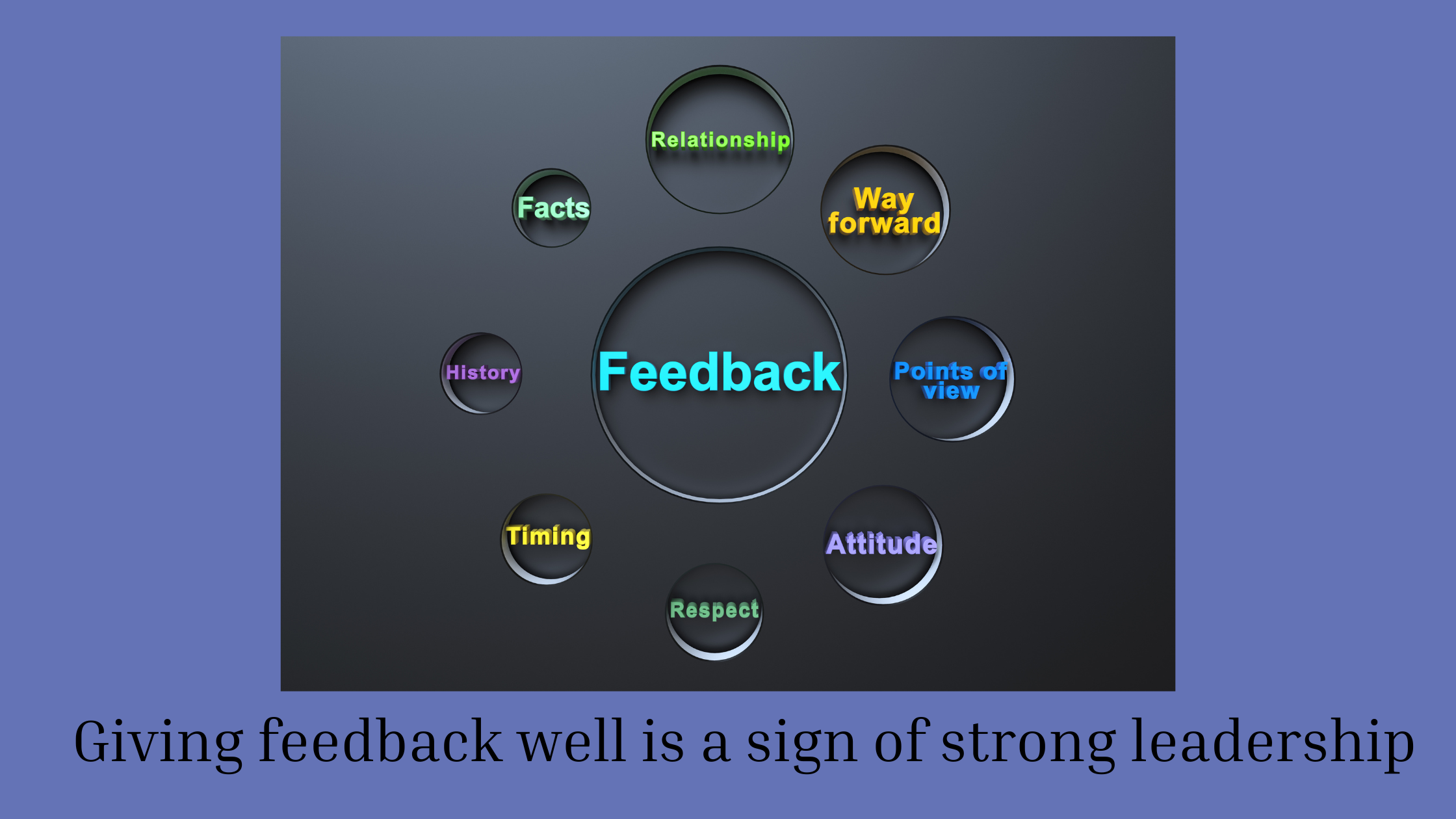
  8. Trust that your success is based on your ability to create the conditions for other to succeed—You need feedback. That is an important part of listening. Ask in such a way as to get an accurate response. “What did you think of the project?” is not likely to get any helpful feedback. “What could I have done better?” or “Was anything missing?” will get the discussion started in a meaningful way. And listen to the responses you are getting. Receiving feedback builds trust.
  9. Focus on impact and meaning—Reflect on your week. Where did you make a difference? Where do you want to go next? Go an extra step. Ask others where they saw themselves making a difference–and listen to their answer.

Listening is at the heart these leadership skills. It’s also at the center of building the relationships you need to be successful as a leader in a school. Take the time to listen to others and yourself and you will find yourself making a greater impact.

Communication Channels

Every conversation is an opportunity, yet many are wasted or don’t use the best channel for a particular communication. With our limited time, we can’t afford not to use these interactions to get the maximum possible benefit.

In looking at these different channels, keep in mind that the underlying purpose of any conversation is building relationships. When we get to know people better and allow them get to know us, ties are forged, and future advocacy developed. As a leader, particularly in these times, you need all the supporters you can get.

Joel Garfinkle focuses on 5 of The Most Effective Communication Channels at Work. Each offers a different opportunity. The challenge is to know which one to choose for a specific purpose and what you can accomplish.

In Person – This gives you the best opportunity to learn more about the other person. You have a host of non-verbal cues, including body language and even appearance, to help you understand and communicate. In Person is the perfect channel to meet with your principal or other administrator (as long as your principal knows the meeting is happening).

Summer is the ideal time for this meeting when your principal is less harried, and there is less likelihood of interruption. This meeting is especially important if you have a new principal. Your past achievements don’t count.

This is the time to learn their vision, what they want to achieve, and a perception of libraries and librarians. Share your mission and vision and spin it to show how you and the library can support their goals. Use your knowledge of body language to recognize when it’s time to bring the meeting to an end. It’s best if you can do this before the principal does. Change channels and follow up with an email — or a handwritten note—thanking them for their time and highlighting one important take-away.

Video Communication – We have all become Zoomers. Within the school setting this isn’t used as much as now that we’re back to in person classes, but it offers some interesting possibilities.

If you are fortunate enough to have several librarians in your district, a Zoom meeting can help in unifying how you deal with similar challenges. While not the same as in person, it does help you to get to know your colleagues better and build those relationships. You lose some ability to read body language and eye contact isn’t as clear, but it’s a good start. Consider this channel for reaching out to the public librarian.

Phone – These are best for shorter, more direct conversations. Garfinkle recommends you check at the start to be sure this is a good time to talk. The phone is best used for setting up an in-person meeting or reporting in on something. Be specific, clear, and quick. Stay focused on your purpose. You might want to have notes to keep you on track. Follow up with a confirming email. Without any visuals to guide you, listen for verbal cues to hear if the person sounds rushed or background noise that hints at distractions.

Voice Mail – Sometimes this is the only option. You called and the person didn’t pick up. Be prepared to leave a succinct and clear message. Identify yourself and, if necessary, give your preferred call back number. Repeat that at the end of the message – slowly. Keep your message focused on the reason for the cal. Garfinkle advises if you are not prepared to capsulize the reason for your call, hang up. Get your thoughts together then try again. Smiling as you talk will help you sound upbeat and increase the chances of being called back. Your tone is your most important signal in this method.

Email – Although Garfinkle likes this channel the least, it continues to have its place as long as you are aware of potential pitfalls. The first rule is to keep it brief. People are busy and often don’t read all the way to the bottom. They are also often checking on their phones and so are reading on a small screen.

The next rule is to proofread, particularly if it’s an important communication. Spelling errors have a negative impact on you and your message. Also check to be sure your language is clear and is unlikely to be misconstrued. Obviously, this is not the place for sarcasm and emojis aren’t appropriate in the work environment. All you have are your words in this form of communication – no tone, no inflection. Clarity is key.

Before hitting “send,” make sure you haven’t included people who shouldn’t get this message in the “To” section. A “reply all” can get you in trouble. We work so fast, it’s easy to make these mistakes. If it matters, take time to get it right.

Knowing the best channel for initiating conversations is an important leadership skill. Don’t waste or miss your opportunities to reach out and build those vital relationships.

How Strong is Your SPINE?

The recent rise in book banning and attacks on school librarians have made our already stressful lives even more so. Dealing with challenges – or anticipating them when preparing a book order— has been something school librarians have typically faced alone. But the nation-wide organized campaign has taken the issue to a much more intense level.

ALA, AASL, and many of our state library associations have joined with other groups to respond and defend intellectual freedom and freedom of access to information. The resources on ALA’s Fight Censorship page keep growing. But at some point, it’s one school librarian making a choice that will impact their lives and the lives of their students. Until recently, that private decision didn’t stress or threaten job security for most school librarians. Today, we are all in the crosshairs, and the stakes are higher than ever. How do you decide?

In Leading with SPINE, John Baldoni presents the following acronym to guide you in taking stock of how strong your spine is, and possibly what you might want to do to strengthen it.

Strength – Are you standing up for your beliefs? Speaking out? This is one of the hardest things to do. Silence is consent, but voluntarily choosing to put your beliefs out in the open, leaving yourself open to attack is scary. Look for others who do it and stand with them. Speaking out as part of a group is easier and helps you build that strength.

Principle Baldoni equates principle with your purpose. What is your Mission? Are you acting in a way that furthers or hinders that Mission? He quotes Confucius, “To see what is right and not to do it is want of courage, or of principle.” Your choices need to be in support of your Mission whenever possible.

Integrity – Integrity is always cited as a core leadership quality. It describes who you fundamentally are. You keep your word and behave justly. It’s living with a moral code. Politicians and companies are often accused of not having that moral compass that guides their decision-making when they act only in their best interests. What is your moral code, and how do you live up to it?

Nurture – This is a great addition which refers to developing others’ capabilities. Leadership is not about creating followers. It’s about creating more leaders. You need your spinal strength to help them grow strong and take on the risks of leadership. It also includes nurturing yourself. What are you doing to grow as a librarian and a leader? Who are you learning from?

Energy – Being a leader is hard work. It requires Vision, self-reflection, and assessment. It means not being satisfied with doing a good job but looking to do a better one. With so much of library ethics and core values under attack, we need to keep growing and learning. Becoming more knowledgeable about how to get the word out and build advocates will strengthen our spines. Build and create momentum that will help carry you through the challenges.

Our spines hold us up, physically and metaphorically. To be spineless is to not have the courage to do what we can when we can. Being a librarian takes courage. Although we are stronger together and getting stronger at dealing with the book bannings, the reality is there will come a point when it’s just you making a decision for your library potentially taking a huge risk as you take a stand. Hopefully, we can all do our best to strengthen our SPINE.

Life is a Marathon

More than two years after the beginning of the pandemic, thinking about masks, reaching for the hand sanitizer, getting vaccines and boosters has become our new normal, but we want it to be over. The reality, which we already know, is that it never will be over. And on the horizon are the next changes and new challenges. Life is truly a marathon, long and winding. All of it requiring our energy and attention. How well we do in this race depends on our mindset and willingness to learn so we are ready as we can be for what comes next.

In The 18th Mile: It’s Not the Finish Line Leaders Should Focus On, RapidStart Leadership further develops the familiar life-as-a-marathon example. When the pandemic started, we dug down to do what was necessary. But it lasted so much longer. And we are tired. We are now at what RapidStart calls the 18th mile, the true test of a marathoner. The beginning excitement (or, in our case, the willingness to take on the challenge) has faded, and we are faced with miles to go before the finish line. This is the true test of our resolve and our leadership.

Directed to the business world, RapidStart offers the following 7 steps – along with my tweaks and comments they are:

  1. Expect it – Anything long term hits this point. When you are a leader, you often are involved in complex, sometimes multi-year, projects. It’s around here where things start to go wrong and it’s harder to find the energy to invest. What strategies do you have in place to deal with this point? How about a mini celebration of the distance you have travelled?
  2. Put in the miles – Doing the work means continuing to learn what you need to do the new and old tasks. It also means once you’ve gone this far in the past, you can go further in the future. And as you go further, remember that you don’t have to have all the answers. Look to the other “runners” for support. Make use of your PLN.
  3. Recognize when it comes – If you expect the stress and stumbling blocks, you will be better at recognizing it. Notice changes to your mindset and focus. When you are ready to call it a day before the day has begun, you know you have reached that point. Put your strategies into play.
  4. Pace wisely – Enthusiasm is great, but it can burn out quickly in the enormity of what you are facing. Likewise, starting out too fast can mean you have nothing in reserve. A fast start is fine, but don’t keep that pace. And when you’re flagging, what keeps your reserves up? Time for family and friends and time for yourself are musts. You can’t keep drawing water from the same well without it running dry at some point. Brain, body, and spirit all need to be refreshed regularly.
  5. Watch for the “reveal” – The 18th mile is where you see what you are made of — your commitment to your Mission and Vision. Your perseverance. The longer the project, the more likely the shine is going to come off and you’ll get to see the truth of this work and its impact. Who is still with you? Who’s dropped off? Assess how things are going. Where are there weaknesses that can use some extra support? Whether it’s a pandemic or a project, you are in this together.
  6. Go mental – The power of the brain over your attitude has long been noted. RapidStart says where runners count steps or sing songs, we should look to our why. When fatigue and doubt arise, revisit your vision for and the purpose of the project. There is more to come, but you can do it. You know it because you have already done so much. Review the many accomplishments and milestones you have achieved.
  7. Enjoy the journey – Or as RightStart says, “embrace the suck.” Not every part of the journey will be filled with joy, but these important projects are worth the time and effort. Going through this process, especially with collaborators, brings you all closer together, even (especially?) when it’s challenging.  Find ways to make time for fun and laugh when the situation gets tough, knowing it’s just one more step closer to the goal.

No matter what a project — or life — throws at you, don’t be stopped by the 18th mile. Keep the end (and your Vision) in sight, work with your team, and look forward to reaching that distant and important goal. Maybe we’ll even get a T-shirt at the end!

Always Leading

Leadership should not be something you turn on and off and it’s more than something you do. It’s a mindset and a way of being. When you see yourself as a leader, you carry your leadership qualities and skill set into all situations and regardless of the type of administrator you work for.

By being aware of what your administrator(s) want and need, and responding as a leader, you sharpen your leadership skills. Other people respond to your actions by seeing you as a leader. The more naturally you assume the role, the more you own this identification. Your colleagues and administrators come to view you as one of the building leaders and respond positively to your suggestions and proposals.

Managing or leading up can be critical in a building or school district where administrators change frequently or the one in place is inept. Jenn David-Lang and Donna Spangler explain why and “How to Manage Up in a School Setting.”  They identify six different administrators and what skills you want to employ:

  • Brand new – Get in early and be regarded as a helper as the administrator becoming acclimated. Learn their goals and show how your work supports this.
  • Hands-off or distracted – Take the reins and run. They won’t notice it, but the teachers will, and many will be grateful.
  • Micromanager – Sending detailed reports shows you know how to do your job – and how they like to do theirs.
  • Inexperienced with teaching and learning – Infographics are a good source of help. You want to present information as succinctly as possible so they can absorb it and see the connection.
  • Know-it-all – Show that you’re aware of their knowledge. Introduce ideas with phrases like, “As you know…”
  • Indecisive – Present options (but not too many) and offer rankings along with reasons or evidence for choices.

David-Lang and Spangler expand on dealing with these six types of administrators with their “AAHH” strategy.

Ask – You need information to prevent missteps. Ask questions to learn their vision, what they see as success, and gain a sense of who they are. You also want to know what issues the administrator is focused on and any background information on it.

Adjust – Change tactics depending on which of the type of supervisor you are dealing with. What worked for a previous administrator, might not work for your new one. For example, if you were a micromanager, presenting a plan of action and having a written agreement on who will do what (and probably by when) works well. With a hands-off administrator, you can be more general in your plan and stay focused on presenting the successful end result.

Head or Heart – Some administrators want just the facts. They love data. Others respond better to the emotion behind a project. Micromanagers and Know-it-alls tend to be the former. The others can fall into either category, so it helps to identify early how they react to information and present it in a way that facilitates their hearing you.

Hands – When you make a proposal, you need to support it with an action plan. All types of administrators need to know they can count on you to deliver—and make them look good.

Get to know your administrators and their style. Present yourself and your work in the best light by giving them what they need, the way they can you it best. When you do, you are better able to lead everywhere.