ON LIBRARIES: Making the Most Of Your Time

Just about all of us could use a few more hours in the day or days in the week. Unless you develop strategies that support you, you’ll end almost every day and week exhausted. If you don’t do something about it, you will eventually burn out. Much of our exhaustion comes from doing tasks without having them connect with the bigger picture.  When you have a Mission and a Vision for your library program you can better see the ultimate purpose of even small tasks and quickly notice if you are furthering your Mission or being pulled away from it.

To-do lists in whatever format you like are a classic way to manage time, but just noting down tasks is not enough and can be overwhelming to look at. And if it’s overwhelming, you’re likely not to look and end up missing something. Consider putting a star by high-priority tasks, then look at your schedule and decide when during your day the priorities can be done.

You can also identify tasks by how long they are likely to take. Don’t start lengthy tasks if you only have a few minutes. You’ll likely end up having to repeat much of what you have already done. Instead, it can be helpful to keep a list of essential tasks broken down by time. This way, if you have fifteen minutes between classes, look at the list of things that require that time or less. This is not the time to start creating a LibGuide.

Most time management experts suggest scheduling non-urgent tasks for near the end of the day.  These are the tasks which, if you dig into them too early, are likely to take you away from important jobs. Checking email or social media falls into this category.

We all know that part of our challenge is the time that gets “wasted.” It’s important to note that there’s a difference between procrastinating and doing what is helpful to switch gears. The brain requires a pause before shifting from one activity to another. It’s one thing if I play another game (or ten) of Klondike rather than move on to my next task. It’s different when after I finish writing my blog, which is a creative task, I insert something before I work on my lectures for a new course. I can switch more easily to checking on my students’ posts on the online course’s Discussion Board where I am responding rather than initiating.  Once I have done that, my brain is ready to move onto writing my lectures.

No surprise, I found a great article from the business world which is always looking for ways to maximize available time.  Naphtali Hoff offers A List of Suggestions to Become More Productive and all thirteen, in a random order, begin with the letter “S.”

  1. Stop – Before plunging into the next task, Hoff says to reflect on what you want to achieve. As I would say, “What will best further my Mission?” Remember to couple this with the amount of time you honestly have available.
  2. Set Goals – As Yogi Berra said, “If you don’t know where you are going, you will wind up someplace else.” Goals, especially ones based on your Mission, remind you of what you want to achieve.
  3. Segment and Celebrate – Small, short term goals are best. Each time you accomplish one, it gives you a boost to the next one. Break down large jobs into small, attainable goals.  Give yourself small rewards when you reach a goal. Knowing your reward in advance can be a fun motivator.
  4. Simplify – What can be done to make the task less complex? Creating short term goals are part of this.
  5. (Get) Serious – Let someone know about your goal. We are more likely to hold ourselves accountable if we have a partner who is aware of what we did or didn’t do. Find someone you can check in with. (Our Facebook group could be a good place for this)
  6. Schedule, Schedule, Schedule – Hoff is not a fan of to-do lists, but he recommends blocking out time for tasks. Time blocking allowed you to look at your schedule and match it appropriately with your goals and to-dos.
  7. Strategize – This is related to #6. What is the best time for each task? And what is the best time for you? If you’re most alert in the mornings, then schedule your priorities then. This will also help you feel accomplished for the rest of the day – always a good motivator.
  8. Snooze (Your Devices) – Hoff wants you to set a time to focus on email, which also means not checking it while you are in the middle of another job that requires your full attention.
  9. Smile – It creates a positive atmosphere, not only with others but also affects your posture and demeanor. We feel better about what we have to do when we’re feeling good overall.
  10. Stretch – As a walker, I know the benefits of stepping away from the computer and doing something physical. It doesn’t need to be long, but it needs doing.  Supposedly the American Heart Association has said that sitting is the new cigarette smoking.
  11. Snack – Eat something healthy like fruit, vegetable sticks, or a small yogurt. It will power you back up.  Do not indulge in junk food or sugars that could lead to an energy crash.
  12. Sleep – Trying to get more done by cutting down on sleep doesn’t work. Your brain fogs and you become less productive.  And you make errors. Turn off the devices, grab your newest favorite read and snuggle in earlier.
  13. Self-care – Hoff and I are in complete agreement, as are other experts. Not taking care of yourself, which includes the above mentioned not getting enough sleep, is debilitating.  You stop giving your best.  Your job is not your first priority (or it shouldn’t be).  Stop behaving as though it is.

There are many ways to get the most out of the time you have. Honoring what works for you, noticing when you’re avoiding something, and allowing your Mission to support and guide your actions will help. And remember, some days none of this works.  Life happens.  Accept it.  Tomorrow is another day.

ON LIBRARIES: There is Always Risk

We are not firefighters or astronauts. We don’t put our lives on the line each day. But risk is not only about life or death situations. It is about choices we face daily and the decisions we choose to make.

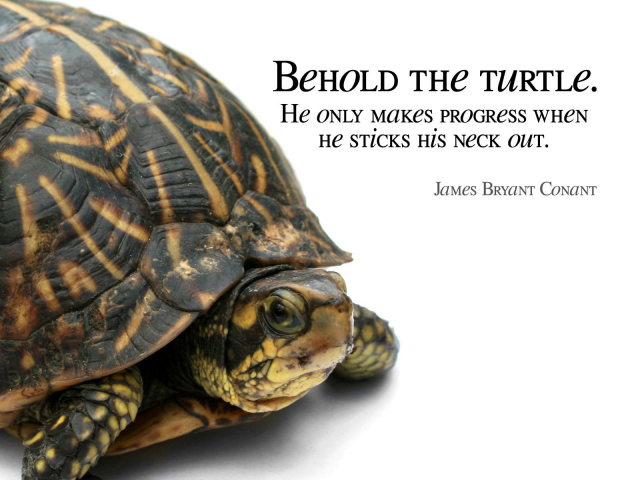
Leadership is not about preserving the status quo.  Leaders must be willing to take risks.  It’s the only way you will achieve your vision. It may even be necessary to carry out your mission. I have frequently quoted James Conant who allegedly said, “Behold the turtle who only makes progress by sticking his neck out.”  You can’t make changes, stay relevant, or be involved unless you take risks.

I can almost hear some of you saying I don’t understand your situation.  Times are tough for librarians and the safest thing to do is to keep your head down.  That might prove to be the riskiest possible course of action.

Back in the days before the economic crisis of 2008, I used to encourage librarians to develop cooperative or collaborative projects with teachers and find a way to keep their administrators in the loop while knowing their priorities. Elementary librarians would tell me they didn’t need to worry.  They were part of the teachers’ contract.  I reminded them that contracts are changed, but few listened.  And then we had the great recession and elementary librarians suddenly didn’t seem necessary. At first middle and high school teachers thought they were secure.  After all, they taught research skills and kids needed that for college.  When times got tight, administrators in many places decided that with the internet they didn’t need the librarians.

I am not blaming all the librarians who lost their jobs – and the ones who are still at risk. Many excellent, pro-active librarians got swept up as school boards wrestled with severe budget cuts.  But librarians who kept a low profile created the climate that made administrators and teachers believe nothing would be lost by eliminating librarians.

In other words, not risking is a risk.  Naftali Hoff says much the same thing in The Risk of Staying in the Safe Lane.  He uses the highway as an analogy, pointing to two different types of drivers.  Some stay to the right, going at (or below the speed limit), feeling safe and secure in abiding by the rules.  Others drive in the fast lane, pushing past the speed limit and cutting in and out to get one or two car lengths ahead.

Those fast drivers are clearly risking getting into an accident. But as Hoff points out, while crashes in the left lane are more serious than those in the slow lane, the right lane has a higher accident rate.

Hoff says those who choose safety over risk in the workplace do so for the following reasons:

  1. Believing nothing surrounding the current circumstances will ever change (for example, my industry, company, and job will always be there)
  2. Believing if so many people in front of us are doing the same thing, they must know what they’re doing.

The first reason overlooks a basic truth.  There is no status quo.  Life is always changing.  As a leader, you must accept that, be alert for changes in the wind, and be ready to get out ahead of them.

Hoff offers these methods to help you be more risk resilient:

  • Acknowledge that our natural state is risk aversion. From that vantage point, it is easier to take notice where we’re hesitating, then take the necessary action to grow and break through.
  • When you’re about to make a decision and you feel afraid, ask yourself: “What is the worst-case scenario?” In most cases, it won’t be so bad after all.

You might one day take a really big risk – job hunting.  I did it to the shock of many after a long time in the same school system.  Few of us in education with tenure do not risk voluntary leaving their jobs. By doing it from a position of strength and on my terms, I found a new position which matched my goals.

Life isn’t safe.  Risks are in an integral part of it.  Thinking you are avoiding risk could easily cause you to lose more than those who are out there trying new things and being a visible presence.  Look at your program and your mission. Look for where you can try one risk this week and see where it takes you.


ON LIBRARIES: Brand Your Library

Your message about the library program and its value to the educational community needs to out there constantly.  You work at collaborating with teachers.  You build advocates for your library program. You create programs that demonstrate the vital role you play. Leadership and advocacy have become an integral part of your program. To make sure that parents, administrators and school board members are aware of and connect with all you’re doing you need a library brand that is recognizable. I blogged about Branding Your Library over a year ago, but the topic is one worth repeating. Once you have established your brand—and consistently maintain it—it becomes a 24/7 messenger of your value.

Believe it or not, you already have a brand.  Or possibly multiple brands.  It’s what people think when they hear your library mentioned. As I noted in that blog post, it could be “the shushing place,” or the “dusty book place.”  Your brand carries an emotional message. It’s what you promise your customers, and it’s how they connect to you. If your brand is the dusty book place, you are not likely valued.  Any messages you send are going to hit up against that emotional reaction to your library.

You need to carefully and consciously create the brand that will add weight to your message. Doing so takes time, but you can do a lot of it when you are away from your desk. It’s the kind of thinking and connection making I do when I am walking.

In the Basics of Branding, John Williams takes you through the steps, starting with preparatory ones.

  • What is the Mission of your program? (I would add Vision as well). – This gives you the foundation on which your brand will be based. Some of the keywords you use here could be in your brand.
  • What benefits do you provide? – In answering this, be sure these benefits are unique, that no one else in the school is doing it.  And do these benefits have value for your stakeholders. In other words, are these benefits something they need and want?
  • What do your customers think of you? – What do you want them to think of you? Are you the dusty book place or the place everyone wants to be? If it’s the former, you must work extra hard to correct that image.
  • What qualities do you want stakeholders to associate with your library? – This may vary with your stakeholders, but there should be a unifying theme.

These four steps should lead you to your brand but play with the wording for a while.  Brands are not taglines which may change with your target audience or over time.  Your taglines will reflect your brand, but they are not interchangeable. Your brand is core to who you are, the heart of what you want people to feel when they think of the library.

When I go to the supermarket, I often look at how brands are ingrained in us by the various companies.  My current favorite is Oreos. When I was growing up, Oreos meant two chocolate cookies with a distinctive design and a cream filling.  Today they come in many different configurations, but they are still Oreos.  And you still think of how you eat (and savor) them, which is the emotional connection. If they tried to make this change as a new product, they would have had more trouble creating their brand as the world’s most fun cookie.

My personal brand is “Inspiring librarians to be indispensable leaders.” When people in school librarianship think of me, they think of leadership.  They know my books and workshops are all about how to become a leader.

Your brand might be “Finding your answers in a safe and welcoming space.” This works even if your library goes beyond its four walls.

Once you know your brand, your next step is to live it. How do you talk to students, teachers, administrators if “Finding your answers in a safe and welcoming space” is your brand?  What could you use as a tagline?  Perhaps, “You have questions.  We have answers.”  Note that the brand has emotion while the tagline, in this case, doesn’t.

Williams suggests you write down the key messages you want to communicate with your brand.  This will help with taglines as well as solidifying in your mind what your brand is. You need to know who you are first.  Then find ways to send it out.

As a final piece, a logo can help to get your brand ingrained in your stakeholder’s awareness. Designing one makes a great project for art or marketing students.  Find out if it’s possible.  Even if you are in the middle or elementary school, speak with the art and/or marketing teachers at the high school.  They can decide if students should do it individually or as a team.

Be prepared to explain your needs.  For example, if you are using “Finding your answers in a safe and welcoming space,” the logo needs to reflect the safe space and the answers. Have some sort of prize for the winning design or an event for all who contributed.

Let your world know who you are. Make an emotional connection.  In the words of Staples (brand and tagline), “That was easy.”

ON LIBRARIES: Making Leadership a Habit

When you want to change a behavior or achieve something, one of the best ways to ensure success is to turn it into a habit.  Whether it’s daily exercise, going to bed earlier, or making sure you have a monthly date with your significant other, when a positive action becomes a habit, success is the result. Leadership can become a habit if you tune into the behaviors which are a part of it.  To give you momentum – and early success – start by choosing the ones most comfortable to you.

To get you started, Lolly Daskal presents twelve “C’s” in a post, saying It’s Never Too Late to Learn These 12 Powerful Leadership Habits:

  1. Care – As the saying goes, “No one cares how much you know until they know how much you care.” Good leadership is built on relationships.  It’s through caring about others you grow as a leader.  I used to tell my staff (unbelievably in today’s world I had a co-librarian, a secretary and two clerks in a 12,000-student high school), “Don’t leave your problems at home.  Let us know and help you.”  This way, I never expected too much from someone who was struggling.
  2. Conviction – Your philosophy about what school librarianship must be, along with your Mission Statement, form your convictions. When they are strong, they are part of who you are.  The passion is communicated to others who are then more inclined to follow where you lead.
  3. Clarity – You need to be able to succinctly set a direction. Too much verbiage or including too many alternatives clouds the issue. Where do you want to go?  A leader knows and can express it easily and whenever asked.
  4. Confidence – This goes hand in hand with clarity. People don’t feel confident following leaders who continually waver and change direction.  This doesn’t mean you have to know everything or have all the answers all the time. You do need to have confidence in your skills, your mission and your ability to get things done eventually if not always immediately.
  5. Courage – For me, this is all about being confident enough to take risks. You need to be willing to leave your comfort zone. You will not do this every day, but you have to be ready to take the chance when the idea or opportunity surfaces. It goes well with confidence and clarity. It also includes taking responsibility for any mistakes. This can be a huge challenge and feel risky and uncomfortable, but when people see you doing it, it goes a long way toward them trusting you in the future.
  6. Commitment – Your stakeholders need to know you will follow through on what you propose. In a district (not the one with a staff of 5) that voted down 20 budgets in 22 years, I regularly got funds for projects because the superintendent knew I would produce results. The more you can show this, the more often you will get the “yes” you are looking for.
  7. Celebration – Recognize and celebrate the achievement of others. No project gets done alone. Praise and gratitude go to those who participate.  Everyone likes to be recognized. It’s the first step to them saying yes again.
  8. Collaboration – I know you are trying hard to do this and there are times when it feels as though the door is continually slammed in your face. Remember, collaboration is also about being open and willing to get ideas from others. Teachers, students, administrators, IT people, and others bring a different perspective. Keep an open mind and listen attentively. (And then celebrate the collaboration after!)
  9. Communication – Getting the word out to the right people at the right time with the right message and using the right platform is a critical leadership skill in today’s world. Who needs to know? How can you best reach them?
  10. Candor – Tell the truth. Never blindside an administrator.  Be willing to admit you are seeking help and advice.  You can still be confident when doing so. Hiding full truths (expense, the time necessary, etc.) will not endear you to other people in leadership roles.
  11. Courtesy – This is closely related to care. We are in a relationship occupation. Whether it’s a custodian or an administrator, show you value them as people. You should treat your students with respect as well. It’s amazing how memorable courtesy is.
  12. Credibility – Your track record builds credibility. People believe you will get something done based on what you have accomplished before.  Success breeds success. This doesn’t mean you can’t fail.  Keep going so any failures are outweighed by all your successes.

That’s Lolly Daskal’s list.  I have one more “C” to add:

  1. Confidentiality – You don’t repeat gossip. What a teacher or administrator says to you does not get circulated.  You are trustworthy. Remember at the beginning I mentioned encouraging staff and volunteers not to leave problems at home. Keeping what they say confidential is critical.

To add to your success and see your progress, I also recommend creating a leadership notebook where you record when you have exhibited the leadership behaviors/qualities you are focusing on.  There’s nothing like filling up those pages to see how far your habit has come.

Which habits from this list struck a chord with you? Choose two or three habits that you’d like to start. See how often you can practice them. Over time you will find that leadership is really habit-forming.


ON LIBRARIES: Taking A Stand

You can order this poster from the ALA store

We can all agree that being a school librarian is a rewarding, challenging, and frequently exhausting job. We never think of it as scary until the day we are faced with a book challenge that threatens our mission, the integrity of our program and possibly our personal beliefs. How you react if and when it happens can be a defining moment for you as a librarian and a person.

The Library Bill of Rights clearly defines our responsibilities as librarians.  The seven articles spell out the beliefs of the profession, such as article III: “Libraries should challenge censorship in the fulfillment of their responsibility to provide information and enlightenment.” ALA’s Code of Ethics states, “ We uphold the principles of intellectual freedom and resist all efforts to censor library resources.”

AASL further recognizes the importance of access to information in the National School Library Standards for Learners, School Librarians, and School Libraries. It highlights our obligation to implement these values in the fifth of the Common Beliefs: “Intellectual freedom is every learner’s right.”

Of course, you support intellectual freedom and the access to information — but what happens when you are faced with a decision regarding it.  I know there are librarians who don’t buy books that may trigger a challenge.  Some of them live in communities where they would be pilloried for such purchases.  I can understand and respect their fear. A few of them acquire the books with their own money and keep them in the office, handing them to a student when it seems appropriate. Still dangerous, but less so. In the public library, there are several librarians who can stand by each other in support. You are alone.  And it can be scary.

Hopefully, you have a Board-approved policy dealing with this.  If you don’t, get started on writing one now and getting it approved.  You may never have a challenge.  Most librarians never face the issue in their entire career, but you never know.  Because it can happen, it’s best to be prepared.  To help you, ALA has a new Selection & Reconsideration Policy Toolkit for Public, School, & Academic Libraries.

Having a policy in place doesn’t mean all will go smoothly if someone challenges a book.  ALA offers help and a wealth of resources in Challenge Support  I also recommend reading How to Respond to Challenges and Concerns about Library Resources to get an idea of what it contains.  You can review it, if it becomes necessary.

There’s a specific story that sparked this week’s blog.  I’m not going to go into the details, but for the second time, I know a school librarian who had a book challenged.  Both courageously stood up for the principles of intellectual freedom, and it makes me proud to know they got a lot of support from the library community and from those in organizations that also strongly support the First Amendment.

In the most recent situation, there shouldn’t have been a problem.  There was a Board-approved selection and reconsideration policy. It was the principal who pulled the book.  When the librarian reminded him of the policy, he told her it didn’t apply since it wasn’t a challenge but rather an administrative decision. This put her in a particularly difficult dynamic.

What do you do when the censor is your administrator?  In this case, the librarian swung into action.  She reached out to high school librarians to see who owned the book without having problems. She contacted her state and county school library association, ALA, and AASL.  Those on the Board of the library association reached out to other library associations in the state. Soon advocates for intellectual freedom lined up including the National Coalition Against Censorship and the National Council of Teachers of English Intellectual Freedom Center.  Letters were sent to the Board of Education. Support was there when the Board met and the media covered the controversy.

Ultimately, the book was allowed back on the shelf. Or it was until a student checked it out.  The librarian kept detailed notes of the whole process.  She plans to share it with others who find themselves in a similar position.  Her next steps include working to mend her relationship with her principal and the administration who wanted to make this decision regardless of policy. Because even though the “fight” was won, she must continue to work in that environment and sustain and grow the success of her library program.

Judy Blume has said, “Librarians save lives: by handing the right book, at the right time, to a kid in need”. She’s long acknowledged the librarians and teachers who have put their jobs on the line to share her (often banned) books. It’s not something we want to face, but there are times it must be done. We are a strong community who fight for our beliefs. I salute all those librarians who have stood up for Intellectual Freedom. We are a vital part of our democracy.


ON LIBRARIES: Tell and Sell Your Story

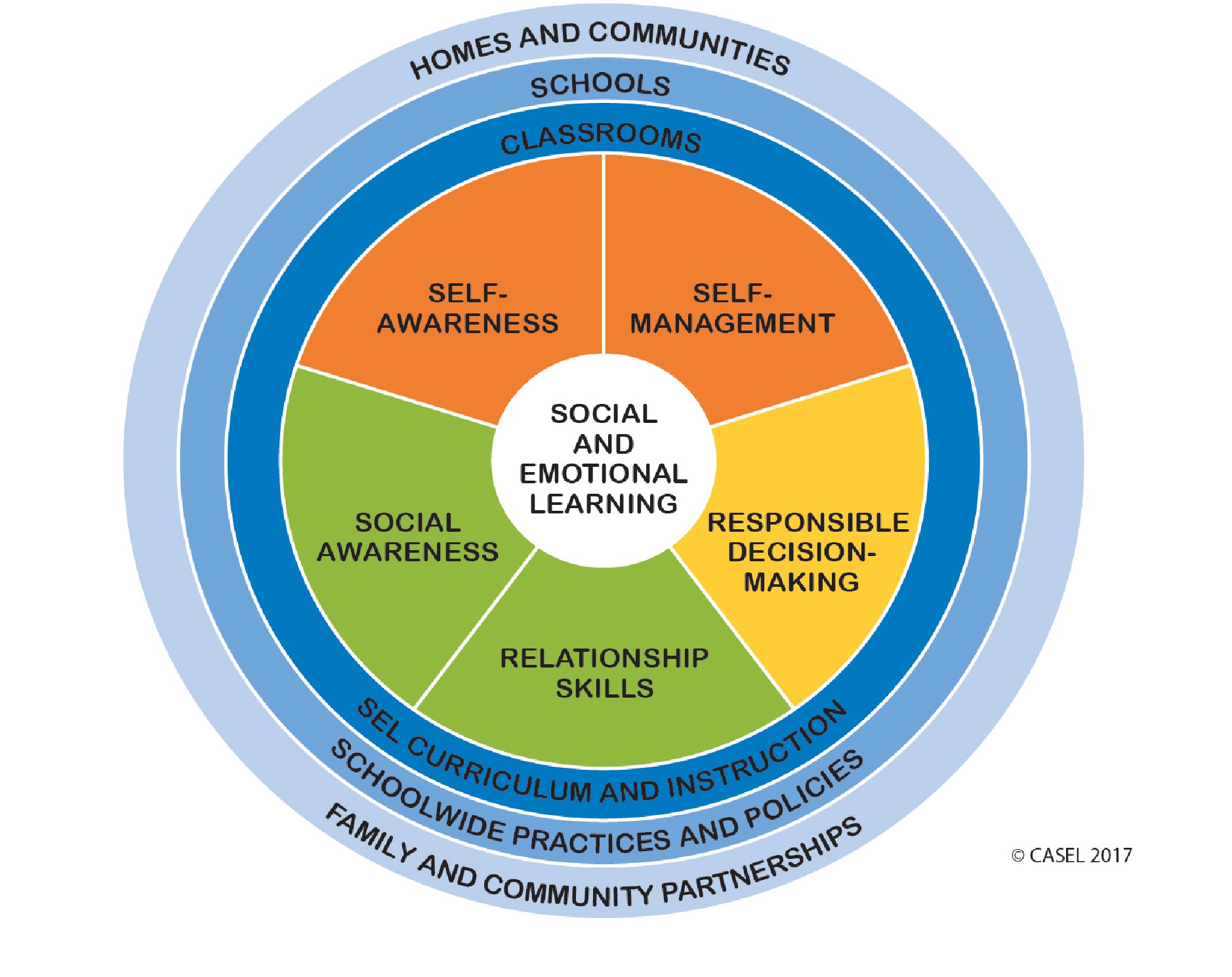
This week’s blog is another entry in the ongoing discussion of the art of communication in an age of too much information.  It’s a reminder that data—even the beloved “big data” – is not what will carry the day.  For your message to be received you first must connect in some way with the receiver. Being able to make this connection depends on Emotional Intelligence (EI). EI is now recognized as a major factor in success in school and beyond, which is why so many schools have incorporated Social and Emotional Learning (SEL) into the curriculum.  The Core SEL Competencies are the same as those used to define EI.

Although you are probably incorporating SEL into your instruction, you may have not integrated it into your own advocacy program.  Emotions underlie all our decisions whether we are aware they are at work or not.  The more conscious you are of your emotions and those of the people you are speaking with, the more likely you are not only to be heard but to inspire action.

If your words have not yet penetrated the wall your listeners have built, Lisa Rabasca Roepe gathered These Techniques from Professional Speechwriters That Will Help You Get Your Point Across.  She presents seven ideas which are highly applicable to what you need.

Personify Your Data – Generalities contain no emotion. People hear them and can’t repeat them five minutes later.  If you want to discuss the problem of aging resources, don’t lead with a Titlewise collection analysis. Talk about a student who used out-of-date or incorrect information because the book she chose was twenty-years-old.  Or you can take one of those aging books and say, “Imagine what would happen if David (use a name to make the example more personal) was doing research on planets and found this book discussing Pluto.  If he researches what is known about Pluto from this book and other sources, he never discovers that Pluto is no longer considered a planet until after he turns in his assignment.” The story, focused on a single individual, captures attention.  You can then follow up with your collection analysis.

Know Your Listener – Be mindful of your listener’s attention span.  In my experience, principals have so much on their plate, they have a very limited amount of time to hear you out.  Get to the point quickly.  If they want more details, they will ask. When I would set up an appointment with my principal’s secretary, I asked for ten minutes and was prepared to finish in five – and leaving the data at the conclusion of the meeting. It made it much easier to continue getting appointments as I needed them.

Be Personal But Not Confessional – It’s always easier to connect with someone you feel you know.  Include some relevant stories of your experience. The most important word here is “relevant.”  The story about yourself should connect to and reinforce what you are discussing (such as my principal story above). Try to avoid topics such as politics, religion or others that lead to heated, not connected, dialogue.  It’s also best to steer clear of serious personal issues such as illness or loss, lest it seem like a bid for sympathy.

Be Specific – My husband reminds of this all the time.  He asks me, “Why are you telling me this?”  “What do you want me to do about it?”  We tend to slowly edge up to our request.  By the time we get there, our listener has tuned out. Don’t say, “I know you have seen our Makerspace and liked what the students are doing.”  Go right to what you want. “It is time to take our Makerspace to the next level.”

Aim for a Home Run – Play big.  Go for what you really want. The big idea captures attention.  Having done that, your back-up plan is likely to be approved, possibly with additional modifications.  If the issue of money is raised, you can offer ways to do your idea in stages or cut back somewhat. And your principal will know that you have big ideas that may well be used to showcase the school.

Re-enact Your Story, Don’t Just Tell It – Suppose you are trying to convince a teacher or administrator that books in the library shouldn’t be leveled. Don’t cite articles on the subject.  Make it personal by putting a face on the issue. Talk, for example, about Darrin, a boy who has hated reading. Last week he found a book in the library on his favorite baseball team, but it was below his reading level. You decided to break the rules and let him take it out.  Now he is reading so much more, and although he still wants books below his Lexile level, he’s more likely to improve because of this change.

Build a Story Bank – Be aware of the power of story and the emotions they carry. Keep track of incidents and moments that happen in the library which you can use at some later date. This may seem odd at first, but the more stories you collect, the more you will notice.

You can tell teachers, administrators, and others how important the library is, but, as you well know, that doesn’t mean they will hear you.  Bring story and the techniques of speechwriters to grab your listener’s attention, hold it, and get them to take action.


ON LIBRARIES: A Different Approach Changes Outcomes

Many of you have tried multiple approaches to get your message through but making progress is still slower than you’d like. Sometimes you make headway with one or two teachers, and that’s a big gain.  Rather than focus on your frustrations, it’s important to look at what you can do to change your situation. Some self-reflection on how you present yourself might give you a few more tactics you can use to reach more of the faculty and possibly the principal.

In 10 Behaviors for Better Results, John R. Stoker reviews how we sometimes get in our own way and then offers ways to change the dynamic. There is an important theme throughout these behaviors – we can’t let our passion stop us from hearing the same passion and needs in our associates. He frames his ideas as responses to these ten questions:

  1. Are you so entrenched in your perspective that you don’t hear what others are saying? We know about active listening, but when we are passionate about what we believe, it is not always easy to practice. What is the other person’s perspective? Why do they see it that way?  Why are they passionate? Speak first to that.
  2. Do you really listen when others are speaking? Another reference to the importance of active listening. Because of our own beliefs, often nurtured by experience, we listen to hear the arguments, the negative, and overlook the possible areas of agreement. Instinctively, you prepare your defense and at that moment you tune out.  Without realizing it you’ve set up an immediate barrier.  You’ve probably been on the other side of this as well. No one likes to be ignored. Listen first.
  3. Do you push too hard to get the thing that you want? This is probably one of our biggest mistakes.  We finally have someone’s ear.  We have our message out – fast.  In the process, we overwhelm our listeners and they retreat.  Watch the other person’s body language for signs they are disengaging.  Be prepared to modify your request. If a teacher says s/he is too busy to come to the library, offer to send a cart with materials and an emailed list of apps and web resources. The same is true when proposing a project to your administrator. If you are asking for funds (and that is always difficult) consider spreading the project over several years. Would it work to just get approval for the project along with funding from alternate sources such as DonorsChoose?
  4. Do you assume that you know better or that you are always right? Even if you do, that can’t be where you start. My motto for years has been, “Do you want to be right, or do you want it to work? If you want to be right, it probably won’t work.” You need to be prepared for a solution that won’t be exactly how you envisioned it but will get you closer.  And in the discussion, you might get some new ideas which will be an improvement over your original plan. Plus, being seeing as a collaborator paves the way for your next success.
  5. Do you allow your negative emotions to determine what you say, do or think in the moment? When we talked with a teacher who has always shut us down, we tend to anticipate the negative and follow suit.  Your body language and your tone of voice communicate your negative feelings. This is when you must consciously must your mindset because this time could be your longed-for yes.
  6. Does your desire to play it safe or to be comfortably secure hinder your ability to be vulnerable and connect with others? This speaks to how we are as leaders.  The “don’t rock the boat” attitude keeps us from trying new ideas.  We worry about the possibility of failure and hide in our library.  After all, you have a ridiculously full schedule, why add to the stresses of your day by trying to add working with teachers to the mix?  Remember, we are in the relationship business, and if we are not building relationships, we will soon be out of business.
  7. Do you avoid heartfelt expressions of appreciation or gratitude? It pays to go further than just saying thank you. Handwritten notes make a big impression in the world of text, email, and emojis. Making sure you have informed your principal when a teacher has worked with you is another way to express your appreciation and one that the teacher will value.
  8. Do you take the time to reflect and focus on what matters most? Reflecting and focusing are two key components to success. Our days are so full we frequently don’t reflect on what we are doing or why we are doing it.  Throughout the National School Library Standards, we are encouraged to reflect. It’s an important habit to develop.  This question is also a reminder to prioritize.  This means not only our tasks but our relationships with family, friends, our colleagues, and our students.  When we become “human doings” rather than “human beings” we lose an important component of our life.  Being focused only on the next task makes us less approachable and keeps us from building vital relationships. (See question 6.)
  9. Are you empathetic and understanding of others? When you are a “human doing,” you are not likely to be alert to signals from others. It’s imperative that you be attuned to what is going on with your colleagues as well as your administrator (and your family).  If you want to build collaboration, you start with what they need, and they aren’t likely to tell you immediately.  You will often have to figure it out for yourself by staying connected.   
  10. Are you blind to your own behavior?   In his poem, “To A Louse, On Seeing One on a Lady’s Bonnet at Church,” Robert Burns said, “Oh would some Power the gift give us, to see ourselves as others see us.”   We rarely know how we are perceived by others.  We make assumptions based primarily on our view of ourselves, positive or negative. You can get some idea by watching the body language of those with whom you are speaking. Do they move closer to you or move away?  Do they feel comfortable sharing their thoughts and views with you? If you’re having challenges, return to the first few questions and look at how you can really listen, hear what others are saying and not push to get your own view out first.

Making the case for your program is not easy in our stress-filled environment. Learning more about leadership and advocacy is never-ending. Adding new techniques and skills is an ongoing and empowering part of our jobs. The more we can be a “human being” the more we’re likely to enjoy the journey.

ON LIBRARIES: About Agency

The term Agency has been around for several years and has reached the level of buzzword.  As such, you need to understand it and see how it fits into the library program, particularly since administrators are reading about it.  Being able to discuss Student Agency shows your leadership and allows your principal recognizing that you incorporate the newest educational thinking into your library program.

I admit I struggled with the term for a while.  It is used in various places in the National School Library Standards for Learners, School Librarians, and School Libraries.  The Glossary of Terms (p. 273) defines it as:

“When learning involves the activity and the initiatives of the learner, more than the inputs that are transmitted to the learner from the educators, from the curriculum, and the resources. It is the learners’ power to act. When learners move from being passive recipients to being much more active in the learning process, actively involved in the decisions about the learning, they have greater agency. (CORE Education 2014)”

I understood it when I read it, but it didn’t want to stick in my brain. Fortunately, the February 2019 issue of EL (Educational Leadership) has an article by Will Richardson entitled Sparking Student Agency with Technology that included a simpler, if more challenging definition. He explains true agency as:

“. ..the freedom to choose what to learn as well as how to learn it. Curriculum matters, but only to the extent that it is used to support students’ inquiry. In neglecting this aspect of independent learning, many schools are missing the opportunity to give students true agency over their learning.”

The concept is great.  There is no question in my mind that when students’ have agency they remember what they learn, they are engaged, and they aren’t bored.  Too many students still think school “sucks” or is a waste of their time. Student Agency changes that, but how do we incorporate it? It’s difficult to give students “voice and choice” when teachers feel bound by a highly structured curriculum.

The library is one of the best places to introduce student agency. Students need to determine what problem interests them and how they can solve it.  Agency involves inquiry-based, project-based and differentiated learning, sometimes called “personalized learning.” Makerspaces were introduced to be part of this, but these are limited by what you can provide.

Ross Cooper offers five ways to answer How Can Educators Best Promote Student Agency?  Although he is talking about the classroom, I think these fit even better in the library.

Create a Culture of Inquiry and Creativity – I am tempted to say “duh” – that is what is supposed to happen in the library. Cooper suggests the way to achieve this is to:

  • Learn to Let Go: In other words, don’t help so much. Allow kids struggle to find their answers, providing scaffolding as necessary.
  • Do Not Lock It and Block It: Too many places have blocked sources students need to solve the problems they are working on. That’s frustrating and stops the learning.
  • Teach Collaboration Skills: Yes, kids play collaborative games, but working on a project together is different. Give them the guidance they need before the projects start.

Emphasize Relevance over Engagement – This sounds contrary to agency, but Cooper is cautioning not to use your own interests to capture students’ enthusiasm.  It’s their choice that matters. If all students are working on the same project, even if you have given them free rein over how to present it, they don’t have agency.  They are not in control over their own learning.

Share Learning Targets – Let students know up front what you want them to achieve.  In other words, start with the end you want to achieve and let students decide which route they will take to get there. Give them guidance, if necessary, in the form of exemplars.

Facilitate Ongoing Feedback – Students need feedback from you, from other students, and from themselves. The last is the most important one. Some conferences (and the Antiques Roadshow on PBS) have a Feedback Booth.  Set up a table for this. It’s a place where students can stop and analyze where they are, where they are going, and whether a change of course is needed. They can speak with you, work by themselves, or tap a classmate.

Allow for Reflection and Publishing – In most school settings there is no time for reflection. Once something is completed, it’s on to the next unit.  Yet reflection is vital for growth and is essential for true agency. Cooper offers these questions to help students reflect on their work:

  • What additional questions do you have about this topic?
  • What strengths can you identify in your work?
  • What are you most proud of?
  • How could you improve your work?
  • What would you do differently next time?

The publishing aspect is also important. Students need to publicly share what they have created. Find ways to feature their work as much as possible.

Agency is a buzzword, but I think it’s more discussed than done. It needs to become the norm, and you can help achieve that in the library.

ON LIBRARIES: Embracing Failure

You can’t escape failing.  Maybe the word “embracing” is a bit much, but whenever you try something new or different, the risk of failure is always present.  Knowing this is often what prevents you from trying. But there are lessons that come with each setback and the more you are willing to learn, the stronger leader you will be.

How would you speak to yourself if you were one of your students who wasn’t trying because of the fear of failure? You would tell them that failure is important and worth the effort.  Whether it is learning to ride a bike, throwing a curve ball, or playing chess, no one gets it right the first time. Frequently they don’t get it right the second time. I can hear you say the consequences of failing at those is quite different from what you would experience if something you tried for your library didn’t work, but what are your choices?  Taking a risk and possibly succeeding (particularly if you have thoroughly researched your idea) or staying where you are not advancing your program or your ideas.  I love the quote attributed to James Conant, Behold the turtle who only makes progress by sticking his neck out.”

Failure happens in the business world all the time on the way to success, and Lily Daskal, a leadership coach and author of The Leadership Gap: What Gets Between You and Your Greatness, explains Why It’s Important for Leaders to Fail Well. I love the idea of failing “well.”  She points out that beginning skiers learn how to fall safely.  We, too, need to fail safely, and not let a failed idea make us believe we are failures. Learning how to fail safely means we need to develop the right attitude towards failure – even welcoming it for the benefits it brings.  Daskal identifies seven benefits of failure.

  1. Failure keeps us focused on our strengths – It sounds counterintuitive, but that is what we need to do. It’s too easy to beat yourself up for the mistakes you made. Although you shouldn’t ignore them, also take stock of what you did right.  What were your strengths –and how can you utilize them in another project or improve this one.  What weakness did you exhibit?  Can you turn it into a strength?
  2. Failure teaches us to be flexible – Don’t give up on a good plan just because it failed. If it was worthwhile, how can you change it so that it does work? It’s a worthwhile skill to develop for several reasons. For example, you want to turn your library into a Learning Commons.  You approached your principal or superintendent enthusiastically and were shot down. Why? What reasons were given?  Money?  If so, consider revising your concept so it takes longer to complete and allows the cost to be spread out, or look for a grant to cover some of the funding needed.  Instead of nursing your wounds, get creative.  I had a superintendent who told me her first answer was always, “No.”  It got rid of the people who weren’t fully committed.
  3. Failure teaches us to rethink what we deserve – It’s easy to blame yourself for the failure. It gives you an excuse to quit and not try again.  That’s the real failure. Accept responsibility for why the plan or idea failed, but don’t take it personally.  It’s part of your growth. And if you’re still fully committed to the idea – you’ll find ways to make it happen.
  4. Failure reminds us that everything is temporary – When we fail, and we all do at some point, it’s vital not to think this is how it will always be. It’s been said that change is the only constant. As a leader, you need to be looking for any change in direction.  As I blogged last week, administrators come and go.  What your current one didn’t like, the next one might love, particularly since you learned from what didn’t work.
  5. Failure shows us it’s not fatal – The failure was yesterday. Today is a new day, and you are alive and well. If you try only a few projects, every failure looks huge.  Do more and the number of successes will outweigh the ones that didn’t work.  It’s how you build your “street creds.” You demonstrate perseverance by digging in and moving on.

  6. Failure disciplines our expectations – It’s great when we get excited about introducing something new. However, our enthusiasm can sometimes blind us to what is realistic.  This doesn’t mean you don’t attempt big things. You don’t say, “They never want to try something new.”  It’s recognizing that not everyone sees the project the way you do. You need to create a foundation of support before you move into introducing your idea.
  7. Failure instructs us to keep trying – There is wisdom in the adage, “If at first, you don’t succeed, try, try again.” No invention worked the first time it was tried. Leaders in every field know this. They don’t like failing, but they don’t let it stop them.

And here’s one from me:

Failure teaches us to understand our students better – I knew a math teacher who always underestimated how long it would take students to complete a test.  She was brilliant in the subject and couldn’t understand the difficulty many of her students faced.  Sometimes a person who struggled in school makes the best teacher.  Use your experience with failure to help students when they have trouble dealing with their own failures so that they too keep taking the steps that will lead to their next success.

ON LIBRARIES: Another New Administrator Arrives

The statistics aren’t encouraging – the average principal stays less than five years. The average superintendent lasts about six years, half that for urban districts. The constant change in administration causes regular stress for those working in schools and most people don’t recognize the effects of these revolving doors. With each new administrator, priorities shift.  Frequently, projects in the works get scrapped.  Long-term planning is difficult. And each of these new heads has a different view of school libraries and librarians. You have to start from scratch to build your reputation every time this happens.

Those who are in a district where they are experiencing these regular departures and arrivals need to have a strong plan in place that can be set into motion as soon as the new hire is announced.  If you are fortunate enough to have a long-term administrator, it is wise to be aware of how to proceed should your principal or superintendent leaves. In addition to the initial steps, the sequence of the “settling-in” process applies to committees so it will help you show up (early and often!) as a leader even when things are running smoothly.
So how can you be ready?

Hit the Ground Running – Once you have the name of the new administrator begin your research. Where did s/he come from?  Google and social media usually can give you a fair amount of information.  If there is a librarian in this person’s previous job, consider sending her/him an email to learn how the administrator regarded librarians. Where was support given? What was their preferred method of communication? Keep your findings to yourself.  There will be plenty of gossip likely fueled by fear. Don’t add to it.  Just listen and see how well it aligns with what you have learned.

Plan on an Early Meeting – Don’t wait for the new administrator to begin the usual “getting to know you” meetings.  Schedule something as soon as possible and keep your meeting brief.  Ask for no more than ten minutes and finish in less time. During your time, you don’t sell what you have done. I cannot stress this enough – make it about them!  Your focus should be on what you can provide. Invite your new administrator to visit the library at any time. Ask how s/he sees the role of the library program. Let him/her know that the library program is flexible and will work to achieve his/her vision/goals for the school or district. When you finish, leave a thumb drive of your last annual report or provide one-sheet with strong data on what the program has achieved.

The Four-Step Sequence – (which is now five steps) Be prepared for the next phase.  In 1965 Bruce Tuckman wrote an article describing the sequence to identify a process common to describe team formation. It is still relevant and comes into play with a new school or district leader.  By being able to identify the process as explained in Forming, Storming, Norming, and Performing, you will avoid pitfalls and demonstrate the leadership that will get you and your program recognized as vital to the new administrator.

  • Forming– This is the settling-in stage. Most people in the school are likely watching and waiting.  Although there are some who are criticizing already, making comparisons to the previous administrator, most will be quiet and uncertain.  You need to identify your new principal’s/ superintendent‘s style.  Congenial? Remote? High tech? No tech? You then adapt your communication to match it.
  • Storming – Time to get down to business, but expect it to be messy. The new administrator wants to begin proving s/he is in charge and knows where to go. Conflicts emerge as not everyone agrees with the new direction. Some want to “get in good” with the new boss, (you are one of them,) but how they do it can be a problem. Brown-nosing is not the answer. Being a team player, which means knowing how to disagree effectively if necessary, is the way to proceed.
  • Norming – Life settles into the new normal. It’s as though the new administrator has always been there. The Pareto Principle comes into play. It’s the 80/20 rule and in this case, it means 20% of the people do 80% of the work.  You need to be among the 20%.  By being of value to the new administrator, helping him/her achieve his/her goals, you and your program will be valued in turn.
  • Performing – This is the make or break period. Everyone has settled into the role of their choice: an active part of the leadership team, a good worker-bee, or a complainer/critic.  The fewer in this last category, the more effective the administrator will be during her/his tenure.  This is your opportunity to propose larger projects and position your program in the forefront, making yourself invaluable to the administration, teachers, and, always, your students.

This four-stage sequence has been adapted to include a fifth stage – Adjourning. In the business world, it refers to when a committee’s work is complete. In our world, it’s when the administrator leaves and a new one is hired.  Once again, you are back to Forming. Now that you have seen it in play, you will be even better at managing the steps as you prepare for yet another new leader.  And you can lead the way.

There is no way to avoid changes in administrations but if you can create a plan and be prepared you will be the leader your program needs and show whoever is in the position that you and your library are invaluable.