Are You Being Defensive?

Last week I wrote about the importance of listening. Somtimes listening is most significant when what’s being said is not something you want to hear.

Whether it’s intended as criticism or feedback, how do you respond when someone says something negative about you? Most of us immediately rise to the defensive, although some go on the offensive. Neither is the best course of action. The word “immediately” is the cue. Anytime we react without thinking, we are apt to make a mistake. Responding from our emotional first reaction is in gear is likely to produce a damaging result.

Whether it’s an administrator, teacher, student, or parent who made the comment, as a leader you want to be seen as someone who respects what others say. It doesn’t mean you agree with them, but you also don’t want to attack them. A defensive response is an attack, as its purpose is to invalidate what the other party said. And a relationship damaged by defensiveness can be hard to repair.

Lolly Daskol shares How the Best Leaders Overcome Their Own Defense Mechanisms. These five ideas, coupled with my comments, can keep you from reacting in the moment,

  • Cultivate self-awareness–Use your Emotional Intelligence (EI) to prepare you for these situations. No one likes to be criticized, but it happens to us all. Daskol suggests you recognize what your triggers are and how you are likely to react. Whether the comments came in a one-on-one or where others were present, your response will affect how people see you as a leader.
  • Make room for acceptance–One of the best tools a leader can have is the ability to pause. Settle yourself mentally. Take stock of your feelings. Daskol says to accept them without judgement in order to respond in a way that will move you forward with this person and continue to build on your relationship.
  • Hold yourself accountable–You may not have liked what you heard, but was it true? It may have been presented in a way that was hard to hear but listen for the message. While the method of delivery may have caused your trigger response, there is likely a kernel of truth in what is being said. Leaders take responsibility for their actions and learn from their successes as well as their setbacks.

Thank the party for calling your attention to a potential problem. Your open way of handling the criticism may even lead to developing or deepening a relationship. After, Daskol recommends you reflect on how you handled the situation. Did you respond reasonably? Remember, you can’t control how others think or behave, but you can control yourself.

  • Break the code–Rising to your own defense is natural. It’s a survival skill that animals as well as humans have learned. However, we are not fighting for our lives here, and the ingrained behavior doesn’t serve us in this instance. It takes work to change an automatic response, but it can be done. Starting with becoming more self-aware of how you react in these situations will help in resisting that immediate response and allow you to behave in a productive way.
  • Lead from within–Every time you avoid a deep-rooted response and substitute a thoughtful one, you grow as a leader. In addition to self-awareness, EI requires self-management. Leaders need to continually build their EI. It makes others see them as trustworthy and empathetic to their needs.

None of us will never like being criticized, and a voice in our heads will always rise to our defense. The object is not to let the criticism derail you. By moderating your response, hearing what the other person is saying, and responding appropriately, you will continue to be seen as the leader you are and want to be.

Listening is Leading

When we ask someone “Are you listening to me”, we’re typically expressing our exasperation. We don’t feel as though what we’re saying is being heard, and that’s frustrating. But what about the reverse? Are we really listening to what others are saying? And are we listening to ourselves?

Active listening, like emotional intelligence, is an important skill to master. So many messages come at us, verbal and unspoken, it can be hard to focus during a conversation. However, the skill is too valuable for our leadership and for our lives in general not to work at getting better at it.

Learning to listen opens the door to expanding relationships, which is key to our ongoing success. In Nine Practices All Leaders Share, Dr. Alan Patterson shows what can be built by improving your ability to listen. Some of his advice is more of a reminder, but reinforcing the basics helps you reach the next level in your leadership. Here are Patterson’s recommended practices, annotated:

  1. Listen with Intent—Focus on what is being said, not the answer you plan on giving. It’s about respect. If you can, use restating to keep you on track and let the other party know that you think what they said matters. It’s an early step in relationship building.
  2. Ask Probing Questions—After listening, go deeper to increase connection and understanding. “Could you explain?” and “Why?’ take you past restating and opens the discussion. A good leader needs to know the concerns and issues of those they work with, whether it’s teachers or students.
  3. Study People—Listening includes reading body language and other non-verbal cues. Be careful about the implicit biases and judgements we all make. You need to see and listen to what the person inside is telling you. It’s not easy, but it is a skill worth developing. Patterson adds that as you get to know a person, you learn what is important to them.
  4. Share observations about the broader horizon with your team, colleagues, and senior leaders—Share your Vision and how you think it can become a reality with teachers and administrators. Contact teacher friends who you think would be open to trying something new and collaborate. School vacation is also the best time of year to have a meeting with your principal and outline your path for going forward. Listen for their responses so that you can see how your work will support them as well.
  5. Look for opportunities to engage in a dialogue—Have conversations that are not only about work problems or situations. Patterson recommends asking “how” and “why” questions to better understand what people need and want. Relationships, connection, and advocacy grow when your colleagues see you are aware of and responsive to their needs. Knowing who your colleagues really are–including as people outside of school–develops the relationships critical to your success. And when they answer–listen with intent and ask probing question.
  6. Practice translating a project or concept into the language of the audience—We do this all the time when we are teaching students. Use the same thinking process when making a presentation to a group, whether it’s parents or a grade/subject meeting. This is not the time for “library language.” What do they already know? What do they need to know? Why? What do you want them to do as a result? Using language that everyone understands makes people feel included and allows them to listen to you better.
  7. Translate vision into individualized responsibilities for your team members—Whether it’s students or teachers with whom you are collaborating (or cooperating) with on a project, be sure all concerned know who is doing what. This will show that you’re listening to what they need and that you’re available if they need help. And be sure to acknowledge their work to the principal.
  8. Trust that your success is based on your ability to create the conditions for other to succeed—You need feedback. That is an important part of listening. Ask in such a way as to get an accurate response. “What did you think of the project?” is not likely to get any helpful feedback. “What could I have done better?” or “Was anything missing?” will get the discussion started in a meaningful way. And listen to the responses you are getting. Receiving feedback builds trust.
  9. Focus on impact and meaning—Reflect on your week. Where did you make a difference? Where do you want to go next? Go an extra step. Ask others where they saw themselves making a difference–and listen to their answer.

Listening is at the heart these leadership skills. It’s also at the center of building the relationships you need to be successful as a leader in a school. Take the time to listen to others and yourself and you will find yourself making a greater impact.

Communication Channels

Every conversation is an opportunity, yet many are wasted or don’t use the best channel for a particular communication. With our limited time, we can’t afford not to use these interactions to get the maximum possible benefit.

In looking at these different channels, keep in mind that the underlying purpose of any conversation is building relationships. When we get to know people better and allow them get to know us, ties are forged, and future advocacy developed. As a leader, particularly in these times, you need all the supporters you can get.

Joel Garfinkle focuses on 5 of The Most Effective Communication Channels at Work. Each offers a different opportunity. The challenge is to know which one to choose for a specific purpose and what you can accomplish.

In Person – This gives you the best opportunity to learn more about the other person. You have a host of non-verbal cues, including body language and even appearance, to help you understand and communicate. In Person is the perfect channel to meet with your principal or other administrator (as long as your principal knows the meeting is happening).

Summer is the ideal time for this meeting when your principal is less harried, and there is less likelihood of interruption. This meeting is especially important if you have a new principal. Your past achievements don’t count.

This is the time to learn their vision, what they want to achieve, and a perception of libraries and librarians. Share your mission and vision and spin it to show how you and the library can support their goals. Use your knowledge of body language to recognize when it’s time to bring the meeting to an end. It’s best if you can do this before the principal does. Change channels and follow up with an email — or a handwritten note—thanking them for their time and highlighting one important take-away.

Video Communication – We have all become Zoomers. Within the school setting this isn’t used as much as now that we’re back to in person classes, but it offers some interesting possibilities.

If you are fortunate enough to have several librarians in your district, a Zoom meeting can help in unifying how you deal with similar challenges. While not the same as in person, it does help you to get to know your colleagues better and build those relationships. You lose some ability to read body language and eye contact isn’t as clear, but it’s a good start. Consider this channel for reaching out to the public librarian.

Phone – These are best for shorter, more direct conversations. Garfinkle recommends you check at the start to be sure this is a good time to talk. The phone is best used for setting up an in-person meeting or reporting in on something. Be specific, clear, and quick. Stay focused on your purpose. You might want to have notes to keep you on track. Follow up with a confirming email. Without any visuals to guide you, listen for verbal cues to hear if the person sounds rushed or background noise that hints at distractions.

Voice Mail – Sometimes this is the only option. You called and the person didn’t pick up. Be prepared to leave a succinct and clear message. Identify yourself and, if necessary, give your preferred call back number. Repeat that at the end of the message – slowly. Keep your message focused on the reason for the cal. Garfinkle advises if you are not prepared to capsulize the reason for your call, hang up. Get your thoughts together then try again. Smiling as you talk will help you sound upbeat and increase the chances of being called back. Your tone is your most important signal in this method.

Email – Although Garfinkle likes this channel the least, it continues to have its place as long as you are aware of potential pitfalls. The first rule is to keep it brief. People are busy and often don’t read all the way to the bottom. They are also often checking on their phones and so are reading on a small screen.

The next rule is to proofread, particularly if it’s an important communication. Spelling errors have a negative impact on you and your message. Also check to be sure your language is clear and is unlikely to be misconstrued. Obviously, this is not the place for sarcasm and emojis aren’t appropriate in the work environment. All you have are your words in this form of communication – no tone, no inflection. Clarity is key.

Before hitting “send,” make sure you haven’t included people who shouldn’t get this message in the “To” section. A “reply all” can get you in trouble. We work so fast, it’s easy to make these mistakes. If it matters, take time to get it right.

Knowing the best channel for initiating conversations is an important leadership skill. Don’t waste or miss your opportunities to reach out and build those vital relationships.

Take My Advice

We all are guilty of giving unsolicited advice. Most often, we don’t even realize we’re doing it. Unfortunately, instead of building relationships, giving advice when it’s not asked for tends to cause resistance. In offering help, we don’t stop to learn if the other person needs or wants assistance. In rushing in with our solution, it may seem to the other person that we are minimizing the problem. In ither case, the other person pulls away and an opportunity to truly be of help is gone.

 What makes us think we always have an answer? We certainly don’t have solutions for all our problems. Often, the best help we can give someone is just to listen. Whether they want to vent their anger or release too many thoughts swirling in their heads, offering a solution cuts off their process. By short-circuiting what they were saying, you may very well have prevented them from finding their own solution. When someone is angry, fearful about a situation, or any other highly emotional state, they are not thinking cognitively. Through the process of expelling it all, reason has a chance to return. The thoughts stop swirling, and the rational mind deals with what has upset them.

When someone comes to you with a problem, you have an important role to play—without offering help. They needed someone with whom to share all of it, and they trusted you to be that person. By using your active listening skills, you help them while deepening the relationship. Instead of speaking, use your body language to show you are focused on what they are saying. Nod your head. Let your facial expression mirror supportive feelings. If there is a pause, you can restate something they just said to show you are listening – and to find out if you missed a point.

PsychCentral cautions “It’s Time to Stop Giving Unsolicited Advice“. The simplest way to do this is to ask if advice is wanted. You can try any of these questions suggested by PsychCentral:

Are you open to suggestions? This clears the path for your response. “Suggestions” is a better word than “advice.”  The latter says you know more and can be taken as a criticism. The former is just some ideas you offer that can be taken or not.

I’ve been through something similar. Can I tell you about what worked for me? Without imposing, you are establishing a bond of a mutual experience. Recognize that means you will have to share that experience. That interchange puts the communication on an even more personal level. It evokes shared trust and leads to deepening the relationship.

Is there anything I can do to help? Be prepared for a no or a yes. It is a generous offer. If the other person takes you up on it, you are obligated to follow through. The commitment may take time and effort on your part. If no further help is required or requested, you have shown your willingness and concern.

If you find that you regularly give unsolicited advice, PsychCentral offers you some advice in the form of questions to ask yourself, including the following:

  • Why do I want to offer advice right now?
  • Is there something else that I can do that would be more helpful?
  • Is there someone more qualified who could advise this person?
  • Can I let them decide or figure this out on their own?
  • What else can I do to reduce my anxiety or discomfort?
  • Can I accept that my ideas aren’t the only good ideas?
  • How can I be supportive without giving unsolicited advice?
  • Can I focus on listening and understanding instead of fixing and instructing? Would this be supportive and respectful?

Unsolicited advice is a two-edged sword. You have only the best intentions when you are the one offering it, but that may not be how it’s received. Think about times when someone has offered you unsolicited advice By recognizing what receiving it feels like, you will be better able to restrain your impulse in the future. And if they are looking for advice, hear the other person out — completely—so you understand the situation before you give your response.

And that’s my advice to you. LOL 🙂

Words of Praise, Words of Encouragement

We know compliments are important.  They can make a person’s day, but we should be more conscious of the ones we give.  Too often we praise students saying, “good job,” but our words fail to make much of an impact without specifics.

If you tell me I did a good job, I’ll be glad to hear it, but I probably won’t think about it again. However, if you said, “that story you told to make your point really resonated with me,” I will remember.  The difference between the two?  The second compliment offered something specific. It showed you weren’t making an offhand, polite statement. You noticed what I did and how I did it.

Making your compliments specific takes time and requires that we “see” the person.  We go beyond the surface and recognize what the other person has done. Telling a student that the design of their presentation had a professional look then going on to ask how they learned to do it will make an impression and a memory. 

Encouragement is also best when specific.  When we say, “You did much better with this assignment,” the student will appreciate it.  But pointing to the examples of the improvement and noticing what they learned will mean much more.

Even better than giving someone a verbal compliment or an encouraging word is to write it. I have been known to copy/paste and print comments my students have written to me at the end of a course so that I can refer to them, especially during those times of Imposter Syndrome.  It means a lot to know I reached them and made a difference.

In The Value of Mailing Encouraging Notes to Students, John Tiersma takes the concept a step further by making a commitment to send a handwritten note to each of his students every year. The results have been long lasting. Tiersma tells the story of a former student who displayed his note, written seven years earlier, on her dorm room wall. His reasoning on why this works is:a

Feeling Important Is Important – Our inner voice is a harsh critic.  Sometimes it’s all we hear. The school dynamic may compound that sense of not being smart or worthy.  A note is a physical representation that you are seen as being of value.  Having positive skills and characteristics recognized is a motivator to build on them and become engaged in learning. Tiersma stresses the importance of making your words “specific, genuine, and true.”

Another Way to Connect – For those of you who cannot do handwritten notes, Tiersma suggests “authentic compliments”, which I discussed earlier, and he encourages having “non-school conversations.” It’s how you get to know the person, not just the student. 

These conversations are also an effective relationship building approach with teachers.  They are not their job.  We only see a portion of our colleagues and students if all we see are their job-related personas.  As you connect with praise or encouragement, you may be surprised to learn what you have been missing.

With everything already on our to-do lists, starting small is probably the best approach.  Pick a student who has been looking bedraggled or one who has been showing improvement, then send them a handwritten note. Or, set a goal to have at least one to two “authentic conversations” each week. Tiersma suggests focusing on someone you don’t know well.  Learn their interests and hobbies.  I built a relationship with one teacher when I learned she liked fly fishing. I don’t share that interest, but I was able to get articles to her she might otherwise have overlooked.

As we deal with students who have been traumatized because of the pandemic or for other reasons, consider how offering praise and encouragement this way will help you to expand and develop your relationship building skills and make a difference in your work.  And remember, this doesn’t only have to be with students. Teachers need this as well. The old expression “People don’t care how much you know until they know how much you care,” reminds us how important it is to connect with the people.  True connection, like clear praise, makes a difference. It can even change a life.

How High is Your Emotional Intelligence?

If ever a year (in reality, more than a year) tested our Emotional Intelligence (EI), this year was it. EI rests on being aware of emotions and how they play out in your life and that of others.  Having a high EI improves our communication and strengthens our relationships and the result is we are more successful.

The four main components of EI are:

  1. Self-Awareness,
  2. Self-Management,
  3. Social Awareness, and
  4. Relationship Skills. 

Responsible Decision Making, which results from these four, is sometime included as a fifth component, and you may find Empathy and Motivation included as well.

Self-Awareness means you know who and how you are. In addition to your library Mission, you have a personal purpose and know your core values. You recognize when you are having an emotional reaction to something said or seen and are aware of (and still learning about) your implicit biases.

Self-Management rests on self-awareness. What do you do when you recognize your negative emotions are engaged? Those who self-manage change their mindset to avoid what might turn into a confrontation or prevent a morning mishap from influencing the rest of the day.

Social Awareness means you can identify the emotions of others. You recognize when they are angry or upset.  As a result, you can be empathetic and keep emotions from boiling over. When in a group, you know how to “read a room.”

Relationship Skills are key to your success.  Librarianship is a relationship business.  If we don’t build relationships, we are out of business. You can’t build relationships without having the first three components of EI. We must always be looking for ways to connect, collaborate and create. Good relationships with students, teachers and administrators are required to achieve our Mission and Vision.

With these components in mind, John R. Stoker in Emotional Intelligence Begins with Self-Awareness poses ten question to assess the level of your EI and how to raise it where needed.

  1. What part of my behavior do I not see? Since it’s impossible to answer this alone, Stoker suggests you ask someone you trust. Be open to what they tell you (remember, it’s feedback – not criticism) using your self-awareness skills.
  2. Do you know who or what sets you off? Some people automatically cause our bodies to stiffen as we prepare for emotional combat.  Who does that to you?  More importantly, “Why?” The answer will help to anticipate and moderate your reaction.
  3. Are your relationships growing and deepening, or are they diminishing and contracting? If your relationships aren’t growing, you are losing support for your program. What is the cause? You may need to reach out again to others to figure this out.  
  4. Do people seek you out as a sounding board or for advice and support?  This is a good indicator that speaks to your relationship building skills as well as your social awareness and empathy. Do they come back for more?
  5. Do people volunteer to give you feedback? It takes a high degree of trust to offer feedback when not asked for it. Stoker notes this shows you are approachable.
  6. Do you seek feedback from others on what you could do to improve? Asking what you can do better increases your chance of getting honest, if possibly uncomfortable, feedback. Just as you help others, remember this is necessary if you are to improve. It also is an opportunity to build relationships.
  7. Do you express appreciation to others?  Thank-you’s are always good.  Even better is to let someone know you saw and admired something they did. Did a teacher manage a difficult situation with a student?  Let them know you learned something from it.
  8. Do you let your past history dictate how you treat others? Similar to #2, this is a reminder to keep an open mind. Use the past as a learning tool, not a prediction tool. A negative anticipation will guarantee a negative result.
  9. Are your interactions with others yielding the results that you want? How have you interacted with other?  You can’t change them, but if you identify your challenges with EI and make needed shifts, your dealings with them will improve.
  10. What similar situations repeatedly show up?  You are the common factor in all your interactions. Start with Self-Awareness and move through the other components of EI to see how you and your reactions have contributed to those situations.

As Leo Tolstoy said, “Everyone thinks of changing the world, but no one thinks of changing himself.” Emotional Intelligence is a soft skill, but it can quickly make a bigger difference than all the hard knowledge you bring to your job. 

Doing What Works

Managing stressful interactions – even without a worldwide pandemic – is a challenging and important skill for librarians looking to lead. We are in a relationship business which means different personalities, perspectives on education, and personal issues, all contribute to volatile moments. To maintain and build the relationships vital to our success, we need to be able de-escalate these situations quickly, possibly even before they begin. And that starts with seeking to do what works rather than worrying about being right.

When someone comes to us, whether a teacher, a student, or an administrator, we tend to make a decision and predict what is forthcoming. It is often unconscious, but we note facial expression, body language and other visual cues to determine if that person is about to say something critical or supportive. Our own body language then telegraphs a response. If it looks like something pleasant will be said, we stay relaxed and open. If, however, we anticipate a negative comment, our bodies stiffen. Our arms may cross tightly, our shoulders pull together. We are ready and with nothing being said, the conflict has begun. We need to shut down this reaction before it takes control of the situation.

A guiding question is, “Do I want to be right, or do I want it to work?”  Because if you want to be right, it won’t work. Your ego gets invested, and you aren’t listening and aren’t open to other possibilities. Taking an offensive or defensive position is almost a guarantee it won’t work. If you respond offensively, the other person will rise to either defend themselves or shut you down. If you defend yourself, all you get are further examples of your perceived errors.

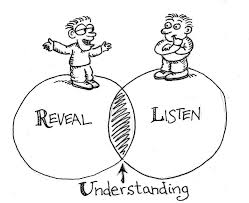
The solution is to listen. Don’t confuse feedback with criticism,. It’s hard to hear anything negative about our work but focus on the heart of what is being said. Take in what is actually being said not what you fear is wrong. It is related to the axiom: Seek first to understand, then be understood.

I have told the story of when I had started in a new school, and a teacher came into the library storming because her privacy had been violated. In my head I heard, “I have only been here a few months, I barely know you. How could I have violated your privacy?”  Fortunately, I thought to move her to my office, and the intervening moments gave me time to think. Instead of jumping in with my perspective, I heard the specifics of what she was complaining about. Her concerns were clear and valid. I came up with a solution. She was pleased and became a huge library supporter.

If she had been incorrect, a different approach would be needed, but that still wouldn’t include telling her why she was wrong. That would only lead to more arguments. Instead, a better response would be, “I recognize you are upset. How can I make this better for you?”  This gives her time to think, gives her agency in the problem, and the conflict starts deflating like air leaving a balloon.

Another technique to deescalate a situation is to paraphrase what the other person said as accurately as you can –not coloring it with your judgement. This gives both of you time to pause and reflect on the issue. It keeps you from making assumptions, allows you to be clear about the other person’s concerns, and helps you get to the true point of the problem.

When dealing with students, similar tactics work. If you get into an argument – or worse a shouting match – you have already lost. Keeping the library a safe, welcoming space for all, means you treat even argumentative or hostile students with respect even as you deal with their issue. Listen, paraphrase, and as soon as possible move to a more private place to discuss the issue. The same approach works when an administrator comes to your library or you meet in their office. Focus on listening before responding. And then respond, not react.

Listening to the other person, remembering it is important for the situation to be resolved in a way that supports both sides, and not worrying about who’s right, allows you to manage stressful situations and stay a supportive, astute, leader.

ON LIBRARIES: The Impact of Small Words

The words we choose matter.  They are powerful conveyors of ideas and emotions.  We are aware of the fact when writing Mission and Vision Statements, but we may lose sight of their importance in our more casual interchanges. It’s the little words that can move us forward or trip us up. The words that we use or don’t use effect how we are perceived and received. When we are in a hurry to get to what’s next we have a tendency to drop what used to be called “social niceties.” It results in diminished civility that can cost us in our relationships.

Maybe it’s because we communicate more through texts and other electronic media, but I’ve noticed “please” is disappearing from many interactions. If we are approaching someone to assist them, we probably say, “please,” but all too often when working with others, we are quick to move to “Could you” or “Would you” without introducing the request with “Please.”

A small word yet changes the tone of the conversation. There is a difference between, “Can I have a word with you?” and “Please, may I have a moment of your time?” Once we put “please’ first, it changes how the rest of the sentence goes.  “Please” recognizes you are making a request of someone and acknowledges their right to refuse.  The good news is, when asked politely, most people won’t refuse.  Civility smooths the path.

If you remember to use “please,” it is natural to then say “Thank you” at the conclusion of the conversation. “Thanks” is not quite as good, but both show you appreciate what the other person has done or agreed to do. Either are far better than “great” which is how we too often close our conversations. This acknowledges the situation not the person. Again, a subtle but important difference.

You also want to use “thank you” when having been given a compliment and stopping there. There is a tendency to return a compliment.  This has the result of diminishing the ‘thank you,” as well as the compliment, reducing it into “I’m saying this because you said something nice.”  When you simply accept the praise, you show you value it.

After “thank you” easily comes “you’re welcome.” It’s gracious and acknowledges someone’s gratitude.

Just as there are words which improve your communication, there are the small words that detract from your impact.  These are the ones we insert unthinkingly and tend to be personal conversation idiosyncrasies. For example, you may have a tendency to use “actually” to introduce something. If you overuse it, it can sound like a contradiction. “For what it’s worth” is a filler that can make it sound as though what you are offering isn’t of value. Listeners may discount what you say over time. Tune into yourself to hear if there are phrases you use repeatedly. 

For other filler phrases (both spoken and written) Grammarly discusses What Are Filler Words and How You Can Cut Them. It’s worth reviewing. The more you eliminate filler words, the easier it is for readers and listeners to focus on the point you are making.

In being aware of and using the social niceties, you show the small touches of caring for others that make people enjoy working with you. It shows that despite the pressures and stress we’re under, you are mindful of what your colleagues and students mean to you. You take the time to show they matter. By dropping filler words, your communication is clearer, and your relationships are likely to be stronger.  You put yourself and your program in the best possible light by being mindful of both.

ON LIBRARIES – The Relationship Building Blocks of Leadership

As the administrator of the library program, you are a leader. However, it is important to stop and notice where you are either not leading or not leading effectively and the first place to look is to your relationships. Do you regularly work on building your relationships with teachers?  Have you established a positive relationship with your principal?

AASL’s Vision sets the path for us. “Every school librarian is a leader; every learner has a school librarian.” Remember, a Vision is what we strive to achieve.  It may not be realized yet, but your planning and what you do each day should be focused on achieving it.  To get to the second part of the AASL Vision, we need to work on the first part.

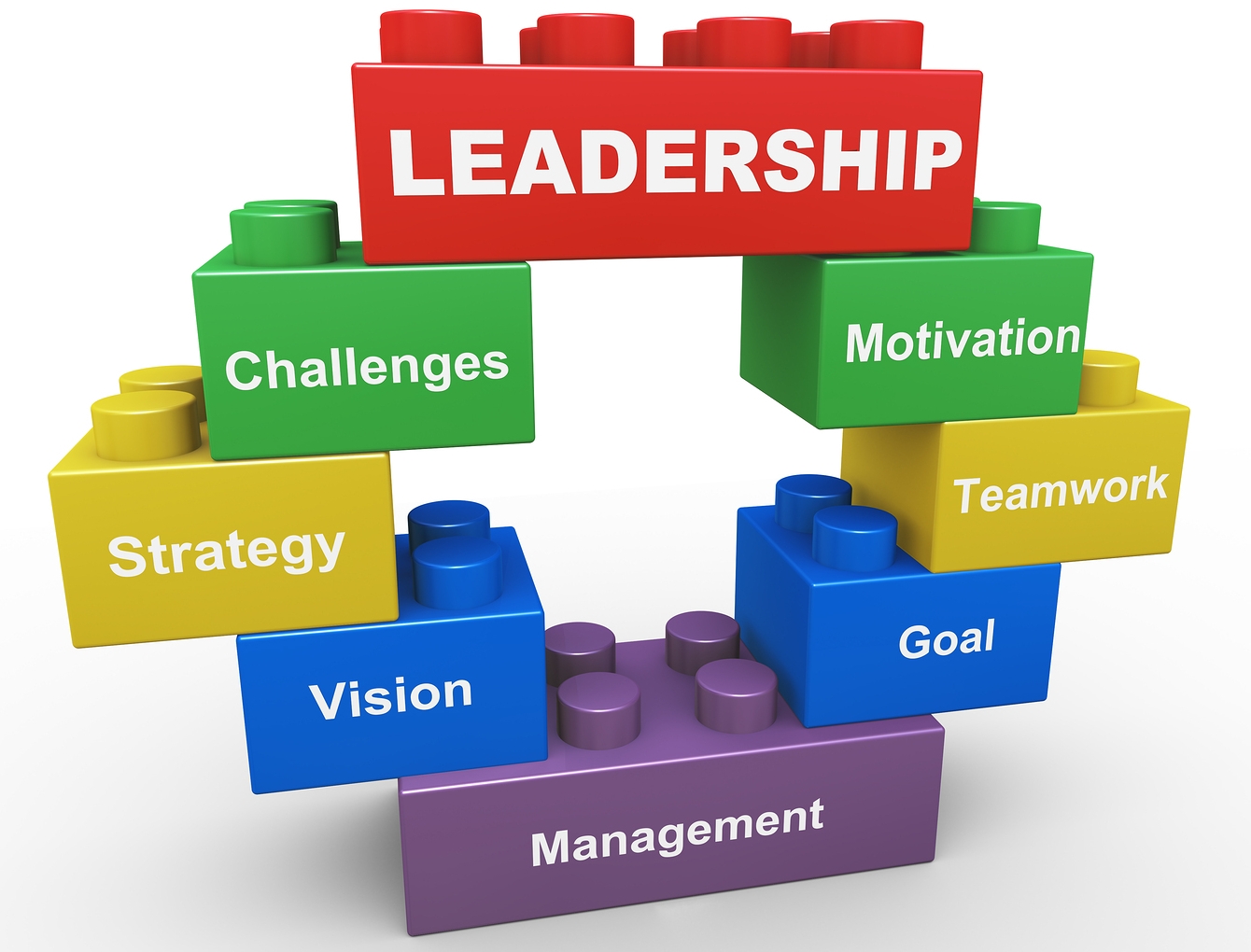
Relationship is the first building block of leadership, but creating relationships requires both a mindset and a skill set.  Douglas Conant, former CEO of Campbell Soup, in a post entitled Leadership That Works: It’s All About the People, aptly defines leadership as, “the art and science of influencing others in a specific direction.”  He states: “You can’t become a world-class leader without being anchored in the fundamentals of your craft, the craft of leading people” and offers the following ten building blocks to get you there.

  1. High-Performance – You work at this every day. But although many of you are coming in early and/or staying late several days each week, not enough of you are letting others know what you are accomplishing.  This isn’t about the hours worked.  It’s about the results that are impacting your students and their success in the school. Librarians must communicate this to teachers so they will look to you for collaboration and to administrators so they will know your importance to the district.
  2. Abundance – Your budget may be small or non-existent, but you have an abundance of knowledge to share. Keep your ear out for teacher —and administrator – needs.  You should share your tech skills and awareness of great websites, apps, and other resources. While it’s an excellent technique to send an email about a great tech resource each week to the faculty, it is far better if you can send one to a particular teacher that addresses a specific need. Or schedule a drop in time for teachers to come try something out and get coaching.
  3. Inspire Trust – Relationships are built on trust. You can’t be in a relationship with someone you don’t trust.  Be mindful to keep teacher comments confidential. Gossip is tempting and schools, like many other workplaces, run on it. But leaders are trustworthy. Don’t repeat what others tell you.
  4. Purpose – This is your Mission Statement. It proclaims what you do.  It should identify what is unique about you and the library.  Create one a fun, noticeable sign for your Mission.  Frame it and hang it so it can be seen by everyone who comes into the library.
  5. Courage – Take chances and introduce new projects and programs. You can get ideas from the many Facebook groups for librarians, other librarians in nearby districts or at state/national conferences.  Being a risk-taker is one of the basic requirements of leadership. Not everything will be successful, but if you do your due diligence by getting advice from your PLN, most of them will take off.
  6. IntegrityYou can’t be a respected leader without it. It is what inspires trust (see #3). It also means standing up for the ethics of our profession. The six “Common Beliefs” of the National School Library Standards are the bedrock of the philosophy underlying our program.   In addition to the fifth Common Belief – Intellectual freedom is every learner’s right – we also hold to ALA’s Code of Ethics and the Library Bill of Rights, along with the Interpretations of it that relate to working with minors.  There may be occasions when it takes courage to stand by our principles, but that’s what integrity requires.
  7. Grow or Die Mindset – My oft-repeated mantra is, “if you are not growing, you are dying.” It’s wonderful to have a well-respected program, but look for ways it can be better. Be innovative. Keep your eye out for what’s next.  Get to conferences as much as you can.  Watch webinars that will take your program in new directions.  Ask questions. Find a mentor. There are many ways to keep your program growing.
  8. Humility –We have only to notice how many school districts have lost their librarians to take the definition of humility (having a modest view of one’s own importance) to heart. In addition, as lifelong learners, we are well aware that someone always knows more than we do about something. And that this someone may be one of our students. Even when we are the resident expert, there are other perspectives which can add to our own. Humility can keep us growing (see #7).
  9. How Can I Help? – The answer to this is likely part of your mission or vision statement. It’s also in the non-verbal message we send daily in our body language and voice, and how we work with students and teachers. We are a service profession which is why building relationships are so important.
  10. Have Fun – I can’t emphasize this enough. If you have been staying late several days a week, cut back on it.  Treat yourself to something you enjoy at least once a week, and hopefully every day.  Make time for friends and family. Rediscover a favorite hobby or learn something new. I guarantee it will improve your leadership skills.

I have been writing and speaking about leadership for most of my working life, and I find there is always more for me to learn. I am confident that you have many of these leadership building blocks, but each of them can be improved.  Every day is an opportunity to learn something new, do something better, and show everyone you are an invaluable leader.

ON LIBRARIES – Build Your Listening Skills

Are you a good listener?  I am much better than I used to be, but it’s a skill I know I need to keep improving.  To be a successful leader you must be a good listener, hearing what is said – and not said and become an active listener. Active Listening contributes directly to building strong relationships.  As a quick review, Employee Development Systems Inc. gives these 6 Elements of Active Listening for Improved Personal Effectiveness:

  1. Letting others finish what they’re saying without interrupting them
  2. Asking questions to gain understanding
  3. Paying attention to what others are saying by maintaining comfortable eye contact
  4. Remaining open-minded about others have the right to their opinion
  5. Using feedback and paraphrasing skills
  6. Observing non-verbal signals such as the speaker’s facial expressions and body language

I have finally managed to do #1 most of the time. I do the others as well, but #5 is the one I’m still working on developing.

Click the image to go to the article

Another way to look at how we can change the way we listen is offered by C. Otto Scharmer in an article entitled How Are You Listening as a Leader?  He lists four types of listening.  By categorizing which one you need when, and knowing how to use all four, you will improve your leadership and develop better relationships.

He calls the first one Downloading.  At this level, what you are hearing is information you already know.  It reminds me of so many faculty meetings.  You can tune in with one ear while you plan the tasks you need to do once you leave the building.  Of course, if this is how you are listening when a teacher or student is speaking to you, you will not connect the way you should so downloading should only be used when appropriate and not as the first one.

The second level is Factual Listening. The focus here is on data transmittal, and we are listening for where what we are hearing confirms or goes against our expectations.  In education, this kind of listening is likely to occur when the focus is on changes in scheduling and other areas during testing situations. Scharmer cautions that this is where we need an open mind and to not make judgments.  For example, you may (rightfully) become angry at what will happen to your program during the days devoted to testing.  Rather than be resentful, contemplate how you can make it work for your program (as long as you aren’t proctoring) and offer it as a suggestion to your administrator.

Empathic Listening is when we reach out to another’s person’s feelings.  It’s at this level that relationships are built and your colleagues, student, and administrators come to trust you as a leader. By understanding and recognizing what is motivating another person, you are better able to understand their point of view.  While you don’t have to agree with the view offered, this knowledge puts you in a better position to respond in a way they can hear you.

Finally, there is Generative Listening. When you are at this level, you and others are creating.  This is where innovation begins. You are ready to consider what is possible while giving others the space to come aboard and join with you.  You are not enforcing your will or ideas, but rather collaborating as the best from each participant is allowed to be heard allowing the result to be far greater than you could have imagined.  In the end, everyone has contributed to a project or program’s creation and success.

Click image to go to the article

Why do we have so much trouble listening? Dan Rockwell in his Leadership Freak blog post in March suggests the following reasons for “shallow listening.”

  1. Desire. Listening is such a bother.
  2. Ignorance. You might listen if you knew how.
  3. Time. Hurry up. The clock’s ticking.
  4. Energy. You don’t have the energy to listen deeply.
  5. Discipline. On a list of “hard things to do,” listening is near the top.

I am discounting #2 because I am sure you have heard much about Active Listening besides what I have just discussed.  For most of us, #3 is probably the main reason.  And after a long day, #4 takes over.

We change our habits when we recognize that making the change is worth the time and effort. Then it becomes a priority.  Listening is a leadership quality. Scharmer says, “Listening is probably the most underrated leadership skill. How you listen can be life-changing; not just business- or industry-changing.”

You can see what a difference it can make in your program and the individuals you come in contact with, where so much of what we can achieve rests on our ability to build relationships.  Listening and continually improving our listening skills deserves to be a priority. It changes our ability to be effective and impactful leaders.