ON LIBRARIES: High Touch When You Can’t Touch

In recent years, many businesses have found success by being “high touch.”  According to Upscope a high-touch business is “one in which a customer places trust and partnership with a company, and in many cases, a specific individual or team at the company.” These companies develop close relationships with their customers, which builds loyalty.  The mental image is of them “reaching out and touching someone,” of being connected. We, too, need to develop these kinds of relationships with our “customers,” but in the current environment this is challenging on both a figurative and literal level.

Our ability to connect with teachers, students, and administrators determines whether we will be considered indispensable. But we base much of our relationship skills on being in physical contact with others.  We are accustomed to reading the body language and tone of voice of others to help us identify where they are and what they need.  Zoom may give us some clues, but it doesn’t come close to real life.  While we will probably have more in-person contact as schools resume, you will still need to rely on other means to build and keep relationships.

In developing these alternatives, you will display important leadership characteristics. Our teachers and students are crying out for leadership as the ground beneath us shifts almost daily.  Our administrators are stressed even more than the rest of us, being put in charge of situations fraught with uncertainty and danger.

Ken Goldstein’s blog post Desperately Needed Now addresses what you can do to help your students and colleagues.  After observing the success of several business teams, he noticed some important commonalities and proposes we need to focus on three “C’s.”: Confidence, Clarity, and Connection.
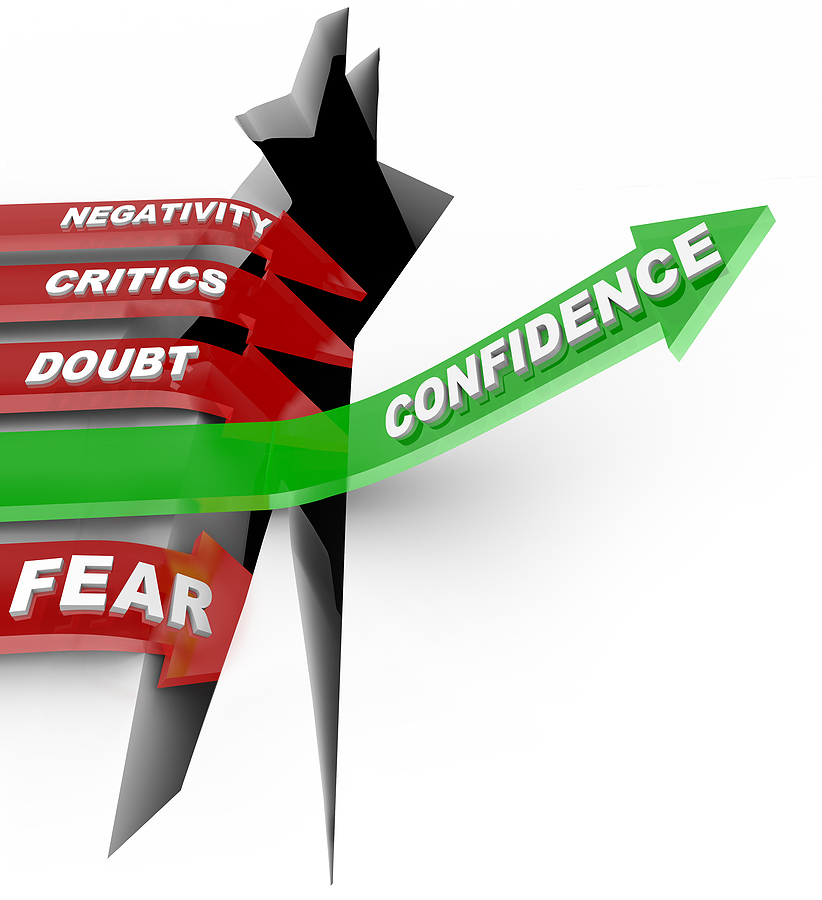
Confidence – It’s difficult to feel and act confident when there are so many uncertainties. Yet this is where leadership comes to the fore.  You know what the proposed plans for the restart are.  You know what the changes are likely to be, depending on the situation with the virus. What is your plan of action?  And what’s your Plan B? Don’t doubt yourself. Accept that your first plan will inevitably need anything from tweaks to full-scale re-writes. Be certain to write your plan(s) down somewhere and keep checking it regularly, adapting as necessary.

Having a sense of direction will build your confidence.  Bring that confidence to your Zoom and in-person meetings.  Don’t try to suggest that you have all the answers, that would be arrogance.  But when you project you know what you will do and how you will work with others, your colleagues will feel reassured and look to you as a leader.

Clarity – You have all seen people in leadership roles who start talking and then bring in something that runs counter to what they just said.  Their audience is lost then either tunes them out or stops trusting them. Keep your ideas clear and simple. It’s hard for audiences (students and teachers) to stay focused in the current climate. Be ready to state your plan in another way if your audience seems confused. But keep it brief.  Encourage questions.  This will ensure that everyone – or sometimes the person you are talking to – understands your plan.

Connection – Social isolation is contrary to human nature. We can see it in the behavior of adolescents who keep violating the social distancing rules or the way we are calling friends and family more often.  Look for ways to personalize connections with others.  Use tech to send friendly visual messages. We are hard-pressed for time, but relationships need and deserve that time.  Ask about family and other non-education related topics once regular business is complete, just as you might under normal circumstances.

It sounds as though all this might add to your workload, but in the long road it will lessen it.  Your colleagues may start by leaning on you but will soon take on the behaviors they are seeing in you.  Leadership is about getting in there with people and plotting a direction.  The route to getting there is where the learning and growth happens.  The Connection you help to create will strengthen the school’s culture.  Your Clarity will help them achieve their own plans. And your Confidence will grow.  You’ll create a library that’s high touch no matter the circumstances.


ON LIBRARIES: Follow The Yellow Brick Road

My daughter often speaks about the great life wisdom in MGM movie The Wizard of Oz. As I consider where we have come from and what lies ahead, it’s apparent the story has much to teach us about our current situation.

To start at the beginning, a tornado called COVID-19 has swept down on all of us.  We landed in unfamiliar territory, and the one thing we know is, “we aren’t in Kansas anymore.”  With Dorothy as our guide, we can safely navigate this bizarre world.

She begins, as we did, at the beginning, not knowing exactly where she is going, but trusting herself to get there because her goal is so important.  Dorothy quickly picks up three companions, which is something most of you have wisely done, because on a journey like this, it’s important not to do it alone.

Despite being self-isolating, we have reached out to others. The various library-related social media groups are a lifeline.  Someone knows a resource that will be invaluable.  Someone can answer your question about using an app.  And we all understand the special demands being made on school librarians. Whether you are seeking help or giving it, you are part of the library community.  It will shore you up on good days and bad. It’s what we do for each other, and how we serve our students, teachers, and administrators. Some days you need the group – some days the group needs you.

Her three companions contribute to the journey, and what they represent is key. There is no doubt you will most need: Brains, Heart and Courage.

Brains:  The Scarecrow, who claims not to have a brain, shows good thinking throughout.  We may start out confused, but ultimately we are able to create important and worthwhile plans to provide the services your educational community – which more than ever includes parents – need.

Fortunately, as a librarian you are a lifelong learner – thinking is your strong suit. You have been going on webinars, checking new apps, and curating the ones that apply.  You share them with the appropriate people.  And you are there to provide technical and other help as needed.

Heart – The Tin Man longs for heart, but, of course, he has one.  He loves completely.  You, too, love your students and the job you do.  You feel for your teachers and your administrator and are doing your best to be there for them and show them you care.

Empathy is an important leadership quality.  It builds trust and draws others to you. Educators have been working on trauma-induced teaching and learning long before COVID-19. Since the start of the pandemic, almost all of us are dealing with trauma – ours and others.  Using your natural inclination to be of service, you bring this quality to everyone.  They count on you, even if they haven’t before. (And a reminder – be sure to document what you have been doing so it isn’t forgotten.)

Courage: The lion recognizes his fear, but doesn’t believe he has courage. However, when the time comes, when it is needed, he shows it completely. Being frightened doesn’t mean you aren’t courageous.   Getting up each day and carrying on is an act of bravery.

You also show your courage in your dealings with others.  You focus on the possible and look for solutions, trusting you will find something that works. Like the lion, you admit you are scared, but your actions show your community how you demonstrate courage in the face of it.

Finally, it is important to notice Dorothy. She starts out feeling confused and uncertain. (And who isn’t these days?).  But she soon shows she is a leader. Dorothy builds her team, accepting help to reach her Vision and Mission. The Vision – To get back home and be there for her family.  The Mission – Get to Oz and get all of them what they need. With the team she inspires with her passion, they each make their own contribution, and attain their desired results. She has empowered them to become better than they knew they were. She is a true leader.

So, put on your red shoes and start following the Yellow Brick Road.  We know it’s not Kansas,  but this is where we live now and no matter what, there’s no place like it.

ON LIBRARIES: When Everything is a Priority

Time management starts with focusing on your priorities, but what do you do when everything is a priority?  You always had a full plate, but these days that plate is piled high – and more seems to be added regularly. When you have so much to do, it can be nearly impossible to know where to start. You might start with the one you notice first, or you might choose the hardest task or the simplest one. Yes, you’ll get through everything eventually, but is your approach the most efficient?

Breaking the to-do list down can be a good beginning. First, divide what you need to do into two groups: personal and professional.  Divide the professional into those directly connected to your library, ones required by your school, and then your additional commitments such as course work, professional development you are doing, responsibilities for your work in your state school library association, and any other related tasks.

For your library tasks and those for your school, choose the ones that support your mission first, that way you know you’re supporting that important goal. For the other professional responsibilities, evaluate where you might need to adjust deadlines and/or get help.

And don’t forget the personal items that need your attention. Those are another kind of priority and you need to allot time for this as well. Be sure you are giving this some time each day, particularly making time for yourself regularly.

To help you determine what to do first, consider the recommendations of Naphtali Hoff in his post on How to Identify the Most Important Tasks. His six-step approach to dealing with your MITs (Most Important Tasks) – with some of my tweaks and comments — should help you deal with your overloaded plate.

  1. What are the most 2-3 important things that I need to do today? Good question. If you identify these and complete them, the result is a tremendous sense of accomplishment. But how do you identify them? Choose one of your groups. Look for tasks that have an upcoming deadline.  Are they of high importance?  Are any of them tasks you enjoy doing?  Will the professional task promote your Mission?

Naftali also suggests you take the Pareto Principle into consideration. In brief, the Pareto Principle, named for the Italian economist who first observed the 80/20 relationship in many places in life, is used to note that 80% of the work is done by 20% of the people. Applied here, it means that 80% of your outcomes result from 20% of your work.  You want to invest your time first where it will bring the greatest result.

  1. What is the task’s value or ROI? ROI means – return on investment. What will you get back from the time and effort you spend? Related to the Pareto Principle, look at your list and determine what will bring you the greatest return on the investment of your time. Also look where completing some tasks may make another task easier.  These connections will support your success.

As you determine a task’s ROI, you must consider advocacy. How will others know of your accomplishment of the task?  It’s always been true, but as budget belts tighten again, this is truer than ever.  You do great work, but if no one knows about it, it won’t make a difference in the long run.

  1. Is it related to your goals? Is it part of a strategic plan you have created? How does it relate to your Mission? Other than things aministorators have directed you to do , your answer to this question should set your priorities for what task you should do next. The more distantly related – the lower the priority. These are the things that should be relegated to the end of the day or week, if/when there is still time.
  1. Is it a task that you’ve been thinking about for some time? I really like this one. If it’s been on your mind, it’s worth considering. And this includes your personal tasks.

And don’t discard it or put it off because you have other more well-defined items on your list.  It most likely connects to a passion of yours.  Bringing it to fruition will give you a great sense of satisfaction and accomplishment and will likely spur you on to deal with the other tasks you have. (That gives it a high ROI!)

  1. Have you been putting it off for too long? This is the flip side of #4. There are always things on our list that get moved to the next day and then the next. Why have you been putting it off?  Do you dread doing it? If so, why?  Is it very time consuming? Is it boring? Think about way to break it into small steps and focus on those. Does it take you out of your comfort zone?  It can be hard, but these can be the tasks that help us to grow the most. Turn to your PLNs for advice on how to accomplish it.  With support, you are more likely to tackle it and come out on top.

6.      Is it a task that will free you up to work on your real MITs? Sometimes you do need to complete small jobs so you have a large enough block of time to work on what is really important. Hoff suggests setting an artificial deadline to complete these.  I love artificial deadlines.  They create a cushion, so I don’t miss the real ones when life “happens.”

The Hoff article didn’t cover two additional things I consider vital.

Know the best time of day for you to tackle the tasks on your list.  He does refer to the things you need to do, but when?  For me, it is the first thing in the morning.  If it is something that has a deadline (even an artificial deadline) I can’t look at email or anything else until I get the highest priority task of the day finished.

Don’t forget to apply these questions to the tasks you put in the Personal group.  You must make time for family, friends, and for yourself. There’s a huge ROI when we honestly take care of ourselves. Laundry can wait another day. Taking time for the personal will make you happier which will likely make your professional tasks easier.

ON LIBRARIES: Leading from the Middle

Back in February (doesn’t that seem like a lifetime ago?) I blogged about Leaders are Team Players and discussed the idea of leading from the middle. It seems like a contradiction in terms.  How can you lead from the middle? The leader is the one in charge, the one in front.  The reality is you can lead from anywhere, and many do. It’s about how you are, how you present yourself, and how you interact with the people around you.

If you think only the person heading things up is the leader, you are focusing on a title not on actions.  If the person who holds the title does not exhibit strong leadership qualities one of two things will happen.  Either what they are leading will not function well and will achieve little, or someone will step in to fill the vacuum.  The person who does is leading from the middle.

For those of you new to leadership, it can be a good position from which to start. Those of you who are already leaders can sometimes more easily step in, but you will need to be mindful not to take charge. You don’t want to show up the official leader. That can sabotage your efforts.

You can practice leading from the middle when you are on a school or district level team, but the skill really comes into play when your principal is ineffective, incompetent, or uncertain.  I have had administrators in the first two categories, and it was often hard work to steer them in the right direction. Mostly it was a matter of “sharing” an idea I had, stating it briefly, and proposing to handle the details while keeping them in the loop. It made them feel as though they were in charge, as if they were giving me permission to move forward. In reality, I had taken the lead.

These days with school opening plans being open-ended, subject to quick changes, and having the potential for causing harm, administrators at all levels are uncertain and insecure.  If they don’t have strong leadership qualities, knowing how to get a broad selection of advice and information, and  understanding the needs of the people they lead, they are apt to freeze in indecision or push forward regardless of how new information changes the picture. That can put you in a difficult situation. Lolly Daskal, author of The Leadership Gap, explains The Best Way to Deal with an Insecure Leader, offering these six suggestions:

Don’t take their lack of confidence as a reflection on yourself Insecure leaders blame others.  They don’t take responsibility and are quick to lash out. Listen instead to what has set them off.  What are they worried about? How can you help mitigate the situation?  By staying calm, you will help your principal to relax and, hopefully, refocus so that purposeful action can be taken. When you can see what they fear, you can better offer solutions.

Praise their strengthsThis can be difficult because when you are annoyed and frustrated, you don’t see any strengths.  But everyone has them.  Even if it’s a small thing, find a positive.  It has to be honest.  You don’t want to be an apple polisher or over do it. Just keep looking for good qualities that you can bring to your administrator. It bolsters their ego which is obviously damaged at this point and helps them move forward in a good direction.

Don’t allow comparisons – This is an interesting one.  Whenever we compare ourselves to others, we invariably come out second.  We always see what someone else is doing better than we are.  Your administrator may be doing this as well. Don’t exacerbate the issue. The last thing you want to do is compare how another principal has handled a similar situation.  Just make the suggestion — without attribution.

Pinpoint productive ways to handle frustrationDealing with a poor administrator will cause you to become frustrated.  Don’t let them drag you down.  I once had a principal who was a bully and not very competent.  I would come home almost daily complaining about him. By doing this, not only had I let him affect my workday, I had allowed him to spoil by personal time.  After my husband pointed it out, I stopped discussing him at home.  Make time to do the things you like.  Do any routines that calm you and put you in a better place. In addition, find support from other librarians – as great as your partner may be, s/he does not understand your situation the way others in the field will. Let your Professional Learning Network (PLN) bolster you and be a place where you can let off steam. You will be ready for your principal in the morning – and your family at the end of the day.

Link your success to your leader’s – At first glance this seems almost impossible, but it’s something I have recommended before.  Usually, I suggest you identify your principal’s vision and goals.  With an insecure leader this might not be obvious.  Instead, figure out what would make them feel successful.  Who do they need to show they are doing well?  How can they do that?  Help them get there, using the library program.  They may never say it, but they will then regard you as indispensable to them. This is a key part of leading from the middle.

Lead from withinAnd also from “without.”  Lead everywhere.  It doesn’t matter what your title is or what situation you are in.  A leader is what and who you are.  The more confident you are in your abilities and what you bring to the student, teachers and administration, the more obvious it becomes to other that you are a leader.

For your efforts, you will improve your relationship with your principal and through that relationship create a better working environment for everyone. You will also improve your leadership skills. That’s something we all need right now.

ON LIBRARIES: Be a Community Builder and Leader

The world will never be as it was on New Year’s 2020.  So much has changed, and so much will be changed.  What never changes is people. One of the reasons we feel unsettled so much of the time is due to the upheaval in our relationships. Being cut off from our usual daily contacts for such a long stretch is a huge challenge.  What does all this mean to you? An opportunity. This is a time for you to take a new type of leadership position – one with a community focus.

Although we often refer to the educational community, we don’t pay much attention to what holds and keeps it together. Our schools must be strong communities outside the classroom more than ever, and you can be the one who creates and leads it. This goes beyond the support you have given teachers on distance learning and the resources that go with it, and the various online events you have held during the virus.  I am talking about vital connections and relationships, the kind that truly sustain a strong community.

Believe it or not, one of the ways you can do this is by building website – one that is specifically focused on creating community. Yes, your library and/or you school already has one but consider creating one that is for community.  This is not for tools, techniques, meeting times, administrative forms or other resources.  This one is for connections. Alternatively, you could consider building private Facebook group.

People join communities because they need something that’s provided by the social support and network found in a community. When trying to create one, think about the needs of the potential members (parents, teachers, administrators). Beyond the academic goals of each of these groups, what do people need that they can get from coming together as a group.

This can be a place to encourage the school community to share who they are with each other. It may be a place where people ask for help, or a way to set up online playdates or movie watch parties.  You can also create themes for days of the week. For example “Monday Menu Ideas” could ask for everyone to put links to their favorite simple recipes (we all need some new ones by this time!). “Starring The Staff Tuesday” could be the day where teachers and administrators are featured engaged in an activity they love. “Binge Fridays” could ask what shows people are planning to binge watch in the coming weekend. You can also spotlight local businesses that could use the support of everyone around.

Before starting this, discuss your idea and goal with the principal. Explain that building a strong community will boost resilience as we tackle whatever the future brings. To get the community site started, announce it on all social media the school uses and any other ways they reach out. Be clear about the purpose and how you see this supporting the school through this time and the future.

Even having posts to help people laugh can build community. I saw a post on Facebook askin people to quote a famous line from a movie and add “due to the pandemic.” The idea drew many responses and was shared heavily, drawing more suggestions.  You can do the same with a famous line from a book, “It was the best of times. It was the worst of times …due to the pandemic.” Post some riddles or other brain posers.  Invite teachers and administrators to add their own ideas.  The more people who contribute the stronger your community will grow.

You might suggest the community have a slogan and/or a logo.  Ask for ideas and have a vote to decide which one to use.  Then incorporate that in any activity you do.

Emelina Minero offers 10 Powerful Community-Building Ideas you can choose from to boost your group.  I like the Shout-outs.  Encourage members to acknowledge someone for anything that is worthy of sharing with others. We all love to be praised.  Oddly enough, we also feel good when we single out someone for praise.

Look for projects everyone can get behind. Ask for suggestions and for someone to lead it.  You are leading the way, but you want others to join you. And you don’t want to be doing all the work.

The idea behind this is to have some fun together and learn who we are as people.  We need to be like the California redwood trees which manage to grow so tall and live so long even though their roots are very shallow. They remain standing because their roots are interconnected with each other.  Together they stay strong. Like the redwoods, the more interconnected we are, the stronger we will grow.

ON LIBRARIES: Tackling Time Management – Again

I have yet to meet anyone who said they’ve mastered time management.  No matter how much we have learned and put into practice, we have far too many days when we feel like a hamster on a wheel. Part of the problem is with so many tasks, both professional and personal, we can’t possibly finish them all.

The truth is, no matter how good you get at time management, there will always be days that are so hectic by evening you are exhausted.  If the large proportion of your days are like this, the energy drain will rob you of your enthusiasm and joy in what you do.  And that’s not good for you, your students and teachers, or your relationships family and friends (check out the last two weeks posts on burn-out and resilience).

Most time management articles and posts repeat much of the same things, which suggests they work. Most of the time we are not thinking of these practices as we dig into the day’s workload. So rather than going through a long list again, let’s try a simpler approach.

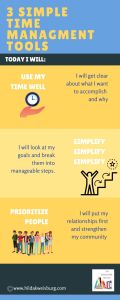
In an Edutopia post, Matthew Howell talked about Balancing Effort and Efficiency: Three Tips to Help School Leaders Establish and Achieve Their Goals While Keeping Their Workload Manageable. Focusing on just three behaviors might be just what you need to keep from becoming overwhelmed.

  1. Use Time Well – Setting goals with a clear why/purpose is a great way to avoid misusing your time. Think about what you are trying to accomplish and why. Once you know what the goal is, stay with it. It’s all too easy to get distracted. If you leave the room where you are working, you are bound to see something that needs your attention. Unless it’s a real emergency, train yourself to ignore it. Those pings on your phone?  Ignore them until you have reached your goal. The messages will be there later.
  1. Simplify, Simplify, Simplify – If the task (and goal) are too large, you will find ways to procrastinate because you don’t think you will ever get it done. As the saying goes, the way to eat an elephant is one bite at a time.

Ask yourself, is there a way to get to the goal with fewer steps or pieces?  If not, how can you break it down into small, manageable goals? Reaching them gives you the impetus to move onto the next small goal.

I have discussed my technique of telescoping, microscoping, and periscoping as a means of managing big jobs.  The first step, telescoping, has you look at the whole picture and breaking it down into smaller manageable chunks.  Next is microscoping where you focus completely on that small chunk.  Every so often you pop up a periscope to see the next task, just to be sure you are prepared for it when you get there.

  1. Prioritize People –   Those who know me now would be surprised to learn this was the most difficult lesson for me to learn. I would always put tasks first.  If I was working with someone, I lunged into what needed to get done, saving the “chit-chat” for when we completed the work. I’d skip right over the opportunity to build relationships.

Always put people first. In the long run the tasks get done faster and better.  It’s also a way to learn if someone can help you with a current project. As we find our way in these days of virtual learning and communicating and social distancing, it’s more important than ever to make meaningful contact with people.

One of your goals (and possibly a modification to your Mission) needs to be about creating community.  So often administrators say, “the library is the heart of the school.”  True, their actions don’t always back that up, but the more you can show that you are at the center of the educational community, the more indispensable you will be.

One more idea to help with focus.  See the graphic on the left?  That’s a .pdf for you. Just click, download, and print (SLW – Time management info).   Post it where you can see it while you are working. It will remind you to stay on track and do better at managing your time. Most of the time.

ON LIBRARIES: In Search of Resilience

Has your get up and go got up and went? This is not the usual end-of-year tiredness.  We have had too much to do, a huge learning curve, and an increased workload coupled with fear of the virus and economic concerns.  And while you may want a nap, a glass of wine and a lot of chocolate, what you need is to develop resilience.

Before we look at what resilience can offer, consider the distinction between three words which are similar but not the same: Perseverance, Grit, and Resilience.

Perseverance is the ability to keep going no matter what.  It’s how you have mostly been getting through your days. One foot in front of the other. Grit is when you focus your mind on what needs to be done, bear down and power through. It’s perseverance with a dose of determination. Resilience is the capacity to bounce back or recover in the face of challenges and difficulties. Unlike the other two terms, it isn’t about just coping.  It carries a connotation of growing and improving as part of dealing with challenges. It is a growth mindset and one that could be a tremendous benefit to you in the weeks ahead.

Perseverance and grit are good traits in their own way, but resilience will carry you through.  In a post from KQED in California, Katrina Schwartz discusses the work of Elena Aguilar on 12 Ways Teachers Can Build Resilience So They Can Make Systemic Change. Many are familiar, but this presents it in a new way. The idea is not to survive, but to thrive and grow.

  1. Know Yourself – Start with self-reflection to give you the base on which to build your resilience. What are your strengths? Where do you struggle? Your weaknesses probably come to you first, so promise to take the time to be honest and recognize your strengths. (Ask a good friend if you struggle with this!) Also look at your traits, your background and what life experiences you’ve had. They all contribute to your becoming the person you are.
  2. Emotions – You are well-schooled by now in Social and Emotional Learning (SEL) for your students, but don’t forget to apply it to yourself. Emotions power almost everything from our choices to our reaction. Notice how you have been using your EI in approaching the day. Practice noticing and naming the emotions you’re experiencing.
  3. Tell Empowering Stories – I often talk about the “stories we tell ourselves” that have a basis in truth but keep us from stepping out of our comfort zone. Instead, start telling yourself stories about your successes. Now re-write a story about a failure, putting the emphasis on what you learned as a result and how you used that. Reframing a situation and changing the context can be powerful.
  4. Build Community – Relationships are at the heart of what we do. In the days of social distancing they are more important than ever. Be sure your community includes many librarians. Join and participate in the library-related social media groups.  They will support you, soothe your hurts, give you laughs, provide information and rejuvenate you. They will understand and support you in vital ways and contribute to your resilience.
  5. Be Here Now – Aguilar says this is about mindfulness and being aware of the “story” you are telling. It is also about focusing on what is in front of you without letting yourself be distracted by what’s beyond that. This is a form of mental multi-tasking which reduces your concentration on what you are doing, making current projects take longer and be done less well. Staying focused can lower your stress and increase your productivity.
  6. Take Care of Yourself – This is the advice given most often, and it’s the most often ignored. It’s not that you don’t agree with it.  But you don’t have time at the moment.  That’s not sustainable. Include at least 30 minutes of the day for “me time.”  Don’t use it to get dinner started or do any other of the tasks you do for others. This is all about you.
  7. Focus on the Bright Spots – They are there. Hold on to them as the treasures they are. As I have written before, I note my successes and things for which I’m grateful in a journal. Keeping those thoughts in front of me means the negatives can’t dominate my consciousness.
  8. Cultivate Compassion – This leans on your Emotional Intelligence (EI). Everyone is stressed and many are having difficulties managing it. Students and adults alike are lashing out in anger and frustration.  Instead of focusing on the emotion being broadcast, look for the underlying cause and speak to that. You will likely defuse the situation.  And when you do this, add the success to your Empowering Stories.
  9. Be a Learner – This one is second nature for us, but make time to learn about something new that catches your attention, not just the learning you do for your job. Broaden your horizons. You may discover something wonderful.
  10. Play and Create – Adults need play time as much as children, Some of you are very crafty and show it in your displays, so find other outlets for that talent. Because being creative is a kind of risk, it takes some courage, but courage is part of resilience.
  11. Ride the Waves of Change – Change is part of life. It is happening at a fast pace these days, but your Empowering Stories remind you that you have survived and thrived many other changes both professional and personal. You have what it takes to learn and grow as more changes come into your life.
  12. Celebrate and Appreciate- Celebrate small things as much as large. Celebrate yourself and celebrate others. Our lives are what we make of it. We are resilient.  We are strong.

In going through this list, it struck me how it connects to the four Domains of the National School Library Standards: Think, Share, Create, and Grow.  A good recipe for building resilience.


ON LIBRARIES: The Return of Burnout

Burn out is a common problem at the end of the school year, but here we are a month or more after schools have ended and for many the challenge continues. You are not alone. The workload, the assessments – of students and you – and the feeling that you aren’t valued are all contributing factors.  Add to this all the ways COVID-19 has exacerbated the issue, and it’s hard to change course. How can you rekindle your enthusiasm?

Moving at top speed to get everything done will not help.  Once you recognize you are burnt out – whether from things at work, home, or a combination – your first step is to pause and breathe.  To create a pause, do what you can to remove yourself from the environment you are in. Go sit outside. Take a walk. Drive to park and, if necessary, sit in your car. Just get away from your usual surroundings with its reminders of all you have to do.

Next consciously take a deep breath, slowly in and slowly out (this is good even if you can’t change your environment).  In the article The Benefits of Deep Breathing, Andrea Watkins, LCSW, writes that the benefits of this one action include:

  • Decreasing stress, increasing calm,
  • Reliving pain,
  • Stimulating the lymphatic system (and detoxifying the body),
  • Improving immunity.

Once you’ve taken these steps, you’ll be better able to think clearly and see the ways you’re capable and succeeding. You are used to dealing with many demands. You have proven how flexible you are. Throughout the quarantine you have been a source of information –and comfort – to students and teachers. Trust yourself to continue to be that. And make sure your principal and even your superintendent know what you have been doing and how it has contributed to learning and student engagement throughout this time.

Another action that can help is to reconnect with your “Why.”  It’s amazing how powerful this can be. Think back to the reasons you became a librarian.  Recall the special moments you have had with kids, teachers, and others. Maybe even some that took place during this crazy final semester. Remember your Mission and Vision statements.  This is who you are and what you bring to others.

You can also try reorganizing your day and possibly your work environment. A change-up will help to energize you. Be sure you are including “me-time” of at least 30 continuous minutes. You will get more done by taking a break than if you worked through it.

When you’re feeling calmer, identify what was the “straw” (or strawS) that triggered the burnout. Look at both your work and personal life. Each may be a contributor. Once you’ve determined what that breaking point might be, taking action – even one step – can help.

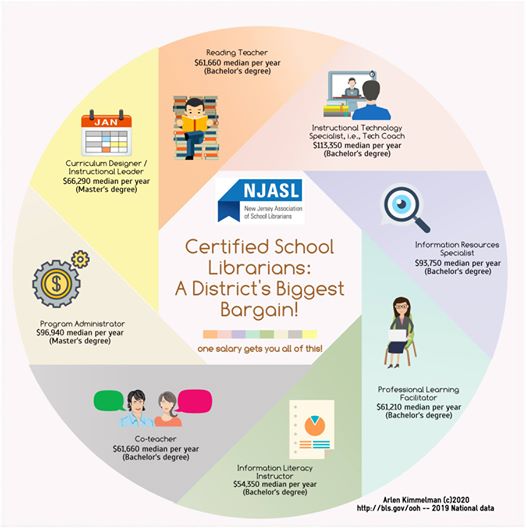
I’ve been reading on the School Librarian’s Workshop Facebook page that many of you are worried that after all you have done, you won’t have a library to go back to. You might be re-assigned to the classroom if libraries and other specials are being cancelled for the year, or perhaps the administration is talking about eliminating you entirely. Your action step can be stepping up your advocacy. All across social media you can find numerous charts and infographics for “sharing” with your administrators.  Here is  one from New Jersey Association of School Libraries or this one from Arlen Kimmelman, also of NJASL. AASL has one specifically for administrators.  You might also request time with your principal to discuss how you can impact student learning in the various potential configurations for school in the fall. Bring your awareness of trauma-informed learning and teaching. Discuss how you can assist in helping teachers who are also suffering from trauma.

The switch to distance learning, helping teachers who are struggling, and doing the same for students has been incredibly draining.  As you look toward a new school year, the extent of uncertainty about how the new configuration will look, and what your role in the new configuration it will be is increasing your anxiety and exhaustion. But if you take the time to use your support systems, make a plan, and take a step, you will discover you can do this.  You have already done so much.  Don’t let burnout stop you now.

Take the time you need and, as always, breathe!

ON LIBRARIES – Making Your Presence Known

Schools are creating – and recreating – their reopening plans for the fall. Budgets are being slashed in the wake of the pandemic. As administrators wrestle with tough decisions, you need to ensure that you and the library are seen as essential to making the new configurations work and work effectively.  If you haven’t been sending this message, start immediately, or it may be too late.

The workshop I give, “Making Your Presence Known,” was designed for what, in retrospect, was a simpler time, however its central premise, using Emotional Intelligence and the Four Truths, is extremely relevant now.

Emotional Intelligence (EI) is vital to your success because it means you know yourself, manage your emotions, and, most critically at this juncture, know how to read others’ emotions – whether in a Zoom-type meeting, in an email, or in person.  What messages are you getting from your administrators’ emotions? Your teachers’ emotions? What can you do to act on those?

Four Truths:

  • All libraries, regardless of their type, are part of a larger host system.
  • All libraries, regardless of their type, get all their funds from this host system.
  • These funds are dependent on the value of the library to the host system.
  • That value is determined by the host system, not the library.

Are you valued by your host system?  If you are not, you are likely to be gone.

Now is the time to make sure you are highly regarded by your administrators, recognized for what you do, and turned to for ideas and advice.  It’s time to increase the volume as you speak and speak out.

Joel Garfinkle in an article entitled How Fauci Exemplifies Executive Presence  identifies these four necessary characteristics which are key to combining EI and the Four Truths:

Gravitas: It’s the ability to project calmness in a crisis. You may be churning inside, but you don’t show it.  This is the managing your emotions/self-regulation part of EI as well as being aware of the emotions of others. Where is their fear?  How can you address it and, even if only part, ease it?  You are bringing a perspective to the table others might not have. If you work on this now, you stand a good chance of staying at that table because you will show your value to the “host system”.

Acts with Authority:  Yes, you do have authority when you speak from your strengths.  You have been curating information on COVID-19, on alternatives to managing it within the school environment, and the pros and cons of the possibilities.  Because of the help you have been giving teachers and students, you have direct knowledge of their challenges.  As Fauci does, you can bring the downside while you inform them of the upside.  You tell the truth.  It’s not sugar-coating; it’s reality put in a constructive framework and that becomes usable information, something everyone needs.

Establishes Credibility: You can cite the research.  You know your stuff. This is part of where your authority comes from. But you also have built relationships.  People trust you because you have proven yourself to be trustworthy. Again, your EI comes into play as you empathize with others’ fears. By doing so you reduce their concerns and increase your value.

Communicates Powerfully: Keep your administration informed about what you are and have been doing. Use infographics and other visual means. In a Zoom-type meeting don’t dominate the conversation.  Be succinct and don’t use library jargon.  People are tense and overwrought.  Speak simply and clearly – with gravitas. Speak slowly and don’t end your sentences with your voice going up as if you are asking a question, which sends a message that you are uncertain.

You already have some of these four skills.  Now that you are aware of them you can make certain you are integrating them into your communications, particularly with the administration. This will put you in a position to show – and have them believe – that you and the library must be part of the new normal.

ON LIBRARIES: Turning Hope Into Action

The posts and comments are familiar and often repeated. We are exhausted.  It’s been going on too long.  We hoped it would be over by now. A note of despair has entered our lives. The old normal will never be back. I’m hearing and reading more absolute terms being used such as the “never” in the previous sentence.  Or “always” as in, “it’s always going to be this way.”  We need to be careful of thoughts like that. It is a mindset that feeds despair and drains us of something vital – hope.

Our world has always been filled with “ills and diseases,” but hope is there as well. As Emily Dickinson has said, “Hope is the thing with feathers that perches in the soul – and sings the tune without the words and never stops at all.”  Perhaps we need to give the tune words. Hope is vital to our well-being.  We need to nourish it. Instead of thinking of hope as wish, take steps that will bring it to life.

In a long post on 3 Things the Most Resilient People Do Every Day, Eric Barker proposes a simple approach for creating hope.  His idea is to “Fill the Gap” with the formula:

Goals + Agency + Pathways = Hope.

Only three steps, but it takes work  – and time – to correct our negative mindsets.

Goals – Always a powerful place to start.  You write them for your library and for your lessons. Perhaps you write them for personal achievements.  But to use goals for creating hope is a bit different.

If you are accustomed to writing SMART goals (Specific Measurable Attainable, Relevant, and Timely), how can this work for Hope? Baker says begin the process by starting a sentence with “I want …”  But then make it more specific.  For example, if you start with “I want to build a relationship with my principal,” drill down to “I will research my principal online, and regularly send them a link to something that interests them along with new achievements from the library.”

What goal might foster hope?  Perhaps if you notice yourself using never and always too often, you can set a goal of “I will decrease (don’t try to eliminate) absolutes in my language by changing the wording after I use them.”

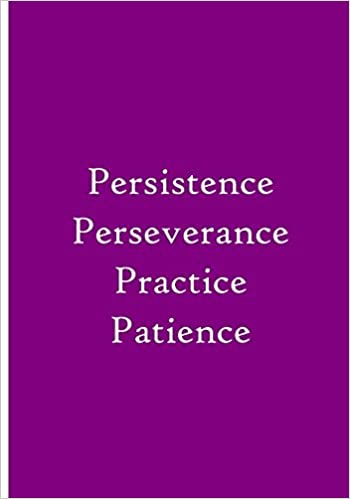
Agency – This is the action step.  Agency is what gets and keeps you moving. It’s related to persistence and perseverance.

As I have seen in WW (formerly Weight Watchers), it’s easy for people to leave the program when they experience a setback.  Agency means you make a choice to continue even when it gets difficult.  If you think you quit, share your goal with a friend.  That tends to cause you to be more accountable.

And to keep yourself going, don’t beat yourself up when you have a bad day and fail to follow one of the steps towards your goal.  That way leads to defeatism and abandoning what you want to achieve (and an absolute “See, I’m never going to get this right”).  Instead, focus on previous successes you have had after experiencing a setback. You have done it before, and you can do it again. This is part of the process not an end to it.

Pathways – You have to have a plan.  As the saying goes, “If you fail to plan, you plan to fail.”  Barker says to visualize the path, and by that he doesn’t mean dream.  That might be how you start, but you must take action and move along the path in specific ways to get to your goal.

Your opening steps are probably obvious. You are going to outline textually or visually how you are going to reach the end.  The opening is easy.  The middle is where things tend not to go as planned (and where agency helps).  You are on your way.  If things veer off course, you need to find an alternative or create a new plan.  It happens.  Just remember what I said in Agency, “you have succeeded before and you will succeed again.”

These three pieces together – a goal, the agency to stick with it, and a path to follow – can lead to an increase in hope. According to the Greek legend, Pandora was given a box with all the world’s ills and diseases. She opened it, letting them all out. When the box was shut, only hope remained inside. I like to believe she opened the box once more and let it out. The uncertainty of our time, not knowing what will happen next, and fear tend to keep us in despair. By giving yourself a direction you want to go – something with more certainty – will bring hope.  And that hope will make you feel more positive about today, tomorrow, and the days beyond.