Tools to Take Control of Your Life

Does it sometimes feel as though every day something new is coming at you? You are not alone. This world seems faster changing than ever. With that, each day the news brings information of a new threat or a technology that is likely to affect the library. And in the midst of this you worry if you’ve missed something key. Not surprisingly, turmoil is bad for your health, your relationships, and your ability to best serve your students, teachers, and administrators. It’s time to take back control of your life.

In his blog post, The #1 reason people fail at their life plan, Donzel Leggett says many people now “feel like life is happening to them rather than being shaped by them.”  Legget talks about “the cycle of no destiny control.”  He goes on to write how when we feel in control, we’re able to move with purpose including setting goals and having a forward-looking mindset. But with this distraction and stress heavy world, this is hard to manage.

Leggett discusses three reactions to feeling as though you have no control. His concepts along with my comments, may give you some clarity about how to move forward:

  • The Flywheel HamsterYou may be feeling like that proverbial hamster, your wheels spinning but getting nowhere. Your plans lack direction. Much like the Beatles song “Nowhere Man” you are “Making all his (your) Nowhere plans for nobody.” When your plan doesn’t work the way you wanted it, you revise it. And the cycle repeats. What is needed is a plan with clear goals and confidence in your abilities.
  • The Floating Dandelion – Leggett describes this as creating no-risk plans because risk implies the possibility of failure. We have no room for that. Take a hard look at your Vision and Mission. What are you doing to make them a reality? Start there and craft a plan with a true goal, action steps to attain it, and a reasonable time to accomplish it. Include both formative and summative assessments.
  • The Head-in-the-Sand Ostrich – When you believe nothing you do will change anything significant, and besides you are a target, so keep your head down. As Leggett says, “Like an ostrich hiding its head in the sand, they miss the fact that the world is moving on without them,” Believing that if you do that, maybe they won’t notice you.  That’s a recipe for disaster. You are a leader. Leaders know where they want to go next and how to get there. In reality, that approach is guaranteed to get you eliminated.  And since you are so quiet, no one will even notice you are gone.

Legget concludes by reminding us that transformation is the way out. Change your mindset. Once again, check your Vision and Mission. You have been successful in the past. There is no reason you can’t be successful again. Re-energize yourself. Take care of yourself. Go for walks or whatever you need to feel yourself as powerful and committed as you were.  You are a leader, now lead yourself.

The maxim “Know Thyself” was inscribed on the Temple of Apollo at Delphi. And, as I say in my forthcoming book, The Involved School Librarian, the first community you need to interact with is yourself. Know yourself, both strengths and weaknesses, and use them as you lead in your school community and elsewhere.

Tips To De-stress

Are you stressed? That’s a really rhetorical question. Who isn’t these days? Even during summer break, and having the chance to take care of yourself, you’re likely thinking about what’s to come and what’s happening in the world around you.

The fact is stress is taking a toll on your body and your relationships all the time. And we can’t afford that. We have too many people who need us at our best – or close to it. Including ourselves.

In 10 Leaders, 10 Ideas for Lowering Stress, Amber Johnson synthesizes the ideas of ten businesses leaders, all feeling high stress. She divides the ideas into three categories:Work Strategies, Physical Strategies, and Mindset Strategies. I will add my library world adaptations to the business world view and hope that we all find way to lower our stress:

Work Strategies

Fix the root of the problem – Is there a way to fix the deeper causes of your problems. It’s not easy, and it may not be obvious, but it’s worth considering. You can’t change the political climate, for example, but you can find support and advocates for your work and collection. Make a list of a few things you can do. Get creative. Have you tapped into the resources offered by your state library association and the national library associations?

Let go of the little things – There are some things that are urgent and need energy and attention. But what doesn’t? Johnson asks what can you pause? Do you have to work through lunch? Would a walk or time chatting with school friends energize you more for the rest of the day? Think of ways to turn your brain off for a while and relax. And look for these places outside of work too. Can you get someone to clean your house? Mow the lawn?

Find your plug-and-play patterns – How have you handled stress in the past that worked? For me it’s winning an X number of computer solitaire games. Chances are things that worked previously will help you again.

Physical Strategies

Take care of your body – You know stress takes a toll on your body. It’s at the root of numerous medical conditions. Look for ways to actively start taking care of yourself. Get to bed earlier. Cut down on the frequency of junk food and choose healthier foods. Exercise or at least stretch a given number of minutes each day. If that’s too hard at first, do it for two or three days in the week. Start small and build.

Work with your senses – Johnson recommends the “54321 technique”: name 5 things you can see, 4 things you can touch, 3 things you can hear, 2 things you can smell, and 1 thing you can taste. What it really does is getting you to breathe and centers you in the moment rather than worrying about the past or being concerned about the future. When stressed our breaths become shallow, and we don’t get enough oxygen to our brain making the challenge worse.

Find ways to play – Those with young children or pets can do this easily. I love doing Wordle every day and posting my score on Facebook. My friends comment with how they did. Are you reading for pleasure? Is there  a hobby or craft you’ve dropped or want to pick up? Joy and fun can help alleviate stress.

Take a getaway – Weekend vacations are great for some. I love having a dinner or even a lunch with friends. A change of scene can make a big difference.

Mindset Strategies

Take care of your mind – Our minds are so powerful and the stories we tell ourselves have a huge impact on our wellbeing. As I have said in the past, I keep a Gratitude Journal where I record daily three things for which I am grateful and one way I give back. I also have a container with a small note pad in it. Whenever something wonderful happens to me or my family, I write it along with the date on a paper from the notebook, fold the paper, write the date again on the folded sheet and put it in the canister. On New Year’s Day, I take out the sheets, arrange them in chronological order, and read them to discover what a great year I had.

Draw boundaries – Johnson mentions ending your day by a certain time. I do that and also don’t take messages from my landline util the end of the day. To do this, you’ll need to know the boundaries, set the boundaries, and then keep them. This may have a bit of a learning curve, so give yourself some grace during the process.

Find the mantra that works for you – Whether it’s an affirmation or a simply a sentence that grounds you, as librarians, we know the power of words. Find one that works for you and pull it out when you need it. I remind myself of a story with the closing line, “This will change.” I also am using the words on a bracelet I was given as a birthday gift, “You Can.”

Stress is not going to magically disappear, so it’s imperative to find the coping strategies that work for you. Notice the ones you’ve been using – and if they’ve been working. If you need new ones, then add to your collection. For me, it always helps when I can find ways to laugh and find the joy in my life. You deserve that, too!

Time to Nap

As a little kid, you probably fought against taking a nap. As a grownup, you might crave a one, but you have no time for it. You have too much work to do. But in reality, it’s more than a craving. You do need a nap, not only the break from work, but the time to quiet or focus your thoughts. Beyond the obvious self-care, taking some down time will give you the energy you need to be more productive.

Admitting we’re tired is common —it’s practically a badge of honor—but being willing to do something about it is less so. In her blog article, If You’re a Creative, Why It’s Probably Time for a Nap, Kristin Hendrix admits to how much she loves and uses naps and says says, “it might look like a nap isn’t working. But if it brings more clarity, energy, and creativity to the workday (aka increases productivity), I’d argue differently.”

If you work from home, scheduling a time to rest is possible. What about those of us who need to be at school? If you have an office, consider thirty minutes with the door closed. You don’t have to sleep, but if you turn off your computer and your lights, set an alarm, and give yourself the quiet, you might be amazed by how refreshed you are after – and how much more alert you for the remainder of the day. If you’re worried about falling asleep – consider drawing or coloring.

Another option, if weather and location permits, is taking a walk. If possible, walk where you’re not likely to encounter people. This is not the time for conversation. This is your introspection time. During this time, let yourself consider not only what’s on your plate but what’s coming and what you’d like to be doing more of. .Or you can take time to get clearer on your priorities and what you’d like to tackle first. Consider one or several items. By the time you return, you will be organized and raring to go.

If you are a napper and don’t want to risk being seen sleeping at your desk, Hendrix offers the possibility of dozing in your car. Don’t forget to set an alarm so you’re back on time. The results will be the same. But remember – this is not the time for answering emails, texting, or even playing phone games. This is your brain’s chance for a reset.

Hendrix notes, “expecting creative work to flow throughout (the day) isn’t reasonable. Making complex decisions and doing deep, challenging work is also difficult to do all day, every day. Unless we take that time away.”

In school, kids have naps through kindergarten. It helps them stay relaxed and focused in the afternoon. Maybe if we all had these pauses, students and teachers alike. we would have fewer behavior problems. Some schools have created time-out places as they integrate Social and Emotional Learning (SEL) into the day. It’s worth learning if this is a place you can use. And it’s definitely worth making time for that downtime for you.

As a leader, sometimes you need to just get away from it all. For just a little while. When you return, you will be rested, restored, and ready to go.

A Better Balancing Act

The feelings of overwhelm, exhaustion and burnout are on the rise. Between our work, our world, and our families, we are frequently unsure how to manage all we are responsible for. Then we’re told to take time for ourselves, because if we don’t, we run the risk of things getting worse. Sounds like more stress.

Unfortunately, most of the advice out there is generic. Do this, eat that, stop saying yes. But the truth is we are unique. Our lives are different from the ones we see and read about. Our needs are different. What works for one person, doesn’t work for another. What is true is that we require balance so that the stressors in our lives don’t suck out all the joy.

So how do we find and succeed at our personal balancing act? Fortunately, Sandeep Gupta explains how to go about the process in his blog post, Work-Life Balance: A Myth or Reality? He starts with the following 4 myths referenced in the title of his blog:

  1. Work is pain, and personal life is pleasure – While it’s true that most of us have to work, it isn’t true that work is always pain. If family life is currently stressful, it could be that your personal life is not always pleasure. Which is true for you? Is it always the case? Hopefully we enjoy our jobs – most of the time. We love our family and friends. Most of the time. What is the best balance for you, personally? How much work and how much personal time are the right balance for you?
  2. Work and personal life are separate – We categorize it that way when we think about balance, but the two overlap often. You take work home. You don’t forget personal issues when we are at work. I used to tell my staff to let me know if they were under stress from home so we could adjust their day. As Gupta notes, when you have a bad day at one, you bring it into the other. What we need, he says, is not a “work-life balance” but a “balanced life.”
  3. Time is the only constraint – Gupta says we think having more time would allow us to have a work-life balance. But it’s not about the hours and minutes, it’s the quality of the time and what we choose to do with it. Having the time to enjoy dinner or play with our children is more enjoyable than just making it home at a specified hour while still thinking about a task at work.
  4. One Correct Solution – Just as there is no one-size-fits-all when it comes to having a balanced life, there is not one solution that will always continue to work. What you need today may not be what you need next year. It’s important to be reflective about how you feel and make changes as necessary when necessary.

So, how do you go about it finding your balance? Gupta recommends considering these questions.

  • What needs to happen to make life more fulfilling? 
  • How can life be more balanced and fulfilling?
  • Who do I need to become to lead a fulfilled life?

To answer the first question, ask yourself: what are your priorities? What things can you do to make more time for them? What unnecessary things are you doing which can be delegated or eliminated? Take time to notice when and if these might change.

For the second question, identify your passions – both at work and in your personal life. Ensure that you make a place for them. The usual advice about making time for physical activity is true here as well. It energizes you and promotes a positive mindset.

The third question requires you to include time to reflect on your life. Are you feeling fulfilled? Do you need to revise what you are doing? Remember, there is no one correct solution and today’s solution may not work in a year. Life brings change at home and at work. Accept it, be ready for it, and make any needed adjustments.

Burnout is a real thing. It comes when over a period of time, what we expect or think we can do doesn’t align with the truth. We can burnout because of both work and personal stressors. It may not seem like you have the time to look at this, but the truth is, you can’t afford to ignore it. Ask yourself these questions (maybe you do it one your commute). Listen to the answers you receive, and then do what you can to act on them.

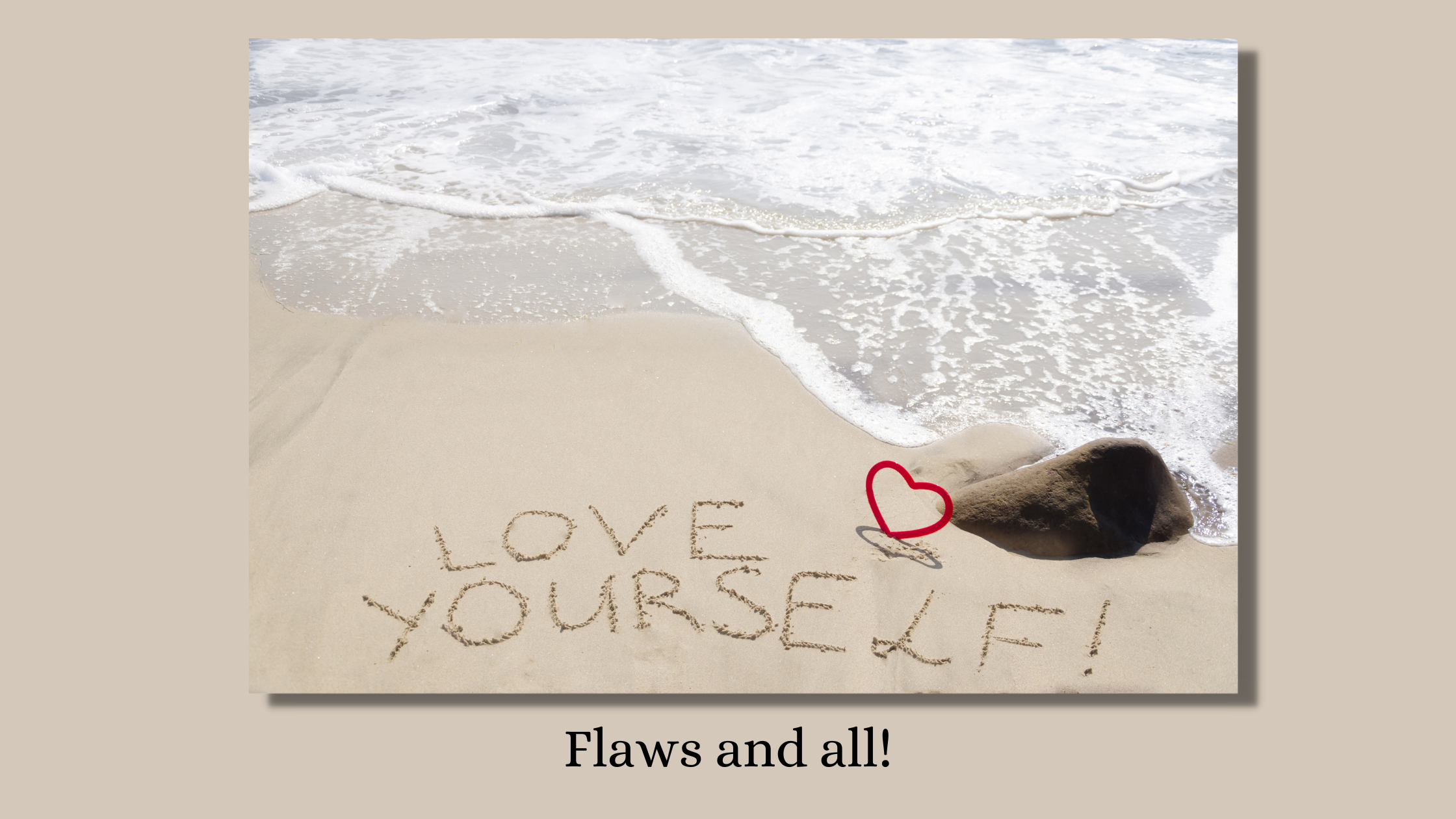
My Imperfect Self

I am not perfect. We know humans are imperfect creatures. So why do I spend so much time worrying about the things I should do better or be better at, not to mention all the imperfections in my body? “If only I…” is too often a part of my inner conversations with myself, and I know I am not alone in this.

In my forthcoming book, The Art of Communication: A Librarian’s Guide for Successful Leadership and Advocacy, I cite an article claiming we “speak” over 4,000 words to ourselves each day. Too many are self-critical. It is time to recognize that these flaws are often an integral part of who we are. While self-improvement is a worthy goal, reality says somethings won’t change. For example, I am a talker. I have learned to not be the first to rush in with an answer- most of the time. But I will always be a talker.

How can we learn to accept and love who we are, who we are not, and who we will never be? Mike Robbins offers five ways to Love Your “Flaws”. Even seeing the word flaws in quotes is a good reminder of where we are judging ourselves—possibly incorrectly. To make a change, he suggests:

  1. Acknowledge What’s True for You—Honestly identify your flaws. There’s no need to run from or ignore these aspects of ourselves. If we want to make a change, we have to be clear about what needs changing.
  2. Admit and Express the Underlying Emotion- What do you feel about these flaws? Robbins says, “If a specific aspect of your personality, body, or career bothers you and you find yourself feeling ashamed—as uncomfortable or negative as it may seem, the best thing you can do is acknowledge and express your shame.”  It’s normal to feel shame or embarrassment about these flaws that you think are keeping you from being your best.
  3. Forgive Yourself—We always judge ourselves more harshly than we do other people. Flaws are a part of all of us. As a friend of mine once said, “Don’t judge your inside by someone else’s outside.”  You notice only that the other person doesn’t have your flaw, but they see the flaws and struggles in themselves.
  4. Appreciate—Robbins asks us to value what we have learned about ourselves and life by recognizing our flaws. Knowing and acknowledging our flaws has given us opportunities for learning and doing better. Instead of focusing on the negative, we can be grateful for these lessons and how we’ve grown.
  5. Love—As you don’t withhold love and caring from others, no matter their flaws, you deserve to love yourself as well. You are a whole package. Think of the friends you have. We expect and accept imperfections in others. We need to do that for ourselves as well.

Celebrate yourself. You do much and mean much to so many people. You would never put a friend down. Be a friend to yourself and offer yourself compassion and support when all you’re seeing is your flaws.

Why Is It So Hard?

Somedays are just too hard. I have big plans for the day.  My to-do list is at the ready.  Then one by one, life happens, and the day is drawing to a close.  I still haven’t done my number one priority, I’ve added more things to my to-do list, and I am too tired and brain dead to deal with any of it.

I remind myself tomorrow is another day. I focus on having a positive mindset. And then tomorrow brings its own set of obstacles to my plan. Or I have one or two great days and feel confident I have a handle on my life. And then stuff happens again. I know I’m not the only one feeling this way. Social media is filled with tales of life continually interfering with plans and intentions. 

I give advice on time management. Surely, I should manage my own better.

Some answers came from an unexpected article. A post by Scott Mautz, 5 Reasons Why Your Middle Manager Role Is So Difficult (And What To Do About It) provided answers I could see where school librarians are middle managers and how their challenges are ours. You are the Program Administrator for your library with the responsibilities it carries, and you also have a boss–your principal.

Consider how these five reasons reflect your situation.

  1. Self-identity – Mautz points to the many hats you wear and their differences. You move from directing what is happening in your library to working collegially with teachers, and then bringing a “deferential stance with your boss.” These “micro-transitions” exhaust us. Probably more so because we are not recognizing them as such. It’s hard.
  2. ConflictExhaustion and stress are everywhere, which means tempers flare. You may be in challenging situations with teachers, students, and parents. As librarians, you are expected to have a positive working relationship with everyone, but no one seems to have that responsibility with you. You are using many of your relationship skills to soothe tempers and reduce tensions. It’s hard.
  3. Omnipotence – Mautz says you “feel you are expected to know everything,” The saying that “if librarians don’t know the answer they know where to find it” heightens that expectation from others. But they have questions and needs from so many different fields. Every moment you’re uncertain adds to the weight of your day. It’s hard.
  4. Physical – All that micro-switching, uncertainty, and desire to be at your best takes its toll. You’re probably not getting enough sleep and the sleep you do get is not always restful. You wake up exhausted with the entire day to face. Then it’s coffee and/or sugars to give you an energy boost even when you want to eat better. And exercise? When? It’s hard.
  5. Emotional – Mautz points to the emotional toll of middle managers who felt isolated. Librarians know this deeply as most are the only ones in their school– or perhaps spread over multiple schools. No one else has our responsibilities, goals, or challenges. PLNs definitely help. But it’s hard.

Mautz follows up these challenges with several “reframes” which I have abbreviated:

  • Recognize your micro-transitions are all one job–Keep your Mission Statement in mind. Mautz writes: “The 100 jobs you belong to add up to one vital job you’re uniquely suited to do well. Take pride in that and value the variety.”
  • Leading and Influencing Up – Know what your principal expects of you (and what they need) and keep them apprised of how you are doing it. Offer regular reports or, at the least, an annual report (see last week’s blog).
  • Leading and Influencing Down–Mautz talks about the importance of giving feedback. Watch your words and body language to ensure your message comes across as feedback, not criticism. Create strong relationships and partnerships and the emotional toll is decreased.
  • Influencing Across–These are the people in the larger community. Here is where you can spread the word about the importance of school libraries and having certificated librarians run them. Even where you have no authority, you have an opportunity for great influence.

It is hard. Understanding what causes some of your daily frustration may ease your feelings that you aren’t doing enough or not organized enough. You are doing more than enough. Yes, it’s hard, but it’s also important work.

Exhausted

Bone tired. Drained. Weary. Drooping. Pick a word. It all comes down to the same thing – we are beyond tired.

We have been working crazy hours in stressful conditions. We have been flexible. We have pivoted. We have learned resilience. And it’s still not over. Uncertainty about your future as well as the future in general has raised your stress levels. Even if you are a planner, it is hard to determine which approach will best meet what is an ambiguous tomorrow. What can you do to overcome the constant exhaustion?

If you, your program, and your life outside the library are to survive – and thrive – you need tools to deal with it. In a blog post from the Eblin Group, the author explains What to Do When You Are Feeling Exhausted, offering six steps to take. These are all an important form of self-care to help you get through this next stage.

  1. Admit to yourself that you are feeling exhausted – Sometimes pushing through is not the right choice. Yes, you say you’re tired, but you keep on going. You are avoiding acknowledging how much the exhaustion is affecting you. Find a friend to whom you can vent. Have a short pity party. Journal. Take a short nap. Do something that admits the exhaustion. It will help alleviate it and maybe help you find the key triggers.
  2. Get things off your list – Not everything is a priority. What can be postponed, ignored or cancelled? Know what must be done and what must be done now. When you admitted your exhaustion and looked at your life, were there tasks that could be done by someone else – or could be dropped entirely without have a serious effect?
  3. Change up your input – Sometimes the brain needs different input. There is a monotony that comes with his pandemic life and to break that cycle you need to do something different. Changing input changes thinking which in turn changes action. If you read, try an audio book. If you listen to music, try a podcast. Watch a TED Talk instead of a rerun. And now that spring has come to the Northern Hemisphere, don’t forget the benefits of getting outside.
  4. Do things that are fun and bring you joy – From the look of social media feeds, people have turned to cooking and baking, either attempting new things or recipes they haven’t made in ages. Others find joy in craft projects. Make sure you’re taking time for the things that make you happy. This could be solitary, like a snuggly blanket, tea and a book or time to call or Zoom with family and friends. Think about what brings you joy and make sure it’s part of your week.
  5. Pick something that is fast and easy to finish – You’re doing important work, but if your time is all about the work – the work is going to suffer. To balance this, try to find something fun that’s also fast and can be completely quickly. Binge watch a season of The Crown or Schitts Creek. Print some pictures and put them in an album. Find a game to play – solo or in a group – that doesn’t take long to finish. One of the current challenges is that the external stress is never ending. Completing something is energizing.  
  6. Eat, Move, Sleep – Make sure you are maintaining your healthy routines. Watch out for grabbing high sugar snacks for the unhealthy and limited energy boost. With the distruption of routines, you may be sitting more (you don’t even get to walk to a meeting – just a few clicks at the computer and you’re there). Sitting too long is dangerous to your health. Find ways to add movement to your day. And, of course, one of the reasons we’re exhausted is that stress has impacted our ability to get a good night sleep. Just as you did or do with children, develop a bedtime routine that allows you so slowly unwind and be ready to sink into sleep.

I’ve included the graphic from the article to help you remember. Copy it to your phone gallery if you think it will help.

Exhaustion is quickly becoming a secondary health crisis. Ignoring exhaustion only makes it worse. Acknowledge what happening and how you’re feeling, and then do what you can to take steps to help yourself so you won’t feel as though you are slogging through mud. Following this advice won’t stave off exhaustion completely, but it will lessen it and give you some steps to take when it creeps up.

Tired of It All

Is it me or is February the fourteen month of 2020? We have been carrying so much for so long, but even with vaccines being distributed and administered, the pandemic marches on. When does it end? When can we put the burden down? The longer it goes on, the longer we have to push out the deadline for returning to “normal”, the harder it is.

We and everyone around us are continually exhausted. Lisa Kohn tells those in the business world How to Keep Leading When It Starts Getting “Old.” Some of her ideas are not new, but the reminder is helpful as we continue to lead despite the exhaustion.

Keep a Sense of Humor – Laughter is the best medicine is not just a maxim, it’s a fact. It changes the body chemistry for the better. Our need for laughter is possibly one reason for all the jokes and cartoons on Facebook and other social media. Sometimes it’s the black humor reminiscent of the Korean War set sitcom M*A*S*H, but it makes us laugh, and it eases some of the exhaustion. Laughter is also contagious. It brings out the best in other people. Then they can be more light-hearted and able to bring humor and new focus to the situation. 

Keep Things in Perspective – Tiredness leads to a mindset focused on negative absolutes. “This is never going to end.” “I will never have my library back again.” “Everybody is too stressed to work with me on a project.” Having these thoughts too often in the course of the day adds to a sense of hopelessness, contributing to exhaustion. The truth is not everything is in bad shape. Which leads to –

Look for What’s Good – Where has the pandemic given you new opportunities? What new contacts have you made? Find things that make you happy. What puts a smile on your face? It can be the smallest thing that helps you to balance out the barrage of negative news. I am sometimes stopped in my tracks while watching a bird find food in the snow. It may take more looking than usual, but the good is there.

Up the Self-Care – We are drained by continual stressful situations that trigger the fight/flight/flee mode. Self-care is an important means of combatting this. If you are having trouble giving yourself the time, you need to restore and rejuvenate (or at least step back a bit), put it on your to-do list. Remember, self-care is emotional, physical, mental, and spiritual. Have you tapped into all those areas to ensure you are taking care of yourself? Doing this for yourself will help you notice when those around you need more too.

Connect with Others – However You Can – We are social creatures, and the change and decrease in our interactions has been hard on everyone (even introverts!). Reach out to people professionally and personally. Like self-care, this can be part of your to-do list—something to look forward to. When I started making these calls, I thought I was doing it for them, but I have seen how much it brings to me. Have you noticed how many people are sending good morning messages via social media these days? It’s just one more way to get some of the human connection we need.

Acknowledge It’s Getting Old – No question about it. It’s a case of been there, done that, and have the T-shirt to prove it. Being honest about your feelings strengthens your bonds with others and allows them to be honest about where they may be struggling. Acknowledging the situation reinforces that we are all in this together, and together we will get through it.

Plan for the Future –Planning for the future, even knowing that it will not be the same as what was, is an important and positive act. It is also a part of self-care. Allow yourself see beyond the challenges of the present. It doesn’t matter what the future actually turns out to be. The act of thinking about it gives free rein to ideas that you might be able to incorporate into whatever happens. In the meantime, you will have given yourself the gift of dreaming.

One of the most challenging aspects of the pandemic has been how long it’s lasted coupled with not knowing how much longer it’s going to go on. Adapting and readapting is draining when you don’t know where the finish line is – or it keeps getting moved. Adding some of these ideas to your plans will hopefully help you, your program – and even your family – get through it all a little easier. And a little easier would be a lot welcome.

ON LIBRARIES: Being Resilient

The last nine to ten months have presented most of us with unprecedented levels of stress. As each month passes it becomes increasingly difficult to maintain our energy and motivation. Resilience is necessary for survival, and with so many counting on us it’s vital that we develop ours as much as we can. A few weeks ago I blogged on this topic. I think it deserves reviewing, especially as we move into the holidays.

Merriam-Webster defines resilience as:

1: the capability of a strained body to recover its size and shape after deformation caused especially by compressive stress

2: an ability to recover from or adjust easily to misfortune or change

While the second definition is the one that most logically applies, the first has a strong connection as well.  I certainly feel my body has been compressed by being emotionally battered on nearly every level. Whether it’s news reports, social media, or hearing from friends and family, life can seem bleak with only the hope of a vaccine soon-to-come that seems a light at the end of the tunnel.

Despite all the negatives, it is my belief you can always find some positives in difficult situations and times.  Building resilience won’t make problems disappear, but it will help you manage them. By working on becoming more resilient, we develop or add skills and capacities we can use even when we emerge from the overpowering presence of COVID-19.

The Mayo Clinic offers six techniques on the subject in Resilience: Build Skills to Endure Hardship. I like the word “endure.”  It’s a reminder that we are in an ongoing cycle.  No matter how good we are today, we must get up tomorrow and do it again.  You might find their tips familiar, but it’s important to keep them in mind so you keep working at resilience.

Get connected – Isolation is damaging to mental health and therefore resilience.  Zoom meetings in and of themselves are not enough of a connection.  Your PLN on social media can be an outlet to talk about challenges and get supportive feedback.  Having an opportunity to help someone else who is struggling will also bolster your own resilience.

Take time to make phone calls. It is not as good as speaking to someone face-to-face, but it brings you closer because it’s one-to-one.  If you need to, schedule the calls to ensure you make the connection.  Reach out to family, friends, and colleagues who live alone.  The stress is likely heavier on them.

Make every day meaningful – Many have noted how the days blur, one into the next. Try to distinguish the days and look for things that might add something special. It doesn’t need take long. It could be that call you make, making a special dessert or other treat, or having dinner delivered.

Keep track of what you accomplished.  You don’t want your achievements to dissolve in the blur of days.  Record them digitally or on paper in a “success journal.”  It will remind you of how much you got done.  If you record professional successes, you can use it to update your principal on what you have been doing.

Learn from experience – You have faced tough times in the past. At the time it seemed insurmountable. How did you get through it? What skills and practices helped you? Who supported and encouraged you? The Mayo Clinic recommends journaling as a reminder of how you succeeded then.  For me, the mantra, “I will get through this.  I always have” is empowering.  Find a way that works for you to keep those previous successes in mind.

Remain hopeful – I have a painting in my office that says “There is always hope.” It reminds me of Emily Dickinson’s poem entitled “Hope.” The first stanza is often in my head these days,

“Hope” is the thing with feathers –

That perches in the soul –

And sings the tune without the words –

And never stops – at all –

Hope never stops, and we need to hold onto hope.  Nothing stays the same.  This will change. That is my hope – and belief.

Take care of yourself – You know this.  You heard it countless times before the pandemic, and it’s been repeated even more since.  But knowing something and acting on it are two different things.  It’s easy to postpone self-care.  Don’t. Practice the care you know works for you – or try something you’ve been thinking about.

Be pro-active – This is about not ignoring the challenges and problems around you. When you can identify them, you can make a plan and take action. Action helps build resilience. This also means recognizing and accepting when you are struggling so you can seek the help you need. 

And how does all of this connect with your role as a librarian? We all know that we can’t be there for others in a lasting way until we take care of ourselves. If you make some or all of these ideas a part of your life, you’ll feel your resilience – and your ability to recover your size and shape – strengthen. Know that you won’t have the same strength every day. Some days will get to you. When they do, go back to the tools that work when you’re ready and remember there is always hope.

ON LIBRARIES – Five H’s To Live By

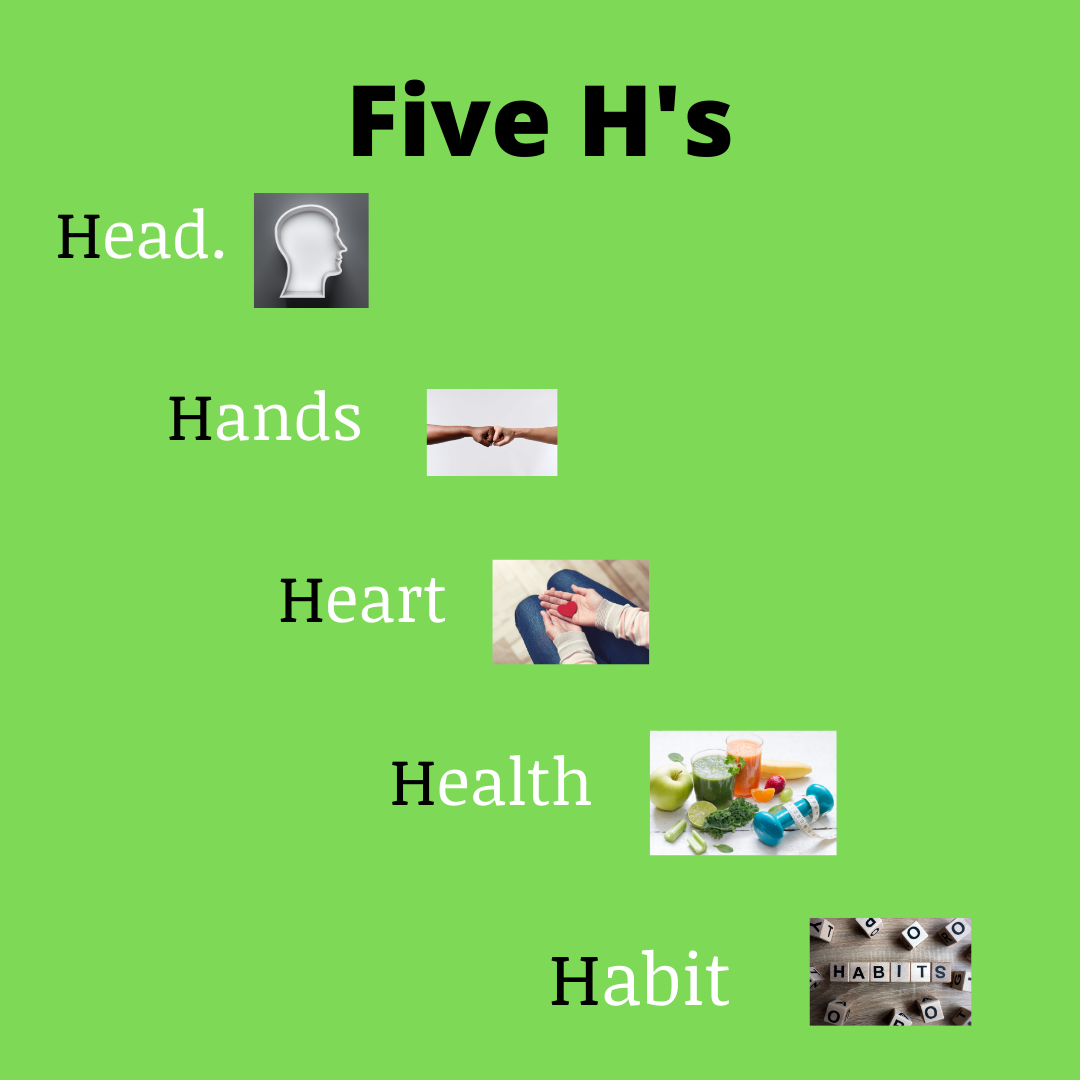
As the school year continues with fits and starts, you and your colleagues may struggle to keep up with each new schedule as it emerges. By focusing on Five H’s – head, hands, heart, health, and habit, you can keep your balance in a world that continues to tilt. The first four come from the 4-H program. The fifth is from me.

Head – At the beginning of each month do a big picture scan. What is working?  What isn’t?  Based on what you are seeing in the world, your state, your town, your school, what seems to be the direction things are heading? 

Review your Mission and Vision Statements. Does your Mission still reflect what you are working to achieve?  On a daily/weekly basis, how much of your time furthers your Mission? Is your Vision still describing your aspirations for the future of the library program? Based on your review, you may want to tweak these statements. 

Using this big picture awareness you can choose how you can leverage your skill set to meet the upcoming needs of your students, teachers, and administrators. The pandemic has changed how we do things and therefore what is necessary to accomplish them. This is an opportunity. The more ways you can anticipate and address what their requirements are and will be, the more people will rely on and value you.

Hands – Put your thoughts into action. Create a plan to meet these identified needs. Have a rough timeline for accomplishing it and remember you may need to adjust details to account for changes. Make certain to select communication channels to reach your audience effectively then inform stakeholders of what you are doing and with whom. Be succinct. For example, don’t send wordy newsletters, no matter how nice they my look. Everyone is overloaded. Don’t add to it. If the recipient doesn’t see the value of the communication, it is pointless to send it. 

Look for sources of help. Sometimes students can be of assistance in these projects. Knowing they are doing “real life work” engages them. And they will also learn a great deal in the process, and you will have a new collaboration to share.

Heart – Show caring. I’ve written about this a lot during the last several months, but we continue to see that little things mean a lot. If you are physically back in school, drop small notes on teachers’ desks. Print out a funny cat or dog picture and sharing it a place people walk by. Social media is not the only place to share the fun. If you are remote, send the note or picture as a message.

Congratulate colleagues (and students) on successes and be a listening ear when things aren’t going well. Use your displays to send messages of kindness and caring. And, as I wrote in my October 19 blog, remember to say, “Please,” Thank you,” and “You’re Welcome.” 

Health – Self-care is an ongoing topic and an important one. Your health is vital to your ability to do everything else. Make sure you are making time to guard it. While you are wearing a mask and washing your hands, there are other health basics you may be overlooking. People are joking about the COVID 20, referring to the pounds gained during the pandemic, but it’s something to be aware of. Healthy eating keeps your immune system up. Getting enough sleep affects your emotional intelligence.

Regular exercise is another contributor to overall health. It doesn’t have to take long. There are many YouTube videos with 5-minute workouts, especially good for those of us living in the Northern Hemisphere where the weather is getting colder. Keep some weights in your desk if you are in school. Pausing for five minutes to take care of yourself will get you back at work with a more positive attitude – and it will help keep you in shape.

And don’t forget to hydrate! Wearing masks can make remembering this a challenge. Set a timer on your phone if it helps to remind you. That leads us directly to – 

Habit – Good and bad habits are the things we do unconsciously. They can improve our capacity to get things done or they can sabotage us. Think of one bad habit you might want to eliminate and one good habit you would like to gain.

When does the bad habit show up?  Why? What is something you can do to distract yourself from it?  What could/should you do when the habit shows up? In noticing what triggers the habit, you are more able to replace it with the diversion you think will work. The more often you do it, the more likely the habit is to shrink. It may never go away, but it will be more controllable.

When do you want to practice the good habit? Set an alarm to remember or find a positive trigger. Frequency builds habits. Don’t beat yourself up if you skip a day when you’re developing something new. You will succeed if you just keep at it. Knowing your why and making it a priority will also support your success.

At the end of the week, reflect on what you have accomplished. Did the “Five H’s” help?  Was there one that was especially helpful? Then do what you can to keep going with it. Was one challenging? Look for ways to get support (change is easier with a group)  or make a new plan. Then your next week will be even better.