ON LIBRARIES: Leadership – There Is No Other Option

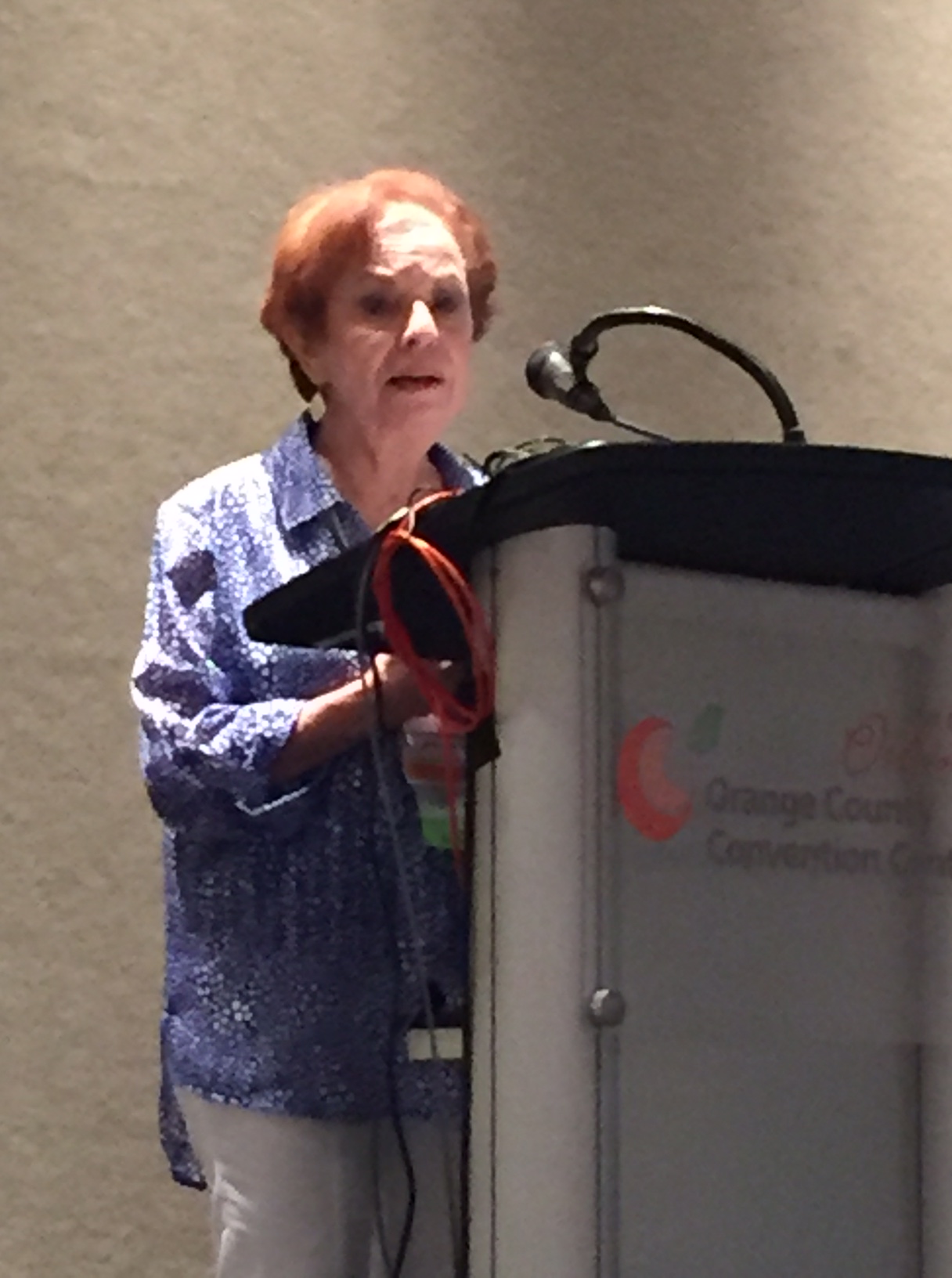
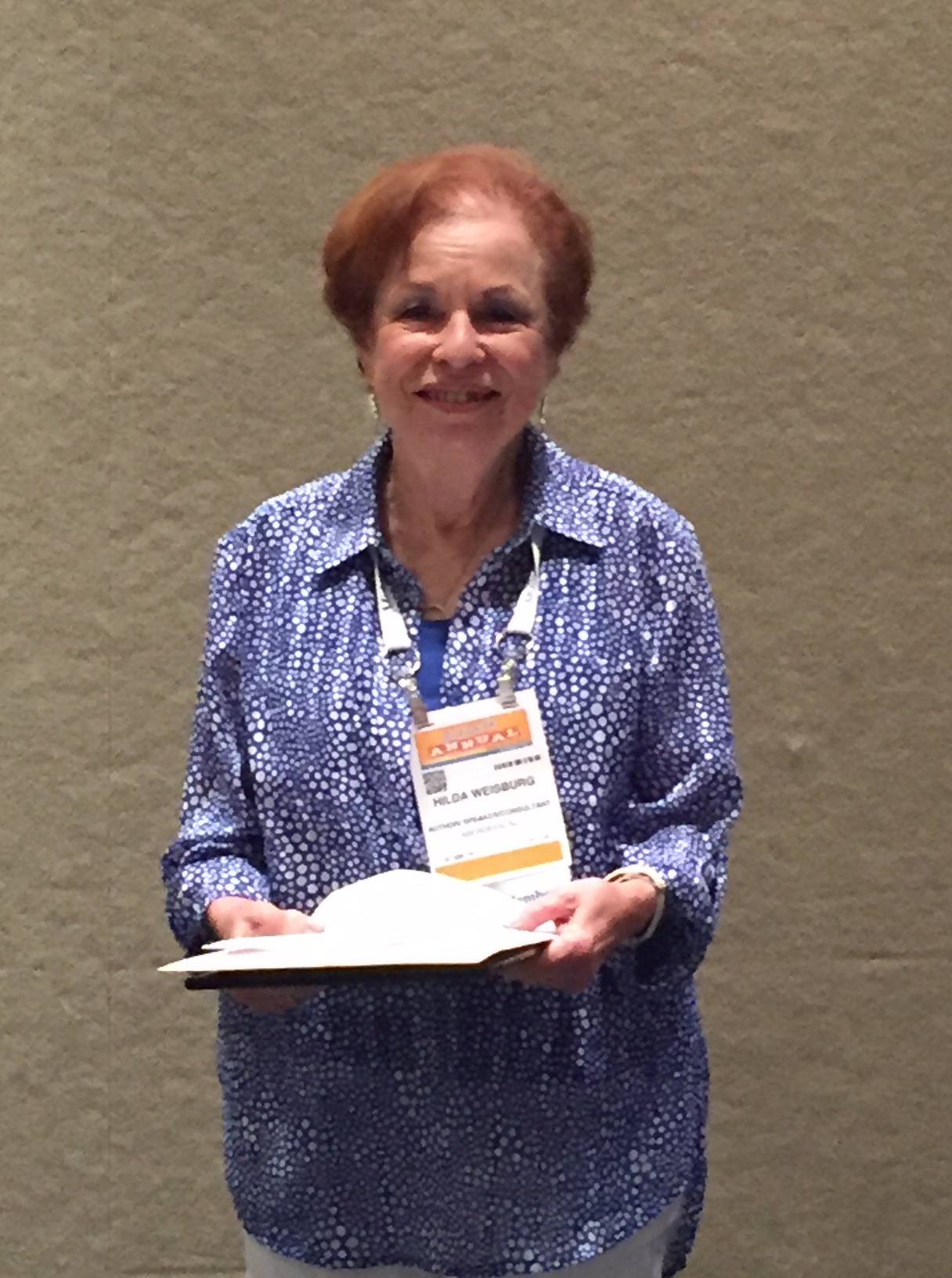
On Saturday, June 25, I was honored at the AASL Awards Program to receive the 2016 aaslDistinguished Service Award.  As part of the presentation, I had the opportunity to speak and I addressed a topic I have been writing about for years. This is something you know I am passionate about, so I am sharing that brief speech as my blog for the week.

~~~~~~~~~~~~~~~~~~~~~~~~~~~~

IMG_3562My deepest thanks to AASL, Baker & Taylor, and to everyone who had a part in nominating me for this incredible honor. To say I was absolutely dumbfounded when I got the news is a giant understatement of how I felt. I have long admired so many of the past winners whom I know personally, and can think of so many others who deserve this award as much as I do.  A good number of them are in the room right now.

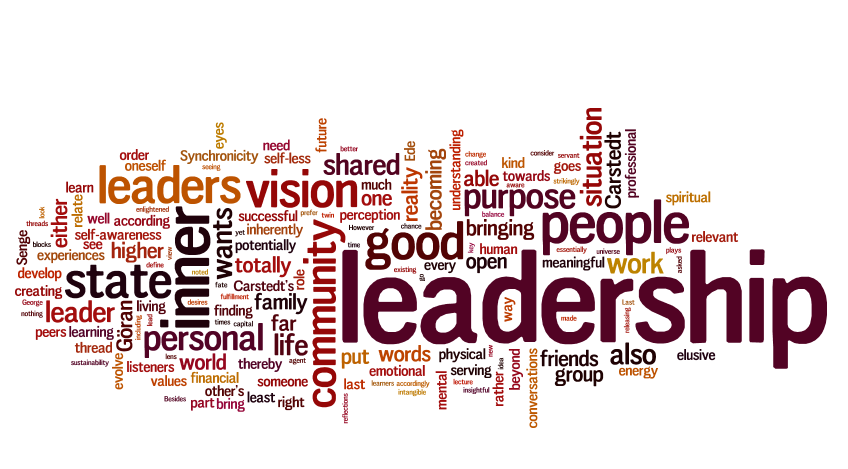
Although it is called the “Distinguished Service Award,” it is truly one that recognizes leadership in the profession and leadership has been a soap box I have been on for decades. Most of you here right now are leaders.  Some farther along than others, but all of you have begun that journey.Leadership wordle

Unfortunately there are too many librarians who have yet to step out of the comfort zone of their libraries and accept the fact that leadership is no longer an option.  It is a job requirement. Our students and teachers need us to be leaders.  And our profession needs librarians who know how to make their presence known and their program be viewed as vital and indispensable.

AASL can provide resources.  All of you can be mentors.  But we must recognize that it is not enough for us to lead and be successful. If we all aren’t successful, too many people will not realize the unique roles we play and how these affect our students, teachers, and often the administration as well.

I honestly think we have turned a corner on the depletion of librarians and libraries, but it will be a slow climb back and the direction will not always go forward.  We must be there to support our colleagues who find leadership a scary thought and have told themselves many stories as to why they can’t be leaders.

I will address only one here, but I have heard it often. “Leaders are born, and I wasn’t born a leader.”  Guess what?  Neither was I.  If you met me in high school and college you would know I was not and would never be a leader.  If you saw me on my first two jobs, you would be convinced I had no idea how to lead.

IMG_3565I don’t think anyone would say that of me today.  What happened?  I joined my state association and was on a committee.  (Note, I didn’t chair it.) I joined ALA/AASL and went to conferences and programs.  There I learned the “language” of our profession, meaning I could speak with authority and conviction about topics relating to school libraries and education.

I moved out of my comfort zone.  I started saying “yes” when my brain was screaming, “are you crazy?  You can’t do that.”  But I was smart.  I got help.  I didn’t do it alone.  We think we are alone because we usually are the only librarian in our building.  But we belong to the most generously supportive profession in the world.

When I had a question, I could get an answer from around my state – and then the country.  And at first I needed a telephone for that. Fortunately, we now have many more ways to connect.

So please, be the help that your librarian colleagues need.  Make it known you are there for advice and help.  We belong to a very old profession that has been important to the progress of civilization for thousands of years.  We can all take it to the next level and insure that we continue to make our invaluable contributions, for we truly transform our communities and our society.

~~~~~~~~~

challenge acceptedFINAL NOTE: The challenge remains.  We  need to commit ourselves to ensuring all our librarians are leaders. What are you doing personally to become a leader or to expand your leadership?  How are you helping the librarians in your state and your district to become leaders?

ON LIBRARIES: Are You Confident?

confidence2Leaders are confident. Not arrogant.  Not bullies riding roughshod over others, just confident. They trust themselves and, while they listen to others, they don’t constantly second guess their decisions.

Confidence is a natural part of leadership. Who would follow someone who was uncertain and continually thought, “Well maybe we should do it this way instead?” This doesn’t mean good leaders don’t alter their course or tweak a plan. However, they do it in a well-thought out reasoned way.

Since I advocate that leading is not an option but a job requirement for school librarians, I have come to recognize developing confidence is a necessary prelude to becoming a leader.  Leadership seems a difficult challenge for many and idea that you can become confident seems equally remote.  If you are in that situation, I have some suggestions.

Dress with Confidencedress for success

In this context, it means dress like a leader.  People react to visual messages before they hear the verbal ones.  See how teacher and administrators dress and emulate them. You don’t have to go over the top, but avoid clothes that don’t fit well or send a conflicting message.

Anyone who has worked in an elementary school is aware of the different building climate on “picture day.”  Students dress up and without anyone saying anything their behavior improves and becomes more orderly.  Dressing up for a prom sets the tone making it a special day.  We all dress for a dinner at a fine restaurant.

Clothes affect how we think about ourselves and how we act.  For those who aren’t confident, dressing as though you are helps you “fake it till you make it.”

Speak with Confidence

You might not know where to begin with this, but there is an easy first step.  Monitor how you end a sentence when expressing an idea.  Does your voice go up as though you are asking a question?  This speech pattern has become common particularly with women and girls.  It implies you are uncertain about what you are saying.

Become familiar with educational and library issues.  AASL’s and your state association’s web page report on these.  They give background information.  From there you can pick up the language in use.  Talk to a mirror at home about these topics.  When you speak without too many pauses, needing time to re-check the information, you are ready to share your “expert” opinion on the issues. And you will sound confident.

gears of confidenceProject Optimism

Confident people are optimistic.  The current climate in most schools has caused even those who aren’t pessimists by nature to develop a negative outlook. Search for the positives.  This doesn’t mean be a Pollyanna who sees life only through rose-colored glasses. Being realistic is important.  But remember nothing in life stays constant.  You don’t have to be in education too long before you realize change is always happening.

For example, you can point out that the stresses caused by Common Core and PARCC testing has roused parents.  They are now working with teachers and are putting pressure on districts and the state to make changes.  Note that ESSA has been passed and this will make a difference in the educational landscape.  While the shift will probably cause additional stress, you will be there to help them adapt and work through them. And since you have been on the AASL and your state association website, you will be current with where ESSA is and where it’ going.

Adjust your attitude. Whether or not you are a person who likes affirmations, start each day with a positive thought. Think of seeing a teacher or a class you like to work with.  Focus on the parts of your job that you love.  Yes, there will be incidents that pull you off, but just get back to why you became a librarian.

Ask for Helpconfidence

This sounds counter-intuitive, but remember confident people listen to others. It’s how you ask that makes the difference.  Instead of saying, “I am supposed to do this, but I have no idea what to do,” say, “I am working on this and would like you input as I value your opinion,”

Check with your PLN.  Librarians are an incredibly helpful, supportive group. Ask for suggestions and opinions (we have some great conversations on the School Librarian’s Workshop Facebook page!).  You will get a vast amount of valuable assistance.  In turn, be ready to help others.  It will build your confidence.

One final piece of advice.  Smile – and mean it.  It goes a long way to projecting confidence.


ON LIBRARIES – Standard Approach to Leadership

be calm and leadNo, this is not about a basic way to be a leader. I meet so many school librarians who feel being a leader is too difficult or too time-consuming or too—add you own reason (for more excuses see my blog October 15 Stories We Tell Ourselves).  This is about a very simple way to ease into leadership.  And you do need to find a path to leadership because, as I have been saying for some time – Leading isn’t an option—it’s a job requirement.

Standards have become an educational obsession.  Many librarians have proven their value by showing how they can help teachers in meeting the Common Core Standards, and the research results consistently show a high correlation between an active library program staffed by a certified school librarian and student performance on high stakes test. By doing so, these librarians have shown the value of their program, but you can use standards to do even more to showcase you as a leader.

And good news – there is a shortcut.short cut

AASL has a Crosswalk between the AASL Standards for the 21st-Century Learner and the Common Core Standards for English Language Arts, Reading Standards for Literacy in History/Social Studies, Reading Standards for Literacy in Science/Technical Subjects, Writing Standards for Literacy in History/Social Studies, Science & Technical Subjects, and Mathematics. In other words—the Common Core standards in all subject areas are matched to the AASL Standards for the 21st-Century Learner and you can either start with the Common Core standard and find the matching AASL one(s) or start with the AASL standards and get the related Common Core standards.

You can look at your lesson plan and see which AASL standard(s) you are addressing: Standard 1 – Inquire, think critically, and gain knowledge: Standard 2 – Draw conclusions, make informed decisions, apply knowledge to new situations, and create new knowledge; Standard 3 – Share knowledge and participate ethically and productively as members of our democratic society, and/or Standard 4 – Pursue personal and aesthetic growth.  When you click on that Standard you find a two column table.  The first column lists the indicators for each of the four strands. The second column give the applicable Common Core standard that matches.

crosswalkSince I am more familiar the AASL Standards than with the specifics of Common Core, this is the way I would begin.  I know what AASL Standards I want students to get as the result of a learning opportunity, so I check for the Common Core standard that includes the grade level I am dealing with.

However, if you want to really focus on Common Core, go in that direction. Select the appropriate standard area and click on the grade level.  Don’t be alarmed by the many standards for which there is no corresponding AASL Standard.  Just keep scrolling down.  The empty cells reflect areas not part of the library program. You are not reproducing what happens in the classroom.  Your unique role is in providing those components of Common Core which are central to the library program.

Now when you write your lesson plans, do a copy/paste of the matching Common Core and AASL Standards.  Not only does this show how you address the needs of students, it also highlights how our national standards are in alignments with Common Core.  Once you have done this a few times, make an appointment with your supervisor or principal and show how this crosswalk works.

If you have purchased the 12-copy packet of AASL Standards, give one to the administrator, if not, download them and do the same. Point out what is on the first two pages and then discuss the four strands which are explained on the last page.

How does this make you a leader?  It demonstrates you are an instructional partner to teachers. It also highlights your understanding of the importance of standards and how AASL has national presence in developing standards for 21st century learners. (Do stress the word learners as opposed to students – it focuses on the need to realize we are all learners.)

On a final note – Common Core is slowly moving out of the picture and AASL is in the process of revising the standards which are now eight-years old.  This is a fast-moving world and AASL seeks to stay on top of the changes.  As a leader in your building you must do the same.  Be on the lookout for whatever succeeds Common Core.  Something will.  Keep checking the AASL website so you are aware of the new standards when they are published.  Your students, teachers, and administrators need you to be prepared.  That’s how leaders behave.

ON LIBRARIES: The Stories We Tell Ourselves

storytellingAs librarians we love telling stories.  It’s story time at the elementary level, and we delight in entrancing students with tales new and old.  In the upper grades, we work hard connecting students to just the right book, knowing that is how we build lifelong readers.  We believe in the power of story… the power of fiction…. the power of a lie?

Because there’s another type of story – the ones we tell ourselves. The ones about why we do or don’t do certain things, and like the ones we bring to students, these have power.  When our stories are positive, it helps us do great things, but most often we cling to our negative stories.

I am most concerned with the stories you have about being a leader.  I have spoken with many librarians who recognize the value of being a leader but know they can’t be one.  And they all have a story.  Are any of these yours?

I don’t have the time.  I have a full schedule.  I work in two (or more) schools. I barely have time to breathe on the job.  I go home to more work.  It’s hard enough for me to complete all my responsibilities.  When would I find time to be a leader?

Leaders are born, not made, and I wasn’t born to be a leader. I can tell you countless stories of how I have never been a leader.  I was last picked for teams. I was always the nerdy girl (or guy). Whenever I did run for an office, I didn’t get elected.

I can’t talk in front of a large group. Teaching a class of students is not the same as speaking before my colleagues or parent groups. I am really an introvert.  If I have to get up before a group, my palms sweat and my voice gets shaky.  I don’t sound like a leader, I sound nervous and scared.what's your story

Even fairy tales have elements of truth. It’s why we can relate to them, and each of the stories I’ve mentioned above has an element of truth, but like those tales, there is quite a bit of fiction within them.  But let’s look more closely and see if it’s all true.

No time: Most of you are very busy, but the fact is in our world no one can find time.  You have to make time.  Which means look at what you are doing and determine priorities.  Yes, you must get your lessons taught but there is much you do within your school day that does not have as a high a priority.  Getting every book into the catalog as soon as possible.  Checking everything in before the end of the day. You have others depending on your job. Yes, they are important, but making your presence known in the building, leading the way with tech integration, and sending visual quarterly reports to your administrator featuring what students are learning in the library are more important in assuring your program and you are valued.  Pick on and add it to your “to-do” list.

Born Leaders: Sure, some people seem to be natural leaders from childhood, but as Shakespeare said, “Some are born great, some achieve greatness, and some have greatness thrust upon them.” The bottom line is, the need to be a leader has been thrust upon you.  You can do it.  You have achieved so much in your life by this time, you are more than capable of going those extra steps and taking the risk of stepping out as a leader.  Look for a mentor in the field, someone who you see as a leader and ask for advice and help.

get rid of the storiesPublic Speaking: It’s true that in countless surveys people put the fear of public speaking higher than death, but who said leaders must speak in front of large groups? That’s only one aspect of leadership and not everyone needs to do it.  Quiet leadership can be equally and sometimes more effective.  Be the person who teachers can count on to show them how to use a new tech tool.  Help your principal carry out a new administrative directive.  When rubrics first erupted on the educational scene, I had a few teachers come to me quietly to ask for help.  I had not made one for myself as yet, but they were confident I could help them—and I did.  I also worked with the administration when the decision was made to move to block scheduling, getting material for teachers and giving them advice based on my research.  That, too, is leadership.

What stories are you telling yourself that keep you from being the leader your student need you to be?