What Do You Expect?

We go through life expecting that things will go a certain way – and then they don’t. It’s frustrating, disappointing, and irritating. Sometimes it’s because conditions changed, but very often the problem is due to the expectations themselves. Being aware of and able to manage expectations makes our jobs easier and our relationships stronger.

Expectations are based on who we are, how we perceive the world, and how we act. In our communications and interchanges, we make the unconscious assumption that other people are like us. We know this is not true, and when we know someone well, we recognize the differences. When it’s a teacher, parent, or administrator with whom we don’t have that higher level of familiarity, we unwittingly assume things that aren’t true.

John R. Stoker asks Can Managing Your Expectations Improve Your Emotional Intelligence? and gives twelve ways to do so.

  1. The expectation that you have been understood – Communication has three parts: the sender, the message, and thereceiver. When something is amiss with any part, the receiver will not get the message that was sent. Did you tailor the message to the receiver? Did you give too much information?  Did you use library jargon which made things unclear to the receiver? Be certain the message was received.
  2. The expectation that people will know what you want – If you’re not clear about what you want, chances are you won’t communicate your needs well. Get clarity before you speak so you know what you want to say. Lead off with your main point and be careful of being either too specific or too vague which leads to a loss of clarity.
  3. The expectation that people will perform the way you would perform – We all manage projects differently. People perform based on their expectations, not yours. In addition, where a project is your priority, it may not be someone else’s. Be aware of differences.
  4. The expectation that people should know what to expect from you – Even if teachers and administrators have expectations about the library, they may not know what they can expect from you. Let them know what you’re doing and how you’re doing it. The more they know, the more they will be aware of your contributions.
  5. The expectation that those who are disengaged will take responsibility for their disengagement. For us, this means expecting a busy teacher or principal will eventually get back to you – and even apologize for the delay. Again, you likely have different priorities so cannot expect this. If necessary, create a reminder for yourself to re-send messages, follow up, and make your needs clear.
  6. The expectation that you won’t violate someone else’s expectations – If we don’t know the other person’s expectations, when we haven’t gotten clarity, mistakes are more likely. We don’t like to think we missed the mark, but it happens. As soon as you notice, apologize and then make a plan for going forward.
  7. The expectation that someone will tell you what’s going well and what isn’t – A leader’s job is to “inspire and inspect.”  People tend not to say anything if something isn’t going as planned. Plan to check in every so often to ask how things are going and if they need help. People are sometimes embarrassed to admit that they are struggling.
  8. The expectation that people will know how what they do contributes to the organization’s success. Sometimes it’s hard to see how small projects contribute to bigger successes. It’s important to be aware of this within your program. Then you can let teachers and students know when they’ve made a difference and pass this information along to administrators. This is a great opportunity to acknowledge a teacher or administrator who has made a difference. Specific compliments make a person’s day and will strengthen your relationship with the receiver.
  9. The expectation that priorities are understood by everyone – Even when they overlap, our goals differ from those of teachers and administrators. If your principal doesn’t understand how a program is contributing to the success of students, s/he may ask you to take on something new. When starting a new initiative, be clear with those participating what the priorities are.  Don’t assume. And take time to review as the project continues to be sure you are all on the same page.
  10. The expectation that people will give you personal feedback – You don’t always want to hear praise – you need to know where to improve. People don’t like giving negative feedback almost as much as they dislike receiving it. In discussions with teachers, make sure to ask, “What could I have done to make this project better?” rather than, “Did it go OK?”
  11. The expectation that you know what people need – This is why the “inspect” discussed in #7 is important. We are different. We work differently. And we are different in what we do well and what challenges us. What do people need when it comes to resources, time, support and assistance. When you check in, with feedback not criticism, it allows both of you to be more successful.
  12. The expectation that people who are driving slower in the fast lane will move over – This is about giving and receiving respect. No matter how a project is going, whether communication and priorities are clear, it is important to treat everyone involved with respect. Listen for what’s working and where things are challenging then move forward accordingly.

When you start a project, think about your inherent expectations. Are they true?  If not, make the necessary adjustments. You will minimize disappointments and lower your frustration levels. As Stoker says in his conclusion, Part of becoming more emotionally intelligent and a more effective leader is about identifying our expectations and clearly sharing them with others. Doing so will not only eliminate unneeded and potentially damaging emotional reactions but will also greatly improve your results.”

How High is Your Emotional Intelligence?

If ever a year (in reality, more than a year) tested our Emotional Intelligence (EI), this year was it. EI rests on being aware of emotions and how they play out in your life and that of others.  Having a high EI improves our communication and strengthens our relationships and the result is we are more successful.

The four main components of EI are:

  1. Self-Awareness,
  2. Self-Management,
  3. Social Awareness, and
  4. Relationship Skills. 

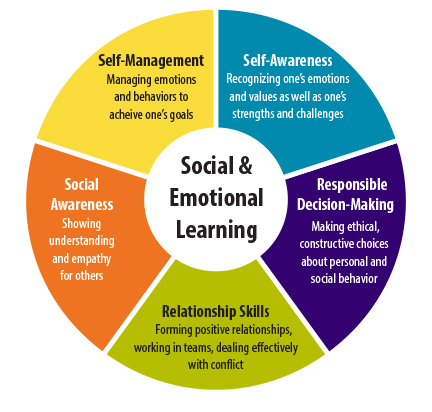
Responsible Decision Making, which results from these four, is sometime included as a fifth component, and you may find Empathy and Motivation included as well.

Self-Awareness means you know who and how you are. In addition to your library Mission, you have a personal purpose and know your core values. You recognize when you are having an emotional reaction to something said or seen and are aware of (and still learning about) your implicit biases.

Self-Management rests on self-awareness. What do you do when you recognize your negative emotions are engaged? Those who self-manage change their mindset to avoid what might turn into a confrontation or prevent a morning mishap from influencing the rest of the day.

Social Awareness means you can identify the emotions of others. You recognize when they are angry or upset.  As a result, you can be empathetic and keep emotions from boiling over. When in a group, you know how to “read a room.”

Relationship Skills are key to your success.  Librarianship is a relationship business.  If we don’t build relationships, we are out of business. You can’t build relationships without having the first three components of EI. We must always be looking for ways to connect, collaborate and create. Good relationships with students, teachers and administrators are required to achieve our Mission and Vision.

With these components in mind, John R. Stoker in Emotional Intelligence Begins with Self-Awareness poses ten question to assess the level of your EI and how to raise it where needed.

  1. What part of my behavior do I not see? Since it’s impossible to answer this alone, Stoker suggests you ask someone you trust. Be open to what they tell you (remember, it’s feedback – not criticism) using your self-awareness skills.
  2. Do you know who or what sets you off? Some people automatically cause our bodies to stiffen as we prepare for emotional combat.  Who does that to you?  More importantly, “Why?” The answer will help to anticipate and moderate your reaction.
  3. Are your relationships growing and deepening, or are they diminishing and contracting? If your relationships aren’t growing, you are losing support for your program. What is the cause? You may need to reach out again to others to figure this out.  
  4. Do people seek you out as a sounding board or for advice and support?  This is a good indicator that speaks to your relationship building skills as well as your social awareness and empathy. Do they come back for more?
  5. Do people volunteer to give you feedback? It takes a high degree of trust to offer feedback when not asked for it. Stoker notes this shows you are approachable.
  6. Do you seek feedback from others on what you could do to improve? Asking what you can do better increases your chance of getting honest, if possibly uncomfortable, feedback. Just as you help others, remember this is necessary if you are to improve. It also is an opportunity to build relationships.
  7. Do you express appreciation to others?  Thank-you’s are always good.  Even better is to let someone know you saw and admired something they did. Did a teacher manage a difficult situation with a student?  Let them know you learned something from it.
  8. Do you let your past history dictate how you treat others? Similar to #2, this is a reminder to keep an open mind. Use the past as a learning tool, not a prediction tool. A negative anticipation will guarantee a negative result.
  9. Are your interactions with others yielding the results that you want? How have you interacted with other?  You can’t change them, but if you identify your challenges with EI and make needed shifts, your dealings with them will improve.
  10. What similar situations repeatedly show up?  You are the common factor in all your interactions. Start with Self-Awareness and move through the other components of EI to see how you and your reactions have contributed to those situations.

As Leo Tolstoy said, “Everyone thinks of changing the world, but no one thinks of changing himself.” Emotional Intelligence is a soft skill, but it can quickly make a bigger difference than all the hard knowledge you bring to your job. 

Social and Emotional Leading

You have become adept at incorporating Social and Emotional Learning into your library program, but you also need to consciously integrate these tools when you are leading. The social aspect is more obvious. We are in a relationship-based business, and you can’t build relationships without social skills. It’s the emotional leading that requires a rethinking.

In a profession where women are in the vast majority, it’s important to remember that, with awareness, emotions can be appropriate and important, rather than avoided or dismissed. Understanding and managing your emotions is the key to successful leadership. Emotion is a neutral term that encompasses an immense range of responses. In Social and Emotional Leading, you need to draw on the positive ones and recognize and reduce the negative ones.

In her blog post, Essential Decision Making Emotions: Are You Using These?, Kate Ness presents five decision-making emotions to incorporate into your leadership and five to manage. Starting with the positives, here are her first five:

  • Showing Respect – Recognize the value of others. You do this when you don’t interrupt work with a student to respond to a question from a teacher. If you must, you explain that you will be back. In our world of text messages, we shouldn’t forget the importance of “please,” and “thanks” becomes a perfunctory “thx.” Be more conscious of the little civilities. They make a difference.
  • Expressing Empathy – Recognize what others are going through. Use your ability to read body language and their tone of voice to reach out to them. Send a quiet note. Offer to be a listening ear if they need one. Do it with all the lives you touch, from students through administrators – and parents.
  • Considering Human Impact – Ness’ post references laying people off. We don’t do that, but we do see it happen to others in our educational community – and too often to us. This pandemic has led to all sorts of losses. In any difficult situation you come across, offer help where you can and empathy where you can’t. Let them know you are there for them at some level.
  • Recognizing and Appreciating Talent and Effort – When you inform your administrator of a successful project, highlight the important contributions of people who were a part of the project. When you’re offered suggestions, acknowledge them, and show you are considering it. When you give this type of respect to students, you give them voice and choice and further make the library a welcome place.
  • Valuing Altruism – Look for ways to give back – and acknowledge ways that others are giving. Suggest and lead projects that help the community or an individual. These are hard times. We need to work together to stay strong.

And the five you want to avoid when building relationships are:

  • Anger: Anger is a valid emotion, but you don’t want to speak or act out of it. Most people don’t think clearly while angry which can undo much of what you have achieved when using positive emotions. Remembering to pause will do much to get you back on track.
  • Panic – Panic also stops you from thinking clearly and leads to poor decisions. Once again, a pause helps along with taking time to breathing more deeply. Slower breathing leads to a slower heart rate and a clearer mind. You will get through it. You always do.
  • One-sided Compassion – Avoid being immersed in one emotion and not letting yourself see where there are other forces at play. Be sure you are seeing the whole picture.
  • Fear of Conflict – Fear of causing anger and disagreement is understandable, particularly in today’s very polarized world. But you can’t lead if you keep stepping back. Use your positive qualities and all your emotional intelligence to look for ways to respond in a non-controversial way.
  • Uncontrolled Passion – Being passionate about your work and your core values is necessary for leadership. However, overwhelming people with it is not. People feel you are battering them and that there is no room for their interests and priorities. Find ways of sharing your values and abilities without it sounding as though you demand to be heard.

Emotions are everywhere and always with us. They are powerful but can work against us when we’re not aware. Recognize and work with your emotions and your leadership skills will improve.

ON LIBRARIES – Making Your Presence Known

Schools are creating – and recreating – their reopening plans for the fall. Budgets are being slashed in the wake of the pandemic. As administrators wrestle with tough decisions, you need to ensure that you and the library are seen as essential to making the new configurations work and work effectively.  If you haven’t been sending this message, start immediately, or it may be too late.

The workshop I give, “Making Your Presence Known,” was designed for what, in retrospect, was a simpler time, however its central premise, using Emotional Intelligence and the Four Truths, is extremely relevant now.

Emotional Intelligence (EI) is vital to your success because it means you know yourself, manage your emotions, and, most critically at this juncture, know how to read others’ emotions – whether in a Zoom-type meeting, in an email, or in person.  What messages are you getting from your administrators’ emotions? Your teachers’ emotions? What can you do to act on those?

Four Truths:

  • All libraries, regardless of their type, are part of a larger host system.
  • All libraries, regardless of their type, get all their funds from this host system.
  • These funds are dependent on the value of the library to the host system.
  • That value is determined by the host system, not the library.

Are you valued by your host system?  If you are not, you are likely to be gone.

Now is the time to make sure you are highly regarded by your administrators, recognized for what you do, and turned to for ideas and advice.  It’s time to increase the volume as you speak and speak out.

Joel Garfinkle in an article entitled How Fauci Exemplifies Executive Presence  identifies these four necessary characteristics which are key to combining EI and the Four Truths:

Gravitas: It’s the ability to project calmness in a crisis. You may be churning inside, but you don’t show it.  This is the managing your emotions/self-regulation part of EI as well as being aware of the emotions of others. Where is their fear?  How can you address it and, even if only part, ease it?  You are bringing a perspective to the table others might not have. If you work on this now, you stand a good chance of staying at that table because you will show your value to the “host system”.

Acts with Authority:  Yes, you do have authority when you speak from your strengths.  You have been curating information on COVID-19, on alternatives to managing it within the school environment, and the pros and cons of the possibilities.  Because of the help you have been giving teachers and students, you have direct knowledge of their challenges.  As Fauci does, you can bring the downside while you inform them of the upside.  You tell the truth.  It’s not sugar-coating; it’s reality put in a constructive framework and that becomes usable information, something everyone needs.

Establishes Credibility: You can cite the research.  You know your stuff. This is part of where your authority comes from. But you also have built relationships.  People trust you because you have proven yourself to be trustworthy. Again, your EI comes into play as you empathize with others’ fears. By doing so you reduce their concerns and increase your value.

Communicates Powerfully: Keep your administration informed about what you are and have been doing. Use infographics and other visual means. In a Zoom-type meeting don’t dominate the conversation.  Be succinct and don’t use library jargon.  People are tense and overwrought.  Speak simply and clearly – with gravitas. Speak slowly and don’t end your sentences with your voice going up as if you are asking a question, which sends a message that you are uncertain.

You already have some of these four skills.  Now that you are aware of them you can make certain you are integrating them into your communications, particularly with the administration. This will put you in a position to show – and have them believe – that you and the library must be part of the new normal.

ON LIBRARIES: LEAP into Leadership – And Beyond

I recently returned from ALA Annual where, as the delegate from the New Jersey Association of School Librarians, I attended Affiliate Assembly.  Everyone there was a leader. Some early in their journey, others who have been active in both state and national level for some time.  As I worked with my colleagues on ways to promote school librarianship, I thought of those who weren’t in attendance but were leaders in their own right.

The bottom line is you are all leaders. Leadership is built into what we do each day.  Whether it’s being a technology integrator or managing the library, we are leaders.  What some of us are not doing is recognizing our strengths and finding ways to promote it.  It’s time to see and show how terrific you and your program are.

Dr. Cathi Fuhrman

LEAP is an acronym created by Dr. Cathi Fuhrman, president-elect of the Pennsylvania School Library Association. She shared it with the delegates and gave me permission to share it here:

L – Listen with your mind and your heart. What are others trying to tell you that your mind NEEDS to comprehend, and you can act on – but also what are they saying that your heart needs to hear? Being a leader isn’t just about being logical – our lives and our work are wrapped up with our heart.

E – Energy and Empathy. Energy for the work that needs to be done and empathy for all those that you’re leading.

A – Accountability– As a leader you’re accountable to the work that you’ve agreed to do. The buck stops here.

P – Passion. You have to be passionate about the work you’re doing as a leader. And you have to share that passion with who you are leading. They have to see and feel your passion – because the passion we have for this profession – the passion we have for students and how we impact them – it’s everything!

I think the one most of us struggle with is Listen because we don’t trust ourselves enough. Cathi is so right that the best leadership is tied to heart. Leaders without heart are not really followed – they are obeyed.  She also points out that it is also important to listen for the things we gloss over. Is there encouragement, and support being offered that you didn’t notice?  Take them in.  We’re so ready to hear the complaints and concerns we don’t hear the compliments.

Our job requires enormous Energy for the day to day requirements, but to build and maintain the relationships, Empathy is required. When those two work together, the library becomes a safe space, sometimes the first safe place a student finds.

You have full responsibility for the library from the budget to the collection and to the teaching you do formally and informally.  For all this, you hold yourself AccountaBLE. Take time to notice what you’ve accomplished because you’ve owned the success of your program.

And as for Passion, I know you have it. I can’t improve on Cathi’s words describing it.

To strengthen the qualities in LEAP, it helps to add in the soft skills of Emotional Intelligence which is widely recognized as vital for true leadership.  Joel Garfinkle lists 5 Qualities of Emotionally Intelligent Leaders (one of which duplicates Cathi). Garfinkle recommends that we be:

  1. Empathetic – Both Fuhrman and Garfinkle note the importance of this quality. It’s the process of putting yourself in another’s shoes before responding.
  2. Self-Aware – You probably are well aware of your weaknesses, but do you know your strengths? Focus on developing projects that require them.  What types of situations cause you to stress, feel panic, or get you angry?  Plan how to handle these before they arise.
  3. Positive – As I have often noted, people don’t like to be around those who have a negative attitude. Being positive is about mindset.  It’s how you reframe adverse situations, which will happen. It can be anything from the Internet going down to being given additional responsibilities.  How you handle it will define how you are as a leader.
  4. Considerate – In some ways this ties to empathy. We sometimes get so wound up in believing we are not valued, we forget the teachers feel the same way. By listening (back to the L in LEAP) we make the library a safe, welcoming environment.  And that is often the route to collaboration.  Don’t forget your administrator in this. Principals are drowning in details. They often feel assailed on all sides.  Look for ways you can help them out.
  5. Authentic – None of this works if it’s not real. You can’t use Emotional Intelligence to manipulate people.  It will eventually be recognized.  A leader has integrity.  There needs to be an honest caring for the people you work with.

The librarians I know have most these qualities.  They may not always be positive (it’s hard to do every day) and aren’t as aware of their strengths as they should be, but they all have everything necessary to be a leader.  Make your own LEAP and you’ll soon make your mark in your school – and your state – as a leader.

ON LIBRARIES: Raise Your Emotional Intelligence

Caring is central to the philosophy of the library program which seeks to make the library a warm, welcoming space for all.  A library mirrors the personality of the librarian. If you want to create that space, you must always be welcoming. How well we manage our own emotions and how we perceive the emotions of others affect our success as librarians and the success of our programs.  We need to be able to “read” the person we are talking with, so we know if they are paying attention, are truly interested, or are taking offense.  That knowledge allows us to make adjustments in what we say so that our message is heard.

That is just one example of how Emotional Intelligence (EI) impacts us. Businesses today recognize that, more often than not, “soft skills” are more important than hard skills.  It is far easier to train someone in the tasks and responsibilities associated with a job than it is to develop their relationship skills.  And many corporations will hire someone with good soft skills over another candidate who has greater expertise.

In her article What Are Soft Skills? Alison Doyle explains that soft skills “the personal attributes, personality traits, inherent social cues, and communication abilities needed for success on the job. Soft skills characterize how a person interacts in his or her relationships with others.” The social cues and communication she speaks of are part of EI.

I knew a librarian with several years of experience who was proud of being a graduate of a pre-eminent library school. However, she didn’t particularly like students and did only what was required.  By contrast, a clerk working in that library who was studying to be a librarian was genuinely interested in students and would extend herself to help them and teachers.  As you can imagine, teachers and students gravitated towards the clerk, even though the librarian knew so much more.

The “higher” your EI, the more likely you are to be successful.  But is there a way to raise you EI? I found an unlikely helpful source.  A GQ article offered suggestions since many men today are feeling uncertain of the messages they are sending out into a post #metoo world, and it’s affecting their careers.

The GQ staff spoke with Daniel Tolson who proposed 10 Ways to Improve Your Emotional Intelligence.  Here are his tips, followed by my ‘tweaks’ showing how this plays out in our world:

  1. Ask an honest, trusted friend or advisor to help you consider if your perceptions of yourself are realistic from a different perspective. The challenge here is for you to be able to state your perception of yourself and then having the courage to ask someone if it’s accurate.
  2. Practice self-restraint by listening first, pausing and then responding. Active listening is a difficult skill for many of us.  The pause before answering will help you become more accustomed to listening better.
  3. Summarize frustrations you may experience and determine triggers. Frustrations are part of our lives, but if you allow these feelings too much room, you send off negative vibes which others pick up.  Remember, the person you’re talking to has their own frustrations. Think, “We are all in this together.  How can I help?”
  4. Define what motivates you and what you most enjoy doing with your time. A reminder again to write a Mission if you haven’t done so and read it daily if you have. You might even consider creating a vision board if visual cues help you to stay focused and inspired.
  5. Think on paper! Identify your comfort zones and define your obstacles in writing. In medicine, they say “an accurate diagnosis is 50% of the cure.” Those who journal find it as effective as meditation and perhaps more so as it can presents a direction to follow along with a deeper awareness of our thought processes.
  6. Be aware of the message your body language is communicating. Whatever you are thinking, your body is saying. Watch for crossed arms, pulling back and not making eye contact.
  7. Implement strategies to make an excellent first impression. Try walking into your library as though it were the first time.  What does it say?  What does your website say? What about your typical dress?  Look for ways to send positive non-verbal messages.
  8. After a negative interaction or misunderstanding, accept responsibility and find ways to make amends. The faster you deal with it, the sooner it can be fixed.
  9. Allow others to take the lead role so you can learn from their leadership style. This is a great way to have an unknowing leader mentor you.  Is your principal viewed as a leader? How does s/he communicate that?  Is there a teacher who is regarded as a leader? Why and what can you learn from that?
  10. Whenever you experience stress, stop and ask yourself this question: “Knowing what I now know, what would I do differently?” Once you have the answer, resolve to make that change immediately.  You will make errors in your EI judgment. When it happens, examine what led you down the wrong path. What would have been a better approach or reaction?

I know this list can seem daunting if it’s not something you’ve done, but look at the ideas on this list which you think could benefit you. Pick one or two that seem most helpful to you.  Practice them for at least a week.  Did your interactions with other improve?  Slowly add additional tips and take note of the results. Better relationships and more connection – in and out of your library – is always a valuable thing.

ON LIBRARIES – Emotionally Connected

For several years I have been writing and speaking about Emotional Intelligence (EI) and its importance in leadership success.  Emotions drive us in our lives and are at the root of, according to some studies, at least 80% of all of our decisions.  The more we are attuned to them, the better we can use them to achieve our goals. And when we connect EI with empathy, we have a powerful leadership tool.

ASCD  began promoting Social and Emotional Learning (SEL) in the late 1990’s. The May 1997 issue of their journal, Educational Leadership  was devoted to the topic, and included an article on “How to Launch a Social & Emotional Learning Program.”  The article discussed attitudinal and logistical roadblocks to instituting a SEL program. Those attitudinal roadblocks are undoubtedly why it has taken so long for districts to develop SEL programs. 

Also in 1997, ASCD published Promoting Social and Emotional Learning by Maurice J. Elias, Joseph E. Zins, Roger P. Weissberg, Karin S. Frey, Mark T. Greenberg, Norris M. Haynes, Rachael Kessler, Mary E. Schwab-Stone and Timothy P. Shriver. In the opening chapter, the authors state,

  • “The challenge of raising knowledgeable, responsible, and caring children is recognized by nearly everyone. Few realize, however, that each element of this challenge can be enhanced by thoughtful, sustained, and systematic attention to children’s social and emotional learning (SEL). Indeed, experience and research show that promoting social and emotional development in children is “the missing piece” in efforts to reach the array of goals associated with improving schooling in the United States.”

The book is still available or you can read it online – amazing to find something from 20 years ago that isn’t completely out of date!

Recently, I have been seeing more districts add SEL to their curriculum. Education is finally accepting the fact that emotions do affect learning.  In New Jersey, my home state, the Department of Education has a page on their website on Social and Emotional Learning filled with helpful links.

Interestingly enough, the website page falls under the heading of “Keeping Our Kids Safe, Healthy & In School” and is part of a section on “Safe and Positive Learning Environment.” While we have recognized for some time that feeling safe is required for learning, it is only recently the role of emotions is being seen as playing an important role in that safety.  Without directly referring to EI, the core of the information shows how to develop and improve EI.

If your district hasn’t gotten started with SEL, discuss it with your principal.  You can start by sharing this PDF from the New Jersey site. You will notice that the first three are the “what” about EI and the remaining two are the “how” to infuse it.

Despite the slow reaction of districts to adopt SEL into the curriculum, librarians have always been doing it even when they didn’t have a name for it.  It’s intrinsic to making the library a safe and welcoming space for all.  Now you have the opportunity of being at the forefront of incorporating it throughout the school.

One aspect of SEL – and EI—that many find difficult to master is empathy. According to LaRay Quy, “empathy is the most important instrument in a leaders’ toolbox.” Good leaders take care of their people who in turn take care of them.  If you are fortunate enough to have a clerk or even more staff, you must take care of them.  But your teachers need care as well, and to do so effectively you need empathy. 

Quy, who used to work for the FBI, notes that empathy is like a mind reading tool.  By being attuned to another’s words and body language you can tell what they are thinking/feeling. To take care of them as you learn what’s going on with them, you can’t make your need to be right a priority.  One of my long-time mottos is, “Do you want to be right, or do you want it to work?” Because if you want to be right, it’s not going to work.

This connects to another aspect of empathy, showing that you value the other person’s work.  As librarians, we know how we struggle to feel validated.  Don’t forget others in education feel the same way. Validated another is a way to start an important change throughout your district.

When you are talking to someone, focus on them.  Look at their eyes even as you note their body language.  Don’t multitask.  This is not the time to go through junk mail, or see if another email has come in.  As with the other leadership techniques, it’s as important to use this with students as with your colleagues.

And if there is someone—teacher or student—who seems to rub you the wrong way, you still have tools that can help smooth this relationship. Start by watching your body language as you interact with them. They may be responding to something they are reading in you. By staying open, you may be surprised to discover you can feel empathy for this person.

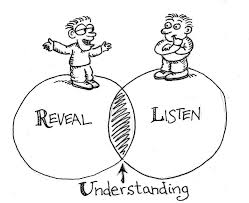
Graphic from http://www.teachingwithdesign.com/empathy-skill-sets.html

I remember a teacher who I felt was highly confrontational.  My first instinct was to draw away. But by listening and focusing on what she was saying and her body language, I became aware she was reacting to the way people responded to her.  She was very intelligent and had high standards.  Many students disliked her because she was “tough,” which meant she dealt often with angry parents.  By letting her see I respected her knowledge and valued the way she got her students to succeed beyond their expectations, we developed a wonderful relationship.  She became one of the strongest advocates for the library program.

Does your district integrate SEL into the curriculum?  What training did everyone get? What’s your part?  If your district doesn’t include SEL, how will you bring the idea to your administrators?