ON LIBRARIES – Do You Need a Mental Reboot?

Are you feeling drained?  Let’s see why:

  • You have been working hard to keep your library a valuable presence while we are doing distant learning and you still don’t know what’s coming for the fall.
  • Although you have been aware of the importance of having a diverse collection for some time, Black Lives Matter has put the challenge front and center in everyone’s mind. You need to be ready to communicate to the administration and teachers the diverse resources you have acquired for your collection.
  • Your own fears about the virus and coping with stresses at home which can include your children, partner, and parents combined with health and economic challenges you may be facing.

It’s a lot. You are handling so much; you don’t have time to think.  And therein lies a problem.

When you don’t think – you just react and that isn’t sustainable. What you need is a mental reboot. A chance to clear your deck and allow yourself the time to get your head back in order.  The first recommendation of most health practitioners is to breathe deeply. When we are harried, we shallow breathe which reduces the oxygen flow to the brain.  You need your brain working on full power. Deep slow breathing helps. It also slows our heart rate, making us feel instantly calmer and more focused.

Another common recommendation is to get outside and walk. This is a favorite of mine. (Take a mask with you if there is any likelihood that you will encounter other walkers and bikers.)  If there are woods nearby, so much the better. The combination of a change in scenery, fresh air, and physical activity does wonders – and it doesn’t have to take a lot of time.  Fifteen to twenty minutes can make a difference.

After your deep breaths and walk (and any other self-care that works for you), you can then contemplate the advice given by Marcia Reynolds in How to Help Others Do a Mental Reboot. In this instance, it’s a case of “physician heal thyself.”  Once you get your head back in place, you can help others do the same. She has a relatively simple two-step approach, and simple is needed now.

Her first recommendation is to do a safety check.  When you feel threatened, you go into fight or flight mode which, as you know, shuts down the cognitive part of your brain.  Ask yourself “Do I feel safe?” or, perhaps a better questions is “What is making me feel unsafe?” The virus is ever present in our minds, but have you been following the guidelines?  Is there anything you could do differently? You have been managing it well so far.  Is there any reason to think you won’t continue to do so? If you can start noticing where you’re doing well, you will start to relax.

Perhaps you’re feeling unsafe about how school will look in the fall. It may be distance learning or back to a physical space with differences.  Or a combination of both.  Yes, there are unknowns and things you can’t control, but, as a librarian, you are flexible and good at adapting to change.  You will adjust.

You may also be feeling unsafe about job security.  Many places are making cuts. To help you feel safer, up your advocacy.  Consider giving your principal reports on the ways you have supporting teachers and students.  Have you been talking to them about the diversity issue and what you are doing and can do to help with it? You are needed now more than ever.  Be sure administrators know how vital your work is to the continued success of their school.

The second step is to take time for reflective inquiry. Reflective inquiry allows us to separate what is real from what we imagine.  It’s not that we don’t have concerns, but we may be worried about things that haven’t happened. We take what we know and project it into the future.

To make a change, consider what you can do about each of the situations that have been draining you or taking up space in your thoughts. Then, decide whether to tackle the one that is most concerning or least concerning.  Identify it clearly, recognizing why it has been wearing on you. Gently ask yourself

  • How real is the possibility?
  • What did you see/read/hear that is making you more concerned? Is the information accurate and reliable? (We’re good at checking that!)
  • What can you do about it?

While advocacy should always be part of what you do, you may have been worrying unnecessarily. Even though other places may be losing jobs, that might not be the case for you. If you have a good relationship with your principal, you cab even ask about it.

Are you very worried about getting the virus?  Tests are much more available now.  See if you can have one done. It will be a relief to know you are not infected.

Finding the daily tasks of managing your home overpowering?  Maybe you can have a family discussion and find a way to organize it better. There could be things you don’t have to do or things other people would be willing to help with.

And once you’ve taken time for doing a safety check and a reflective inquiry for yourself, you’ll be better able to check in with the people around you and give them support. Reynolds quotes John Dewey (so appropriate!) who said that provoking people to think about their thinking is the “single most powerful antidote to erroneous beliefs and autopilot.”

We’re all prone to unhelpful, panicky thoughts. Do what you can to give yourself a break. Once you do that, you’ll not only feel calmer and more focused, you’ll be able to help you colleagues and family do the same.

ON LIBRARIES: Taking a Stand Against Racism

The Oxford Dictionary defines racism as “prejudice, discrimination, or antagonism directed against a person or people on the basis of their membership in a particular racial or ethnic group, typically one that is a minority or marginalized.”  In our schools, virtual or physical, we must actively fight racism – in our collection, in our educational community, and in ourselves. Many of you have been working on making your collection more diverse, but when creating a collection which includes “mirrors and windows,” ensuring that our students can find books that reflect their lives and let students see into the lives of others, how successful have you been?

Sadly our efforts have fallen short if too many of our diverse books fall into one of the four “F” categories: Folklore, Fashion, Food, and Festivals. This not only misses the mark when it comes to multiculturalism, but potentially veers into stereotyping cultures in terms of language, ethnicity and traits. True multiculturalism can only happen when significant attention is given to many different backgrounds in a particular setting.

What proportion of your books on Blacks are about slavery or the Civil Rights Movement?  That isn’t a mirror.  We need to be more pro-active about having a more representational collection. There are some very helpful websites such as https://diversebooks.org/ and if you do searches for titles under Own Voices.

Even better is to do a Diversity Audit. Library Collection Shelf Audit for Diversity and Inclusion is a relatively simple one. As you check the books, note whether the author is writing in their own voice.  Too many books are authored by those not sharing the history they are writing about, although more publishers are now actively seeking those who write from their own voice. Diversity audits take time, and you probably cannot accomplish it in the virtual world, but plan on doing one when you have physical time in your library.

To make a change in your educational community, you need to step out and lead. Adding diverse books to your collection does not mean that students – or teachers- will read them.  How can you promote them?  One way is a book tasting with book jackets covered as you offer students a sample of what’s inside the book, piquing their interests without engaging biases. New books that increase your collection’s diversity and inclusion should be shared with teachers along with suggestions for ways to bring them into either library or classroom projects.

Going further, look for ways to curate information on microaggressions and related topics and make it available to teachers and administrators – this can go beyond books to websites, podcasts, and videos.  Become informed and give a workshop on it. You want the entire school addressing the issue. If there are books in your collection which are problematic, use it as an opportunity to create a program about racism and how race is portrayed (don’t remove the books or we start down the slippery slope of censorship). See if the PTA/O is open to doing an event around resources available at the library and offer support for parents who want to talk more with their children.

While it’s important to fight racism in our collection and look for ways to lead our educational community in becoming anti-racist we also need to look at ourselves. The more we learn about how we’ve been taught and raised to look at the world through a white lens the better we become about changing how we think.  I know I have benefited from White Privilege. It doesn’t mean I don’t respect people no matter their ethnicity, gender, religion, or any other of the many ways are different.  It means my life has not been made harder because of the color of my skin. When I am in a store, I don’t expect to be watched by security.  When a policeman stops me, I am not afraid.  I don’t worry about my grandkids going out with their friends at any time of day.

Recognizing White Privilege is only a start.  As a lifelong learner I am committed to learning more, to leading by example, and to speaking up when I see racism. I am a leader for change, and I accept that this starts with me. The Chicago Public Library posted Ibram X. Kendi’s, author of How to Be An Antiracist, Anti-Racist Reading List, and I highly recommend it. (It is also a good list for expanding your collection, especially at the high school level).

As librarians we are staunch defenders of the First Amendment. We are committed to making our libraries safe, welcoming spaces for ALL. We support Equity, Diversity, and Inclusion as a basis, along with curriculum connections, for building our collections. We have not been just talking the talk.  We have been walking the walk, but it is likely we can and need to do more. We are not only responsible for our actions but tremendously influence the future of the communities we serve.

ON LIBRARIES: Mission, Vision and a Virus

Mission and Vision work together for your long-term success – even and especially during a pandemic. A Mission is your purpose.  Most of you have written one for your school library. It has guided your decisions on where to put your energy and in assessing how successful you have been.  Your Vision has been your inspiration, opening your mind –and planning—to what might be possible someday.

Your Mission and Vision are core to your school library and they can stay the same for years, even when times and circumstances affect how you do your job.  However, the last few months have you dealing with a major shifts in what and how you work.  For your own guidance and the future of your program, it’s a good time to revisit your statements.

Here are two sample Mission Statements:

  • The Mission of the School Library is to create lifelong learners with critical thinking skills, and an appreciation of literature by providing opportunities for all students to gain the self-confidence necessary to successfully learn in an information-rich world.
  • The Mission of the School Library is to ensure that students and staff are effective users and producers of ideas and information, promote literacy, and develop students’ competencies to be ethical participants in a global society.

Here are two sample Vision Statements:

  • The School Library is a safe, open, accessible and inviting learning library commons, essential to student achievement, citizenship and support the principles of intellectual freedom. Our students think globally and are capable of creating new knowledge.
  • The School Library is a user-centered environment where up-to-date resources and technology and a responsive staff empower students and teachers to achieve their academic and personal goals.

All four are powerful statements declaring the value of the school library. (NOTE: I have dropped the word “program” because the National School Library Standards states that we should say “school library” not “school library program”.)  As written, they reflect what you have been doing during quarantining event though you have been doing so differently. And it’s that “differently” which is necessary to address.

What else have you been doing as part of distance learning?  From what I have been reading, you have been building and strengthening your educational community.  And that community is larger than it was.  Parents are now an integral part of the community you have created.

You also have drawn on national library association sources, primarily ALA and AASL, to bring the latest information on the virus and how it affects schools. Your PLNs such as the library-based Facebook groups have been a source of creative ideas to further help your students, teachers, parents, and, hopefully, your administrators.

You have shown teachers new digital tools for distance teaching. While you have always been a tech integrator, now more than ever you have become their tech expert, hand-holding many of them through the steps need to get their lessons to students and helping parents get online.

Distance learning has also highlighted the digital divide.  What have you contributed in helping students who have limited or no access to wi-fi? (See ALA’s Equity, Diversity Inclusion: An Interpretation of the Library Bill of Rights.)  How will you be able to help the administration deal with the issue?

Reflect on the changes and all you have contributed.  Come up with a list of words that highlight your new role.  If “community” wasn’t in your old statements, it needs to be now.  And be sure that community means the larger community.  If possible. include your role with administrators.  If technology wasn’t mentioned consider phrases like “bridges the divide between…” or “supports the use of … for…”

As discussions begin on what it will be like when we return to school, you need to expand your advocacy work.  Schools are facing budget cuts (yet again), and all to often that has meant eliminating librarians. Don’t wait until cuts are announced. Be proactive. Send out information on your updated Mission to show administrators and parents the key role you and the library play for students’ success. Volunteer to be on any committee working on what it will look like when your district returns so that the library is part of the plan.

Collect evidence that shows how you have been a leader. Show what you have done in making your library a safe, welcoming environment even when you aren’t in your physical space. Check for graphics created by different states to present what librarians have been doing during the pandemic.

And if you do make changes, don’t forget to use your tech expertise to showcase your new Mission. Share it widely – with teachers, parents, and the administration.

ON LIBRARIES – A Trauma-Informed Mindset

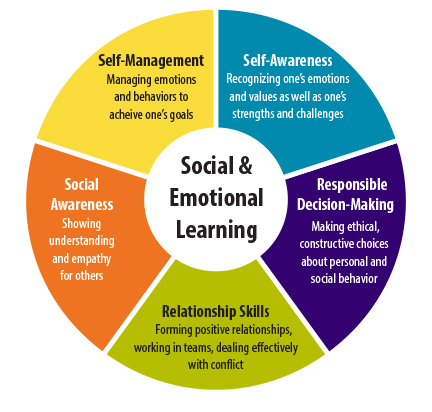
For the past several years, we have been discovering the importance of Social and Emotional Learning (SEL). The result has been recognizing how many of our students have experienced trauma in their lives and how this affects their behavior and learning. Now we’re in the middle of a pandemic and nine weeks into distance learning, we are all suffering from trauma to one degree or another, our most vulnerable students are even more so. How we respond to this trauma in our students will go a long way in helping them – and our programs – thrive in the months ahead.

In a post for the Association for Supervision and Curriculum Development (ASCD.org), Jason A. Haap discusses The Private Logic Behind a Trauma-Informed Mindset. Haap writes about the way those with trauma interpret the world around them. When a student, particularly oe affected by trauma, believes s/he is unworthy, they translate even an innocuous comment as proof you see them that way. Their response can then seem out of proportion and unrelated to what was going on.

Whether or not we realize it, our mindset and beliefs interpret situations and then we act on the assumption that we are correct. As with many aspects of equity, diversity, and inclusion, we can be very wrong.  Our language to describe what happened and our ability to see it is affected by our own private logic.  Do we recognize the response as a reflection of the student’s needs or do we attribute it to something done purposefully to get our attention? By considering the possibility of it being a need, we can attempt to address it in a way that might defuse the situation.

As Haap says, “We never can know what’s going on in someone’s mind.” However, we can work at altering how we perceive students’ behavior in a more positive, understanding way. If you adjust your mindset about the cause of the behavior, you will reduce the number of confrontations you have with those dealing with Adverse Childhood Experiences (ACE).

With distance learning, you may not be experiencing the sometimes violent student reactions that occur in person, which may seem to make things easier.  However, at the same time you need to be more mindful of the possibility that the home environment, often a major cause of the students’ trauma, is increasing their stress. Hopefully, you can draw on the guidance counselor or the school’s psychologist for additional help when needed.

A big take-away from the Haap article is that “behavior is communication.”  What is the student saying? What needs are not being met?  If you can identify that, you can give a constructive response and you are also less likely to act from faulty assumptions.

Even recognizing this, there is another challenge.  We, too, are under stress.  There is trauma happening in our lives. How are you handling your needs? What would those close to you think you are communicating by your behavior? Are you aware when they’re responding based on incorrect assumptions?

It may seem unfair that we have to worry about how others are perceiving us while also trying to be aware of their needs and challenges, but if you’re feeling as though you’re not being heard or understood (a daily issue for your ACE students), then take the time to be as clear as you can. If you need help with something, an hour of uninterrupted quiet, someone else to make dinner – ask. If you’ve never made a request like this before because you’ve been able to balance your life, then not only is it important to be clear, but to also give yourself the compassion you’d show your struggling students or family members.  You are navigating a new mindset professionally and personally, and that will be an adjustment for everyone. The more you can “reframe your attitude,” as Haap says, the more successful you will be.

ON LIBRARIES: Changing Lives One Kid at a Time

Librarians are in a unique position to connect with students, get to know them in ways their teachers – and parents – might not, and impact that lives, maybe more often than we know.  Many of you have received thank you cards from students.  They are spontaneous and always bring that leap of joy in your heart.  But for every card you receive, there are hundreds of others who just haven’t sent a note and who will remember you forever.

Students don’t always show themselves to their teachers.  A large percentage want to make a positive impression because they are seeking a grade. The ones who act up are making a different statement.  Although there are many teachers who have always been good at making connections and who recognize the pain that underlies their “problem” kids, you have an “in” they don’t have – You don’t give grades.

Because the school library is not connected to the pressure of grades, students may feel safe letting you know who they are. When this happens, you get to see them.  More than a classroom teacher, you have opportunities to work one-on-one with kids.  During these interactions, they may take the chance to reveal themselves – their pain, their hopes and dreams, their fears.  It happens because you have made the library a safe, welcoming space.

You also connect with them throughout their time in a school building, watching them grow and change. You see them maturing, learning, succeeding, and failing. This gives you a different perspective from the teachers who may only interact with them for a year or two at most. It’s something you may take for granted, but it gives you an incredible opportunity to make a lasting impact.

Having been a librarian for many decades, I have had many examples of how I touched and changed a life.  From an honor society student who named me as the teacher who made the greatest difference in her time at high school to a young woman who stopped me on the street in New York (I live in New Jersey) to tell me that serving on “library council” was the first place she felt safe in a racially homogenous school.

What are the things you do that change lives?  Betty Ray has identified 6 Traits of Life-Saving Teachers. Unsurprisingly, you do many of them.

Life- Changing Teachers Help Their Students Feel Safe – Accounts by authors and others talk of how the library was their sanctuary. They remember their librarian and how they made them feel safe and valued. Their time in the library helped them find their voice and become stronger. It is a life-long influence.

Life- Changing Teachers Possess a Contagious Passion – Passion is contagious.  People catch the fervor and either embrace it or enjoy being around it (or both). You have a passion for books and what they bring to lives as well as the importance of research, communication of ideas, literacy, knowledge and so much more.  You also are passionate about being a librarian, choosing it as a career.  Over the years, I have been thrilled to learn of former students who have become librarians.

Life- Changing Teachers Model Patience – There are days when patience is in short supply, but this is about your overall attitude.  Choosing patience can be a gift to yourself and everyone around you. You don’t tell—you guide, you encourage, and you cheerlead.  Students are less afraid to make a mistake with you, unlike how they may feel with their teachers.

Life- Changing Teachers Know When to be Tough – You are not a pushover. You have high standards and expect students to work toward achieving them.  Looking back at the teachers you remember, it wasn’t the ones who let you get away with anything and made things easy.  Attaining a goal brings a sense of pride and makes memories. Guiding a student to a new level of success is an achievement for your both.

Life- Changing Teachers Believe in Their Students (and Help Them Believe in Themselves) – This is why life-changing teachers can be tough.  Students are very good at seeing their own faults, just as we do ourselves.  It’s important that they learn to put these in perspective and even discover how they can become strengths. Librarians also have an opportunity to see skills that classroom teachers may not. Reflect these back to your students whenever possible.

Life- Changing Teachers Love Their Students – You can’t fake this. Students know when you care about them as people.  I once had a co-librarian who didn’t like kids. It’s no surprise that they didn’t like her either. Emotions are tied to learning.  Positive ones foster it.  Negative ones take away from it.  Where the library is a safe, welcoming environment, it is also a discovery zone, a place where students create, believe in themselves, and grow.

You are a life-changer.  How many of these traits do you exhibit every day?  Take the time to change your own life by acknowledging your impact. You make the future a better place.

ON LIBRARIES: Routine Matters

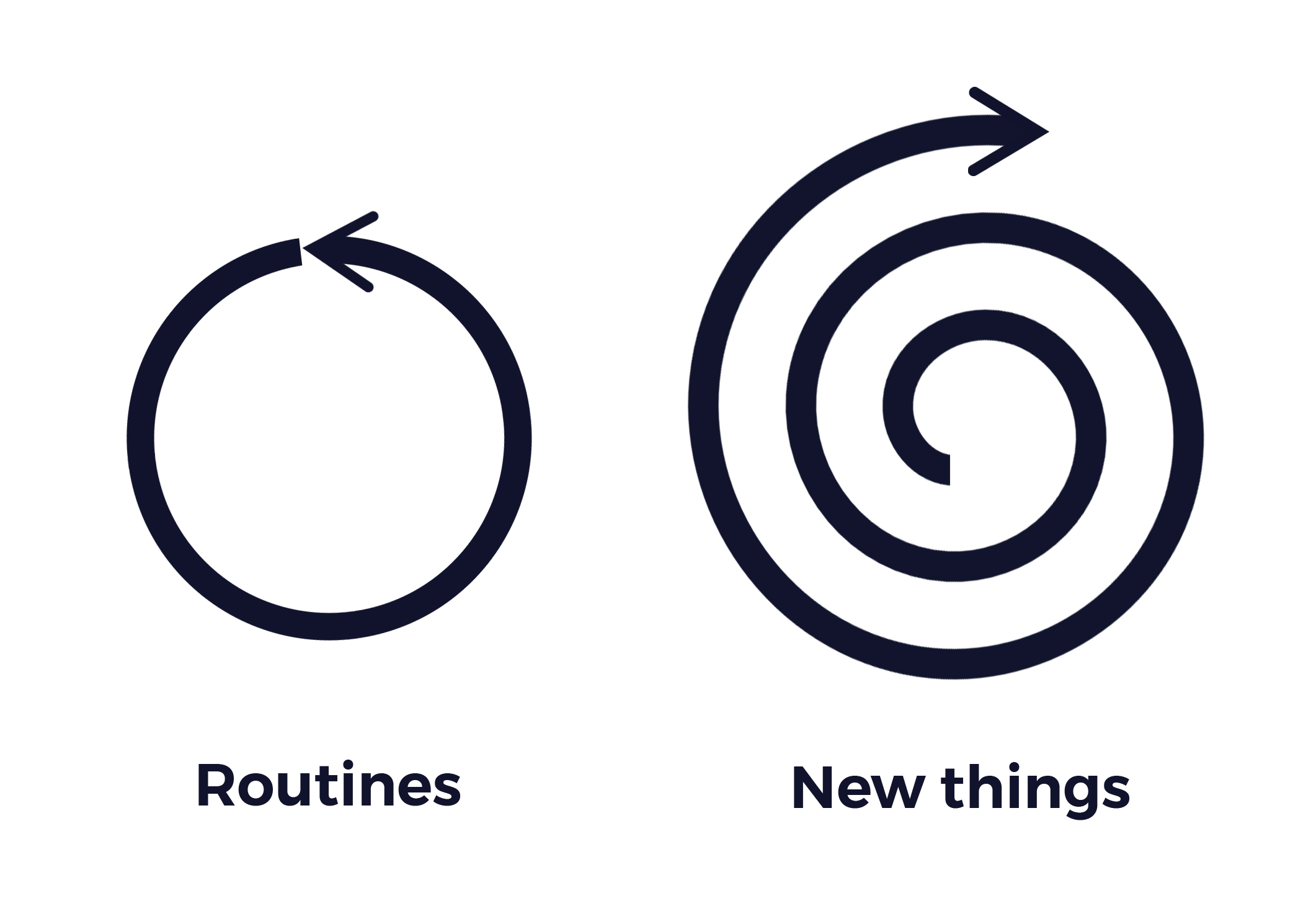
COVID-19 has affected all of our routines, some out of necessity and others out of our emotional responses. It has also changed our habits which may be one reason we feel so out of sorts.  Although routines and habits are similar, habits are repeated actions that happen with little conscious thought.  Routines need some attention.

For example, your commute to work was routine. (Although some days you may have done so on automatic pilot.) Washing your hands was a habit.  Now you are not driving to work, and you are focused when you wash your hands.  Eventually that routine, repeated often enough, will become a habit.

Many parts of our job were habits.  Signing in, opening the library, and booting up computers were automatic — habits. Interacting with students and teachers were, for the most part, comfortable routines that were a regular part of your day.

Routines help us organize our time.  Knowing what we accomplished at the end of the day gives us satisfaction and the incentive to keep on going.  With our old routines gone, we have put some new ones in place, but they aren’t always as good a “fit” as the old ones.  Our lives work better when there is structure.

In thinking about our interactions with others as a “routine,” I found a post by  Eric YaverbaumHow One CEO, Positive for COVID, Is Continuing to Lead. I am hoping his leadership style, which he says was always rooted in “openness and optimism” will help him defeat the virus as well as offer us some pointers.

Check in to start your day – Many of you are required to do this, but if you aren’t, make a point of officially starting your day.  It’s helpful if you do it at the same time each day. Differentiating between work and non-work is particularly important when home and work are the sharing the same space.  If it helps – change your clothes. It tells your brain you have begun working.

My first September after retirement, I indulged myself in sleeping late and lounging about in sweats and going without makeup. I soon discovered I was getting nothing done.  How I dressed affected my attitude and my routines. To this day I get washed, dressed and put on makeup even if no one but my husband sees me.

Support and gratitude- This doesn’t sound like a routine, but it deserves to be.  You support your teachers and students every day, but you should be aware of doing it regularly. Equally important is to be a cheerleader to keep them going. And don’t forget to get the support you need. Use your PLN, family and friends to bolster you.

Gratitude both in and out of work will help keep your focus on the present. You can use a small notebook or a Google doc to regularly note what you are grateful for and writing it down can become a very inspiring routine. Before or after your lunch and as the last thing in your workday, reflect on what you have in your life that makes you grateful.  It’s one of the simplest techniques I know to keep a positive mindset.

Take breaks – Don’t sit in front of your computer all day.  Get up and do something you like.  For me, of course, that’s walking, but give yourself at least an hour to separate yourself from your tasks. Pick a new series to binge watch, take out that coloring book again, look for a new recipe. And if it stresses you – stay away from social media.  Find the things that fill you up and make them part of your routine.

Cultivate empathy and compassion – This must always be for yourself as well as others.  If kids are late getting something done (students or your own kids), find out why.  If you don’t get a response from someone, assume they have a good reason when you check back in with them.  Don’t beat yourself up for what you haven’t done.  Celebrate what you have. Cheer on the people in your life, including yourself. Every step forward is an achievement.

It’s been a tough few months, and it is likely to continue for quite a while.  Given the routines we’ve been forced to adapt, we need additional ones that give us the support we need to keep going.  We need to nurture and cherish the things in our lives that are working, be grateful for the support that’s available, and keep finding more things that make us – and those around us – feel successful.

ON LIBRARIES – A Don’t-Do List

How long is your to-do list?  Whatever system you use to keep track of your ever-growing lists of tasks – both personal and professional – it has probably gotten too long.  And despite all you are doing, you probably feel you are still behind, which adds to the strain of an already grim situation. Something has to give. You don’t have to get the virus to get sick.  Stress takes a toll on the body.

To manage the situation differently, you need to acknowledge two factors that are making things difficult. First is the dramatic change to your workday. It is more complicated to teach and collaborate online, and you may have more meetings than you used to, sometimes daily. This, along with requests from teachers and parents, keep coming. The second factor is the pandemic itself. Television and social media are bringing continual updates, frightening stories, and conflicting information all mixed into a divisive political climate. You fear for yourself, your family, and your friends and you have the challenges of the new schedules of the people with whom you are at home.

Since it will be awhile before either of these factors change, it may be time to find some things you can stop doing so that you can feel successful going through this time.  The Ebling Group blog recommends Three Things to Stop Doing This Week. Targeted to the business world, the advice holds true for us as well.

Stop Sitting All Day; The medical profession has said that sitting all day is dangerous. Without your usual commuting time and reducing your regular shopping and errands, you are walking much less. You brain and your body needs the stimulus of movement.  For me and many others, walking is a refresher. I’ve even taken to doing laps around my house on bad weather days. It clears the mind, opens up ideas, and focuses you on something else besides your tasks and your fear. (Although you should consider having a mask on if you will be passing people.) Fitbits give users reminders, or you can set an alarm on your phone.

Stop Making Every Meeting a Zoom Call: Zoom and other meeting platforms have been invaluable in allowing us to get our jobs done.  We can stay in communication with students, teachers, administrators and parents while having the added benefit of seeing familiar faces.  But several articles have made note that one Zoom meeting after another is even more draining than a series of face-to-face meetings.  It may be following the various faces or finding everyone on a large call or underlying worry about how you look or sound since you can see yourself as well as others. When possible look for ways to limit these meeting/calls. Obviously, there are ones that can’t be changed, but reach out to your PLNs to see what alternatives are being used to reduce your time on Zoom.  And see if you can get up and walk between calls.

Stop Holding on to Your Original Plan: What did you imagine you would be doing when you were told schools were closing and you would be teaching online?  Whether it sounded scary or like something you could handle, it probably hasn’t turned out the way you thought. And remember when you thought you would have a chance to get to those tasks around the house you had put off because you didn’t have the time.? Yeah, most of us aren’t getting those done either.. None of this could be anticipated – neither the workload nor the emotional toll. In addition to everything else we don’t know, we can’t predict how productive we will be on a given day. Some days you’ll make progress and others will be a battle for every inch. Do what you can to be unceasingly kind to yourself no matter what.  You’re doing your best even as your best changes from day to day (or hour to hour).

I’m not sure of a lot right now, but I do know librarians have flexibility and resilience. We use both these characteristics all the time.  We adjust and we persevere.  Just remember to put these three things on your Don’t-Do Lists.  Keep making time for yourself, move, and breathe.

ON LIBRARIES: Scoping the Future

We are starting our seventh week of social isolation and distance learning, and everyone is looking to see when it will end and “life will get back to normal.” Prognosticators are coming out of the woodwork but no one knows what our future will look like. The question is, how do you plan for an unknowable future?

A method I developed when my district added a wing to the high school including a new library may help you get through this with a minimum of fear and a readiness to take on the next stage. I call my method Microscoping, Periscoping, and Telescoping.

Microscoping is what you do first. You only focus on what is happening and possible in the here and now.  It includes the things under your immediate control.  You do whatever is next and it allows you to feel grounded in the moment. This can mean planning tomorrow’s lesson, creating a video to send to teachers or families, or doing laundry.

Telescoping is how to plan for the future. It’s done rarely, but is still important. This happens when you look down the road to see what’s ahead. It allows you to make your best estimate of what needs to get done in order for you to be back in your library working with students and teachers or what’s necessary to end the year online. It keeps you aware of the steps in between today and the future.  At this point, you can’t spend too much time on Telescoping, but you can create lists and steps for what will most likely need to be done.

Periscoping is what keeps you from missing something important. In Periscoping you pop up and look around.  What is the next step you can take in connection with something you identified when Telescoping?  Is it coming up soon?  Does something need to be altered or changed?  Once you’ve taken a look at what’s happening around you, Periscoping helps you adjust your daily Microscoping to ensure you are staying on track.

We can never forget that the truth is we are still living through a crisis and don’t know how the ripple effects are going to play out. Becky Robinson says A Crisis Is Not a Marathon — But It Is a Call for Endurance.  She acknowledges four ways this crisis is different.

  • This crisis is not predictable– Unlike a marathon we are uncertain of the distance or the route we need to take. Different states will make different decisions and some are having a harder time than others.
  • We did not train for this – As a profession, we are good at tech, but no one was ready for full-time distance learning, supporting both teachers and students and dealing with the trauma they (and we) are living with all while dealing with other things happening on a personal front. Many of you are doing double duty on distance learning as you help your children as well as support the needs of your school.
  • We are isolated from our support crews – We miss the daily interactions with our students and teachers. Some of you didn’t even have a chance to say good-bye.  You went home on Friday and were told over the weekend not to come back. And I’m sure many of you hoped for a return before the end of the school year. This separation is a huge challenge. I hope you’re finding ways to use your PLN’s Facebook groups as a source of information and strength as well as finding ways to stay connected with friends and family who can give you support and strength.
  • We can’t see the finish lineThis is much like the first on the list. It’s not only that we can’t see it, we have no idea of where it is. We can hope and plan, but not knowing when restrictions may ease up is a huge challenge.

These key differences add up to a great deal of stress – both personal and professional. Robinson’s recommendations on how to face this call for endurance are very similar to my approach. She cites Ryan Hall’s book Run the Mile You Are In reminding us that you cannot look to far ahead. If you see how far you have to go, or notice that you can’t see the finish line at all, you will want to give in. It’s not unlike trying to lose a lot of weight. If you focus on 50 lbs it can seem impossible. Instead, you must take it in small goals, daily challenges, and doable steps.  It may not be a perfect solution, but nothing is.

This pandemic more like runnng a marathon on a treadmill. Lots of energy required but not getting anywhere – or so it seems. To get to the future, we can only manage the now. Keep a close focus on what we can do today, how we can be there for each other, and what we need personally so that when the finish line finally comes into focus, we’re as ready as possible.


ON LIBRARIES: Reversing the Energy Drain

Feeling drained and exhausted?  You are not alone. Even though you’re not commuting or doing as many before and after school activities, the things that energized you – including seeing the teachers and students – are missing. But while you can partially attribute the feeling to cabin fever, the major energy drain is due to fear and there’s no getting away from it.

Acknowledging the fear and knowing it’s going to be a part of our lives even after the virus is contained (and hopefully cured) is a good first step. But what else can we do to minimize the energy drain so we are at the best we can be now and going forward? In Maximizing Your Energy During COVID-19 Nicholas W. Eyrich, David Fessell and Gretchen Spreitzer offer three ways to accomplish it. (NOTE: There’s a survey at the end of this article which requires personal information at the end.) They recommend:

Identifying and using your signature strengths – Consider both your people and professional skills. How good are you at lifting the spirits of others? Often helping someone else feel better gives you an energy boost.

How much of a techie are you?  Working one-on-one with a teacher (online, of course) to demonstrate a resource will help you focus on doing something positive.  When they use it their teaching, they will invariably let you know. Another feel good experience that helps restore energy.

Those of you who are artistic or crafty can create something to share online. The act of creation, particularly when you tune into it is an energy boost. Bringing beauty to others adds to your pleasure and that too adds to your energy.

And since energy carries over, think about your strengths and joys outside of your job. Do you like cooking, baking, knitting, gardening or singing? Spend some time purposely doing those things. It’s okay to enjoy yourself.

Keeping your purpose ever-present – This is probably my theme song.  Your Mission – or purpose – is what keeps you on track.  It’s all about your Why.

Why did you become a librarian? What powers you when you are in your library?  What can you bring from that into your new environment?

What values are important to you?  Note where they are still present. Acknowledge yourself for when and how you further Mission and demonstrate your Why.

Lean into high-quality connections – As always, keep checking in to your PLNs.  You don’t only have to use them for advice on how to do something.  You can also open up and let them know you are feeling.  By sharing your fears and anxieties, not only do you release them (fear hates when you shine a light on it) but you may learn methods others have used for dealing with the same concern or your disclosure could help someone else feel stronger and in good company.

Recognize when you are feeling drained. Identify its cause.  Most of the time fear will be at the root.  Choose one of the three suggestions to help you restore your energy or let me know others that are working for you. Most of all, be kind to yourself no matter where your energy is. Accept that there will be days when you don’t accomplish much, and don’t expect to give maximum effort all the time.

ON LIBRARIES: Crisis Leadership

For most of my career I have discussed leadership and its importance to school librarians but leading in the pandemic requires another set of skills. Crisis leadership necessitates the traditional leadership skills of confidence, empathy, and vision – but on steroids. You can see these skills at work in the governors who are getting respect for managing the pandemic in their states.  They stay calm, reassure but tell the truth, and seem to have a plan for getting through and past these surreal times.

The Leading Blog zeroes in on Dealing with the Two Fronts of Every Crisis—Issues and Fear. The post quotes Harvard Business School Professor Herman “Dutch” Leonard’s definition of a true crisis as “there is no precedent for it, there is no playbook for handling it. There is no script for managing it.”  Sounds familiar.

You are accustomed to being flexible, adjusting to the mini crises that are part of managing a school library but this is unprecedented. On the Issue front, although you are just attempting to do your job in a different environment, you really are in uncharted territory. You need to invent answers to managing it as you go. The clearest way to deal with the situation is to define a process and make it work as you go.

To create this process, the post suggests you first identify all the concerns or priorities. Next, get information on the crisis focusing on who has information relating to your concerns.  It could be the school district, or it could be resources from ALA. Finally, knowing the priorities, you develop a plan for getting things done.

You may have already done this but are still feeling harried.  What likely is draining you is the second front of Crisis Leadership – Fear.  The article presents four ways of dealing with fear in a crisis.

  1. Always Keep the Big Picture in Mind – Leaders always need to look at the big picture. Don’t be pulled away from what you are doing by the latest news, the newest curation, or the most recent outpouring of free resources. The news needs time to be validated as do the curations and free resources. Don’t let them immediately distract you.

Instead, use your Mission Statement as your anchor.  Too much is happening too quickly. Keep your direction in mind. Sift through the new and only deal with it if it moves you in the direction you want to go. Is the curation or resource worth your time to explore? Are they of immediate value to your students and teachers? Is it information you need to share with an administrator? If not, let it go.

  1. Educate to Bring Clarity – Being able to communicate clearly is a core leadership skill. In a true crisis there is continuous confusion (have you noticed?), and people need help in dealing with their fears and their insecurity about what they are doing and if they are doing it right. As teachers cope with how to do their jobs online your expertise as a tech integrator can support them and their students.  You can share the best resources to guide them through this uncertain landscape or offer to do an online tutorial.
  2. Remain Steady – If you look at those who are best regarded and trusted during a crises, you see they remain calm even as they refer to uncertainties. Part of a crisis is there is so much no one knows. Instead of adding to fear, look for positives.  Acknowledge your teachers and your students for where they are successful. Look to your PLNs to acknowledge you and take time to cheer for others.
  3. Make People Agents of Something Positive – Along with acknowledging, leaders empower others. In crisis leadership this is more important than ever. We are often reminded that together we are stronger (the needs of social distancing not withstanding). Consider creating a newsletter of sorts to highlight the great things being done by teachers, students, and parents. You might even give a boost to your administrators.  Encourage people to email you contributions. It’s a wonderful chance for your community to see how it is working together.

Iron is forged in a super-heated fire.  The pandemic is our fire. Crisis leadership needs a cool head and the ability to alter course quickly. You have what it takes to be a crisis leader. Follow your Mission and priorities. Take time to get clarity before acting. Do what is necessary and don’t try to do everything. Lean on others even as you lead the way and remember to take time for yourself.