ON LIBRARIES: Mixed Messages

mixed messages2We are not always aware of the unintended messages we send.  Students in particular pick up on these, but others do as well.

I remember a fourth grade teacher who was who wanted her students to be good at writing and to love it. She worked hard on her writing lesson plans so that her students would enjoy the process.  One day I stopped by her class to tell her something important.  She met me at her door, and we talked while she kept an eye on her students.  The conversation ran a little longer than I had anticipated.  The kids got antsy and began talking with each other. The teacher turned to the class and said, “Is this how you behave when I am speaking with a guest?  Settle down right now or you will be writing two paragraphs on how we act when I have a visitor.”  With that one comment she told students writing is not fun; it is a punishment.

The teacher unthinkingly reverted to a “teacher default” response.  It is sometimes said that teachers teach as they were taught, not as they were taught to teach. I don’t believe that’s true most of the time, but when stressed or upset they say and do things the way teachers used to do.  It’s like the jokes about women becoming their mothers and using the same phrases as the previous generation.unclear

With Students

The first Common Belief in the AASL Standards for the 21st– Century Learner is “Reading is a window to the world.” Many of you include “developing lifelong readers” or some variant of that in your Mission Statement.  Even without it in the statement, it’s a goal we hold very strongly.  How do you send that message?

You probably put new books out on display.  You talk to students about what they are reading. You recommend titles to students based on what you know of their likes and interests. And you share your own enthusiasm for books. All are wonderful way to send your message.

But do you then do something that sends a very different message?  I know countless elementary librarians who won’t let kids borrow a book if they have one (or more) overdues.  The message becomes: getting books back on the shelf is more important than having the student read.

The argument offered in most cases is you are teaching the child to be responsible. And besides, you can’t afford to lose books. What is more important, responsibility or developing their reading habit?  Of even greater concern to me is imposing a flat rule without taking into consideration different circumstances kids have.  For example children of divorce may their divide time between two houses. It’s easy to leave a book at one parent’s home and not be able to get it back in time for their “library day.” Give kids some leeway. Ask them when they plan to bring it back.  Have a reminder card you can give them to help.  Instead of requiring responsibility, help them learn it.

rulesIf you are helping a student and a teacher comes in wanting to talk with you do you end your conversation with the kid quickly so you can respond to the teacher?  This lets the student know that he/she is not as important to you as adults are.

Do you want your library to be a safe, welcoming environment?  The phrase shows up often in Vision Statements, but posted library rules – a list of “no’s” usually – sends a message that behavior is what really counts. Do students have to speak softly while teachers can speak loudly?  Watch for your double standards.

With Teachers

Librarians often resent they are not regarded as teachers.  You teach every day and with all types of students.  Sometimes it’s a whole class.  Other times it’s one-on-one. Are you sending the message that you are a teacher or are you sending another message?

I witnessed the worst example of this a number of years ago.  Teachers have always dropped into the libraries where I worked.  Sometimes to plan a lesson, but often to gripe about something.  While I never joined the complaints, I was a listening ear letting them know I recognized how upset they were.  One time, my co-librarian was listening with me to a teacher’s mini-rant.  Her response was, “You teachers….”  And I knew she had created a gulf between her and the teacher.  It always needs to be “We teachers,” in what you say and how you behave.frustrated

Unless we start noticing on some of our instinctive responses we are likely to send mixed messages to students, teachers, parents, and administrators.  Think about how you want to be perceived by these members of the educational community.  Then work to be sure your interactions promote it.

ON LIBRARIES: It Begins With Relationships

build bridgesWhy is one librarian successful and another isn’t?  They can both work in the same district.  Their training and years on the job can be about the same.  The successful librarian might even be a newbie with lots to learn and the other with many years of experience.  Somehow the library program of one continues to grow and flourish while the other languishes.  Teachers resist using it, and when they do prefer to handle their students without any help from the librarian.  At the elementary level, the closest they come to the library is when they drop their students off and pick them up.

“People don’t care how much you know until they know how much you care.”  I have seen this favorite quote of mine attributed to a number of different sources, but the oldest citing I have gives Theodore Roosevelt the credit. What is important is that it is true.

I have said it many times, in the books I have written and the presentations I have given, “We are in the relationship business.” What I haven’t said is that if you don’t know how to build relationships you will be out business.

Librarians don’t have the luxury of not liking someone on the staff.  The job responsibility requires you to get along with everyone.  Not an always simple task when there are people who grate on your nerves and never have a nice word to say.  Yet it can and must be done. Let’s begin with some easy relationship building.

Relationships with Studentsworking with kids

You don’t grade them. They are not “yours.”  If they don’t like you, they will not only make it obvious, they will make your life miserable. Discipline problems grow and from your principal’s perspective you cannot manage your “classroom.”

While any kid can act out on a bad day, that should not be the norm.   Start by giving respect and you will get it back. Many librarians don’t realize how often they disrespect a student.  An adult comes in, and they break off any conversation, making it obvious to the student that you consider adults more important and worthy of your time. You help teachers find information, but you direct students where to go or give them a mini-lesson. Yes, you are there to teach them, but are you following up to see if they found what they needed?  Wouldn’t the lesson work just as well if you gave it and modeled the steps with them?

Do you make an effort to get to know students, particularly those who come to the library frequently? Do you know their interests? The books, authors, and activities they like?  Have you ever said to one of them, “I’m so glad you came in. We just got some new books, and I have one I am sure you will like. Do you want to see it?”  Students, like everyone else, appreciate when you show you know who they really are.

Parents-orientationRelationship with Teachers

The first rule in building relationships with teachers is to respect their confidences.  The grapevine and gossip is alive and well in every school. You cannot be a contributor. Relationships are based on trust and repeating what you are told is the quickest way to destroy any trust you built up.

A core of teachers everywhere are chronic complainers.  They complain about the administration, their fellow teachers, and their students. Don’t get sucked in.  You can say, “I understand how you feel,” or “I get how angry you are.” But never agree with those sentiments.  You can be sure it will be broadcast throughout the school. With PARCC testing more teachers than ever are complaining, and you undoubtedly have the same sentiments.  Saying, “I know hard everyone has been working. It’s been stressful,” is perfectly OK. Notice, you don’t add, how difficult it has been for you.  That comes off as whining, and it never works.

Slowly get to know teachers’ personal interests, hobbies, and whatever they care about.  If you find a website or a Pinterest board you think they would like, share it with them. The more communications and connections you have, the more likely they will be open to collaborating with you.

Administrators and Board Membersbuild-realtionships

This group is probably the most challenging for you to develop relationships, and yet as power stakeholders, they are the most important.  Begin with your principal.  Listen to what he/she says at faculty meetings and in other communications.  What seems to be of most importance to him/her?  High stakes test? Integrating technology?  Community outreach? How can the library program help attain it?  Figure out how to present that information in under five minutes (they are always heavily pressed for time), and show what a team player you are and how vital the library program is.  You can also find out about personal interests, just as you did with teachers.

Unless you know them personally, the best way to get to know Board members is to go to Board meetings.  See if you can get the other librarians in your district to take turns attending meetings.  Which Board member seems to be most likely to support libraries?  Perhaps you can send that person, with your principal’s approval, a quarterly or annual report.  Be sure it is visual and shows students at work.  Keep the information channel open.  Issue invitations, and learn more about their interests.

Remember, “People don’t care how much you know, until they know how much you care.” Build relationships first, and everything else will follow.

ON LIBRARIES: From Library to Learning Commons

learning commonsYou have heard the term Learning Commons.  You may have read an article or two about it and thought it sounded wonderful—in a distant way.  Your library can’t become a Learning Commons. Because:

  • It takes too much time.
  • It costs too much money.
  • The administration won’t go for it.

For the most part, all three reasons (and any more you can come up with) are true—and false. If you decide it can’t happen in your library, it won’t. But what if you could transform your library into a Learning Commons?  Would it be worth the time and the risk?  How would having a Learning Commons change the perception of your program in the eyes of students? Teachers? Administrators? Parents and the larger community?  It’s one more step, a big one but a step, in demonstrating your leadership.transformation2

Some Reasons to Consider

Let’s start with why you should want to make the transformation.  Years ago, school librarians added the word “media” to their title. The reason was to focus attention on how libraries had moved from just having print to incorporating technology into learning and research.  It was important to change perceptions to prevent libraries being regarded as dusty warehouses.

Once again it is time to change perceptions first and then change reality.  As with many businesses, the 21st century demands we reinvent ourselves.  Does your library look like one from the 1990’s?  Earlier?  The world has changed radically in the past quarter of a century, and it’s not just the technology.  It’s how our relationships, learning, and communications have been transformed by technology.

We are living in a participatory culture.  We rely on crowd-sourcing, curating, and 24/7 access to information—much of it from our smart phones.  Does your library reflect those changes?  If you were a students would you see the library as a place to learn, create, share, and grow? (Those are the shortcut phrases describing the four standards of the AASL Standards for the 21st-Century Learner.)

planCreating a Plan

As the great American philosopher Yogi Berra said, “If you don’t know where you are going, you will wind up someplace else.” Fortunately, you don’t need to do this on your own.  In a Knowledge Quest article Carole Koechlin and David V. Loerstcher explain the elements needed in a Learning Commons and how to plan for them.

While the article is an excellent start, you also need an incentive to keep you going. You are all highly capable researchers. Look for images of Learning Commons and more articles detailing how others have made the transformation.  Not only will this inspire you, it will be useful later when you present your plan. Limit your search by grade level.  While the concept stays the same, you may want to know what an elementary Learning Commons looks like.

Don’t be intimidated by the pictures.  Just look at the message the different spaces convey.  It’s all about participating, sharing, creating, doing. Where in the Learning Commons do these different activities happen?  You want to demonstrate the library is not just a place for finding things.  It’s a place for making things – and more.  It promotes inquiry learning just by the environment it creates.

The conversion to a Learning Commons does not have to be done in one year.  In fact, it might be better if it were stretched out to at least three years.  This way you can see what is working, what needs tweaking, and where you need to add or delete ideas you had for the next stage.

Finding the Moneyfind the money

Your space will need to change.  Fresh paint on walls, green screens, signs, and new furniture cost money. Most of you have been struggling with small or no budgets.  How can you pay for this?  Time to get creative.

What parts of the transformation are DIY – or DIY with volunteer help? What can be done cheaply? For example tables and chairs need to be moveable to allow maximum flexibility.  How much would it cost to put what you have on casters?  What outside sources of funds are available?  Most districts have a local education foundation that gives grants.  Are there other grants you could apply for?  Could the parent teacher organization help in any way?

talkConvincing the Administrators

Nothing is going to happen without the support of the administration.  Once you have you plan put together and have collected a file of pictures, prepare a pitch for your principal. Be sure to include pictures of libraries from the 1950s, the 1990 and your current library.

What is the key message you want to deliver?  If possible, tie it to your Vision and the Mission of the school. Keep it brief.  Show the work you have done and your cost analysis.

You may get shot down, but listen carefully to what you’re told.  I had a superintendent who told me she saved a lot of time by responding with a “no” to almost every suggestion.  Most people would just go away disappointed.  I would come back with an alternative.  And then another alternative.  By this time she knew I was serious and that I would work hard to see the project accomplished.

Are you up for the challenge?  Isn’t it worth it to try?

ON LIBRARIES: On The Level

reading is a windowThe very first “Common Belief” in the AASL Standards for the 21st-Century Learner is “Reading is a window to the world” noting that it’s a “foundational skill in learning, personal growth, and enjoyment.”  I want to focus primarily on the last word—enjoyment. As school librarians we are committed to guiding our students to become lifelong readers. We recognize the habit only develops when they find reading is a pleasurable experience.

Over the past years a few developments in education are making it difficult for us to carry out this critical role. Most recently, Lexiles and leveling have invaded the library and students are being steered away from what they want to read and are being directed toward what they “ought” to read. Elementary librarians are being told to “level” their libraries in the misguided belief it will improve student scores on tests and make them more college ready.

What many don’t realize, is this is a giant step backwards. In the mid-20th century, library shelves were labeled by grade level and students were required to only select books from the appropriate shelf. It didn’t work. Some students read above or below their grade level and others wanted different books.  And libraries changed.window to the world

Now we are heading back to those times. Granted teachers determine individual levels for students so students are expected to read at their current Lexile level, but tit overlooks the core reason the old system didn’t work.  Restrictions on reading, interferes with enjoyment.

I have no problem with teachers using Lexiles for instructional purposes in the classroom.  I recognize the underlying reason Common Core assigned Lexile ranges for each grade level.  Students do need to be challenged and encouraged to stretch. That is what learning is about.

What is being overlooked is enjoyment.  Reading for pleasure should not be work.  It’s about relaxing, choosing what is of interest to you, and learning without being aware it is happening.  I have never liked the “5 finger rule” for choosing a book.  If I had difficulty reading five words on every page, I would read the book.  Reading should be fun (an alien concept in schools today).

When having freedom to choose, students for the most part select a book below their instructional level. This makes perfect sense.  There are students who also want a book far above their instructional level. If they love a sport, for example, they don’t care how hard the book is. They will struggle through it to get what they want.  They may not finish it.  There is no requirement to finish something chosen for fun.  How many young people read Harry Potter books even when it was “too hard” for them?

are you there gdice magicForcing students to always be “stretching” when reading for pleasure, is a sure way to turn them off reading.  It is especially true for those who aren’t fond of reading in the first place.  I can remember the books that enticed my own children to become readers.  Both of them developed the reading habit because they read the one book that “spoke” to them.  For my daughter it was Judy Blume.  For my son, it was Ice Magic by Matt Christopher, which was at least one year below his instructional level.

Accelerated Reader and similar programs, while not as damaging to developing lifelong readers, also interfere with pleasurable reading. Students seeking to earn as many points as they can, will pass over a book that interests them if its point value isn’t high enough.  They will ignore books they might like if it doesn’t have an assigned point value.  Reading for points is not the way to make reading a habit. The purpose from the student’s perspective is not pleasure it is competition.

When parents read to their children, the association of reading and good times is built.  When librarians make story time a pleasurable experience the connection is reinforced.  When a librarian helps a student find the perfect book, the habit of a lifetime begins.

What can you as a librarian do if you are told to level your library?  Be the leader you need to be. Don’t accept the directive without explaining why it isn’t in the best interest of students.  Show administrators Keith Curry Lance’s studies on reading.  Share this blog also. If they still insist, see if you can get them to agree to leveling shelves for teachers who can direct students to them and keeping other shelves open.  This way students can take one leveled book and at least one of their own choosing.

We are all about creating lifelong readers.  Is your library leveled?

ON LIBRARIES: The Challenge of Collaboration – Part Three

collaboration 2For the past two weeks I have been blogging about meeting the challenge of collaboration.  So many librarians are unable to make the connections which combine the expertise of all participants and create a larger result than if the librarian worked alone.  On a more subtle, but no less vital, level these collaborations build a deeper understanding of the library program and develop the advocates who fight to retain librarians and their programs.

You must find and use the assets that are within your reach.

Once again here is the first Guideline under “Teaching for Learning” in AASL’s Empowering Learners which focuses on collaboration:

The school library program promotes collaboration among members of the learning community and encourages learners to be independent, lifelong users and producers of ideas and information. (p. 20)

The actions supporting the Guideline expect the librarian to:

  • “collaborate with a core team of classroom teachers and specialists to design, implement, and evaluate inquiry lessons and units
  • collaborate with an extended team including parents, community members, … museums, academic and public libraries… to include their expertise and assistance in inquiry lessons and units
  • work with administrators to actively promote, support, and implement collaboration
  • seek input from students on the learning process.”

The one most librarians feel is beyond their reach is the second bullet point. As with the others, the best way to incorporate this is by starting small and building on it. The Makerspace movement is an excellent way to begin collaborating with parents and community members. start small

Once you have launched your Makerspace, use your website, Twitter account, or however you reach parents and invite them to share their expertise with students.  Whether it’s building an app or knitting, you will find volunteers who will be glad to teach and help students.  You provide the materials along with print and online resources.  Take pictures and do a video of your “expert” and students at work and their final products.

If the students are willing, see if the public librarian will let you set up a display to showcase what occurred. Add an “advertisement” for community members to lead a Makerspace. Find out in advance from your administrator what needs to be done to permit this.

High school librarians can contact academic librarians if there is a community or four-year college in the area.  With some planning, set up a field trip for a class beginning a research project. The college librarian can teach students how to access and choose the extensive databases available, letting them see and experience what research will be like once they graduate. The local media outlet can be invited to cover the event and record student reactions.

at the libraryMost towns have some sort of historical society or other museum area.  Find out what they are, what they have on exhibit, and any special ones that are upcoming.  Look to see if this matches with curricular units.  Either arrange for a field visit or have the curator bring the items to your library to share with students, giving them a deeper understanding of what they will be exploring.  Again invite the media – and your administrator.

Educators have been stressing authentic learning, and our national standards enjoin us to develop inquiry-base units. The two combine when you develop a large network of people with whom you collaborate. Each project spreads the word on what a 21st century library program is. The groups you collaborate with, the more people are invested in continuing the success of your program.

Advocacy is an on-going, never stopping campaign.  It’s not about begging people for our jobs. It’s about everyone recognizing that what we do is invaluable for our school community and the success now and in the future of our students.

How are you reaching out and building collaborative partnerships?

ON LIBRARIES – The Challenge of Collaboration- Part Two

collaboration2Last week I blogged about meeting the challenges presented by collaborating with teachers. To be able to truly effect a transformation in student learning we need to work with the whole community. Creating collaborative relationships with teachers is not easy given your full workload, but building wider collaborations can be even more daunting and you probably have not considered developing them.

It’s time to address how to make those connections. You can start with small steps, but you need to make continuous progress so these stakeholders view the library program as vital to student and the entire educational community.  To review, the first Guideline under “Teaching for Learning” in AASL’s Empowering Learners states:

The school library program promotes collaboration among members of the learning community and encourages learners to be independent, lifelong users and producers of ideas and information. (p. 20)

The actions supporting the Guideline expect the librarian to:

  • “collaborate with a core team of classroom teachers and specialists to design, implement, and evaluate inquiry lessons and units
  • collaborate with an extended team including parents, community members, … museums, academic and public libraries… to include their expertise and assistance in inquiry lessons and units
  • work with administrators to actively promote, support, and implement collaboration
  • seek input from students on the learning process.”

Your next target is the administrators. You might be thinking it is impossible to get my principal to promote collaboration when he/she doesn’t realize what I do and is only focused on test scores. It’s not about what the administrator knows. It’s your job to inform and to do so in a way your principal is open to receive the message.makerspace

One easy opening is through Makerspaces. You may have already started one, but if you haven’t, start planning one as soon as possible.  At the beginning, you might be the only one leading it, but you can eventually enlist interested teachers who are willing to share their hobby/experts in an area.  Students are sometimes able to run a Makerspace and it’s a great opportunity for them to show their special talents and leadership skills.  Eventually parents and others might contribute.

Present the idea to your principal.  Show how it connects to STEM.  Administrators are looking for ways to increase STEM opportunities for students and this is a natural.  If you start small, it usually doesn’t require much money to get the project launched, but ask for funds as part of your proposal.  By supporting the Makerspace even in this small way, the principal has a stake in its success and is therefore more involved with the library program.

Take pictures and make videos of kids at work. Share them with administrators – and the Board of Education. Follow district procedure about photographs of students and see if you can post these on your website. Include an invitation to parents and others to volunteer to lead a Makerspace.

Survey students to find what they would want added and announce the areas for which you need leaders.  As the program grows you will need more money. Have kids work on making a video to raise the funds through one of the crowdsourcing program such as DonorsChoose.org.

makerspace2Hour of Code is another way many librarians are showing the connection between the library program and STEM and getting support –and recognition—from their administrators.  As always, make sure to get the word out to parents and the wider community showing how the librarians transform student learning.

In the same vein, send your principal quarterly and annual reports even if they are not required.  Although you include statistics such as the number of classes and different subject areas addressed, focus on student learning. Use Piktochart or Issuu for a visual report packing interest and showcasing what you do.  With the information in hand, your principal will be much more likely to listen to your future proposals and be willing to “actively promote, support, and implement collaboration.”

  • Next week, achieving the final action step: “collaborat[ing] with an extended team including parents, community members, … museums, academic and public libraries… to include their expertise and assistance in inquiry lessons and units.”


ON LIBRARIES: The Challenge of Collaboration – Part One

NOTE: This is the first of a several week series on collaboration

collaboration 2“School librarians transform student learning.”  Easy to say.  Important to do.  Accomplishing it… is more complicated.  While we can do much when dealing with students one-to-one, and certainly work toward that end when we have a scheduled class, the transformation is best achieved when working in collaboration with teachers. Some of you are doing so on a regular basis, but from my contacts with school librarians coping with day-to-day pressures, fixed schedules, and unwilling teachers, collaboration is at best a distant goal.

The first Guideline under “Teaching for Learning” in AASL’s Empowering Learners states:

The school library program promotes collaboration among members of the learning community and encourages learners to be independent, lifelong users and producers of ideas and information. (p. 20)

The actions supporting the Guideline expect the librarian to:

  • “collaborate with a core team of classroom teachers and specialists to design, implement, and evaluate inquiry lessons and units
  • collaborate with an extended team including parents, community members, … museums, academic and public libraries… to include their expertise and assistance in inquiry lessons and units
  • work with administrators to actively promote, support, and implement collaboration
  • seek input from students on the learning process.”

That’s a tall order and very few are doing all of this. The Guidelines offer no direction on how you are to develop this level of collaboration and instructional partnership.  Where do you start?Hello

You can’t focus on all four actions at once.  The last is the easiest to accomplish by way of formative assessments during a class and regular brief surveys or exit tickets at the end of a unit. The first action is your main target to implement the Guideline into your program.

At the middle and high school levels, you normally have a flex schedule which means some teachers bring their classes frequently, some do it rarely, and others you never see.  Work initially with those accustomed to using their library as part of their instruction.  At what point do you enter the process right now?  Is the teacher using only your facility but not your expertise or does h/she expect you to do an introduction to the resources to be used? You want to reach the stage where you are develop the unit together, each making a design contribution.

If the teacher is only using your facility, observe what students are working on.  Come up with one or two resources that would improve their results and share with the teacher.  If you are thanked, suggest the teacher give you a heads-up in the future so you can provide relevant sources.  If your recommendatiknockingon is ignored, repeat the process the next time.

In the case where you informed in advance what students will be doing and can offer recommended direction, add possibilities for making the project inquiry-based, one where the end product has meaning beyond the due date.  You want to create learning opportunities for students to be producers of information and not just regurgitating existing facts they collect and turn into a pretty presentation.

In all cases, follow up with a brief assessment with the teacher.  Did this help?  What would work better next time?  Frame your questions so teachers are willing to make negative comments. If you only hear positives you can’t improve what you are doing.

Elementary librarians who mostly have fixed schedules have a greater challenge. If you are in that situation, your first aim is to cooperate with teachers. To do that you need to find out what they are working on in class to give students a deeper connection with the topic by working with you when they come in at their scheduled time.collaborative learning

Start with the teachers with whom you have a good relationship.  When they give tell you what they are doing (or you have a curriculum map to guide you), let them know what you are doing with their students.  As with flex time librarians, follow up when the unit is complete to find out what the teacher thought. What if anything did he/she not like?  What worked? Was there anything you can do differently next time?

Next week, meeting the challenges of other Actions in the Guidline.


ON LIBRARIES: We Make Connections

Two weeks ago I blogged on how we transform our facility.  Last week I discussed the first impression people get when they enter our facility and meet us.  Then they get to discover what we do, and in the process we transform learning and our school community.

connectionsWe make connections.  We connect people to ideas, ideas to ideas, and we connect people to people.  You may not have focused on this core behavior, but it’s there in every librarian.

People to ideas – This form of connection is obvious.  Our patrons come to the library, physically or virtually, and are connected to the information they seek. When we are doing our job well, they find more than facts. It’s usable information.

I had the opportunity to have a very long discussion with several bright high school students the other day. We weren’t in a library, but as a librarian, no matter my location I am still functioning as one.  The first thing I did was challenge them to begin thinking by asking their views on Apple defying a warrant and refusing to create a program to get past the encryption on iPhones in order for the government to access information on the cell phone of one of the accused terrorists in the San Bernardino massacre.

As I expected, among the five there were instantaneous opinions, with the students taking different sides.  I didn’t support either side but pointed out this was an emotional response either to their feelings about dealing with terrorists or how strongly they felt about their right to privacy. The common element was their emotion.  While this was a natural response and would always be present, once they recognized its existence, they needed to move on to finding evidence to either refute or support their gut reaction.  This would not eliminate their emotions but would allow them to see, that just as with websites and other information sources, bias is almost always present.  It’s not wrong. It’s just there and needs to be recognized in order for it to be factored into decision making.  This is teaching critical thinking on a visceral level.idea to idea

Ideas to ideas – One of the best parts of our job is helping students make the leap from an initial idea to another, making a new connection.  The original idea is a single piece of information. Seeing how another idea is related and may further illuminate the first is how new understandings and knowledge are created.  For me, making those connections are the “highs” one experiences in research.

It helps if teachers are open to allowing students to take those side trips off an assigned research project into an area of personal interest, sparked by making an idea-to-idea connection. The project takes on deeper meaning.  It becomes something that lasts long after the assignment is completed. This is when Enduring Understandings are made and students get the purpose of learning.

Librarians know that research is a messy process.  Students and far too many teachers think of it as a linear progression. This is far from the truth, but often it’s the way research projects are done. Even the best students grab for an argument, line up the sources they will use, determine an outline to present their information, check that they have completed all the steps, and heave a sigh of relief.  But when you can lead them to the connection that excites their mind, the back-tracking and shifts of directions make sense as they seek to put together something they can proudly share with others. Something that matters to them –personally.

people to peoplePeople to people – Making these connections is not as widely recognized an aspect of what we do, but it’s becoming an increasingly important part of our job.  In creating digital citizens, a number of librarians are connecting students beyond the walls of the library.  I know one librarian who worked with a science teacher and had students discovering how to deal with epidemics and pandemics (and why they show up regularly in the headlines).  In creating the best way to alert a population and cope with the crisis, students worked with scientists at the CDC.

On a very different level, we use our extensive networks to bring people together who otherwise might never know each other. Through my daughter, I learned her childhood friend is living in an inner city and knits and donates numerous scarfs to the homeless by “scarf bombing” different areas and facilities in the city. A librarian friend of mine works in a school in that city.  She was fascinated by the project and thought it was one many of her students would want to do.  The connection was made and her students are eagerly involved in a community service project.collaborative learning

Don’t overlook the people-to-people connection you need to have with other librarians.  It’s one my grad students are discovering.  Librarians are inclined to think of themselves as being isolated in their building. Some are the only librarian in their district. Who can answer their questions?  Where can they go for help?  The answer is other librarians.  I have blogged about PLNs and you need to be continually expanding yours.  Belonging to your state library association (and hopefully participating) and joining and being a part of AASL and/or other national library associations connects you to a wealth of knowledge with a few strokes on your keyboard or a text on your phone.  LM_NET is a long-standing resource many use.  The School Librarian’s Workshop Facebook group is another one that’s growing.

Are you making these connections for your students and teachers?  Are you making connections for yourself?  Welcome to the connected 21st century –and we are the expert connectors.

ON LIBRARIES: First Impressions

first impression“You only have one chance to make a first impression.” The first time anyone comes into your library they take in the message you’ve created.  They may not consciously realize it, but they have learned something about you and your program.

Many years ago I was a consultant for a school district wanting to improve its library program. I walked into one elementary library.  It was empty at the time, but it spoke volumes.  The first thing I saw was a poster opposite the entrance headed, “Library Rules.”  Among the items on the list were “No loud voices – speak in a whisper,” “No running,” and “Return books on time.” There were others in the same vein. You can probably come up with many of them.rules

Other than speaking in a whisper, many libraries have similar rules. What made this stand out was the sign was large, in a very conspicuous location, and it was repeated on at least one other wall. What this told me me is this library is all about rules.  What is most important to the librarian is people following them. It certainly wasn’t conveying a welcoming environment. Another take-away I had was the librarian was not a leader.  She was a protector of her territory.

You may be thinking you don’t want your library to be a disorderly place, therefore you need rules. Don’t you?  The answer is yes and no. Signs don’t need to be posted if students know what behavior is expected.  You can achieve that by example, and by discussing with students “how we want you to be in the library and why.”  I know one librarian who has three simple rules. “Respect yourself, Respect others, Respect the facility.”  That covers all that is necessary.  If you must have them visible, use a list created and designed by students and at call it “Our Library Rules.” That creates buy-in and community.

This is only one way a message is sent.  Step outside your library and then walk in trying to see it for the first time.  What hits your eye? Is it mired in the 20th century?  Are the shelves crowded? Are there places to relax appropriate to the level of your students? What is the balance of tech and print? Where is the circulation desk?  How good are the sight lines?

list of rulesWhat about the furniture? Can the tables and chairs be easily moved to accommodate different types of projects and group work? Do end caps invite browsing?  Are there areas for creating information as well as finding it?  Is the circulation desk too high for elementary students to approach it comfortably? Have you allowed for students with a disability?  It is the law.

And possibly most important, “Are there clear signs guiding users to the information and resources they want?”  Do you call it a “Circulation Desk” or “Check Out?”  Do you have a “Reference” desk or does the sign say, “Information?”

What about the displays?  Are all signs commercially made?  Is students’ work prominently showcased?  Is there something showing work in progress? For example, do you have dry erase paper on a wall where students can make comments? Do your displays change with the season and what’s happening in the school?

Some ideas require an investment of time and creativity.  It doesn’t cost much to put tables on wheels, although you will need your administration’s approval and probably willing custodians. Other changes require a substantial amount of money to accomplish and would require serious pre-planning or even a fundraising campaign. But could you apply for a grant from your local education foundation? i can help

You, too, send a message.  How are you when people enter your room? Are you engaged with students? If you are free at the moment, do you greet guests with a smile?  Do you do that with students?  Without saying a word, your library speaks volumes. (And the pun is intended.)

How are you sending a silent message that your library is an integral force in student learning and the educational community? Or are you saying “keep out”?

ON LIBRARIES: Leaders Transform

libraries transformALA’s Libraries Transform campaign is underway and school librarians need to be a part of it.  AASL has been promoting the concept of School Libraries Transform Learning since Midwinter 2015, but I suspect few of you have thought about the implications or what you might do differently.  Many of you wonder if any campaign will change how administrators, teachers, parents, and the community in general view you and the importance of school libraries.

Merriam-Webster gives the simple definition of transform as “to change (something) completely and usually in a good way.” In the more complete form it gives these three explanations:

  • To change in composition or structure
  • To change the outward form or appearance of
  • To change in character or condition

All three apply to what needs to be done.  Transforming is substantially different from changing or innovating. A change might move you backwards, and you all have seen changes made for the purpose of changing with no real plan in mind. Innovation brings something new to the mix, but it doesn’t encompass the range of a transformation. superman

Transforming requires a complete overhaul of everything, and to achieve that end the first transformation may have to be you. You can’t be a transforming agent unless you are a leader, confident in where you are going and how to get there.  A scary thought.  But you are a librarian and you don’t have to do this alone. There are many resources out there to help you.  Almost every week, this blog offers you ways to move out of your comfort zone and take on the role of a leader and, for those already there, how to lead on an even larger scale.

Too much is at stake for you to be focused solely on your daily tasks.  As you ready your program for transformation, you must be prepared to propose the changes you plan and how these will fit into a larger whole. Your enthusiasm provides the opening.  Your carefully designed plan shows you have thought through how to accomplish it, and by hitting the hot button issues, you get the support needed to bring it all to fruition.

The next step is transform your facility as the definition said “to change the outward form or appearance of” and by doing so you will also change the “character or condition.”  A few – a very few—of you might have access to funds that allow a huge make-over, but for the vast majority of you money is in tight supply. Fortunately many substantive changes can be made cheaply, particularly if you use resources on hand and once you know what you want to do remember to present it to your administrators and get approval.

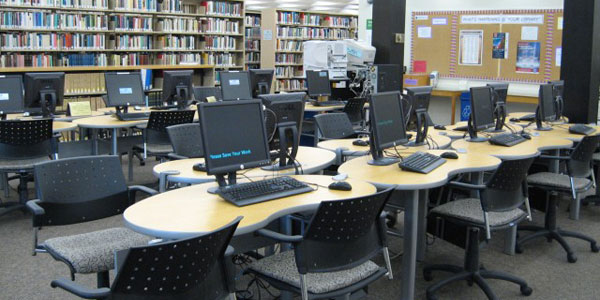
Walk into your library as though you are viewing it for the first time.  What message is it sending?  Does it look much like one from the 1990’s or does it proclaim that it’s a 21st century library?  Fixed tables, computers, perhaps Chromebooks, but somehow it doesn’t feel as though it’s a a place for doing and making things.

When you have worked in a place every day, you take it for granted.  You stop seeing it, making it difficult to see what can be done differently. Start searching for library makeovers.  Look at Learning Commons sites.  You can’t get the fancy furniture and all the tech they have, but what is the message? How is the facility arranged?

Download pictures and create a vision board. Start dreaming and let others see that dream. How do they react? Do they find the possibility exciting?  Look for those places that have accomplished the transformation with minimum cost.  Check out the School Librarian’s Workshop Facebook group, there have been a number of posts recently about transforming library spaces, some cheap others more costly.

change aheadSome quick things you can do.  Look into putting your tables on casters so they can be easily moved into different configurations as students and teachers need. I did a library renovation in the late 1990’s and my tables were on wheels.  The custodians loved it as well.  I wish I had thought to put the counter height bookcases on casters. If you have cooperative custodians and are willing to unload and reload shelves (maybe get help) it still can be done.

Buy rolls of dry erase paper and cover tabletops.  Students working on group projects can get their ideas down, take pictures, and learn to think more deeply and creatively.  Think color.  Can you repaint sections of the walls to bring a more modern look?  Perhaps students in a high school design, marketing, or advanced art class can re-design the facility as an authentic learning opportunity.  Present them with challenge, giving them your vision and your dream board.  See if your local education foundation and/or parent organization can support your transformation with some funding.

Take pictures of the transformation as it is occurring and post it on your website or tweet it out.  Have a “grand opening” when it’s finished.

Now transform student learning.  With this new environment how will you work differently with students? How can teachers best use it?  And keep sharing all that is happening with the larger community.

Are you ready to Transform?