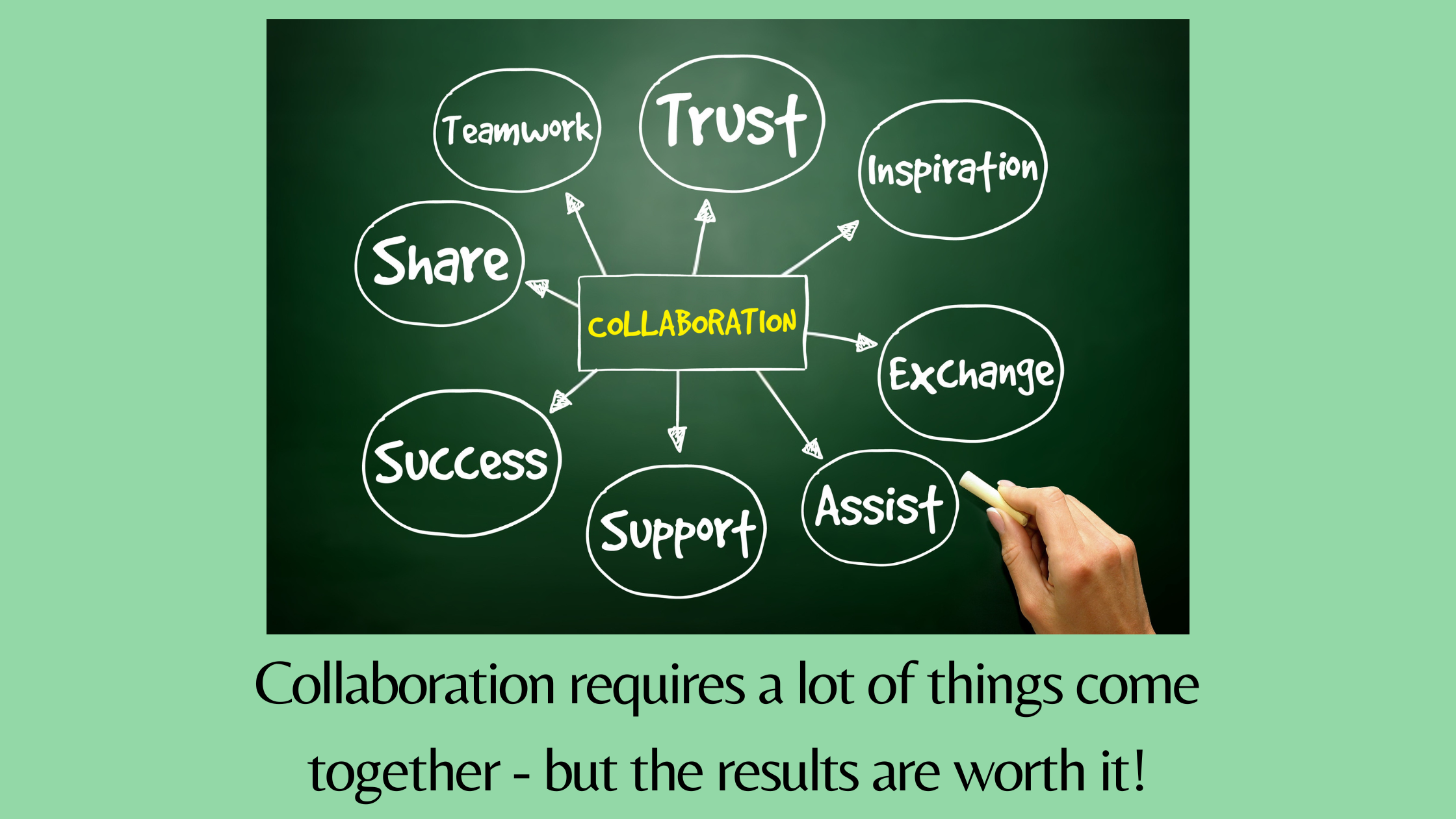
You are only recognized as vital to the school community when others know what you do – not what they think you do. And best way to make certain you’re better known and understood is to have a cooperative or, even better, a collaborative relationship with teachers. Then a peer becomes and ally.
With some faculty members, it’s easy. Others use the library as little as possible. In elementary school, they drop off their students and depart for their free period. In the upper grades, they bring their class to complete an assignment without you and don’t want your help. Somehow, you need to reach these uninterested teachers. If your past suggestions have been ignored, what can you do?
In her article, How to Get Genuine Cooperation from Difficult People, LaRae Quy provides a five-step approach for those in the business world to solving that challenge. Here are her steps, with my suggestions for those of us in education:
- Remember, our first reaction is to not collaborate – The teachers with whom you don’t have a natural connection likely feel they know their job and don’t need you to help them to do it. Quy’s suggests reaching them through a common interest. What do they care about? Email them about a resource or article that focuses on it. Follow up with one that says you hope it was helpful. Offer to work with them on a learning project on the topic. Ask them how they would like to structure it. Accept their approach, adding, as necessary, “we could also…” as a way to show how you can support them.
- Control facial responses – Not only do we communicate verbally, in print, and digitally, we also communicate silently with our body language. Our facial expression sends a message. Is your concern, disinterest or disdain visible? You don’t want your face to show that you think the teacher’s approach is not nearly as productive as it could be. Your negative silent message will carry a greater impact than your verbal positive one.
- Share personal stories – No one knows better than librarians how stories build connections. You might share memories about learning that topic when you were in school and any impact it had on your life. Figure out your story in anticipation of this conversation to keep it natural. Hopefully, your story will bring out one from the teacher. Now you have a new common interest and connection you can build your relationship on.
- Refuse to let it escalate – Should you get a strong negative response to any of your suggestions, keep from answering in the same manner. If you do, you have lost the possibility for any cooperation now or in the future. Quy offer saying this as an alternative, “I see how you feel (or think), but here is another way to look at the situation…” Start by acknowledging their reaction. It’s not easy to do in the moment, but knowing the importance of keeping your cool will help. (And work on controlling your body language and facial expressions.)
- Appeal to higher moral ground – Find a shared common value and speak to it. For example, you could say, “We both want our students to be successful not only in their studies but in becoming lifelong learners in an ever-changing world.” Common beliefs build connections, and connections build relationships.
The first time you try this with a teacher, it might not work and it may feel uncomfortable because it’s new. Collaboration might not come naturally for you either, but that’s not a reason to stop. Try again in a few weeks. Don’t give up. It’s too important. You can do it. You are a leader and have overcome obstacles before; you will do it again. The results – and the ripple effects to other teachers – will be worth it..
 Hilda K. Weisburg