Hope is Powerful

What did you think when you read the title? Did you agree or is it something you generally don’t believe. Hope, while considered positive, is often thought of as a passive thing and reserved for something you don’t think will become a reality.

But consider your Vision Statement. Is that something you hope for? And yes, it isn’t currently your reality, but if you don’t believe it is possible to achieve, you will never reach it. The truth is, as cliché as it might sound, if you believe it, you can achieve it.

So how do you make hope happen? Strategy.

Hope, according to studies, is characterized by Goals, Pathways (the way to to goal), and Agency (capacity to get the goal), In her article, What Leaders Misunderstand About Hope,  Paula Davis provides strategies for using these in four parts. I have added my interpretation for our education world.

Provide role clarity – You aren’t leading a team, as Davis discusses, so the clarity is for you. What is your supposedly unachievable goal? Why is it so important? Who will benefit? Who are your potential allies? This will help you focus on a path, however slow, to reach your goal – your Vision.

Use micro-goals to build momentum – When the end is so far away, it is hard to believe you will get there.  Keep your hope alive by looking for milestones and for small wins to celebrate. When I am walking, I frequently have micro-goal to keep me moving. It is sometimes as small as getting to the next driveway. Consider this sample Vision. “The Library Media Program cultivates independent, lifelong readers fosters critical thinking skills, teaches the effective and ethical use of information sources, and promotes equitable access to all forms of information media.” What have you done that shows your students are actively doing leisure reading? What learning experiences have you taught that shows students are using information sources ethically?  These are your micro-goals.

Track progress – Notice what you’ve achieved along the way, the bricks that are building this path. For me, keeping a success journal reminds me of what I have achieved and inspires me to continue. If it helps, celebrate these successes by sharing them. Include it in reports to your principal and show them the progress being made. Share it with your PLN. The more widely you share it, the better you will feel and the easier it will be to believe your hope will become a reality.

Find mastery experiences – Davis says when you learn new skills, it changes what you believe you are capable of doing. Learning by doing is a powerful contributor to success and builds hope. Look to webinars offered by your school library professional associations or from some library specific social media can give you the opportunity to grow.

These are stressful times for librarians, in out of the library, and it’s hard to hold onto hope. Make working on getting closer to your Vision a priority remembering that hope can boost productivity. Seeing what you can accomplish may stir what was a dying ember of hope back to life. Remember to track and celebrate your achievements, even when small, and keep your administrator informed so they see you as the leader you are. I don’t hope – I know you can do this.


Savor the Moments

We all lead hectic lives, rushing from one task to another, living by our to-do lists, our planners, our appointments. We are constantly under time pressure. When was the last time you savored something?

“Savor” is such a great word. The Cambridge English Dictionary defines it as “to enjoy food or an experience slowly, in order to enoy it as much as possible.” Slowly. Sounds nearly impossible. We usually take time to do this on special occasions, but there is more in life to savor beyond festive moments.

We do this work, hopefully, because we have a big “why” that allows us to embrace and enjoy our role as school librarians. As this year winds down, and many of us look forward to time away from work, it is time to take pleasure in savoring what we do and how our “why” impacts so many people.

In his article, The Power of Savoring: A Thanksgiving Reflection for Leaders, Dr. Ivan Joseph explains how savoring stimulates dopamine, the “feel good” neural transmitter. This “enhances motivation, reinforces positive behaviors, and builds pathways in the brain associated with hope and optimism.” Joseph offers these recommendations for you to bring savoring into your work life:

  • Celebrate Wins—Big and Small – Don’t let these moments pass you by. It’s not just your major triumphs, like getting a grant or starting a new program. It includes the little ones such as having a teacher thank you for a website to use in an upcoming project. Start a “success journal” to keep track of the wins. Give yourself a mental pat on the back – and look at it when things are stressful.
  • Build Reflection into Your Routine –Make time at the end of the day to think about all that occurred. Put it on your to-do list if you have to (I know… but it will be worth it). Focus on the positives. Consider doing it on your commute home as a way to transition out of your day.
  • Use Visual Anchors – Joseph advises having your awards posted where you can see them. You undoubtedly have served on a committee and been given a certificate in commendation of your work and service. If you received a thank you letter from a parent or teacher for something you did, have it framed and mount it in your office. Look at these confirmations of the contributions you make to the educational community. And if you don’t want to print out that email filled with praise – put it in a folder called “Savor” and go back to it when you need it.
  • Apply Lessons from the Best – Pointing to corporations such as Patagonia and HubSpot, Joseph says there is a performance return from savoring. Patagonia encourages employees to take time to enjoy nature. HubSpot uses “Cheers for Peers” where employees celebrate each other. Take a walk outdoors at lunch and savor the day. Send a note to a colleague letting them know you “see” what they do. Doing so is a way for you to savor that moment and gives them a chance to savor their own contributions.

The school year is heading into winter break. Put savoring into your life. Allow yourself to enjoy holiday preparations and time with family and friends. Savor the chance to sleep in, to read for pleasure, to watch a favorite movie. Taking time to savor the good will have you enjoying life more – and bring increased productivity when it’s time to return.

Dealing With Avoidance

Procrastination and avoidance may look outwardly similar, but their internal differences need to be recognized. Procrastination can be healthy, such as when used to give your brain a rest. Yes, it can be overdone, but normally you get back to the task. Avoidance has few positives. It refers to something you know should and must be done, and you keep doing other things hoping it will go away. It could be a dreaded task or a conversation you don’t want to have. At its core, it is a form of denial.

We cannot not avoid most big things in life. Avoiding something doesn’t make it go away, and often makes it worse. And it looms in our minds adding to our stress. Leaders need to face the tough stuff.

In his blog post, What Are You Avoiding, Gregg Vanourek lists what we most commonly avoid, why we do it, and the problems caused by avoidance. He concludes with a list of 14 ways to stop doing it. They are brief, and many you have heard before, but they are worth reviewing and recognizing.

  1. Recognize our avoidance behaviors—but without beating ourselves up over them – You can’t deal with a problem unless you recognize it’s there – and is a problem. Whether it’s choosing less important tasks until you have used up all available time or waiting until you are in the right frame of mind, there is a pattern for you. Be honest about it.
  2. Seek their root causes (continue asking why until there’s no deeper why) – There are reasons for our behaviors. What are we afraid of? Do we fear we can’t do it? If so, why do we think that way? Our brains try to protect us, but sometimes they prevent us from developing further.
  3. Engage in relaxation and self-care activities such as deep breathing, meditation, yoga, gardening, art, or journaling – These can be key ways to understand what you uncovered in the first two steps.
  4. Get support from a friend, mentor, therapist, and/or coach – Support is a great means of dealing with a tough problem and getting past avoidance definitely qualifies. Reach out to the people who will talk you off the ledge and help you get back on track.
  5. Process emotions by talking them through with someone or journaling – Similar to the previous one but focus on the underlying emotions, not just the actions. Emotions are powerful controllers of our behaviors. The journaling or talking will help you identify them and see how they are getting in your way.
  6. Divide the problem into smaller, more manageable chunks – Once you can see both the behavior and the emotion behind it, chip away at it by breaking it into manageable steps.
  7. Start with an easy task to get momentum and small wins- As you divide the task, look for the small pieces you can start with. Early victories create momentum.
  8. Give ourselves motivations, such as rewards for accomplishing tasks – Acknowledge the achievements as you take these steps, no matter the size. It will keep you going.
  9. Reframe a situation to note the positives and avoid focusing only on the negatives – What are the positive emotions you’re noticing as you take these steps? Look for these rather than how far you have to go (remember #1 – don’t beat yourself up!)
  10. Change our inner monologue, quieting the negative self-talk – The words we use when we talk to ourselves are extremely powerful. Give yourself a break. You are getting there.
  11. Practice communication skills, including assertive self-advocacy – Speak up for yourself. We frequently avoid difficult conversations and topics, including advocating for what we need.
  12. Set deadlines and goals to commit to action by a certain time – Set a “by-when.” Make sure it’s realistic. Without that you are more likely to continue to avoid.
  13. Build action and proactivity habits, training our brain and helping us become a “doer” – Knowing your best time of day for getting big jobs done is the first step. Do the next small chunk then and celebrate you win.
  14. Recognize that doing something we’ve been avoiding can feel amazing, giving us a sense of agency, accomplishment, momentum, and confidence – It is liberating. That looming elephant that you have been pretending not to see is gone!  You are ready to take on the world.

You are not the only one who has avoided doing difficult things. It’s human nature. But if you keep dodging them, you don’t build the self-confidence you need to draw on to be the leader your students, teachers, and administrators need you to be.

Imposter Syndrome Redux

Now you’ve done it. You’ve taken a step out of your comfort zone. It’s not even a big step, and suddenly the Imposter Syndrome has returned. You know better than to listen to it, but somehow you can’t shut it out. Imposter Syndrome is widespread no matter our gender, field, or level of expertise. It shows up at all point in your career, and it continues to appear as you become increasingly successful. Many of the most powerful people face it in their lives.

As a reminder, Imposter Syndrome is that voice in your head that questions if you’re good enough. It suggests you are out of your league, everyone is going to realize you are a fraud, and you are going to fail. It’s the voice that always knowns the right things to say to shred your confidence. It appears when others are going to see something you have or are going to do. People are going to be judging you. Are you going to measure up? Or are you going to be found out?

So how do you deal with it. Alaina Love’s post, Overcoming Imposter Syndrome, offers 4 steps to take to overcome it. Maybe some of these tools will help you when you’re faced with it:

  1. Examine Your Inner Demons – What happened in your past that continues to haunt you? What project didn’t go as planned? What are you expecting or fearing will go wrong? Love recommends writing some of these down and reviewing them. By examining your concerns head on, you will likely see the places where you’re being unrealistic as well as where you’ve succeeded in the past (even when things didn’t go exactly as planed). We can take away from Imposter Syndrome’s hold on us when we see where it is bringing up old fears not valid concerns.
  • Create a New Narrative – Now that you know where your thoughts are creating issues that aren’t there, we can take the time to envision true success, something that actively stills the negative voices. Love points to athletes who mentally go through an upcoming game and rehearse their moves. Envision yourself as succeeding in your challenges, picture the successful end result, and think about how you will feel to see this through as a way to override the message from the Imposter Syndrome.
  • Rein in Your Quest for Perfection – The need to do it perfectly is almost inherent in why Imposter Syndrome shows up. Excellence, not perfection, is the goal. The bigger the project, the more room there is for making some errors. You will never get it all right, but that doesn’t mean you weren’t a success. After the project/presentation/etc., instead of focusing on what went wrong (because that’s what we always notice first), reflect on and write down what went well and where you’re pleased. If there were problems, take time to learn from them and see what you could have done differently, but keep your focus – and inner voice – on the positive.
  • Make a List of Your Successes – Keep a record of your small and large successes. Create an e-portfolio or some other record if that helps. It is amazing the achievements we can forget as we move on with our lives. As I said in last week’s blog, You Are Successful Now. Keep track of that success and reduce the Syndrome’s appearances and how long it stays. Love refers to this record as a “highlight reel” of your accomplishments. It is something to review as you take the next step out of your comfort zone – and for when your Imposter Syndrome starts squawking. Use it whenever your mind begins that negative talk, possibly doing it every day.

Knowing how to manage Imposter Syndrome is an important tool. I have written about Imposter Syndrome in my blogs, discussed it in some of my books, and included it in several presentations, and still there are times when it has power over me. If you’re going to be a leader and stretch out of your comfort zone, Imposter Syndrome is going to come back. Love’s recommendations can help you manage it when it appears. (It wouldn’t surprise me to learn she had to face down her own Imposter Syndrome when writing it.) Find ways to own, remember, and build on your successes, and that pesky voice won’t get in the way of your next steps.

You are Successful Now

Do you see yourself as successful, or do you consider success something off in the distance? Unless you have recently completed a major project, you are more likely to think you are doing well, but nothing special. It’s not negative thinking exactly, but it certainly isn’t positive.

We tend to see and find what we are looking for, and we train our brain to confirm our thoughts. If you believe what you do is ordinary but find other librarians’ creativity and knowledge remarkable, you won’t see your ongoing achievements. As a result, you won’t feel like a leader or present yourself to others as a leader.

The truth is, you are successful. I can prove it. You are successful when you teach, and when you find that perfect book. You are successful when you help a teacher out. You are successful when you see a student stop and look at a display or bulletin board you created. When you make a difference, no matter how small, you have been successful. There may be many successes you’re missing. When you take the time to notice, you find what you’re looking for – this includes success. One thing I do to help me notice these moments is writing daily in a Success Journal. Every success is a step in the right direction and seeing it written out can help you own it.

In his post, Tracking Your Accomplishments: Why to Do It, What to Document And How to Follow Through, Joel Garfinkle echoes my recommendation about recording your successes. He has even more reasons for doing so. Among them are:

  • You will forget – Of course you will especially when you don’t even notice many of them – and when the next problem/crisis/need is grabbing your focus.
  • Everyone else forgets – When you keep track, you’ll be able to share the specifies of your success when it’s time for your annual evaluation or when someone asks why you think a project will work..
  • You will be interview ready – No position is 100% secure, and even if you’re tenured, a change in administration could have you wanting to move on. Having a record of your successes allows you to be prepared – and remember the reasons you’re valuable to the schools you work for.

He suggests tracking the following:

  • Comments from your boss, clients or other stakeholders – For you this includes students, teachers, parents and perhaps other librarians as well. Take note of how they see your work and contribution.
  • Successful projects – In addition to writing the details of what happened, take pictures for your record (or portfolio). Add any comments you received (was there media coverage or postings of an event?).
  • Positive results from your efforts – Be clear about what goal(s) was achieved – intentional and unintentional, expected and unexpected. Make notes on the impact that you and your work made.
  • Regular responsibilities you have fulfilled – It isn’t only the big things that demonstrate your successes It’s also the successful day-to-day functioning of your library. Getting through that routine is definite accomplishment. And, back to the earlier comment, your principal is not likely to be aware of all you are doing unless you tell or show them.

Yes, tracking your successes might feel like one more thing for the to-do list, but as you see your successes add up, you might look forward to doing it. Find a time of day or location that works best for you. I keep it by my computer and track as I achieve something positive. This has the added benefit of giving me a boost of joy and motivation to tackle the next thing on the list.

Take the time to discover how successful you are. It will change your mindset. And that will change how people see you. Me? I’m going to put “wrote my blog post” on today’s success list. What’s going on yours?

You Are Not Lazy

photo from Canva

It’s been another tough year (okay, is there ever not one?). There’s more to do than ever, and everybody seems to be doing more than we are. Any time we take away from getting things done if it’s not we studiously scheduled for self-care is considered wasted. We think it’s “proof” we are lazy.

A piece of advice, which I sometimes need to remind myself, is “Don’t judge your inside by someone else’s outside.” We see what others are doing, but we don’t see what they are not doing. Their lives and task may have some similarities to yours, but are actually very different. We judge ourselves when we compare, and our judgements are usually harsh.

Give yourself the same generous support you would give others. Doing nothing for an entire evening or taking off a whole day, even when that’s not what you originally planned doesn’t mean you are lazy. Could be that you are very tired. Or overwhelmed. Or haven’t truly given your body and mind time off. In these cases, allowing yourself to not do what you planned is probably the best thing you can do to be productive and effective. If you don’t let yourself have down/away time, you will burn out.

You don’t want your exhaustion to cause you to take more and more time off. That’s usually a sign you’re heading for burnout. Albert Costill explains How You Can Become Productive – Even If You Are Lazy. He presents the following ten tips for doing it:

  1. Arrest Your Laziness Culprit – Identify what is causing your need to take time off. Is there a task you hate doing? Maybe you can delegate part of it. My best method is to get it done first so it doesn’t wear on me all day – or distract me as I do other things. Remember, your inner critic isn’t helping. Talk to yourself like a friend.
  2. Find Meaningful Work – Or make your work meaningful. Sometimes we approach tasks like robots. Do this. Then do that. Ask yourself why you are doing it. Why does it matter? Connect your tasks to your Mission and Vision so you see their purpose.
  3. Surround Yourself with Success – Costill suggests listening to a motivating TedTalk. Find the things that work for you. Stay away from colleagues who spend time complaining. I like keeping a success journal to remind me of what I accomplished in a day.
  4. Play to Your Strengths – You know what you are good at. Costill suggests drawing on them to help you accomplish a task. Your strengths make you confident in what you are doing and allow you to be more productive.
  5. Make It Difficult to Get Distracted – Okay, during school hours this might be nearly impossible, but even if it is only for a half hour, have or create a space where you can stay focused. Have everything you need before you start and minimize your distractions. Turn off your phone or put it on vibrate.
  6. Procrastinate – Yes, there is a time and place for this. You can’t go from one intense task to another one. Do whatever works for you to clear your mind. Meditate. Go for a walk or run. Read a few pages in a book. The space you gave yourself will often allow new creative thoughts in and have you more ready to take on what’s next.
  7. Do a Victory Dance – You don’t need to do this literally but find a way to congratulate yourself for your accomplishment. This connects to #3 and surrounding yourself with success. Teachers used to give students gold stars. How many did you earn today? This week? Notice your forward momentum and celebrate it.
  8. Try Gamification – Big tasks take a long time to complete. Sometimes the end seems so distant it is hard to believe it will get done. Break it into its parts and give yourself “points” for achieving each “level.” If a job took you an hour last week – see if you can do it faster this week. Find ways to have fun with the progress as well as the goal.
  9. Relax and Do the Things You Enjoy – This is a reminder to give yourself time to the things that give you pleasure. As with Procrastinate, it will allow your creative energy to emerge. Positive feelings bring positive results.
  10. Recruit Support – Is there someone who can work with you on part of the task? Remember, “If you want to go fast, go alone. If you want to go far, go together.” If that is not an option, draw on your ever-available PLN. They are always there for advice and support.

There is so much to do – chances are you doing much more than you realize and only noticing when you’re not working. Be kind to yourself. Try a reverse of the Golden Rule and treat yourself as you would treat others. 

Success

Nothing feels like success. And the only thing better than one – is more. To bring more successes into your life, there are two things to do. First, celebrate your success. Second, set yourself up for future successes.

You probably celebrate big successes. What you likely haven’t taken the time to acknowledge are your smaller, daily successes. By noticing these achievements, you build your confidence and enthusiasm. You can set yourself up for future success by incorporating Casey Imafidon’s 10 Little Things Successful People Do Differently into your life.

  1. They Strive for Consistency – Imafidon says having a schedule allows successful people to focus on their goals. Routine may sound boring, but it’s what gets most things done smoothly. Although most of our routines are imposed, we still make choices about when we check email and when we do lesson plans. To the extent possible, choose tasks that work with your body cycle. Are you more alert in the mornings or evenings? Use your lower energy times for the activities that need less focus.
  2. They Set Daily Goals – It’s not just having a to-do list. It’s knowing what the high priority tasks are. Imafidon refers to Kenneth Chenault, CEO of American Express, who identifies three goals for the day. When you know what you want to achieve for the day, you feel success as each is completed.
  3. They Nurture the Right Relationships – We are supposed to get along with every staff member as part of making the library a safe, welcoming place for all, but it’s important to ensure we have strong relationships with key stakeholders. According to Imafidon, “successful people look for support and find people they can connect with….” This builds advocates and helps make you and your program successful.
  4. They Display High Emotional Intelligence – You need a high EI to forge those “right relationships.” You also need it to understand what can help others and therefore result in them recognizing how important you and your program are to their success. I have often said, “I am a connector. I connect people to ideas and information. I connect people to people who can then help each other. And I connect ideas to ideas, seeing how they link to form new ideas.”
  5. They Take Action – Simply put, successful people are willing to leave their comfort zone to get things done. The bigger your comfort zone, the more opportunities for success.
  6. They Practice Positive Self-talk – Beating yourself up for a perceived or past failure will not contribute to your success. It will only make you less willing to try something else. It’s almost impossible to get something positive done with a negative mindset. Imafidon recommends having an affirmation-like phrase like “today is going to be a great day” when you need to make a shift.
  7. They Stay Healthy – When you don’t feel well, you don’t do well. What is your daily diet like? Healthy or harmful? We all know the positive results of eating healthy, being active, and getting enough sleep.
  8. They Meditate – Imafidon says Meditation increases focus and productiveness. Our brains need downtime. Putting in more hours does not translate into more getting done. If you have trouble meditating, try a walk or a few minutes listening to quiet music. Remove yourself from your workspace.
  9. They Act on Small Improvements to Their Goals – As the old riddle goes- “How do you eat an elephant? One bite at a time.” A big goal usually seems almost impossible to achieve. Break it down into small bites. Achieving success one bite at a time motivates you to continue until you finally reach that big goal.
  10. They Wake up Early–It’s not only the “early bird catches the worm,” it’s also using what, for most us, is the most productive part of our day. You can get so much done before the usual distractions begin. See if you can get to your library before anyone knows you’re there (consider not turning on the room lights) so you have time to get yourself prepared. Then you can turn them on to connect with the early-bird teachers who also want to get a head start.

Every success matters – and the daily ones may matter more because without them, it’s hard to keep moving forward on the bigger projects. Celebrate yourself when you can and notice your achievements. Wishing you all much success.

ON LIBRARIES: Dealing with Criticism

Last week I blogged about Dealing with Failure. This week’s topic is almost its twin.  Most of us hate to be criticized as much as we hate to fail.  Both are inevitable.  Some criticism will be formal, such as a bad observation or evaluation. Other times it will be informal, ranging from negative feedback from a teacher after doing a lesson (which also ties it to failure) to a denigrating comment on how easy your job is.

Like failure, it’s important to be prepared for criticism and know how to deal with it. Two common reactions can have an adverse effect on your leadership.  Going into offense/defense mode ignores what the other party said.  In the process, you are likely to escalate the event, say things you don’t mean, and rupture what should be a developing relationship.

The other reaction, often based on fear and embarrassment, is to curl up inside yourself and say nothing.  But it festers.  You hold inner arguments about what you could have said, alternating it with self-recrimination.

Does this sound like a leader?

Nobody’s perfect.  While the criticism may have inflated your supposed errors (and deflated your ego), there invariably is an element of truth in what is being said. It’s that element that is the true trigger to your reactions.

For example, perhaps you have a class getting rowdy at the end of the period.  You might have yelled at them or ignored it and waited for the period to end.  However, the teacher coming in saw an out-of-control class and possibly an out-of-control librarian and said you and the kids shouldn’t be behaving that way.  Well, that is true.  But you want to explain the situation, justify it. The list of reasons as to why it occurred can be extensive.  Whether you want to lash out in defense or just be tight-lipped, you are missing the point.

As with failure, this is an opportunity for reflection and self-assessment.  Maybe not immediately, but certainly before the day is over.  How did it happen?  What could you have done to prevent or reduce the situation?  How would you like to deal with it in the future? You learn more from what goes wrong than you do from what goes right.

Unsurprisingly, there are a lot of online posts on dealing with criticism from both the business world and psychology.  The one I feel did the best job is Laura Schwecherl’s How to Handle Criticism Like a Pro.

The first piece of advice she offers is to consider whether the criticism was constructive.  It’s easier to accept when you know the person is well-meaning. However even hurtful criticism may have a valid point – otherwise, it probably wouldn’t hurt. She follows that observation with a five-step action plan.

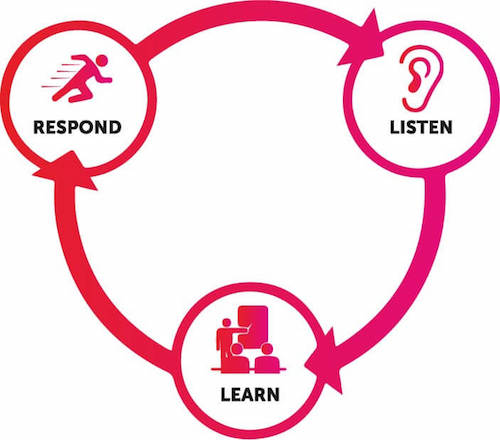
Listen Up: Again, assess whether the criticism was constructive or rude.  Have the courage to ask for clarification, particularly if you are unsure if it was only meant to be hurtful.  People tend to make a general critical statement.  You need more details to determine just where you missed the mark.

Respond Calmly: Really tough to do sometimes.  Whether you want to rant or disappear, you do need to respond.  You can say, “I appreciate your observation.”  You don’t have to do more, which is good since you probably can’t take it all in and make a reasoned assessment in the moment.  Later, when the critic is not around, analyze what you heard.  How much was true?  Was there a place to do it better?  In the best case scenario, you might even go back to the person and thank them for taking the time to give you valuable feedback.

Don’t Take It Personally:  This is a reminder that you are not a failure (see last week) nor are you a bad librarian, person, etc.  Focus on the specific information without generalizing. It was just one more learning experience.

Manage Stress: This is a challenge since you were probably stressed by your day before you were dealt this criticism.  Take a deep calming breath.  Or three or four.  Or some time in your office if that’s possible. As Judith Viorst so accurately put it in Alexander and the Terrible, Horrible, No Good, Very Bad Day, “some days are like that, even in Australia.”

Keep On Keeping On: As Schwecherl note, this was just one person’s perspective.  Sometimes you need to also check to determine whether the criticism was valid.  Just because someone says it, doesn’t make it true.  And tomorrow is another day.

All leaders get criticized. It comes with the territory.  Some is mean-spirited coming from envy, and some are accurate.  It may not feel like it in the moment, but you need good criticism to grow.  It’s hard to see where we miss the mark. It helps when the good people around us help us get back on track.


ON LIBRARIES: Embracing Failure

You can’t escape failing.  Maybe the word “embracing” is a bit much, but whenever you try something new or different, the risk of failure is always present.  Knowing this is often what prevents you from trying. But there are lessons that come with each setback and the more you are willing to learn, the stronger leader you will be.

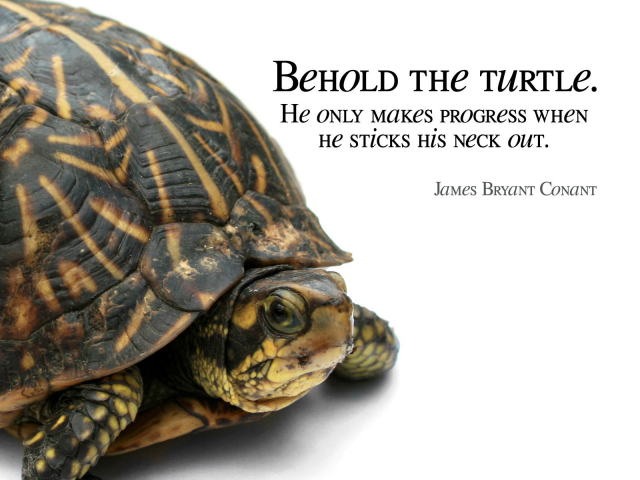
How would you speak to yourself if you were one of your students who wasn’t trying because of the fear of failure? You would tell them that failure is important and worth the effort.  Whether it is learning to ride a bike, throwing a curve ball, or playing chess, no one gets it right the first time. Frequently they don’t get it right the second time. I can hear you say the consequences of failing at those is quite different from what you would experience if something you tried for your library didn’t work, but what are your choices?  Taking a risk and possibly succeeding (particularly if you have thoroughly researched your idea) or staying where you are not advancing your program or your ideas.  I love the quote attributed to James Conant, Behold the turtle who only makes progress by sticking his neck out.”

Failure happens in the business world all the time on the way to success, and Lily Daskal, a leadership coach and author of The Leadership Gap: What Gets Between You and Your Greatness, explains Why It’s Important for Leaders to Fail Well. I love the idea of failing “well.”  She points out that beginning skiers learn how to fall safely.  We, too, need to fail safely, and not let a failed idea make us believe we are failures. Learning how to fail safely means we need to develop the right attitude towards failure – even welcoming it for the benefits it brings.  Daskal identifies seven benefits of failure.

  1. Failure keeps us focused on our strengths – It sounds counterintuitive, but that is what we need to do. It’s too easy to beat yourself up for the mistakes you made. Although you shouldn’t ignore them, also take stock of what you did right.  What were your strengths –and how can you utilize them in another project or improve this one.  What weakness did you exhibit?  Can you turn it into a strength?
  2. Failure teaches us to be flexible – Don’t give up on a good plan just because it failed. If it was worthwhile, how can you change it so that it does work? It’s a worthwhile skill to develop for several reasons. For example, you want to turn your library into a Learning Commons.  You approached your principal or superintendent enthusiastically and were shot down. Why? What reasons were given?  Money?  If so, consider revising your concept so it takes longer to complete and allows the cost to be spread out, or look for a grant to cover some of the funding needed.  Instead of nursing your wounds, get creative.  I had a superintendent who told me her first answer was always, “No.”  It got rid of the people who weren’t fully committed.
  3. Failure teaches us to rethink what we deserveIt’s easy to blame yourself for the failure. It gives you an excuse to quit and not try again.  That’s the real failure. Accept responsibility for why the plan or idea failed, but don’t take it personally.  It’s part of your growth. And if you’re still fully committed to the idea – you’ll find ways to make it happen.
  4. Failure reminds us that everything is temporary – When we fail, and we all do at some point, it’s vital not to think this is how it will always be. It’s been said that change is the only constant. As a leader, you need to be looking for any change in direction.  As I blogged last week, administrators come and go.  What your current one didn’t like, the next one might love, particularly since you learned from what didn’t work.
  5. Failure shows us it’s not fatal – The failure was yesterday. Today is a new day, and you are alive and well. If you try only a few projects, every failure looks huge.  Do more and the number of successes will outweigh the ones that didn’t work.  It’s how you build your “street creds.” You demonstrate perseverance by digging in and moving on.
  6. Failure disciplines our expectationsIt’s great when we get excited about introducing something new. However, our enthusiasm can sometimes blind us to what is realistic.  This doesn’t mean you don’t attempt big things. You don’t say, “They never want to try something new.”  It’s recognizing that not everyone sees the project the way you do. You need to create a foundation of support before you move into introducing your idea.
  7. Failure instructs us to keep tryingThere is wisdom in the adage, “If at first, you don’t succeed, try, try again.” No invention worked the first time it was tried. Leaders in every field know this. They don’t like failing, but they don’t let it stop them.

And here’s one from me:

Failure teaches us to understand our students better – I knew a math teacher who always underestimated how long it would take students to complete a test.  She was brilliant in the subject and couldn’t understand the difficulty many of her students faced.  Sometimes a person who struggled in school makes the best teacher.  Use your experience with failure to help students when they have trouble dealing with their own failures so that they too keep taking the steps that will lead to their next success.

ON LIBRARIES: Are You Successful?

I suspect many of you would answer the title question in the negative. I hear from many librarians who are feeling frustrated and exhausted, and while I understand their reasons, it causes me great concern.  These symptoms, if prolonged, lead to burnout and that in turn results in not giving your best to your students and teachers.

But what can you do when you are overworked and under-appreciated?  The answer begins with changing your mindset. When you change your mindset, you can start recognizing you are far more successful than you think. I am not saying you aren’t working under stressful conditions, but it’s how you react to them, how you internalize them, which can make all the difference in the situation.

Our new National School Library Standards for Learners, School Librarians, and School Libraries refers to having a “growth mindset” which is the antithesis of a “fixed mindset.”  It is defined as “people believe that their most basic abilities can be developed through dedication and hard work.  This view creates a love of learning and resilience that is essential for great accomplishment.” (p. 276)

And you definitely need resilience to deal with what is on your plate.

You certainly believe that a growth mindset is important for your students. But how about you? You are working hard but are you working towards your mission, your purpose? Are you only seeing what you aren’t accomplishing and the negatives around you? That will only move you into a downward spiral.

I challenge you to define what success would look like.  What do you think being successful with your students looks like?  With teachers?  With administrators? Your list likely has places where you haven’t achieved what you consider success.  But look a bit more closely.

You are undoubtedly more successful with your students than you are giving yourself credit for.  Has a student thanked you for your help in some way lately?  What about any relationships you have developed with teachers?  Has one of them expressed any appreciation for something you have done? Have you made any inroads with your principal?

I recently read an article by Jillian Kramer entitled 4 Myths We Are Taught about Success. This comes from the business world but there are strong connections to what we are dealing with every day.

Her first myth is one I have discussed before, “If You Are Good at Your Job, You’ll Get Promoted.”  You are good, and no one is noticing you.  True in the business world and true for us.  And what does she recommend to change this?  Build relationships – and focus on your next step.

The second myth, “You Must Start Young,” doesn’t seem to connect – but it does.  The point is yesterday doesn’t matter.  It’s what you do today.  Where do you want to go? How will you get there?  And then, start NOW.

The third is “You Must Kill Yourself to Succeed.”  Some of you are trying that route.  It doesn’t work.  You feel like a martyr and you have nothing left for what’s really important in your life.  Working late everyday is not a recipe for success.  Try my mantra, “Everything will get done. It always does.” This really means if it’s a priority, you will make it happen.

The final myth is, “You Must Play Politics.”  Guess what? In business and in our world, that kind of approach is obvious to everyone. Being a team player is not being a brown-nose. On the other hand, you do need to know what your stakeholders’ goals are, whether you are referring to administrators or teachers. That’s how you successfully connect your library program to what matters to them.

It’s easy to focus on all the negatives in our lives. Obviously, they must be dealt with, but when we bring them to close to our vision, we see nothing beyond it. I counter that habit by keeping a Success Journal.  Each day I record whatever has occurred that makes me feel successful. (Such as completing my blog for the week.)

Learning to take a wider view will help you establish a more positive mindset, which will improve how you see your world and yourself. Ultimately, I hope you will discover you are far more successful than you thought.