Lead With Grace

Grace as a leadership tool? Yes!

The word “grace” is usually associated with religious practices, but it goes beyond that and used properly, it can deepen your leadership ability. One of the many definitions of “grace” given by Merriam-Webster is “the quality or state of being considerate or thoughtful.” With that in mind, it is easy to see grace-based leadership as a natural outgrowth of the recently popular concept of servant leadership, which is about leading from a place of being clear on who and how you wanted to serve.

While the business world struggles to incorporate either or both of these leadership styles, they are natural to school librarians and the work we do. Even as the pressures on teachers and librarians grow, bringing grace into our lives (treat ourselves) and our leadership (treat others) is very powerful and has the potential to have a huge impact..

In her blog article, Short fuses, high stakes: An argument for grace-based leadership, Julie Winkle Giulioni says that Grace-based leadership is  “the ability to meet people where they are — with patience, understanding and compassion — while still upholding clear expectations and accountability.” She then offers six practices to incorporate in your daily interactions. Giulioni is speaking to the business world, so I have tweaked these to match our world. Keep in mind these apply when working with all of your audiences: students, teachers, administrators, volunteers, parents, and more:

  1. Make space for humanity – Due dates matter but so do people. Pressures abound. Recognize these feelings as you deal with students, teachers, administrators – and yourself. Things will be late, mistakes will be made. It’s part of the process.
  2. Assume positive intent – Jumping to conclusions is easy, particularly in stressful times, but it only exacerbates the problem. There usually is a reason for someone’s anger/frustration/challenge. Be curious as to what is driving the negativity rather than making judgements. Come from a place of “they’re doing their best” and you’ll have a different perspective and response.
  3. Respond rather than react – It is natural to respond with hostility when someone directs a negative emotion at you. Remember to pause and breathe. It will lower your temperature and blood pressure, allowing you to give a more reasoned response and give you a chance to do the first two steps (space for humanity and assuming positive intent).
  4. Honor multiple realities – We know from the political climate, we aren’t going to be able to convince someone who holds an opposite position that your belief is correct. As librarians we serve the whole school community, even (may especially) those we don’t agree with. Find a common ground among your differences.  It is part of how your build relationships.
  5. Offer “soft landings” for hard truths – This is particularly helpful with students as Giulioni says to frame “feedback respectfully, focusing on behaviors and results.” It also applies when you need to explain to a teacher or administrator why you want to tweak their plan. People don’t want to hear ‘no’. Find a better way to share what you have to say.
  6. Hold people capable, not just accountable – Part of your feedback should recognize the other person’s abilities and strengths. It’s also knowing they have a “Why” for what they did or didn’t to that is as important to them as yours is to you.

Giulioni adds these three suggestions on how to Grow in grace which I am quoting directly:

  • Use curious language (“Help me understand…”) instead of accusatory language (“Why did you…”).
  • After a mistake, lead with support first (“What do you need to get back on track?” or “How can I help?”) before jumping to blame.
  • Share your learning moments openly. Modeling self-grace normalizes growth and reduces fear.

And when practicing grace, remember to offer it to yourself because you deserve at much as everyone around you. Leaders need to be gentle with themselves just as they offer this to those around them.

To-Do’s to Make You A Better Leader

Librarians are lifelong learners which is key to supporting and growing our programs. We learn about the latest tech and the newest books for our students. We learn about the ways they take in information and how we can support them to be critical thinkers so that they keep an open mind and are also constantly learning.

What we don’t often focus on what we need to learn to become better leaders. The vision of AASL is “Every school librarian is a leader; every learner has a school librarian.” It is incumbent on us to be the best leader we can be. The better we become at leading our school community, the better we can do all the other things that are our high priorities.

To lift your leadership to the next level, consider using David Durand’s Four Daily Habits That Separate Giants From the Pack. Here are his recommendations with my modifications for our education world:

Daily habit 1: Bring your thoughts to life with action

If you think it, write it. In the course of your busy day, you may have a passing thought of a possible change that would address a problem or increase the reach of the library. Lock on to it. As soon as you have time, record it digitally or manually.

Review your list regularly to identify which of your ideas needs to or can become a reality. Start the planning process with action steps, including start and by-when dates. If it is a big project, such as developing a new strategic plan, begin with your Mission Statement, then look at who will be involved, what needs to be done, and how you will assess it.

Daily habit 2: Find concrete reasons to believe

It’s too easy to say the idea is “pie in the sky” and will never happen. Yes, it might not work. But you will learn much along the way if you try. And what if it does work?

Durand say, “Giants find reasons to believe, and they do it daily. They set a goal and begin building a realistic case for how and why they can and should accomplish it.” You have seen what leaders in the field have done. If they can do it, so can you. You might even contact them for advice or ask if they would consider being your mentor. Trying is the only way to know for sure.

Daily habit 3: Break your morning down into 3 daily tasks

  • First task: Get your head right – Focus. What mindset will forward your Vision and Mission today? Remind yourself of it during the day to maintain you focus.
  • Second task: Guard the culture – Your library culture which should stem from your Mission usually is related to the idea that the library welcomes everyone. It is a safe haven and a place where learning happens. Embody it in all your interactions.
  • Third task: Do the thing that moves the needle most before anything else – Know your priorities. It’s easy to get sidetracked. Know what comes first and get it done. At the end of the day you will be able to see you accomplished something that moved the library forward in some way.

Daily habit 4: Keep primary responsibilities primary, or you will unconsciously complicate secondary responsibilities

Durand warns to keep the third task in mind. You have many responsibilities but there will always be interruptions in your day. Keep your focus (First Task) and be sure the first thing you do is what needs to come first, or you are likely to have a day filled with only secondary tasks. You may be preparing monthly report and start designing the infographic you will use. However, as you work on the content (your primary responsibility) you realize the infographic needs to be tweaked or redone.

Just like librarians, leaders are always learning. When you look for the ways you need to learn and grow, you become the librarian and leader your students, teachers, district, and administrators need.

Craft Your Leadership Statement

You have written a Mission and Vision Statement for your library. Hopefully, they are what energize you every day as you see them (they are in a prominent spot, right?). Your Mission, as I often say, is your perspiration, announcing what and why you do what you do. Your Vision serves as inspiration and aspiration, igniting ideas for future goals and plans. Today, I’m going to add another one: a Leadership Statement.

Like a Mission Statement, a Leadership Statement grounds you as you move out of your comfort zone. It defines you and how you present yourself to others. It is a place to take what you are best at, most known for, or enjoy the most, and use it to grow into the leader you want to be.

In her article, What Do You Stand For? The Power of a Leadership Statement, Elizabeth Hayes writes “A clear leadership statement not only builds trust and aligns expectations but also creates a more engaged and motivated team. When your team understands what you stand for, they are more confident, engaged and empowered to perform at their best.”

Writing the statement takes time and thought. To help you craft your statement, Hayes gives these four guiding steps:

  1. Define what matters most – Identify your core values. Where won’t you compromise? Do you stand for intellectual freedom? If so, what does that look like for you and your library? Perhaps it is that the library is a safe, welcoming space for all. You can combine values in your statement, but don’t overload it. Hayes says to reflect on how you want others to describe you.
  2. Draw inspiration from great leaders – The library profession provides a host of great leaders from whom to choose. You might go further and look at leaders in politics and those who led the way for significant change. Or authors who didn’t change what they wanted to write based on the biases around them. When you identify what inspires you in others, you’re likely to see that this is something you strive for —or already do.
  3. Learn from leadership missteps – No leader is perfect. We have learned from our mistakes; learn from where leaders took a wrong turn. There are always those who don’t recognize when it was time to leave, having become hooked on power and prestige. Some leaders stop listening to others, convinced their view or approach is the best possible route. Where did they falter?
  4. Pull it all together– This is the hard part. What do you write in your statement? Hayes says to, “Start by jotting down key ideas from your reflections…It must be authentic and reflect your true values, as any disconnect between your words and actions will erode trust.” To structure your statement, she gives the following frameworks:
  5. Values-based framework – A personal “I believe” statement followed by a goal.
  6. Commitment statement framework – Identify your core principles followed by daily commitment to it.
  7. Mantra style framework – Hayes says this is “A single sentence encapsulating your core leadership principles.”

If this is something that clicks for you, give it a try. Make notes, imagine what you want your leadership to be like. Like your Mission and Vision, it is likely something that will need a few iterations before you feel it’s finalized. When you feel comfortable, share it with others and see if they agree it’s a good fit. I built mine from my personal mission statement: “I seek daily opportunities to inspire school librarians to become the leaders they need to be.” The clearer you are about who you are, the more powerful and impactful your leadership will be.

Lessons in Leadership – From Drawing

Being a leader—and always learning to be a better leader—is an essential part of our job. In today’s world, we need to embrace AASL’s Vision, “Every School Librarian is a leader; Every learner has a school librarian.” When we aren’t leaders, our learners are more likely to lose their school librarian.

The stress school librarians are facing while trying to do their jobs is taking away their joy, replacing it with fear. It’s time to turn the page. We must be interwoven into our school community and the outside community as well. We must become like Velcro, totally attached. Someone who would be unthinkable to eliminate.

After spending too much time focusing on work and losing touch with what was most important, Joshua James, co-founder of 8 Bit Content, made the conscious decision to spend more time with his family and children. And while coloring… he learned important lessons about leadership. In his article, 5 Leadership Insights from Drawing with My Kids, James provides us with an idea of not only in how to be better leaders, but how to restore balance in our lives. These are his insights, with my thoughts on how we can best manifest them:

  1. Perfection Is the Enemy of Progress – James noticed that for his children “their best work isn’t the one with the most perfect lines or flawless details. The drawings they’re most proud of are the ones they finish.” We can’t be perfect. Neither can our students. Consistency and growth bring progress. You will smooth out the wrinkles later. Everything we complete, everything that goes well, if not perfectly, is a win. If you need help to see your progress, keep a Succes Journal to record all your wins, big and small.
  2. Frustration Is Part of the Process – Sometimes it feels as though you will never get it right. But that… is part of the process, part of learning and leading. James says, “How we respond to this frustration is critical to how we lead. By taking a step back, reflecting, and giving ourselves space to reframe a situation, we can model healthy coping strategies for our staff and students.” Being emotionally resilient means we are patient when needed and can adjust our perspective. We allow it in our students. We must allow it in ourselves.
  3. Plans Don’t Always Go as Expected—and That’s Okay – In my experience, if it’s a large plan, it will rarely go completely as expected. I end up learning – and growing – along the way. It’s getting to the desired outcome that matters. As Ursula LeGuin famously said in The Left Hand of Darkness, “It is good to have an end to journey towards; but it is the journey that matters, in the end.” Learning doesn’t occur in a straight line. We face a block, we pivot, we find a new way, a work-around and learn something new along the way.
  4. Unplug to Be More Present – We are attached to our devices and our to-do lists. If you are doing that at work and home, you have a higher chance of burn-out and overwhelm. On top of that, you are also likely to become short-tempered and miss important subtle messages we get from students, teachers, and our family. Make time to get away from your devices. My salvation is taking walks. Yours can be anything you enjoy. Block it into your schedule. You will be a better leader and person as a result.
  5. Surround Yourself with Passionate People – Being around his children, sharing what they loved was a game changer for James. While we work to have good relationships with everyone (teachers, students and administrators) because all are served by the library, you need to connect with people who are feeling positive about what we do and why. We don’t need to buy into the views who only see gloom and doom. Reach out to your PLN not to mention friends and family. My life Vision includes “living with passion and purpose.” I choose to be close with those who are passionate about what they do. It motivates me further, enriching my life and well-being.

Bring balance into your life. Reconnect into your passions and your purpose. Remember why you became a librarian and what you want to achieve. As you internalize these five lessons, you present a more positive face to the world, making it easier to build more connections and become that Velcro to your school and outside communities.

Getting Others to Work With You

You are only recognized as vital to the school community when others know what you do – not what they think you do. And best way to make certain you’re better known and understood is to have a cooperative or, even better, a collaborative relationship with teachers. Then a peer becomes and ally.

With some faculty members, it’s easy. Others use the library as little as possible. In elementary school, they drop off their students and depart for their free period. In the upper grades, they bring their class to complete an assignment without you and don’t want your help. Somehow, you need to reach these uninterested teachers. If your past suggestions have been ignored, what can you do?

In her article, How to Get Genuine Cooperation from Difficult People, LaRae Quy provides a five-step approach for those in the business world to solving that challenge. Here are her steps, with my suggestions for those of us in education:

  1. Remember, our first reaction is to not collaborate – The teachers with whom you don’t have a natural connection likely feel they know their job and don’t need you to help them to do it. Quy’s suggests reaching them through a common interest. What do they care about? Email them about a resource or article that focuses on it. Follow up with one that says you hope it was helpful. Offer to work with them on a learning project on the topic. Ask them how they would like to structure it. Accept their approach, adding, as necessary, “we could also…” as a way to show how you can support them.
  2. Control facial responses – Not only do we communicate verbally, in print, and digitally, we also communicate silently with our body language. Our facial expression sends a message. Is your concern, disinterest or disdain visible? You don’t want your face to show that you think the teacher’s approach is not nearly as productive as it could be. Your negative silent message will carry a greater impact than your verbal positive one.
  3. Share personal stories – No one knows better than librarians how stories build connections. You might share memories about learning that topic when you were in school and any impact it had on your life. Figure out your story in anticipation of this conversation to keep it natural. Hopefully, your story will bring out one from the teacher. Now you have a new common interest and connection you can build your relationship on.
  4. Refuse to let it escalate – Should you get a strong negative response to any of your suggestions, keep from answering in the same manner. If you do, you have lost the possibility for any cooperation now or in the future. Quy offer saying this as an alternative, “I see how you feel (or think), but here is another way to look at the situation…” Start by acknowledging their reaction. It’s not easy to do in the moment, but knowing the importance of keeping your cool will help. (And work on controlling your body language and facial expressions.)
  5. Appeal to higher moral ground – Find a shared common value and speak to it. For example, you could say, “We both want our students to be successful not only in their studies but in becoming lifelong learners in an ever-changing world.” Common beliefs build connections, and connections build relationships.

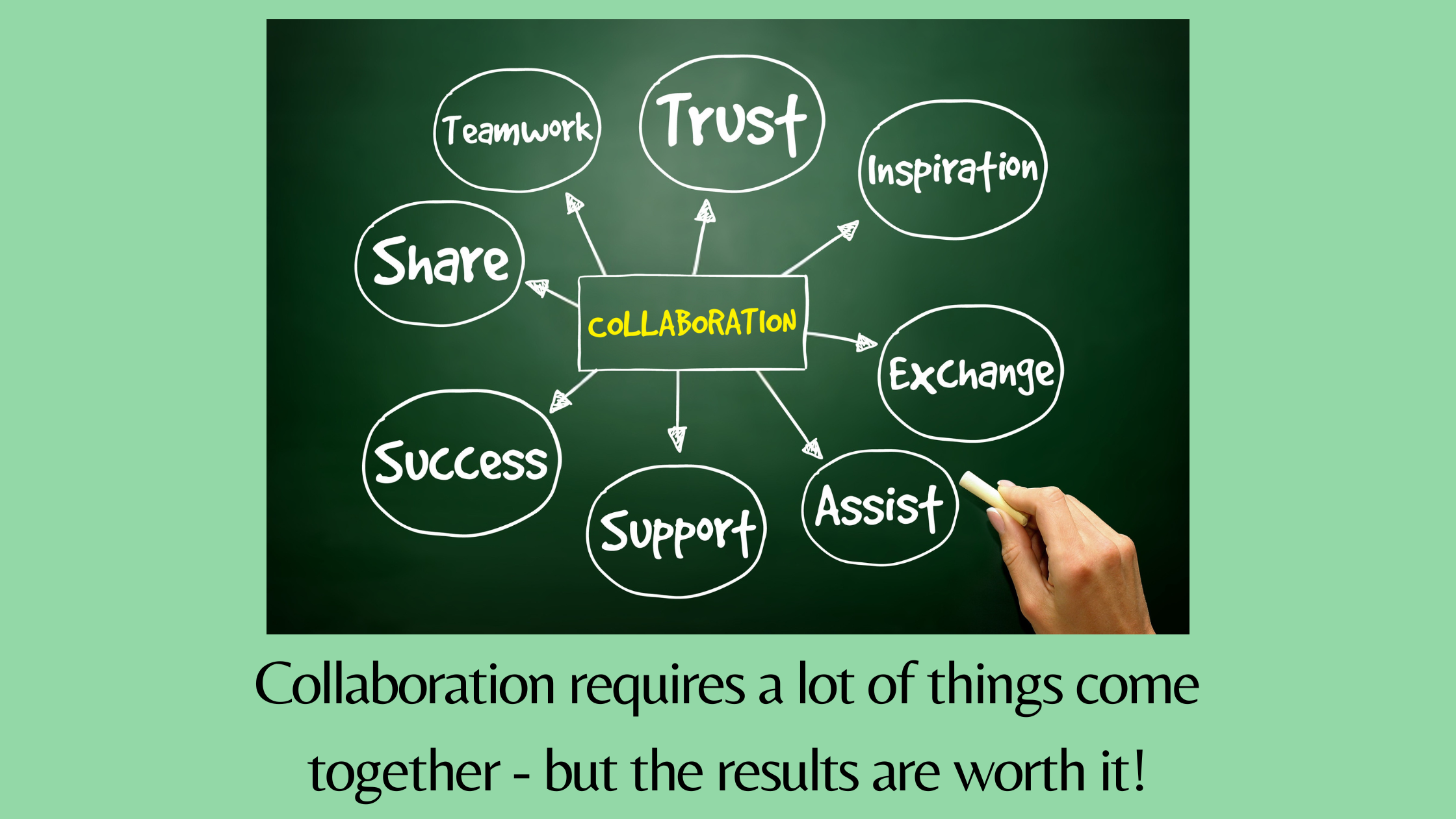
The first time you try this with a teacher, it might not work and it may feel uncomfortable because it’s new. Collaboration might not come naturally for you either, but that’s not a reason to stop. Try again in a few weeks. Don’t give up. It’s too important. You can do it. You are a leader and have overcome obstacles before; you will do it again. The results – and the ripple effects to other teachers – will be worth it..

Feel Well – Do Well

The old expression “Make time to smell the roses” is about slowing down to enjoy what’s around us. It is also, in fact, a prescription for improving your mindset and your productivity. Much has been written about the importance of self-care and its effect on how you feel about yourself.

Have you noticed when you go outside, your body posture undergoes a slight change? Your shoulders go back, and your vision seems to expand as you leave the confines of indoors and screen viewing. These outward physical changes are the manifestation of the chemical changes going on in our bodies. The effects of the chemicals our bodies produce can be negative or positive. Having too many episodes of negative chemicals flooding out bodies can affect our short- and long-range health.

Not surprisingly, the converse is equally true. In her article Fuel Well-Being to Transform Your Leadership (email sign up required), Marlene Chism discusses different positive body chemicals and how we can produce them. She goes on to show how producing these chemicals regularly boosts the quality of our work.

It is wonderful to know that the following chemicals are within your power to produce:

Serotonin- keeps you calm and in a positive mood. It helps you as a leader by keeping you from mood swings and acting impulsively. You make better choices and stay focused. You produce Serotonin when you:

  • Exercise regularly – Choose something you like so you will do it. Incorporate it into your regular routine and enjoy the many benefits.
  • Practice gratitude – This can be a simple addition to include in your routines. It helps to maintain a daily record, digital or print, of what you are grateful for, but even taking a moment in your day can benefit your serotonin levels.
  • Walk in nature – Get out. Find a place to get outdoors, breathe fresh air and, hopefully, grass and trees. If this is a challenge because you live in a city, look for a park you can go to.
  • Get sunlight – Another challenge for workers with long commutes or during the short daylight hours (and cold!) of winter. Do the best you can when you can.
  • Eat serotonin-rich foods such as turkey, eggs, seeds and nuts – Yes, even your diet can support this. No wonder these are considered healthy foods.

Dopamine – The feel-good neurotransmitter. Low dopamine leads to a lack of motivation and tiredness. Feeling overwhelmed and easily distracted can be caused by low dopamine levels. When you have a good balance of dopamine, your creativity increases, and you have a sense of positive achievement. All so necessary for leaders in stressful times. You produce Dopamine when you:

  • Eat Omega-3 foods like fish – Once again, eating healthy is beneficial in more ways than you knew.
  • Exercise regularly – A double reward for exercising – dopamine in addition to serotonin. Your exercise needn’t be for very long. Consistency is what is important.
  • Get enough sleep Always a challenge in our over-filled days. Treat yourself as you do your children by developing a bedtime routine. Read yourself a story.
  • Listen to music – What music fills you up. Maybe lullabies can be part of your bedtime routine. Shift to music instead of news on your car radio, or at home. Or, after news…. This will give you that dopamine boost.  
  • Set and achieve small goals– Robert Collier said, “Success is the sum of small efforts repeated day and day out. Reaching small goals makes you feel successful. Poof —dopamine! When the goal seems out of sight, it feels unattainable and hard to sustain. See the small steps as the big win they are.

Oxytocin – Chism calls it the “bonding chemical.” It helps in making connections, feeling empathy, and building trust which are all essential for building relationships. You produce Oxytocin when you:

  • Spend time with friends – The importance of this explains why the isolation we experienced during the pandemic was so damaging to many.
  • Express appreciation – Say thank you and mean it. Send a text or email. Even better, send a handwritten message, being specific.
  • Get a massage – A great reason to treat yourself. You can be good to yourself and build your leadership bonding chemical at the same time.
  • Listening – We have recognized the importance of active listening. It’s hard for many of us. Practice it when you spend time with friends.
  • Share a meal – Go out for a meal with friends and include serotonin- and dopamine-rich foods to eat.

Knowing the importance of these chemicals in your body and how you can produce them can give new impetus to you and your leadership skills. It’s fun to think that being a great leader is a matter of chemistry – and feeling good.

Get Your Principal to Hear You

Does this sound familiar: You know what you want to make your program even more successful, but the resources necessary aren’t in your budget. You constantly hear how tight money and resources are. Is there any hope for your plans?

Yes, there is. While it’s true that budgets are notoriously challenging, there is always money somewhere. It just needs to be juggled. The skill you need to find some of this money directed at you is getting your principal to see why the funds should go to the library. Ande the best way to do this is to develop a positive relationship with the principal – preferably before you need the money. It will help immeasurably, but it is possible even if you haven’t.

Before going to your administrator, know exactly what you want and are asking for. This is not the time for vagueness. How much money is involved? Will the money be needed immediately or will the costs come in stages as the project continues? How much time is needed? Will there be anyone else involved at any point?

When you have your “ask” down pat, and you are ready to put into motion, try using Karin Hurt’s four-step approach in her article, Career Advice – How to Advocate for Yourself at Work.

  1. Connect with Empathy and Consider Their World – Your principal doesn’t have an easy job. They have the Superintendent’s list of demands. Parents can inundate with complaints. They handle the most difficult discipline issues with students. The list goes on. Just like you, your principal has goals that are important to them. Be sure you know what they are. You can figure out what it is based on what they bring to faculty meetings and other statements they make. Use your awareness of what they value and need in your opening sentence. Let them know you share these goals. As you present your “ask,” point to how it will further them.
  2. Speak Their Language – Principals and Superintendents have a language just as librarian’s do. Use words and phrases which are part of their working vocabulary. Make it a point to check the articles in Principal, the journal of the National Association of Elementary School Principals (NAESP) or Principal Leadership, the journal of the National Association of Secondary School Principals. In addition to what you learn in meetings and emails, this will give you important clues as to what concerns your principal. In reading the articles, focus on recurring words and phrases. These are part of your principal’s language. Incorporate them in your discussion with them.
  3. Consider your Timing – In my experience, this should come first. You don’t want to see them on Friday afternoon when they’re mostly thinking about wrapping up the week and looking forward to getting home. Monday mornings are likely far too busy. Check with their secretary to find the best time. They know the principal’s schedule and work mode best. When possible, schedule these over the summer. That is when they have the most time and are looking towards what can be achieved in the upcoming school year.
  4. Own the Outcome Sometimes the answer is “no.” That doesn’t mean forever. Don’t give up. Listen carefully to why your request is being denied. Then go back and re-work your plan. Perhaps it can be broken down into more than one year. Is there a way to get donor or grant funding? Maybe there’s a new goal that you can support with this same project. When you have refined your alternative proposal. Re-schedule a meeting. Let the principal know you heard what they said and understand the validity of it. It’s harder to turn you down a second time. Additionally, by coming back you have demonstrated the plan’s importance.

Remember this truism:

  • All libraries, no matter their type, are part of a larger hosting body.
  • All libraries, no matter their type, get their funding from the hosting body.
  • That funding is dependent on the needs and wants of the hosting body.
  • Those needs and wants are determined by the hosting body, not the librarian.

Leaders master this truism and know how to define their needs and wants in terms the hosting body, in this case, the school system, value. Your principal is part of the same hosting body – and is closer to the needs and wants. Make sure your asks support their needs and the money is more likely to be found.

Quiet Doesn’t Have To Go Unnoticed

You know it’s important for others to view you as a vital part of the educational community. But what if you are an introvert? How can you get your message out when you are uncomfortable speaking up and actively sharing your accomplishments?

A few weeks ago, I wrote about how extroverts can benefit from using some of the strengths of introverts (Leadership Strengths of Introverts). These are the strengths you use naturally. For example, you are likely a deep and aware listener. You are good at tuning into what the teachers are saying or hearing the places where your principal is struggling. This awareness is a powerful skill when used purposefully. Knowing what others want and need, seeing where your skills can support them, allows you to help them get it. You don’t need to talk. Just do.

In her article, How to Get Noticed at Work as a Quiet Person, Jessica Chen, author of Smart Not Loud: How to Get Noticed At Work For All the Right Reasons, provides several suggestions you can use to support your success:

  • How you talk about your wins – Telling people how great you are or how well a program did is very uncomfortable for you. This isn’t necessarily a problem, since people often discount what they hear if they feel it is bragging. What you can do that will feel more comfortable is focus on the success of those you worked with. Talk about something the students created or about the teacher who worked with you on a learning project.
  • Spend time – Which teachers are considered stars? Which ones talk up about the great things they have done? Make it a point to spend time with them and find ways to collaborate with them. They will spread the word. They always do. And this time, you will be included in what they are saying.
  • Find your differentiating factor – Chen asks you to take the time to identify what it is you like to do and comes easily to you. Chances are, this is something that is challenging and/or less fun for others. Don’t discount it because it’s easy for you. This is your superpower. Once you know what it is, stop and think about who can benefit from it.
  • Link your talent to opportunity – Listen (already one of your skills) for more opportunities where you can offer your superpower to help someone. (Don’t worry, you don’t have to call it your superpower.) Knowing how to meet people’s needs and wants is a great way to get noticed by them. When you work in collaboration, there are more people to talk about the success – which means you can say less.
  • Expand your reach – Think bigger. Look for school and district committees where your talents and skills support their long and short-term goals. Once on the committee, do what you do so well – wait, watch, and listen. You will soon see ways you can help and once you do, your contributions will be noticed.
  • Advocating for yourself – Promotion yourself can be a huge challenge for introverts. Chen suggests using the acronym ACCT to guide you.
  • “A” is for Asking for what you want – Things won’t be given to us just because we work hard. Only you know what you need. Get clear, get specific, and ask. Your ongoing success depends on your speaking up for yourself.
  • “C” is for Circling Back – Most of the time you won’t get an immediate answer to your ask. This means you need to ask again. It shows you are serious. Go back to your clarity. They didn’t respond because of their priorities, not because the answer is no.
  • “C” is for Celebrate Your Wins – This is neither boasting nor something that has to be done “loudly”. If a teacher sends you a note about how a lesson has impacted further learning by students, after thanking her, forward it to your principal. (I also keep a Success Journal to keep me empowered.)
  • “T” is for Turning Down Requests – You have to know when (and how) to say “no.” If you take on everything you will soon be overwhelmed, and your work will suffer as will your personal mental health. You won’t have the ability to advocate for yourself. Instead of saying “no”, offer alternatives.
  • Speak up in meetings – I can almost hear the panic. This can be a real challenge for introverts, but Chen has an answer: The 4 A Sequence (and only three of them require you to say anything):
  • Active Listening – Use this skill to listen for the right moment to enter the conversation.
  • Acknowledge Your first statement should make reference to the previous speaker. You can concur if you agree or say something neutral if you are about to disagree.
  • Anchor  – Having acknowledged the last speaker, use a few words from what the person said in introducing you comment or idea. The connection makes your response fit in the context of the meeting.
  • Answer Now say what you have to add to the conversation. Stick to the point. Make it brief.

You have amazing skills and strengths. Being an introvert doesn’t change that, but they could be hidden. Look to see which of these steps are ones you feel you could incorporate. Soon, you will feel safe stepping out of your comfort zone, and your community will see you as the leader you are.

Becoming a Great Leader

Which one of these have you heard before?

  • Leadership is a never-ending journey.
  • If you are not growing, you are dying.
  • Good is the opposite great because if you think you are good, you will never be great.

These have been touted so many times that they have become dulled in our minds. But they are adages because they contain truth. As a leader, you can never be complacent about your achievements. Yes, be proud of what you’ve achieved and all that it took to get there, but this doesn’t mean you can stop working hard. There is always more.

Another aphorism can be your next step: Leaders don’t make followers. They make more leaders. The more school librarians who are leaders, the greater our overall impact on our school communities and on the larger local, state, and national communities. Yes, national. Thinking big is important. We need to have the national communities see school librarians for the vital role they have in education and our students’ future.

This means finding ways to bring up other leaders. In an article, Rena Harvey presents 5 Ways Leaders Can Unlock Their Potential to Inspire Others. She notes that, “becoming a great leader requires self-awareness, continuous learning, and a commitment to personal growth.”  To do so, Harvey says you must work on these five areas: understanding your core values, developing emotional intelligence, embracing lifelong learning, fostering resilience, and cultivating a vision that inspires others.

Understanding Your Core Values – Reflect on both your personal core values as a librarian as well as the ALA Code of Ethics, the Library Bill of Rights, and AASL’s Common Beliefs. Our values ground and support us as leaders, guiding us as we make decisions and choices. There is strength in knowing other librarians are holding the same values. Because they are always present, others know who you are and what they can count on from you. It shows your integrity and that of the profession.

Developing Emotional Intelligence – We are in the relationship business. Our emotional intelligence is part of what allows us to communicate effectively with others and build relationships. People respond to us because we “see” them. It helps us make decisions as we understand how it will impact others. Harvey adds that your emotional intelligence allows you to stay calm under pressure and respond to challenges with a clear mind rather than reacting impulsively.

Embracing Lifelong Learning – We are role models for lifelong learning. Anyone who has been in the profession for five or more can look back at our careers and see the many changes. We have embraced the challenges and changes, teaching ourselves when possible and seeking other ways to become proficient in the changes. We have adapted, pivoted, and helped our students, teachers, and sometimes administrators in finding their way in our ever-changing landscape. And we have looked for feedback to improve and refine that learning.

Fostering Resilience – An integral part of the changes we have had to make is becoming more resilient. We hold to our core values to anchor us. We draw on our librarian colleagues and state and national organizations for help. They strengthen us like the giant redwood trees whose shallow roots are interconnected with others, allowing them to grow to great heights in the face of high winds. Despite the challenges, we work on having a positive mindset, remembering the importance of self-care.

Cultivating a Vision That Inspires Others – I am always inspired by AASL’s Vision – “Every school librarian is a Leader; every learner has a school librarian.” In essence this blog is my contribution to inspiring other school librarians to be leaders – and great ones. Review your vision to ensure it’s big, showing your commitment to a better tomorrow. Visions are about what it would be like in a perfect world. No, you will never attain it. You are not supposed to. It’s working toward it and inspiring others to join you in your journey.

We are living in difficult times. Fortunately, you are all leaders and together we will meet the challenges of our roles and our audience. Each day we have the opportunity to find at least one way to be a stronger leader and inspire others to do the same.

It’s Wise to Have Many Whys

We talk about Mission Statements as our “Why.” Looking deeper, the Mission Statement is focused mailing on what you do. It is, as I say, your Perspiration. The underlying “Why” you do it is tied to your values, your life history, and other forces that have created the you who is in this current place.

Making a difference in the learning and school experience of your students is probably one of the “Whys” you have. Other “Whys” might have developed over time, such as promoting intellectual freedom.

Focusing on only one “why” has been the traditional approach. The thinking was you needed to bring your full attention to it in order to be successful. David Zimmerman has a different take on it in his blog article, Leaders, It’s OK To Have Multiple “Whys” where he discusses why more could be better and the power of multipotentiality. Zimmerman begins with these four reasons:

  1. Diverse Perspectives – Librarians, like everyone else, are not clean slates schooled only in librarianship. We have interests and often other careers which can bring greater scope to what we do. Are you crafty? How can that add to your program? It’s not just in making displays. Think of how it benefits a makerspace. Or perhaps you have a good way of bringing local business people into the library which showcases their talents and exposes students to the choices available after school ends.
  2. Adaptability – In a fast-moving world, our multiple interests make us more able to change, pivot, and go through any other gyrations needed to not only catch up but be ahead of the curve. It allows us to be willing to try the new, build on what works, and release what doesn’t. It also shows us the interconnectedness of our interests.
  3. Continuous Growth – A single focus can be limiting. Having multiple passions makes us more likely and able to be continuously growing, being motivated anew by what we discover. As librarians, we are and need to be role models for lifelong learning.
  4. Greater Impact – The assortment of interests and strengths we bring allows us to communicate more personally with a variety of stakeholders. We have more in common, more reasons for connection. When we communicate, we build the relationships that are so vital to carrying out our Mission – and make a difference in the lives of our communities.

Having multiple “Whys” is at the core of multipotentiality. People who embrace multipotentiality are “an adaptable, quick learners with a wide range of skills and creative pursuits, characterized by their curiosity, capacity to learn quickly, and ability to synthesize disparate ideas.” Zimmerman who presents four ways to lead with multipotentiality.

  1. Leverage Your Passions – Take stock of your passions. How can each of them contribute to your role as a school librarian? Whether a love of nature, cooking, or travel, your passion for these parts of you can add creativity and give you greater dimension as a leader.
  2. Create Space for Exploration – Don’t be limited to your current passions and interests. When something piques your interest, try it out. Look for new activities, and then bring them into the rich mix that fuels your program and your leadership.
  3. Cultivate a Growth Mindset – See these new interests as part of your growth. What did you have to do to learn these new interests? How can you bring the experience of that learning process into your daily work?
  4. Encourage It in Others – This is another passion. Bringing the joy of learning and discovery to others. It’s also about the role of leaders in creating new leaders. Seeing others bloom is a special joy.

Your days are full. It seems like a lot to ask you to add to your “Whys,” but you are probably doing it to some degree already. Instead of ignoring those other interests, focus on and include them so you can lean into your passions and interest to bring you to a greater level of leadership.