SOAR When Speaking to Your Principal

You need to have a relationship with your principal in order for your library to thrive. So how is that relationship going? Do you have a strong, positive one where your principal supports everything you do? Or do you have one who claims to believe in libraries but is not fully aware of how they have changed. Maybe your principal feel you are not very valuable and a drag on the school budget. If you and your principal share common values about what the school library is and needs to be, you don’t have a problem. But if your relationship falls into the second or third category, how do you change it to be more like the first one?

In their article Dealing With a Difficult Boss for Psychology Today, Wes Adams and Tamara Myles write about the importance of “managing up,” ways to deal with managers who are challenging and/or unproductive. Many of us have experienced difficulties in getting through to principals who hold to preconceived ideas and attitudes about libraries. Adams and Myles recommend a SOAR approach to open communication. This may help to build that important relationship. Here’s their explanation of putting SOAR to work along with my usual tweaks to align it more in our education world:

S-Shared Goals – Start by drawing on what you have in common. Students are at the core of what you both care about and support. But there are other common areas you might address, such as keeping parents included in their child’s education or supporting the mandates of the Superintendent of Schools who is concerned about test results.

O-Opportunities – Point to what can be used to reach those common goals. You both want the school budget to pass. Look for ways to show the value the library brings. Your library can be a perfect location to welcome the business community. They can be invited to share the skills of their trade with students in a related class, such as a business class or a course on future careers. They might also be willing to sponsor an author visit which in turn would bring the local newspaper to cover it, giving the business publicity and the school some vital community visibilily.

A-Alignment – Turn these opportunities into a true conversation by drawing you principal into the discussion. What do they like about what you have presented? What questions do they have? Do they have recommendations for improvement or modifications? Don’t become argumentative with any of their proposals. This is a time to see how to incorporate their suggestions, deepening your professional relationship.

R-ResultsShare your goal for the outcome of whatever you have proposed. Let the principal know you will be keeping them posted on how things are going. Make sure they know both the progress and final results. You can do it in meetings or via email. Be open to their responses. If you don’t hear from them after emailing them, schedule a brief meeting.

Adams and Myles further recommend that “when the project is complete, remember to tie the results back to those same priorities and goals to build credibility and gain influence. Doing so consistently reminds your [principal]that you are delivering, which earns trust.” And as I keep saying, trust is the foundation of relationships.

Your relationship with your principal is vital to your long-term success, maybe even your job security. The more your principal sees you as making them look good, the faster and more willing they will approve your next proposal. You will be seen as a valuable leader and the library will thrive.

Your Inner Voice Is Speaking Out Loud

Do you talk to yourself? Probably. Most people do whether we realize it or not. While these silent talks are about a lot of things, much of our inner conversations are about ourselves. So, here’s the important question: Do you speak kindly or harshly?

The truth is we are far more insulting of ourselves than we ever would be with anyone else. This would be bad enough if our internal diatribe remained silent, but we are unknowingly broadcasting these thoughts in our interactions with others. And the messages we are sending out keep us from reaching our full potential as leaders.

Suzy Burke, Ryan Berman, and Rhett Power deal with this common syndrome in their article, 5 Proven Self-Talk Strategies to Strengthen Leadership. In their opening, the authors state: “Leading others starts with self-leadership.” It always starts with you. You are the face of the library. Others take in the messages you send and, from there, they decide if you are sure of your goals and know how to get there. Yu are telling them, intentionally or not, whether they should trust you.  And trust is the foundation of relationship, which in turn leads to the cooperation/collaboration and advocacy you need.

Here are their five strategies along with my tweaks which makes their business focus more appropriate for us:

  1. Self-talk is the hidden saboteur of leadership. In the authors terms, we are involved in worry-wars on many levels and almost constantly. The current Worry War is, for most of us, the societal/political one which has turned the librarians and libraries into prime targets. Additional wars involve budget and staff cuts along with personal ones including financial stresses, family relationships, responsibilities, and whatever else is going on in your life. When any one of these areas show up, your self-critic starts talking and the negative talk adds to the worry.
  2. Every leader has a monster. Many of us, me included, see how talented, skilled, and resourceful other librarians are. We compare and see ourselves as falling short of them. But that comparison is a monster lying in wait. The authors say, “That voice doesn’t just shape your day, it shapes everything.” It shows up in how you hear, what you believe of yourself and how you respond. You do not want to leave this “monster” in charge of your work.
  3. Your mindset isn’t fixed. As lifelong learners, we understand this. Many of us have successfully changed a negative mindset into a positive one. The authors acknowledge that since you will never keep the negative mindset away forever, they offer a three step approach to make the need shift: Catch – Identify when a monster is taking over. Your anxiety is one way to recognize its presence; Confront – Challenge you mindset with facts. For me, it’s when the word “never” is in my thoughts:, Change – Now reframe the thought with a more positive, truthful one.
  4. There is more than one type of monster. – Just what you needed to hear.  According to the authors we must deal with these five monsters:
    • Catastrophizer -This is going to be a disaster.
    • Always Righter – This needs to be perfect, and I’m never going to get it right.
    • Mind Reader –  I know how you are going to react to this situation.
    • Over-generalizer  – This didn’t work, and it’s all downhill from there.
    • Should-er – I should have known better. And now of course, it’s too late.

      The more practice we have spotting each of these monsters within ourselves, the better we get at not letting them be the ones to lead.
  5. Self-talk can be your leadership plutonium. – When you know how to reverse (or lower the decibel level) of negative self-talk, you power up your leadership. While we are talking to ourselves, our bodies are sending out the message of our thoughts. Our face, arms, and tone of voice combine to tell the world what we are thinking—and what monster is in charge. This is why that earlier quote, “Leading others starts with self-leadership” is so important to remember.

Leaders keep growing and learning new skills. Have you seen yourself here? If so, this can be an important lesson for you to incorporate into your leadership. Your interactions students, teachers, administrators, and others you interact with will be more productive as a result. And you might just find yourself feeling better overall!

Lead Like a Politician

Did the title make you pause? Did you want to reject it? These days, most people have a negative view of politicians, but like them or not, they do lead. And they are able to get people to vote for them.

As school librarians we need to get out the “vote” for us. Whether it’s our students, teachers, administrators, or parents, we need their support and recognition of our value to them. In Jed Brewer’s article, “You Are a Politician: Four Lessons From Local Politics That Make for Better Organizational Leaders,” his lessons for business leaders apply equally well to our ability to be leaders in our educational setting. Here are the four for you with my tweaks.

  1. It’s About the Problem — Always – To be heard, you need to speak to the listener’s wants and needs. With students it’s usually about the grade or the inability to see the value in what they are doing. Hopefully, you are creating engaging lessons, giving learners agency in working on the assignment or project. Teachers want students to learn and do well on high stakes tests. Focus on what you can bring that will advance their goals when you suggest they do a cooperative or collaborative project with you. Your principal worries about the superintendent and the Board of Education and especially the budget. Keep them informed about student successes, sending them things they can use in their reports, such as pictures/videos of student creations tying them to state standards. Parents are always concerned about their children and how they are doing. Make sure they know how your LibGuide and website keep them informed and allow opportunities for them to access you. In dealing with all these different wants and needs, Brewer recommends you find opportunities to connect with each group to be sure you know what they see as their problems and concerns.
  2. Nothing Beats the Personal Touch — Ever – Getting to know students individually is a challenge for us, but it is important to keep working at it. Offering coffee and snacks for teachers is a tried and true way to bring them in and get an opportunity to talk one-on-one. While sending regular reports to principals is necessary, also invite them in when kids are working on projects so they can see the work in action. Also, make sure to have some face-to-face time with your principal. Ask them for their opinion on where they want to see the library go. Be prepared to respond positively but provide data where necessary to correct any negative ideas.
  3. No One Succeeds Alone — Really Draw on your PLN, your Professional Learning Network. Between the national and state library associations as well as the social network and people you follow, you have ample “partners” in creative ways to address your own wants and needs. Build your own support team so that when things become challenging, you have resources and places to go.
  4. Compromise Is Success — Truly – Important goals aren’t achieved quickly. Trust and relationships need time to build. Even if you have done all the proper preparation, you won’t likely get a complete acceptance of anything you propose. That’s where negation comes in. If you get a partial buy-in, it means they see things they like in what you are saying. Modify, tweak, or do whatever is appropriate for achieving your goal, and then come back. I had a superintendent who once told me her first answer was always, “No.” If someone came back, she could be sure they were serious. Keep looking for new avenues – break a project down into a several year plan, show short and long term benefits, offer ideas for modifications.

Brewer concludes by telling business people they are politicians. This is true for you, too. You have to meet the needs and wants of diverse groups. By using the skills of a politician, you and the library will grow and thrive.

Quality Answers Require Quality Questions

Rhetorical questions are those with such obvious answers no one needs to respond. Simple questions get one word or even one syllable answers. If we want useful, useable answers, we need to ask better questions. Even if we fear a negative response. We cannot build the collaborative relationships we want or improve what we’re doing if we don’t ask questions that give us quality answers. Even if we don’t always like those answers.

Asking quality questions gives us information. “What would you want to do differently next time?” rather than “What did you think?”. If you’re in the midst of a project with students, ask “What was the hardest part of this so far?” In building a connection with your principal, ask, “What would you like to see changed about the library?” Here, you may want to get a little more specific based on your purpose is for this discussion.

In his article, Asking the right questions, Paul Thornton offers eight tips on how to ask questions that get quality answers. As he is addressing the business world, I will add my comments to show how to use the tips in our education world.

  1. Be clear about your purpose Everyone, even students, are pressed for time and often under stress. Get to the point quickly. See the sample questions given above for suggestions on doing this.
  2. Prepare in advance – This is not the time for improvisation. Once you know the purpose you can decide what questions you plan to ask. In what order? Have them written down. Limit the number to no more than three and memorize them.
  3. Ask one question at a time – Whomever you are talking to needs time hear what you said and form an answer. And you need to be listening to each response. Your focus is on the information you are receiving, not rushing to ask your next question. Thornton reminds you not to ask rhetorical questions. You won’t get usable answers.
  4. Challenge assumptions – Whether you want students to think more critically, extend collaboration with a teacher, or enlighten a principal about how libraries have and need to change, we all carry a level of bias on what we think we know about the subject. Be clear about what you’re asking and don’t assume the basis/background of the answers you are being given.
  5. Connect ideas – Thornton says when asked properly and clearly, your questions will get your listener to gain new insights into whatever you are presenting. It will give them an opportunity. When it’s possible, connect the purpose of your questions (see the first item on the list) to your Mission Statement.
  6. Be comfortable with silence – If you want quality answers you need to allow people time to think. This goes back to Number Three. As you wait for the response, use the time to read body language to see where they are in the process. Giving people space and time to answer tells them you value their response.
  7. Encourage broad participation – With students, a pair/share exercise or having a group post their response on a whiteboard will allow you to see where the class is. With teachers, you might have them share several student projects in the library. A wider net gives you more answers and more information.
  8. Capture notes promptly – You want to have a record of what you were asking about and what the response was. Depending on whom you are talking to, it could be analog, digital, photo, or even a recording. In our fast-paced world, you could lose some information as you turn to the next thing. Give these answers the weight and time they deserve.

Improving the quality of your questions will help propel you forward in increasing the library’s value in the minds and behaviors of the populations you serve. What you learn in the process will be invaluable and further your growth as a leader.

Tips for Managing the Library Classroom

As every school librarian knows, managing the library classroom is not the same as managing a typical classroom. Not only do students not come to the library on a daily or even a weekly basis, in some cases, but you have to add in the fact that the kids don’t see you as their real teacher. You can see where it becomes challenging. Plus, you have the ongoing possibility of drop-ins.

What is needed is a Classroom Management plan that encompasses all that happens in the library, ties into your Mission and Vision, and is cognizant of unforeseen circumstances cropping up. You need to keep yourself centered to manage it and make it a vital part of the school community. A tall order.

In Confident Classroom Management. A. Keith Young offers four tips for the traditional classroom. I have adapted to make them work for you.

  1. Let Each Day Start Fresh – Focus on today. Yesterday is over. Take time to review why something went off track yesterday or why it worked. Next, come up with a strategy to keep it from happening again or find a way to repeat it. Once you have your positive mindset in place—especially important after a tough day—move forward. Greet students with a smile and welcoming comments, even the ones who caused a conflict of some type on their last visit. Reset the tone for today.
  2. Maintain Relationships Separate from BehaviorThis is not easy. We have a tendency to be wary when a frequent troublemaker comes in. A focused positive comment is vital here. Choose an article of clothing, hairstyle or some other personal connection for your comment. It will signal to the student that you are not holding onto what happened last time. Talk to the person, not the action.
  3. Redirect with Calm, Neutral Phrases – When a student acts up, rather than telling them to stop, ask a question related to the topic at hand without indicating the student is off track and not behaving appropriately. Offer an approving comment when they respond positively. If the student continues to be disruptive you can hand them paper and pencil and suggest they write what is upsetting them. Or you can ask if they need time away from the group. Each of these give the student agency to resettle themselves and allows you to remain focused.
  4. Conduct Social Audits for Better InteractionsWhile much easier to do in a typical classroom, you can incorporate it into your strategy, particularly with students who repeatedly have problems in the library. Young suggests you “guide students through reviewing a situation that occurred, identifying missteps, and outlining future actions—(then) offers clear and precise empathetic direction.” You will likely not have time to do this while the class is in session. Instead, have step-by-step directions for them doing it. Tell them to ask you for help if they have difficulties answering the questions. Also, consult with the class teacher and the guidance counselor for advice on dealing with this student. Working together my have a much bigger impact

Incorporate these four steps into your personal lesson plans, different from what you might submit to your principal. The more frequently you put it this management into effect, the more natural it will become to you. As a leader and school librarian in difficult times, it’s more important than ever for your library not to become a problem for the administration or add to the challenges of teachers. Instead, demonstrate every day how the library contributes to the success of students and teachers.

Start at the End to Gain Support

TLDR. Have you come across this acronym? It stands for “too long; didn’t read.” It’s a warning given by the author, frequently followed by a summary, if they are concerned people might skip what was written. We are flooded with information without enough time to take it all in. You must have heard someone say, “Get to the point already?” Or said it yourself on occasion.

So what’s the solution?

Share your point – your end – at the beginning. When you make your point early, people know where you are heading and have a reason to focus quickly. We tend to build our argument to show why approving it is important and make the “ask” at the end. John Millen in his blog The Biggest Presentation Mistake Smart People Make explains why this approach rarely works and how to reverse the sequence of your requests.

These are his four steps with my usual connections to our school world:

  • Flip It: Start with the bottom line – Millen observes if you start at the end, even if people don’t have time to read the full message, they know what your point is. Think about wanting your principal to approve a project. You tend to build toward that idea, showing how well thought out your proposal is. Your principal is pressed for time. If you start at the end, letting them know what you want to accomplish, they are going to be listening for your arguments even if their first reaction is to reject it.
  • Executives think inductively – This is true for all decision makers. They are as much under stress as the rest of us, maybe more. But putting your ask first, your focus becomes: What I am proposing; three reasons why and how I will do it, and, finally, what questions do you have about it? Simple and fast. I have always recommended you keep meetings with your principal brief. This is how to do it.
  • Data builds credibility. Clarity builds influence. – We are so accustomed to “showing the data” we forget it needs to be put in an understandable context. Give the context – the result – first. Then share keep the data short and clear, using language that is understood by the listener. Millen recommends the order of information should be:
    • What’s the problem?
    • What’s your recommendation?
    • Why should they care?
  • A simple shift, a big payoff – Move more a deductive approach to giving information to an inductive approach. For example, instead of talking to you principal about genrefication like this: “I have been reading about the success many libraries have had by genrefying their fiction collection.” Use an inductive approach starts with showing a benefit to students and say, “I want to arrange the fiction collection by genres, allowing students to find books by subjects and focus rather than solely by author to help them get what they need quicker.” The difference is striking.

Millen concludes by reminding us to give listeners “the point, not the process.” Most recommendations and ideas are turned down because our audience got lost in all the information we offered, and they lost a connection to the outcome.

Don’t forget to try this with students, so they know from the beginning how your instruction will help them, and with teachers, so they immediately see the benefit of a collaboration. Even with presentations, if you give your audience the end results, they will remain more engaged in your topic to see how to get there. Start with the end in mind and you will lead your audience to the goal you’ve set.

Leaders Show They Care

Watch the news the news or scroll through social media and it’s quickly clear that everyone is feeling stressed, overworked, and underappreciated. As librarians, we not only feel, but are actually under attack as well. Our jobs, our collections, our programs are under some intense scrutiny. Fortunately, there’s an unexpected tool that can help – Caring.

Sometimes the best way to deal with the negative emotions is by helping others. Our students need their teachers and librarians to bring our best selves each day, no matter how difficult. When we start by remembering how important and impactful the work we do is, we can tap into the power of connection.

In her blog article, The duty of care: How leaders can anchor teams in turbulent times,  Julie Winkle Giulioni presents seven ways to show caring in the business world. Here they are her seven, along with my adjustments for their application to the school setting.

  1. Benevolence– Make time to know what others value, what they care about in their school and personal life. Your interest in them opens the door to sharing and easing a burden they were carrying on their own.
  2. Trust – As I have often said, trust is the foundation of relationship, and as a leader you must build these relationships. Trust can come from keeping your word as well as keeping confidences. What a teacher may have shared with you is not one for you to share with others unless you have been given permission.
  3. Respect Giulioni says this is about how you listen. Listening is a core skill in leadership.

You honor the other person’s journey and don’t jump to judgement if you don’t agree with their path.

  • Empathy – When teachers allowed you in on their worry and pain, let them know you care. You can share a similar pain, but don’t try to top theirs.  This isn’t a contest.
  • Communication – You show your caring by how you speak to students, teachers and, yes, administrators. According to Giulioni, you do so by welcoming their perspective and accepting their emotions. I would add the importance of tuning it to what is communicated in their body language. People sometimes mask their emotions on their faces, but you can often pick up what they are feeling by the way they are standing and subconscious hand movements. Pick up on these and ask about them if you notice something isn’t right.
  • Vulnerability – In this case, it doesn’t refer to over-sharing. Giulioni says it means admitting when you don’t know everything and when you have made mistakes. We are all human. Show your human side. It give others the space to do the same.
  • Support – You are in this for the long haul. It isn’t a one-time thing. Follow up on your conversations. Ask how things are going when you know there’s been a problem. Offer to help if they need it.

We are going through tough times, but I have always held on to the mantra, “This will change.” Nothing stays the same. Bad times become better, and good times go bad. But even when we can’t control what happens, we can control how we deal with it. What you do now will impact your relationships when times get better. Stay connected with people. In the words of Theodore Roosevelt, “Nobody cares how much you know, until they know how much you care.” Leaders care about others.

It’s More Than Your Words

You are a relationship-builder. It’s one of your most important abilities. The relationships you create power and empower your program and the advocates who support it. To build relationships, you need to send clear messages. Unfortunately, there are many ways in which you can inadvertently garble it. Your communications are too important to the sustainability and growth of your program to chance them not being heard.

To avoid sending a mixed message, it’s helpful to be aware of ways in which it can go wrong and how to prevent that from happening. Wilson Luna in his article, Your Words Only Tell a Fraction of the Story — Here’s Why Tone and Body Language Actually Matter More, discusses a rule you probably don’t know and how to use it: Dr. Albert Mehrabian’s 7-38-55 Rule.

 Developed by psychology professor Albert Mehrabian in 1971, it states that “7 percent of meaning is communicated through spoken word, 38 percent through tone of voice, and 55 percent through body language.” It is astonishing to discover the words you use say only constitute 7% of what is taken in by the listener and more than half comes from your body language which involves your facial expressions, gestures, posture and eye contact.

Let’s try an exercise. Choose a sentence or two. Think of an emotion and then, saying the sentence out loud, convey that emotion using your vocal tone (pitch and pace). Repeat the sentence while thinking of another emotion. Let’s move on to body language by repeating the last exercise. Say the sentence with supporting body language. Now say it with contradictory body language. Can you hear the difference? Can you feel the difference?

Hopefully, most of the time, your voice and body language are aligned with your verbal message. The challenge is to be aware of times when the three or two of the three might not be in sync. To keep the communication channels clear, Luna offers these ways to ensure each of the ways you are sending the message you want:

Improving verbal communication: The practical ways

  • Clarity and brevity – Keeping it short and to the point is always safest. Everyone is pressed for time. Don’t clutter up your message. This is particularly important in speaking with your principal.
  • Intentional speaking – Think before you open your mouth. For important conversations, try mentally rehearsing your opening statement. Tell them what you most need them to know.
  • Eliminate filler words – “Uh’s, ” “umm’s,” and “you know’s” block the clarity you are trying to achieve. Rehearsing helps here, too.

The 38%: Using your voice effectively

  • Tone matching – Your tone of voice should match the message. The exercise you did with tone will help you keep them aligned. Don’t laugh off difficult news. Don’t assume good news will be met with more problems.
  • Pitch control – Speaking in a high pitch makes you sound nervous, which the listener may translate as unsure. Low pitches transmit confidence. Women’s pitches are naturally higher than men’s which give men an advantage here. See if you can modulate your tone lower. Also, ending your sentence with an up pitch sounds like you are asking a question, which is heard as insecurity with your message.
  • Controlled pacing – How fast or how slowly you speak can reduce the impact of what you are saying. Too fast and they may not hear every word. Too slowly and you might bore them, and they will tune out. Moderate is good for most things, with slightly faster speaking suggesting eagerness that pulls  listener in.

Strategies to improve nonverbal communication

  • Maintain eye contact – The expression “shifty-eyed” shows what happens when you don’t look someone in the eye. On the other hand, non-stop staring can make a person uncomfortable, too. Luna says “avoid doing it regularly. Instead, use eye contact as a gesture when speaking.”
  • Use facial expressions – Your face does most of your communication. A genuine smile goes a long way in getting your message heard. Do some mirror practice if you don’t feel confident with this. Head tilts also suggest interest, as does nodding when the other person responds.
  • Use purposeful gestures and open posture – You want your body to be loose and responsive to the content of what you are saying. When watching a program, see how the actors use gestures. Note how politicians use them in their speeches. Crossed arms say one thing. Hands in your pockets, another.

Save these suggestions, particularly the rehearsal ideas, for when you need your message to be as clear as possible. Whether it’s a meeting with your principal or a job interview, knowing how to communicate with clarity and confidence will have them hear and recognize you as leader you are.

Get Your Messages Read

TL;DR – To have your message received, it must be read. These six tips will make sure that your messages are heard by recipients.

Text, email, and posts on social media are how we send and receive most of our messages today. We scan and read quickly. Do we take it all in? Mostly, but not always. When we receive lengthy emails, we read the opening paragraph and once we see how long the message is, we tend to scroll through to pick up the highlights (and now many servers offer AI summaries). The same is true with our social media posts.

We don’t always think about the messages we send in the same way, but the receivers do. Our communications with administrators and teachers are very important to us and too often we pack too much into them. The challenge is to be more succinct but also improve the look of the messages so they get read, and we get the desired results.

John Millen shows you how to achieve that goal in TL;DR: Be More Clear and Concise. (For those like me who are unaware of the abbreviation, TL;DR means “too long, didn’t read.) His guidance will ensure that your messages are not tagged that way.

Here are his 6 tips:

  1. Start with the purpose up front – You want to grab the reader’s interest. Clearly share the purpose and focus of your message is at the beginning. It’s something I strive to do in these  blogs.
  2. Use structure to your advantage – Bullet points, bolds, and italics along with number lists and short paragraphs draw a reader’s eye and help hold their interest. Long blocks of texts make people scroll faster, especially on smaller devices. Here I always have ways for you to see the important points quickly and keep most paragraphs to no more than three sentences.
  3. Prioritize the most important information – Whatever is most important, put it first. Millen says to think about the main idea or required reaction, why it’s important now, and what the reader needs to do next. By guiding the receiver through the key points they move through the contents and retain it. And if they rush to the end – the didn’t miss the most important parts.
  4. Anticipate reader questions – Millen observes that “great communication isn’t just about telling; it’s about answering.” Until seeing this blog, you might not have thought that your message structure was why you weren’t getting responses. The opening paragraphs hopefully answered that question for you.
  5.  Edit relentlessly – Consider your sentence length. Is the sequence logical? Could I use a better word? Have you slipped into jargon or are you using acronyms the reader might not know? Don’t give them a reason to stop reading. Keep them engaged.
  6. End with a call to action or key takeaway – Don’t leave your reader wondering what they should do next. Be clear: respond, call, set up a meeting? Is there a final point you want to drive home? Reiterate it at the end to make a strong lasting impression.

Leaders need to be clear communicators in all the ways they look to get their message across. Your messages are too important for them to be regarded as TL:DR. Keep these six tips in mind as your prepare your next one so you get maximum impact.

Getting Others to Work With You

You are only recognized as vital to the school community when others know what you do – not what they think you do. And best way to make certain you’re better known and understood is to have a cooperative or, even better, a collaborative relationship with teachers. Then a peer becomes and ally.

With some faculty members, it’s easy. Others use the library as little as possible. In elementary school, they drop off their students and depart for their free period. In the upper grades, they bring their class to complete an assignment without you and don’t want your help. Somehow, you need to reach these uninterested teachers. If your past suggestions have been ignored, what can you do?

In her article, How to Get Genuine Cooperation from Difficult People, LaRae Quy provides a five-step approach for those in the business world to solving that challenge. Here are her steps, with my suggestions for those of us in education:

  1. Remember, our first reaction is to not collaborate – The teachers with whom you don’t have a natural connection likely feel they know their job and don’t need you to help them to do it. Quy’s suggests reaching them through a common interest. What do they care about? Email them about a resource or article that focuses on it. Follow up with one that says you hope it was helpful. Offer to work with them on a learning project on the topic. Ask them how they would like to structure it. Accept their approach, adding, as necessary, “we could also…” as a way to show how you can support them.
  2. Control facial responses – Not only do we communicate verbally, in print, and digitally, we also communicate silently with our body language. Our facial expression sends a message. Is your concern, disinterest or disdain visible? You don’t want your face to show that you think the teacher’s approach is not nearly as productive as it could be. Your negative silent message will carry a greater impact than your verbal positive one.
  3. Share personal stories – No one knows better than librarians how stories build connections. You might share memories about learning that topic when you were in school and any impact it had on your life. Figure out your story in anticipation of this conversation to keep it natural. Hopefully, your story will bring out one from the teacher. Now you have a new common interest and connection you can build your relationship on.
  4. Refuse to let it escalate – Should you get a strong negative response to any of your suggestions, keep from answering in the same manner. If you do, you have lost the possibility for any cooperation now or in the future. Quy offer saying this as an alternative, “I see how you feel (or think), but here is another way to look at the situation…” Start by acknowledging their reaction. It’s not easy to do in the moment, but knowing the importance of keeping your cool will help. (And work on controlling your body language and facial expressions.)
  5. Appeal to higher moral ground – Find a shared common value and speak to it. For example, you could say, “We both want our students to be successful not only in their studies but in becoming lifelong learners in an ever-changing world.” Common beliefs build connections, and connections build relationships.

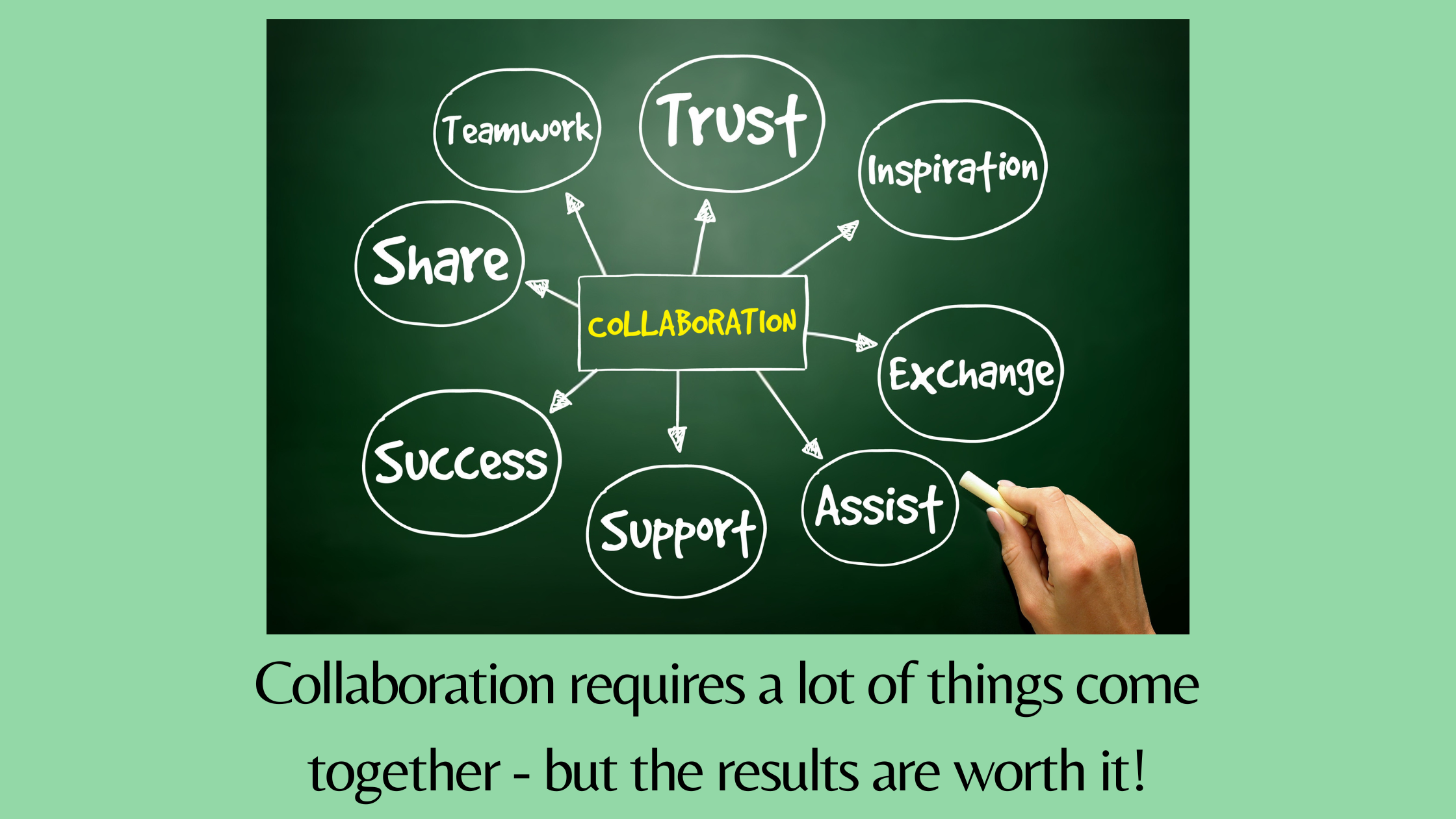
The first time you try this with a teacher, it might not work and it may feel uncomfortable because it’s new. Collaboration might not come naturally for you either, but that’s not a reason to stop. Try again in a few weeks. Don’t give up. It’s too important. You can do it. You are a leader and have overcome obstacles before; you will do it again. The results – and the ripple effects to other teachers – will be worth it..