Start at the End to Gain Support

TLDR. Have you come across this acronym? It stands for “too long; didn’t read.” It’s a warning given by the author, frequently followed by a summary, if they are concerned people might skip what was written. We are flooded with information without enough time to take it all in. You must have heard someone say, “Get to the point already?” Or said it yourself on occasion.

So what’s the solution?

Share your point – your end – at the beginning. When you make your point early, people know where you are heading and have a reason to focus quickly. We tend to build our argument to show why approving it is important and make the “ask” at the end. John Millen in his blog The Biggest Presentation Mistake Smart People Make explains why this approach rarely works and how to reverse the sequence of your requests.

These are his four steps with my usual connections to our school world:

  • Flip It: Start with the bottom line – Millen observes if you start at the end, even if people don’t have time to read the full message, they know what your point is. Think about wanting your principal to approve a project. You tend to build toward that idea, showing how well thought out your proposal is. Your principal is pressed for time. If you start at the end, letting them know what you want to accomplish, they are going to be listening for your arguments even if their first reaction is to reject it.
  • Executives think inductively – This is true for all decision makers. They are as much under stress as the rest of us, maybe more. But putting your ask first, your focus becomes: What I am proposing; three reasons why and how I will do it, and, finally, what questions do you have about it? Simple and fast. I have always recommended you keep meetings with your principal brief. This is how to do it.
  • Data builds credibility. Clarity builds influence. – We are so accustomed to “showing the data” we forget it needs to be put in an understandable context. Give the context – the result – first. Then share keep the data short and clear, using language that is understood by the listener. Millen recommends the order of information should be:
    • What’s the problem?
    • What’s your recommendation?
    • Why should they care?
  • A simple shift, a big payoff – Move more a deductive approach to giving information to an inductive approach. For example, instead of talking to you principal about genrefication like this: “I have been reading about the success many libraries have had by genrefying their fiction collection.” Use an inductive approach starts with showing a benefit to students and say, “I want to arrange the fiction collection by genres, allowing students to find books by subjects and focus rather than solely by author to help them get what they need quicker.” The difference is striking.

Millen concludes by reminding us to give listeners “the point, not the process.” Most recommendations and ideas are turned down because our audience got lost in all the information we offered, and they lost a connection to the outcome.

Don’t forget to try this with students, so they know from the beginning how your instruction will help them, and with teachers, so they immediately see the benefit of a collaboration. Even with presentations, if you give your audience the end results, they will remain more engaged in your topic to see how to get there. Start with the end in mind and you will lead your audience to the goal you’ve set.

Humility as a Superpower

Humility: A modest or low view of one’s importance. Humbleness. Freedom from pride or arrogance.

What was your first thought when seeing the title for this blog? Was it confusion? Understandable because it sounds counterintuitive. I write and present often about leadership and discuss power. So where does humility fit in? In a world where rampant ego is projected as a superpower and proof of leadership, humility seems to lurk in the shadows, frequently associated with religious values.

And yet… there is more to humility in good leaders and leadership than you think. In Humility as a Psychological Task for Leaders, Dr. Paul J Dunion describes humility as a hidden treasure and identifies the five tasks necessary and then lists the benefits. These are the tasks he gives along with my suggestions for how we might incorporate them into our leadership:

  1. Gaining comfort with one’s limits – None of us are perfect. We all have strengths and weaknesses. Know both. When you accept that you have weaknesses, you can ask for help in those areas. I am a big picture person and tend to overlook what seems like obvious details. I usually check with someone who can help me see what I missed.
  2. An increased acceptance of their imperfection – It’s embarrassing when we notice we’ve made a mistake or overlooked something. But this is both normal and acceptable. Dunion says those who have “exaggerated expectations of achievements (get) caught in striving for perfection.” And since that’s unachievable, it becomes exhausting and detrimental to success.
  3. Radical accountability – Admitting mistakes is hard. It can make you feel you aren’t good enough. One form of accountability is accepting and owning the mistakes you make. A second, which Dunion recommends, is to practice gratitude instead for all the help you have received and for the help you will need in the future.
  4. A heartfelt commitment to be rightsized – Too often, we try to project we don’t have weakness because we want to appear confident in dealing with the increasing demands of our jobs. Don’t inflate yourself, your abilities or your accomplishments to keep up with expectations. Neither should you downplay and make what you have done smaller as a way to not be noticed. Either will get you in trouble down the line. Being rightsized is “a measure of (your) competencies, (your) shortcomings, and the true nature of (your) achievements.”
  5. A capacity to appreciate and acknowledge the strengths and accomplishments of others– It doesn’t make you “less” when you acknowledge what someone else has accomplished. If you acknowledge a teacher, you are likely to build or strengthen your relationship and role as a leader. When it’s a librarian who has done something special, that person can possibly help you achieve the same.

And here are his Benefits:

  • Leaders can access a capacity to offer inclusivity, empathy, and inspiration – Which is how we want to be with our students and teachers.
  • Leaders begin to experience a refined sense of security as their limits and mistakes are welcome – Having acknowledged you aren’t always right, makes mistakes unthreatening.
  • Leaders experience a deepened sense of being trustworthy – No matter how you try to hide mistakes, they are recognized by others (and yourself). Being honest about mistakes build trust.
  • Humility allows leaders to be less competitive with colleagues and more able to acknowledge and appreciate their strengths – Honestly knowing your strengths – and weaknesses helps you see more realistically.
  • As humble leaders are honest and define themselves as okay with their shortcomings, their cultures take on more psychological safety – It makes it easier for your colleagues and students to acknowledge their mistakes making everyone feel safer.

You have a big job and many people need you. Don’t try to be perfect. Accept your limits along with your achievements. Work on giving your best and continuing to be the lifelong learners you are as a librarian.

Lead With Grace

Grace as a leadership tool? Yes!

The word “grace” is usually associated with religious practices, but it goes beyond that and used properly, it can deepen your leadership ability. One of the many definitions of “grace” given by Merriam-Webster is “the quality or state of being considerate or thoughtful.” With that in mind, it is easy to see grace-based leadership as a natural outgrowth of the recently popular concept of servant leadership, which is about leading from a place of being clear on who and how you wanted to serve.

While the business world struggles to incorporate either or both of these leadership styles, they are natural to school librarians and the work we do. Even as the pressures on teachers and librarians grow, bringing grace into our lives (treat ourselves) and our leadership (treat others) is very powerful and has the potential to have a huge impact..

In her blog article, Short fuses, high stakes: An argument for grace-based leadership, Julie Winkle Giulioni says that Grace-based leadership is  “the ability to meet people where they are — with patience, understanding and compassion — while still upholding clear expectations and accountability.” She then offers six practices to incorporate in your daily interactions. Giulioni is speaking to the business world, so I have tweaked these to match our world. Keep in mind these apply when working with all of your audiences: students, teachers, administrators, volunteers, parents, and more:

  1. Make space for humanity – Due dates matter but so do people. Pressures abound. Recognize these feelings as you deal with students, teachers, administrators – and yourself. Things will be late, mistakes will be made. It’s part of the process.
  2. Assume positive intent – Jumping to conclusions is easy, particularly in stressful times, but it only exacerbates the problem. There usually is a reason for someone’s anger/frustration/challenge. Be curious as to what is driving the negativity rather than making judgements. Come from a place of “they’re doing their best” and you’ll have a different perspective and response.
  3. Respond rather than react – It is natural to respond with hostility when someone directs a negative emotion at you. Remember to pause and breathe. It will lower your temperature and blood pressure, allowing you to give a more reasoned response and give you a chance to do the first two steps (space for humanity and assuming positive intent).
  4. Honor multiple realities – We know from the political climate, we aren’t going to be able to convince someone who holds an opposite position that your belief is correct. As librarians we serve the whole school community, even (may especially) those we don’t agree with. Find a common ground among your differences.  It is part of how your build relationships.
  5. Offer “soft landings” for hard truths – This is particularly helpful with students as Giulioni says to frame “feedback respectfully, focusing on behaviors and results.” It also applies when you need to explain to a teacher or administrator why you want to tweak their plan. People don’t want to hear ‘no’. Find a better way to share what you have to say.
  6. Hold people capable, not just accountable – Part of your feedback should recognize the other person’s abilities and strengths. It’s also knowing they have a “Why” for what they did or didn’t to that is as important to them as yours is to you.

Giulioni adds these three suggestions on how to Grow in grace which I am quoting directly:

  • Use curious language (“Help me understand…”) instead of accusatory language (“Why did you…”).
  • After a mistake, lead with support first (“What do you need to get back on track?” or “How can I help?”) before jumping to blame.
  • Share your learning moments openly. Modeling self-grace normalizes growth and reduces fear.

And when practicing grace, remember to offer it to yourself because you deserve at much as everyone around you. Leaders need to be gentle with themselves just as they offer this to those around them.

Leaders Show They Care

Watch the news the news or scroll through social media and it’s quickly clear that everyone is feeling stressed, overworked, and underappreciated. As librarians, we not only feel, but are actually under attack as well. Our jobs, our collections, our programs are under some intense scrutiny. Fortunately, there’s an unexpected tool that can help – Caring.

Sometimes the best way to deal with the negative emotions is by helping others. Our students need their teachers and librarians to bring our best selves each day, no matter how difficult. When we start by remembering how important and impactful the work we do is, we can tap into the power of connection.

In her blog article, The duty of care: How leaders can anchor teams in turbulent times,  Julie Winkle Giulioni presents seven ways to show caring in the business world. Here they are her seven, along with my adjustments for their application to the school setting.

  1. Benevolence– Make time to know what others value, what they care about in their school and personal life. Your interest in them opens the door to sharing and easing a burden they were carrying on their own.
  2. Trust – As I have often said, trust is the foundation of relationship, and as a leader you must build these relationships. Trust can come from keeping your word as well as keeping confidences. What a teacher may have shared with you is not one for you to share with others unless you have been given permission.
  3. Respect Giulioni says this is about how you listen. Listening is a core skill in leadership.

You honor the other person’s journey and don’t jump to judgement if you don’t agree with their path.

  • Empathy – When teachers allowed you in on their worry and pain, let them know you care. You can share a similar pain, but don’t try to top theirs.  This isn’t a contest.
  • Communication – You show your caring by how you speak to students, teachers and, yes, administrators. According to Giulioni, you do so by welcoming their perspective and accepting their emotions. I would add the importance of tuning it to what is communicated in their body language. People sometimes mask their emotions on their faces, but you can often pick up what they are feeling by the way they are standing and subconscious hand movements. Pick up on these and ask about them if you notice something isn’t right.
  • Vulnerability – In this case, it doesn’t refer to over-sharing. Giulioni says it means admitting when you don’t know everything and when you have made mistakes. We are all human. Show your human side. It give others the space to do the same.
  • Support – You are in this for the long haul. It isn’t a one-time thing. Follow up on your conversations. Ask how things are going when you know there’s been a problem. Offer to help if they need it.

We are going through tough times, but I have always held on to the mantra, “This will change.” Nothing stays the same. Bad times become better, and good times go bad. But even when we can’t control what happens, we can control how we deal with it. What you do now will impact your relationships when times get better. Stay connected with people. In the words of Theodore Roosevelt, “Nobody cares how much you know, until they know how much you care.” Leaders care about others.

It’s More Than Your Words

You are a relationship-builder. It’s one of your most important abilities. The relationships you create power and empower your program and the advocates who support it. To build relationships, you need to send clear messages. Unfortunately, there are many ways in which you can inadvertently garble it. Your communications are too important to the sustainability and growth of your program to chance them not being heard.

To avoid sending a mixed message, it’s helpful to be aware of ways in which it can go wrong and how to prevent that from happening. Wilson Luna in his article, Your Words Only Tell a Fraction of the Story — Here’s Why Tone and Body Language Actually Matter More, discusses a rule you probably don’t know and how to use it: Dr. Albert Mehrabian’s 7-38-55 Rule.

 Developed by psychology professor Albert Mehrabian in 1971, it states that “7 percent of meaning is communicated through spoken word, 38 percent through tone of voice, and 55 percent through body language.” It is astonishing to discover the words you use say only constitute 7% of what is taken in by the listener and more than half comes from your body language which involves your facial expressions, gestures, posture and eye contact.

Let’s try an exercise. Choose a sentence or two. Think of an emotion and then, saying the sentence out loud, convey that emotion using your vocal tone (pitch and pace). Repeat the sentence while thinking of another emotion. Let’s move on to body language by repeating the last exercise. Say the sentence with supporting body language. Now say it with contradictory body language. Can you hear the difference? Can you feel the difference?

Hopefully, most of the time, your voice and body language are aligned with your verbal message. The challenge is to be aware of times when the three or two of the three might not be in sync. To keep the communication channels clear, Luna offers these ways to ensure each of the ways you are sending the message you want:

Improving verbal communication: The practical ways

  • Clarity and brevity – Keeping it short and to the point is always safest. Everyone is pressed for time. Don’t clutter up your message. This is particularly important in speaking with your principal.
  • Intentional speaking – Think before you open your mouth. For important conversations, try mentally rehearsing your opening statement. Tell them what you most need them to know.
  • Eliminate filler words – “Uh’s, ” “umm’s,” and “you know’s” block the clarity you are trying to achieve. Rehearsing helps here, too.

The 38%: Using your voice effectively

  • Tone matching – Your tone of voice should match the message. The exercise you did with tone will help you keep them aligned. Don’t laugh off difficult news. Don’t assume good news will be met with more problems.
  • Pitch control – Speaking in a high pitch makes you sound nervous, which the listener may translate as unsure. Low pitches transmit confidence. Women’s pitches are naturally higher than men’s which give men an advantage here. See if you can modulate your tone lower. Also, ending your sentence with an up pitch sounds like you are asking a question, which is heard as insecurity with your message.
  • Controlled pacing – How fast or how slowly you speak can reduce the impact of what you are saying. Too fast and they may not hear every word. Too slowly and you might bore them, and they will tune out. Moderate is good for most things, with slightly faster speaking suggesting eagerness that pulls  listener in.

Strategies to improve nonverbal communication

  • Maintain eye contact – The expression “shifty-eyed” shows what happens when you don’t look someone in the eye. On the other hand, non-stop staring can make a person uncomfortable, too. Luna says “avoid doing it regularly. Instead, use eye contact as a gesture when speaking.”
  • Use facial expressions – Your face does most of your communication. A genuine smile goes a long way in getting your message heard. Do some mirror practice if you don’t feel confident with this. Head tilts also suggest interest, as does nodding when the other person responds.
  • Use purposeful gestures and open posture – You want your body to be loose and responsive to the content of what you are saying. When watching a program, see how the actors use gestures. Note how politicians use them in their speeches. Crossed arms say one thing. Hands in your pockets, another.

Save these suggestions, particularly the rehearsal ideas, for when you need your message to be as clear as possible. Whether it’s a meeting with your principal or a job interview, knowing how to communicate with clarity and confidence will have them hear and recognize you as leader you are.

Be Resilient and Persevere

It is a long-term truism that we live in a rapidly changing world. Keeping up with change is an ongoing component of a school librarian’s toolset. But the current speed of change is outrageous. From one day to the next there are so many changes from so many directions it is nearly impossible to keep up.

The stress level created by this is high and is a true test of your abilities as a leader.  Think of yourself as the captain of a ship dealing with safely navigating a ship in a wind-laced storm. As you weather these constant challenges, you must simultaneously review and sharpen your ability to persevere and draw on your resilience. These two in combination will help you to not only survive but thrive.

Danna Diaz in her article, Resilience and Perseverance: Keys to Effective Leadership in Schools, writes about the process of strengthening your abilities in these two areas by defining them then presenting strategies to do so. As always, I have added my comments to more firmly root them in the daily work life of school librarians.

Definition – According to Diaz, “Resilience is the capacity to recover quickly from setbacks, while perseverance is the steadfastness to stay committed despite difficulty.” We are all familiar with the pivoting that has been necessary in the past years. Fluctuating situations require us to be even more nimble in making changes to meet new requirements. Our perseverance is tested as we hold true to our commitments and Mission in the face of the ongoing challenges.

Building resilience in leadership – To build this necessary component, you need to have a growth mindset and a belief that a potential or possible crisis can be turned into an opportunity. A blog post I wrote on May 27, 2019, Crisis? No! It’s a Chopportunity, details the many ways you can use an apparent disaster into a chance to strengthen and grow the library. When presented with a challenge—look to your Mission and Vision to find possibility.

The role of emotional intelligence – Your ability to create a Chopportunity relies on your awareness and understanding of what motivates others (whether positively or negatively). For example, if you have been informed of a drastic cut in your budget, the opportunity you present to your principal needs to be based on how well you know your principal’s needs, wants, and goals and your ability to show them how your work supports what they are trying to do.

Perseverance: The long game of leadership – Diaz says, “While resilience helps leaders recover from setbacks, perseverance ensures they remain committed to their vision.” Your Mission Statement, combined with your knowledge of what a your school or administrator needs, guides you in creating the opportunity or recommendation you present. Your Vision keeps you fighting to see it through. It is why you write a Vision in the present tense. While it isn’t the current reality, it is the aspiration that should inspire you to hang in there and bring it closer to existence.

Strategies for building resilience and perseverance in schools

  • Foster a culture of collaboration and support – You are a relationship-builder. Use the relationships you have with teachers, students, and administrators to further your plan. They have come to count on you to deliver on your promises.
  • Model self-care and wellness – Never neglect to take care of yourself. Relying on Persistence and Perseverance without including self-care leads to burn-out. In taking care of yourself, you are showing others that much can be accomplished while not losing yourself. It’s another aspect of your leadership.
  • Develop a data-driven mindset – We always need the data, but I’d go one step further and remind you to look for emotional context to bring to the data. Decisions are rooted in emotion substantiated by data and logic. Give them a reason to care about the data you present.
  • Build strong community partnerships – Expand your thinking to find and work with others who can help you in strengthening the library in challenging times. Parents can be a good source. If you have parent volunteers, they know your value. Parent-Teacher associations can also be helpful as can relationships with the public library.

Diaz concludes by reminding us of the ripple effect of doing this work: We will inspire resilience and perseverance in others. Remember, the job of a leader is not only to have followers, but also to create other leaders. Times are likely to always be tough in one way or another, but so are you.  You have or are building a track record and can thrive. Be Resilient and Persevere. So many will benefit when you do!

Getting Others to Work With You

You are only recognized as vital to the school community when others know what you do – not what they think you do. And best way to make certain you’re better known and understood is to have a cooperative or, even better, a collaborative relationship with teachers. Then a peer becomes and ally.

With some faculty members, it’s easy. Others use the library as little as possible. In elementary school, they drop off their students and depart for their free period. In the upper grades, they bring their class to complete an assignment without you and don’t want your help. Somehow, you need to reach these uninterested teachers. If your past suggestions have been ignored, what can you do?

In her article, How to Get Genuine Cooperation from Difficult People, LaRae Quy provides a five-step approach for those in the business world to solving that challenge. Here are her steps, with my suggestions for those of us in education:

  1. Remember, our first reaction is to not collaborate – The teachers with whom you don’t have a natural connection likely feel they know their job and don’t need you to help them to do it. Quy’s suggests reaching them through a common interest. What do they care about? Email them about a resource or article that focuses on it. Follow up with one that says you hope it was helpful. Offer to work with them on a learning project on the topic. Ask them how they would like to structure it. Accept their approach, adding, as necessary, “we could also…” as a way to show how you can support them.
  2. Control facial responses – Not only do we communicate verbally, in print, and digitally, we also communicate silently with our body language. Our facial expression sends a message. Is your concern, disinterest or disdain visible? You don’t want your face to show that you think the teacher’s approach is not nearly as productive as it could be. Your negative silent message will carry a greater impact than your verbal positive one.
  3. Share personal stories – No one knows better than librarians how stories build connections. You might share memories about learning that topic when you were in school and any impact it had on your life. Figure out your story in anticipation of this conversation to keep it natural. Hopefully, your story will bring out one from the teacher. Now you have a new common interest and connection you can build your relationship on.
  4. Refuse to let it escalate – Should you get a strong negative response to any of your suggestions, keep from answering in the same manner. If you do, you have lost the possibility for any cooperation now or in the future. Quy offer saying this as an alternative, “I see how you feel (or think), but here is another way to look at the situation…” Start by acknowledging their reaction. It’s not easy to do in the moment, but knowing the importance of keeping your cool will help. (And work on controlling your body language and facial expressions.)
  5. Appeal to higher moral ground – Find a shared common value and speak to it. For example, you could say, “We both want our students to be successful not only in their studies but in becoming lifelong learners in an ever-changing world.” Common beliefs build connections, and connections build relationships.

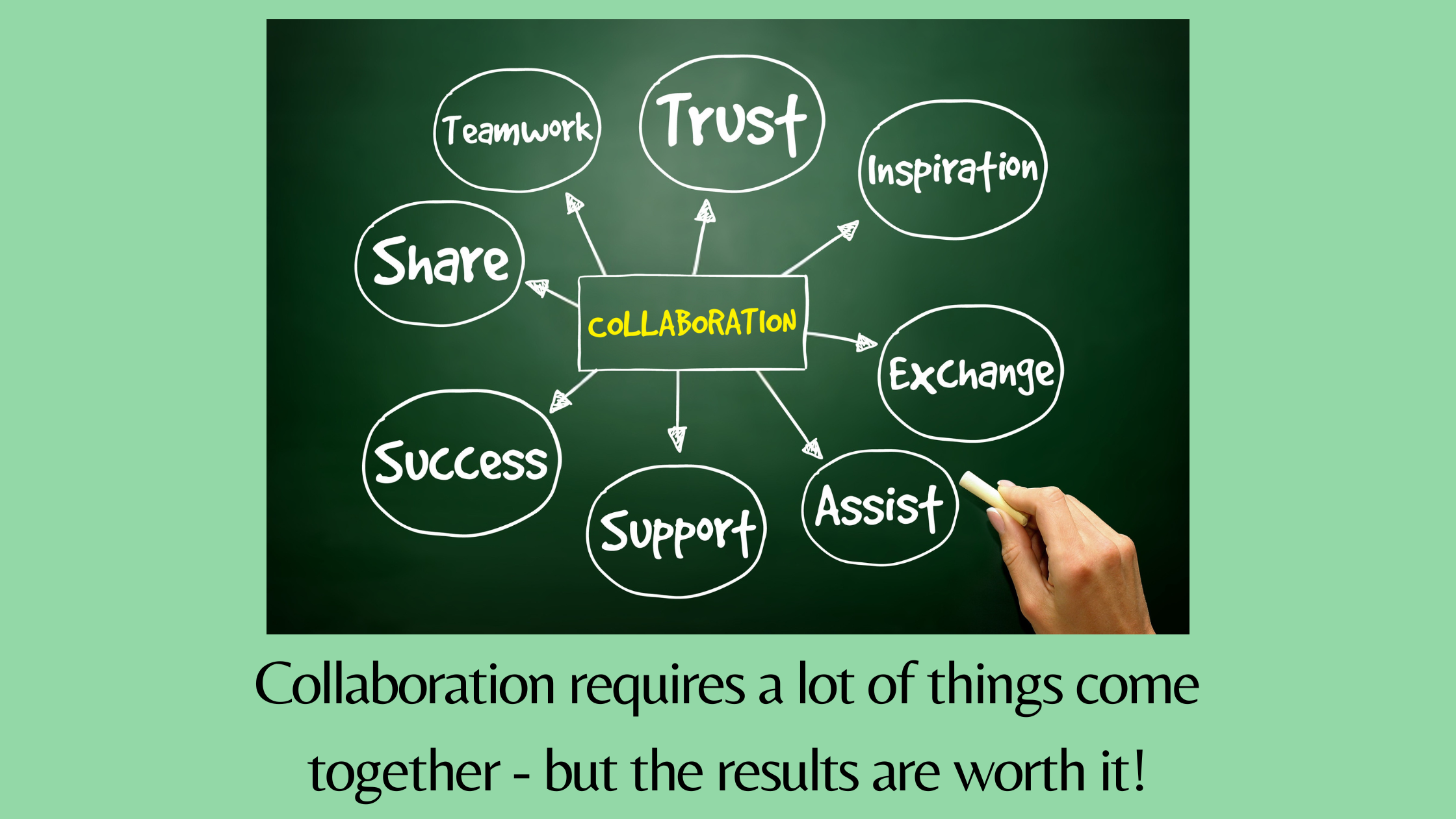
The first time you try this with a teacher, it might not work and it may feel uncomfortable because it’s new. Collaboration might not come naturally for you either, but that’s not a reason to stop. Try again in a few weeks. Don’t give up. It’s too important. You can do it. You are a leader and have overcome obstacles before; you will do it again. The results – and the ripple effects to other teachers – will be worth it..

Feel Well – Do Well

The old expression “Make time to smell the roses” is about slowing down to enjoy what’s around us. It is also, in fact, a prescription for improving your mindset and your productivity. Much has been written about the importance of self-care and its effect on how you feel about yourself.

Have you noticed when you go outside, your body posture undergoes a slight change? Your shoulders go back, and your vision seems to expand as you leave the confines of indoors and screen viewing. These outward physical changes are the manifestation of the chemical changes going on in our bodies. The effects of the chemicals our bodies produce can be negative or positive. Having too many episodes of negative chemicals flooding out bodies can affect our short- and long-range health.

Not surprisingly, the converse is equally true. In her article Fuel Well-Being to Transform Your Leadership (email sign up required), Marlene Chism discusses different positive body chemicals and how we can produce them. She goes on to show how producing these chemicals regularly boosts the quality of our work.

It is wonderful to know that the following chemicals are within your power to produce:

Serotonin- keeps you calm and in a positive mood. It helps you as a leader by keeping you from mood swings and acting impulsively. You make better choices and stay focused. You produce Serotonin when you:

  • Exercise regularly – Choose something you like so you will do it. Incorporate it into your regular routine and enjoy the many benefits.
  • Practice gratitude – This can be a simple addition to include in your routines. It helps to maintain a daily record, digital or print, of what you are grateful for, but even taking a moment in your day can benefit your serotonin levels.
  • Walk in nature – Get out. Find a place to get outdoors, breathe fresh air and, hopefully, grass and trees. If this is a challenge because you live in a city, look for a park you can go to.
  • Get sunlight – Another challenge for workers with long commutes or during the short daylight hours (and cold!) of winter. Do the best you can when you can.
  • Eat serotonin-rich foods such as turkey, eggs, seeds and nuts – Yes, even your diet can support this. No wonder these are considered healthy foods.

Dopamine – The feel-good neurotransmitter. Low dopamine leads to a lack of motivation and tiredness. Feeling overwhelmed and easily distracted can be caused by low dopamine levels. When you have a good balance of dopamine, your creativity increases, and you have a sense of positive achievement. All so necessary for leaders in stressful times. You produce Dopamine when you:

  • Eat Omega-3 foods like fish – Once again, eating healthy is beneficial in more ways than you knew.
  • Exercise regularly – A double reward for exercising – dopamine in addition to serotonin. Your exercise needn’t be for very long. Consistency is what is important.
  • Get enough sleep Always a challenge in our over-filled days. Treat yourself as you do your children by developing a bedtime routine. Read yourself a story.
  • Listen to music – What music fills you up. Maybe lullabies can be part of your bedtime routine. Shift to music instead of news on your car radio, or at home. Or, after news…. This will give you that dopamine boost.  
  • Set and achieve small goals– Robert Collier said, “Success is the sum of small efforts repeated day and day out. Reaching small goals makes you feel successful. Poof —dopamine! When the goal seems out of sight, it feels unattainable and hard to sustain. See the small steps as the big win they are.

Oxytocin – Chism calls it the “bonding chemical.” It helps in making connections, feeling empathy, and building trust which are all essential for building relationships. You produce Oxytocin when you:

  • Spend time with friends – The importance of this explains why the isolation we experienced during the pandemic was so damaging to many.
  • Express appreciation – Say thank you and mean it. Send a text or email. Even better, send a handwritten message, being specific.
  • Get a massage – A great reason to treat yourself. You can be good to yourself and build your leadership bonding chemical at the same time.
  • Listening – We have recognized the importance of active listening. It’s hard for many of us. Practice it when you spend time with friends.
  • Share a meal – Go out for a meal with friends and include serotonin- and dopamine-rich foods to eat.

Knowing the importance of these chemicals in your body and how you can produce them can give new impetus to you and your leadership skills. It’s fun to think that being a great leader is a matter of chemistry – and feeling good.

What is Your Body Saying?

We are in constant communication. When alone, we communicate with ourselves by what we’re thinking, whether it’s a negative assessment, a positive mindset reframing, or a review of what is next on our to-do list. But non-verbal communication happens as we interact with others. And all the time.

A teacher greets you in the hall. At a barely conscious level, you access your history with them. Do you have a good working relationship? Is there one you are trying to establish? Have they been resistant to your previous outreaches? You also note how they look. Upbeat and happy? Tired? Annoyed?

While you are receiving this non-verbal message, the teacher is receiving your non-verbal message. Do you know what your body is saying? All of this occurs mostly without conscious thought, but that doesn’t make it less impactful. And when you begin talking, these non-verbal messages affect the response you are likely to get.

 As a leader, it’s important to be aware of how and what you communicate. I wrote about the many types and ways we communicate in my book, The Art of Communication: A Librarian’s Guide for Successful Leadership, Collaboration, and Advocacy (Libraries Unlimited, 2022) (currently less expensive in print than in Kindle!). I addressed our library world, of course, but the business world is also discussing the importance of understanding the many channels of communication we use.

Cheryl Robinson tackles the topic in her article, “What Your Body Language Says About Your Leadership Impact.” She notes, “Research underscores that body language has a greater influence on perception than verbal language alone. Positive, consistent body language reinforces trust and authority, while incongruent or negative cues may lead to misinterpretation or distrust.” Robinson goes on to detail how and what you are communicating.

Key Elements of Leadership Body Language

  • Body Movement – How are you sitting and standing? Fidgeting doesn’t send a leadership message. Sit up. Hands relaxed. A meeting with your principal or an upset parent is the most likely time to stay aware of this.
  • Posture – Shoulders back. Don’t slouch. It sounds obvious, but if you are not conscious of where your body is in space, you may he hunched over or low in a chair without realizing it.
  • Facial Expressions – Looking interested is important, but don’t overdue do it. Be animated, but not false. Faking it can be seen and negatively interpreted.
  • Space/Distance – Each of us occupies a physical space that extends beyond our body based on our size and culture. Too near is intimidating. Too far shows disinterest. Be aware of what you are doing and the (dis)comfort of those around you.
  • Gestures and Eye Contact – Open gestures are inviting, but too much gesturing is distracting, taking away from your message. You’ll seem frenetic and anxious. Maintaining eye contact shows trust and confidence (although be aware of cultures that consider it intrusive). Smiling genuinely is always positive.

I’d also add to this list: Listen attentively. Pausing before responding shows you paid attention to what was said.

Think of the best leaders you know. What do they project? How do they do it? Robinson states, “Maintaining a strong yet inviting presence is essential to conveying leadership effectively.” As leaders and librarians, we are in the relationship business. Being aware of what we are communicating enhances our ability to build these relationships. Know what messages you are sending and become a more effective and connected leader.

Get Your Principal to Hear You

Does this sound familiar: You know what you want to make your program even more successful, but the resources necessary aren’t in your budget. You constantly hear how tight money and resources are. Is there any hope for your plans?

Yes, there is. While it’s true that budgets are notoriously challenging, there is always money somewhere. It just needs to be juggled. The skill you need to find some of this money directed at you is getting your principal to see why the funds should go to the library. Ande the best way to do this is to develop a positive relationship with the principal – preferably before you need the money. It will help immeasurably, but it is possible even if you haven’t.

Before going to your administrator, know exactly what you want and are asking for. This is not the time for vagueness. How much money is involved? Will the money be needed immediately or will the costs come in stages as the project continues? How much time is needed? Will there be anyone else involved at any point?

When you have your “ask” down pat, and you are ready to put into motion, try using Karin Hurt’s four-step approach in her article, Career Advice – How to Advocate for Yourself at Work.

  1. Connect with Empathy and Consider Their World – Your principal doesn’t have an easy job. They have the Superintendent’s list of demands. Parents can inundate with complaints. They handle the most difficult discipline issues with students. The list goes on. Just like you, your principal has goals that are important to them. Be sure you know what they are. You can figure out what it is based on what they bring to faculty meetings and other statements they make. Use your awareness of what they value and need in your opening sentence. Let them know you share these goals. As you present your “ask,” point to how it will further them.
  2. Speak Their Language – Principals and Superintendents have a language just as librarian’s do. Use words and phrases which are part of their working vocabulary. Make it a point to check the articles in Principal, the journal of the National Association of Elementary School Principals (NAESP) or Principal Leadership, the journal of the National Association of Secondary School Principals. In addition to what you learn in meetings and emails, this will give you important clues as to what concerns your principal. In reading the articles, focus on recurring words and phrases. These are part of your principal’s language. Incorporate them in your discussion with them.
  3. Consider your Timing – In my experience, this should come first. You don’t want to see them on Friday afternoon when they’re mostly thinking about wrapping up the week and looking forward to getting home. Monday mornings are likely far too busy. Check with their secretary to find the best time. They know the principal’s schedule and work mode best. When possible, schedule these over the summer. That is when they have the most time and are looking towards what can be achieved in the upcoming school year.
  4. Own the Outcome Sometimes the answer is “no.” That doesn’t mean forever. Don’t give up. Listen carefully to why your request is being denied. Then go back and re-work your plan. Perhaps it can be broken down into more than one year. Is there a way to get donor or grant funding? Maybe there’s a new goal that you can support with this same project. When you have refined your alternative proposal. Re-schedule a meeting. Let the principal know you heard what they said and understand the validity of it. It’s harder to turn you down a second time. Additionally, by coming back you have demonstrated the plan’s importance.

Remember this truism:

  • All libraries, no matter their type, are part of a larger hosting body.
  • All libraries, no matter their type, get their funding from the hosting body.
  • That funding is dependent on the needs and wants of the hosting body.
  • Those needs and wants are determined by the hosting body, not the librarian.

Leaders master this truism and know how to define their needs and wants in terms the hosting body, in this case, the school system, value. Your principal is part of the same hosting body – and is closer to the needs and wants. Make sure your asks support their needs and the money is more likely to be found.