ON LIBRARIES: You and Your Professional Development


professional dev1If you want to be the best possible librarian you can be, you must take responsibility for your own professional development. You might feel it isn’t fair, since teachers don’t have to do this, but fair is not the issue. The only way you will get what you need is to seek it out yourself.

To stay current with constant changing world and learning how to integrate the latest trends and technology into your program, help teachers, and continue to prepare students for their future, you need to pursue relevant professional development. “Relevant” is the key term since most districts provide professional development several times a year. While these are helpful in understanding what is being required of teachers, they rarely are directly helpful to you and your program.

Free PD

Your first concern is likely to be cost.  Teacher PD is usually paid for by the district, but this isn’t true for librarians. However, you don’t have to let this stop you. We just have to be more creative.  And the long term and professional cost of not finding ways to include this is potentially very high.costs

Your colleagues can often be a source of highly relevant, useful information.  There are numerous Twitter Chats you can join with different themes and days and times when they are held.  This Piktochart infographic has several excellent ones.   For an explanation of how the chats work and brief descriptions of some (including a few from the Piktochart infographic) go to Top Twitter Hashtags for Librarians.

Library magazines such as School Library Journal frequently host webinars. They are normally held in the afternoon so may be impossible for you to attend live, but most make the archive available to listen to at a more convenient time. You can pick and choose which ones are of greatest interest to you.  Since these are free, you can’t always find exactly what you want, but you may discover something you hadn’t considered.

aasl ecollabAASL offers some free webinars through their eC0LLAB page.   For example you can choose “A 21st-Century Approach to School Librarian Evaluation” or A School Librarian’s Role in Preventing Sexting & Cyberbullying.”  Two excellent possibilities are the ones on the 2015 “Best Apps for Teaching & Learning”, and “Best Websites for Teaching & Learning.” The webinars discuss some of the winners for the year and give you great ideas to use with your teachers and students.

Occasionally a publisher hosts a webinar. These are always free, but obviously they have a product to sell.  It doesn’t mean the webinar isn’t worthwhile.  If you are curious about the product, it’s no different from seeing a presentation at a conference.

Quality PD at a Range of Prices

The best source for relevant professional development comes from your state and national library associations.  In addition to the free webinars AASL offers, they also have online asynchronous e-courses. The AASL e-Academy offers a number of options.  A four-week course is $119 for members, $245 for non-members, and $95 for student AASL members. Courses are offered on a rotating basis, so if one you are interested in is not being offered in the near future, you can contact Jennifer Habley at AASL and she will let you know when it will be scheduled again.

Have an idea
Get creative about your PD!

ALA editions offers e-learning in the following areas: Computing, Technology, & Web Design; Copyright; Management; Programming, Outreach, Marketing and Customer Service; Personal Development; Reference; Cataloging and Metadata; Collection Development; and Information Literacy and Library Instruction.  These are all connected to books published by ALA and part of the cost is for an e-book that goes along with the course.  For example under Personal Development you can see a course I am teaching “Being Indispensable: A School Librarian’s Guide to Proving Your Value and Keeping Your Job” which is a 6-week asynchronous course and will start on July 18.  Prices vary from one to the other, but this course is $195.  I am currently teaching one on New on the Job and it is $245.


ON LIBRARIES: Stopping Summer Slide

summerThe school year is coming to a close and teachers and administrators are talking about a persistent problem—summer slide.  Summer vacation is longed for by students and many tired teachers.  Long days, no homework (or lesson plans) makes those days away from school idyllic.

But all those weeks without any school work comes with a cost. Far too many students lose so much of their reading and learning skills that teachers need four to six weeks to bring them back to where they were at the end of the school year. Not surprisingly less proficient students lose more than those who do better in school. The latter are more likely to read on their own while the former are glad they don’t have any required reading. Lower income students are hit the hardest.

This is not just a problem in the United States. Canada recognizes it as well. The province of Alberta has a site on Preventing Summer Slide. It’s short and gives you some ideas on what to do.

Many schools have a summer reading list which has both positives and negatives aspects.  While it does force kids to read some books, those who have been through it before know that in most places there is little follow up when school resumes.  And if there is an assignment of some type connected with it, doing a poor job on it has only minor consequences. In addition, as librarians we know that putting reading in the context of something potentially punitive is the worst way to encourage life long readers.summer slide

Summer Loans

While you might not be able to do much about loss of math skills, you certainly can help to curtail loss of reading skills. One quick approach, if your administration approves, is to allow students to borrow books for the summer.  Yes, there is a danger they will be lost, but combatting summer slide is far more important. You can limit the number to four but ten would better, and you can restrict the borrowing to paperbacks or older book

If you go with this option, set up several table top displays to encourage browsing.  See if you can get paper bags with handles and put a colorful label saying “My Summer Reading” on them. Place students’ selections in them and encourage them to put them back in the bag when they are finished and bring the bag back at the beginning of the school year.

Put a “review” card or sheet of paper in each of their books.  Have them write the author/title and call # on top, rate the book from 1-10, and add an optional comment about it. Be sure to have a good selection of non-fiction books available for those who prefer them.

Outreach

If visiting the public library in the summer is an option for your student population, see if the children’s or young adult librarian can come to your school, bring library card applications, and tell kids about summer programs available at the library.  They normally have a reading program for the elementary grades and other possibilities for older students.  Just visiting the library, being surrounded by books –and computers—encourages reading.

Communicate with parents about summer slide.  While more challenging in low income areas, do the best you can. Your website is one way but it doesn’t work where parents don’t have Internet access. Find out if your town –or city—has a recreational program for the summer.  In many low income areas they or another group provide free lunch to those who can’t get it while schools are closed.  See if they will distribute brochures for you giving parents information about summer slide and what they can do about it.

Resources

resourcesEither on your website or in the brochures (or both) provide links to good resources for parents. Some possibilities are:

You can do an online search and find other resources.  Google and Bing have great images you can use to alert parents to the issue. This is a busy time for you. If you can’t put any of these ideas into action now, start collecting sources and information so you will be ready next year. It’s a great way to also promote your library program.

What are you doing to prevent Summer Slide with your students? Have you initiated something in the past that worked?

ON LIBRARIES: Stand Up for Privacy

digital privacyBenjamin Franklin said, “Those who surrender freedom for security will not have, nor do they deserve, either one.”

Time and again in these years since 9/11 our right to privacy has been challenged in the name of security.  I am proud of ALA, our national organization, for its ongoing efforts to protect the privacy of patrons despite being accused of being unpatriotic. This is an important part of making certain our libraries are safe places for everyone who uses them.

ALA, through the Office for Intellectual Freedom, works to safeguard the reading history of library users. Individual librarians have had resisted warrants demanding those records.  As with dealing with challenged materials, it is a lonely fight and many don’t understand the importance of holding onto these principles when they feel the nation is being threatened by terrorists.

Re-read the Benjamin Franklin quote.  In giving up a freedom we give those who seek to destroy our way of life what they want. We become more like them.  It’s easy to think you have principles you believe in when no one challenges them.  Standing up for them in the face of so many opposing you is when you discover what you are made of.ala privacy week

We have just concluded Choose Privacy Week, an annual initiative of ALA.  Its purpose is to involve library users in a discussion of “privacy in a digital age.”  It is increasingly difficult to have any degree of privacy in today’s world.  Security cameras are everywhere and while I, too, recognize it is a protection against criminal behavior, sometimes in my head I hear the words of George Orwell, “Big Brother is watching you.” Our phones can be used to track us. We choose to use (and I do) E-Z pass, or whatever it’s called where you are to go through tolls without stopping, which records our actions. Ads on the side of my Facebook page remind me of where I just shopped and thanks to countless searches on my computer, Google “knows” a great deal about me and my preferences.

In this world of surveillance, at least what we choose to read should be our own business.  As school librarians, we also have the responsibility of keeping what students are reading private. If asked, we must tell a parent or guardian. They are still minors.  Be sure your automation system has been disabled so it does not maintain a record.  Most ILS systems don’t keep the record as a default, but you should check.  Once an item has been returned it should disappear from the student’s reading history.

Sending out overdue notices can be an easy way to violate student privacy. Teachers should not get a list of what their students’ overdue books.  Although it takes more time, either put them in envelopes or only give the name of the student and the number of overdues.

privacyEnd-of-the-year notices present a more difficult problem.  Where students can’t get their report cards until they complete their library obligations, it is customary to hand a list of student names with outstanding items to the school secretary who deals with returns, late fees, and lost book charges during the summer. There isn’t much you can do about that, but make a point of informing the secretary that what students have borrowed is private, and as with other information she learns throughout the year, it is to be kept confidential.

All school libraries should have a Privacy Policy spelling out how student and teacher information is to be kept private. ALA has information on Privacy and Confidentiality with resources including a toolkit.  Check it out if you don’t have a Privacy Policy or want to know more about your responsibilities in this area as a librarian.

The website for Choose Privacy Week had a highly informative blog with ideas for what to do to inform users about their privacy rights and how to safeguard it.  The post on Resources for Teaching Privacy offered information on How to Teach Internet Safety in Primary School and a Teen Privacy Guide.

ALA’s Intellectual Freedom Committee issued new Library Privacy Guidelines for Students in K-12 Schools.  Download it and share it with your administrators. Incorporate it into your current Privacy Policy. And if you have any volunteers in your library, make sure they are aware of it, and recognize they are not free to discuss outside the library what students borrow.

School librarians strive to make the library a safe, welcoming environment.  Protecting the privacy of our users is one way we ensure they feel safe – and welcomed.


ON LIBRARIES: 3 R’s for Librarians – Reading, Research, & Relationships

It occurred to me if librarians focused on the three “R’s” central what we do, our leadership will emerge naturally and advocacy will follow. Since so many of you feel becoming a building leader is hard to do, and advocacy is even more difficult, I thought this might be an easy way to concentrate efforts, and get positive result.

keep calm and love readingReading– Reading is at the heart of what we as librarians are about.  You can’t do research or much of anything else if you can’t read.  Of course, we are not responsible for the teaching of reading, but we are responsible for instilling a love of reading. The first of the “Common Beliefs” in AASL’s Standards for the 21st-Century Learner is “Reading is a window to the world.”  The explanation that follows is:

“Reading is a foundational skill for learning, personal growth, and enjoyment.  The degree to which students can read and understand text in all formats (e.g. picture, video, print) and all contexts is a key indicator of success in school and in life. As a lifelong learning skill, reading goes beyond decoding and comprehension to interpretation and development of new understandings.”

When students fall in love with reading, they become lifelong readers. Their curiosity stays present and grows, and they search out information.  In other words, lifelong readers are lifelong learners—and in our constantly changing world this is a vital attribute.

So how do we develop this love of reading?  On an individual level we pay attention to each student. We listen for their likes and interests.  We are alert to what they don’t enjoy. Not having to compel students to read a particular book or type of book, we connect students to just the right book for them.  In so many casual conversations with adults, I have heard how one book set them on a course to loving to read.lifelong readers

As I have said, forcing students to read leveled books doesn’t do this. And I don’t believe reading for a prize works either whether it’s AR or a contest to see who reads the most.  I would much rather for example see a reading motivation program that seeks to find out what types of books is the most popular.  You could set up a genre bulletin board (and be prepared to add as students choose from new areas).  When they complete a book they like, have then fill in a book-shaped cut-out with the author/title/call# and their name. Staple it to the bulletin board, creating an ever-growing graph.  You can probably come up any number of other ways to do this.

Give a small reward for the first book a student posts.  You can do the same for a post in a new category. This type of non-competitive program, doesn’t put pressure on students to read a certain number of pages or try to best others. It’s personal.

At the elementary grades, librarians are charged with the first step in creating lifelong readers.  They choose a variety of stories to read aloud.  Stories with refrains encourage group involvement. Discussions about the stories builds critical thinking and visual literacy, while cultivating an appreciation of the sounds of language, word choice, and literary heritage.

As one of the bookmarks from the Libraries Transform initiative says, “Because Learning to Read Comes Before Reading to Learn” and learning to love reading is the middle step.”

research 2Research – From the time libraries came into existence, their central purpose has been research. In an age when information is at everyone’s fingertips, the role of libraries and librarians has become ever more critical. Another bookmark from Libraries Transform says, “Because There Is No Single Source for Information. (Sorry Wikipedia.)”  We have an obligation to teach students how to search efficiently – which means to quickly locate relevant and accurate sources rather than what they get with their non-specific Google searches.

We teach how to use information responsibly and ethically as well as digital literacy which encompasses understanding multiple platforms for accessing information.  Students need to learn which is likely not only to be the best one for their current need but also which one to use to share their knowledge.

An ongoing challenge for us is helping teachers restructure assignments so they are not just asking students to collect facts – which can be one-stop shopping-but rather to weigh and interpret their findings to make meaning from them.  Even better is to have students produce something of value to others.

Without proselytizing we must show students and teachers the difference between search and research.  By being mindful of this ourselves, we can guide them into more meaningful interactions with information and truly prepare them to be successful in college and their future lives.building relationships

Relationships – At the beginning of last month I blogged on relationships and why it is vital for the success of our programs. I won’t repeat what I said then, but recognize in order to instill in students a love of reading, you need to develop some relationship with them. Teachers are far more likely to listen to your suggestions on modifying their assignments if you have a relationship with them.

When your relationships are in place, students, teachers (and administrators) are comfortable coming to you with questions and asking for help. You become a guide for new technology and trends in education.  You are trusted.  You discover that you have become a leader.  And because what you bring has become so necessary to the success of all within the building, you have built advocates for your program.

ON LIBRARIES: Celebrating School Libraries

School library month April is School Library Month.  Have you been using it as a means of spotlighting what we do and why we are indispensable to students and the whole educational community?  Too many librarians don’t make use of the opportunity.

First a brief history of School Library Month. In 1958, ALA launched the first National Library Week because people were becoming more focused on television and musical instruments rather than books. ALA and the American Book Publishers thought if people were motivated to read they would use their libraries more.  The event is usually scheduled for the second full week in April.  This year the honorary chair was David Balducci and the theme was “Unlimited Possibilities @your library™.”

In 1983, Judy King, the president of AASL, appointed Lucille Thomas to head a committee to create the first School Library Media Month (since we were called Library Media Specialists then).  The committee worked diligently and in April 1985, the first School Library Media Month was celebrated.  The committee prepared a 52-page handbook sharing ideas from local and state celebrations.  The theme launching the week was, “Where Learning Never Ends: The School Library Media Center.” The theme is still true today.

In 2010 the name of the month was changed to the current School Library Month, reflecting the AASL decision to revert to our title being School Librarians.  For this year, the committee chose “School Libraries Transform Learning” as the theme, which goes along with the ALA initiative Libraries Transform. Megan McDonald, author of the Judy Moody and Stink books is the spokesperson and she has done a PSA.Megan McDonald

Just as Lucille Tomas and her committee did, each year the School Library Month committee compiles resources for you to use. We have come a long way since that 52-page handout.  A page on the AASL website is filled with activities and information for you to use.  A new twist for this year was a way to put a butterfly with the hashtag #slm16 on your Facebook or Twitter profile picture. Also new this year was a padlet where school librarians from across the country shared how their program transforms learning. School Library Month maybe almost over, but the ideas are there for you to use in your school.

With less than a week left, you still have time to do a few things and resolve to celebrate the entire month next year. You can’t pass up this easy way to begin advocating for your program. You don’t need to do anything big, but you should keep promoting the month – and you—several times during this celebration of school libraries.

heart of the schoolAt the elementary level, speak to students about what like best about coming to the library.  It will let you know which aspects of your lesson and the library environment the kids’ most appreciate.  Let them know it’s School Library Month and hand them large hearts to fill in the sentence, “I love my library because….”  Hang the hearts on the library walls. You can download this year’s from the AASL website.

An online Calendar of Events opens with a calendar of ideas for every day in April.  I really liked the one for April 18 which suggested a “Who’s behind the book?” contest.  You take pictures of teachers and teachers covering their face with a favorite book.  The object of course is to identify who they are.

Another great idea is one from April 6 which has ideas for three different age levels.  Film elementary students sharing their feelings about the library. Middle school students create commercials promoting the library, while high school kids make a commercial about your Makerspace or other non-traditional ideas or program.

Keep it simple or go all out.  The choice is yours, but recognize what this month gives you.  Involving kids in the special activities you create for the month, gets them more involved and attuned to what the library has become.  When you post it these on your website, parents check it out and they too become aware of how school libraries transform student learning –and the education community as a whole.

So what have you done this year?  What do plan on doing next year?  Promote your school library.  You have transformed your program. Get the word out.Stephanie Hewett Rous

And as a special closing, I blogged last week about AASL awards and mentioned my personal connection the Ruth Toor Grant for Strong Public School Libraries, I want to share the press release of this year’s winner, Stephanie Hewett Rous, the librarian at  Corinth Holders High School in Wendell, N.C. Many congratulations, Stephanie!


ON LIBRARIES: The Rewards of Awards

CongratulationsThis past week I was thrilled and stunned to be informed that I was receiving the 2016 AASL Distinguished Service Award.  It took about 24 hours for it to sink in. Once it did, I began thinking about the other awards AASL gives and what an opportunity these present for school librarians.

Check out the Awards and Grants page on the AASL website. There are six awards listed in addition to the Distinguished Service Award. Each of them can bring attention to you and your library program. But you do need to submit an application.

Now is an excellent time to explore the possibilities.  Since most of the applications are due on February 1 you’ll have time to look them over, choose the best fit for you and then slowly begin filling out the forms. No pressure. It won’t be due for months.aasl awards

The National School Library Program of the Year award is the big one. Three different schools or districts can win the award in any one year, and some years only one or two get it.  The process for this one is arduous so an early start is vital.  Consider checking past winners and contacting them to see if they have any helpful advice.  You don’t have to be from a wealthy district. A few years ago, an inner city school won.

If you are among the finalists, the committee comes for an on-site visit. Imagine the excitement of this group coming to your town/city to see your school.  The whole school turns out to welcome them. And your library program is acknowledged for being considered as one of the year’s exemplary programs. Winning schools get $10,000 which will make any administrator take notice.

Want to start a bit smaller? Consider the Collaborative School Library Award.  If you and one or more teachers have developed a great collaborative program that had students excited about learning and gives them an opportunity be producers of information, making a contribution to the community, and using critical and creative thinking skills this award is for you.  In addition to the usual plaque, it also carries a $2,500 monetary prize,

Roald Dahl’s Miss Honey Social Justice Award “recognizes and encourages collaboration and partnerships between school librarians and teachers in teaching social justice through joint planning of a program, unit or event in support of social justice using school library resources.” Just reviewing the criteria and description might give you an idea of something you can plan with a teacher who likes to work with you. This one awards $2,000 to the librarian plus $1,000 for travel and housing at the ALA Conference and a donation $5,000 worth of books from Penguin Random House.

excellenceThe Intellectual Freedom Award is not one you would plan for.  It goes to a librarian who has stood up for the principles of Intellectual Freedom which usually means he/she stood fast in the face of a challenge to a book or other library material. Although state library associations and the ALA Office for Intellectual Freedom offer support, the fact is the librarian is most often alone in the firestorm. It is an example of courage in upholding core principles of librarianship. Winners receive $2,000 plus $1,000 for their library. While you always hope nothing like this happens to you, if it does, do apply for the award. It’s important to get the word out, and it’s another validation for you in your school and district.

Are you blessed with a wonderful administrator? Nominate him/her for the Distinguished School Administrator Award. Winners receive $2,000 and of course a plaque.  Our best advocates are often administrators. Give them a chance to talk about what they see as the importance of school librarians and school library programs.  As winners they may be asked to speak at their own state and national conference.  It also won’t hurt your standing that you brought this fame to him/her.

Just below the list of awards are the grants.  Don’t overlook these. ForRuth two reasons, my favorite is the Ruth Toor Grant for Strong Public School Libraries. First, and most personally, Ruth Toor was my co-author and friend for over 35 years.  She is no longer able to participate in library activities, but this is how her husband has chosen to honor her contributions.  My second reason is my own (and Ruth’s) recognition of the importance of librarians having advocacy programs to promote the library to the entire educational community—and sometimes the local community itself.

Look at the criteria for the award and its requirements.  If you can come up with a plan that can be replicated and/or adopted by others, put it together and apply for the award.  The winner gets $3,000 to carry out the program plus $2,000 for the librarian and the school official or volunteer to attend the AASL Conference or the ALA Conference.

The Innovative Reading Grant addresses a core belief of libraranship – the importance of reading. If you have (or can come up with) a unique and innovative plan to motivate readers particularly those who struggle, this is one to look at closely. It carries a monetary award of $2,500, and just think of the difference your program can make in the lives of students.

I know you are all very busy, and applying for these awards takes time. But the possible rewards are great, and I am not referring to the monetary prizes.  If you win a national award your district will take notice.  Your Board of Education is likely to honor you and it is likely to be covered in the local newspaper. You bring attention and acclaim to your library program and make people aware of the importance of what you do.

Get started on applying for one of these. Good luck – and keep us posted.

ON LIBRARIES: Mixed Messages

mixed messages2We are not always aware of the unintended messages we send.  Students in particular pick up on these, but others do as well.

I remember a fourth grade teacher who was who wanted her students to be good at writing and to love it. She worked hard on her writing lesson plans so that her students would enjoy the process.  One day I stopped by her class to tell her something important.  She met me at her door, and we talked while she kept an eye on her students.  The conversation ran a little longer than I had anticipated.  The kids got antsy and began talking with each other. The teacher turned to the class and said, “Is this how you behave when I am speaking with a guest?  Settle down right now or you will be writing two paragraphs on how we act when I have a visitor.”  With that one comment she told students writing is not fun; it is a punishment.

The teacher unthinkingly reverted to a “teacher default” response.  It is sometimes said that teachers teach as they were taught, not as they were taught to teach. I don’t believe that’s true most of the time, but when stressed or upset they say and do things the way teachers used to do.  It’s like the jokes about women becoming their mothers and using the same phrases as the previous generation.unclear

With Students

The first Common Belief in the AASL Standards for the 21st– Century Learner is “Reading is a window to the world.” Many of you include “developing lifelong readers” or some variant of that in your Mission Statement.  Even without it in the statement, it’s a goal we hold very strongly.  How do you send that message?

You probably put new books out on display.  You talk to students about what they are reading. You recommend titles to students based on what you know of their likes and interests. And you share your own enthusiasm for books. All are wonderful way to send your message.

But do you then do something that sends a very different message?  I know countless elementary librarians who won’t let kids borrow a book if they have one (or more) overdues.  The message becomes: getting books back on the shelf is more important than having the student read.

The argument offered in most cases is you are teaching the child to be responsible. And besides, you can’t afford to lose books. What is more important, responsibility or developing their reading habit?  Of even greater concern to me is imposing a flat rule without taking into consideration different circumstances kids have.  For example children of divorce may their divide time between two houses. It’s easy to leave a book at one parent’s home and not be able to get it back in time for their “library day.” Give kids some leeway. Ask them when they plan to bring it back.  Have a reminder card you can give them to help.  Instead of requiring responsibility, help them learn it.

rulesIf you are helping a student and a teacher comes in wanting to talk with you do you end your conversation with the kid quickly so you can respond to the teacher?  This lets the student know that he/she is not as important to you as adults are.

Do you want your library to be a safe, welcoming environment?  The phrase shows up often in Vision Statements, but posted library rules – a list of “no’s” usually – sends a message that behavior is what really counts. Do students have to speak softly while teachers can speak loudly?  Watch for your double standards.

With Teachers

Librarians often resent they are not regarded as teachers.  You teach every day and with all types of students.  Sometimes it’s a whole class.  Other times it’s one-on-one. Are you sending the message that you are a teacher or are you sending another message?

I witnessed the worst example of this a number of years ago.  Teachers have always dropped into the libraries where I worked.  Sometimes to plan a lesson, but often to gripe about something.  While I never joined the complaints, I was a listening ear letting them know I recognized how upset they were.  One time, my co-librarian was listening with me to a teacher’s mini-rant.  Her response was, “You teachers….”  And I knew she had created a gulf between her and the teacher.  It always needs to be “We teachers,” in what you say and how you behave.frustrated

Unless we start noticing on some of our instinctive responses we are likely to send mixed messages to students, teachers, parents, and administrators.  Think about how you want to be perceived by these members of the educational community.  Then work to be sure your interactions promote it.

ON LIBRARIES: It Begins With Relationships

build bridgesWhy is one librarian successful and another isn’t?  They can both work in the same district.  Their training and years on the job can be about the same.  The successful librarian might even be a newbie with lots to learn and the other with many years of experience.  Somehow the library program of one continues to grow and flourish while the other languishes.  Teachers resist using it, and when they do prefer to handle their students without any help from the librarian.  At the elementary level, the closest they come to the library is when they drop their students off and pick them up.

“People don’t care how much you know until they know how much you care.”  I have seen this favorite quote of mine attributed to a number of different sources, but the oldest citing I have gives Theodore Roosevelt the credit. What is important is that it is true.

I have said it many times, in the books I have written and the presentations I have given, “We are in the relationship business.” What I haven’t said is that if you don’t know how to build relationships you will be out business.

Librarians don’t have the luxury of not liking someone on the staff.  The job responsibility requires you to get along with everyone.  Not an always simple task when there are people who grate on your nerves and never have a nice word to say.  Yet it can and must be done. Let’s begin with some easy relationship building.

Relationships with Studentsworking with kids

You don’t grade them. They are not “yours.”  If they don’t like you, they will not only make it obvious, they will make your life miserable. Discipline problems grow and from your principal’s perspective you cannot manage your “classroom.”

While any kid can act out on a bad day, that should not be the norm.   Start by giving respect and you will get it back. Many librarians don’t realize how often they disrespect a student.  An adult comes in, and they break off any conversation, making it obvious to the student that you consider adults more important and worthy of your time. You help teachers find information, but you direct students where to go or give them a mini-lesson. Yes, you are there to teach them, but are you following up to see if they found what they needed?  Wouldn’t the lesson work just as well if you gave it and modeled the steps with them?

Do you make an effort to get to know students, particularly those who come to the library frequently? Do you know their interests? The books, authors, and activities they like?  Have you ever said to one of them, “I’m so glad you came in. We just got some new books, and I have one I am sure you will like. Do you want to see it?”  Students, like everyone else, appreciate when you show you know who they really are.

Parents-orientationRelationship with Teachers

The first rule in building relationships with teachers is to respect their confidences.  The grapevine and gossip is alive and well in every school. You cannot be a contributor. Relationships are based on trust and repeating what you are told is the quickest way to destroy any trust you built up.

A core of teachers everywhere are chronic complainers.  They complain about the administration, their fellow teachers, and their students. Don’t get sucked in.  You can say, “I understand how you feel,” or “I get how angry you are.” But never agree with those sentiments.  You can be sure it will be broadcast throughout the school. With PARCC testing more teachers than ever are complaining, and you undoubtedly have the same sentiments.  Saying, “I know hard everyone has been working. It’s been stressful,” is perfectly OK. Notice, you don’t add, how difficult it has been for you.  That comes off as whining, and it never works.

Slowly get to know teachers’ personal interests, hobbies, and whatever they care about.  If you find a website or a Pinterest board you think they would like, share it with them. The more communications and connections you have, the more likely they will be open to collaborating with you.

Administrators and Board Membersbuild-realtionships

This group is probably the most challenging for you to develop relationships, and yet as power stakeholders, they are the most important.  Begin with your principal.  Listen to what he/she says at faculty meetings and in other communications.  What seems to be of most importance to him/her?  High stakes test? Integrating technology?  Community outreach? How can the library program help attain it?  Figure out how to present that information in under five minutes (they are always heavily pressed for time), and show what a team player you are and how vital the library program is.  You can also find out about personal interests, just as you did with teachers.

Unless you know them personally, the best way to get to know Board members is to go to Board meetings.  See if you can get the other librarians in your district to take turns attending meetings.  Which Board member seems to be most likely to support libraries?  Perhaps you can send that person, with your principal’s approval, a quarterly or annual report.  Be sure it is visual and shows students at work.  Keep the information channel open.  Issue invitations, and learn more about their interests.

Remember, “People don’t care how much you know, until they know how much you care.” Build relationships first, and everything else will follow.

ON LIBRARIES: From Library to Learning Commons

learning commonsYou have heard the term Learning Commons.  You may have read an article or two about it and thought it sounded wonderful—in a distant way.  Your library can’t become a Learning Commons. Because:

  • It takes too much time.
  • It costs too much money.
  • The administration won’t go for it.

For the most part, all three reasons (and any more you can come up with) are true—and false. If you decide it can’t happen in your library, it won’t. But what if you could transform your library into a Learning Commons?  Would it be worth the time and the risk?  How would having a Learning Commons change the perception of your program in the eyes of students? Teachers? Administrators? Parents and the larger community?  It’s one more step, a big one but a step, in demonstrating your leadership.transformation2

Some Reasons to Consider

Let’s start with why you should want to make the transformation.  Years ago, school librarians added the word “media” to their title. The reason was to focus attention on how libraries had moved from just having print to incorporating technology into learning and research.  It was important to change perceptions to prevent libraries being regarded as dusty warehouses.

Once again it is time to change perceptions first and then change reality.  As with many businesses, the 21st century demands we reinvent ourselves.  Does your library look like one from the 1990’s?  Earlier?  The world has changed radically in the past quarter of a century, and it’s not just the technology.  It’s how our relationships, learning, and communications have been transformed by technology.

We are living in a participatory culture.  We rely on crowd-sourcing, curating, and 24/7 access to information—much of it from our smart phones.  Does your library reflect those changes?  If you were a students would you see the library as a place to learn, create, share, and grow? (Those are the shortcut phrases describing the four standards of the AASL Standards for the 21st-Century Learner.)

planCreating a Plan

As the great American philosopher Yogi Berra said, “If you don’t know where you are going, you will wind up someplace else.” Fortunately, you don’t need to do this on your own.  In a Knowledge Quest article Carole Koechlin and David V. Loerstcher explain the elements needed in a Learning Commons and how to plan for them.

While the article is an excellent start, you also need an incentive to keep you going. You are all highly capable researchers. Look for images of Learning Commons and more articles detailing how others have made the transformation.  Not only will this inspire you, it will be useful later when you present your plan. Limit your search by grade level.  While the concept stays the same, you may want to know what an elementary Learning Commons looks like.

Don’t be intimidated by the pictures.  Just look at the message the different spaces convey.  It’s all about participating, sharing, creating, doing. Where in the Learning Commons do these different activities happen?  You want to demonstrate the library is not just a place for finding things.  It’s a place for making things – and more.  It promotes inquiry learning just by the environment it creates.

The conversion to a Learning Commons does not have to be done in one year.  In fact, it might be better if it were stretched out to at least three years.  This way you can see what is working, what needs tweaking, and where you need to add or delete ideas you had for the next stage.

Finding the Moneyfind the money

Your space will need to change.  Fresh paint on walls, green screens, signs, and new furniture cost money. Most of you have been struggling with small or no budgets.  How can you pay for this?  Time to get creative.

What parts of the transformation are DIY – or DIY with volunteer help? What can be done cheaply? For example tables and chairs need to be moveable to allow maximum flexibility.  How much would it cost to put what you have on casters?  What outside sources of funds are available?  Most districts have a local education foundation that gives grants.  Are there other grants you could apply for?  Could the parent teacher organization help in any way?

talkConvincing the Administrators

Nothing is going to happen without the support of the administration.  Once you have you plan put together and have collected a file of pictures, prepare a pitch for your principal. Be sure to include pictures of libraries from the 1950s, the 1990 and your current library.

What is the key message you want to deliver?  If possible, tie it to your Vision and the Mission of the school. Keep it brief.  Show the work you have done and your cost analysis.

You may get shot down, but listen carefully to what you’re told.  I had a superintendent who told me she saved a lot of time by responding with a “no” to almost every suggestion.  Most people would just go away disappointed.  I would come back with an alternative.  And then another alternative.  By this time she knew I was serious and that I would work hard to see the project accomplished.

Are you up for the challenge?  Isn’t it worth it to try?

ON LIBRARIES: On The Level

reading is a windowThe very first “Common Belief” in the AASL Standards for the 21st-Century Learner is “Reading is a window to the world” noting that it’s a “foundational skill in learning, personal growth, and enjoyment.”  I want to focus primarily on the last word—enjoyment. As school librarians we are committed to guiding our students to become lifelong readers. We recognize the habit only develops when they find reading is a pleasurable experience.

Over the past years a few developments in education are making it difficult for us to carry out this critical role. Most recently, Lexiles and leveling have invaded the library and students are being steered away from what they want to read and are being directed toward what they “ought” to read. Elementary librarians are being told to “level” their libraries in the misguided belief it will improve student scores on tests and make them more college ready.

What many don’t realize, is this is a giant step backwards. In the mid-20th century, library shelves were labeled by grade level and students were required to only select books from the appropriate shelf. It didn’t work. Some students read above or below their grade level and others wanted different books.  And libraries changed.window to the world

Now we are heading back to those times. Granted teachers determine individual levels for students so students are expected to read at their current Lexile level, but tit overlooks the core reason the old system didn’t work.  Restrictions on reading, interferes with enjoyment.

I have no problem with teachers using Lexiles for instructional purposes in the classroom.  I recognize the underlying reason Common Core assigned Lexile ranges for each grade level.  Students do need to be challenged and encouraged to stretch. That is what learning is about.

What is being overlooked is enjoyment.  Reading for pleasure should not be work.  It’s about relaxing, choosing what is of interest to you, and learning without being aware it is happening.  I have never liked the “5 finger rule” for choosing a book.  If I had difficulty reading five words on every page, I would read the book.  Reading should be fun (an alien concept in schools today).

When having freedom to choose, students for the most part select a book below their instructional level. This makes perfect sense.  There are students who also want a book far above their instructional level. If they love a sport, for example, they don’t care how hard the book is. They will struggle through it to get what they want.  They may not finish it.  There is no requirement to finish something chosen for fun.  How many young people read Harry Potter books even when it was “too hard” for them?

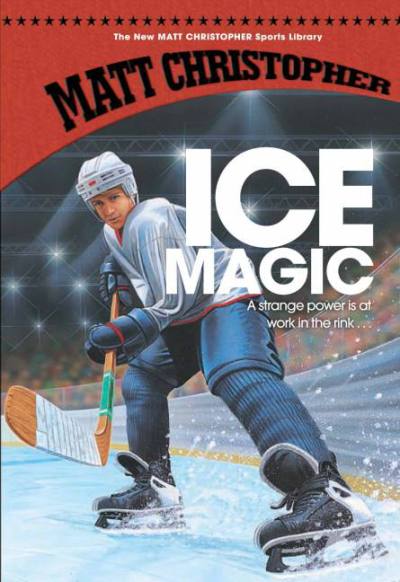
are you there gdice magicForcing students to always be “stretching” when reading for pleasure, is a sure way to turn them off reading.  It is especially true for those who aren’t fond of reading in the first place.  I can remember the books that enticed my own children to become readers.  Both of them developed the reading habit because they read the one book that “spoke” to them.  For my daughter it was Judy Blume.  For my son, it was Ice Magic by Matt Christopher, which was at least one year below his instructional level.

Accelerated Reader and similar programs, while not as damaging to developing lifelong readers, also interfere with pleasurable reading. Students seeking to earn as many points as they can, will pass over a book that interests them if its point value isn’t high enough.  They will ignore books they might like if it doesn’t have an assigned point value.  Reading for points is not the way to make reading a habit. The purpose from the student’s perspective is not pleasure it is competition.

When parents read to their children, the association of reading and good times is built.  When librarians make story time a pleasurable experience the connection is reinforced.  When a librarian helps a student find the perfect book, the habit of a lifetime begins.

What can you as a librarian do if you are told to level your library?  Be the leader you need to be. Don’t accept the directive without explaining why it isn’t in the best interest of students.  Show administrators Keith Curry Lance’s studies on reading.  Share this blog also. If they still insist, see if you can get them to agree to leveling shelves for teachers who can direct students to them and keeping other shelves open.  This way students can take one leveled book and at least one of their own choosing.

We are all about creating lifelong readers.  Is your library leveled?