ON LIBRARIES: Are You Confident

Confidence is a grounding leadership quality. It makes it easier to take risks, speak before groups, ask for help, and develop a vision.  What makes the title question difficult to answer is while you may be confident in how you do your job, once you consider leadership, all that confidence melts away.

How can you build the confidence necessary to become the leader your students and teachers need you to be?  You can start by employing some of the skills I have talked about in other contexts.  The first is having a positive attitude. Pessimists and nay-sayers are not confident.  They retreat by pointing to why something won’t work or why things are bad and getting worse. If it won’t work and everything is going downhill, there is no sense in doing anything differently.

Leaders don’t think that way. No one follows a pessimist. They may join in as justification for their own attitude but that’s not following.  Change your mindset and it will change your perspective. Look for the “chopportunity” or the positive challenge that can be found in almost every negative. For example:

  • Losing staff? Look for ways to enlist student help (and if you are in an elementary school you may be able to get high school students to help as part of their community service).  Identify what jobs could be eliminated and discuss with your principal. In the process you will be expanding his/her understanding of all you do. And he/she might come up with another suggestion.
  • New administrator who doesn’t see value of librarians? Use highly visual resources such as Piktochart to create reports featuring students at work and to make infographics. Invite your administrator to see a project you created with a teacher. Depending on the end product, you might see if one or more of the students’ work can be displayed in his/her office.
  • Heavy emphasis on STEM minimizing library use? Incorporate the many STEM-based programs into the library.  For example, connect a Makerspace to books and a research project.
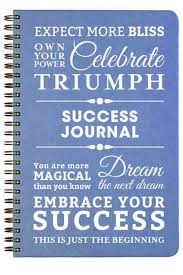
Start a personal “Success Journal.”  Keep a small notebook at your desk.  Record each personal success.  Jot down when you get thanks from a teacher or student. Note when students show they really got a particular lesson or loved the book you recommended.  Once you start doing this you will be amazed at how many times you are successful during the day.

Back in September, I wrote a blog on Dress for Success. It suggested that if you dressed more like an administrator you were more likely to be treated like an administrator.  Dress also can build your confidence.  When you feel that you look good, your mindset shifts and you feel more confident.

You will also boost your confidence if you keep up with the latest ideas in school libraries and in education Be on the Facebook pages that will help. Read articles in education journals such as Educational Leadership.  Just seeing what the monthly themes are will give you a clue.  Being on state and national committees will do even more to keep you abreast of trends.  This keeps you ahead of the curve which will do much for your confidence.
Being informed in your field will also help you speak confidently.  Your ability to do so reinforces your growing confidence. Do be mindful as to whether you have picked up the habit of raising your voice at the end of a sentence as though you were asking a question instead of making a statement.  It makes you sound less sure of yourself, and mentally you pick up on that as well.

Another tool is to learn to have a welcoming smile.  “Smile and the world smiles with you” sounds trite, but there is truth to it. People respond positively to a smile, and that, in turn, makes you feel more confident. Let people see your engaged attitude.

Confidence is also linked to self-esteem.  Self-esteem is defined by Merriam-Webster as “a confidence and satisfaction in oneself.” Note the words “oneself” and “satisfaction.” It means, on the whole, you like the person you are—and you’re not waiting to like yourself until you become perfect. You’ll be waiting a long time on that one.
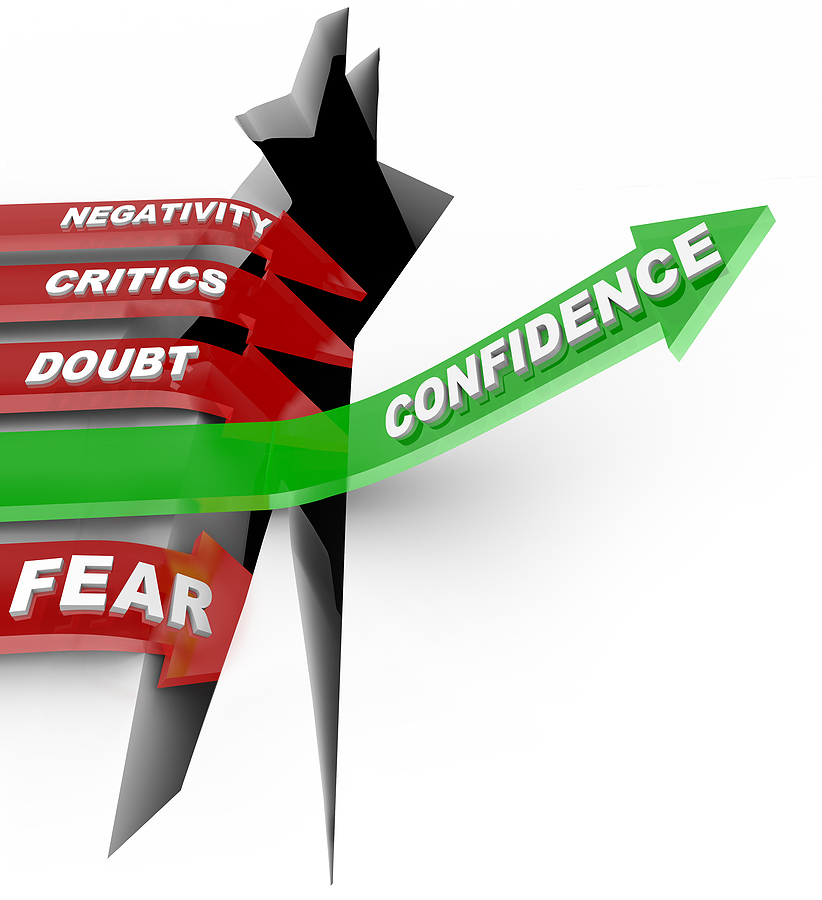
People in high self-esteem accept that they make mistakes and have bad days.  They don’t let those things change how they view themselves.  Although some may see confidence as a synonym for self-esteem, it seems to me that it’s more that the two terms reinforce each other. If you are in high self-esteem you exude confidence.  If you are confident in what you do and how you do it, you develop high self-esteem.

So how confident are you?  Do you regard confidence as a leadership quality?  How are you building your confidence?

The Buddy System


lifetime-membershipI love my Weight Watchers program.  Although I reached Lifetime over 12 years ago, I faithfully attend my weekly meetings, because they keep me on track and I’m always learning new things. I was recently reminded of a truism I had learned a while ago.  You are more successful if you don’t do it alone.

Our program leader has us regularly set small goals, and I have always done so and found the practice very effective.  But a few weeks ago, she suggested working with someone in the program to keep our goals.  A few people had already made the connection but I hadn’t. Since I want to keep exercising, particularly walking, I paired with another woman who was struggling a bit to integrate it into her life.

We began texting each other. Every time she went to the gym and worked out on the treadmill, she would text me.  When I completed my two walks for the day, I would text her.  We both have Fitbits and while we don’t challenge each other since I walk more than she does, we let each other know how many steps and miles we covered in the day.buddy

The result is she is definitely walking more and had a significant weight loss this past week.  I thought walking 3-5 times a week was ingrained into my habits, but knowing I was going to text her, pushed me further.  In this case, I felt it necessary to be a role model.

Yes, there are days when life intervenes and one of us doesn’t get in an anticipated exercise, but we are buddies. We cheer each other on even as we hold one another accountable.  “I wasn’t in the mood,” is not something we want to text each other.

It amazes me how easily I can lie to myself or give myself excuses.  I wouldn’t lie to anyone else.  And that is part of the reason buddies work so well.  Another is the feeling that we are in this together.  We understand the challenges our buddy is facing because we have the same ones.

We live in a face-paced world with many demands on our time.  Too often we put the tasks ahead of relationships forgetting that humans are social organisms.  We need that contact for our well-being.

from-my-friendsSome people are really good at maintaining connections with friends, usually of the same sex.  I wasn’t that person for a good portion of my life.  Although I appeared sociable in my professional contacts, I was a loner and thought it worked just fine.  Friendships take time and I didn’t have any to spare.

I was wrong.

Making time for lunch with a friend energized me.  Exchanging thoughts with someone I liked and whose thoughts I valued, gave me greater insights into whatever I was doing.  The time with others enriched my life.
Although I generally think of buddies in pairs, if you have a common purpose small groups can foster similar feelings of success and accomplishment.  The barn raisings which were part of our pioneer culture brought the community together to get a specific task completed.  Everyone participated in one way or another. At the end of the day, there was a new barn and people felt the sense of satisfaction of doing a good and worthwhile job.  In addition, they shared a camaraderie that spilled into their future interactions.work-together

While few of us will ever be part of a barn raising, if we are open to the possibility there are still occasions where a group of like-minded people will get to get to achieve an objective.  When you hear of one, strongly consider participating.  As with the barn raising, you don’t need to be one of those nailing the boards in place.  There are always other jobs, but the sense of achievement and belonging are worth the effort.


ON LIBRARIES – Personality Plus

successWhy are some librarians successful and others are not? It’s not about knowledge and competencies.  I have seen highly experienced librarians unable to regularly get teachers to work with them while some newly degreed librarians are quickly embraced by the faculty.  What makes the difference?

My blog on “It Begins with Relationship,” posted on April 4, 2016 began with almost the same words.  I discussed some ways to build relationships with students, teachers, and administrators.  Everything I said is still valid, but there is something more.pq

Back in the very sexist 1950’s, a self-help book for teenage girls asked, “What’s Your PQ?” It stood for “Personality Quotient.”  While the advice was to employ tactics I would never use, the question is relevant for librarians of both genders.

Personality is a major factor in how people relate to you, how they connect – or don’t – with you.  And I am sure some of you are thinking that your personality is ingrained.  It’s how you are.  But as someone who has seen her own personality evolve over the years, I am convinced you can work with who you are and by knowing how to accent the positives of it, bring out a more engaging personality.

Attributes of an engaging personality include:

optimismOptimism It feels good to hang out with someone who has a positive approach to life. This doesn’t mean a Pollyana who believes life is wonderful no matter what happens.  It’s a person who doesn’t focus on the negatives but deals with them by seeing them as “chopportunites” – challenges that can be turned into an opportunity (click the word to see the original post).

But perhaps you are a pessimist.  What can you do about that?  It’s who you are, right?  Face it, living with pessimism isn’t pleasant.  Even for the pessimist.  So take one page from the optimist and find the “chopportunity” in a given situation.  Change your mind set.  Affirmations seem too corny for most pessimists, so instead try “I can handle this.”  It’s not a ringing statement but it moves you from looking at whatever is occurring with a sense of despair.  With practice you will get better at it.

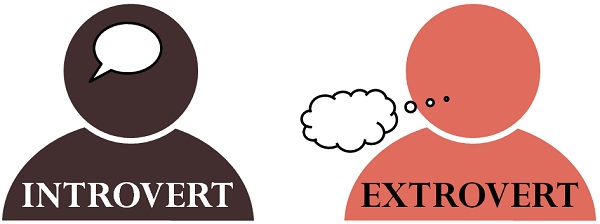
Introvert/Extrovert – Oddly both can be leveraintrov-extrovged to animate your personality.  If you are a librarian and an introvert you can’t retreat from being with people.  What you mean is that you don’t initiate a contact.  But introverts are great at listening and that is very attractive to others. Use this in a focused way and people respond.

If you are an extrovert, the caution is to “curb your enthusiasm.” Enthusiasm can be infectious, but it only work if you aren’t overpowering others with it.  Rein it in a bit and give others a chance to respond.

empowerEmpowering – As AASL exhorts in Empowering 21st-Century Learners, one of the things you do is to empower your students—and teachers.  In addition to giving them the skills they need, you can also empower others by recognizing their accomplishments and cheering them on.  Quite different from empty complements such as “good job,” this is specific.  You might say, “that was a very creative use of this technology” or whatever else they did.

Teachers and students need to be validated as much as you do.  Many don’t see where they are special.  Those with a positive personality know how to make others feel good about themselves. It ties to the Tom Peters quote, “Leaders don’t make followers; they create more leaders.”

inclusiveInclusive – What pronoun do you use most?  Listen to yourself. If you are saying “I” very frequently you can easily be viewed as egocentric.  It’s not about you.

Start thinking, “We are all in this together.  Together we can make things work better.” It’s important that you identify with the faculty.  So it’s “we teachers” not “you teachers.”  Your language will affect how others start viewing you.

In addition, as a librarian you should have plans at least in the back of your head for how to improve your program.  You can’t do it alone.  When you are inclusive you build the basis for a team. Using the other aspects of personality, your team will be ready to work together with you.

And finally the “Plus”

Related to personality but not exactly the same thing is Charisma.  When you think of charismatic leaders you might name President John F. Kennedy, President Ronald Reagan, Reverend Martin Luther King, Jr., Mahatma Gandhi, and others.  Not everyone liked them but a large segment of the population did and followed them, glad to help them achieve their goals.plus

To be sure there are negative charismatic leaders and they have successfully led their people down dark paths.  However, I trust you are not heading in that direction.  The fact is charisma is a powerful leadership attribute.

You might think charisma must be innate, but like any element of leadership it can be learned. LaRay Que wrote a blog post on her website called 6 Ways to Become a Charismatic Leader. Among the things she talks about is how to win the hearts of followers – an important lesson for librarians who want to get support from their teachers and administrators.

She also explains how to use story.  We have been focusing on this increasingly, but she brings an additional thought to it. Her last point is on how to create a strong persona.  By polishing your personality and recognizing your own skills and strengths you can do it.

So how is your 21st century PQ?  Where does it show up in your relationships?  And what how can you make it more engaging?