Be Flexible and Thrive

With so much stress and challenges in our lives, many of us feel as though we can barely do what is necessary to survive. But what if thriving is possible? What would it take? What would it look like?

Believe it or not… it might look a lot like Taylor Swift’s career. Not the role model you were expecting, perhaps, but this is a woman who has learned how to take setback, upsets and insults and use them to not only become more resilient, but build an amazing career. And as librarians, we are lifelong learners, which means there is something to be gleaned from the success of others.

Kevin Evers, Senior Editor at Harvard Business Review, spells out what he learned from Taylor Swit in this article, The Strategic Genius of Taylor Swift’s Rise to Mega-stardom, giving five key insights from his new book, There’s Nothing Like This: The Strategic Genius of Taylor Swift. Here they are, along with my usual comments:

  1. Seize opportunities others ignore –  Taylor was told that the audience she wanted to write for at the beginning of her career – teenage girls like herself – were not a viable market. She ignored this and pushed forward because it was her passion. Where are these places within the library? How about looking at who else is under fire. It’s not just librarians, but teachers, too. What can we do to support them? Parents are often confused or feel out of the loop – where can you include them? Consider a parent volunteer group.  Keep them informed about library happenings with a LibGroup. Have a way for parents and teachers to contact you so it’s easy to make you a part of their process.
  2. Know what people are “hiring” you to do –  Taylor’s fans don’t just want her music – they want connection. Your students don’t just want books, they want a safe place to explore their growing questions. Teachers don’t just want the internet, they want support to reach their benchmarks. Administrators don’t just want good numbers and test scores, they want to know that their goals are understood and supported.
  3. Be people-obsessed –  Swift is practically obsessed by her fans and always looking for new ways to reach them. For us, these means we need to really see” the people we support. Read body language and let teachers, administrators, and parents know you see their worry and their enthusiasm. Do this with students as well. Give meaningful compliments and feedback and be open to receive it. This is how you build relationships and create trust. When people feel your caring and see it is honest, they become supporters and advocates.
  4. Be productively paranoid – This is actually a business term that “refers to the ability of a leader to anticipate future change and challenges even when things are going very well.” Good or bad, nothing stays the same. Be ready to pivot. Stay on top of what is happening in technology and business. For example, AGI, artificial general intelligence, might be only five years away. It imitates human intelligence. How might that impact you? Since we don’t know, you need to keep watching for its development. What are administrators talking about? I belong to ASCD (Association for Supervisors and Curriculum Developers). Their journal EL (Educational Learning) is a gold mine of topics of concern to your principal and superintendent. The articles are a great source of information to keep you prepared for their next focus.
  5. Be a radical adapter –  The recording industry had “rules”, but Swift noticed the changes coming with streaming services and changed the way and frequency she released music. What’s changing in the way our services are being delivered and what our students and teachers need. This is another place to be looking at and understanding (not ignoring) AI. In a book I am writing, I discuss going into your “outside” community. Introduce yourself to local business owners and managers. They are voters. They also are a potential source of resources for your projects. Some may be able to help with construction projects or sponsor an author visit. You give them credit which promotes their interests as well.

It’s amazing to realize where workable ideas are. We can always look for and find ways to keep our library programs and messages on the cutting edge and learn from successes and struggles of others. As a leader always be on the alert for how to do things better. Today, take these ideas from Taylor Swift and make your library thrive.
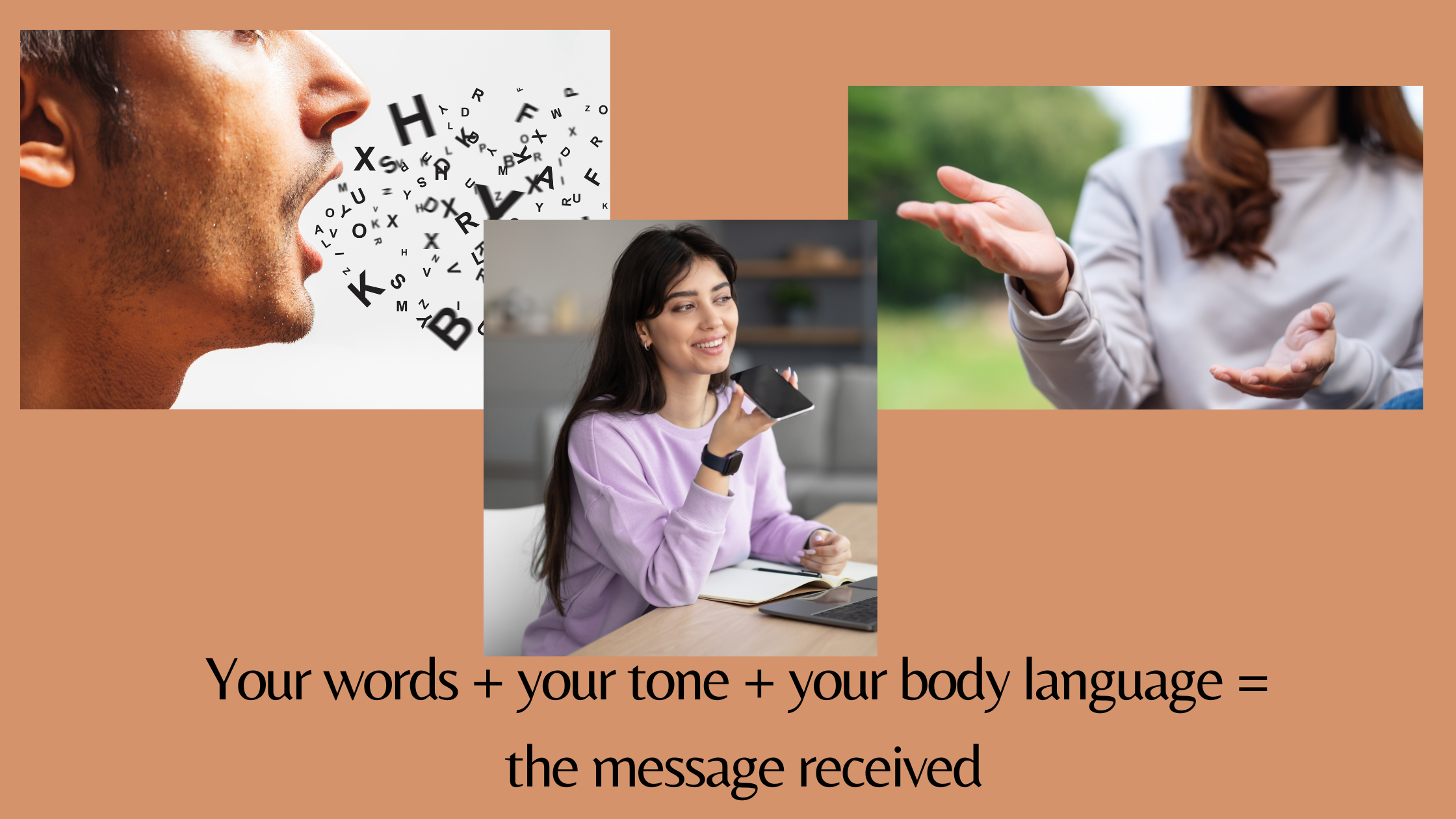
It’s More Than Your Words

You are a relationship-builder. It’s one of your most important abilities. The relationships you create power and empower your program and the advocates who support it. To build relationships, you need to send clear messages. Unfortunately, there are many ways in which you can inadvertently garble it. Your communications are too important to the sustainability and growth of your program to chance them not being heard.

To avoid sending a mixed message, it’s helpful to be aware of ways in which it can go wrong and how to prevent that from happening. Wilson Luna in his article, Your Words Only Tell a Fraction of the Story — Here’s Why Tone and Body Language Actually Matter More, discusses a rule you probably don’t know and how to use it: Dr. Albert Mehrabian’s 7-38-55 Rule.

 Developed by psychology professor Albert Mehrabian in 1971, it states that “7 percent of meaning is communicated through spoken word, 38 percent through tone of voice, and 55 percent through body language.” It is astonishing to discover the words you use say only constitute 7% of what is taken in by the listener and more than half comes from your body language which involves your facial expressions, gestures, posture and eye contact.

Let’s try an exercise. Choose a sentence or two. Think of an emotion and then, saying the sentence out loud, convey that emotion using your vocal tone (pitch and pace). Repeat the sentence while thinking of another emotion. Let’s move on to body language by repeating the last exercise. Say the sentence with supporting body language. Now say it with contradictory body language. Can you hear the difference? Can you feel the difference?

Hopefully, most of the time, your voice and body language are aligned with your verbal message. The challenge is to be aware of times when the three or two of the three might not be in sync. To keep the communication channels clear, Luna offers these ways to ensure each of the ways you are sending the message you want:

Improving verbal communication: The practical ways

  • Clarity and brevity – Keeping it short and to the point is always safest. Everyone is pressed for time. Don’t clutter up your message. This is particularly important in speaking with your principal.
  • Intentional speaking – Think before you open your mouth. For important conversations, try mentally rehearsing your opening statement. Tell them what you most need them to know.
  • Eliminate filler words – “Uh’s, ” “umm’s,” and “you know’s” block the clarity you are trying to achieve. Rehearsing helps here, too.

The 38%: Using your voice effectively

  • Tone matching – Your tone of voice should match the message. The exercise you did with tone will help you keep them aligned. Don’t laugh off difficult news. Don’t assume good news will be met with more problems.
  • Pitch control – Speaking in a high pitch makes you sound nervous, which the listener may translate as unsure. Low pitches transmit confidence. Women’s pitches are naturally higher than men’s which give men an advantage here. See if you can modulate your tone lower. Also, ending your sentence with an up pitch sounds like you are asking a question, which is heard as insecurity with your message.
  • Controlled pacing – How fast or how slowly you speak can reduce the impact of what you are saying. Too fast and they may not hear every word. Too slowly and you might bore them, and they will tune out. Moderate is good for most things, with slightly faster speaking suggesting eagerness that pulls  listener in.

Strategies to improve nonverbal communication

  • Maintain eye contact – The expression “shifty-eyed” shows what happens when you don’t look someone in the eye. On the other hand, non-stop staring can make a person uncomfortable, too. Luna says “avoid doing it regularly. Instead, use eye contact as a gesture when speaking.”
  • Use facial expressions – Your face does most of your communication. A genuine smile goes a long way in getting your message heard. Do some mirror practice if you don’t feel confident with this. Head tilts also suggest interest, as does nodding when the other person responds.
  • Use purposeful gestures and open posture – You want your body to be loose and responsive to the content of what you are saying. When watching a program, see how the actors use gestures. Note how politicians use them in their speeches. Crossed arms say one thing. Hands in your pockets, another.

Save these suggestions, particularly the rehearsal ideas, for when you need your message to be as clear as possible. Whether it’s a meeting with your principal or a job interview, knowing how to communicate with clarity and confidence will have them hear and recognize you as leader you are.

Time for a Reboot

New calendar, new planner, new month, new year. The start of a new year is the ideal time to take stock of where you are and where you want to go. You have completed about half of the school year and had your winter break. It’s time to return to work.

What will that work be? Will it be a daily slog till the end of the year? That doesn’t sound like a leader. When your computer gets sluggish, you reboot it. Now it’s your turn for a reboot.

In his article, Warning: Upgrade Your Personal Operating Model, Arne Gast opens with the statement: Effective leaders continually adapt their priorities, roles, time, and energy practices to stay ahead of new realities. He then goes on to present numerous steps to the business workers on how to move their career forward. Much of his advice can be applied to our work life. Here are some of the key steps along with my interpretations for the library program.

Assess your priorities – What is your main purpose? Look at your Mission Statement. Does it still capture the focus of what your program needs to be? Tweak it if it doesn’t. Remind yourself of what is at the core of what you do. Let these priorities inspire you.

Do you fully understand your mandates? – Who are your stakeholders? Do you fully understand their wants and needs and how the library meets them? Remember these 4 Truths:

  • Every library, regardless of its type, is part of a larger host system.
  • Every library, regardless of its type, gets all its funds and resources from this larger host system.
  • Those funds and resources depend on the value of the library to the larger host system.
  • That value is determined by the larger host system.

What can you quit doing now? – This is a tough but important one. How many projects do you have going? What’s in your daily routine that drains your time and energy? Can any be reduced or combined? Or still better – eliminated? If not, look to plan these things according to your energy. Tackle the least important (ex: emails) at your least productive/creative time of day.

Are you focused on the work that only you can do? – We bring greater breadth and depth to the educational program. What are you bringing to students? Teachers? Administrators? How are you implementing your Mission Statement on a daily basis? What, if anything, do you need to change? You are the only librarian in your building. Let your unique contribution shine.

Who has your back? – Which teachers collaborate or cooperate with you regularly? Does your principal know and support the work you do? The underlying question is how successfully have you been in building advocates for the library? After you answer this, determine what do you still need to do. Create an advocacy plan for the remainder of the year if you don’t have one in place.

Manage your time – We’re tired of hearing this, but there are only so many hours in a day. The skill of time management is to maximize what time is available. (And this goes back to “Whaht Can You Quit Now). Have a basic schedule for when you do certain tasks, recognizing there will always be incidents that require immediate attention. The schedule helps you get back on track. Know your most productive times. Use the least productive time for routine, almost non-thinking, tasks.

Optimize your energy – No one can keep going without draining their inner batteries. You need time to recover and restore your energy. Incorporate self-care and time for family and friends into your schedule (yes, put it in that new planner(. You will be more productive and bring a more positive mindset to your work day.

Who are your real friends? – Who are the people with whom you can safely and appropriately vent? Who do you talk to when you are stressed out? In addition to your PLN (professional learning network) you should have another PLN — a personal learning network which should include family members and good friends.

Gast’s steps will get you ready to return and be the leader you need to be. I have one more step.

Make time for gratitude – It’s easy to be negative. So much is wrong in education and in other areas of our lives and the world. Focusing on that gets us nowhere. Make it a point each day to find three things for which you are grateful. It can be as small as a teacher thanking you for a website or app you found for them. Or it can be as big as getting a grant. You’ll find your spirits lift when you notice these moments

Positive leaders attract others to them. Use these steps to recharge, recommit, and be ready to step into success.

Happy New Year.

Happiness Is Not The Goal

We often talk about striving for happiness, about wanting to achieve it. But if—as the title suggests—it’s not a goal, then what is it?

It’s an outcome.

It comes from within you as a result of your choices, actions, and interactions. Some people can spark it in us, but it’s our reaction to them that makes it happen. Think of a little baby or young child. Being with them makes you happy, but they are being themselves, not working to make you happy. The happiness you feel is your reaction, not what they are trying to do. And expecting something outside of ourselves to deliver happiness is not a realistic approach to life.

But it’s still something we want. After all, the fairy tales always end, “and they lived happily ever after.” So how do we get this outcome?

Interestingly, Jessica Stillman has written an article stating that not only is happiness not a goal, but Neuroscience Says to Be Happier, Stop Thinking About Happiness. Although it sounds counterintuitive, studies have shown that focusing on happiness… makes us less happy. Fortunately, Stillman explains the science and how to successfully bring happiness into your life.

According to a research team, the problem is when we make happiness a goal we expect to be happy all the time. That’s the “proof” they’ve achieved it. But that can never happen – so the goal is unobtainable. Stillman suggests this is an example of Goodhart’s law, an economic principle that states, “when a measure becomes a target, it ceases to be a good measure.”

The research showed that when people pursued happiness, what they really focused on was where it was missing. They saw every not perfect feeling as being a lack in their lives. They saw others appearing cheerful and assumed it was proof that others were happy, and they were not. This, of course, is a faulty gage, because we have no idea how happy other people are if we only know their outside appearances.

As leaders, we need to be aware that if we focus on where we are feeling unhappy, that is communicated in our words, body language and overall disposition. And it does not attract others to you. Instead of building relationships, you create distance. So how can happiness be an outcome instead of a goal?

One of the researchers offered these three suggestions:

  • Accept all your emotions – This works in professional and personal situations. You shouldn’t pretend negative emotions are not there. Nor should you judge yourself (or others) from having them. Once you accept them as a reality, they cease to be a drag you down. And in acknowledging them, you can find the information that the feelings are offering you.
  • Don’t view doing good as a means to an end – It will take the pleasure out of doing them, because you will be judging the action to see if it brought you happiness. Do it because it is the right thing. In my own life, in addition to a Gratitude Journal, I always add one way I gave back. I didn’t do the action to feel happiness but in acknowledging it, happiness is the outcome.
  • Get social – Humans are social animals. Being with others brings a lift to our lives. Of course, do what you can to people who are constantly negative (and don’t be one of those people). As often as you can, connect with the things you love and the people you love to be with. Find joy in your interactions throughout the day.

Be honest with yourself. Are you always trying to be happy? Because if you are, that’s probably taking you away from it. Make the shift from trying to achieve happiness and instead, let it be the outcome of the choices and actions you make. Get goals that matter to you and happiness will be one of the outcomes. When you reframe, you will be a better leader… and a happier person.

Learning To Be Likeable

Beyond books, special projects, and curriculum, we are in the relationship business. This means we must always be making positive connections with teachers, students, administrators, and other advocates. Being likeable can go a long way in furthering these associations.

When your community enjoys being around you, as well as trusting your expertise, they are open and willing to work with you. You’ll find yourself creating collaborative projects with teachers and building lasting relationships. When students like you, they will come to you as a resource for questions beyond their reading. And when administrators like you, they are more apt to reach out to you to add your support and skills to the overall goals they have for the school. When you see the benefits, it’s clear that we need to be sure we are doing all we can to be likable.

Fortunately, there are aspects of likeability that are learnable. In an article entitled 6 Habits of Instantly Likable People, Gwen Moran presents these traits which we all need to cultivate. What makes someone likeable?

  1. They are present – If you are in a rush, you tend to make it obvious that you don’t really have time to listen to what the other person is saying. You can’t make a connection that way, and people feel you are too busy to care about them. Be focused on the conversations you are having. Moran says asking questions shows your interest, and people are likely to respond positively to that interest.
  2. They give and share credit – After working with a class, make sure to make positive comments about how well-prepared students were and acknowledge any faculty support. When you share the results with your principal, focus on the teacher’s contribution.  You needn’t explain your contribution. And if the principal praises the teacher, they are more likely to come and work with you again.
  3. They are authentic – Always be yourself.  In your library, a classroom, or the parent/teacher night. People are good at spotting when you are trying too hard or are assuming a persona to fit the situation. Trust who you are and what you bring.
  4. They are caring and empathetic – As the saying goes, “People don’t care how much you know until they know how much you care.”  When you have asked questions, follow up on the answers when problems and stresses are mentioned. Be alert to the body language of others to recognize when they are concerned and follow-up.
  5. They are good and active listeners – People appreciate and value being heard. If you are doing numbers 1,2, and 4, this is probably happening naturally. When you are not “present,” there is no way you can be actively listening. Some of us think we are listening, but we are only waiting for a chance to respond and/or get our thoughts expressed. Be focused on what the person is saying and trust you will have time for your input.
  6. They are good communicators – Be clear in what you say and how you say it. Ambiguity makes people uncomfortable and frequently leads to them wondering if you are trustworthy. This does not lead to being likable. Look for ways to share the truth without being rude or hurtful.

We make quick decisions about others. If our initial impression was negative, it can take a long time to change it. Therefore, it’s important to continually improve our ability to build relationships. The better we are at it, the more we will be seen as vital to the school community. With each new relationship we build advocates for what we do. Our students, teachers, and administrators need us and this connection ensures we’re around for them.

Rediscover the Joy In Your Work

For the last several years, I’ve been teaching classes for school librarian students at several programs across the country. Universally, they bring the enthusiasm and joy that typically comes with a new career path, looking forward to the young learners they will work with. Yet all too often, as years pass, our enthusiasm dampens, and the joy disappears.

Like at the beginning of a relationship, there’s no way to remain bright-eyed as the years pass and we deal with the less than perfect aspects of our work. It’s stressful and draining. But the truth is – what we do matters. Perhaps even more than ever. We change lives. We help students develop their ability to go out into the world with critical thinking skills, an understanding of how learning never ends, and an awareness of the resources open to them. We need to restore our excitement in what we do and delight in seeing that change as it unfolds.

Jason McKenna recognized the importance of this in his blog post, Embracing the Teaching Marathon with Joy and Well-Being. He discusses the increasing burnout of educators, which includes librarians. and offers five strategies not only to deal with burnout but to “reinvigorate the passion and joy” at the heart of what we do.

  1. Create a not-to-do list – I discussed this strategy in my blog post To Do …And To Don’t. When we add more and more to our plate without taking anything off, we risk overwhelm and burnout. Just as new tech and other resources become available and are important to incorporate, older practices may become less so. It is helpful to take stock of your responsibilities and find new ways to manage them. What can you eliminate? Who or what can help?
  2. Embrace periods of unproductivity – It’s inefficient to go from one creative task to another without taking a break. Our brains don’t work that way, no matter how much we want to do the next thing. After finishing a complex report to your principal, don’t plunge into planning a lesson that will demonstrate a new resource that will foster critical thinking. Congratulate yourself and go through your email. It will allow a healthy shift. If being “unproductive” stresses you, think of it as “differently productive.”
  3. Redefine success metrics – Stop defining success as the number of things you have crossed off your to-do list. Qualitative results count more than quantitative ones. McKenna reminds you to consider how you felt as a project was being done or completed. Recognize and celebrate the ways you made a difference and the changes that happened along the way. Your emotional feelings that came from running a program are also a measure of how successful you were. It’s where the joy is.
  4. Prioritize dialogue over data –. An extension of the last item, notice the impact you’re making by talking to students and teachers and hearing how projects and programs impacted them. How many students became excited about what they were researching? How many teachers thanked you for the help you gave them? We touch lives. Be aware of the many ways you are doing it each day. Making connections with people, particularly one-to-one, reminds us of how we change lives in big and small ways. And it builds relationships and advocates.
  5. Protect your personal time diligently – Never having time for yourself – and the other priorities in your life- is a sure route to burnout and loss of joy. And the road back can be longer than we expect. Someone I know once said, we are human beings not human doings. Take the time for the things that bring your pleasure so you can refill your well.

Can you remember back to when you first decided to become a librarian? Do you remember your “Why?” My students have long lists for their why. Take some time to reconnect with your own passion for school libraries and school librarianship. Remember how much your work, your library, and your programs matter. Take in the ways you are succeeding – and have succeeded in the past – to bring renewed energy to your work.

Giving Compliments That Matter

In Creativity Inc., Ed Catmull, one of the cofounders of Pixar, writes about Good Notes which was how staff members were trained to give feedback in a way that could be heard and used. Compliments are much the same. Being complimented always makes us feel good. And while some linger with us for a long time, other we can’t recall. Knowing what makes the difference can contribute to the ongoing success of your library by strengthening your relationships.

It starts with being specific. “You look nice” doesn’t have the same impact as, “You’re new haircut is terrific.” If you start giving specific compliments, you will see a difference in how people respond. Commenting about the design of a teacher’s bulletin board and what stood out to you can open a channel to start a conversation about a future unit. When you complete a learning project with a teacher and say something about how well they prepared their class, they are apt to return with another project.

This goes for students as well. If you say “good job” they will appreciate the recognition. But talking about what you notice them accomplish lets them see you really understand and appreciate what was involved. The more substantive compliments you give students, the better they will respond to you. This will have an effect on their behavior in the library and make a difference in how they approach you and tasks in the future.

To take this process further, Steve Keating has these seven suggestions to practice in learning How to Give a Sincere Compliment:

  • Be Genuine – Mean it. Honesty is an important leadership quality. You should always say what you mean and mean what you say. Most people can tell if you are saying something nice only because a compliment seems called for. This is why specific is more meaningful.
  • Timing Matters – When is the person in the best position to hear it? Most often it’s in the moment. But sometimes too much is happening to say anything. Look for a time soon after and try not to wait.
  • Use Positive Language – Keating says instead of saying “You’re not as bad as others at this.” What is heard is “you’re not really good at it,” Instead, consider something like, “I appreciate all the work you’re doing to improve.” Keep the focus on what is working.
  • Body Language – Not only can people usually tell if you don’t mean what you are saying – they can see it. Your body language should align with your words. This is one of the reasons being honest is important – your body generally agrees with what you are thinking.
  • Avoid Backhanded Compliments – This is worse than not complimenting. Like not using positive language, it inevitably is demeaning. Keating’s example is “You’re surprisingly good at this.” The receiver is left wondering how bad he actually is.
  • Personalize the Compliment – For a compliment people really remember, raise the specificity of it. It tells them you see them for who they are and what they are accomplishing. The example in the post is, “I’ve noticed your attention to detail in your work. It really sets you apart.”
  • Be Mindful of Cultural Sensitivities – Keating means, depending on the culture, a compliment may not be appropriate. Understand the context and your audience. Melinda Reitz has a list of compliments from other cultures that sound like insults. And of course, beware of giving “compliments” that display inherent bias.

Compliments are a powerful communication tool. Used properly, they give us an opportunity to connect while acknowledging the growth and achievement of the people around us. World Compliment Day is coming on March 1st. If you start practicing now, you will be comfortable with this new skill by then. And who knows… maybe you’ll even receive some meaningful ones as well.

Do You Know How To Read the Room?

Reading the room is a useful skill that is related to our ability to build and maintain strong relationships. It can mean knowing your audience when you make a presentation or understanding the person you are having a conversation with. In his post, Axios Finish Line: Read the Room, Jim VanderHei presents seven hacks to help you get better at this essential reading skill.

  1. Back to School – By this, VanderHei is referring to “fine tuning your situational EQ” and being a student of observing and listening to people in whatever setting you’re in. Notice the body language and tone of voice of the person (or people) you are talking to, as well as what and how they are expressing themselves. Are they relaxed or tense? Can you sense what they are feeling? Is the emotion very strong?
  2. Case the Room – Know who is there and who is listening to you. You don’t speak to teachers and students the same way, nor do you bring them the same information. The better you know who you’re speaking to, the better you can give them what they are looking for. You may find you change what you say when you know more about your audience.
  3. Shift Your Eyes – Whether in a group or with one person, train yourself to really look at people. Be aware of them and what they are saying and not saying. Don’t focusing inward. This is not the time to wonder about your dinner plans. Use what you are learning about them to make a connection. Practice at every opportunity.
  4. Watch Faces – Thanks to Zoom, many of us have gotten better at this. Whether online or in person, watch the actions and reactions of the people in front of you. Who seems to be paying attention? Who isn’t? If you are leading the meeting, you can ask questions of individuals to bring people back. But don’t start with those not paying attention. You’re not trying to call them out; you’re trying to get them involved.
  5. Let ’em Talk – Give space for others to speak. Be mindful of whether you are dominating the conversation. As VanderHei says, “if you are doing most of the talking, you are losing.” This is true even if you are the presenter. You need to involve your audience so they know their questions will be heard and answered. (This is my biggest challenge and one I continue to work on.)
  6. Diffuse Tension – In the daily interchange, don’t let conversations get heated. You are getting into a power struggle, and even if you win—you lose because you will have had a negative effect on the relationship. An effective cool-down sentence is “I appreciate your perspective on this.” You can add that you will think about what they’ve said and hope they will do the same and come back to talking about it later.
  7. Take Notes – VanderHei suggests you do this literally by jotting down your observations both during and when the meeting is over. It helps you stay focused as well as recall what happened. He also recommends taking mental notes while the interaction is occurring. This will aid you when you record what you “read” and make you better at doing it. He concludes by saying, “Think of the room like a book. Read the words – and between the lines.”

One of the most important times to read a room is when you are giving a presentation. Whether a faculty meeting or a conference, this can be a great way to increase your leadership visibility. To be effective, you’ll not only want to know your topic and what questions it will answer, but you need to be aware of your audience. This means knowing who is there to see you, why they might have come, as well as who you know – and who you don’t.

Reading the room is a powerful skill for leaders to master. It will help you avoid tension and misunderstandings because you will have taken the time to see and understand where your audience is and what they might need from you. When you consider your audience, you’ll look for and find ways to connect with the people you are talking to. And by doing this you will help them retain the ideas, techniques, and concepts you are bringing.