You Have Power – Use It!

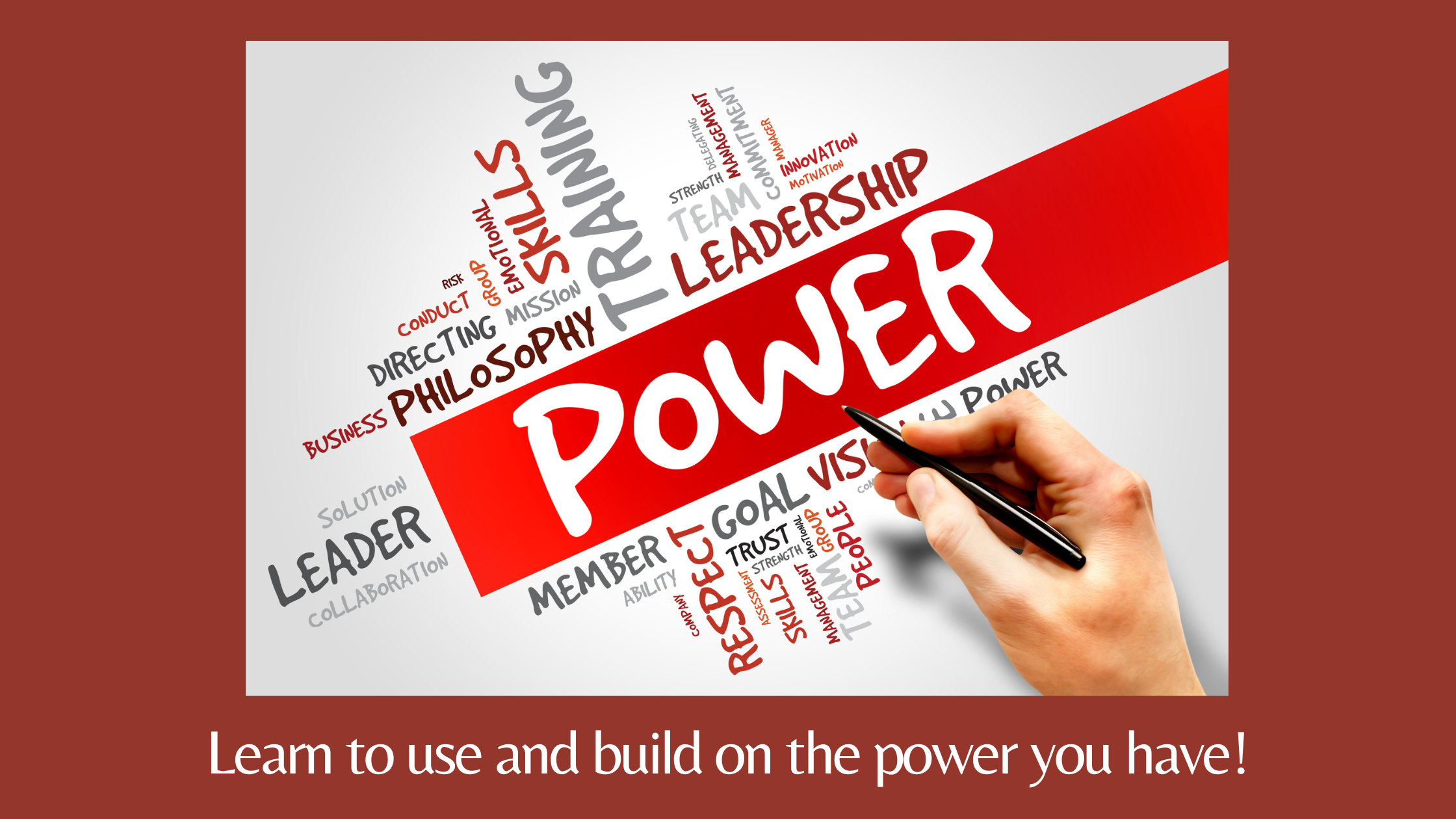
All too often, school librarians feel and act as though they don’t have power. We do. And the first step to using it – is recognizing it. Consider today’s blog a refresher and a reminder.

The power librarians are speaking of when they say they are powerless is Power Over. It comes from a position someone holds and is authoritarian in nature. It is used to control. Much of the time it is used (even by teachers and librarians), it indicates uncertainty and lack of confidence. It can also be uncomfortable to use.

Power Over does not work for us. It suppresses initiative, produces resentment, and, in some cases, rebellion. It certainly does not lead to the safe, welcoming environment you want to create in your library. You have far better types of power to cultivate and use.

Paul Thornton in his article, Maximize Your Power and Effectiveness, identifies three types of power and offers advice on how to use them. I have added my suggestions on how they work best in our world.

Position Power – This is Power Over, but refers to what is in your control. For example, you create your budget. Although it is subject to administrative decisions, you identify what the library needs are. You, hopefully, have some control over your curriculum.

Tips for gaining and using your position power:

  • Consistently deliver high-quality work and exceed expectations – Make sure your administrator is aware of what you are doing and how you are delivering.
  • Make decisions that align with the organization’s strategy and values – Create your Mission with the goals of your principal in mind. In your reports to them, connect your work to their wants and needs.

Expert Power – You have a large body of knowledge about how the information is organized, information literacy, information technology, and factual and fictional reading. You are a resource for teachers and students. To increase this power, Thornton says:

You can gain expertise by

  • Acquiring degrees, certifications and other credentials that reinforce your expertise – Your state library association as well as AASL and ASCD offer webinars on topics to keep you at the peak of your game.
  • Taking on challenging projects. Learn by doing! – It may be scary but it builds your knowledge base. Present an author visit. Plan a library renovation. (Lots of preliminary work with your administrator). Your PLN will be a great resource for you.
  • Attending conferences to keep your knowledge and skills up to date – Your state and national library associations usually have an annual conference. They not only serve to expand your knowledge but they help you build your PLN. Plan to attend the next one. Remember, there are more virtual opportunities for this all the time.
  • Working with mentors and other experts to benefit from their insights – Before and during the challenging project, look to find a librarian willing to be your mentor. It could be someone who presented at a conference or taught an online class.

Personal power – Sometimes called charismatic power, this is about being likable. It is linked to your social and emotional intelligence. When you have it, people like being with you, which translates into teachers collaborating with you and principals appreciating your contributions. Thornton suggests these actions you can take to increase your personal power:

You can gain expertise by

  • Learning to eliminate distractions and be fully present with people – Work on your active listening skills.
  • Being approachable and show genuine interest in others – While in informal interactions with teachers and administrators, listen for where their passion is. Ask questions. Note any hobbies they have. You might then send articles or new books on them. This is also good advice with students.
  • Understanding and responding to the emotions expressed by others – This is an extension of the previous action. Notice body language. I once recognized a teacher’s distress by how she was walking and holding her head. It lead to a much stronger relationship.
  • Command attention with poise and authenticity – Now look to your body language. Does it show your confidence?

Power can be used or abused. Guess which one works to build you as a leader and move your Mission forward? Work on strengthening the ones you are good at. Seek to improve the ones in which you are weak. Leaders need to embrace and grow their power.


ON LIBRARIES: Being Charismatic

According to John R. P. French and Bertram Raven there are five types of power. The fifth type, which they call Referent Power, is the power of charisma. Different manifestations of power can contribute or detract from being a successful leader. Charismatic leaders are very powerful, but as history has shown, they can use their power for good or ill. You have undoubtedly encountered charismatic administrators and teachers in your schools.

Watching these people in action is amazing.  Everything around them seems to flow so smoothly. People—students and colleagues—respond to them easily, and things get done apparently effortlessly.  While it may be true that some people are naturally charismatic and born leaders, all is not lost if you don’t have the ability naturally.  You can learn to be a leader, and you can learn to be charismatic.

Charisma is a rarely discussed soft skill, but as with many soft skills, it is more effective than knowledge and skill.  When combined with knowledge and skill, it results in great leadership.  You have the skill sets, now build your charisma.

Loue Solomon explains 6 Ways to Learn to Radiate Charisma If You Don’t Have It at First. If you click to the article, you’ll read that it’s directed to the business world, but the method works very well for us.

  1. Be attentive – This advice keeps recurring because it’s vital, and we don’t always do it well or consistently. When someone is speaking with you, are you thinking of the next thing you have to do? Sometimes we are stopped at an inopportune time, and we are twitching waiting for the person to complete whatever they have to say so we can get on with what we were doing. They will get the message. Why should they want to be with you when you have no time for them? Instead, be honest. Tell them you want to hear what they have to say but now isn’t a good time then let them know when you can listen more attentively.
  1. Recognize humanness before rank Although phrased in terms more suited to the business world, it applies to us as well. There is a hierarchy in schools, and some of us lose opportunities to build important relationships when we react to people based on that hierarchy. You are working with a student and a teacher comes in with an important question. How you handle this will speak volumes to the student. Rather than telling the student to “wait a minute,” address the teacher and ask for a minute or two to complete with the student.  A variation on this is when an administrator comes in while you are working with a teacher or student.  The one you are with deserves your attention.  If you have to wrap it up quickly, show you know and will be back to check if there are any questions. 
  1. Draw people out- Be curious about others. Compliment them on something you admire or notice.  Ask questions. People enjoy talking about themselves.  When they do, a connection forms—as long as you are listening. The more you know about someone, the more you know and understand their wants and needs.  Knowing that helps you meet them better and they come to appreciate and value who and what you are. 
  1. Notice your second language–By now you are well aware of the messages you send (and receive) non-verbally. Smiling is always a welcoming invitation to others. It doesn’t mean you have a broad smile all day long. It would look ridiculous. Rather, have a soft smile as you walk the halls and as you work. Then when someone approaches you, your smile widens in welcome. You look the person in the eye, letting them know you are focused on them. With the smile on your face, as long as your mind isn’t going elsewhere, your body will follow in extending the welcome. 
  1. Show strength in your vulnerability–This is tough. It feels risky because it can be, but it’s about honest human contact. Share personal stories as appropriate. It opens the avenue of communication. Whether the stories are funny or show a mistake you made, it shows others you are human. Not perfect, but open to always learning. 
  1. Never try to fake it–When you are interacting with others, faking it never works and it will result in the opposite of what you are trying to achieve. Becoming charismatic is not about manipulating people. It’s about connecting so you can work better together and accomplish more.

Practice these steps in your personal life as well.  Charisma should not be something you just turn on at work. Make your life easier – radiate charisma. And I’ll trust you to use your power for good.