Embrace Your Ambition

Are you ambitious?  My guess is that some of you would say in many ways you are. However, you might not publicly claim it because of all the negativity surrounding ambition. Certainly, we have all experienced that from others in our professional life, perhaps in your personal life, and on the national stage.

Our instincts are correct in this. There are positive and negative aspects to ambition. And some of the positive aspects can help you grow as a leader. Amina AlTai offers five insights from her new book, The Ambition Trap: How to Stop Chasing and Start Living in her article “How to Break Free From the Ambition Trap.” Here are her five, along with my usual comments:

  1. We need to redefine ambition – At its core, ambition is about growing in some way. The negative association has to do with growing powerful and/or rich and then cruel or callous. The ambition you want to have is about growing in knowledge to better serve your community. Librarians are lifelong learners who can and should embrace their ambition to learn and their desire to share.
  2. There are two types of ambition– AlTai looks closely at the two types which she calls painful and purposeful ambition. The painful ambition, which is more familiar, is focused on winning no matter the cost. We can all identify those who want to show they are better than others. A history of feeling betrayed makes them pursue control. Purposeful ambition is focused on purpose and collaboration. This speaks to our core values as librarians. It looks to what we want to achieve and the best means to get there.
  3. Identity and ambition are deeply intertwined – According to AlTai “Ambition doesn’t exist in a vacuum. It is shaped and constrained by identity.” You know the identity society has given you. At various times, your ambition will be attributed to your identify and treated accordingly. And it will be different depending on the identity. How will you react to this? Do you overperform to gain approval or underperform to stay safe. It will take courage to have positive/purposeful ambition, but so much is at stake. We must be ambitious.
  4. It’s not about renouncing ambition, but allowing ambition to come from innate gifts – As AlTai says, “We need to leverage the best of us. We all have a unique form of brilliance, a rare talent or ability that is specific to us and that we came to this planet to share.” As a librarian you have so many skills: tech, research, people, interdisciplinary and more. We need to know when and where to use these to achieve our goals. We want our students to feel safe in our library and be ready for whatever the future holds.
  5. Ambition is cyclical – Most of us think of positive or negative ambition always continuing to grow. AlTai points to the necessity to pause. I see it as a reminder for self-care. You cannot always be chasing a goal, despite the messages in our hustle culture. We need to remember that constant giving is draining. In order to serve, we need the downtime to recharge.  Too many need us to skip the need to recharge.

Abition is not a “dirty word.” Like it or not, comfortable with the idea or not, leaders are ambitious. We have goals, a Vision and Mission and the determination to live into them. Our drive is powerful and should not be dampened. Students, teachers, and administrators are counting on us to continue to strive for growing and doing better.
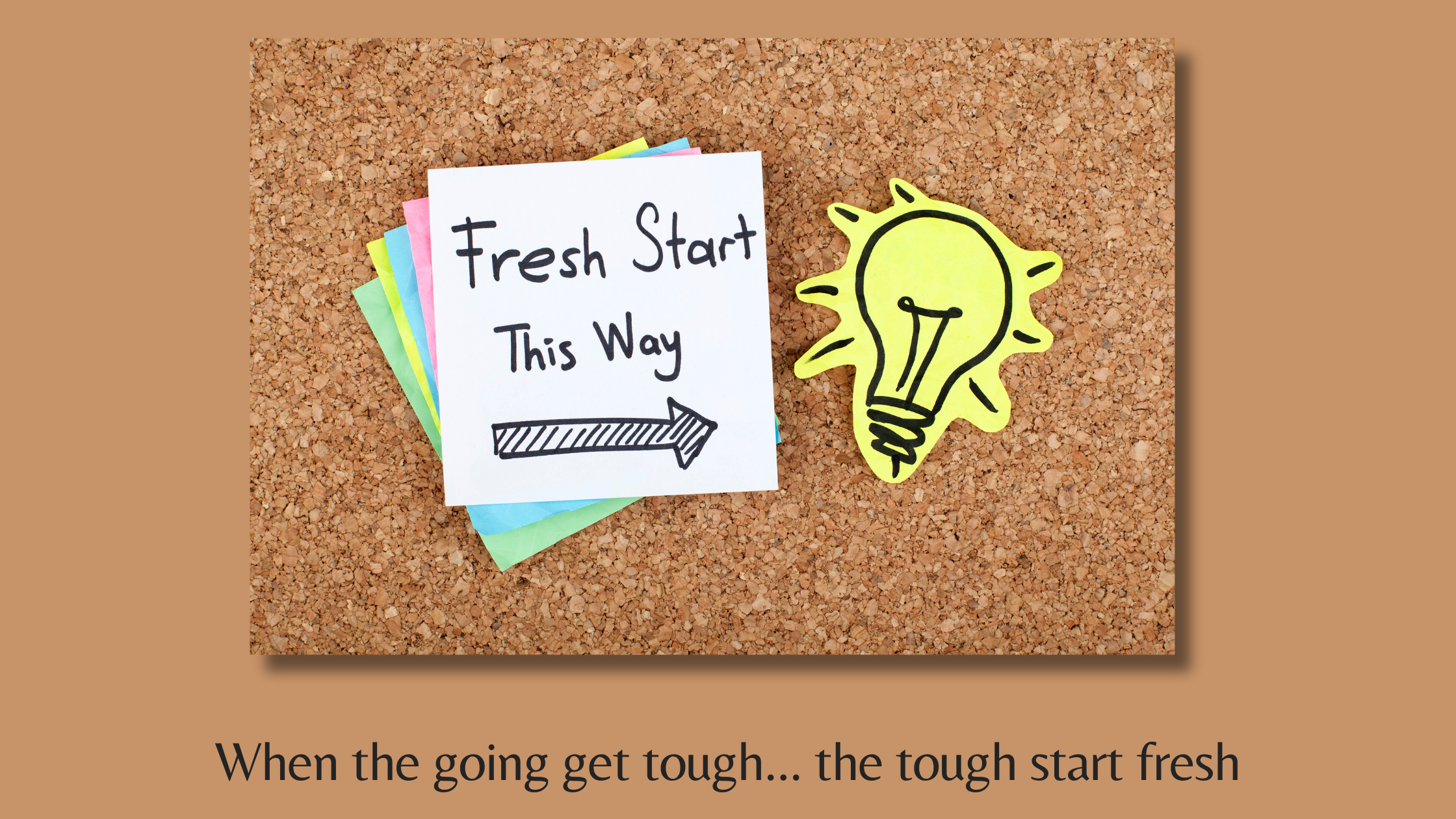
Is It Already Time for a New Beginning?

Has the school year already lost that new beginning luster with all the old and new challenges you are facing? There is so much going on in our lives as we pivot from vacation mode to work mode. Chances are you plunged right in without much thought especially since you know your job. But that means that even though the year is only a few weeks old, maybe you could already use a new beginning.

What would that mean? Probably a combination of things – looking at what can be started, what can be made new, what’s getting in your way, and how to get past those roadblocks. To help you get your motivation back, I recommend looking at the recommendations of Palena R. Neale Ph.D., PCC in her Psychology Today article, Harnessing the Fresh Start Effect : 6 steps to set you up for success with the fresh start effect. Neale notes that giving yourself a fresh start moves you away from any failures you perceive. This can help turn off those negative voices in your head that creep in with the “new” wears off.

Here are her steps and my usual comments on how it works for us in the education world:

1. Create Your Own Fresh Starts  – The first thing to consider is what would a fresh start include. Think about what would you like to accomplish. Do you have a goal or a plan you thought you put into action when the school year began and then it got lost in all the opening activities? Knowing what you hope to achieve can give you some focus.

2. Choose Your Peak Momentum – Now choose the day you want to begin your fresh start. Monday is usually a favorite time, but any day that works for you and your schedule is fine. New month, day after a long weekend. Nothing is off-limits. Accept and use what works best for you. Then, the night before, go through the focus you created in step one.

3. Connect to Your “Why” – What is your Vision for the library? Even though by definition it is not achievable, you are always working to bring it closer to reality. This is where your Mission comes in, what I call your “Perspiration” and “Motivation.” It defines how you operate through the day, how you deal with students, how you work with teachers, and how you communicate with your principal. Why do you want to accomplish what you focused on in step one.

4. Keep It Simple – There are likely to be lots of things you want to change, but it’s better if you focus on one or maybe two goals. Create a strategic plan. It doesn’t need to be complicated. You’ve got your Vision and Mission. Do an Environmental Scan. Do a SOAR analysis by identifying your Strengths, Opportunities, Aspirations, and Results. The first two are what currently exists. The second two are where you want to go. What Action Steps will get you started? Who will be involved? Remember to get approval where you need them. What costs are involved? What’s the timeline knowing it’s bound to need tweaking. Knowing where to start is the key to starting.

5. Change Your Environment – No, you don’t move outside the library. You need to remove the things that make you lose your focus. Clear clutter from your desk. Perhaps plan to save looking at emails until the end of the day or at lunch if you worry you may miss something important. Get things filed or tossed. Bring in something you love to look at. Frame your Vision Statement.

6. Sustain Success – Implementing a plan is important. Sustaining it is vital. Check in with your goal the steps you thought would get you there to see your progress. For my own strategic planning, I use “telescoping”, “microscoping,” and “periscoping”. At the beginning you telescope to see what the end results will look like. Before you get overwhelmed by the thought, microscope by focusing on what needs to be done now. Periscoping involves popping up now and then to check on what comes next. This ensures you won’t miss a deadline or key step.

As the well-known philosopher, Yogi Berra, said, “If you don’t know where you are going, you will end up someplace else.” Create your new beginning and get to where you want to go.

Get Your Motivation Back

REPOST FROM JULY 4, 2022

Finally, it’s summer break. Time to recover and rejuvenate. And to get your motivation back. You need the time to recover, but summer will slip away before you know it. First, take the time to relax, and then set a date to get yourself ready for the fall so you can bring your passion back to your job.

Need some ideas to spark your motivation? Eric Barker gives some great advice in his article How to Stop Being Lazy and Get More Done – 5 Expert Secrets. While being stressed and exhausted is more our issue than being lazy, his tips will work to help us get on track for a successful school year. Here are his 5 with my usual comments:

  1. Define Goals Properly – Barker recommends four steps to get clear on your goals.

Frame goals as an “end” not a means –By identifying what we want to get, we don’t focus on the boring, “don’t feel like it” steps. We want our goals to excite us, not feel like an added burden.

Keep goals abstract – Rather than focusing on the “How” something is going to get done (more inline with SMART goals), think about your “Why” as you write them.

Set “approach” goals, not “avoidance goals – Keep it positive. Don’t focus on the negatives, such as not doing something. Be aware of the outcome you’re working towards. Bonus points for being clear about how this aligns with your Mission and Vision.

Make goals intrinsic, not extrinsic – Don’t make this about what you think you should be doing. What is it you want to be doing? What excites your passion? Creating a goal from this adds to your ongoing motivation.

2. Set a Target – This is where you can be specific. By when will you start? When do you want to finish? What are some of your target numbers – students reached, modules completed, teacher collaborations. Be clear on the steps you wish to accomplish. And as an additional recommendation, make the steps small so you get lots of wins along the way. The goal and a target together support your motivation.

3. Monitor Your Progress – Keep track of all the targets you achieve. It spurs you on. This is why I keep a Success Journal next to my computer. You can create a spreadsheet, keep a log, reward yourself. Whatever works, so you see the steps you’re taking.

4. Beware the Long Middle – Life is a marathon and so are goals for the school year. As the days go by, it can get harder to keep pushing through, and this is where you can lose that motivation. Every so often, pause and note how much you have accomplished. Barker recommends you “shorten the middle.” If you’ve been tracking progress monthly, switch to weekly. If weekly, switch to daily. The extra boost will help. When you are past the midpoint, look ahead and note how close you are to your goal.

5. Think about Your Future Self – This is an important shift that allows you to look at the bigger picture. Baker writes that thinking about our future results allows us to make better choices in the present. Reflect on the difference between how you’ll feel about yourself if you keep putting off the hard work rather than going for something you are passionate about.

Wherever you are on your summer break, this is a short reminder that you can have fun and still be productive. And when the school year does begin again, these five tips can keep you going. Recovery is important. But set a date to get motivated for fall. Put it on your calendar. Set an alarm. The important thing is get started.

Don’t Kill Time – Use It!

Most of us have a full plate. Our responsibilities are continually being added to. Our to-do lists are long. As soon as you cross something off, two more items take its place. And what about all the moments when we can’t get to what’s next on our list? We have doctor’s appointments, cars that need repairs, and why are the lines at the supermarket so long? This was supposed to be a quick trip.

And it seems to take forever before it’s our turn. If it ever is.

These outside interferences with our workflow and attempts at time management are frustrating, but there is something you can do. In his article Three Better Ways to Think About Time, Mark Sanborn offers you a way to be more productive when they occur. These are his recommendations along with my usual tweaks for our world:

  • “Fill Time” to “Fill Minds” – The first shift is from going from thinking “How will I fill this time?” to “How can I fill their minds?” Our goal is to prepare students for the unknowable future by guiding them into becoming lifelong readers and critical thinkers capable of navigating a rapidly changing world. Think about the short- and long-range outcome for an upcoming lesson you are planning and how it will impact your students, help the teachers, support administrators. You’ve been giving the time – use it to fill their minds.
  • “Kill Time” to “Mine Time”– Instead of thinking of how to kill time in the pockets of time we suddenly have (sitting in traffic, waiting in line), take ownership of it. You get so little time for yourself. Use these unexpected—and unchangeable—moments as a time for self-care. Read a book. Call a friend. Reflect on what’s working in your life. Count your successes (this is a favorite of mine). If you’re able, consider taking a short nap. As Sanborn says, what is important is extracting value from what you were considering dead time.
  • “Make Up for Lost Time” to “Make the Most of Present Time” – Sanborn notes we often try to make up for lost time. Again, he suggests we shift our focus.  Since the past can’t be undone, what can we do in the future? Be aware of what distracted you or wasted time in the past (doom-scrolling, anyone?) and do things differently in the moment. Know what time of day you are most productive. If you are like me, the mornings are best for you. Come in a bit earlier – and don’t turn on the lights in the library. That way no one will know you are there. Get a lesson plan done or other such task that requires your best. Then turn on the lights and officially start your day. Making the most of the present lessens the stress of the future.

Sanborn ends his article with this, “Moments are the building blocks of time, and when we treat each one with care, we’re not just making better use of our hours—we’re creating a life of purpose and fulfillment.” And that is why we are librarians and leaders. We seek a life of purpose and fulfillment. Our time and attention are precious, and the more we can choose how we use them, the more successful we are.

Get More Done in Short Sprints

It is great to have big goals, but when you try to take that first step, you may discover that instead of feeling excited, you are overwhelmed, exhausted, and drained. On a daily or weekly basis, it can be hard to believe you will ever get there. Once that belief gets hold of you, you may find yourself working less hard at achieving the goal, getting distracted or even giving up. So much for that goal, right?

Maybe not.

The secret to reaching that big goal is to break it down into manageable chunks and celebrate each step’s completion as you accomplish it. It’s how people write books, run marathons, make movies, compose symphonies, and start a new library program from scratch.

In his article, New Year, Strong Start: Launch 2025 With Momentum, Michael Watkins explains to a business audience how to put the Momentum Method of achieving goals in short sprints into practice. Much of his advice works well for us as we work on integrating our Mission into what we do each day and aim to see our Vision come closer to reality. His focus is planning by quarters. Given our schedules, I suggest monthly reviews.

These are some of his strategies along with some of mine:

Start by assessing your current situation and realities.

  • What do you ultimately want to achieve?
  • What small goal will be a step in that direction?
  • When can you realistically achieve it? One week? A month?

End of month assessment

  • How close did you get to your small goal?
  • Have any new opportunities and/or threats surfaced during the month? What can you do to address those?
  • What do you need to incorporate into your planning going forward?

Celebration

  • Remember getting stars for good work in elementary school? Find a way to celebrate your achievements. You can keep a chart and make notes on what worked (very helpful for seeing on tougher months), purchase flowers, or choose another treat you enjoy.
  • Make the star (or other memento) visible so you see it regularly. The reminder will leep you going.

Reflection

  • What did you do well? What spurred you on?
  • Where did you falter? Why?
  • What have you learned from this first sprint?
  • What is your next small goal.

Step by step you will work your way closer to that really big goal. Each small goal —and success—empowers you to keep going and helps you during the times when it feels too hard and you wonder why you set the goal in the first place. Because the goal is attainable, and you are getting there.

You set a goal because it matters to you. Yes, difficult times pull at our focus and big goals can feel daunting, but when you break it down, enjoy each success, you get closer and, like a true leader, inspire those around you. Short sprints can allow you to win the goal marathon.

Ready for the New Year

Although the school year is not quite half over, there is a fresh start feel when January begins. You come back after break refreshed and, hopefully, with more energy. Like Janus, the two-headed god, you naturally look back at what was and forward to what you will create for the next several months. While that is instinctive, you will be far more prepared if you have a planned approach for this reflection.

Joel Garfinkle provides a multi-step process in his article, “Reflecting on your year: How to end strong and start fresh.” You might not be able to do all steps now since you are probably reading this after the winter break has begun, but keep it on file for use at the end of the school year.

Step 1: Close Out the Old Year

  • Wrap up loose ends – Clear out the email. Finish off any reports that are due. Send a succinct email – in a visual format if possible – to your principal highlighting the achievements of teachers and students work in the library since school started. Get back to any teachers with whom you need to complete plans for the upcoming year.
  • Organize your space (physical or digital) – Make your desk look ready for work. Ditch or archive files in any format that are complete. Set up your digital or paper calendar.
  • Celebrate your accomplishments – We need to recognize our achievements. You sent the email to your principal. Keep it in mind for your end-of-school-year report. Take time to reflect on achievements, personal or job related. It’s too easy to overlook these as we turn to the next thing on our to-do lists.
  • Stay connected – We may be away from work, but the world goes on. Make sure those who might need it have a way to contact you. Plan on checking your PLN and professional associations so you aren’t blindsided by changes.

Step 2: Take a Well-Deserved Break

  • Unplug to recharge – This is self-care time, and you need it. Yes, you may need to stay connected, but it’s not 24/7. It’s not even every day. Time to read what you want!
  • Reconnect with family and friends – These are the important connections whether in person or via emails or Zoom. Enjoy the time to really listen to the people who matter most in your life. Have fun.
  • Strengthen your network – Yes, you should unplug, but while checking your PLN and associations, look for those who are sharing new ideas or having creative approaches to dealing with challenges. Follow them and/or do what is needed to let you keep track of them. Reach out and acknowledge those who really inspire you.
  • Practice gratitude – Now is a great time to thank those in your PLN, teachers, and others who have helped you through the bumps in the road. Handwritten messages are best but reach out in whatever way works for you.
  • Reflect on your growth – We often complain that our achievements are overlooked, but we do this to ourselves as well. In successfully managing the many challenges we deal with, we fail to recognize how much we have grown as leaders and professionals as a result.

Step 3: Prepare For a Fresh Start

  • Set clear goals – You’ve acknowledged your accomplishments. Now you get to build on them. Be honest about where you are now and where you want to be by the end of the school year. And as you look to see what you want to do more of – also look at what you want to less. Make sure to notice what projects excite you – because joy has become recognized for its importance to our mindset and for achieving more.
  • Organize priorities – Look at your Vision and Mission Statements. Do they need tweaking? What do you want to accomplish in the remainder of the school year? How will you do it? Create an action plan with steps and dates for reaching them. Include an assessment.
  • Learn from negatives – What didn’t work? No one has continued successes. We know failure is a learning opportunity; we just don’t always remember to apply that maxim to ourselves. Instead, ask your PLN for advice on how you might have managed it better. You will have strengthened your connections and grown as a result.
  • Track your wins – Always! This will help you through the unavoidable rough patches. I keep my “success journal” handy. It’s a great reminder of what I have accomplished.

You’re a leader and aware that if you aren’t planning for success, you are planning to fail. Clear your path to success and watch as you live into your Vision and Mission. As the year ends, I wish you a Happy Holidays and Happy New Year.

Failure Is Part of the Path

When we plan a project, set a goal, aim for a target, we think of all the things we need to do and what will think and hope will happen along the way. Something we generally don’t factor in is the times when we will fail.. Although we often tell students that Fail stands for “First Attempt In Learning,” we rarely accept it as true for ourselves. Failure is scary. It makes us look bad. We do everything we can to avoid it. But is also necessary. Without it we don’t learn, and we don’t get better.

Nothing great is ever achieved in one step. The steps along the way will always include some failures. And if you let the fear failure get in the way, you will either back away from what you are doing when it happens or not start at all. As a leader, you need to take risks, and risks bear the possibility of failure. But without risk there is no reward – and no success.

In her article, How That Wretched Slog Makes Way for Your True Potential, Laura Gassner Otting says, “Each time we accomplish something — big or small — we see a version of ourselves that we didn’t yet know existed.” Ironically coupled with this, each success often brings new worry about being good enough, capable enough to do it. Even in our success we are fearing future failure. If this is the case, we need to accept and get through this fear. Gassner offers this way to get past the fear of failure:

  • Let’s Not Fake It Till We Make It – Playing it safe will not bring big changes. Doing only what has been done before, the way it has been done before, won’t get you anywhere. Think of what it must have been like to be the first or one of the first to generify the collection. Give up Dewey? Unheard of. Who would ever think we would suggest dropping fines or even charging for lost books. Out of the box thinking isn’t safe, but it moves us into the future. Embrace the fear that may be part of taking the risk as part of the process – and a sign that you’re moving forward.
  • Re-Categorize Failure from Finale to Fulcrum – Gassner suggests we adopt a beginner’s mindset. We need to see failure as the point from which we learn something that will help us accomplish the next step. Failures should raise new questions and give us the opportunity to see something we didn’t anticipate and pivot. Think, why didn’t this work? What was missing? What, if anything, needs to be changed? How can I do it differently? And never forgot to consider, who can I ask for help?
  • Take a Lesson from the Pros – Professional athletes spend a great deal of time perfecting what they are already doing right. But they also face the fact that they aren’t perfect. They watch videos of their performance and see where they are not doing it well. Then they work on that. It’s harder and uncomfortable, but they do it. Go back to the basics first so you have those to build on, make changes and see if they work. If they don’t take a step back and adjust. Remember – athletes don’t expect perfect, but they are always looking for how they can improve.

Fear is part of the process – but it doesn’t get to stop the process. What fears are keeping you in a safe place? Don’t let fear of failure keep you from stepping out of your comfort zone – and making it bigger. Accept the possibility of failing and embrace that it isn’t saying anything negative about your or your plan. Take a chance. Although you will fail some time, as you pile up your successes your reputation as a leader will grow – and so will you.

Resolutions that Work

The new year has begun. Did you make a resolution, or did you not bother because you never stick to them? In December. I blogged about Gratitude, Reflections, and Resolutions, but the holiday season was imminent. You may not have had the time to make those resolutions or reflect on the past year. Good news – there’s no reason you can’t do it now.

Why am I making such a point about resolutions? It’s because I am a strong believer in goals that get you to where you want to go. I often quote the famous “philosopher” Yogi Berra’s who said, “If you don’t know where you are going, you will wind up someplace else.” Too many people finish the year “someplace else.”

I have embraced the AASL Vision, “Every school librarian is a leader; every learner has a school librarian.” For me, this translates into writing and curating ideas and resources to give school librarians techniques and tools to build their leadership. It means I learn as much as I can about new trends as well as challenges so that I can better advocate for librarians with people I meet, making them more aware and, if they aren’t already, making them supporters of school libraries. This is always the focus of the professional goals I set for the year.

In How to Have a Good Year, David Bigman has the following suggestions for making resolutions you actually keep:

Set Better Goals- Having big goals is great, “but boil it down to something really practical that you can measure yourself or notice yourself doing every day, every week, but something that’s tangible.” The vision I embraced is huge. But my weekly goals include finding topics and writing my weekly blog, working on the second edition of Leading for School Librarians, and teaching pre-service school librarians.

Bigman’s blog post cautions against setting too many goals, recommending one professional and one personal goal. Although I have 3 professional ones, they have been ingrained as habits for me. My personal goal is about walking which improves my mindset and my physical well-being.

Acknowledge Tensions – Life is stressful. List the tension areas in your life both professional and personal. The bad news is they won’t go away. You have heard of another “philosopher,” Roseanne Roseannadanna (played by the amazing Gilda Radner) from the original cast Saturday Night Live, who said, “If it’s not one thing, it’s another.”

To deal with the tensions on your list, reflect on how severely each impacts your life. What can you do to ease them slightly? Where can you get support? You won’t eliminate them but getting a handle on them will help you stop beating yourself up about not being able to manage them better or get everything done.

Connect with Others – The pandemic showed us how much humans need social contact to thive. Make sure you plug this into your weekly actions. I have lunch with a friend once a month. I have scheduled calls with relatives so that I don’t allow my tasks to cause me to neglect what is so important to my mental health.

Your PLN is also important. School librarians are lonely. Yes, they interact with the whole school population, but no one in the building truly understands the scope and demands of the job. Get a mentor or be a mentor. Serve on your state’s school library association. It will enrich you on many levels. And take time to share your goals and resolutions with peers and friends – you never know where support can come from.

Focus on Certainties – There are so many uncertainties in our life and worrying about them adds to our tensions. Instead, consider the certainties you deal with. There is a certain rhythm to the school year and predictable deadlines. These can help calm us in rougher times.

By managing the certainties as efficiently as possible, you can ease tensions which makes it easier to handle those uncertainties. As the blog notes, “This will really help you do your clearest best thinking about the things that are uncertain and are nebulous and hard to wrap your arms around.”

Retake Some Time – Try doing a time audit. How much time are you taking for your various professional and personal tasks? Do they really need that much? How can you cut back on some so that you can give more time to your priorities?

If you set a time limit for going through email, you might find you can get it done faster and just as well. Do you really have to stay as late as usual or on as many days? Leaving early at least one day a week could strengthen your relationships outside of work and give you needed mental break. Finding places to reduce the time you invest in a task makes you calmer and feeling more successful.

So where do you want to be next January? The “resolutions” or goal you set today are the best way to help you get there. From my resolutions to yours – I’m wishing you a great year!

Get Your Motivation Back

Finally, it’s summer break. Time to recover and rejuvenate. And to get your motivation back. You need the time to recover, but summer will slip away before you know it. First, take the time to relax, and then set a date to get yourself ready for the fall so you can bring your passion back to your job.

Need some ideas to spark your motivation? Eric Barker gives some great advice in his article How to Stop Being Lazy and Get More Done – 5 Expert Secrets. While being stressed and exhausted is more our issue than being lazy, his tips will work to help us get on track for a successful school year. Here are his 5 with my usual comments:

  1. Define Goals Properly – Barker recommends four steps to get clear on your goals.

Frame goals as an “end” not a means –By identifying what we want to get, we don’t focus on the boring, “don’t feel like it” steps. We want our goals to excite us, not feel like an added burden.

Keep goals abstract – Rather than focusing on the “How” something is going to get done (more inline with SMART goals), think about your “Why” as you write them.

Set “approach” goals, not “avoidance goals – Keep it positive. Don’t focus on the negatives, such as not doing something. Be aware of the outcome you’re working towards. Bonus points for being clear about how this aligns with your Mission and Vision.

Make goals intrinsic, not extrinsic – Don’t make this about what you think you should be doing. What is it you want to be doing? What excites your passion? Creating a goal from this adds to your ongoing motivation.

2. Set a Target – This is where you can be specific. By when will you start? When do you want to finish? What are some of your target numbers – students reached, modules completed, teacher collaborations. Be clear on the steps you wish to accomplish. And as an additional recommendation, make the steps small so you get lots of wins along the way. The goal and a target together support your motivation.

3. Monitor Your Progress – Keep track of all the targets you achieve. It spurs you on. This is why I keep a Success Journal next to my computer. You can create a spreadsheet, keep a log, reward yourself. Whatever works, so you see the steps you’re taking.

4. Beware the Long Middle – Life is a marathon and so are goals for the school year. As the days go by, it can get harder to keep pushing through, and this is where you can lose that motivation. Every so often, pause and note how much you have accomplished. Barker recommends you “shorten the middle.” If you’ve been tracking progress monthly, switch to weekly. If weekly, switch to daily. The extra boost will help. When you are past the midpoint, look ahead and note how close you are to your goal.

5. Think about Your Future Self – This is an important shift that allows you to look at the bigger picture. Baker writes that thinking about our future results allows us to make better choices in the present. Reflect on the difference between how you’ll feel about yourself if you keep putting off the hard work rather than going for something you are passionate about.

Wherever you are on your summer break, this is a short reminder that you can have fun and still be productive. And when the school year does begin again, these five tips can keep you going. Recovery is important. But set a date to get motivated for fall. Put it on your calendar. Set an alarm. The important thing is get started.

Achieve Your Goals

I often cite Yogi Berra’s quote, “If you don’t know where you are going, you might wind up someplace else.” It’s goals which help us identify our direction and give us a focus for what we do. Goals motivate us to go forward, raise our awareness of procrastination, and give us a sense of achievement.

Except when they don’t.

Setting goals isn’t the hard part – reaching them is. So many goals, whether personal or professional, are set with great enthusiasm. But we don’t always get what we aim for. The result is we feel defeated. We lose faith in our ability to make changes. Rather than blame ourselves for not achieving our goals, we need to look at what may have gone wrong in our approach.

A post on Dialogue Works entitled “Have You Ever Eaten a Bicycle? offers 11 steps for achieving your goals. The title refers to the author’s college roommate attempted to eat a bicycle – one teaspoon at a time. Here are the steps along with my reflections.

  1. Start where you are – Sometimes the way we write our goals sets us up for failure. Be realistic about your starting point in connection with where you want to go. If teachers aren’t collaborating with you, don’t start with a goal for getting an entire grade or department to work with you before the year is over. Find the best first step.
  2. Strive for 1% improvement – A small goal with regular progress is better than an overwhelming large goal that leaves you feeling defeated. Having one teacher collaborate with you who has never done so before is an achievement. Succeeding with one give you the motivation to reach for a second.
  3. Create a specific plan – It’s the “S” in a SMART goal. Without the specifics, it’s hard to find your starting point. Using the collaboration assignment, a goal to work collaboratively with a grade level is too general. Instead, identify a teacher you are friendly with and a unit you know that teacher will be doing. Start specific and build from there.
  4. Be consistent – Related to “strive for 1%, if you can’t be consistent in the steps toward your goal, then it may be time to change the goal (and go back to 1-3 for that). When working consistently, be aware of the steps and timeline of your plan. The plan is your “How,” the timeline is the “when” in your goal. Without a timeline, you are always starting tomorrow.
  5. Expect setbacks – Not only expect – accept them. It is rare when a plan goes exactly as outlined. Be prepared to adjust. For example, if the teacher is absent on the day you planned to initiate the conversation, you will need to go back a step and set up a new date. The date changed, not the goal.
  6. Forgive the fail– This is critical. Beating yourself up is an excuse not to keep trying. The article stresses, “You are not your performance.” Failing isn’t missing the target. Failing is not staying committed to the goal. Learn from what happened to tweak your plan.
  7. Keep moving – The author’s roommate didn’t stop after the first bite. Expand your plan and build on your success. Where can you reach out next? What’s the next 1%?
  8. Make adjustments – Different from “expecting setbacks,” this asks us to look at our results when they aren’t what we want. Is there something we’re doing or saying that is causing us to miss the mark? (Look for an upcoming book on successful communication I am doing for Libraries Unlimited.) Becoming attuned to how people react to you – and your reaction to them affects whether you will reach them with your plan.
  9. Build support – Mentors are great. Do you know another librarian who frequently collaborates with teachers? Ask for their help. Have them explain how they established their connection. Use social media as another source of advice. You can also look for someone with the same goal and work to support and encourage each other.
  10. Don’t compare – Only compare with yourself. Measure your success and progress against how far you’ve come, not based on how someone else looks as though they are doing. You don’t know the other person’s entire situation. I have a friend who says, “Don’t compare your inside with someone else’s outside.”
  11. Celebrate your successes – Each step accomplished deserves a personal acknowledgement of your achievement. Each 1%, consistent step, failure released, and adjustment made deserves recognition. Don’t wait for the big finish – although you definitely need to celebrate that. Keep yourself motivated by noticing your wins along the way.

Four months into the year and most of the way through the school year, it can be hard to remember the goals we started with, but by remembering where we want to go, making a plan, and taking the action to get closer, our goals are within reach.