A Purpose Driven Life

If you are like most people, you constantly feel as though you are being pulled in multiple directions at once. You are probably tired and overwhelmed if not always at least frequently. It’s not healthy, and it harms you and the people you care about who count on you. It can also shorten your life. So what can we do about it?

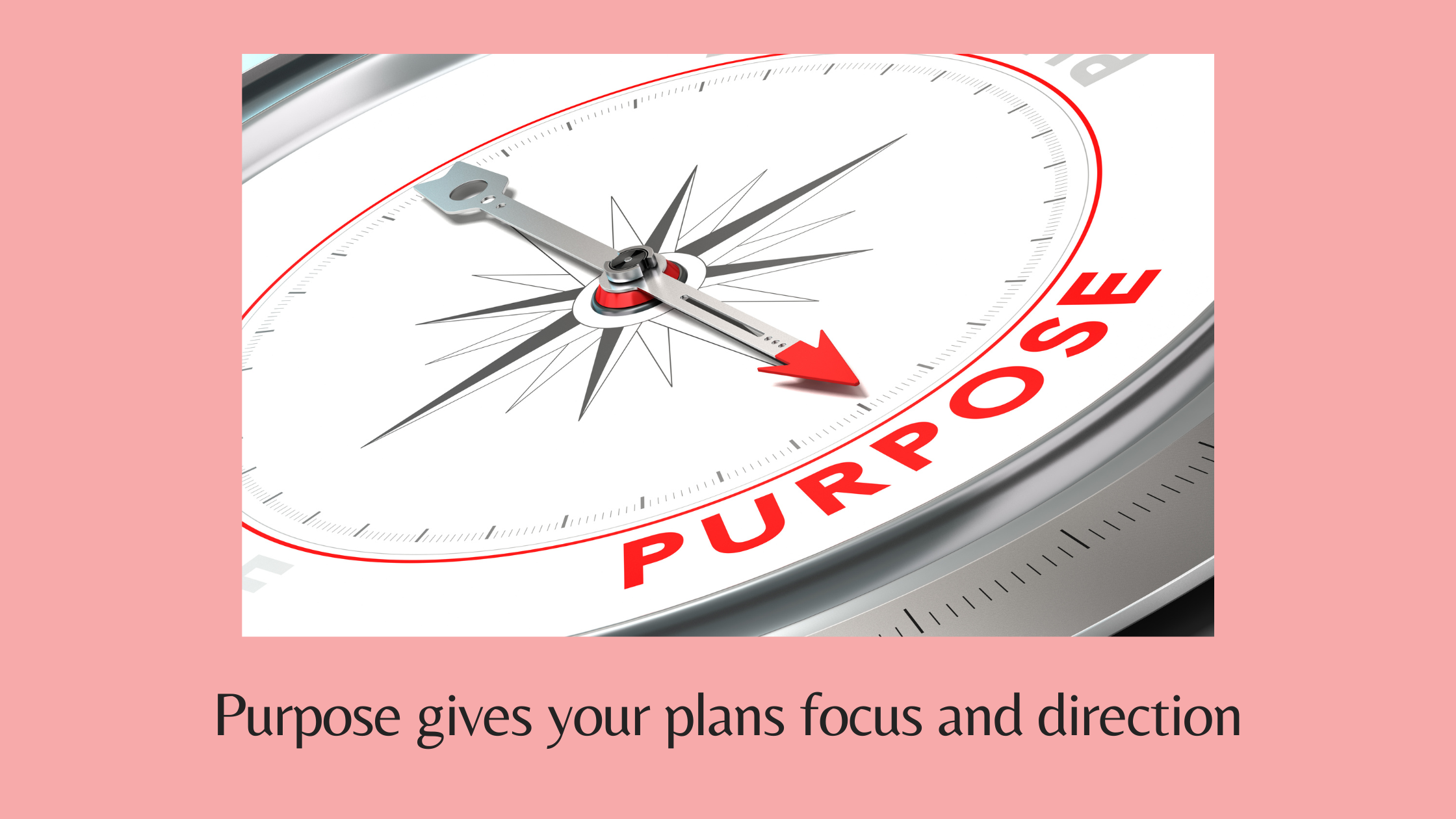
The question posed in the Harvard Health Publishing post, Will a purpose-driven life help you live longer? has a clear answer – yes. You may not know your life purpose, but you do have one for your work as a librarian. It’s your Mission. Your ‘Why’. My purpose, as an educator and a librarian is: “I reflect back to others their greatness, and, when appropriate, help them manifest it in their lives.” And I live this in my weekly blog where I talk about how you are vital to the students, teachers, and administrators, when I teach at the graduate level, and when I present at conferences around the country.

In his blog post, The #1 reason people fail at their life plan, Denzell Leggett explains why a life purpose is important, why people don’t have one, and offers his suggestion on getting one. Following are the three non-planning patterns he identifies and the answer he proposes along with my comments to make this more meaningful for you:

  • The Flywheel Hamster equals Fake Plan, Fake Hope – The hamster image conveys how many people see their lives. You keep moving but get nowhere. You are basing your plan on what you think you should do. When you realize you aren’t getting results, you change the plan but still are drawing on the expectations of others. So you are not really planning you are reacting.
  • The Floating Dandelion equals No Plan, Misguided Hope – Again the image reveals how you are moving through your life – a dandelion seed floating on the wind. Leggett says people who plan like this are relying on “luck, peer influence, media trends or family tradition to guide them. They chase whatever sounds good or seems easier in the moment.” The wind changes, they go in a different direction. It’s not plan and, once again, it’s all about reacting.
  • The Head-in-the-Sand Ostrich equals No Hope, So No Plan – Why bother if it’s not going to work. We see everything as out of our control so we move forward without a focus. When things are hard, sometimes it seems best to not be noticed even though we have learned that’s not a solution. No matter what is out of control, we can choose how we respond. That response might be the beginning of a plan.

So, if this doesn’t work, what can you do?

  • Transformation is the way out – Leggett says, “The key to destiny control lies in transforming one’s mindset, beliefs and actions to develop assured belief…[and] you must see yourself as the leader of your life. Your destiny depends on it.” He gives no advice on transforming your mindset, but a first step can be to take time to focus on what brings you joy. At work, at home, anywhere. What are you passionate about? List these things, add to it whenever you can. Your true life purpose will emerge. Once it does, as with your library Mission Statement, write it down, save it on your computer, print it out where you can see it and memorize it.

You are a leader in your life as Leggett says. You are also a leader in your school and library. Take time to get clear and discover your purpose. It will help you have the clarity to make a plan that supports that leadership, that supports your dreams, and enriches your life.

Be More Effective

According to Merriam Webster, effective means “producing a decided, decisive, or desired effect.” A second meaning for the word is “ready for service or action.” You obviously want to get certain tasks done during the course of the day, but are you doing this effectively? And if not… why not?

When you sit down at your desk, are you completely ready for action? Or do you start by straightening things up, putting off the moment when you begin? Even after you have begun, there are so many things that can and do pull you off track. It’s no wonder that by the time you finish for the day, it’s frequently later than you had planned, and you are often feeling battered and thoroughly exhausted.

In his blog post, These Three Questions Help Our Effectiveness, John Keyser quotes David Emerald’s 3 Vital Questions: Transforming Workplace Drama, observing how the approach is simple, helpful, and insightful. The responses to these questions require reflection which Keyser guides you through. As usual, even though this post is intended for business leaders, you are leaders, and it does apply to all of us.

Here are the questions and the process for responding to them (italics are based on Keyser’s emphasis):

  1. Where is my focus? – Take time to notice where your thoughts are going and if they are pulling you off track. Ask yourself: Am I focused on where it should be? Am I listening to what my teachers really want/need? Have I heard what the student was really looking for? Do I communicate my appreciation for what they do? Do I let teachers know I am grateful when they take a chance and work with me? When I am helping others, am I focused on doing my best so they do a great job? Do I do it all with kindness or am I abrupt and thinking about getting back to a task? In the process, am I giving feedback in positive ways that can be heard? You won’t be able to do all of these at once (or immediately) but keeping them in mind will help.
  2. How are my relationships? – Keyser says, “Relationships matter greatly” and this is no surprise to us. I have repeatedly stated we are in the relationship business. If we aren’t building relationships, we will be out of business. To do this, Keyser recommends one-on-one conversations. Every interaction, planned or spontaneous, is an opportunity for starting or building a relationship.
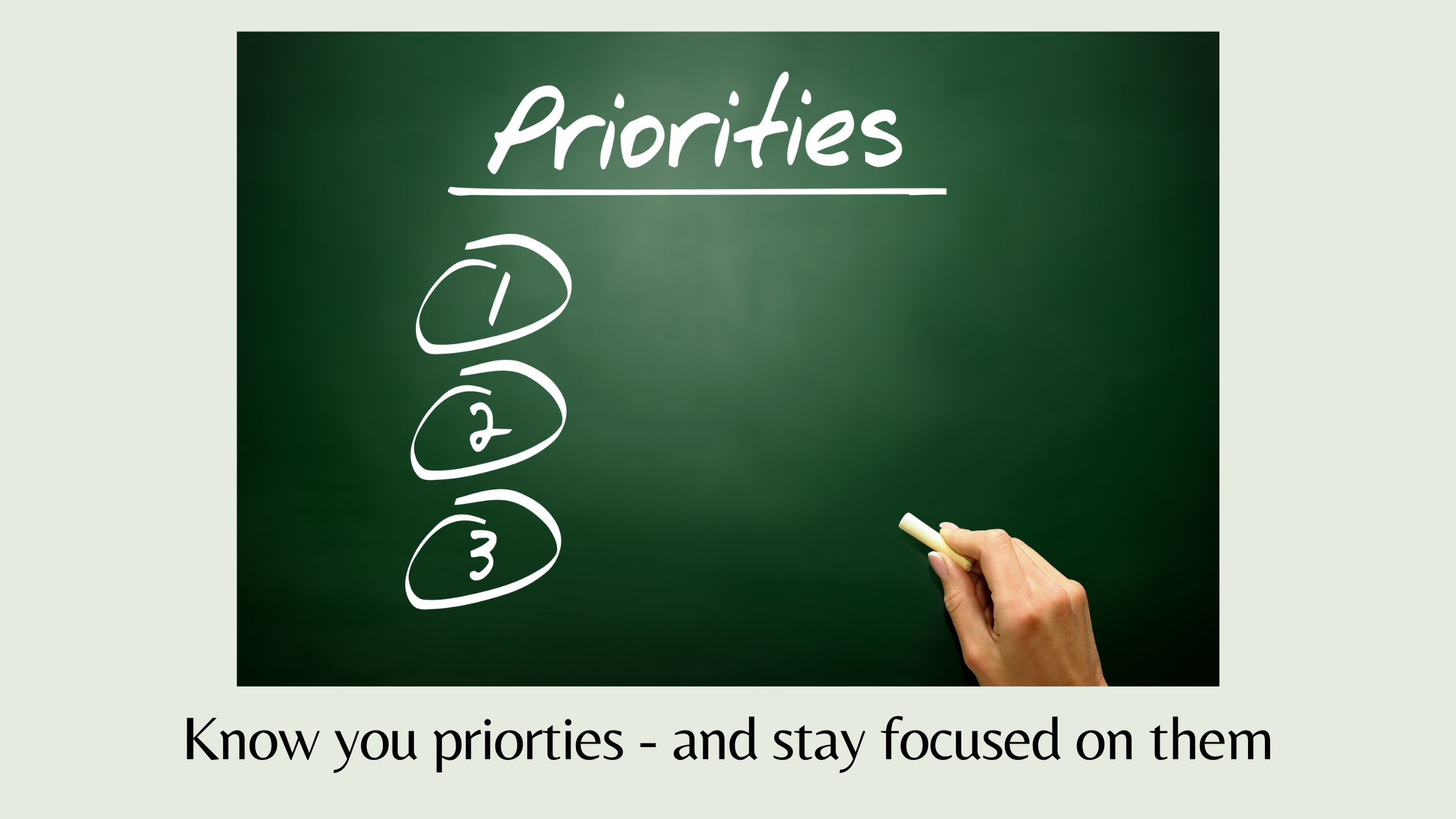
  3. What steps/actions am I taking? We cannot ignore the truth that everything we do has an impact. The smallest step in relationship-building leads to more steps. The clearer your focus, the better your results. To-do lists and priorities are recommended as always as a way to see your progress and know that you are moving in the right direction. Keyser recommends you have only three items on your to-list, and these should be the ones that will produce the most significant outcomes. (In other words, don’t just pick the easy ones.) Be hones with yourself – what will move you toward your most desired result.

You probably won’t go through these three every day. However, if you do this at the beginning of the work week and then review them again at the end, you’ll see the results as well as where you want to do things different. The process and practice of self-reflection and self-evaluation is good to develop and will lead to great effectiveness.

Focus and Procrastination

Photo by Antonio Guillem via Canva

There is always something that needs to get done but too often something pulls our focus. Before we know it, we’ve lost too much time and haven’t made the progress we want. Is there a way to make the two work together?

Sometimes procrastination can help and other times, not so much. When we choose to answer a phone call or an email as a way to not work on a task, it can be hard to get focused again. Then there are the times when you’re stuck during a project. You take a break. Perhaps go for a walk or even play a game of solitaire (my two favorites). When you return to work, somehow you have figured out what you need to do next. The procrastination became an aid not a deterrent.

What’s the difference? Usually it’s your attitude or mindset towards what you are doing. Are you taking the break intentionally or to avoid something? When you are not eager to dig into the task at hand, staying focused can be a challenge. You are more likely to succumb to the negative aspects of procrastination. The short break you give yourself stretches out. By the time you get back to work, more time has passed than you realized. Then we typically beat ourselves up for taking the break. You probably will get it done, but without the enthusiasm that produces your best work.

As part of a blog post on How to Remove Distractors from Your Workday, Naphtali Hoff shares six techniques to help you manage internally driven distractors from your day:

  1. Set Daily Goals – This is familiar advice. My suggestion is to limit the number of goals to two tasks. You can have more on your to-do list but keep your focus on one or two priorities. If you get to anything else, it’s a bonus.
  2. Set Deadlines – Most of your tasks probably have inherent deadlines, but it helps to be specific. Set a time by when you will finish the day’s top priority items. Having a “by when” will help you achieve it as you have a goal you are working toward.
  3. Break Project into Manageable Chunks – Big projects are intimidating. My method is to telescope, microscope, and periscope (see my blog post on this here). Use Telescope to identify by when the project must be completed. (Set your own internal deadline for before that date since life happens.) Microscope by determine a sequence of steps, including daily ones. Focus only on the one you need to complete today. Every so often, pop up your Periscope to see what is coming up. Do you need to alter your daily schedule?
  4. Practice Mindfulness – Meditation is not procrastination. Use all your tools to keep your outlook positive. Record your successes. Praise yourself for accomplishments. Hoff says, “practicing mindfulness meditation is associated with improvement in sustaining focus and attention.” When you feel good about yourself, it’s much easier to get work done – and stay focused at it.
  5. Set a Timer – This allows for what might be called “planned procrastination”. It’s like a workout for a specified period of time. How long do you want to work before taking a break?  Your body needs to move, your thoughts may need to focus elsewhere for a little while. It’s healthier if you get up each hour for a few minutes. After a second hour, you might plan a longer break – to take that walk or play that game. But set a timer for that, too.
  6. Switch Tasks – Sometimes you hit a brick wall. While some form of procrastination to refresh your brain cells might work, consider switching to task #2 on your to-do list. Some may find that doing this needs some transition time, but as long as you know you’re making this change, you’ll start the next task sooner.

Know how your mind and body behave. Identify what is happening when you lose focus or when you’re having trouble getting focused. How long can you work full-out at something before your focus begins to dwindle? Remember that you can welcome, allow, and even plan for procrastination as a tool in accomplishing tasks. When you do this – the time spent procrastinating is less likely to take over your day.