Starting Difficult Conversations

It seems as though difficult conversations are everywhere these days. Some we get pulled into – such as issues surrounding gender, sexuality, and racism. Some we must start when these issues affect collection selection, censorship, book banning, and who decides what information students have access to. But because we are in the relationship business, and every relationship – from personal to professional – has to manage through tough conversations at some time, we must know how to handle these situations when they happen.

Sometimes our actions or words put a colleague in the position of coming to us with a sensitive topic, and sometimes we’re the ones who need to take a stand. Nate Regier, the CEO and founding owner of Next Element Consulting, a global leadership firm dedicated to bringing compassion into the workplace, discusses how to Initiate Difficult Conversations With These 4 Steps. He quotes an EDI leader for a company as saying, “We just need better ways to talk to each other right now.”  As the political climate keeps amplifying both our differences and our emotional responses, this has become more critical than ever.

Regier’ four step approach involves using “Compassionate Accountability” which he says is more than altruism or empathy. It’s rather “struggling together in a spirit of dignity.” An important factor is accountability for behavior “without repeating the cycle of violence.”

  1. Own and express your feelings without blaming – Blaming words include “disrespected,” “left out,” and “attacked.” They imply that you blame the person who did whatever triggered your feelings. It’s hard to think of what you can say in response without using those words.  First take a moment to recognize what you are feeling. Accept the emotion and say, “When I hear something like that, I feel as though I don’t matter or that I am not seen as equal to others.” As Regier says, owning your feelings without blaming them on someone else’s behavior doesn’t condone the behavior or end the conversation. Quite the opposite. It can be what starts a healthy discussion.
  2. Use discomfort as your ally – When you have expressed a biased comment to someone, and realized it after the conversation was over, there is a tendency to duck your head and try to forget it happened. But it did happen, and someone was likely hurt. Integrity means you need to own it and say something. I had a volunteer model this many years ago after using a slur against Jews. At the time, I said nothing. She left after her morning shift, but returned in the afternoon, embarrassed and apologetic. I admired her tremendously for taking the first step by acknowledging what she had said.
  3. Mind the gap; own your part – Regier says, “Conflict is any gap between what we want and what we are experiencing.” In the fraction of the moment after my volunteer said what she did, I wanted to let her know how her comment made me feel. I recognized there was no ill intent, but I was hurt. Fortunately, when she returned, we could have that discussion because she had owned her part. She faced her discomfort and our relationship was better for her actions.
  4. Awareness is necessary but not sufficient to change behavior – Awareness is an important step, but the communication that follows is even more key when it comes to doing things differently. The experience with my volunteer was been a lesson to me.  I have my own innate biases.  I work hard to identify them and shut them down before I say something, but I make mistakes. When I have done so (or know that I have done so), I immediately apologize.

Regier concludes by saying, “Compassionate Accountability is a skill that translates beyond any particular conflict or dimension of diversity. By owning and expressing our feelings without blame, minding our part in the communication gap, leveraging discomfort to move forward, and being aware enough to close the knowing/doing gap is how conflict can become transformational.”

Whether someone is coming to us or we need to initiate a difficult discussion, it is important to stay open and listen to what is being said and how someone may be hurt so that the relationship can be strengthened. It takes a great deal of time and mindful effort to eliminate our inherent, unconscious biases, but we can acknowledge and own them. Recognizing and expressing our error and vulnerability adds to our integrity as leaders – and human beings.

I Hear You

We know the importance of building relationships. While you can start making the necessary connections by emailing websites or apps that might interest teachers, the action that results in collaboration or cooperation doesn’t truly begin without face-to-face conversations. How we handle these in person interactions can speed or derail the process.

Just as a bad wi-fi connection can interfere with hearing what people are saying on a Zoom call, the way you respond to the teachers can prevent you from hearing them – and prevent them from reaching out to you in the future. You may think you are offering help and support, but that is not what is being communicated. What can go awry and how can you prevent it?

In my book The Art of Communication, I discuss the importance not only of active listening, but being aware of the non-verbal signals you are sending when you speak with someone. Similarly, in his blog post, How to Make People Feel Heard, David Burkus recommends four ways to improve your connections and relationships. He starts with active listening then offers three other usable skills.

  1. Model Active Listening – We know how important this is, but in the moment some of us, me included, get so caught up in wanting to respond, we plunge ahead. So much for active listening. Nodding and gesturing helps, but make sure your gestures aren’t expressing “Hurry up and finish, I have something to say.” Remember, our body language speaks volumes. What can help is summarizing what you think you heard them say. Give them the space to point out any parts you may have misheard or misunderstood. This ensures any further response doesn’t include false assumptions.
  • Praise the Contribution –Burkus says, even if you disagree, let them know you appreciate their willingness to share the information or their opinion with you. Identify any points which you agree with. By showing you respect what they said, you open the way for them to take in your response. It also alleviates any tension that may be building up. This is especially powerful when the interaction occurs at a meeting, and we have an audience. Our interactions with the speaker, usually unconscious, show others how you treat people. You could be inadvertently preventing other relationships from building.
  • Challenge Assumptions, Not Ideas – In these contentious times, it’s so easy to speak out against the ideas being stated. Instead, Burkus recommends you focus on the assumptions that underlie them. This way, you are more likely to discover the thinking process that lead them to develop their ideas. You can ask questions about the assumptions. If you can, point out where there is additional information that conflicts with those assumptions, but keep it factual and as emotion free as possible. Identify any areas where you have common ground, such as, “we all want our students to be successful.”
  • Questions Before Advice – Just as we want our students to feel safe in the library, our relationships with teachers depend on how safe they feel with us. Asking questions to determine where they want to go shows we want to go on this journey with them. They might not be asking for advice. Once you know what they are looking for, then you can offer support. I once had a teacher who wanted her entire ninth grade class to research Galileo. Rather than say, “Are you kidding me?” I asked what she wanted by having the focus be on Galileo. Her response that she wanted them to see the scientific method in action led me to suggest the possibility of having them choose from a list of scientists to report on how scientists’ work showed the importance of the scientific method. Once she knew I was listening to and understanding her goals, she was willing to diversify the assignment and used Galileo as a model when she introduced the assignment.

These same rules apply when we’re building our relationships with students. We need to pay close attention to discover what they are saying if we want to truly respond to their request and make them feel safe and welcome. Be sure that the student who you thought asked for help in finding out about euthanasia wasn’t looking for information about youth in Asia.

Our leadership is always about relationships. We need to continually learn how to build and maintain them. It’s a skill that requires lifelong learning – with lifelong benefits.

Managing Conflict

Wouldn’t it be great if we always got along? I’m not sure it would always be a good thing because everyone agreeing would mean we would explore new options less frequently. But for good or ill, we don’t have to worry about that. There will always be conflicts.

Handling conflicts requires two aspects of social intelligence: understanding your emotions and managing them. How do you normally respond when you feel attacked or judged? Do you go on the offensive? Do you try to prove you are not responsible? Or do you deflect and try to show how you were misunderstood, and that isn’t what you meant or intended?

As Socrates said, “To know thyself is the beginning of wisdom.”  You must be honest about your own behaviors to be able to manage the response. Remember, the conflict won’t be defused unless calm heads prevail, and it starts with you. A question to keep in mind is, “Do you want to be right, or do you want it to work?” Because, if you want to be right, it won’t work.

In her post, How Leaders Can Start Building Conflict Capacity, Marlene Chism defines conflict capacity as, the “ability to tolerate conflict without getting triggered into unconscious reactions.” She notes it requires self-awareness, which boils down to knowing yourself. Chism then offers four ways to develop the necessary capacity.

  1. Reframe Conflict – Mindset is always crucial. If you see conflict as two sides fighting each other, you are likely to focus on being right and winning. Instead, view it as a chance to explore where things aren’t working with the goal of improving the situation. A challenge almost always provides an opportunity. This disagreement provides the impetus to move forward in a better way.
  2. Get Curious – Rather than thinking some form of “Well, they’re wrong,” find out why and how they came to their viewpoint. Chism says you do this by inviting conversation with questions like “Will you walk me through your thinking?” or “I’m curious. How did you come to that decision?” This pauses the heat that is building. It also communicates your willingness to listen rather than drown out what they are saying.
  3. Expand Your Comfort Zone – When you are dealing with people with low conflict capacity, as defined by Chism, it is hard to resist interrupting them. Don’t. Let them go on. Eventually, they will lose steam. As the person keeps talking, keep your focus on listening for the core issue that set them off. It will help you respond when they get to the end of their rant, and it will also send a further message that you see them and their issue.
  4. Seek Mentoring – This recommendation is to build relationships before the crisis comes. You know which teachers have the reputation as complainers. In an organization, there are always some who don’t want to follow the leader. When you interact with these people, be sure to do your best to release what you’ve heard and connect. Get to understand them, and what motivates them. Any challenges that come – and they mostly likely will—will be less heated because of your pre-existing relationship. Don’t neglect the relationship with your principal. This connection shouldn’t wait for a crisis. Find reasons to ask for their advice and support  – and listen to it.

When you change your perspective, conflicts can become opportunities. The more you grow as a leader, the more of these you will need to deal with. Learning to manage yourself and handle these challenges are an important part of building strong relationships and part of your growth. Keep going.

Developing Your Self Confidence

Confidence is essential to leadership. Indeed, it is virtually impossible to lead without it. Who would follow a leader who was unsure or always second-guessing themselves? Your self-confidence is evident in your voice, both spoken and written, when you propose a project. It is what helps you get out of your comfort zone and take on new challenges. It inspires others to follow you, secure in the belief that you know where you are going and will get there successfully.

This doesn’t mean leaders are arrogant or think they can never be wrong. Confidence is about the trust you have in yourself. You trust your Vision and your knowledge. You trust the relationships you have built with others, knowing they will tell you when you may have overlooked something important. According to Joel Garfinkle, you can become more self-confident by following the steps he presents in  Five Ways to Boost Leadership Self-Confidence.

1. Practice self-examination – Look at your history and the ideas and projects you launched. If you have been leading, there will be a number of them, including those that didn’t work. Garfinkle notes it may sound counterintuitive to look at failures in order to become self-confident, but we learn from our failures. What didn’t work on those projects? What did? What could have made them more successful? What should be repeated and built on? Recognize there will be failures in the future, but the knowledge you gain in this self-examination will contribute to more successes in the future, bolstering your self-confidence

2. Exercise your influence – Garfinkle urges participation in your “organization’s decision-making.” For us, this means being on committees that allow us to showcase that knowledge and expertise. It can also mean contributing at faculty meetings or offering sessions for teachers to help them use the library to support their work. When we see how others recognize our contributions, self-confidence is built. It may not seem like it, but you do have influence. You have proven knowledge and expertise in areas that others don’t have. In the relationships you have built, you have demonstrated it.

3. Motivate others – The combination of relationships and demonstrated expertise encourages others to listen to you. Garfinkle recommends developing gravitas – “the calm, open demeanor of a leader who both speaks and listens with respect and humility.”  As you live and share your vision, which should be inspiring to begin with, you will connect with others who will be motivated to become part of making it a reality.

4. Embrace personal development – As you learn and grow, so too does your self-confidence. Then you must take the learning a step further by putting it into action. Being on those committees and an active member of local, state, and national organizations serves two purposes. First, you grow professionally as you see the larger picture which affects you and your library. Second, your vocabulary changes as you incorporate your learning into how you explain an issue or project. You are now speaking with confidence and the gravitas Garfinkle discusses. It’s a process of “absorb and apply.”

5. Improve your workplace – This refers to something larger than redesigning your library. How can you make an impact on the social and emotional environment of your school? When you make the library a safe, welcoming space, you do the same with the educational community. This is a much larger and ongoing task, requiring a big vision. Garfinkle says to “work with colleagues to improve a process, reduce barriers, increase teamwork or enhance morale.” Certainly, the last is a big issue in our schools today. He notes “working with others for the good of others” will increase your sense of your self-worth and by extention, your self-confidence.

Garfinkle concludes by stating: Confidence comes from an unshakeable sense of self, which requires consistent and continued dedication to your values, goals and personal self-worth  These five steps are a progression. They won’t happen overnight but think of the rewards. Build your self-confidence and transform your community.

How – And When – To Say No

You already have a full schedule. You are always a hairbreadth away from overwhelm. And now you have been asked to do something else. What do you do? Can you just say no?

What if the request is coming from your principal? What if it’s a teacher you are good friends with? My guess is you say, “yes,” and then you try to make it work. Maybe you stay late – and cut out some of your self-care. Yes, it cuts into family and personal time, but you had no choice. Right?

There is always a choice. It’s how you manage it that makes the difference. Something that frequently worked for me, especially with teachers, was asking, “Can we do this differently?” Then I would come up with alternate solutions. It could be anything from changing the date or time that was requested to sending a cart of books and emailing websites if my schedule was booked.

When it came to my principals, I, of course, couldn’t say no—not exactly. Instead, I would let them know that I’d be happy to accommodate them and ask for their advice regarding how to handle the shifts I would need to make to meet their requests. This lets them know that you can agree, but gets their buy-in or support for the things that will have to be dropped or changed.

There was a time I was asked by the secretary to close the library to accommodate a meeting of the athletic directors in our league could meet. I agreed and said I would contact the previously scheduled teachers to tell them they couldn’t come because of this meeting. A teacher complained to the principal. The secretary called me back “to apologize for her mistake.” She said the request was that I close a portion of the library to allow the meeting to happen. This had a double benefit. Not only had I completely acceded to my principal’s request, I also had demonstrated how connected I was to the teachers and curriculum.

As a leader, you may get requests from your state (or even national association) to take on a task. Do you want to do it? How much of your valuable time will it take? When this occurs, pause before responding and do your best to make your decision out of your purpose, priorities, and passion. If it doesn’t match up with these, say no.

In Saying No Is Better Than Saying Nothing, Shari Harley had advice for those times when “no” is the answer you want to give. She recognizes that saying no is hard. She says people often practice avoidance, ignoring the request or saying you will get back on that—and not doing it. That shows a lack of integrity and honesty in your dealings with people, something that hurts relationships.

Harley offers three options. Before exercising one of these, the first step is thanking the person for asking and saying you will give them your response in a set period of time (not too long in the future). Make sure you get back to them after you determine what your answer will be. Then you answer with one of these options:

Option One is to turn down the request but suggest someone else who might be able to do the task. Within the school, this option is rarely open to you. However, when it’s a district request or one on the state/national level, you should be able to recommend a qualified person who could do it.

Option Two is to agree but negotiate a different time. It gives you the opportunity to ask important questions such as by when does this actually have to be done. It enables you to prioritize your time in completing this new task. It may be possible to do an introductory piece and then complete the project at a later date. For example, if the teacher wants to bring in a class two days in a row, perhaps you can go to the class and do an opening to get students started and thinking, and then have them come in a day or so later to actually get to work. (Debrief them on their thinking process to begin the class.)

Option Three is to turn down the request but offer what you might be able to do instead. Ask if that would work. If not, see if you can find some substitution, but don’t change your no into a yes. You have thought the request through. You know it won’t work for you. Don’t push yourself into becoming overwhelmed.

Harley concludes with “keep your commitments.”  Whatever you said you would do, do it. You want people to trust you. Your word must have meaning.

Knowing how and when to say no is a test of your leadership. Don’t answer too quickly – and always follow through.

The Power of Apology

I’m sorry. Two short words (OK—one is a contraction.), yet they carry so many different meanings. Sometimes they aren’t enough or hardly matter. Other times, they carry a heavy weight. What you say, when you say it, whether you choose to say it, and how you say it can affect your relationships and your leadership and, therefore, your success.

The offhand “sorry” comes when you accidentally bump into someone while walking or your cart hits theirs in the supermarket. You make that quick apology. The other person says, “it’s OK.” or says nothing at all. Not saying “excuse me” or “sorry” makes you rude, but in the larger scheme of things, it doesn’t matter that much.

An apology carries a deeper import if your mind wanders in a conversation, and you didn’t hear what the other party was saying. It’s embarrassing, but you both will get past that quickly as long as you don’t drift off repeatedly. Avoiding the “sorry” can cause a bump in a relationship if you try to fake it and get caught.

Apologies become more significant when you have made a big mistake, such as forgetting a meeting, failing to follow-through on something you promised you would do, or saying something that revealed your implicit bias. Do you acknowledge your error? Try to minimize it? Hope it won’t be noticed? What should a leader do?

Niki Jorgensen discusses The Emotionally Intelligent Way to Apologize for a Mistake at Work. She says to be effective you need to choose your words and the correct time to make an apology. Your body language when making it also contributes to its effectiveness.

Jorgensen describes two things you should consider before making an apology:

Is an apology necessary? How to Decide – Don’t automatically rush into a long apology before taking the time to stop and think. How significant was your mistake? If you always apologize profusely, this detracts from what you say when your error was significant.

Observe the body language of the other person. Are they upset? That may provide an indication of the seriousness of your error and the impact it may have on your relationship. This is particularly true when what you said revealed your implicit bias. You need to apologize as soon as you become aware of your mistake. We all have these biases. What is important is that we recognize them when they appear and acknowledge them.

How to apologize professionally Jorgensen says to “evaluate the reasons behind the incident, the impacts on others and ways to prevent similar mistakes moving forward.” Apologizing in private is important and is more likely to  allow an open interchange. Avoid the temptation to get it all out quickly.

Apologizing is usually uncomfortable, but you also need to show you are listening to the other person’s response – and watching their body language. While you may be the one apologizing, it is an important opportunity to listen more than talk. When you acknowledge and take responsibility for your mistake, you strengthen the bonds of trust necessary in building and deepening a relationship.

To be recognized as a leader you must have integrity. Embarrassing as it can be, apologies made – or not made – reveal the person and leader you are. Take the time to acknowledge the error, whether big or small, and give the situation and person the right apology.

Giving Effective Feedback

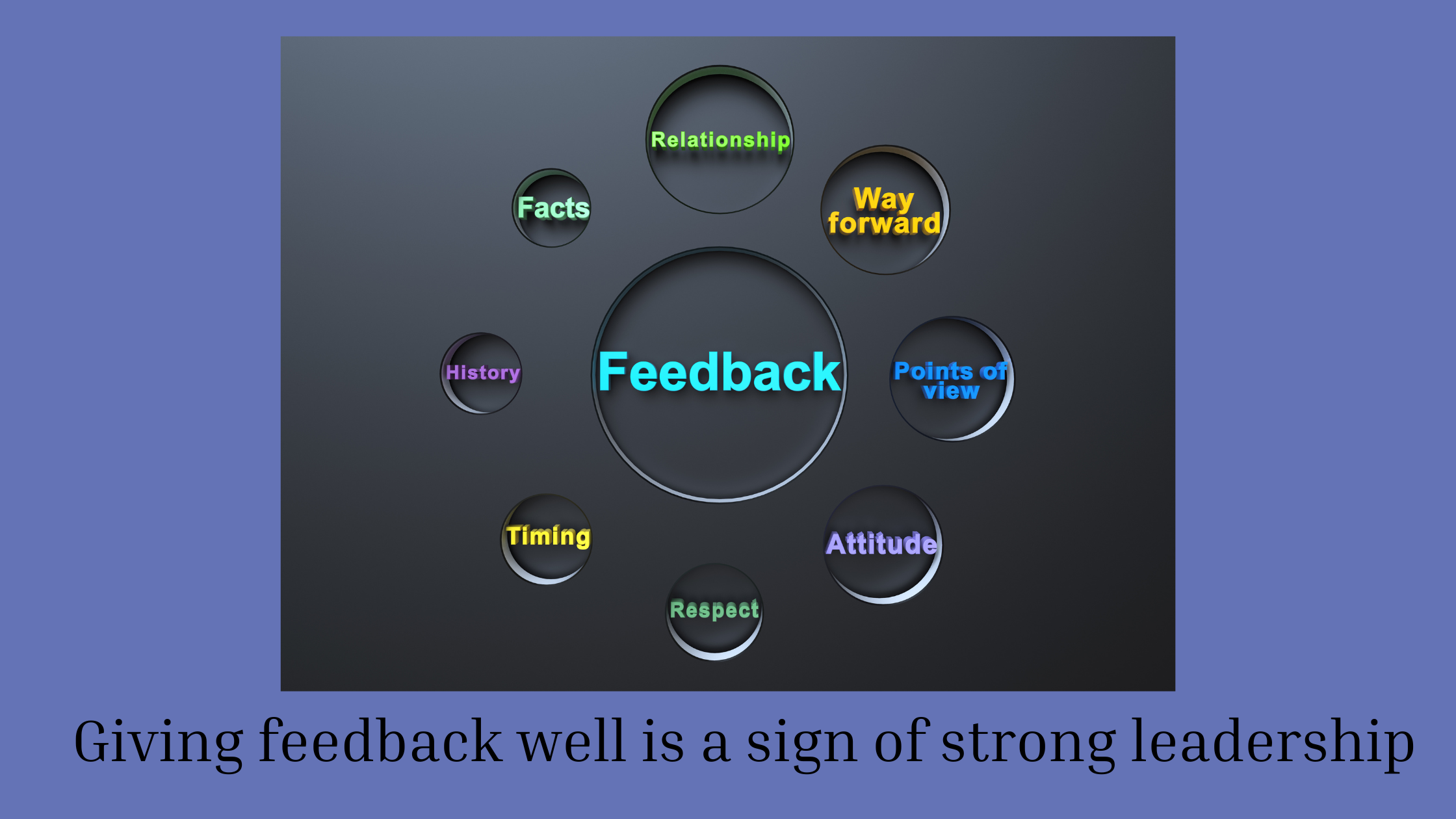
Two weeks ago, I blogged on When Feedback Hurts. We have all experienced those painful moments (they can be the hardest to forget, unfortunately). As a leader, we recognize that receiving feedback is important if we are to grow, but we also need to consider how we give feedback to others.

We may not always be aware of all the instances we give feedback. It is worthwhile to notice the comments and criticism we offer. A teacher is late bringing in his class. You note the lateness, and unbeknown to you, he is thinking you don’t understand what is involved in getting this group organized and ready to go to the library. With this negative feedback, will he be as willing to schedule his class in the future? Will he be open to collaboration?

The IT department has not responded to your request to address an issue. You are justifiably frustrated and send an email, copying the principal, saying the delay is affecting student learning. Do you think the IT department will be more or less responsive to your next request?

You give feedback to students all the time. Perhaps a group is supposed to be working on a project and is obviously more interested in socializing. You tell them it’s time they settled down and got back to work. Are they now more or less engaged?

It’s not that these issues shouldn’t or can’t be addressed, but words count and so does the delivery. Consider these alternate approaches:

  • If you said to the teacher, “Let me get them started. You can probably use a breather after getting the kids here today,” the teacher will feel taken care of, not criticized. You’ve let him know you’re aware of the challenges he faces. And he’s more likely to start the process of getting his class organized earlier so they’re not late in the future.
  • If you sent the IT department a message (not including the principal) and said, “Help! I really need you. I appreciate how very busy you are, but I hope you can make this a priority,” their response is likely to be far different from that annoyed email where they were embarrassed in front of a superior. And you’ve shown you understand their workload.
  • If you said to the students, “Now that you have completed the preliminaries, where are you planning to go next?” Because they need to respond, they are more likely to focus on the task and start working.

While it’s important to let people know you’ve noticed them doing something that doesn’t work, there are ways to move from that information toward something that is helpful to you, them, and the relationship you want to have with them going forward.

Be SpecificThis allows people to be focused. You can tell the teacher in advance what the class will be doing, which can support them all to arrive prepared. The IT department will appreciate as much specificity as possible. Telling them it’s important to you, doesn’t make it important to them. Let them know how their work will have an impact. Your next question with students should direct them on how to start.

Be Timely –The more immediacy you bring to giving the feedback the better it will be. The teacher knows he is late. The IT department is buried in requests for tickets and doesn’t usually think yours is special. The kids are going to have fun until you show them there is fun in the task. Once you’ve pointed out the situation, move on.

Be Prescriptive – What can they do to improve and how can you help? Once the class is going, ask the teacher if he could use a brief reminder early in the day about the impending visit. Ask the IT department how they determine priorities and if there’s anything they need from you in the future, since your request affects so many students. Tell the students you are looking forward to seeing whatever it is they are to do next (a reminder here to be specific).

Be Encouraging – Let the teacher know you recognize the challenge of getting kids to the library as scheduled and are glad to help. Assure the IT department you are aware of their workload and appreciate all they do. Tell students the project is challenging, and you are looking forward to seeing their creative solutions. And the second part of this is to recognize changes. When the teacher arrives on time, say you appreciate what it took to get this done. Thank the IT Department every time they are responsive. (This is the time to copy the principal.) And, if possible, make a positive specific comment to the students when you see what they have accomplished at the end of the period.

So often (maybe even more often) it’s the little things that count. Leadership is not just huge projects with big outcomes. It’s what you do every day to encourage, support and work with the people around you.

Building Relationships With Everyone

As I’ve written about many times, we are in the relationship business. Without them, we’re out of business. And if the library is going to be a welcoming place for all, we need to be in relationship with everyone in our building. The challenge comes when we must work with those who we find difficult to connect to – because it doesn’t matter. We need to build a relationship with them and provide them with the same services and resources we give everyone else. We don’t need to be their friends, but we must create the connection that shows we are there for them.

So how can we build these connections? Amy Gallo offers guidance on how to handle tricky waters in Getting Along: How to Work with Anyone (Even Difficult People). Her five suggestions should get you going.

1. The definition of a “difficult person” is often informed by bias – Take note of why you might consider this person difficult. Gallo says, our interpretation is often informed by our own biases and prejudices. The author suggests you ask yourself: “If your colleague was a different gender, race, sexual orientation, would you make the same assumptions? Would you be willing to say the same things or treat them the same way?”

Even if you have become aware of your implicit bias towards BIPOC – or possibly LBGTQ+ people, there are other types of implicit bias we hold. Do you innately believe your Athletic Director is a non-reader and/or someone who wouldn’t be interested in libraries?  Do you unwittingly assume that custodial staff members are less intelligent? What biases do you hold about people who are very overweight, much older (or younger) than you, or those who your friends don’t particularly like?  We make judgments without being aware we have done so. Stop to consider this when looking at the relationships that challenge you.

2. Your perspective is just one perspective – It’s not only our implicit biases that shape our perspective. How we see the world is not necessarily how others see it. Our attitude towards so many things unconsciously affects our decisions about others. In my family, we often interrupted each other in our enthusiasm to communicate our ideas. I have a friend who considers it rude. There is no right or wrong here. Only different perspectives that deserve understanding. To deal with this, the questions to ask yourself, says Gallo are, “What assumptions have I made?  How would someone with different values and experiences see things differently?” By stopping to ask yourself this, you’ll have the chance to connect.

3. It’s not just negative relationships that need attending to – Your positive relationships may be affected by your negative response to others. Colleagues you don’t like or who annoy you add stress. You bring that stress with you into all areas of your life. And it’s important to recognize that not all relationships fall neatly into “good” or “bad”. There are those which are more ambivalent, and which also need our attention. You may not have a problem with the person, but if you’re indifferent, you really don’t “see” them. As a result, you remain unaware of their needs and don’t provide the same support and resources that you do with your positive relationships. Also remember that relationships aren’t fixed. Good ones can turn sour without care.

4. Escalating is an option that has to be done carefully – As a librarian, this is one you hopefully will never have to use. Going to the administration or possibly the union about a colleague is something that would require an egregious offense. It happened to me only once in my career. I was retiring from a high school library and my co-librarian was a disaster. Through her own careful planning, she managed to avoid being observed so the administration wasn’t aware of her shortcomings. She was up for tenure and slated to replace me. I spoke to the Assistant Superintendent, and while I wasn’t able to change their decision, in my exit interview with the principal, I recommended frequent visits to the library and listening to the staff. They did, and a year later my suspicions proved accurate, and they moved her to another library. The library – and other relationships – were more important. Consider this before escalating.

Sometimes we have to be the adult in the room – As with much of all our relationship-building (in and out of work), and our collaborations, it often seems as though we have to be the one doing the work. There will be times when you need more help from them or wish they’d do more, but ultimately, the only person in a relationship you can control is yourself. These means that to have the relationships we need, we have to accept responsibility for their success, even when (and maybe especially when) it’s difficult.

We need to be in relationships with everyone because the library is for everyone. Yes, some relationships will be deeper than others, some may even become lifelong friendships. What’s important to remember is all of these relationships are important, and the better you are at connecting to your colleagues, students, administrators, and parents, the more likely it is that your program will thrive.

What Is Your Body Saying

Our silent communication is often louder than our verbal one, and it’s not always saying the same thing as our words. Or what we want. The mixed messages we send can cause people to not trust you, not feel included, or not worth your time. And since our relationships are key to our success, making sure there’s cohesion in what we are communicating is important.

Body language communicates what we are thinking – even if when (especially when) we’re not aware of it. Whatever mindset we have about an interaction is on display for everyone to see in our body language. It includes voice and tone as well as the positions of our body.

For example, have you ever had a situation where a class you “know” to be difficult lives up to your expectations? There’s a chance you were partially responsible for this. How did you sound when you greeted them? How were you holding your body? All of these tell the students you were sure they were going to act up. And then they do. But, if you prepare yourself and change your mindset, you can get a different outcome. For example, you can think of the students as highly energetic rather than troublesome. Most of the time, along with a good lesson, it will work.

Your body language also comes into play when you are at a meeting. There are many reasons you might not be fully engaged, but if you learn to recognize and control your body language, you can prevent sending negative messages. Lolly Daskal in Seven Cringeworthy Body Language Mistakes Leaders Make During Meetings provides basics you need to know as a teacher and leader to become more aware of any unconscious communications you are making.

Unengaged Posture –Slouching sends a message that you are tuning out. When meeting with a group of teachers, doing this while they discuss matters related to them before or after your presentation says you aren’t interested in topics about their workday. Or to put it another way, you only want to “sell” the library.

Lack of Eye Contact – This is much like the unengaged posture. It gives the impression that you have tuned the speaker out. Eye contact is often associated with honesty. As Daskal notes, it’s not that you stare at the speaker, that wouldn’t be natural. Indeed, it could be seen as trying to intimidate or disparage the speaker, but you do want to make regular eye contact and not be looking off elsewhere.

Drumming Fingers – Although usually done unconsciously, it sends an obvious message of boredom or impatience. It’s an almost stereotypical but clear sign of being disengaged.

Looking Distracted – Daskal puts is well: If people don’t have your full attention, they won’t give you their full respect. How many faculty meetings have you attended where people are checking their phones? When you are with other people, this is when it is key to stay engaged. Take notes. Ask questions. Be involved.  

Crossing Your Arms—A classic way of shutting down by visually and physically closing yourself off. When kids do it, you know they don’t want to hear you. You are saying the same thing. Possibly accompanying it with drumming your fingers.

Fidgeting—Let jiggling, toe or pen tapping, continual shifts in position or slouching from one side to the other. You may not even be aware that you’re doing it, but if you are, it’s signaling distraction and lack of attention. Daskal suggests if it’s your response to nervousness, seek a coach to help you.

Multitasking—Many of us multitask on a regular basis, but it’s important to shut down that impulse anytime you are in a situation where relationships can be built. Not only does it send the wrong message, but studies show that it’s inefficient and it sends a message that other things are more worthy of your attention.

How many of these do you do? As you start recognizing them and preventing them from occurring, become aware of the messages others are sending. It will help you to better respond to them. Make sure your words and body match the message you want to send to build stronger relationships with students, teachers, and administrators.

Building Trust

Earning and keeping the trust of others – students, teachers and administrators – is key to your success. More than trusting your expertise, they need to know you will be able to deliver on your promises and be there for them when needed. Trust takes time to build, but it can be quickly lost.

Building trust is rooted in integrity. Keeping your word, honoring confidentiality, and other elements of honesty are vital. But trust is an emotional state, which means other more subtle factor contribute to its growth. In The Leadership Trust Crisis, David Livermore discusses the fact that trust in leaders (political, corporate and others) is at an all-time low. This means that relationships are shaky. He identifies five factors that affect the development of trust. Applying these can help you deepen the connections with the people in your building.

  1. Likeability – You get to know people you like. In the process, trust is developed. But what makes someone likeable? It often begins with a smile that goes beyond the superficial. It continues when you show you are interested in who the other person is. Sharing who you are extends the connection. Give people a chance to know and like being with you. It takes time, but it pays off.
  2. Competency – Livermore poses three questions on this: Do you have the skills to lead us? Can you communicate effectively? Do you know what you are doing?  As a librarian, this is where you excel. When we are aware of trends, new learning opportunities and the most recent tech resource or even teaching approaches (think inquiry-based learning), teachers see us as leaders and feel confident in coming to us with questions or concerns.
  3. Intensions – Are you in it for your success or do you care about mine?  What is your overarching purpose in putting this project together? Your everyday behavior sends messages to other about your character and integrity. We (usually unconsciously) make judgements of others based on their actions. Teachers and administrators are doing the same about you. Make certain you are treating others right and demonstrate that you care about the collective success. For example, when a project is complete put the teacher and their students’ outcomes front and center. Give credit to them. The library’s role and yours will be obvious. Their trust in your intentions builds.
  4. Reliability – Do you follow through on what you promise?  Can others see your commitment to living your Mission for the library? This relates to your integrity but is also about delivering in a “timely and consistent manner.” What did you tell your principal were your goals for the year. How did you hit them? In building trust – and the relationships that go with it, they need to know you can be counted on to do what you said and get it done on time.
  5. Reputation – This is the sum of all the others. How are you seen and thought of?  The stronger your reputation, the more others will trust you. The more they trust you, the more willing they are to work with you – and hopefully seek you out. And each time they do you grow as a leader.

I once had a teacher tell me she wouldn’t schedule a class with my co-librarian because she felt my co-librarian didn’t like the kids. That doesn’t work. Students learn more when teachers and librarians work together. The collaboration is formed on relationships, and relationships are built on trust. Look for ways to promote other’s trust in you and you’ll find your relationships and program getting stronger.