ON LIBRARIES: The Art of Communication

the-art-of-communucationI often say “We are in the relationship business” What goes along with this is without communication you can’t develop a relationship.  That shouldn’t be a challenge.  After all, we are always communicating, aren’t we?  Not necessarily the message we want.

Communication has three distinct elements:

  • the sender,
  • the message, and
  • the receiver.

If you remember the game of telephone you played as a kid, messages can easily become distorted, and in real life that distortion can occur within any of these three elements. In order to communicate effectively you need to be aware of how this happens and what you can do to prevent it. It is your responsibility to make sure the message is sent on a “clear channel.”Vector businessman online communicatiion connection business

Assume you are the sender.  Before you do anything you need to identify your receiver, your audience.  Is it your principal?  A teacher?  A parent?  Next you must consider what your message is.  Are you reporting something to your principal?  Offering help to a teacher? Responding to a parent query?

To be sure your message will not be garbled as it is received you must be sure it is in language the receiver understands.  Educators have jargon they use so frequently they are not always aware they are using it.  Scaffolding and differentiated instruction are quite specific terms for educators, but would parents understand them? Librarians have their own jargon as well.  We talk about information literacy and digital citizenship and don’t stop to think that not even our principals or teachers fully understand what we mean.

In communicating, it’s important you don’t make assumptions.  You might say, “Our teaching of information literacy ensures students are able to identify their need for information, locate relevant facts, evaluate them, and use them to communicate effectively.”  In essence you included the definition without either insulting someone who knows what it means or using a term they didn’t understand.

illusionYour next challenge is to select the right medium for the message. In the previous century, your choices were limited.  Do you want to talk to the receiver (in person or the telephone) or write to them (memo, report, or letter)? Today you have an array of options. To some extent it depends on what the message is, but there is a further consideration.  What is the users preferred source of communication?

If your principal wants e-mails, use that.  If he or she is a technophobe (getting rarer) schedule a meeting. Do the parents in your school use Twitter?  If they don’t it’s not a good medium for communicating with them. Do they go to your library website, your blog, or only like the print or emailed newsletters?  You need to take your message to where they are.

Besides language, the structure of the message is critical.  When you are tweeting you are limited to 140 characters. Conversations, emails, and memos have not such limit. It must be self-imposed.  Most of you are aware that text messages need to be fairly short and emails should also be brief.  If they are too long people skip some of the last part of the message. I work to keep these blog posts to a specific length and no longer, knowing they are being read on devices more than computer screen.

What isn’t as well recognized is how to craft a message, oral or written, to an administrator, and this works for others as well. We have a tendency to provide “background” so the receiver knows we are well versed in the topic and have done research, when appropriate, to be certain that what we are proposing is the best course of action. By the time the recipient gets your point, they have become lost in the verbiage.

As journalists have always known, “Don’t bury the headline.”  Lead with it. Give one or two supporting statements.  Particularly if the message is directed to your administrator let him or her know that if more information is needed, you will be glad to provide it. The same is true if you have a face-to-face meeting. Start with what you are seeking.

Note how this and all my blogs are written.  I keep paragraphs to a few lines.  Too large a block of text tends not to be read.  In my presentations I almost never have a PowerPoint slide with a lot of text.  It doesn’t work in today’s world.

Once you have “sent” your message, you may become the receiver. When you are on the other end you must do what you can to be certain you heard the message correctly. This means engaging in active listening and restating in your words what you understood.understanding
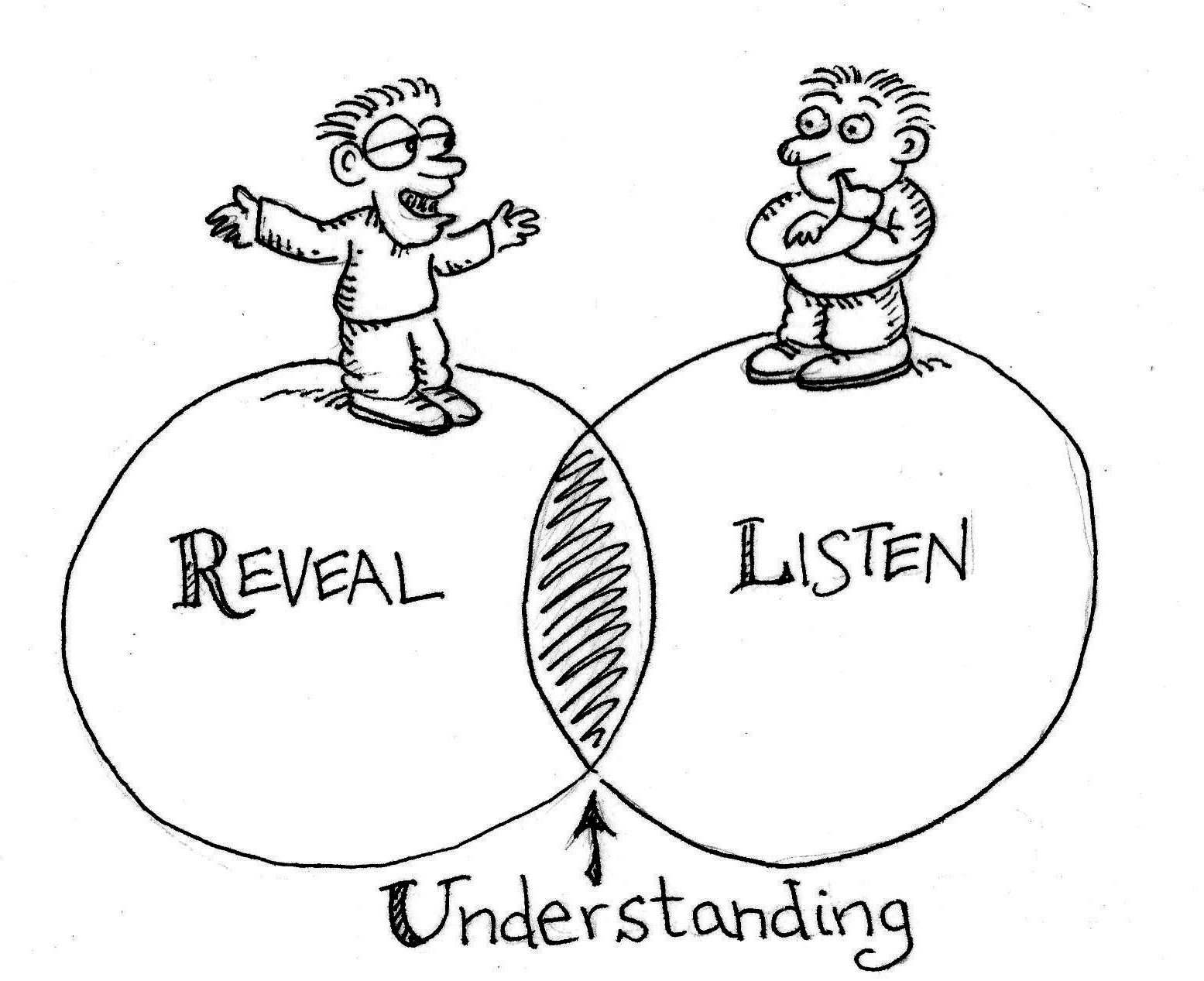
Although the focus here is on verbal/written communication, never forget the presence of nonverbal communication. Any written messages should be proofread.  We hit send (or replay all!) too fast. It’s not serious when dealing with your friends, but when communicating with administrators, teachers, and parents it communicates a message about your skills and how much you care about what you are saying.  When it’s important, I create my emails in Word first and then do a copy/paste.

non-verbalWhen you are speaking to someone, watch their non-verbal communication.  Are they subtly checking the time? Are their eyes glazing over?  Do you need to rephrase for their understanding or is it time to bring the conversation to an end?  Stay aware.

Good communication skills can be learned and can always be improved.  Practice makes perfect – or at least better.  How well do you communicate?  What’s your best medium?  What do you need to work on?

ON LIBRARIES: Thankful for the Library as a Safe Place

Safe place2One of the most recurrent phrases in school library Visions (and sometimes in Mission Statements) is the library is a “safe, welcoming environment.” By implication we mean “for all.” We have read many testimonies to that truth from authors (especially, it seems) and others who found the library to be a refuge where they could escape harassment or the pressures of their lives in general whether a school or a public library.

While bullying has a long history, recent events have increased both bullying and fears in schools. In addition, the anonymity and overwhelming presence of cyberspace exacerbates the challenge. As librarians we have an obligation to ensure all our students feel safe—at least in our space, and as teachers to remind students the value in being their “better selves.”

A tall order at any time, but it’s one we can handle. At the elementary level, where you have more control over your lessons begin by using the Thanksgiving and holiday seasons to present a unit on thankfulness and giving. By reading appropriate stories and engaging students in discussions of what they are thankful for and how they would like to give to others, they begin to realize how kindness and generosity become gifts to themselves.be-kind

A member of the School Librarian’s Workshop Facebook group had a great idea.  Here’s what she posted:

                    After discussing, watching short videos, and reading books about kindness this week, my kiddos are writing and drawing one kind thing they promise to do to make the world a better place (kindergarteners drew themselves doing their kind act and told us what to write). I am covering our library windows with them to inspire kindness in our school. So far it’s looking pretty cool!

Besides books from your collection, look for stories of how kids have made a difference in the lives of others. What do they think of the possibility of doing the same?  What could they do?  It might become a class project done in cooperation with the teacher. If so – inform the principal.

Most elementary schools incorporate Character Education into the curriculum and you can easily work from that.  Take whatever theme of the month is being featured, then read and display books on the topic.  Challenge your students to share how they are incorporating that value into their daily life.

Character Education
Character Education (looks like Divergent factions, yes?)

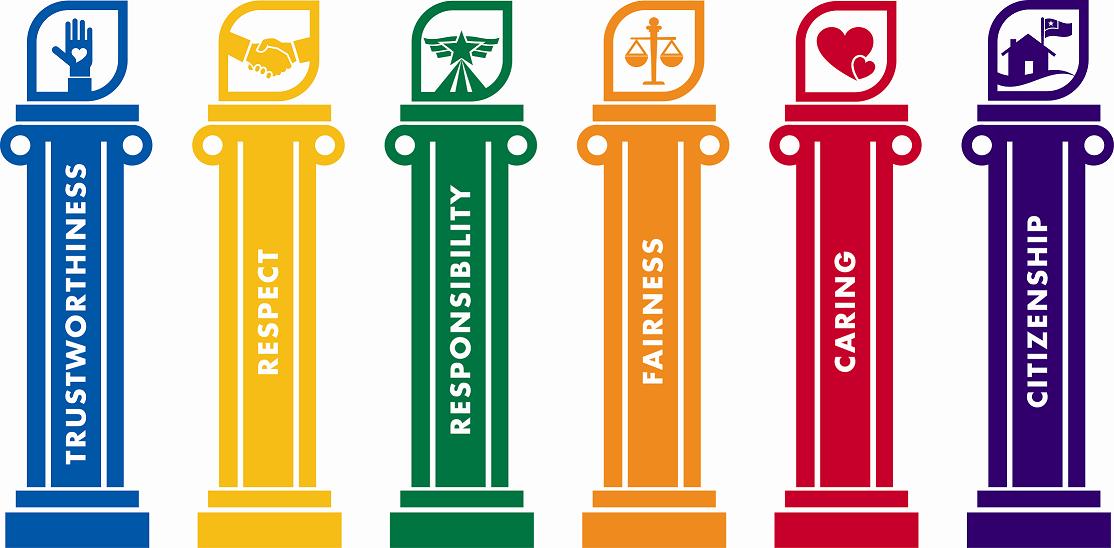
If your school doesn’t do that, you can work with the 6 Pillars of Character from the Character Counts website. The six are:

  • Trustworthiness – Be honest • Don’t deceive, cheat, or steal • Be reliable — do what you say you’ll do • Have the courage to do the right thing • Build a good reputation • Be loyal
  • Fairness – Play by the rules • Take turns and share • Be open-minded; listen to others • Don’t take advantage of others • Don’t blame others carelessly • Treat all people fairly
  • Respect – Treat others with respect; follow the Golden Rule • Be tolerant and accepting of differences • Use good manners, not bad language • Be considerate of the feelings of others • Don’t threaten, hit or hurt anyone • Deal peacefully with anger, insults, and disagreements
  • Caring – Be kind • Be compassionate and show you care • Express gratitude • Forgive others • Help people in need • Be charitable and unselfish
  • Responsibility – Do what you are supposed to do • Plan ahead • Be diligent • Persevere • Do your best • Use self-control • Be self-disciplined • Think before you act • Be accountable for your words, actions, and attitudes • Set a good example for others
  • Citizenship – Do your share to make your school and community better • Cooperate • Get involved in community affairs • Stay informed; vote • Be a good neighbor • Obey laws and rules • Respect authority • Protect the environment • Volunteer

With a few minor changes the examples of how to practice the six pillars come from the website. You don’t have to do them all, and certainly not in that sequence. Obviously a few of the examples are beyond what elementary students can do.  Choose what works in your situation or highlight one a month for the next six months.

It may be more difficult to introduce these themes at the middle and high school level where you need to connect with a teacher to be able to create an appropriate unit.  Social Studies is your primary target but you might be able to work with an English teacher having kids research and create a project. If you focus on harassment and bullying, Health teachers are another possibility.

You can find many helpful resources on Teaching Tolerance a project of the Southern Poverty Law Center.  Click on Classroom Resources for lesson plans that give the topic and grade level.  Southern Poverty Law Center also provides a free magazine to teachers and librarians that’s worth getting.teaching-tolerance

Much of this also comes under the heading of Social Justice, although I didn’t use the term because it has so many meanings and I wanted to focus on the importance of guiding students to becoming more caring people. Even without a unit on the subject, students should recognize through your modeling and behavior that the library is always a safe, welcoming environment for all.

What have you been doing to create that feeling in your library and your school?

ON LIBRARIES: Doing It Together

fishAre you a loner?  I don’t mean someone who doesn’t like to socialize. I am referring to the type of person who prefers getting a job done alone, without help from others. Since you are a librarian, you want to work collaboratively or, if you are on a fixed schedule, cooperatively with teachers. Doing it together would be the way to go.

For most teachers, their classroom is their kingdom and they run it the way they like.  Once they close the doors they are in charge. They are loners and they like it – and if they become librarians, they carry this outlook with them. Although librarians bemoan the difficulty they have in getting teachers to collaborate, the truth is, many teachers don’t like to collaborate with any one.

This is a generalization, of course. It doesn’t apply to all teachers, and with the formation of Professional Learning Communities (PLC) in schools, more of them are sharing their lesson plans and experiences with their colleagues, even if they don’t do so willingly.

I can remember when students hated to do a group project but today’s students by nature prefer to work with others.  They discover the latest app from their friends, game in partnership, and share information is their preferred learning style.  They are comfortable in the participatory culture.

I honestly believe most librarians are now this way as well but we need to recognize the presence of the secret loner within ourselves and the not-so-secret loner inside teachers. We often blame teacher reluctance to work with us on NCLB and the Common Core, but in reality it has always been this way.  The pressures have just made it more noticeable.together

How can you convince teachers that doing it together is better? (And convince some of you as well.).  Long before NCLB and the presence of computers in our lives, I struggled to get a science teacher to bring her students to the library.  She taught a special course called The Human Experience (THE) which connected science to everyday life.

THE was exciting and relevant. Among other things, kids learned about heart transplants and how they worked.  The course content was solidly packed and the teacher felt she had no time to “waste” in the library.  Sound familiar?

Because we had a good relationship, (you might remember how I have stressed the importance of building relationships), she grudging gave me one class period to work with her students on their current research assignment.  I discussed research strategies with them and showed them the resources (all print at the time) that would best meet their needs.

When the assignment was complete the teacher was extremely pleased. The kids had done a much better job than in the past.  What amazed her even more, was that the one day in the library had a positive effect on the rest of their projects during the year.  The next year, she sought me out to begin collaborating often.

together-2Not only did the students learn something valuable, the teacher did as well.  As a side note, the teacher went on to become a principal.  Her views on the value of the library and the librarian came with her on the administrative level.  It’s amazing how we affect our future positively and negatively by small actions.

I understand the inner resistance to working together.  Time is precious.  You know what has to get done.  Someone else might not bring the same commitment to the task.  It won’t come out the way you intended.  But that’s not all bad.

copyright Leo Lionni

In getting over my own “loner’ tendencies, I discovered some basic truths I think our students already know. No matter how smart you are, you don’t know everything.  And while someone else might not have as much knowledge as you on a given subject, the differing perspectives very often brings about a richer final product.  And like the teacher, we all learn and grow in the process.

Are you a loner or a natural collaborator?  How can you get passed any loner tendencies you have?  What have you learned as a result of collaborating?

ON LIBRARIES: Show Me The Evidence

evidence-2 We live with assessment every day.  High stakes tests are used to determine what students know and whether you are doing a good job.  The tension it causes leads many of you to dislike the term, and yet it remains a critical part of teaching and leadership.

When you teach you are always assessing your students’ progress and that is the mark of a good teacher. But how often are you assessing your library program?  Is it as good as it can be?  What can you do to make it better?  That form type of assessment is necessary if you want your stakeholders to recognize your value and that of your program.

You are probably aware of Evidenced-based Practice (EBP) which started in the medical profession, but you may have dismissed it as too complicated to add into your already crowded day. Just because it sounds very academic doesn’t mean it’s difficult.  It’s as hard as you make it—or as easy.

To review for a moment. There are three aspects of EBP.

  • Evidence for practice involves using the research to determine best practices.
  • Evidence in practice is taking the research evidence coupled with your own evidence (possibly from your formative assessments with students) to identify what is necessary to improve your program. Here is where you want to connect what you are doing to the Mission and/or Vision you have for the library. It is how you transform learning.
  • Evidence of practice is the results you get. The data you collect from using evidence in practice showing the outcomes of what you put into practice.assessment

For more on the subject you can go to Ross Todd’s 2008 article in School Library Journal, “The Evidenced-Based Manifesto for School Librarians.” The article points out a number of ways you can gather evidence including student interviews, their reflective journals, and surveys.  While these may still feel like a lot of extra work, you need to build a portfolio documenting your accomplishments. To remind yourself of some of the significant research go to Scholastic’s School Libraries Work 2016.

Although the academics might not fully approve, you can also get your evidence in somewhat less formal ways.  If you are focusing on a specific change in practice, perhaps developing students’ ability to think critically or building their understanding of digital citizenship, you can create exit tickets to determine how close you came to achieving your goals.

Why is all this important?  Many years ago a principal came to me and asked if we could speak confidentially.  I had worked for him at the elementary level before transferring to the high school. He had a problem with his current librarian.  His difficulty was while he could go into any classroom and see whether the teacher was doing a good or poor job.  He was at a loss to do the same with the librarian.

This should sound familiar to those of you who say, “My principal doesn’t know what I do.” I took an hour to go over the many big and small ways a librarian impacts student learning and helps teachers, even good ones, do a better job. Feeling more capable of evaluating the librarian in question who was up for tenure, he went back to his school. (For the record, she wasn’t rehired.  He did have a sense that something was wrong, but he had no resources to substantiate his feelings.)

Action Research is very similar to EBP and you may find it easier to do.  First of all it is not research in the typical sense.  Rather you embark on a series of steps:

  • Identify a problem
  • Gather and interpret data on the problem
  • Create an action to address it
  • Put it the action into practice
  • Evaluate the results

portfolioIn many ways, you may already be doing this, but not formally.  For example, your students turn to Google all the time instead of using more helpful databases.  So you incorporate a mini-lesson on one or two databases in connection with a research project they are doing.  Then you observe them in action and check their work-cited page. All that work but you have no evidence to show for it.

Instead document it from the beginning.  You have identified the information.  Now gather evidence of them at work, even if its anecdotal record what you observe and date your observation.

Your lesson plan is the documentation of the action you put into practice. For the results you can record them in action and their work-cited.  You also use a survey (before and after if you like) to show their past practice in research, their change, and whether they found it worthwhile. You now have evidence of the efficacy of your instruction.

Bring a portfolio of your EBP and /or your Action Research to your annual evaluation.  Even better  – share it with your principal (and your board if you reach out regularly) as you complete it.  Included highlights on your quarterly reports.  Not only will you principal know what you are doing, he or she will value the contribution you are making to the educational community.

ON LIBRARIES: Tackling Controversy

election-2016We are two weeks away from the Presidential election. Social studies teachers usually respond with a short unit on the subject looking at past history and the process itself.  Normally, emotions and opinions run high as the election approaches particularly among older students, some of whom might be eligible to vote for the first time.  However, this campaign has been far from normal.  The level of acrimony coming from supporters on each side is creating stress and arguments within families and among friends.  It’s tempting to step aside and not deal with it.

Yet we have an obligation to tackle it.

We need to find a path that allows our students to learn from what is happening, develop a deeper understanding of this election in context of what has gone before, and discuss it without hostility.  A tall order when our own feelings are also heavily engaged.  To do so, it’s necessary to focus on what you want to achieve with the unit and set ground rules from the beginning.controversy

For all grade levels, formulate the Essential Questions you want students to explore. Possible ones are: Why do we have elections? Should we continue to have an Electoral College? What causes political parties to change their views over time?  Why has this election campaign been so different from previous ones? The first would work well at the elementary level and will have a deeper analysis with high school students.

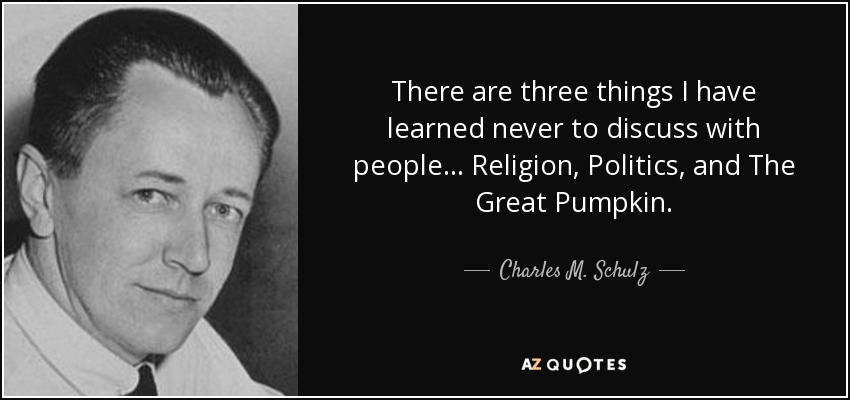
Once you know the direction you are taking, set up ground rules to ensure the exploration and discussions don’t descend into the rancor that has typified this campaign. A number of indicators in the AASL Standards for the 21st Century Learner refer to being able to do such things as “Maintain a critical stance by questioning the validity and accuracy of all information” (1.2.4), “Consider diverse and global perspectives in drawing conclusions” (2.3.2), and “Use knowledge and information skills and dispositions to engage in public conversation and debate around issues of common concern.” (3.3.3).great-pumpkin

In your first meeting with students have a brief discussion as to why ground rules are necessary. Acknowledge the emotions common this year about the election and the candidates.  Ask students to raise their hand without any comment if they feel strongly in favor of one of the two major candidates.  Then let them know there will be no attempts to change anyone’s preference and there will be no criticism of the candidates. Unlike what is happening on television, social media, and news outlets, the discussions will stay on target.  There is to be no name-calling, shouting over each other, or accusations about the other candidate.  Be open to having students add any ground rules.

If students are exploring the candidates in this election, have them work in pairs to research the candidate they prefer.  Using a lesson plan that ties into your Essential Question(s) direct students to get started.  One resource to use is Scholastic’s website or check out Edutopia’s Election 2016: Lesson Plans and Digital Resources for Educators.

factsAlthough at a far higher level than usual, candidates and their supporters regularly accuse the other side of lying. News media do fact checking, but students should learn how to so on their own. Get Your Facts Right – 6 Fact Checking Websites That Help You Know the Truth has three to verify political statements plus other for email scams and hoaxes.

When your project is complete and students come together for a final discussion and sharing, review the ground rules which should be posted. For those old enough to use the political fact checkers, have them discuss what they learned from it.  As much as possible, ask if they have verified a statement. Wrap it up with their responses to the Essential Question(s).

How are you handling this election?  What are you teaching your students?


ON LIBRARIES: What’s Your Philosophy?

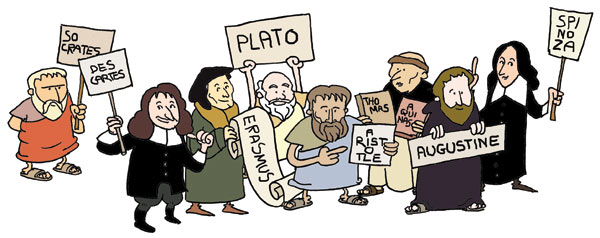
philosophersI’ve blogged about writing Mission and Vision Statements because I think they are vital for keeping grounded and focused in the hectic day-to-day life of a school librarian. However, I haven’t discussed the importance of a having a written philosophy.  It’s been included in several of the books I’ve written for ALA Editions, and I have students in my Management of the School Library course do one, so I think it’s time to put the need for one in the spotlight.

A philosophy is a statement of beliefs.  It identifies your core values. The AASL Standards for the 21st-Century Learner begins with nine “Common Beliefs” which in many ways constitutes the beliefs of the profession. These beliefs are a good place to begin framing your own philosophy.  What is it you hold dear?  What do you feel is essential to your personal definition of what a library is?  What are you willing to fight for?libraries-transform

I embrace all nine Common Beliefs but the one that means the most to me is “Equitable access is a key component for education.”  I couple it with another core value of mine,   “The library is a safe, welcoming place for all its users.”  The two don’t seem to be linked, but in many cases they are and I deeply believe that when the two come together, it can transform the life of a child.

“Equitable access is a key component for education” is a growing concern as the digital divide continues to increase.  Students who don’t have Internet or even a computer at home are at a serious disadvantage. We get stories of students who hang around the school where they can pick up free Wi-Fi for their phones so they can do searches for their classes.  But homework cannot be done on a phone.

As a librarian, I believe you have an obligation to do whatever you can to help those students.  It may mean getting a grant to have the library open after school to accommodate those without home computers.  It means making teachers and administrators aware of the problem.  Too often we take access to the Internet as a given.  The flipped classroom is a great idea.  But it doesn’t work for those who can’t go online.

my-new-philosophy

A basic truth is that schools and school libraries are not funded equably, sometimes even within the same district.  We always assume this is true in urban areas but rural communities are often in even worse shape. The lack of access to computers is only one aspect of the problem. The ones who need the resources the most are the very students whose schools have libraries with aging collections, if they have a library, and quite possibly no librarian.

ALA has recognized this lack of “equitable access” and is in the process of drafting a resolution on “Equity for All to School Libraries Community.”  It’s still be worked on, but the key points are to have ALA work to get certified librarians in all schools, equitable funding for all school libraries, and work with research committees to document the disproportionate cutting of resources affecting racial and economic populations.

Those are lofty goals. If and when it’s passed it won’t compel districts to hire librarians or fund libraries.  But by putting the weight and lobbying power of ALA behind the resolution, we can raise awareness. And as ESSA is being fleshed out, we have a good chance of making some significant changes. (Be sure you keep aware of what ALA/AASL is doing to keep librarians and libraries positioned to take advantage of all that is in ESSA.)

“Equitable access is a key component for education” is also about intellectual freedom.  I have blogged about Censorship and the lonely courage of a librarian who chooses to purchase a book, recognizing the subject matter is one that may raise challenges. We are all aware that a LGBTQ book will bring out censors in many communities.  But those are the very places where a LGBTQ child feels most vulnerable.

A book, fiction or nonfiction, can help those kids see they are not alone. They can even discover they are “normal.” It can direct them to sources for help and advice.  And this gets back to my other core value of the library being a safe, welcoming environment.

Print
Print

We have heard from authors and others that the library was a sanctuary for them.  A place where they sometimes could hide and feel safe from whatever and whoever threatened them.  We know schools have anti-bullying codes, but much happens in a school that flies under adult radar.

As a librarian, keep a watchful eye for those who escape to your library.  Sometimes you can have them become “library assistants,” letting them avoid lunch in the cafeteria. You may find you become a confidante and then must travel a careful line between holding their confidentiality and knowing when to contact a guidance counselor or an administrator.  You once again are making lonely decisions.  I have made a few such in my career.  The student never knew how nervous I was, trying to do what was best for the child without violating school policies.

In making these tough decisions it pays to have a written philosophy. It’s longer than a Mission or a Vision, so you have room to include all the beliefs you have about what a library needs to be.  You can mention collaboration, and opening students’ minds to the world around them, helping them become independent learners and critical thinkers.

But you also must include how the library must feel for all its users, whether the child who is keeping his or her homelessness secret, a kid whose parent is  in prison, or one who is abused at home.  The library must be there for them, and so must you be.

As you write your philosophy, you will find out who you are at your core. You may eve revise your Mission or Vision as a result.

Do you have a philosophy?  What is the most important belief in it?


ON LIBRARIES: Why Librarians

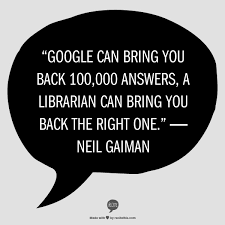
neil-gaiman-quoteTight budgets have given rise to administrators wondering why they need librarians.  Too often they decide librarians aren’t really necessary.  We know otherwise, and if we want to change that mindset we need to speak out where the power stakeholders can hear us.

A few days ago I was contacted by a librarian who was going to be speaking to a county superintendents’ meeting.  She had fifteen minutes to answer that question.  It was a wonderful opportunity and somewhat intimidating at the same time.  At least she didn’t have a problem addressing a large group.

Although you may cringe at the thought of speaking before such a group it is something you all should consider.  In order to be a leader – and leadership is not an option, it’s a job responsibility –you must be willing to step out of your comfort zone.  There are opportunities to get the word out.  Sometimes you can have five or ten minutes at a Board of Education meeting.  Ask to speak at an administrators’ meeting.  The parent teacher organization at your school is another possibility.ray-bradbury

Once you have found an audience, you need to prepare your talk.  Look through your photographs of students at work in the library.  Short videos are good as well.  Don’t have them? Take them now so you will be ready.

Use Piktochart or Google slides as a backdrop to your talk. Make sure it isn’t text heavy. Have an unexpected beginning to capture attention.  Pose the question that’s in back of their minds:

Who needs librarians? 

We have the Internet.  Kids are wedded to their devices anyway.

Libraries and librarians are nice, but in time of tight budgets we can only afford vital.

Now answer your question. “Guess what?  Librarians are more vital than ever.”

neil-gaiman-quote-2From that you segue into the heart of your presentation saying something like, “Rather than giving you a long list of what librarians bring to students and the educational community as a whole, I will give you two big ideas”

The idea here is to keep it simple and make an impact. Point to the two strong areas of school library programs.

  • Love of Reading
  • Lifetime learners

First, the love of reading. Acknowledge that your audience may be thinking you don’t need a librarian for that.  Classroom teachers and literacy coaches handle that.

Not exactly.barbara-kingsolver

They teach HOW to read.  Librarians make kids WANT to read and that makes all the difference in the world.  From the elementary librarian reading stories that enchant kids while developing their visual literacy and ability to derive meaning beyond the text to the high school librarian who knows it’s never too late to connect a kid with just the right book that matches his/her interests and ability, the school librarian’s passion for the magic of books is contagious and kids get it.

(Can you think of a personal story that illustrates that.  Tell it.  Stories make the biggest impact.)

 Correct another misconception by saying, “and before you suggest that the kids want everything online, Pew Research studies have confirmed several times (as does the experiences of building librarians) that kids prefer to read print books.

cutting-hospitalsAs educators we all know “kids who read succeed.”  It’s true for many reasons.  In addition to reading building vocabulary and writing ability, it also expands awareness of the larger world, creating understanding of different times, places, and ways of life in a manner no textbook can ever convey.  Because books are personal.

And the second reason we need librarians is the importance of cultivating lifetime learners. The world is changing rapidly.  What students learn today can be obsolete in a few years. It’s not the content that’s important. In 2005, Thomas L. Friedman in The World is Flat said the most important skill we need to teach our kids is HOW to learn.

And that’s what a librarian does.

Working collaborative, cooperatively, or solo if necessary, the librarian creates learning experiences that have students discovering how to find out about a topic they are interested in and do so ACCURATELY.

Through giving students room to choose what aspect of a topic they want to explore – which makes it of PERSONAL interest to them—and then guiding them through a research process which leads them to deeper and critical  thinking about their topic, and has them produce new knowledge.  Our students find out that the questioning process is more significant then answering test questions correctly.  If a student merely answers teacher generated questions they prove they have mastered the content – that which is already known – by developing questions and finding solutions they become innovators – and that is where the future lies.neil-gaiman-quote-3

(Again, add any personal stories you have here.)

Interestingly enough, numerous research studies have shown that students in schools with a certified librarian and an active library program do better on high stakes tests. Download School Libraries Work and give out copies.  If you can manage it also give them a print copy of AASL Standards for the 21st Century Learner (bundle of 12 for $15.00). Tell them to look at p.3 to see just the 4 standards.)

 Move toward your closing by saying, a school librarian effects the whole school community thorough tech integration, being an Instructional Partner, and giving professional development for teachers – and there are research studies to show that. (See ONE COMMON GOAL: STUDENT LEARNING Report of Findings and Recommendations of the New Jersey School Library Survey Phase 2  p.23 and after for how the library affects the school culture.)

dr-who-quoteFor your closing go to the ALA initiative Libraries Transform for some great quotes. Searching Libraries Transform on Google gives you images you can copy.

Also go to http://www.ala.org/aasl/advocacy/tools/transforming and download the infographic.

Have you made a presentation on Why Librarians?  If not, where can you give one?

ON LIBRARIES – Dress for Success

dress-for-success-1I am taking on a somewhat controversial topic.  Not everyone sees this as necessary, and it’s not the most important thing you can do to promote your leadership.  However, with so much at stake to keep library programs and librarians visible and vital, I believe we should use every tool available to us.

You know that you communicate a great deal without words. When you walk into a room, before you say anything, you have sent a number of messages. Some are totally unfair as people will make judgments based on arbitrary prejudices such as age, weight, and any number of other irrelevant criteria.

body-languageIn addition to visual clues, body language tells a lot about what you are thinking and how you are feeling.  Arms crossed signals you are closed.  Whether you look at people or away from them reveals how secure you are feeling. Tight lipped smiles shows you are hiding something or feel insecure. You make these decisions about others.  They do the same about you.

How you dress also sends messages. I go to every ALA and AASL Conference and I am always amazed at how easy it is to distinguish between the vendors and the librarians in the halls and elevators.  I know many librarians feel they can relax and dress solely for comfort, but I have a feeling that many of them dress that way when they are in their schools.

wonder-womanLook around your building.  Notice how the teachers dress.  Is there a difference between those who are well-regarded and others?  The dress of the secretarial and clerical staff is rarely the same as what teachers wear.  Paraprofessionals and aides mostly have their similar dress “code.” This is not a hard and fast rule.  There are always exceptions, but in general this holds true.

Now look at how administrators dress.  Compare that with what you wear.  Where are you on the scale?  If you look like some of the less-regarded teachers you are opening yourself up to being ignored or not valued highly.  If your clothes are similar to teachers who are highly regarded you are in a better position.

But you want more than that.  You want to be viewed as a leader.  Increasingly you will be in the presence of administrators. If you look as though you are one of them, you will be treated as though you are.  It may seem shallow, but it’s effective.

I have known a few librarian leaders and one administrator who didn’t “dress for success” who are highly respected, but they are rarities.  They are incredibly skilled at showing their worth and so were accepted by everyone for the leaders they are. You, on the other hand, may still be at a place where you want to prove yourself and emerge from how you are currently perceived.dressed-professionally

Dressing for success is much discussed in the business world, but hardly ever mentioned in education. Indeed, in some corporations a person who is being primed for promotion to higher levels of management might be sent to a personal shopper to be able to present a more polished, successful appearance.  Unlike the corporate world, in a school system, upgrading your wardrobe doesn’t mean you will be purchasing clothes with designer labels, but being mindful of the message you send with what you are wearing is important.

A reality check is necessary here.  If you are at the elementary level, skirts and dresses for women and suits for men are impractical.  You frequently get down on the floor to work with kids.  However nice pant suits or their equivalent and ties and such for men are a subtle change that will be taken in subliminally as part of your message.

While you are unlikely to work on the floor with students in high school, the same suggestions can hold.  Most important at any level is to feel comfortable with what you wear. Jewelry that is too flashy and earrings with long dangles are generally to be avoided as they are distracting.

shoes2Shoes are another consideration.  High heels for women are impractical unless you are very accustomed to moving with them on. Sneakers, on the other hand, need to be carefully thought out.  Some are far too casual. Others might work depending on what the norms are in your building and district.  Although it’s not fair, men are more easily able to get away with them.

In becoming a leader, it pays to be mindful of things big and little.  You show your leadership in what you do and how you are and that is what is most important. But you don’t want the small things to take away or diminish in any way from how you are perceived.

Are you mindful of how you dress? Do you think it matters in your building and district?

(EDITOR’S NOTE Based on a section of Hilda’s forthcoming book Leading for School Librarians: There is No Option.)

ON LIBRARIES – Are You a Professional?

professional-2Of course you are. But what exactly does that mean?

The term came up when I was talking with my editor at ALA Editions.  I had just submitted the manuscript for my new book, Leading for School Librarians: There is No Option. It was slightly more than a month ahead of deadline and at something over 64,000 words met the contractual target of 55,000-65,000 words.  She also knew I completed it in less than five months while continually teaching several online courses, and she said in admiration, “You are a professional.”

It’s lovely to hear something like that and it took me back over thirty years to the superintendent of schools where I was working.  She skillfully led a district which voted down budgets twenty times in the twenty-two years I was there.  Knowing she had to operate on a shoestring, she very successfully learned the art of complimenting in ways to get faculty to do and give more.  In our conversation, she said “I can always count on you. You are a true professional.” I beamed and, of course, I did what she wanted.

But I have now begun thinking what does it mean to be a professional.  Of the definitions in Merriam Webster, one is particularly relevant –“relating to a job that requires special education, training, or skill.” School librarians certainly meet that criteria.

In the more expanded form the criteria is somewhat less universally true of librarians. While many are “characterized by or conforming to the technical or ethical standards of a profession,” there are some who are either unaware of the ALA Code of Ethics or haven’t consulted it in a very long time and are not always following it. Indeed a far-too high percentage of school librarians don’t belong to AASL and some don’t even belong to their state library association.  Can you imagine a doctor who isn’t a member of the American Medical Association or a lawyer who isn’t a member of the American Bar Association?

Still not convinced I had addressed all the connotations of “professional,” I turned to the business world and found these two definitions in the online Business Dictionary:professional

  1. Person formally certified by a professional body of belonging to a specific profession by virtue of having completed a required course of studies and/or practice. And whose competence can usually be measured against an established set of standards.
  2. Person who has achieved an acclaimed level of proficiency in a calling or trade.”

Librarians do meet the first definition, but the only “acclaimed level of proficiency” we can attain is probably to have a NBPTS Library Media certification. It certainly demonstrates you are a professional, but only a small percentage of librarians have undertaken that arduous and costly route. (There are sources to help cover the cost.) nb-logo

Being a good librarian—and therefore a good searcher, I continued my exploration of the term professional.  I hit real pay dirt at the Tech Republic site where I found not so much a definition but rather an excellent list of how a professional behaves.   I think this is what we want to take to heart and use to become recognized by others as a “professional.”

Put Customers First

In order to meet this requirement, you have to identify your customers.  Your students are your obvious customers, but so are teachers, administrators, and any number of other stakeholders.  It means they will always have priority over any tasks waiting your attention. “Professionals identify and satisfy their customer’s needs.”

Make Expertise Your Specialty

If you are a professional, you are an expert at something.  Recognize the areas where you are an expert.  Know why this expertise is important to customers.  Keep getting better at it. And incorporate your expertise into your Mission Statement so your customers know the benefits they get from working with you. And you become more valued. “Professionals know their trade.”

Do More than Expectedexceed-expectations

So many of you are doing this.  Your day extends before and after the school day.  You also may be giving teachers more help than they expected from you.  Perhaps you send them weekly emails on online tech resources or apps they can use with their units and volunteer to help them master the sites. You go the extra mile with a student who is struggling to complete an assignment but has limited access to a computer and/or the Internet at home.  “Professionals meet or exceed expectations whenever possible.

Do What You Say and Say What You Can Do

Don’t promise more that you can deliver.  You can always go beyond what you promised (see above). You want your “customers” to know they can trust and count on you.”  It can be easy to get caught up in the moment either touting what school library programs can do or wanting to be seen as invaluable to a teacher, that you go beyond what is in your power to do given your staffing and time.  “Professionals deliver on promises made.”

Communicate Effectively

We are great communicators, but not necessarily on all platforms.  In today’s world you need to be able to send emails, create compelling reports, text on occasion in the education world, develop informative websites, tweet, and speak effectively and to the point. In addition, you need to know the best medium for your message.  It’s a tall order but if you didn’t choose the most effective means for a particular message, it’s likely to be overlooked or, worse, misinterpreted. “Whether verbal or written, professionals communicate clearly, concisely, thoroughly, and accurately.”

Follow Exceptional Guiding Principles

In this case, it’s back to the ethics of our profession as well as the Common Beliefs of the AASL Standards for the 21st-Century Learner. Know and practice them. “Professionals adhere to high values and principles.”

good-jobPraise Your Peers Not Yourself

Always find opportunities to put teachers (and any staff you have) into the limelight. “Professionals are humble and generous in their praise of others.”

Share Your Knowledge

Of course.  We wouldn’t be librarians if we didn’t do this. “Professionals help their peers and are respected for doing so.

Say Thank You

I learned a lot from that Superintendent of Schools. A well-thought out thank you goes a long way. “Professionals thank others in a meaningful way that most benefits the recipient.”

Keep a Smile on Your Face and the Right Attitude in Your Heart

We want the library to be a warm, safe, welcoming environment. A smile is a good start.  And if you have a positive attitude it will be read in your body language.  Most communication is non-verbal. “Professionals are pleasant even during trying times.

You probably do more than half of these. Are there any that you need to cultivate?  My certification as a public librarian is “Professional Librarian.”  I wish the one for school librarians carried that designation.  Even so consider yourself a “Professional School Librarian” (or whatever you are called in your state), and work to be sure you live up to that every day.


ON LIBRARIES – To Be Valued and Valuable

the-future-starts-todayThe libraries, librarians, students and teachers of tomorrow — need you NOW.

I have been writing for school librarians since 1979.  I have been speaking and presenting to them for almost as long. Many would say those first years –1980’s and 1990’s – were a golden age for school librarians.  Certainly we weren’t seeing librarians being eliminated, but the times weren’t perfect and many of the seeds of today’s challenges were planted then.

While this look at the past may seem laden with doom and gloom, hang on.  There is light at the end of the tunnel.  You can and must be part of the change. Yes, you are part of that light.

Articles in the early issues of School Librarian’s Workshop dealt with budget constraints.  Libraries still got money, but it was often cut.  Principals saw that large chunk of funds as a source for some of their pet projects.  And how did the librarians respond?  They complained to their fellow librarians.  “Woe is me. My principal doesn’t see the importance of the library program.”library-closed

Sound familiar? I would give a workshop at a state conference—usually my home state—and invariably one or more librarians would tell me, “My principal has no idea what I do.”  There is a connection between an administrator having no idea of what you do and not recognizing the importance of the library program. But too many librarians didn’t want to undertake more work to change perceptions.

Time and again, I was told by elementary librarians, “I am needed because I provide teachers with their contractual duty-free period.” The unsaid message was, “my position is secure.”  I would respond that times change and so do contracts.  The answer mostly fell on deaf ears.  These same librarians would also complain that teachers dropped their class off and came back to pick students up without caring about what happened during the “library period.”  “They think of me as a babysitter.”  Yet, the librarians did nothing pro-active to raise teacher awareness.

perceptionAt the high school level, more librarians had staff and reasonable budgets, but these were cut on occasion as well.  Teachers who liked libraries and had a project would bring their classes in. Some of them worked with the librarian.  So in a typical high school, English and History classes were likely to be the only ones who ever used the library.

High school librarians had rules.  I know of one situation where the two librarians would not schedule all the sections a teacher had for the same day. Too much work.  They only permitted teachers who gave them a copy of the students’ assignment to be sure the period wouldn’t be used to give the teacher a break.  Students were allowed in the library at lunch only if they had work to do.

This is not what school libraries are like to today, but this is what they were like for a long time and what teachers saw.  Librarians had a cushy job. A number of those teachers went on to be administrators.  They took their perceptions of the librarian and the school library program with them.

In 1997, Gary Hartzell wrote a two-part article for School Library Journal on “The Invisible Librarian.”  He pointed to the omission of the role of librarians in teacher training, the absence of librarians in many professional organizations, and the difficulty in measuring the value of librarians contributions. There was general agreement with Hartzell’s views.  Librarians saw it as confirmation that they were ignored and one positive result emerged.  Library researchers began investigating the contributions of a library program and developed ways to measure them. Those studies continue being made today. steve-martin

Unfortunately, most administrators and lawmakers don’t seem to care—or even know about them. They remember the librarians from their early career.  Sure they would have continued library programs and kept librarians, but then the economic crisis hit.  School budgets were slashed.  Time to cut the expendable and not vital. Library programs were a logical place to begin.

In the slashing of programs, many wonderful librarians with outstanding programs were eliminated.  We are all still reeling from how quickly we lost so much.  But bemoaning the past doesn’t get us anywhere. We need to learn from it and use the current scene as an opportunity to emerge better than ever.

The big lesson is, if the school community doesn’t know who you are, what you do, and why it is unique, they won’t value you.  If your principal doesn’t know what you do, how can he or she be expected to see you as vital to student learning and helping teachers teach their students critical thinking and the host of other information literacy skills which are integral to what we do?  You must always find creative ways to let your administrators know about student projects and activities you developed in collaboration, cooperation, or conjunction with teachers.

because-of-youYou must make your presence known.  It’s imperative that you step out of your comfort zone and become a leader in your building.  By working with teachers, helping make their jobs easier, showing them how to integrate tech into their lessons, you become invaluable to them.  They know what you do and want more of it.

Serve on building and district communities to show how you contribute. And finally, you must help other librarians in your district be leaders as well.  The past has shown us it’s not enough for one of you to be great.  The broom sweeps out everything at once.

You must do whatever you can to build that advocacy program.  Get ideas from the AASL Health and Wellness Toolkit. Look for programs on leadership and advocacy at your state association’s conference.  Re-read the blog from two weeks ago on mentorship—and become one.

And if you need an incentive, think of Elizabeth Warren’s quote: “If you aren’t at the table, you are probably on the menu.”

How are you demonstrating leadership? How are you building more leaders? How are you contributing to the future of school libraries?