ON LIBRARIES – Are You a People-Pleaser?

From https://livelearnwrite.com/2016/10/13/how-being-a-people-pleaser-can-effect-your-future/

Or do you please people?  There is a big difference between the two, and it’s not just semantics. The second is a successful leader. By contrast, it’s impossible to be a leader and a people-pleaser.  It may seem as though it’s the safest approach to ensure your position won’t be eliminated, but the opposite is more probable.

There are numerous websites on the characteristics, qualities, and results of people-pleasing. Most of us don’t fall into the full spectrum of people-pleasing as described by psychologists, but too many incorporate aspects of it into work behavior.  Reviewing what is discussed, look to see if you notice patterns that reflect some of your behaviors.

Jay Earley lists the following actions in The People-Pleasing Pattern:

  • I avoid getting angry.
  • I try to be nice rather than expressing how I really feel.
  • I want everyone to get along.

What’s wrong with avoiding being angry or wanting everyone to get along? Doesn’t it make for a better workplace environment? Isn’t that using your Emotional Intelligence? Not exactly.

Emotional Intelligence does require you to manage your emotions, which means getting to the reason for your anger and dealing with it to achieve your goals. Suppressing your feelings means you are making your emotions and yourself less important than those around you.  That is not leadership – or healthy.

The underlying truth to your behavior may be another of Earley’s characteristics—you are afraid to rock the boat, a fear frequently based on the concern that your job and program might be cut. However, you are most in danger of being eliminated if you don’t show your value and being a quiet doormat does not demonstrate value.

Consider what happens if your principal assigns you extra duties or you are told you will be responsible for two schools instead of one. What do you do?  Even though your principal might blame it on the budget situation, should you just accept it as is?

The people-pleasing response is to accept without any comment. This subtly sends the message that it’s no problem for you to take on the extra responsibility.  Which then suggests you have plenty of room in your schedule.  Taking that to the next stop, if you have plenty of room in your schedule, doesn’t that mean that your program doesn’t keep you busy?

If you responded this way, you are not alone.  Many librarians have done the same.  The simmering resentment can then affect how they do their job and their willingness/ability to build a relationship with their administration.  You don’t get to be a leader if that’s how you react.

I am not suggesting you get angry with your principal.  Obviously, you can’t ignore what you are being told to do.  But you can react in a way that will please people – including yourself.

Start by making a list of all your responsibilities.  Take some time to ensure you have identified almost all of them.  As much as possible, do a fair estimation of how much time you spend on each on a daily or weekly basis.   Star anything you definitely don’t want eliminated because it is at the core of your program. In addition, try to determine a fair estimate of the amount of time your additional assignment will take.

Next, set up a meeting with your principal seeking his/her advice and guidance. Explain you want to be sure the students and teachers will be getting the necessary literacy and 21st-century skills after the change in your schedule goes into effect.  Review your list of responsibilities, current and combined. Be clear that some things will have to be eliminated, and you want to have the principal’s agreement as to how to proceed. Also, realize you will have to go along with whatever the principal says you can stop doing.

Yes, you still have the change in your responsibilities, but recognize the difference in how they came about.  You didn’t quietly accept it.  You expressed your concerns, current program needs, and possible sacrifices to the person most able to support you (complaining to coworkers and spouses changes nothing). Your principal had to face the cost of your new assignment.  In the process, he/she was reminded of your value and contribution to the school program.  Managing the request this way will likely leave you with a much greater sense of satisfaction since you have not acted in a people-pleasing manner.

In your dealings with teachers and administrators, you don’t and shouldn’t quietly accept negation of your role while seething inside.  Leaders stand up for their worth.  They don’t do it aggressively.  That loses supporters.  They do it with calm confidence, offering alternatives. We teach people how to treat us.  If you say nothing in response to being minimized, you give that person the right to repeat that behavior.

One of my students in a summer course told me the principal had contacted her to say he was cutting her budget in half, and she needed to eliminate some purchase orders. He added, “I have always been good to you in the past.”  I told her, she could have said, “I saw it as being good for our students and our program, and then laughingly continued if you were being good to me, you would have given me a BMW.”

How have you handled being given additional long or short-term assignments or other changes which were given to you? Were you a people-pleaser or did you figure out a way to please people and show your leadership?


ON LIBRARIES – Know Your Value

Value. According to the dictionary: (1) the regard that something is held to deserve; (2) the importance, worth or usefulness of something; (3) a person’s principles or standards of behavior.  We use the word a lot, too often to bemoan the fact we and our programs are not valued. But there are other ways this word comes into play.

We are committed to our professional values as stated in ALA’s Code of Ethics and the Library Bill of Rights. In addition, some of you have your own professional values encapsulated in a Philosophy Statement which I discussed in a blog last January on the Value of Values.

What I have been calling a Philosophy Statement is closely aligned to what the business world refers to as a Values Statement.  Sounds more important somehow.  The Business Dictionary defines it as:

“A declaration that informs the customers and staff of a business about the firm’s top priorities and what its core beliefs are. Companies often use a value statement to help them identify with and connect to targeted consumers, as well as to remind employees about its priorities and goals.”

Translating this into the education world is relatively easy.  The “core beliefs” are your philosophy.  If you haven’t written one yet, you can base yours on the Common Beliefs of the new AASL Standards. The “top priorities” are what’s new.

Do you know your top priorities?  Those who are working from a strategic plan have at least two or three identified in their goals.  But to what extent do those goals help you “identify with and connect to targeted customers?”  In the case of the library, your customers are your students, the teachers, and the administration.

Crafting a Values Statement is a new way to look at how you focus your program. The Free Management Library: Online Integrated Library for Personal, Professional, and Organizational Development has a web page on the Basics of Developing Mission, Vision, and Values Statements. Review what they have on Mission and Vision Statements, but once you have them, go on to the five steps that describe how to construct a Values Statement.

The terminology may be a bit difficult to wade through at first but you will get the idea.  One of which is that Mission, Vision, and Values Statements are the foundation of strategic planning. And you all need a strategic plan so you are always working toward achieving meaningful goals.

From https://www.chiefoutsiders.com/blog/not-screw-up-value-proposition

In 7 Ways Not to Screw Up Your Value Proposition, Mark Caronna states, “a value proposition is a powerful summary of who you are and what you offer.  It defines what is distinct and valuable for those prospects and customers that you want to reach.”  He goes on to say:

“Your value proposition needs to be solidly founded on your distinctive competencies.  Value propositions aren’t aspirational (that’s the role of a Vision Statement).  They translate what is unique about your business into something unique … and of value to your customers.”

In other words, what does your program provide that no one else in the school does?  And more importantly, what makes it of value to administrators, teachers, and students.  Be sure you frame the statement in words your stakeholders understand.  The simpler the better.

Here is a Values Statement from a public library:

Tompkins Public Library (Ithaca, NY) Core Values

  • A welcoming environment to enjoy the written and spoken word, cultural programs, and the arts
  • A well-maintained and safe facility
  • Lifelong learning
  • A vibrant community and the library’s role in as an active community citizen
  • The importance of continuously evolving to meet changing community needs
  • Privacy and confidentiality in patron use of library resources
  • Intellectual freedom and the freedom to read

And here’s another:

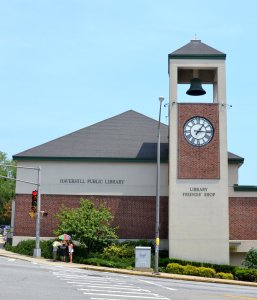
The Haverhill Public Library (MA) – its Board of Trustees, staff and volunteers – is committed to the following values.

  • We value the library as a public forum: it is a community facility for open communication of ideas and information; its collection, displays, programs and services reflect an array of opinions and viewpoints.
  • We value our customers by responding to them with equal, respectful, accurate and friendly service to all.
  • We value reading and learning and promote both for all ages.
  • We value full and equal access to information, the building, its services and its programs.
  • We value the collection of and accessibility to information in all formats: print, electronic, audio and video.
  • We value the community by being active participants in it, endeavoring to enhance the quality of community life.
  • We value the privacy of our users by keeping their transactions strictly confidential.

Note that some statements are about professional values while others are of value to the community. Your Values Statement – best done in a bulleted list as these are—should have a similar mix.

I have long recommended that Mission and Vision Statements be framed and hung where anyone using the library can see them. Your Value Statement belongs on your website, but it’s a bit too long to do that.  Instead, create a word cloud to display your Values.  It will definitely catch the eyes of your users.

What would you include in your Values Statement?  Which ones are of value to your stakeholders?


ON LIBRARIES – Reading Is Required

Between Makerspaces, STEAM, and integrating technology into the curriculum and our own lessons, we can lose sight of a common belief of librarians. It is necessary for us to keep a focus on recreational reading.

Frequently, pressure from the administration and the need to be considered relevant, rather than stodgy, that causes discussions on the importance of recreational reading to be pushed to a back burner. It’s not quite as challenging for elementary school librarians, but for middle and high school librarians championing reading may make you sound tied to the past.

Nothing can be farther from the truth, and we need to be leaders in spreading this understanding.

The challenge is to bring the message in a way that will get heard.  Two weeks ago I shared the Common Beliefs from our soon-to-be published national standards. The fourth one, as I noted, is, “Reading is the core of personal and academic competency.”

A few years ago, I was the AASL representative on ALA’s Committee on Literacy. One of the members shared this visual:

The House of Literacy has many rooms. There is digital literacy, health literacy, legal literacy, computer literacy, information literacy, and an ever-lengthening list of additional literacies.  But the entrance is through text literacy.

Poster available at the ALA store online

AASL had as a slogan, “Kids Who Read Succeed.”  We know this is true.  The benefits students get from reading impacts their entire life.   One reason the many research studies show the correlation between having a certificated school librarian and student achievement is because librarians guide students into becoming lifelong readers.

Although elementary librarians spend a greater portion of the time helping students find the “right book,” than do middle and high school librarians, all of us are hampered when there is a requirement for kids to read at their level.  It is acceptable to use leveled books in the classroom to discover if students are reading at their instructional level, but the recreational level is different and perhaps more important.


Poster available at the ALA store online

If a book interests a kid, the level should never be a consideration.   When students read below their reading level they develop fluency. When they choose to read a book that’s “too hard” as many have done with Harry Potter, they rise to the challenge, learn persistence, and are proud of their accomplishment.


When my now college professor son, was in fourth grade and not wanting to read, I gave him a sports fiction story that was one year below his instructional level.  He could read it rapidly and did.  He loved it and wanted more.  It was a while before I gave him a book that was more difficult.  To this day, he is a reader.

But why do readers succeed?  In my opinion, it’s because of the peripheral information barely noticed while reading which becomes absorbed into the readers’ knowledge base. For as long as the book lasts, you are walking in someone else’s shoes, living their life and during that time a unique type of learning occurs.

I loved historical fiction while I was growing up.  By the time I studied British history, I had an understanding of who Queen Elizabeth I was and the forces that drove her which went far beyond what was in my textbook. I discovered science fiction and began to speculate about life beyond Earth.  The prejudice experienced by some races from other planets helped me look at my own prejudices and laid the foundations for the tolerant adult I hope I have become. Whether I was discovering the work involved in running a farm or seeing slavery through the eyes of a main character, books opened me to the world.  By temporarily living these other lives, I developed empathy for others.

This isn’t limited to fiction. Those who prefer non-fiction expand their horizons as well. When a student reads a biography of a sports hero, he or she finds out about the challenges the player encountered and conquered on the way to achieving success.  Reading about how others dealt with setbacks and persevered becomes a life lesson.

An October 3, 2017 article written by Susan K. S. Grigsby in Improving Literacy and Communication Magazine entitled “Literacy Starts in the Library”  supports my viewpoint. The opening states, “Literacy is the foundation of everything we do for our learner,” and goes on to say, “When students are starting to read, they tap into one of the very things that makes us human: stories.”  This human connection only continues with students who become lifelong readers.

The article is worth your time and should be shared with your administrator as part of a discussion on how and why to increase students’ recreational reading at all levels. Share students’ comments about books they have loved.  Short videos capture the emotion and send a powerful message.

What are you doing to foster lifelong readers? What are your success stories with kids you have connected to the perfect book?


ON LIBRARIES – Emotionally Connected

For several years I have been writing and speaking about Emotional Intelligence (EI) and its importance in leadership success.  Emotions drive us in our lives and are at the root of, according to some studies, at least 80% of all of our decisions.  The more we are attuned to them, the better we can use them to achieve our goals. And when we connect EI with empathy, we have a powerful leadership tool.

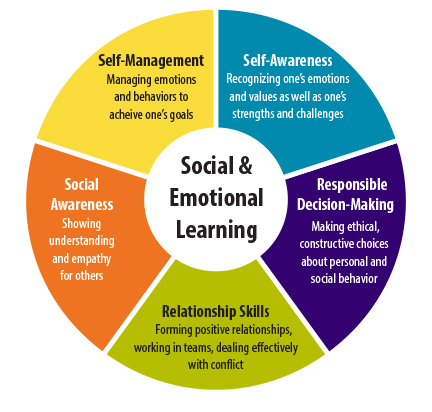
ASCD  began promoting Social and Emotional Learning (SEL) in the late 1990’s. The May 1997 issue of their journal, Educational Leadership  was devoted to the topic, and included an article on “How to Launch a Social & Emotional Learning Program.”  The article discussed attitudinal and logistical roadblocks to instituting a SEL program. Those attitudinal roadblocks are undoubtedly why it has taken so long for districts to develop SEL programs. 

Also in 1997, ASCD published Promoting Social and Emotional Learning by Maurice J. Elias, Joseph E. Zins, Roger P. Weissberg, Karin S. Frey, Mark T. Greenberg, Norris M. Haynes, Rachael Kessler, Mary E. Schwab-Stone and Timothy P. Shriver. In the opening chapter, the authors state,

  • “The challenge of raising knowledgeable, responsible, and caring children is recognized by nearly everyone. Few realize, however, that each element of this challenge can be enhanced by thoughtful, sustained, and systematic attention to children’s social and emotional learning (SEL). Indeed, experience and research show that promoting social and emotional development in children is “the missing piece” in efforts to reach the array of goals associated with improving schooling in the United States.”

The book is still available or you can read it online – amazing to find something from 20 years ago that isn’t completely out of date!

Recently, I have been seeing more districts add SEL to their curriculum. Education is finally accepting the fact that emotions do affect learning.  In New Jersey, my home state, the Department of Education has a page on their website on Social and Emotional Learning filled with helpful links.

Interestingly enough, the website page falls under the heading of “Keeping Our Kids Safe, Healthy & In School” and is part of a section on “Safe and Positive Learning Environment.” While we have recognized for some time that feeling safe is required for learning, it is only recently the role of emotions is being seen as playing an important role in that safety.  Without directly referring to EI, the core of the information shows how to develop and improve EI.

If your district hasn’t gotten started with SEL, discuss it with your principal.  You can start by sharing this PDF from the New Jersey site. You will notice that the first three are the “what” about EI and the remaining two are the “how” to infuse it.

Despite the slow reaction of districts to adopt SEL into the curriculum, librarians have always been doing it even when they didn’t have a name for it.  It’s intrinsic to making the library a safe and welcoming space for all.  Now you have the opportunity of being at the forefront of incorporating it throughout the school.

One aspect of SEL – and EI—that many find difficult to master is empathy. According to LaRay Quy, “empathy is the most important instrument in a leaders’ toolbox.” Good leaders take care of their people who in turn take care of them.  If you are fortunate enough to have a clerk or even more staff, you must take care of them.  But your teachers need care as well, and to do so effectively you need empathy. 

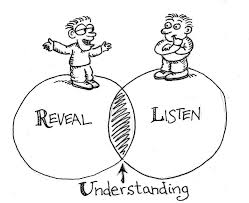
Quy, who used to work for the FBI, notes that empathy is like a mind reading tool.  By being attuned to another’s words and body language you can tell what they are thinking/feeling. To take care of them as you learn what’s going on with them, you can’t make your need to be right a priority.  One of my long-time mottos is, “Do you want to be right, or do you want it to work?” Because if you want to be right, it’s not going to work.

This connects to another aspect of empathy, showing that you value the other person’s work.  As librarians, we know how we struggle to feel validated.  Don’t forget others in education feel the same way. Validated another is a way to start an important change throughout your district.

When you are talking to someone, focus on them.  Look at their eyes even as you note their body language.  Don’t multitask.  This is not the time to go through junk mail, or see if another email has come in.  As with the other leadership techniques, it’s as important to use this with students as with your colleagues.

And if there is someone—teacher or student—who seems to rub you the wrong way, you still have tools that can help smooth this relationship. Start by watching your body language as you interact with them. They may be responding to something they are reading in you. By staying open, you may be surprised to discover you can feel empathy for this person.

Graphic from http://www.teachingwithdesign.com/empathy-skill-sets.html

I remember a teacher who I felt was highly confrontational.  My first instinct was to draw away. But by listening and focusing on what she was saying and her body language, I became aware she was reacting to the way people responded to her.  She was very intelligent and had high standards.  Many students disliked her because she was “tough,” which meant she dealt often with angry parents.  By letting her see I respected her knowledge and valued the way she got her students to succeed beyond their expectations, we developed a wonderful relationship.  She became one of the strongest advocates for the library program.

Does your district integrate SEL into the curriculum?  What training did everyone get? What’s your part?  If your district doesn’t include SEL, how will you bring the idea to your administrators?


ON LIBRARIES – Up To Standards

Are you ready for the new AASL Standards or are you feeling some trepidation about them?  As a leader, you must get up to speed rapidly so you can tweak and revamp your lessons as necessary.  It is natural to want to cling to what you have known and used since 2007, but stop and think — it’s been ten years.  How much has the world changed since then?  How much have you changed? You – and your students – are doing things you couldn’t possibly have done, or even imagined, then.

The new standards will be brought out at the AASL Conference in Phoenix, November 9-11.  I will be there and attending one of the pre-cons on them on Thursday. There’s still time to put in a pre-publication order so you will be ready to go as soon as possible. Click HERE to go to the order page for the standards. And HERE for the Standard Framework preorder.

Meanwhile, AASL has set up a portal to get you started by providing the philosophical base of the new standards.   I recognized the need for new standards but there was so much in the old ones that I liked, I had a few concerns.  Thanks to the portal, I am eager and more prepared to embrace the new. Let’s walk through them together.

Start with the Common Beliefs. The existing standards had nine. The new ones have six. The first,  “The school library is a unique and essential part of a learning community,” promotes the program on a far wider scale than the old which stated, “School libraries are essential to the development of learning skills.”  As in the old standards, a short paragraph explains the Belief in more detail:

  • As a destination for on-site and virtual personalized learning, the school library is a vital connection between school and home. As the leader of this space and its functions, the school librarian ensures that the school library environment provides all members of the school community access to information and technology, connecting learning to real-world events. By providing access to an array of well-managed resources, school librarians enable academic knowledge to be linked to deep understanding.

The second breaks new ground by declaring the worth of librarians. “Qualified school librarians lead effective school libraries,” positions us as indispensable, stating:

  • As they guide organizational and personal change, effective school librarians model, promote, and foster inquiry learning in adequately staffed and resourced school libraries. Qualified school librarians have been educated and certified to perform interlinked, interdis­ciplinary, and cross-cutting roles as instructional leaders, program administrators, educators, collab­orative partners, and information specialists.

Complimenting Common Core, the third belief states, “Learners should be prepared for college, career, and life.”  The explanatory paragraph addresses our unique contribution to student learning:

  • Committed to inclusion and equity, effective school librarians use evi­dence to determine what works, for whom and under what conditions for each learner; complemented by community engagement and inno­vative leadership, school librarians improve all learners’ opportunities for success. This success empow­ers learners to persist in inquiry, advanced study, enriching profes­sional work, and community partici­pation through continuous improve­ment within and beyond the school building and school day.

Mirroring, “Reading is a window to the world” from the old standards, the fourth proclaims, “Reading is the core of

personal and academic competency.”  We must never forget our commitment to literacy and the accompanying paragraph succinctly defines it.

  • In the school library, learners engage with relevant information resources and digital learning opportunities in a culture of reading. School librari­ans initiate and elevate motivational reading initiatives by using story and personal narrative to engage learners. School librarians curate current digital and print materials and technology to provide access to high-quality reading materials that encourage learners, educators, and families to become lifelong learners and readers.

Much like “Equitable access is a key component for education,” the fifth Common Belief is, “Intellectual freedom is every learner’s right.”  Our profession is staunchly committed to this right and has officially been so since ALA’s Bill of Rights was first adopted in 1939.  The new standard states:

  • Learners have the freedom to speak and hear what others have to say, rather than allowing others to control their access to ideas and information; the school librarian’s responsibility is to develop these dispositions in learners, educators, and all other members of the learn­ing community. 

The final Common Belief is, “Information technologies must be appropriately integrated and equitably available.” This is a call to action as so many schools do not have adequate information technologies, and the new standards recognize that with this supporting paragraph:

  • Although information technology is woven into almost every aspect of learning and life, not every learner and educator has equitable access to up-to-date, appropriate technology and connectivity. An effective school library bridges digital and socioeconomic divides to affect information technology access and skill.

Do you think anything is missing from these Common Beliefs?  Don’t be too quick to decide.  The new standards also have six Shared Foundations, summarizing Competencies for Learners. The infographic link shows how learners Think, Create, Share, and Grow with each of them, and how librarians lead the way.

There is certainly lots to take in and learn, which makes me grateful for this preview from AASL. I was very proud in 2007 of the AASL Standards for the 21st-Century Learner. I think I am going to be even prouder to represent and lead from these.  I can’t wait to dig into them.

What do you think of these beginning documents?  Is there anything that stands out for you? Are there any which particularly that excite or motivate you? What are you doing to get ready for the new standards?


ON LIBRARIES: Leaders Keep Growing

Leadership is a journey without an end.  You are either growing or dying.   So how do you continue to grow? Like everything you face in life, it’s a matter of choices.

Consciously or not, many librarians have sadly made the choice not to lead, but for those who have taken steps along that road, after each new step is in place, you want to be looking at where you want to go next. There are many ways to continue your growth, so choose the directions that best meet your needs.

Three weeks ago, I blogged about Leading Larger, suggesting you consider becoming more active at the state and/or the national level.  While actively participating in these associations are the most obvious steps, you might consider moving out of the librarian silo.  For example, at one point in my career, I became the union rep for the high school. I did it primarily to be in a position to advocate for the union’s support for the librarians in the district.  It was an effective move because it strengthened my relationships with teachers, but not one I enjoyed. For those of you who do like it, it’s a wonderful way for informing your teaching colleagues of the contributions school librarians at all grade levels make to students and the whole educational community. You might even become the union president. Those of you who work in states where unions are not permitted don’t have this choice, but you can find other options.

You can join organizations such as the International Reading Association or ASCD (Association for Supervision and Curriculum Development). The latter includes many administrators.  While the journals of both are excellent, to grow your leadership you need to become active at least in your state association’s affiliate.  If you have an affinity for a particular subject area, you can choose its national or state association to join and become an active member.

Beyond those possibilities, there are other ways to continue growing as a leader and some are fairly simple. Marlene Chism in a SmartBrief on Leadership discussed “7 Signs You Are Growing.”  You should find it reassuring to see how many ways you continue to grow.

From: Seven Signs You Are Growing

The first sign she writes about is “Your beliefs are still evolving.”  We all have our personal belief system while we also internalize the beliefs of our profession.  With the hate speech and violence making headlines, librarians everywhere are looking at the ALA Code of Ethics and Library Bill of Rights to determine when if ever certain types of speech are not acceptable in a library.  In the discussions being held within ALA and on various Facebook pages, school and other librarians are keeping an open mind and are prepared for shifts in beliefs as they come to their conclusions.

The second sign of leadership growth is the ability to see different points of view.  Although it connects to the first sign, it also is a constant within the school setting.  If you are to build relationships with teachers and administrators, you must be able to accept their perspective on a situation and work from there without judgment.

Third is the willingness to stop unproductive habits. This one is challenging. (I’ve mentioned my Klondike solitaire habit, right?) You might be willing, but doing so is not easy. If you want to work on this, pick just one that you think is keeping you from being as effective as you want to be.  When does it appear and why? What actions can you take to deal with it? Don’t expect to be perfect while making the change. A habit is a habit and it takes work to do something differently.

Chism’s fourth sign is, “You consciously build productive habits.”   This is the flip side of the third sign and is somewhat easier to do. Again, just choose one habit you would like to acquire.  For me, it’s not checking Facebook before getting productive work done.

Next is “You grow thicker skin.”  It’s natural to take negative comments personally, but it won’t help you as a leader. Learn to focus on the message, not the method of delivery. In growing as a leader you build your self-confidence and you are no longer intimidated by others.  You trust your skills and abilities.

The sixth sign is “You achieve more than you thought possible.”  Have you launched a successful Makerspace or other projects?  Did you get a teacher who barely used the library to collaborate with you? Did you serve on a committee and discover the other members valued your input? You find yourself thinking, “Did I really do that?”  You look back at where you were a few years go and realize the person you were then would be stunned to see what you have done.

Finally, “Your definition of success changes.”  The more you grow, the more you see other larger goals to reach for. The other six signs inevitably move you to aspire to greater things – and you go after them.

Are you growing as a leader?  Where do you want to

ON LIBRARIES: Leaders are Strategic

It is obvious that leaders are strategic, but most librarians are tactical which is not the same. I can hear several questions being raised:  “What’s the difference?” “Why is it important?” And also, “You aren’t describing me. I have a strategic plan.”

The reason we tend to be tactical is the daily need for getting things done, showing progress, and meeting the goals we or our administrators set. We create systems and programs that allow, hopefully, for the achievements we are striving for. But that’s not the full scope of leadership – and it’s not strategic.

For years – and on many of these blog posts – I have discussed the importance of Mission and Vision Statements.  I have found most librarians have become very good at crafting their Mission but not as good at creating their Visions, so they skip it. Although you might write your Mission first since it’s easier, a strategic plan needs to include both a Vision and Mission. (And yes, I know ALA’s strategic plan only states its Mission, but in developing that plan, – at least in the past— it identified the BHAG i.e. the Big Hairy Audacious Goal which in essence is a Vision).

In order to create both of these statements, it’s important to understand the difference and the different importance between them. Many Visions I have seen are really Mission Statements. The blurring of the two is widespread and not just among librarians.  As usual, the business world recognizes it.

An online column in Forbes by Liz Ryan points out the confusion and helps to clarify the difference.  She notes that many think what they are doing is strategic when in reality it’s tactical. She quotes an old boss as explaining strategy is how to get out of the woods, or how are you going to achieve your goals. Tactics are what you’ll use to implement the how.

Therein lies the major distinction. Your goal is not your Mission. Your goal is your Vision. I recently came across a humorous distinction between the two. Frank Muir said, “Strategy is buying a bottle of wine when taking a lady out to dinner.  Tactics is getting her to drink it.” Mission – is why you asked her out in the first place.

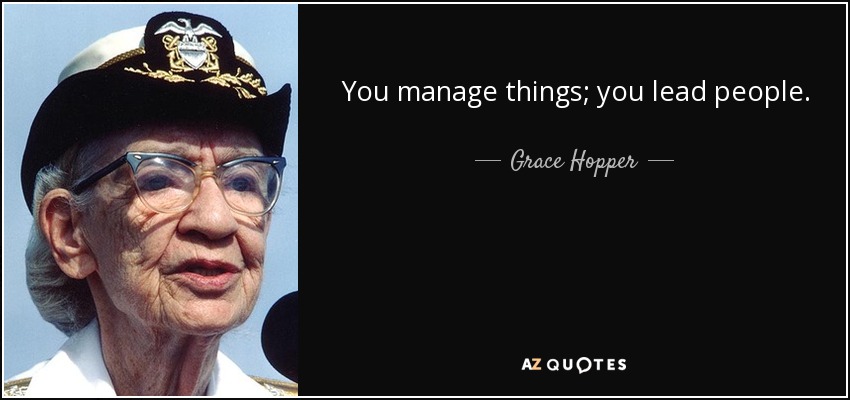
In other words, your strategy is a long-range plan to achieve a desired end, your Big Hairy Audacious Goal—your Vision. Tactics are an assortment of steps you take – and change as needed – to get you to that goal, your Mission.  In one of my presentations, I talk about the difference between leading and managing.  One difference is that leaders are strategic while managers are tactical.

As a school librarian you need to be both a leader and a manager, but it’s important to be aware which hat you are wearing when. Most of the time you are managing. Your well-written Mission keeps you focused as you go about your day. While events might pull you off track, by knowing your Mission you more easily return to it. Another term for Mission is purpose.  It’s what you do every day and is why I have characterized it as your perspiration.

Lynn Parker in Startup Strategies says, “Tactics are the what. Strategy is the why.  Tactics are the actions. Strategy is the planning. Tactics may achieve goals. Strategy is all about setting the right goals.”

This is why those of you who have a strategic plan but don’t have a true Vision, have attained goals.  The question is, are they the right goals?  Do they really get you to your envisioned end?  If your Mission is your perspiration, then your Vision is your inspiration and aspiration.

Here are some sample Vision Statements:

  • The School Library Media Program is a collaborative and instructional partnership between students, teachers, school library media specialists, administrators, and the community with the freedom to explore personal and intellectual interests through informational sources.
  • The School Library Media Program is the heart of the educational community. Love of the written word and the research skills for intellectual and personal achievement are grown and nurtured here.
  • The School Library Media Program is a user-centered environment where up-to-date resources and technology and a responsive staff empower students and teachers to achieve their academic and personal goals.

These Visions picture a desired goal for a school library. I don’t think many (or any) libraries have fully achieved this. But it is what you would like to have. Therefore, it is your aspiration and it can and should inspire you to work towards that end.

By contrast, these are some Mission Statements:

  • The Blank District Library Media Program cultivates independent, lifelong readers fosters critical thinking skills, teaches the effective and ethical use of information sources, and promotes equitable access to all forms of information media.
  • The Mission of the Blank School Media Center Program is to promote lifelong learning, develop critical thinking skills and gain an appreciation of literature by providing opportunities for all students to gain the self-confidence necessary to successfully learn in an information-rich world.
  • The Blank School Library Media Program provides a positive environment that encourages students to love reading and assists them in becoming critical thinkers, problem solvers, and effective users and producers of ideas with the ultimate goal of creating life-long learners.

The Mission Statements are all about the “doing.”  The Vision Statements are the place the library program holds in the educational community.

Sun Tsu, the famed ancient Chines military strategist said, “Strategy without tactics is the slowest route to victory. Tactics without strategy is the noise before defeat.”  You need both in order to attain your goals.

What is your Mission?  Your Vision?  Do see and understand the distinction between the two?

ON LIBRARIES: Some Days Are Like That

We all have those days when nothing goes right.  It sometimes begins before we step out the door, continues during our commute, and goes downhill from there.  Judith Viorst understood and wrote about it.  Her picture book Alexander and the Terrible, Horrible, No Good, Very Bad Day captures one of those days in the life of a young boy.  We all have those days.  And the conclusion, “Some days are like that – even in Australia,” sums up the universality of it, as well as the need to move on from it. And we do.

You feel unappreciated, frustrated, disrespected and possibly several other negative emotions.  And your feelings are completely justified. But you can’t continue that way.  When you are in that place you are not a leader.  And you must be a leader.  There is NO other option.

So what happens when your “terrible, horrible, no good, very bad day” is every day?  Some of you work in districts where your budget is non-existent, you have two or more schools to oversee coupled with a crazy schedule.  Others of you are ignored by teachers who believe you have an easy job. Your administrators look at the lifeless space the library has become because they have not funded it in years and see it as a vestige of the past, to be eliminated if their budget gets tighter.

Underneath it all, you still love working with the kids.  Most days.  You love seeing their faces light up when they have connected with the right book or found a resource that is just perfect for the project they are working on.  This is why we became librarians.  But for too many of you, the rest of the school environment is sucking the joy from what you love doing.

So what can you do?

Hopefully, you have a Mission Statement and a Vision Statement.  The Mission, which is your perspiration, reminds you (and everyone else, since it should hang in your library) of what you do that’s vital and unique.  Does it include the teachers in some way?  Your Vision, which is your inspiration and aspiration, gives you a goal to attain – even if it seems as though it can never happen.

Now pick something that ties to your Mission and/or Vision. Develop a plan as to how you can address that one thing. If it’s teachers who don’t know or care that you exist, choose one teacher as your focus.  Build a friendly relationship.  Don’t talk library.  Find common ground.  Then make the suggestions that have heretofore been rejected.  You may not succeed at first, but you will over time.  Once you have reached one teacher, add another.  After a while, you reach a tipping point, and your value will increase.

No budget?  Look for grants.  Start with your local education foundation.  They don’t have much money to give, but the grant writing is easier.  Focus on something that will be noticeable.   Perhaps it will fund the start of a makerspace, or create a special collection that’s needed.  When you get it set up, create some sort of sign thanking the donor.  Get pictures of the kids enjoying the addition, post it on your website, and include that in a report to your principal.

The multiple schools challenge won’t go away so select the school most likely to react positively to a change.  Once again, choose one thing or person and make your first inroads.

Is your library drab and dreary?  Pinterest is loaded with suggestions on how to liven it up with little or no money.  Connect with an art teacher in the high school (no matter what level you are on) and see if he/she is willing to make it an authentic learning project for his/her students.

There is no one involved with a school or its administration that isn’t regularly or constantly frustrated by one thing or another. When you feel alienated and/or annoyed with teachers or you are upset because the library is “dusty/musty” as a result of no budget money, you can’t let the situation drag you or your program down.  Eventually, the kids will feel it and you will be less effective with them – and that mindset will prevent you from being a leader.

How are you dealing with your challenges?  What baby steps have you taken?  What successes have you had?

ON LIBRARIES: Leading Larger

You have taken on the challenge, and you are now a leader.  You look for ways to showcase the library program. Perhaps you have started a Makerspace or instituted a way to connect regularly with teachers and possibly parents. Teachers ask you for help because they have learned you are a resource for them.

These are all significant achievements.  But don’t rest on your laurels.  You need to continue to grow as a leader. Once again you have to step out of your comfort zone, and, if you haven’t done so yet, it is time to serve your state association.  Your first foray at that level may be to be on a committee or chair a small one. Once you volunteer you must participate fully.

And I can hear many of you saying, “I don’t have time for that.”  While there is a great measure of truth in that statement, it’s a story you are telling yourself.  In my blog on “The Stories We Tell Ourselves,” I wrote “Most of you are very busy, but the fact is in our world no one can find time.  You have to make time.  Which means look at what you are doing and determine priorities.”

Why should serving at the state level be a priority? Aside from the altruism and giving back to the profession, what do you get from fitting one more thing into your already busy schedule? Leaders keep learning. As a committee member, you meet with other librarians. Should you chair a committee, you will be attending board meetings. In both cases, you will have regular discussions with your colleagues, and if you have ever attended a conference, you know the conversations you have with your fellow librarians are usually as beneficial as the programs themselves.

If you are a committee chair, the board meetings will give you a larger picture of what is happening in your state. What are the big issues? What is the legislature doing that will impact library programs and schools? As the other chairs make reports and share their views, your perspective gets larger.

Your vocabulary increases as well. Not your everyday vocabulary, but the one that deals with libraries and education and policy.  In talking about these concerns and potentially challenging situations, you become more fluent when you speak with others, whether it’s teachers or administrators. You sound like the expert you are becoming, and your comments take on greater value.

In other words, you get a good return on your investment of time.

After you have seen the benefits of serving on the board of your state association, think about running for an office.  Yes, the time requirement will be larger, particularly if you run for president, which is normally a several year commitment depending on your state. Usually, it’s a progression from vice-president to president-elect, president, and then past-president.  Each with its own special duties. But with greater responsibilities comes greater learning. The quickest way to start this is to use the AASL website to Get Involved.

If you do choose to be on track to become president, you will learn the true meaning of leadership. The responsibility for what happens to the profession and your association will rest on you. But you get to listen to others (and it’s vital that you do). You may testify at your state legislature concerning issues of importance to school librarians. Reporters who need a comment about school libraries will come to you.

You can’t get that training anywhere else. You are definitely “out front” for all to see.  While that sounds scary, remember you have at least a year or two as vice-president and president-elect to get the experience.  When you become president, you probably will have moments of doubt. Everyone does. But your confidence and belief in yourself will have grown tremendously.  Back at your school, the administration will recognize and most often treat you like the leader you are.

There are still more steps for you to take.  As president, you will have opportunities to attend national conferences, usually ALA, and be a part of AASL’s Affiliate Assembly.  Now your perspective gets even larger as you view events on a national level.

It’s time to consider volunteering to serve at that level.  While my personal commitment is to AASL as the only organization that speaks solely for school librarians, you might choose ISTE or AECCT.  The idea is to keep leading larger.

For many years, I worked on and chaired AASL committees.  I often said I should have gotten CEU credit for each of them.  I learned so much.  Most recently I have been appointed to ALA committees.  I had to leave my comfort zone.  I knew AASL.  I had many friends there and people know me.   But leaders, including myself, need to keep learning and growing. Currently, I am on ALA’s Committee on Professional Ethics and the Information Literacy Committee.  While I see the issues as they impact librarianship as a whole, I bring the perspective of school librarians to my fellow committee members.

As in the past, I have learned far more than I expected.  I have widened my circle of friends at ALA. The expense—of time and money—has brought a valuable return. While some of you cannot afford to travel to distant conferences, be aware that most committee work is done on conference calls and there are virtual memberships.

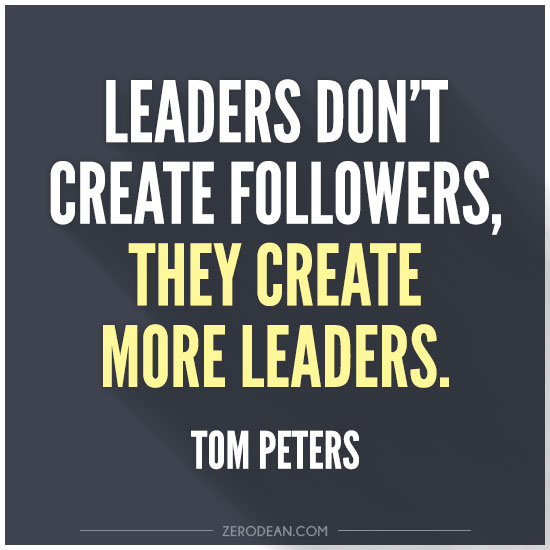
I have written many times – being a leader is not an option.  It’s a job responsibility, and it’s a personal responsibility. Leadership brings positive attention to the library program which results in more respect for it and makes it more likely you and the library will not be eliminated.  It also is personal because you become a role model for other librarians who have yet to take on the challenge of becoming a leader. As business management author Tom Peters has said, “Leaders don’t create followers; they create more leaders.”

ON LIBRARIES: Branding Your Library

My first association with branding, although I didn’t think about it at the time, goes back to the 1950s when television was new and all the rage.  Kids like me watched whenever we could, much like today’s kids who are buried in their devices.  Westerns were popular and they invariably included cattle rustling and how the rustlers would alter the brand to conceal the theft. They also including television shows sponsored by a single product.

Brands today mean much more, but there is still some truth in what I learned in those old black and white movies.  Brands identify the owners and problems occur when the brand is blurred. Businesses work hard to protect their brand.  Every now and then a marketing plan or a product goes awry and the brand is affected.  It takes hard work to restore it.

What does this mean to you as a librarian?  Remember you are in business (or you are out of business), and you do need a brand.  So, what is your brand?

As John Williams says in The Basics of Branding, “Simply put, your brand is your promise to your customers. It tells them what they can expect from your products and services, and it differentiates your offering from your competitors’. Your brand is derived from who you are, who you want to be and who people perceive you to be.”

If you haven’t identified your brand, you may be surprised to know you already have one. In this case, however, it’s likely not what you want it to be.  It may be the “shushing place.”  Or “The dusty place of books.”  While you may not have intended this, it is somehow fixed in the minds of students, teachers, and administrators. That kind of brand can lead to decisions on cutting your budget or worse, eliminating the library.

Note the last part of the definition of branding. “Who do people perceive you to be?”  Unless you have developed a strong brand, your users may have a negative perception of you which colors everything. You have to change it.

If you don’t create your brand – one will be created for you, like it or not.

To create the brand you want, look at the rest of the definition.  It’s imperative you differentiate yourself from your “competition.”  For school librarians, the competition consists of classroom teachers, computer teachers, and literacy coaches. If they are doing the same thing you do, your “product” is not unique.  And if you are not unique, you are redundant and likely to be eliminated.

So, how do you create a brand for your library? Start with what you already have and review your Mission, Vision, and Philosophy. For those of you who haven’t written those statements as yet, you can read my blog on Mission Statements which also discusses Visions.  As to your Philosophy, look at the Core Beliefs in the AASL Standards for the 21st-century Learner for ideas.

As you work on identifying your brand, look to make an emotional connection.  The best and most lasting brands in business do.

McDonald’s brand makes it “the happy place.”  Kids’ meals are called “happy meals.” It was the first to have a place for kids to play.  Their spokesman is a clown, and its primary philanthropy is the Ronald McDonald Houses where parents can stay close to a child in in the hospital and not have to travel back and forth. It’s not about the burger. It’s about the feeling.

Coca Cola is another brilliantly brand, in fact considered the most valuable brand in the world.  It promotes the wonderful feeling you get about being with family and friends –and Coke.  One way or another, their marketing is about – things go better with Coke, the “things” are always the strong emotional tugs we get from activities with those who matter to us. Again, it’s not about the soda.  It’s about the feeling.

You may use some aspects of your brand in a tagline (slogan) that carries a positive message about your library program. However, even when taglines are changed to meet new situations or a different target audience, your brand doesn’t change. In 1971 McDonald’s slogan was “You Deserve a Break Today”. Currently, it’s “I’m lovin’ it”. Basically… the same feeling. 

On a personal level, because I write and present, I have a brand.  It is “Be a Leader and Become Indispensable.”  No matter what the topic of my presentation or workshop, no matter the title of my books, no matter what my blog of the week is called – the message is always, “Be a Leader and Become Indispensable” and the feeling I always want to leave you with is that you are indispensable.

Now it’s your turn.  What do you want your brand to be? It will take some time to formulate.  Spend time playing with the wording to see how to bring an emotional content to it. Some possibilities might be, “Always here to help you with your information needs and recreational interests,” or “Getting you to the right answer you need, every time, no hassle.”

Do you feel the emotion connection in both?  Can you envision possible taglines that may come from either of them? How will you present yourself and your program to embed the brand you want in the minds of users?

If you have developed a brand for your library program, I’d love for you to share it.  How did you establish it?