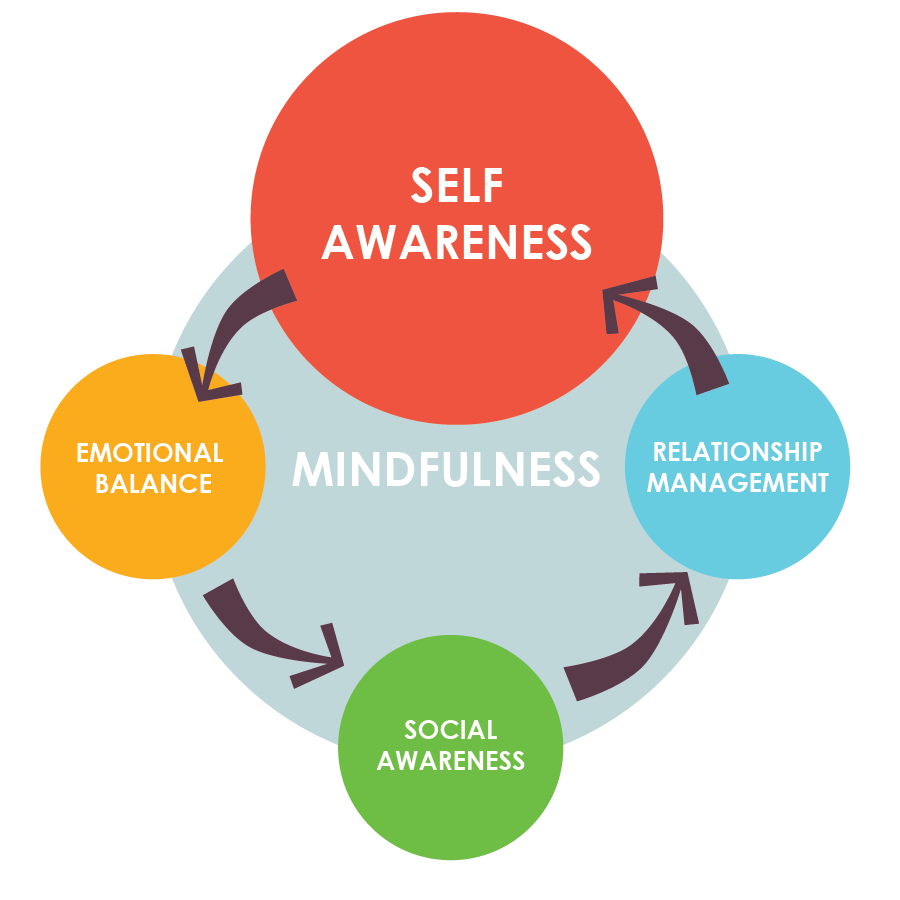
ON LIBRARIES: On Purpose

I have often written and given workshops on writing Mission and Vision statements for school library programs.  I believe it is the bedrock on which all your planning rests.  What I haven’t discussed is your personal mission, which is your purpose in life.

Although identifying your purpose in life sounds a bit grandiose, it’s something all leaders know and have, even if they haven’t formally written it.  It’s your big “Why.”  Just like the Mission Statement for your library program provides your motivation, your life Mission is what gets you up in the morning (other than a paycheck).

I discovered my own purpose years ago thanks to working with a student.  She was a volunteer in my high school library and was extremely intelligent and diligent.  She was also overweight, not well-dressed, and was on the fringe of high school life.  I first thought of giving her some useful tips. Then I realized, she knew all that.  She didn’t need to hear it from me. What she didn’t know, and struggled to see, was how special she was. I concentrated on letting her know how I valued her and recognized her abilities. As she was finishing her senior year, her mother told me how much everything I said had meant to her.  She went on to become a librarian.

From that experience, I realized it was important to me to let people know what I see in them. Too many of us can find loads of reasons to disparage ourselves but rarely recognize how we are contributing to our world. That hampers a growth mindset and certainly stands in the way of an innovative mindset. (See my blog post It’s All in the Mind.)

By thinking about what I had learned about myself thought this experience, I identified my purpose: “To reflect back to others the greatness I see in them and, when appropriate, help them manifest it.”  It’s how I live in my personal life, and it’s how I am in my professional life.  Whether I am writing something or giving a presentation, meeting someone at a conference or teaching a class, I’m invariably trying to show school librarians how special they are and offer tools to showcase (and believe) it.

You may not have experienced an epiphany as I did, but whether you are aware of it or not, you do know your purpose. You just haven’t identified it yet. It doesn’t take long to craft one, and once you do, it will make you a better leader. You will likely discover that it impacts all the areas of your life, in and out of the library.

John Baldoni suggests asking yourself these three questions in his article: Putting My Purpose to Work for Me Now:

What do I most like to do? Make a list. You might start out with hobbies and family connections.  But don’t stop there.  What is it about those things that give you pleasure and make you feel good about yourself? What parts of your job as a librarian brings you joy?  What lights you up? What do you look forward to?

Why do I want to do it? Your purpose, like your library Mission, is your “Why.” In what way do you find it fulfilling. How does it connect to your sense of who you are? Identifying your Why grounds you and helps you get through days that are stressful – whether from the job or your personal life.

What is keeping me from doing it? It’s usually some form of fear from taking risks to feeling vulnerable to fear of failure.  This self-analysis may lead you in a new direction. Perhaps you want to be a bigger influence and need more schooling. Most of us will have have to step out of your comfort zone to live our purpose. In my case, it took a while to be willing to risk telling individuals how I saw them. It sometimes seemed as though I were intruding.  Perhaps they already knew. Now I even do this with the cashiers at my local supermarket and it feels wonderful for us both.

After going through these questions reflect on what you have discovered.  Put it into a few sentences.  As with your library Mission Statement, keep it brief, memorize it, and as often as you can put it into action. If it doesn’t feel quite right, give it a little time and see if that’s about leaving your comfort zone. Don’t be afraid to tweak it until you’ve got it. When it’s right – you’ll know.

Being clear on your purpose gives you confidence and direction, both of which are invaluable to you as a leader. You may even be surprised by the ways this tool is useful. My purpose has become helpful in how I organize my life.  I make decisions based on my purpose, passions, and priorities.  If something comes along and doesn’t fit within one of these three, it’s easy for me to say no. Knowing your personal Why will allow you to live your life on purpose.

ON LIBRARIES: Overwhelmed

No fancy title needed.  It’s just what it is. At this point in the school year most of you are feeling this, and so are the people around you especially teachers and administrators.  It leads to short tempers, feelings of not being good enough, and exhaustion. It also affects your ability as a leader.  And while you are in overwhelm you don’t want to even think about being a leader.  It’s just one more thing you have on your plate and no time to do it.

You know the effects of overwhelm, its dangers, and perhaps how to deal with it. Your school may even have done a Professional Development session on this topic to help with times like this. But while you are in it, you have no time to put any tools into practice.  It’s a catch-22 situation. To get to the point where you can implement strategies for dealing with overwhelm, there is one simple remedy which is good, because you need simple at this point.

Breathe.

That’s it. Go to a place in your library where you won’t be disturbed.  Or go to the restroom. Close your eyes.  Take a deep breath in, and then let it out slowly. Take another and another.  When we are tense and overwhelmed, we shallow breathe.  This adds to the problem and ramps up the feelings.

Once you have made this method into your “first response” to feeling overwhelmed, you can employ special breathing techniques such as “square breathing.”  Breathe in for four seconds.  Hold for four seconds. Breathe out for four seconds.  Hold for four seconds.  The effects are immediate. And immediate is also good.

Now that you have a way to deal with those moments, you need a plan to minimize the frequency of attacks.  If you live in an almost constant state of overwhelm, your logical thinking is affected, you don’t bring your best to your family and friends (actually, you probably bring your worst), and your attitude sends negative signals to teachers and students.

Our world seems to be a 24/7 place. Information, questions, and problems keep coming in, and you feel duty-bound to respond—sometimes immediately.  This gives you little time to think and set priorities and the result is becoming more overwhelmed.

Breathe.

We are hardly alone in this challenge. The business world deals with this as well, and the Harvard Business Review offers a post from Rebecca Zucker on How to Deal with Constant Overwhelm. She offers five suggestions. (Keep breathing as you read on.)

Pinpoint the primary source of overwhelm – In the moment, we tend to give everything equal weight, but that’s not reality.  Something is stressing you more than other things. Is it a project? An aspect of your schedule? A personal issue? You may not be able to take it off your plate, but by identifying it, you can analyze why it is weighing so heavily on you, and maybe discover what can be done to reduce the stress somewhat. For example, if it’s a project, break it down into pieces so you don’t feel the weight of the entire thing all at once.

Set boundaries on your time and workload – This is hard for some.  We can’t work late every day and spend weekend hours doing more work for school.  Make sure you give yourself at least two days when you leave at a regular time and one day free on the weekend. You will have more energy and because of this, you’ll be able to produce more in less time.  This is one of those cases when less can lead to more.

Digitally generated My brain has too many tabs open

Challenge your perfectionism – Not everything needs to be completed to the same level of “perfect” whether it’s a display or end-of-day cleanup.  If you are working at two (or more) schools, stop trying to do full-time work in all your schools.  Discuss priorities with your administrators letting them know what you think is most important and what you cannot do because of your schedule.  Ask them for their advice and work with it.  (This is related to boundaries on your workload.)

Outsource or delegate – This can be a challenge (but then again, what isn’t).  Can you get student volunteers?  They may be more work at the beginning when you’re training them, but they can help.  Can you incorporate some tasks into your lessons? At the elementary level, kids can learn to put returned books on the cart in shelf order.  Little things help. Or how about a parent volunteer committee? On the home front, perhaps you can hire someone so your weekend doesn’t also have cleaning or lawn care as part of it. Even once a month can make a big difference.

Challenge your assumptions – What would happen if you didn’t do one of your jobs? I used to be upset about having new books and racing to get them on the shelves. Instead, I let teachers and students see them.  If they wanted one, they could borrow it. I would make a note of it and process it when it was returned. It got material out faster and was a lure to be the first to take the book out.

As you start putting these suggestions into practice you may notice many require a change of thinking.  (See last week’s blog). These incremental changes will add up and hopefully lead to fewer times of overwhelm. Just knowing it’s possible can be a good start. But since there is no getting rid of it completely, just remember:

Breathe.

ON LIBRARIES: It’s All In the Mind

The brain handles more than our cognitive functions.  Our emotions are lodged there, controlling our thoughts and actions. Whether we are talking about mindfulness or mindset, our minds are the root of it, and anyone in schools today can quickly find themselves in an emotional minefield. Mindfulness has become an integral part of Social and Emotional Learning (SEL) and it’s being used with trauma-infused learning.  With so many of our students (and adults) living with trauma, knowing how to create a climate of mindfulness keeps the library a safe, welcoming space. And knowing what mindset to use at what time can be key.

Students with ACE (Adverse Childhood Experience) can act out unpredictably. Since you don’t know the root cause almost anything can set them off, and they go into flight/fight—and sometimes “flee” mode. It’s bad enough when it happens in a class. In the library atmosphere, the effects can be magnified.

While your first reaction may be to tell the individual to calm down, recognize that no one has ever calmed down by being told to do so.  You have to be able to connect with the student in order to reach them. As always, it helps if you have developed a positive relationship with them.

This is where to use Mindfulness.  Students in this situation need to be brought into the moment and out of the fear and panic that are driving them. One strategy is to re-direct their breathing. When anyone goes into fight or flight, breathing becomes shallow and rapid.  By slowing the breathing, calm is more easily restored. Rather than instructing the student to take deep breaths, join them.  Say, “Let’s just breathe together for a while. One breath in. Hold. One breath out. Hold.”  Do the breathing with the student.  It will help calm your jittery nerves as well.

Once the student has settled a bit, ask what they need or offer suggestions. Do they need quiet time or do they want to rejoin the class? By giving some choice and not imposing your will, the episode will likely be shorter, and the student will come to trust you. NOTE: This is in general.  Sometimes nothing works, and you need outside help from the administration or security.

Mindset is related to mindfulness.  It’s how you view and react to any given situation. As the saying goes, “If you think you can or you think you can’t, you are right.”  There is much talk about fixed vs. growth mindset, and how to move from the former to the latter. Those with a fixed mindset believe that their traits and abilities are all they have to work with. Believing “I’m not good at math,” puts a limit on how well you will ever be in that subject. A growth mindset, assumes you are able to learn.  “With some practice and a little help, I can understand this mathematical concept.” You can find a good explanation (and an infographic) at  Carol Dweck: A Summary of the Two Mindsets and the Power and the Power of Believing That You Can Improve.

Most of you are familiar with these different approaches.  A growth mindset is incorporated into the AASL National School Library Standards for Learners, School Librarians, and School Libraries. The term is specifically used in the Key Commitment for the Shared Foundation Explore: “Discovers and innovates in a growth mindset developed through experience and reflection.” (AASL Standards Framework for Learners, p. 4)

We work to have a growth mindset for our students and ourselves. It’s a part of lifelong learning. Our own inner battles with finding a positive way to look at a difficult situation help us understand our students’ struggles to do the same.

A growth mindset always struck me as an excellent way to develop a positive attitude toward life as well as learning, and I recently learned something that takes it to a new level. George Couros started with two columns from Carol Dweck’s work added a third- the Innovative Mindset.  His blog post Moving Beyond a Growth Mindset is worth reading.

He got me thinking with the first situation he presents on Challenges.  The Growth Mindset (where I was), says “Challenges are embraced, stemming from a desire to learn.”  His Innovators’ Mindset states, “Challenges are sought out as an opportunity to learn and grow.” That’s a very different focus. The remaining four: Obstacles, Effort, Criticism, and Success of Others are equally eye-opening. It’s obvious leaders can’t just have a growth mindset.  We need an Innovator’s Mindset.

Couros’s perspective throughout the article is compelling and memorable. It gives us another choice, another angle as leaders to make the changes and meet the challenges that can support our programs. I know I am going to be working on developing my Innovators Mindset to the work I do.  I hope many of you will join me.


ON LIBRARIES: Time to Go?

I have written about the difficult situations in which librarians find themselves and offered strategies and suggestions for dealing with them and improving conditions.  What I haven’t said is that sometimes nothing works. A recent post in the School Librarians Workshop Facebook group regarding teacher bullying made me realize there are times when a job becomes untenable. If that happens, it’s time to consider leaving.

I’ve had this experience and it’s not an easy one. In the district where I was working, I had an excellent relationship with my superintendent of schools but eventually found myself working for a new principal who was determined to keep my program from being too successful, believing that it took away from his own prestige. I managed the situation until my superintendent announced she was retiring in two years.  The handwriting was on the wall, and I wasn’t going to ignore it. I immediately began a job search. Once my superintendent was gone, the principal could act without restraint, and, given the nature of the district, I was fairly certain he would become superintendent a few years later.

Fortunately, I found a position in a short time and was extremely happy in my new school, where I stayed until my retirement. People asked if I was worried about losing my tenure, but I knew staying because of tenure was the wrong decision.  And my prediction about the principal proved true.  Four years after the superintendent retired, he took over the position.

Although the retelling makes the process sound simple, leaving a district is a big step and shouldn’t be taken lightly. As with anything that’s important, you need a plan.  You need to evaluate the conditions, and, if you decide to leave, ensure that the move improves your situation.

To help you evaluate, I recommend using a combination of the analysis tools SWOT (strengths/weaknesses/opportunities/threats) and SOAR (strengths/opportunities/aspirations/ results.  What are your strengths?  Don’t worry about your weaknesses.  What are your opportunities within your school?  How big are the threats to your program?  What are your aspirations and to what extent does the climate in your school impede them? What results do you hope to attain?

Be honest in your assessment. Eventually, you’ll have to ask yourself two final questions. Have you tried everything possible to change the situation?  Is it impacting your well-being?  If the answer to those questions is “yes,” it’s time to seek another position.

Jobs are not as plentiful as they were when I left a district, but they are available.  Let your school library contacts know that you are searching for a new position. Do not say anything in your school. Ask any vendors you deal with if they have heard of openings.  Check your school library association’s listserv for additional information. It may take a while to find a district that is looking for a librarian but don’t give up hope.  Keep planning for the move while focusing as much as possible on working with your students. If at all possible, don’t put in long days.  You need to limit the time you spend in an environment that is stressing you out.

Update your resume and make sure it doesn’t look dated. Create a portfolio describing the highlights of your program.  Include your Mission and Vision.  Put this on a thumb drive to bring to your interviews. Have enough copies to give to those doing the interview.

When you get a call for an interview, either take a personal day or schedule it for after school hours.  You don’t want to take a sick day for it. Do due diligence on the district in advance of the interview.  What can you learn about their priorities? The library program? The administrators?  What are the demographics of the school system?  You need to have as much knowledge as possible.

Check online for sample library interview questions to prepare you for what may be asked.  Make your own list of questions such as, What do they like best about the library program? (You will quickly find out what they know about the program.)  What don’t they like?  Why is the position open?  What is the library budget? And do ask to see the library.  If you don’t meet the librarian at the time, call and have a conversation with him/her.

At some point in the interview, you will be asked why you want to leave your current district. Do not make negative comments about it.  You never want to burn your bridges, and your response is a clue to the interviewers as to how you will speak of them. This is where knowing your goals for your program will come in handy. You can say you wanted more opportunities to… whatever would fit for the new district.

During the interview, listen carefully.  You want to leave your school, so you will automatically listen selectively for the reasons to think this would be a good situation.  Instead, listen for potential problems.  What would your schedule be like?  Are you teaching classes other than library?  Is the school fixated on traditional approaches or does it embrace a whole child approach?

Once you have signed a contract, and not before, inform your principal and send a letter of resignation to the Board.  It’s tempting to tell them just why you are leaving, but it’s better to keep it completely professional.  The administrators will know why, and again, you don’t want to burn bridges.  You never know if you will have to work with those administrators again, hopefully in a better situation.

When you are in your new job, don’t make negative comments about your old one.  Stick to the reasons you gave in your interview for why you wanted to leave. Talking badly about an old situation doesn’t help to build trust in your new one. Instead, speak about the opportunities you hope to have in this new position and with this new district.

Stay or go?  The decision is yours.

ON LIBRARIES: You and Your Administrator

Your principal can be your biggest supporter or can make your job more difficult.  Most of you work on relationship building with teachers, recognizing it as the first step in collaboration. The same is true with your principal.  Considering how important s/he is to your success, developing or improving that relationship should be a priority goal for you.

To initiate the process, you need to know who they are. Discover what your principal’s interests are, both professionally and personally. What are their goals?  Vision?  Do they have hobbies?  What are they passionate about? Listening to what they say, what metaphors they use, will give you some clues.  Searches on social media and the school’s website will reveal additional information.

Interest is the first step in building a relationship. Do you share any of the same interests and passions? Let your principal know. We are drawn to people who are interested in the same things we are. It doesn’t matter if it’s British mysteries, sports or the importance of literacy.

Follow-through is the second step. Share any information you find about these interests. Again, this works for both professional and personal interests. It gives you another reason to connect and strengthens the growing connection.

Empathy is the third step. Let your principal know you recognize the demands of their position and the pressures they face. While the school may focus on Social Emotional Learning (SEL), it is likely your principal isn’t doing it for him/herself.  Show when you have something that can help them reach their goals.

Trust is the final step which develops when building a relationship. You can’t have a relationship without it, which means you cannot be manipulative in building this connection.  Although having this solid relationship improves your program, the larger picture is that when you have the principal’s support – and you support the principal – the whole educational community thrives.

When and how you initiate these four steps is also important.  Some will be done in casual conversations which is easy when you have a principal who is a presence in the building.  It’s a bit more challenging with those who stay ensconced in their office or if you serve more than one school.

Brief emails are the most common way to inform your principal about websites and other information you have come across. If you have a hard copy of a magazine or professional journal and want to alert him/her, write a brief note and have the secretary pass it along.  Inevitably, you’ll get some type of positive response.

Once the relationship starts to have a foundation, you can schedule short meetings– no more than fifteen minutes – to discuss a plan or something you are doing for the principal.  Be sure you don’t go beyond the time allotted.  Ending early is best. When you have established your relationship, plan on a summer meeting to share what your goals are for the year and take the opportunity at this time to learn what the principal’s goals are.  It is a slower time, and you have the best chance of being heard.

In an article for Southwestern Musician (yes, this time I went way out of our field as part of my learning) entitled Communicating with Your Administrators, Rick Ghianelli and Jeff Laird offer the following practical advice:

Understanding the role of the administrator: Administrators are under even more stress than you and the rest of the teachers. You can tell by how much turn over exists. Test scores and tight budgets.  Kids with trauma. Developing programs promoting diversity.  All the issues hit their desk—and they are accountable to parents and the superintendent of schools.  As someone once told me, “they are drowning in detail.” Be aware and empathetic.

What are you trying to accomplish? Be focused and get to the bottom line quickly when you are asking for something.  They don’t have time for the details. If they want it, they will ask.

What do they need to know? This is also about focus and will help you keep your meeting/request brief.

Addressing your concerns: I can’t improve on the advice Ghianelli and Laird give here:

  • Be passionate about what you do, but know the big picture
  • Have some suggestions to solve the problem
  • Be patient and understanding

Maintaining support.  Your relationship needs to be ongoing. To get support, give support. Advocate for others and show you are a member of the team. Keep your principal aware of what you are doing in the library. Send a short email of a highlight for the week and make an effort to submit quarterly reports. Look for opportunities where they can participate.

When a principal recognizes the importance of the library program and supports it, the teachers follow.  While you are spending time building relationships with your teachers, be sure you are also developing the most critical one – with your administrator.

ON LIBRARIES – Staying Curious

There used to be a commercial that had the tag line, “Inquiring minds want to know.” That mindset is what we want to instill in our students.  It is also one that is essential to a leader. In following the rabbit, Alice discovers a new world and a lot about herself. You never know what you will find if you go down that rabbit hole.  How can you develop a vision and take your school library to new heights if you are not seeking out new possibilities? Leaders are lifelong learners, and so are librarians.

What stimulates your curiosity?  Is it related to a hobby you have?  Do games engage your attention? As school librarians, we are constantly helping students search for information on a subject of academic or personal interest.  Do you ever continue to explore it even after the student leaves because you were still curious?

The nature of our profession requires us to be connectors.  We are constantly connecting people with information, but we also connect one piece of information to another.  That is how new knowledge is created.  When we follow the rabbit, we find ideas that can add greater dimensions to our program.

One way to stimulate your curiosity is to read outside school librarianship. I keep an eye on what is happening in technology and what administrators are focusing on. In addition, I look frequently to what the business world is doing.  Their purpose and goals are not necessarily the same as ours, but there are enough commonalities to see how their ideas can make us and our programs more effective.

A case in point is a post from Stephanie Vozza on 8 Habits of Curious People. She suggests that being single answer driven results in our being trained out of curiosity. How can we re-ignite the curiosity we had as young children?  Here is Vozza’s list of habits along with my usual comments.

  1. They listen without judgment – This implies active listening. You need to hear people out.  Sometimes they say something that sparks an idea you would never have considered. A rush to judgment shuts down your thinking on the subject.
  2. They ask lots of questions – If you have that inquiring curious mind, you want to know more. And the questions you ask should provoke a more detailed response and a way to continue learning.  Questions that can be answered with a yes or no will not add to your knowledge or lead you anywhere.
  3. They seek surprise – This one surprised me, and then I realized how true it is. If you look for something different, whether it’s a scenic attraction or an exhibit of technology, you don’t want to find what you have always known. The surprise generates new thoughts and who knows where that may take you.
  4. They are fully present – This is about knowing when to not multi-task but to focus on what is happening in the moment. How many times are we doing something else while someone is asking us a question? Are we really listening to what is being said? Is anything being said?  Why bother being with someone if you are not going to be “fully present?” Conversations with people outside the profession can bring up an idea that has relevance to what goes on in the library.
  5. They are willing to be wrong – This can be scary territory. I was involved in leading a library renovation project that was using moveable bookcases on tracks to make more floor space available. I planned on putting fiction on the counter height bookcases and reference along with the rest of the nonfiction on the tall bookcases.  My co-librarian noted that having heavy reference books on high shelves was not a good idea. She was right, and I made the change.
  6. They make time for curiosity – The suggestion here is to take one day a month to consider what things might be like in three years. You probably can’t schedule a full day to do this (although if you can – do it!), but you can plan time on a Friday at the end of the day to reflect on what isn’t working as well as you like or what is going better than expected, on what the kids seem to be interested in, and then on what can be changed or enhanced to respond to these situations.  You might then explore your thinking further – just because you are curious.

    copyright Margret and H. A. Rey, Houghton Mifflin Harcourt Publishing Co
  7. They aren’t afraid to say, “I don’t know” – Not knowing is the perfect launch to finding out. It’s giving rein to your curiosity. As librarians we are accustomed to saying, “I don’t know, but I will find out.” Use that in how you respond to something new you haven’t come across before.
  8. They don’t let past hurts affect their future – Don’t live in your previous experiences. Just because you understand them and perhaps have had some bad experiences with pursuing a new course, you shouldn’t shut the door on curiosity.  Learning should never stop.

I challenge you to find one new idea outside librarianship that excites your curiosity.  Follow the rabbit.  Then create a plan for bringing your idea into your program.  It’s what leaders do.


ON LIBRARIES: The Leader in You

If you saw the title and thought “Hilda’s writing about being a leader again” my response is – absolutely. I will likely never stop. I honestly believe every one of you is a leader.  You just may not be revealing it to yourself and others. It’s time to let your leader out for the sake of our students, teachers, and our profession. And just as you must continue to discover, practice, and improve your leadership skills, I must cheer you on, providing as much assistance as I can. I hope as this school year gets underway you challenge yourself to engage in one demonstration of your leadership.

The Vision of AASL speaks to what I have been saying for many years, “Every school librarian is a leader; every learner has a school librarian.”  The only way we are going to stop losing school librarians is by being valuable leaders in our school communities.  Those of you who are leaders have two tasks: become even more visible as leaders and help the school librarians in your district and state to become leaders.

A Google search yields scores of definitions of what a leader is, but the one I like best is from Vocabulary.com: “A leader is the one in the charge, the person who convinces other people to follow. A great leader inspires confidence in other people and moves them to action.”  You are leading when you work with your students and engage them.  You are being a great leader when they feel they can really do what at first seemed like an overwhelming task.

The same skills can apply in your dealings with others.  Joel Garfinkle, writing for the business world, identifies and explains 8 Traits of Great Leaders. Many of these you are using with your students. It’s why your lessons work.  The next step is to think of how you can use these traits in throughout your school and beyond.

  1. Great leaders have integrity – It’s why your students trust you. And your teachers do as well. They know you keep confidences. You also uphold the ALA Code of Ethics and the Library Bill of Rights.
  2. Great leaders have intelligence –It’s why you can help others. You know your stuff.  This intelligence is also social and emotional intelligence.  You have empathy. This is what, along with trust, helps you build relationships.  Don’t forget to show how you can help your administrator. What is his/her vision?  What do they want to accomplish? Use what you know to help them achieve it.
  3. Great leaders have high energy – It’s why you keep coming back. You can’t be a school librarian without it. Even on a fixed schedule, you can’t predict what demands will be made of you during the course of the day. Your high energy communicates to others your enthusiasm for what you are doing. Don’t forget to build in “me time” to avoid overwhelm and stress which will sap that energy.
  4. Great leaders bring stability – It’s why you can stay cool in a crisis. (You may choose to fall apart later.) This calm inspires confidence in you and your program. It is a reason for people to look to you for help when things get crazy. It’s why they will follow your lead.
  5. Great leaders have high standards – It’s why you have a Mission Statement. This works in addition to the ALA Code of Ethics and Library Bill of Rights. It represents what you see as your purpose and what your school library program is determined to deliver. Everything you do is related to that statement.
  6. Great leaders have a strong inner voice – It’s why you can stay focused. You trust your intuition and your gut to help direct you in your decisions. This is part of why you are calm in a crisis.  It is powered by your Mission, Vision, and Philosophy.  If you haven’t taken the time to create these, do so.  That inner voice will serve you well.
  7. Great leaders are confident in their decisions – It’s why you can get back on track. You may always feel very strong in this trait but trust your inner voice, standards, intelligence, and integrity. Allow yourself to make mistakes, recognizing you will grow from it. Your confidence, like your calm, contributes to having people follow you.
  8. Great leaders invest in their own growth – It’s why your program keeps getting better. I have always felt strongly about this. You are responsible for your professional development.  There are so many opportunities from webinars, Twitter chats, professional journals, and, of course, conferences.  (I am an unabashed conference junkie.) You must be a member, preferably an active one, in your state library association.  You should also join—and participate- in at least one national association.  Working at that level will bring out your leadership skills.

As the subtitle of my most recent book for ALA Editions, Leading for School Librarians says, — There Is No Other Option.  Take on making the AASL Vision a reality by performing as a leader.


ON LIBRARIES: Managing Confrontation

No matter who or how you are, at some point someone is going to get angry with you.  How you respond is a demonstration of your leadership skills. Your ability to manage the situation will affect your relationships and possibly your reputation. The “attack” can come from any direction –a teacher, and administrator, a student.  There are basic strategies to deal with all of them as well as some specifics. Knowing these in advance will help you through a stressful situation and potentially result in a positive outcome.

When someone comes to you angry at something you supposedly did, pause before responding.  Let the other party fully express themselves. That is likely what they most want. To be heard.  As they talk, take time to breathe.  Depending on your personality, your natural response will be to attack or defend and neither is a good solution. It will only escalate the confrontation.

My favorite example of diffusing a nasty interchange occurred when I had started a new position as the high school librarian in the early days of automation. A teacher stormed into the library and began haranguing my clerk.  I stepped in immediately and asked the teacher to come into my office.

The tirade slowly ended. In between the “how dare you,” and “you had no right to,” was the core of the complaint which stemmed from a system the previous librarian created. My first thought was, “I just got here. It’s not my fault.”  Rather than engage that way, I let her know I would fix the problem as soon as possible.  I also consciously relaxed my body during the conversation. This added to my personal sense of calm and allowed me to stay focused on the teacher’s concern.   By dealing with the message rather than the method of delivery, I was able to calm her and fixed the situation. Ultimately, the teacher became one of my strongest supporters.

On another occasion, the confrontation wasn’t loud, but it was challenging.  In the late ’90s was the leader for the district librarian and was meeting with the assistant superintendent who began by stating my repeated requests to flexibly schedule elementary librarians was ludicrous. He had observed one lesson where the librarian used a filmstrip on how a book is made starting with a tree.  He felt a classroom teacher could have done the same, and it was a waste of valuable time.

Once again, the person on the attack had a point.  I agreed it was an unfortunate lesson, and my agreement took the wind out of his sails.  He was prepared for an argument.  I said it showed we needed proper professional development opportunities so we could deliver the program students needed.   I earned his respect for that one.

My recipe for managing confrontations:

  1. Pause
  2. Listen to the whole complaint/concern without contemplating your response.
  3. Use the time to relax your body and calm yourself.
  4. Respond to the core of the issue.

Anne Rubin authored a post on The Principal’s Guide to Angry Parents which contains good advice for librarians as well.  Her recommendations are similar to my own.

  1. Stay Calm – Meeting anger with anger is a guarantee you will lose.

  2. Cut It Off – Recognize when the person had gone beyond acceptable limits. Change your body language. You can raise your hands to indicate, “stop.” Then try something like, we can’t resolve this now.  I will get back to you on the issue.  Using email will help you document the interchange if necessary.
  3. Protect Others – I stepped in quickly when the teacher was berating my clerk. You are the leader. Any problems are your responsibility.
  4. Don’t Take It Personally – It rarely has anything to do with you. It’s usually a situation that for some reason has frustrated the teacher or administrator at this time. Find the reasons and you’ll be able to change the situation. This is usually is true for why a student became angry with you.
  5. Know When Enough Is Enough – This is very much like Cut It Off. You can say, “This is not the best way for us to deal with problems. Let’s find another approach.” Your composure could make them angrier if they’re not ready to work with you and still want to be mad or right, but if you maintain it, you will bring the discourse to an end.
  6. Create Guidelines for Behavior- Rubin suggests principals create guidelines for others’ behavior. Since you can’t do this, you can do it for you.  Be aware what your limits are so you know when to “cut it off” and when “enough is enough.”

Most people don’t enjoy confrontations, but we all get caught up in them. The only thing you can control in this situation is you so the more tools you have, the better. Look to understand what is fueling the other person and how to tone down the rhetoric.  People will come to realize that you know how to manage these stressful interchanges.  It makes you more trustworthy and demonstrates your leadership ability.

ON LIBRARIES: Time Management – Truth and Lies

The school year has just begun, but do you already feel as though you’re behind? Our job can easily be overwhelming. Every school librarian I know wrestles with time management. It affects you and how you do your job. It can be what stops us from introducing a new program, starting a project, or stepping into leadership positions in our state library association. How can we possibly fit it into our schedule?

The fact is, we can’t.  There is no room.  As I blogged in Making the Most of Your Time, there are only twenty-four hours in a day. No one gets more (I’ve asked).  If you want to add a new task, you first must discard one.

When I’m in this situation, I base my decisions on my purpose (or mission) and my priorities.  What will I achieve by adding something to my list?  Is it worth it?  Do I really want to do it?  Why or why not?  Once I determine the new task will move me forward in a direction I want to go, I have to look at what I am already doing and decide what I want to drop. This is typically harder.  Everything that’s on my list needs doing. The first thing I do is see if anything is almost done and if I can speed up the work to complete it. Sometimes I can get a partner and minimize my contribution.  The process isn’t easy, but it’s do-able.

You have all read numerous suggestions on how to manage your time better.  Variations on to-do lists are common.  I use one and can’t function without it. The blog post I did has thirteen ways to become more efficient with your available time.  They are all good suggestions, but in some ways, I wonder if they may have added to your stress about time.

Elizabeth Grace Saunders suggests you may have been setting yourself up to fail. She offers 5 Lies You Have Been Told About Time Management. She offers a worthwhile – and calming—perspective on the topic. The five lies she identifies are:

1.     If You Were Better at Time Management You Could Do It All – No, you couldn’t. If you actually tried to fit everything in, you would be in constant motion.  It’s unrealistic.  Thinking “doing it all” is an achievable goal only makes you feel you are not as organized or capable as other people.  I sometimes forget this.  I look at colleagues who are getting so much done and think I have no time for all that.  True, I don’t.  But they don’t have time for all that I am doing.  It’s back to making the decision about what is really important to you.

  1. There’s One Perfect System – No, there’s not. But chances are there is one that works well for you. I love paper and pen to-do lists to keep me on target. Others like organizing by priorities. Some prefer to keep track digitally. My daughter sings the praises of the bullet journal. It may take some tweaking and changing until you find your best system, but if you focus on how you like to think and organize, you’ll find one that’s right.
  2. You Can Learn Time Management in a Day – Or Even an Hour – No, you can’t. Workshops may help. I give one on the subject, but I don’t expect participants will be able to implement their ideal approach as an immediate result. Instead, my goal is that they leave with ideas they can try to find what will support them best. It takes trial and error to determine what does work best for you in part because there are habits to overcome. These have been ingrained and can be hard to kick. I’ve learned to do my high priority work first because I am most creative and focused in the morning.  Except on the days I am lured into my emails. Or I decide one game of Klondike (or 10) will jump-start my thinking. Even if you are proficient in time management, there will be days you waste more than you’d like.  Don’t beat yourself up. That’s definitely a time-waster.  Accept that sometimes your brain and your body need a rest and move on.
  3. You Can Be Tightly Scheduled 24/7 – No, you shouldn’t. That is like “you can do it all.”  It’s unrealistic. Your brain doesn’t work that way.  You need breaks otherwise you’ll burn out, and you definitely don’t have time for that. I go for a walk after I complete something- like this blog.  If you don’t plan breaks – and fun – into your schedule, you will take them anyway and likely not notice or enjoy them. It’s like the difference between choosing a dessert you enjoy and mindless eating that happens without your notice.  One is calories without satisfaction, the other is time loss without any benefits.
  4. You’re Hopeless – No, you’re not. Some people are naturally more organized just as some people are naturally neat.  When something is important you can learn it.  It just might take you more time to master it. You will improve as you go along and you’ll learn from your setbacks. Thinking you are hopeless gives you an excuse to do nothing which will keep you from improving in your time management. Given your roles and responsibilities, that is not an option.

It’s never a bad time to discover the time management techniques that work best for you and begin implementing them. Talk to people who you think do this well. Ask if they have recommendations. Then as you feel more confident, choose a project or job that will move you further into leadership – and practice your new skills by deciding what you can postpone, delegate, or drop.  You’ll be giving yourself the time to shine

ON LIBRARIES – Building Relationships with Students

Students are our priority. No matter what else we do, what programs we create, what books we choose, everything we do in some way should further their development as lifelong learners, users, and producers of knowledge. We build relationships with teachers because they are the gateway to the students, but we also must build direct connections to students.

We want the library to be viewed as a safe, welcoming environment for all.  For students to feel safe and welcomed a relationship needs to be in place.  Students need to see you as a trusted adult with whom they feel safe in asking questions of all types.  Students (and adults as well) tend to avoid displaying ignorance and so may shy away from asking for help.  We know it’s in the questions that we all learn and grow so creating a place where they can ask is important.

To begin, smiles are an obvious way to welcome all. It’s not just for the opening week but how you want to always greet students and teachers.  Think positive thoughts as you do so to ensure your smiles are seen as real.

Using proper names is a good next step.  Unlike smiles, these can be a challenge for librarians because we have the entire population to learn.  In a large school, it is probably impossible, but that doesn’t mean you shouldn’t keep working at it. Try to add at least five or six names each week.

Sometimes we get help. Elementary librarians should have rosters for their classes.  Mark it with the correct pronunciation and students’ preferred nicknames.  You can use tents, fixed seating, and other similar techniques for the first few weeks until you learn names.

For middle and high school librarians who see students mainly as teachers bring their classes in, you can have them introduce themselves the first time.  There are a number of mnemonic tricks online to help you remember but apologize in advance because you will be asking them to repeat their names as you work to learn them.  You will soon know any regulars by name. And show your willingness to not know something by asking students to repeat their names when necessary.

Brief conversations can also help you remember names. Orientations are a good time to start.  Don’t ask kids what they did during the summer.  Some had terrible ones and are thrilled to be back where it’s safe. Instead, ask, “What do you want to learn this year?” It’s an excellent way to learn about their interests. Use their names in conversations to help you learn.

In ASCD’s May issue of Educational Leadership, Mary Ann Ware and Jodi Rath wrote an article entitled “4 Must-Haves for Positive Teacher-Teen Relationships.”  Although targeted toward high school, their recommendations work with even the youngest students.  You are probably implementing some of them even unconsciously. Their four must-haves are:

Consistency – Students need to have routines and boundaries.  It makes them feel safe if they can count on how you will react to situations and their behavior.  It helps them develop their own self-discipline.

Respect – Everyone deserves it. You will never get it if you don’t give it. Kids will reflect back to you what you demonstrate towards them. Be mindful of interrupting a conversation with a student in order to respond to an adult who came into the library.

High Expectations – Show you believe in students by letting them know you expect them to perform well.  You are still there to guide and coach them to reach their goals, but you don’t make things easy.  There is pride in completing a difficult task. This builds their self-confidence and motivates them to continue tackling other challenges.  Acknowledge their achievements specifically including their perseverance when things didn’t go right.

Kindness – The world is a tough place, and school is often no different. There are articles now about burnout in kindergarten. Be observant and note when a student seems distressed and, if possible, quietly ask about it. They may need to just be by themselves for a bit or sometimes talk to someone.  Your noticing and taking the time to reach out is how the library becomes a sanctuary and safe haven for so many students.

Your students are your priority and your advocates.  How you treat them and how they feel about you becomes known to their parents and teachers.  But most importantly, by building positive relationships with them you help them become global citizens who embrace learning and growing.