Spark Your Creativity

Are you creative?

What was your first reaction to the question? You probably thought in artistic terms. If you knit or draw, you may have categorized yourself as creative. Those of you who design great book art projects or bulletin boards tend to do the same. But there is more to creativity than art.

When you consider redesigning your library to meet current needs, you need to be creative. When you want to come up with a project that will excite and engage students, you need to be creative. When you want to get more money for the library program (an outgrowth of the previous statement), you need to be creative.

Any time you want to move past the status quo, you need to be creative. We are all creative, and, frequently, more creative than we realize. But what do we do on the days when we are so tired the thought of being creative is beyond us? How do we break out of that “too tired to think” sense?

Alaina Love has some great recommendations for how to spark your creativity in Building an Imagination Process. As I do, Love recommends “establish[ing] a space for imagination.” She proposes four steps for doing this.

Value the Trinity – Love says we need the trinity of imagination, inspiration, and creativity – to be creative. You can free your imagination by asking, “what if?” For example, what would my library program and facility be like if money weren’t an issue? Creativity will flow from there. Don’t censor yourself by thinking you will never get the money. First get the idea. You can then get creative about money sources.

Establish and Value Your Process – I love the phrase she uses: “It’s hard to get creative in the middle of a hurricane.” What she means by this is you may need to change your surroundings to free your imagination. I’ve written often of my passion for walking. When I’m out and about, I let my brain run free and think of words and phrases associated with what I’m working on. On my return, I record my thoughts. With these new ideas igniting my thinking, I am ready to form them into a concrete plan of action..

Find what works for you. It could be journaling or sitting quietly in a comfortable chair. What matters is that you find the method that sets your imagination free. Then cultivate it.

Be Judgement Free – All that matters is what is right for you. Don’t stress about whether your way is the best way or if you should try something different. Best is not the answer. As long as you are thinking in new and creative ways you are doing it right. It’s much like not censoring whether the ideas you generated can be achieved.

You may not be immediately successful. You are establishing (creating?) a different practice. It takes time to be comfortable with it. As long as you’ve stopped thinking about the “hurricane,” you are heading in the right direction.

Start Small – In another great expression, Love says you shouldn’t try to “boil the ocean.” Start with the project to engage students rather than developing a new library program and facility. See how the space you have created works for you.

As you get better at this, you will automatically tweak how you get into your imagination space. It will be comfortable. Make it a regular part of your week.

Developing this practice will give you a direction, resulting in changes that will demonstrate the leader you are – and your value to your students, teachers, administrators, and the community. Just imagine what that would be like.

Projecting Confidence

Are you confident?  Everywhere? Of course not. Where don’t you feel confident? One of the reasons people trust leaders is the sense of confidence they instill in others. To be clear—this doesn’t mean leaders don’t have doubts. What they do have is confidence in their area of expertise and know they can figure out what to do and what needs to be done.

So what is confidence and how can you project it – even if there are times when you don’t feel it? Merriam-Webster defines it as “a feeling or consciousness of one’s powers or of reliance on one’s circumstance.” There are two key words in this definition. “Feeling” implies an emotional quality. “Power” in this sense about abilities tied to an inner awareness.

How you feel about a given situation can affect your self-confidence. When you are nervous or entering an unfamiliar one, you might not feel confident. A change of mindset can shift you from being uncertain to believing you have the ability to successfully handle the experience. You can read my February 5th blog, Leading a Great Meeting which discussed 5 “P’s” for success: Purpose, Preparation, People, Process, and Progress.  These 5 are applicable in those situations as well.

Taking confidence a step further, John Garfunkel offers his 5 Ways to Exude Confidence in Meetings, Even If You Aren’t.

1. DO: Sit in the front of the room or head of the table  – This can feel challenging when we’re not sure of our place, but, according to Garfunkel, this shows that you care about what is going on, what is being said and that you want to contribute and be heard. Being in the front shows others you value this meeting and ready to be a part of things.

AVOID: Sitting outside the focus area of discussion – Garfunkel notes, “if you are on the fringe leaves you exactly that.” The people in the back rarely speak up. They have chosen their seat because they are unsure of themselves. In a job interview, move your chair into a better position. You may have multiple people interviewing you, and you want to see each one – and have them see you.

2. DO: Treat Senior Executives as Equals – In education, this would refer to administrators and other district personnel such as the head of IT when you are on a technology committee. You have knowledge to bring to the table. Don’t be hesitant. Demonstrate your value to this meeting and to the educational community. Be aware of your intonation, and don’t end sentences with the raise in tone suggesting uncertainty.

AVOID: Looking Down and Not Making Eye Contact – This conveys insecurity in the situation. You want to show you are a full, contributing member of the team no matter who is present. Garfunkel says to “go for full engagement — listening, speaking, body language and eye contact.” This is equally true in a job interview. You want interviewers to see you will be a valuable addition to the staff.

3. DO: Project Your Voice Own that you are an expert in your area and have an important point to make, even if what you’re saying may be unpopular. Be clear, don’t end your sentences on a lifted voice (which makes your words sound like a question and unsure). Be confident and clear. 

AVOID: Apologizing or second-guessing yourself – Again, be mindful of your intonation. Put your ideas forward, knowing they are based on your competence and knowledge. Your conviction will go a long way in helping others to feel and accept your confidence.

4.  DO: Use your body position to convey confidence – Garfunkel recommends you lean forward. It shows you are fully engaged. The act of physically engaging will send a strong message and boost your own positivity.

AVOID: Slumping, Slouching or Angling Away from the Conversation – Sitting this way sends a strong message that you have tuned-out and can insult or upset the person who is speaking. Show engagement whenever possible.

5.  DO: Engage Before the Meeting Starts – This is an excellent time for you to become more comfortable with the others in attendance and they with you. It will make it easier for you to engage and for others to engage with you once the meeting begins because you will have already connected casually.

AVOID: Lowering the Height of Your Chair – Remain at eye levels as others in the meeting so that you are not visually defining yourself as less. You are there to contribute equally and show the expertise you bring.

Something to remember, confidence is not the same as arrogance. Arrogance is when someone has an exaggerated sense of their own importance or abilities. That’s not confidence or leadership. Too often, arrogance is used as a form of bullying, a use of Power Over others, and a good leader is never a bully instead of relying on their Power Within.

How you present yourself not only allows you to look confident, it will help you tap into your true confidence, which comes from the value and expertise you bring to a meeting. Be aware of the subtle messages you send with your body language, and you will project more self-assurance and show you are a confident leader.

Fight The Fear Factor

The past two weeks my blogs have centered on you getting in front of an audience. As a leader, this will be necessary to get your face and your program out there. Yet many school librarians shy away from doing this other than with the smallest possible group. They know the value but find a host of reasons not to step into the limelight. The most obvious reason is fear.

Fear holds us back, and we can’t afford to let that happen.

Public speaking is a fear more common than death. Also known as “stage fright,” it is one of the most common fears. The phrase refers to performers, but it is, in essence, what we are all doing when we step in front of a group. Actors get past it or they wouldn’t have careers. You need to do the same because if you hide your light under a bucket, you will not be seen. If you are not seen, you will not be valued. And if you are not valued, you and your position are likely to be eliminated.

Terri Klass has sound advice on How to Stop Fear from Paralyzing Your Leadership. In presenting her five recommendations, she notes this fear can pop up at any point of your career, especially as the audiences get larger or feel more important. Each time you step onto a larger stage, there is the chance it might emerge. With these steps in mind, hopefully, you will be able to conquer it when it does.

  1. Name the Fear – Klass encourages you to identify the physical responses you are having. Can you recognize what is causing it? Notice and name your reactions (rapid heart, sweaty palms), and what they go with (not being sure you have the answer, wondering if anyone will listen to you, etc.) Recognizing that this is fear “talking” is an important first step.
  2. Share the Fear with a Trusted Advisor – Talking out the fear puts it into perspective. A fellow librarian or a friend (or both) makes a good listening ear. As you speak about the fear you just named, you are better able to see how inaccurate your fears are. If you don’t have someone to share it with, talk to yourself. Out loud. It’s hearing it that makes you aware of how much of the scenario you imagined is improbable and just some chemical reactions in your body.
  3. Try on a New Perspective – Klass has an imaginative idea here – think of someone who inspires you, and imagine them guiding you through this fear. How would they approach this situation? What attitude would they present? What would they say to you to encourage you? Can’t think of a person – Klass suggests you think of an animal. Imagine embodying the power of a wolf, the majesty of lion. It’s the perspective change that will help you manage the fear.
  4. Give It a Meaningful Good-bye – Look that fear in the eye and let it know you are done with it. Klass suggests writing down your good-bye and putting it away somewhere or speaking it into a mirror. Rather than putting away that fear, you can also burn it. There is a kind of satisfaction in seeing it go up in smoke. Gone forever.
  5. Commit to the New and Inspiring Leader – What are you going to do going forward? How do you want to be? Look at the presentation you made after having conquered your fear. How did it go? Remind yourself of this the next time you move onto a larger stage. Talk to yourself as you would to a friend who is beginning to shine more brightly.

I can remember reading Frank Herbert’s Dune shortly after it was published. A line from it has stuck with me forever, “Fear is the little death…. I will face my fear. I will permit it to pass over me and through me.” Each time we step out of our comfort zones, fear will be waiting. Don’t let it keep you from being the leader you were meant to be.

Leading a Great Meeting

Did the title confuse you? Are you thinking, “Why do I need to know this? I don’t lead meetings. I go to them?” That might seem true, but you may be leading more meetings than you are aware of. Or are you thinking, “There’s no such thing as a great meeting?” That, sadly, is true all too often, but you can set a different tone.

The first thing to keep in mind is not every meeting is called a “meeting.” Do you have a training session for library volunteers? Perhaps you do a 10-minute talk for a grade level when they come into your library or a subject area review. In many aspects, these are meetings and how your deliver them is important. The more focused you are, the more impact you will have, and the more you will be seen as a leader in your community.

Even if you don’t do any of the above, you attend meetings. Are you aware that there’s a way of leading from the middle? I do it all the time. It is also a great way to get your feet wet as a leader on a larger stage.

Lolly Daskal proposes 5 “P’s” in explaining How to Lead More Effective Meetings and Get Better Results. When you are leading from the middle, these P’s will help you recognize why a meeting goes well or poorly. You can also use them to quietly steer that meeting in a more productive direction.

Here are the 5 P’s to keep in mind:

Purpose – What’s the agenda? How many faculty meetings have you attended where the agenda is “This is our time for a faculty meeting”? Remember Purpose = Mission. In other words, it is what drives what is to happen. Everyone should know this in advance. If you are leading the faculty meeting from the middle, restate what seems to be the purpose. Be succinct. Ask it as a clarifying question.

When actually leading a meeting, be sure to inform all attendees of the purpose and do your best to send the agenda well in advance. Ask for any additions. When the meeting starts everyone will be prepared, but you should also restate the purpose as you begin.

Preparation –When leading from the middle, take time to review the agenda in advance . If one isn’t sent, try to anticipate the topics most likely to be raised. What do you have to contribute? Do remember that at most faculty meetings, the dominating purpose of attendees is to get out fast, so be succinct and don’t talk too often.

You would never be unprepared for a meeting you lead, but knowing the content of what you want to present is not enough. Think of why it is important for those coming. What should they do as a result? Also, where might you expect pushback? If so, how will you manage it? Knowing how people feel about meetings, consider Daskal’s question, “Is this meeting necessary?” You might be able to handle it another way.

People – Who is coming? Are they the ones who should be there? Obviously, in a faculty meeting, the principal wants everyone there, but is that why people tune out during parts (or all) of it?

Knowing who to invite is particularly important if you are setting up a library advisory board. In this climate, having one is an important source of strength and builds advocates. You want a broad cross-section but not an unwieldy board. Community members, business owners, parents, teachers, and students are all potential members, but which ones will best serve your purpose?

Process – Daskal advises thinking of the “specifics of how things will get done.” In the faculty meeting you are attending, does the principal make clear what is to follow as a result of the meeting? Are there any tasks to get done? Is there a date when they are do? When appropriate, ask for clarity to help you and the rest of the faculty.

When you are leading, follow Daskal’s advice about keeping track of what is discussed. Send it to all attendees afterwards. Be clear who has taken on what task. Where will they report on it? If you are using Google Docs or some other format, be sure all attendees know how to access and use the technology. Not everyone does.

Progress – All too often, there is no connection from one faculty meeting to the next. If there were any accomplishments or changes, they are not presented. Whatever the original purpose, if there was one has been totally lost. Completion needs celebration.

For your meetings, find ways to celebrate and acknowledge what was achieved. Give credit to participants – and don’t take credit for yourself. Your work will be recognized by others, and those who get credit will be willing to work with you in the future.

Although not a “P,” Daskal says in conclusion, “Lead from Within.”  I completely agree. Trust yourself and your knowledge.

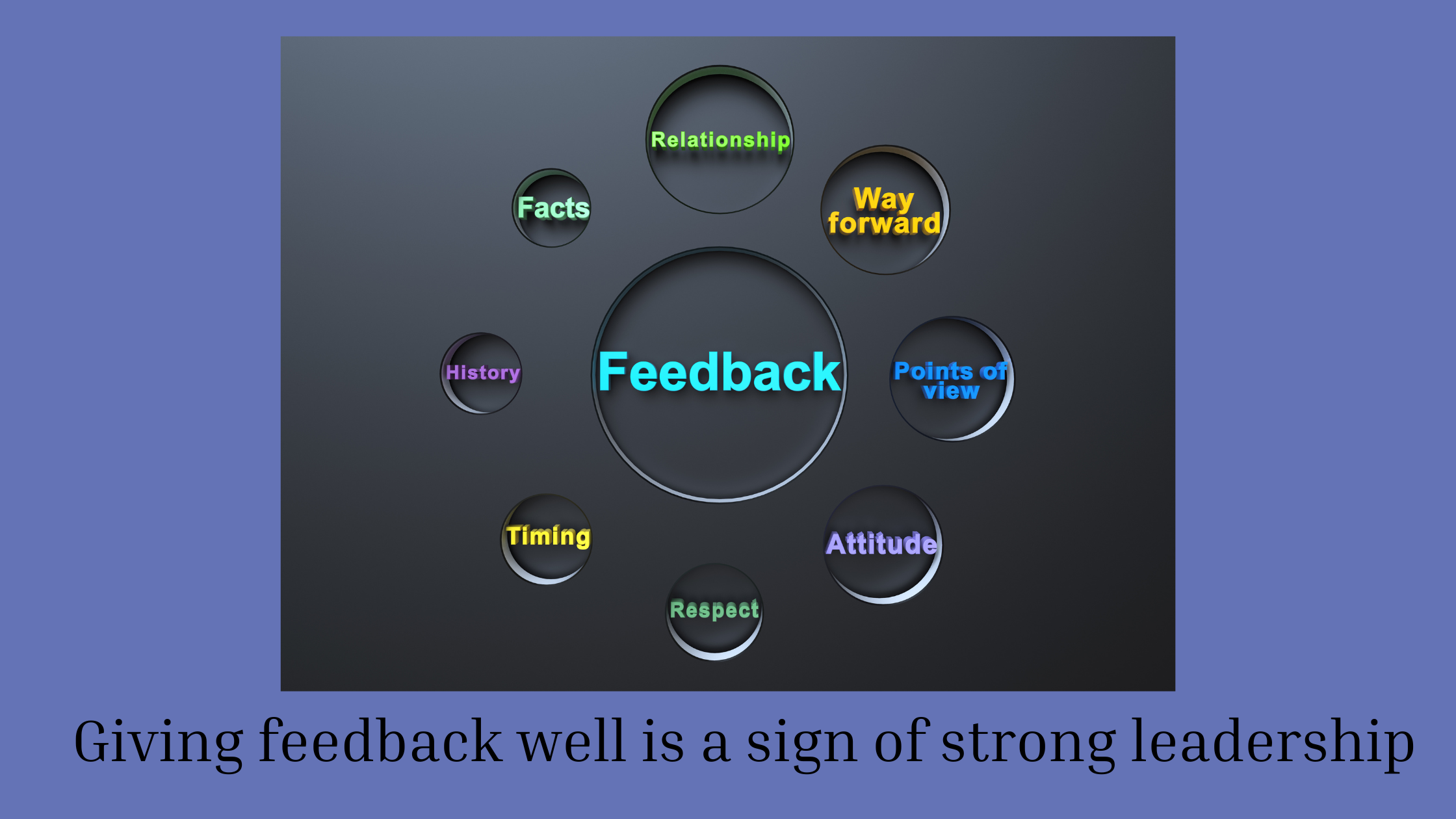
Giving Effective Feedback

Two weeks ago, I blogged on When Feedback Hurts. We have all experienced those painful moments (they can be the hardest to forget, unfortunately). As a leader, we recognize that receiving feedback is important if we are to grow, but we also need to consider how we give feedback to others.

We may not always be aware of all the instances we give feedback. It is worthwhile to notice the comments and criticism we offer. A teacher is late bringing in his class. You note the lateness, and unbeknown to you, he is thinking you don’t understand what is involved in getting this group organized and ready to go to the library. With this negative feedback, will he be as willing to schedule his class in the future? Will he be open to collaboration?

The IT department has not responded to your request to address an issue. You are justifiably frustrated and send an email, copying the principal, saying the delay is affecting student learning. Do you think the IT department will be more or less responsive to your next request?

You give feedback to students all the time. Perhaps a group is supposed to be working on a project and is obviously more interested in socializing. You tell them it’s time they settled down and got back to work. Are they now more or less engaged?

It’s not that these issues shouldn’t or can’t be addressed, but words count and so does the delivery. Consider these alternate approaches:

  • If you said to the teacher, “Let me get them started. You can probably use a breather after getting the kids here today,” the teacher will feel taken care of, not criticized. You’ve let him know you’re aware of the challenges he faces. And he’s more likely to start the process of getting his class organized earlier so they’re not late in the future.
  • If you sent the IT department a message (not including the principal) and said, “Help! I really need you. I appreciate how very busy you are, but I hope you can make this a priority,” their response is likely to be far different from that annoyed email where they were embarrassed in front of a superior. And you’ve shown you understand their workload.
  • If you said to the students, “Now that you have completed the preliminaries, where are you planning to go next?” Because they need to respond, they are more likely to focus on the task and start working.

While it’s important to let people know you’ve noticed them doing something that doesn’t work, there are ways to move from that information toward something that is helpful to you, them, and the relationship you want to have with them going forward.

Be SpecificThis allows people to be focused. You can tell the teacher in advance what the class will be doing, which can support them all to arrive prepared. The IT department will appreciate as much specificity as possible. Telling them it’s important to you, doesn’t make it important to them. Let them know how their work will have an impact. Your next question with students should direct them on how to start.

Be Timely –The more immediacy you bring to giving the feedback the better it will be. The teacher knows he is late. The IT department is buried in requests for tickets and doesn’t usually think yours is special. The kids are going to have fun until you show them there is fun in the task. Once you’ve pointed out the situation, move on.

Be Prescriptive – What can they do to improve and how can you help? Once the class is going, ask the teacher if he could use a brief reminder early in the day about the impending visit. Ask the IT department how they determine priorities and if there’s anything they need from you in the future, since your request affects so many students. Tell the students you are looking forward to seeing whatever it is they are to do next (a reminder here to be specific).

Be Encouraging – Let the teacher know you recognize the challenge of getting kids to the library as scheduled and are glad to help. Assure the IT department you are aware of their workload and appreciate all they do. Tell students the project is challenging, and you are looking forward to seeing their creative solutions. And the second part of this is to recognize changes. When the teacher arrives on time, say you appreciate what it took to get this done. Thank the IT Department every time they are responsive. (This is the time to copy the principal.) And, if possible, make a positive specific comment to the students when you see what they have accomplished at the end of the period.

So often (maybe even more often) it’s the little things that count. Leadership is not just huge projects with big outcomes. It’s what you do every day to encourage, support and work with the people around you.

Fielding Tough Questions

We live in a confrontational, polarized world. Tough questions—and charges—are a part of it. If you are a leader, chances are someone is going to challenge you. It happens to every president, CEO, director and head coach. Even if you don’t think of yourself as a leader, people know you lead the library. If someone has an issue related to the library, you are going to be challenged. What you do next defines you as a leader.

A story I have told before occurred when I took a new position in a school and a teacher came storming into the library and started haranguing my clerk. I came over immediately, indicating if there was a problem, the responsibility was mine, not the clerk’s. It was in the early days of automation, and the practice had been to use teachers’ social security numbers for their barcodes. The teacher was opposed to this. I listened to what she said and apologized for not being aware of the policy. It was my library, and I was responsible. I told her would return all her books, issue a new barcode for her, and re-check out the books to her. At the end of the school year, we changed all teacher barcodes.

What worked when I was challenged? I listened without getting defensive or arguing that I wasn’t the one who put the practice in place. I came up with a satisfactory solution. The result – she became one of my strongest library advocates.

The tough questions are getting tougher, the challenges louder and more fierce. To help us be prepared, Allison Shapira has some answers for you When a Tough Question Puts You on the Spot. Here are her four points.

  1. Prepare in Advance–You can expect to have questions and accusations directed at you for books in your collection and displays in your library. Don’t be caught off guard. Be familiar with the Library Bill of Rights and be able to quote key sections. (You might keep a copy on hand). Have a Selection and Reconsideration Policy in place. This ALA toolkit will get you started if you don’t have one yet.
  2. Pause and Breathe–Being confronted is scary. Your body goes into fight, freeze, flight response. While it is trying to protect you, the process shuts off your cerebral cortex–the part of you that thinks. Allow yourself a moment to respond and get your (hopefully) pre-planned response into action.
  3. Express Sympathy and Honesty–This is what I did with that teacher. When a parent comes to you with a challenge, acknowledge their awareness and their concern. Explain how you don’t seek to override their decisions for their child. Once things have stopped escalating, explain that other parents have the right for their children to have access to those subjects.
  4. Acknowledge the Uncertainty–This is often at the root of challenges and frustrations, rather than true animosity. A teacher is angry and wants to know why the material they requested for inclusion in the library last year is still unavailable. A principal wants more data on the impact of your Makerspace and you hadn’t thought of that before. Be honest about your lack of knowledge, assure them you will look into the matter when possible, and give them a date by which you’ll have an answer.

In some of these confrontations, you need to take a stand and that can be difficult. Shapira recommends you use this PREP framework:

  • Point: State one main point.
  • Reason: Provide a reason behind it.
  • Example: Give an example that supports your point.
  • Point: Before you start rambling, re-state your main point.

You will have to face tough questions and never know when. As with any other aspect of leadership, planning is key. Knowing what you will say when it happens will put you in the best position to handle the challenge and help you trust yourself in difficult, emotional situations.

Leadership Power

Making your Vision for your library a reality requires two things: leadership and power. Power has many faces. Some comes from a person’s title, like principal or superintendent, but at its core (and by definition), power is having or making people do what you want them to do. The best kind of power happens when the person with power inspires – rather than forces – people to follow.

The strongest and most effective leaders don’t only have power, they are visionaries. Your Vision Statement is just a dream unless you keep it in mind and work toward it, however slowly. In addition, you can’t accomplish your vision on your own. You must make connections with others who help bring it with you to fruition.

As an example, look at this Vision Statement, “The Blank School Library Program is the center of collaborative learning, producing creative students who have an appreciation of literature, critical thinking skills, and a respect for others and self, and who are prepared to make a contribution to the world.” It is uplifting, as all Vision Statements need to be. At the same time, the importance of others being a part of it to make it a reality is embedded in the statement with phrases including: “collaborative learning,” “appreciation of literature” and “critical thinking skills.”

Bringing your vision to life requires you to work with teachers at all levels and in all subjects, as well as creating the safe environment that welcomes all, allowing them to produce their best work. To achieve that, you need to be clear on where you are going and have a positive mindset about getting there. Alaina Love in her post, Do You Have the Kind of Power That Really Matters? guides you with these five questions to ask yourself.

  1. What is the over-arching purpose I am here to achieve? The word “purpose” provides the answer. It is your Mission Statement. Your Mission Statement is what grounds you and keeps you focused on what is truly important so that you don’t get distracted –or not for long—by tasks that don’t further your purpose.
  2. What are the outcomes I am hoping to manifest today? A prioritized to-do list has you working towards that over-arching purpose in manageable steps. The pleasure we feel at being able to cross off these tasks keeps us motivated to continue in our always busy world. Love recommends keeping track of your successes as a reminder of what you are achieving. Seeing progress is an incredible motivator.
  3. How do I need to show up for others to get these results? For librarians, this means listening to the people in our community and learning what teachers are doing – and struggling with. When your library is a safe welcoming environment, they are more likely to share their worries and stresses. Offering your help and doing the heavy lifting brings them back. They will see you and the library as a vital resource toward their success.
  4. What needs to shift in the environment I create to allow others to be more successful? Your first thought may be to look at the physical arrangement of furniture in your library. That’s one place but go further. You can invite teachers to put their student projects on display highlighting the success of many. You might also assess if you can make it easier for teachers to talk with you and/or schedule their classes into the library. Is there a place in your library where you can talk privately? Environment is about more than how a place looks. It’s about how it feels when you’re there.
  5. Where do I need to demonstrate more authenticity in my interactions and communications? Establish yourself as someone who can be trusted. Be comfortable sharing what you know – and what you don’t. In addition, be open to feedback, valuable part of leadership. is tough but necessary. After a project is completed, be willing to seek the truth from the people you worked with. Ask, “What do you think worked best?” “Where did you feel most supported?” “What could I have done better?” “How could I have helped you more?” “What changes would you like to see if we repeat this project?”  Asking may make your feel vulnerable, but you will have built trust. And trust is the foundation of relationships.

You want to be the kind of leader who stays in your power and impacts others positively. With your Mission Statement and Vision to guide you, you can work continuously and successfully to make your Vision a reality because others will want to be a part of what you’re creating.

Creating an Advisory Council

In this day of libraries receiving regular disputes about books in their collection (and ALA has some great resources should this happen to you), it’s important to have advocates for the library who can support you through this process and any other challenges your program may face. One of the best ways to do this is to create and develop an Advisory Council.

When you’re planning, try to make your council as diverse as possible without becoming unwieldy by limiting your board to between 5 and 8 members. First, consider other librarians. You can invite the local public librarian and a college librarian, if there is one in your area, are other potential members. If you are at the elementary level invite a middle school librarian. Middle school librarians should look to high school, and high school librarians invite the middle school librarian.

Next, consider inviting one or two teachers from different subject areas, STEM teachers especially. If you are at the high school level, consider adding a student representative. Reach out to the community as well. Invite parents and local business owners. Inform your administrators, inviting them if they are interested. (And keep administrators in the loop no matter what).

As you develop your plan, start by creating your ask. What will be the purpose of the Advisory Council? How do you see the potential contribution of the members?  What will the commitment entail? Before or after school? Evening? Zoom or in-person? Know what you are asking people to do.

Also consider what members will need to know about the library to be effective. This includes an explanation of the Code of Ethics and the 6 Common Beliefs in the National School Library Standards. Add whatever else you believe necessary, depending on the members, and be sure to have these resources available to the members.

At the first meeting, welcome and thank the members for volunteering their time. After brief introductions, review the purpose of the council. Ask what they know and think about the school library. As succinctly as possible, review what you determined members need to know and encourage questions to ensure their understanding.

As a group, develop what the goals of the Council should be. You might want to focus on the diversity of the collection, reviewing the collection development policy, or what changes are needed to ensure the library is welcoming to all. Although you are leading what the possibilities are, be open to their suggestions.

Alaina Love’s post How to Lead a New Team to Success offers a direction for how to continue.

  1. Listen before leading – Don’t plunge into the tasks. While you want something to show for the first meeting, allow time to hear from the members. You asked them to be on the Council for a reason, but they may have more to offer than you knew. Be open to discovery.
  2. Share – Set up a Google doc or other method where Council members can report so every one can keep up with what is being done. After the first meeting, for example, you may have them comment on any goals that were discussed. Also, the doc can have a place to post any questions they have that have arisen since the meeting. Be sure they know everyone can respond to someone else’s posts.
  3. Seek insight –Discover what drives your members. Why did they agree to be a part of the Council?  What do they hope to give? What do they hope to gain? What have libraries meant to them. Knowing them as people, beyond their titles, will make them more connected to the team.
  4. Evaluate and align – The more you learn about the members the better you are at assigning tasks. We all have strengths and weaknesses. You do as well, and the Council is meant to help you do better at leading the library program. By knowing what members like to do and are good at, you not only get the best results but also increase their commitment to it.
  5. Review – Leaders inspire and inspect. Over time, notice how things are going and assess whether members have been offered the opportunity to give their best. Should you make changes in who is responsible for different tasks, be sure to frame it in the context of feeling they could give more in the new assignment.
  6. Query, acknowledge, celebrate – Get their input as to how they feel things are going. Instead of asking “how are we doing?” ask, “What can we be doing better?” And celebrate Council’s achievements and those of individual members. Even if you meet virtually, try for an in-person celebration. People stay more invested and active when they are acknowledged.
  7. Look outward – Council members don’t stay forever and new blood will always be needed to keep the council strong. Encourage outgoing members to recommend their replacement. Be sure to welcome new members and get them up to speed.

Creating and sustaining an Advisory Council takes work, but the benefits to your program and how you are perceived make it worth it. Bringing in diverse perspectives will give you the direction you need to ensure the library is a safe, welcoming space to all and continues to be an invaluable asset to the school.

Moments in Leadership

Leadership is a journey. You start small and grow as you go. And, no matter how much you grow, the journey doesn’t end. It’s a lifelong pursuit. For librarians, leadership is not an option. AASL’s Vision puts it succinctly, “Every school librarian is a leader; every learner has a school librarian.” 

We cannot forget that until every librarian is a leader, not every learner will have a school librarian. Too many non-leader librarians have seen their positions and libraries disappear. Yes, leaders have been eliminated, but it’s those who haven’t stepped out lead who have been the most likely to have lost their jobs.

We do face a challenge, because librarians don’t have a title, such as principal or superintendent, that implies leadership. We are the ones who define and develop what our leadership is and what it means. Fortunately, we have colleagues who have marked the path. Develop your PLN. Use social media to connect to library leaders. Observe how leaders in your state association assert their leadership and take the profession (and their library) forward. Seek out someone you admire and ask if they would be your mentor.

Mark your own leadership path. Art Petty delineates 3 Big Moments That Can Define Your Leadership Career.

The Moment You Decide to Lead – Making this active decision is key. You must decide, then pursue. Petty recommends some self-reflection questions including, “Am I motivated to help others?”  He follows that with “Am I willing to put their needs ahead of mine?” Think about the ways in which your work supports the goals of students, teachers, and administrators and make that your priority as you craft your goals. By becoming and being a leader, you are positioned to give students and teachers the information and resources they need for success.

The Moment You Decide the Type of Leader You Aspire to Become – Petty writes: Deciding to invest yourself in the work of leadership is essential. Defining the leader you aspire to become is priceless. There are many models of leadership and not all of them work for school librarians. A style known as “servant leadership” works best for librarians. This style focuses primarily on the growth and well-being of people and the communities to which they belon is the style most frequently showed by library leaders. They are empathetic and active listeners; leaders who empower others.

A variation is collaborative leadership. Here the leader enrolls others and works with them. They value the skills and expertise of their colleagues as they take their library program and students forward. Servant and/or collaborative leaders in our state and national associations make our profession and value known to an increasingly larger audience.

The Moment(s) When You Make a Stand – In the current book-banning climate, there have been several school library leaders who have taken public stands in the face of hostility and even personal danger. It takes courage to stand up for your core values and professional ethics. While there are reasons some are afraid or have reasons for not doing so, these Warrior Librarians are to be admired. Hopefully, their courage will encourage others to do the same.

Making a stand is not always as earth-shaking as those situations. Sometimes, it’s showing up at a Board of Education meeting and talking about the importance to students and teachers of school libraries. It could be making an argument to your principal about the use of your time.

Your leadership journey will have many “moments.”  No matter when, you need to become more active in our profession. The first step will require you to get out of your comfort zone. Subsequent steps will hopefully be a little easier (although stretching yourself will always be part of the process). First, step up to leadership at your state level. From there look to serve on the national level. If you serve on an AASL Committee, look for a leadership position. Be ready to be part of ALA. The same is true for other professional associations/

What type of leader are you or do you want to be? How are you making that happen? The journey never ends.

The Core of Librarianship – Ethics, Courage, and Planning

In the United States, you can’t escape news of the nation-wide movement to ban library books. Almost daily, social media, television, and newspapers have stories about books being removed from library shelves and legislation that could mean jail time for librarians. You want the library to be a safe place for all, and now it doesn’t even feel safe for you. All this is happening and you’ve barely had time to get your library program going in the new school year.

How do you manage within this turmoil?  What choices should you be making? 

My recommendation is to anchor yourself and use the resources available from the American Library Association (ALA) as well as the American Association of School Librarians (AASL). Start by reviewing ALA’s Code of Ethics. Number 7 and the newly added number 9 are of particular importance at this time.

Number 7 reads: “We distinguish between our personal convictions and professional duties and do not allow our personal beliefs to interfere with fair representation of the aims of our institutions or the provision of access to their information resources.”

Number 9 states: “We affirm the inherent dignity and rights of every person. We work to recognize and dismantle systemic and individual biases; to confront inequity and oppression; to enhance diversity and inclusion; and to advance racial and social justice in our libraries, communities, profession, and associations through awareness, advocacy, education, collaboration, services, and allocation of resources and spaces.”

Those are powerful and often difficult principles to maintain. Number 7 is the basis for the idea that a library should have something in it to offend everyone, including the librarian who purchased it. Number 9 flies in the face of the restrictions and bannings centered on LGBTQ+ themes and the history of racial injustice in the United States.

The Library Bill of Rights adds another dimension by listing eight statements that should be part of library policies. It defines what libraries must do – and not do – to provide equitable services to all. They further delineate what is in the Code of Ethics.

Additionally, school librarians can also look to our Common Beliefs as given in the AASL Standards Framework for Learners. The fifth Common Belief is “Intellectual Freedom is every learner’s right.” The explanatory sentence states: “Learners have the freedom to speak and hear what others have to say rather than allowing others to control their access to ideas and information….” These statements represent the core purpose of librarianship. They are what guide what we purchase, how we arrange our facility and resources, and the displays we create. It is who we are.

This is where courage comes into the picture. You don’t have to do any of it. If you choose not to buy a book because you don’t approve of the author’s viewpoint, you won’t be drummed out of the profession. These documents carry no legal weight. No one even needs to know how you made your choices. It is up to you to decide how deeply you are committed to the ethics of our profession. You are the one who must make choices based on what could be the personal cost of that decision.

 Everyone has different things at stake. I, and other librarians, won’t fault you even as we hope you are willing to hold these ethics. Sometimes you figure out ways to bend them in order to do the best you can. Holding them can be impossible in some situations, but the workarounds are better than nothing.

No matter where you live, whether it’s a liberal or conservative community, challenges are now almost inevitable. You need to be prepared for them, or you will not be able to respond in a way to get the best possible results for your students, teachers, and yourself. As always, planning is required.

Build your plan around your resources and your allies What resources do you have on hand? You should have a board approved selection and reconsideration policy. If not board approved, the one you have been using is a good start. Even better, work with the ALA Selection and Reconsideration Policy Toolkit for Public, School, & Academic Libraries.

Be familiar with the ALA Challenge Support page. It gives you all the go-to information you need as soon as soon as you hear about a challenge. Also know what help your state association provides.

Look for allies among your teachers, administration, and community. Well before a challenge arrives, let people know how you make your book selections. Share the Code of Ethics and Library Bill of Rights. Discuss the library as being a safe place for all. If – and probably when—you are faced with a challenge, these are the ones who will show up for you and come to Board meetings as needed.

It has never been easy to uphold the ethics of our profession, but it has become much harder in the past year. The issue is not going away. Understand our ethics, be as courageous as you can, reach out for help and support when you need it, and plan so you are prepared.