More Leadership Tips

Being a leader, as cliché as it might sound, is a journey, not a destination. Even though you already are a leader, there is always more to learn. As librarians, being lifelong learners comes naturally to us. However, we must always be on the lookout for new places and spaces to learn from.

In this blog, I frequently bring in leadership lessons from the business world. A few weeks ago, I even posted a reference to how Taylor Swift can be a leadership role model for us. Today, I’m returning to Smart Briefs and the article, “Adaptive leadership: How women can lead through uncertainty” from Maria Doughty who shares about leading when “life gets ambiguous.” Although the title says it’s targeted to women, men will find these suggestions equally helpful. You may be doing several of these, but there is always something new you can use.

Here are her eight tips along with my comments on how these relate to school librarianship.

  1. Define goals and stay focused – Just as it is in the business world, our priority is our Mission and Vision. By now you hopefully have both, but when whenever you are feeling uncertain, it’s a good time to review them and see if they need tweaking or expanding.
  2. Be nimble and be ready – Necessity has made us experts at pivoting. What worked yesterday, might not work tomorrow. Stay alert. Read professional journals. In addition to school library ones such as Knowledge Quest (KQ) from the American Association of School Librarians (AASL), your reading should include EL (Educational Leadership) from the Association of Supervisors and Curriculum Developers (ASCD). Keep current with what might be next in technology through ISTE (International Society of Technology in Education) starting with their numerous blog posts.
  3. Stay calm and lead with empathy – This can be challenging to do given the current political and politicized climate and how it impacts school libraries and librarians. But panic doesn’t lead to rational decisions. Breathe. Ask: Who in the school community is also stressed out? Your principal? Teachers? How can you support them? Then stop to consider who can support you? Parents are one important source, particularly if you prepared for this possibility by establishing communication channels with them. Teachers may be as well. Even older students have also proved they can be strong advocates for the school library and you.
  4. Project strength — and vulnerability – While sounding like opposites, they can work well together. Project strength by leaning into the areas where you feel confident. Draw on your values and how capable you are at teaching students what they need to know for today and tomorrow. Teachers are also feeling the effects of the political climate. Let them know you understand and what you are doing to not let it keep you from bringing your best. Share the resources from our national library professional associations and take the opportunity to learn from theirs.
  5. Stay curious and commit to learning As I stated at the beginning, a commitment to learning is natural for us. Avoid getting so concerned about what is happening in your school that you don’t see the very big picture. Keep aware of what other industries are doing – schools, colleges, and beyond. Notice where you might be prone to tunnel vision about changes, such as AI. Look for where you can adapt and grow.
  6. Maintain inclusivity and engagement – Everyone is busy, but the more people work together – and with the library – the more interwoven you are with your audience. Consider hosting an after school coffee and chat (with snacks if possible!) for teachers to share ideas across disciplines with each other. Perhaps you can schedule something for parents such as students sharing their recent projects. This has the advantage of allowing students to show their growth as they discuss what was the toughest part of the project, what was the best part, and what did they learn.
  7. Take care of yourself – I can’t stress this often enough. These leadership tips take time and energy. Growing, learning and changing isn’t easy. You need TLC to keep going. Whatever relaxes you and/or gives you pleasure – make time for it!
  8. Find your tribe -As Doughty says, “you don’t need to have all the answers yourself.” This is where your Professional Learning Network (PLN) is a great resource. The hive mind invariably can give you the answer as well as new ideas to try. Ask the scary questions. You never know who else is having this challenge or who may have found a solution.

We are living in challenging times. Yes, that’s another cliché that is all too true. You can let it break you, or you can grow as a result of how you lead yourself and others through. Your growth sets an example for others. The future of our students depends on us rising to the challenge and being the leaders they and the rest of our school community need us to be.

Four Lessons for Leaders

What have you learned as a leader? How have you grown from your first position, where you probably weren’t even thinking about leading, to the librarian you are today? And if you are in your first year, what steps in your leadership journey are you taking and looking forward to?

Because leadership is a journey, not a destination. Successes, setbacks, struggles. And we can learn from them all – especially the parts that didn’t go as planned. As the great pitcher, Christie Mathewson said, “You can little from victory. You can learn everything from defeat.”

As school years begin again, take some time to reflect on your leadership journey. What worked, what didn’t. What turned out even better than expected. What had hidden lessons. Fred Ende, director of curriculum and instructional Services for Putnam/Northern Westchester BOCES in Yorktown Heights, N.Y. did just that.  In is blog article, Lessons Learned After 25 Years as an Educator, these four are the result of his introspection—with my comments as usual.

Trust your intuition – This will likely be a challenge for the first year or two, but the longer you are a school librarian the more you learn. The experiences, good and bad, improve your instincts for understanding what the people you work with need and want; this includes students as well as teachers and administrators. Time helps you refine your ability to read communication clues including body language and tone.

Change won’t happen if it isn’t led – Being a leader means being willing to step out of your comfort zone and bringing new things to your school. You might launch a new program or incorporate and teach new technologies. You’ll step up and explain your idea or plan to your principal, introduce it to teachers and students, and integrate it into your program. Be mindful of teachers’ and administrators’ hesitancy or outright unwillingness and address it as part of the change. People like doing what they know. Change is scary. Show them the benefits and lead them there.

Give people the work they want to do – Ende is referring to what he learned as district administrator. You offer a different environment than the classroom. This gives you different options. With students it means you are mindful of different learning styles. Your give them voice and choice within a lesson. With teachers you manage collaborations so you do the heavy lifting, but they get to bring what they like to do. It might be introducing the lesson or designing its structure in a way that they like, while still incorporating choice and voice for students.

Let it go – When we believe we are right, we can waste time trying to convince someone else they are wrong. It doesn’t work that way. Truthfully, that doesn’t work at all and can even hurt the relationships we’re trying to build. As Ende says, “We can’t control everything, and why would we want to? In fact, we often learn even more from acceptance and then working to make less-than-ideal situations better for all involved. Since we only know our situations, we have to be willing to believe that everyone wants what is best for learners.”

So, take a moment and ask yourself what have you learned as a leader? Even if this was you first year, you have learned more than you might realize.  Make this a start and an end of the year practice. You will give yourself direction and then be surprised at how much you have grown – and be ready for the next school year.

Making Decisions – Emotions vs. Logic

How do you make your decisions? Do you make them logically or trust your gut and go with your emotions? Most would say they decide logically. But more than 80% of the time, this is not the case.

While we may be logical when doing grocery shopping and choosing between one brand or another (cookie aisle not withstanding), it is rarely true when making any significant decisions. What we typically do is make our decision emotionally and then substantiate it logically. Understanding the power of emotions, and how they are impacting you and those around you, will improve your communication and help you achieve your goals.

In his article “The Power of Emotions,” Kell Delaney explains, “Humans are fundamentally emotional beings, and our emotions often drive our narratives and decision-making processes.” Because of this, we identify our feelings as being accurate. The problems occur when interacting with administrators, teachers, parents, and students who have different emotional responses to the same situation. The result is miscommunication along with worsening the situation.

How can you arrive at something logical when emotions are in control?

Delaney says we need to advocate for our core values and create stories and visions that others can engage with and help shape. He adds that bringing in your vision and actively listening to others’ perspectives develops a collaborative narrative for mutual understanding and action. That’s a big promise.  How do we achieve it? My recommendation is to consider your audience – and bring it back to the students.

With Administrators – Whether it’s a budget request, a plan for a new library service, or anything that requires administrative approval, I lead with the students. How will this affect them positively? Do I have any student work to share that connects to my request? By giving them an emotional reason for what I want, I am far more likely to get a positive response.

With Teachers – While some teachers like working with you, others are resistant. Find a time to talk with them, complimenting them on an aspect of their teaching you’ve experienced, particularly their connection with students. Add that you would like to contribute to their success and offer, if you can, to handle any additional work that is involved. Listen carefully to their response and continue the conversation accordingly.

With Parents – While it has become a far larger issue recently, dealing with parental objections to what books their child has access to has always been part of being a school librarian. When a parent comes to you directly, acknowledge them for being an aware and involved parent. Let them know you will see to it that their child no longer has access to those types of books. If they want to have the books removed, share the values of school librarians according to AASL standards.  When the charge comes at a Board of Education meeting, draw on parent advocates you have been building.

With Students – From “This is stupid!” to “Why do we have to learn this?” there are always students who resist doing what is required. Ask them what they would rather learn. That will pause the narrative. Many will be surprised by the question. Recognize their desire to learn (hopefully) along with their concerns with this lesson, then ask them to participate and see if the lesson provided an answer to their question or an interesting experience.

We are all under stress. Be ready for what is apt to be a contentious school year by readying yourself with how to deal with this paradox between logic and emotion. Knowing how to harness emotions, and not avoid them, to reach a reasonable way of dealing with an issue is key to creating a better work environment.  You will be a more effective leader and school librarian as a result.

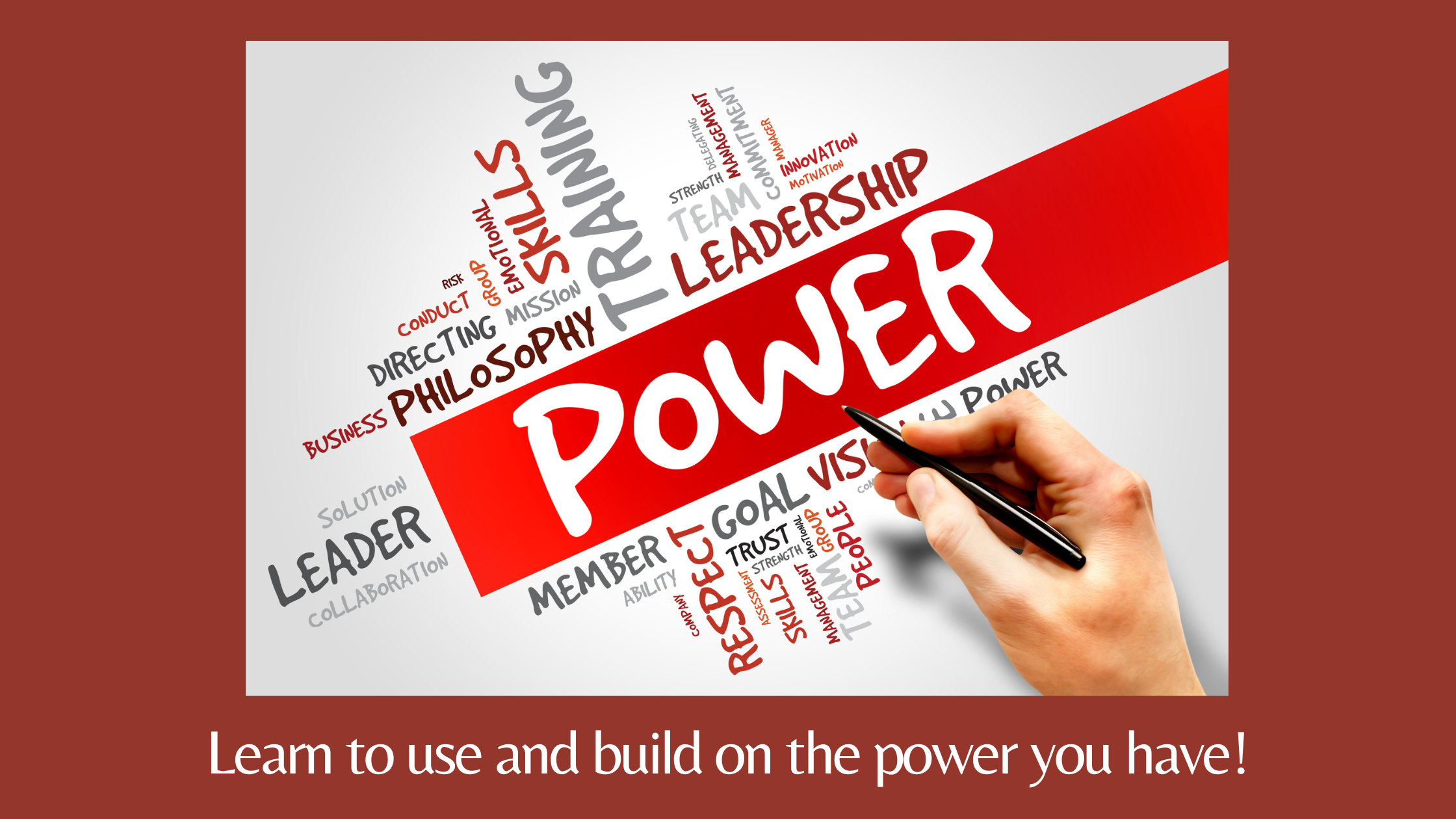
You Have Power – Use It!

All too often, school librarians feel and act as though they don’t have power. We do. And the first step to using it – is recognizing it. Consider today’s blog a refresher and a reminder.

The power librarians are speaking of when they say they are powerless is Power Over. It comes from a position someone holds and is authoritarian in nature. It is used to control. Much of the time it is used (even by teachers and librarians), it indicates uncertainty and lack of confidence. It can also be uncomfortable to use.

Power Over does not work for us. It suppresses initiative, produces resentment, and, in some cases, rebellion. It certainly does not lead to the safe, welcoming environment you want to create in your library. You have far better types of power to cultivate and use.

Paul Thornton in his article, Maximize Your Power and Effectiveness, identifies three types of power and offers advice on how to use them. I have added my suggestions on how they work best in our world.

Position Power – This is Power Over, but refers to what is in your control. For example, you create your budget. Although it is subject to administrative decisions, you identify what the library needs are. You, hopefully, have some control over your curriculum.

Tips for gaining and using your position power:

  • Consistently deliver high-quality work and exceed expectations – Make sure your administrator is aware of what you are doing and how you are delivering.
  • Make decisions that align with the organization’s strategy and values – Create your Mission with the goals of your principal in mind. In your reports to them, connect your work to their wants and needs.

Expert Power – You have a large body of knowledge about how the information is organized, information literacy, information technology, and factual and fictional reading. You are a resource for teachers and students. To increase this power, Thornton says:

You can gain expertise by

  • Acquiring degrees, certifications and other credentials that reinforce your expertise – Your state library association as well as AASL and ASCD offer webinars on topics to keep you at the peak of your game.
  • Taking on challenging projects. Learn by doing! – It may be scary but it builds your knowledge base. Present an author visit. Plan a library renovation. (Lots of preliminary work with your administrator). Your PLN will be a great resource for you.
  • Attending conferences to keep your knowledge and skills up to date – Your state and national library associations usually have an annual conference. They not only serve to expand your knowledge but they help you build your PLN. Plan to attend the next one. Remember, there are more virtual opportunities for this all the time.
  • Working with mentors and other experts to benefit from their insights – Before and during the challenging project, look to find a librarian willing to be your mentor. It could be someone who presented at a conference or taught an online class.

Personal power – Sometimes called charismatic power, this is about being likable. It is linked to your social and emotional intelligence. When you have it, people like being with you, which translates into teachers collaborating with you and principals appreciating your contributions. Thornton suggests these actions you can take to increase your personal power:

You can gain expertise by

  • Learning to eliminate distractions and be fully present with people – Work on your active listening skills.
  • Being approachable and show genuine interest in others – While in informal interactions with teachers and administrators, listen for where their passion is. Ask questions. Note any hobbies they have. You might then send articles or new books on them. This is also good advice with students.
  • Understanding and responding to the emotions expressed by others – This is an extension of the previous action. Notice body language. I once recognized a teacher’s distress by how she was walking and holding her head. It lead to a much stronger relationship.
  • Command attention with poise and authenticity – Now look to your body language. Does it show your confidence?

Power can be used or abused. Guess which one works to build you as a leader and move your Mission forward? Work on strengthening the ones you are good at. Seek to improve the ones in which you are weak. Leaders need to embrace and grow their power.

To-Do’s to Make You A Better Leader

Librarians are lifelong learners which is key to supporting and growing our programs. We learn about the latest tech and the newest books for our students. We learn about the ways they take in information and how we can support them to be critical thinkers so that they keep an open mind and are also constantly learning.

What we don’t often focus on what we need to learn to become better leaders. The vision of AASL is “Every school librarian is a leader; every learner has a school librarian.” It is incumbent on us to be the best leader we can be. The better we become at leading our school community, the better we can do all the other things that are our high priorities.

To lift your leadership to the next level, consider using David Durand’s Four Daily Habits That Separate Giants From the Pack. Here are his recommendations with my modifications for our education world:

Daily habit 1: Bring your thoughts to life with action

If you think it, write it. In the course of your busy day, you may have a passing thought of a possible change that would address a problem or increase the reach of the library. Lock on to it. As soon as you have time, record it digitally or manually.

Review your list regularly to identify which of your ideas needs to or can become a reality. Start the planning process with action steps, including start and by-when dates. If it is a big project, such as developing a new strategic plan, begin with your Mission Statement, then look at who will be involved, what needs to be done, and how you will assess it.

Daily habit 2: Find concrete reasons to believe

It’s too easy to say the idea is “pie in the sky” and will never happen. Yes, it might not work. But you will learn much along the way if you try. And what if it does work?

Durand say, “Giants find reasons to believe, and they do it daily. They set a goal and begin building a realistic case for how and why they can and should accomplish it.” You have seen what leaders in the field have done. If they can do it, so can you. You might even contact them for advice or ask if they would consider being your mentor. Trying is the only way to know for sure.

Daily habit 3: Break your morning down into 3 daily tasks

  • First task: Get your head right – Focus. What mindset will forward your Vision and Mission today? Remind yourself of it during the day to maintain you focus.
  • Second task: Guard the culture – Your library culture which should stem from your Mission usually is related to the idea that the library welcomes everyone. It is a safe haven and a place where learning happens. Embody it in all your interactions.
  • Third task: Do the thing that moves the needle most before anything else – Know your priorities. It’s easy to get sidetracked. Know what comes first and get it done. At the end of the day you will be able to see you accomplished something that moved the library forward in some way.

Daily habit 4: Keep primary responsibilities primary, or you will unconsciously complicate secondary responsibilities

Durand warns to keep the third task in mind. You have many responsibilities but there will always be interruptions in your day. Keep your focus (First Task) and be sure the first thing you do is what needs to come first, or you are likely to have a day filled with only secondary tasks. You may be preparing monthly report and start designing the infographic you will use. However, as you work on the content (your primary responsibility) you realize the infographic needs to be tweaked or redone.

Just like librarians, leaders are always learning. When you look for the ways you need to learn and grow, you become the librarian and leader your students, teachers, district, and administrators need.

Becoming a Great Leader

Which one of these have you heard before?

  • Leadership is a never-ending journey.
  • If you are not growing, you are dying.
  • Good is the opposite great because if you think you are good, you will never be great.

These have been touted so many times that they have become dulled in our minds. But they are adages because they contain truth. As a leader, you can never be complacent about your achievements. Yes, be proud of what you’ve achieved and all that it took to get there, but this doesn’t mean you can stop working hard. There is always more.

Another aphorism can be your next step: Leaders don’t make followers. They make more leaders. The more school librarians who are leaders, the greater our overall impact on our school communities and on the larger local, state, and national communities. Yes, national. Thinking big is important. We need to have the national communities see school librarians for the vital role they have in education and our students’ future.

This means finding ways to bring up other leaders. In an article, Rena Harvey presents 5 Ways Leaders Can Unlock Their Potential to Inspire Others. She notes that, “becoming a great leader requires self-awareness, continuous learning, and a commitment to personal growth.”  To do so, Harvey says you must work on these five areas: understanding your core values, developing emotional intelligence, embracing lifelong learning, fostering resilience, and cultivating a vision that inspires others.

Understanding Your Core Values – Reflect on both your personal core values as a librarian as well as the ALA Code of Ethics, the Library Bill of Rights, and AASL’s Common Beliefs. Our values ground and support us as leaders, guiding us as we make decisions and choices. There is strength in knowing other librarians are holding the same values. Because they are always present, others know who you are and what they can count on from you. It shows your integrity and that of the profession.

Developing Emotional Intelligence – We are in the relationship business. Our emotional intelligence is part of what allows us to communicate effectively with others and build relationships. People respond to us because we “see” them. It helps us make decisions as we understand how it will impact others. Harvey adds that your emotional intelligence allows you to stay calm under pressure and respond to challenges with a clear mind rather than reacting impulsively.

Embracing Lifelong Learning – We are role models for lifelong learning. Anyone who has been in the profession for five or more can look back at our careers and see the many changes. We have embraced the challenges and changes, teaching ourselves when possible and seeking other ways to become proficient in the changes. We have adapted, pivoted, and helped our students, teachers, and sometimes administrators in finding their way in our ever-changing landscape. And we have looked for feedback to improve and refine that learning.

Fostering Resilience – An integral part of the changes we have had to make is becoming more resilient. We hold to our core values to anchor us. We draw on our librarian colleagues and state and national organizations for help. They strengthen us like the giant redwood trees whose shallow roots are interconnected with others, allowing them to grow to great heights in the face of high winds. Despite the challenges, we work on having a positive mindset, remembering the importance of self-care.

Cultivating a Vision That Inspires Others – I am always inspired by AASL’s Vision – “Every school librarian is a Leader; every learner has a school librarian.” In essence this blog is my contribution to inspiring other school librarians to be leaders – and great ones. Review your vision to ensure it’s big, showing your commitment to a better tomorrow. Visions are about what it would be like in a perfect world. No, you will never attain it. You are not supposed to. It’s working toward it and inspiring others to join you in your journey.

We are living in difficult times. Fortunately, you are all leaders and together we will meet the challenges of our roles and our audience. Each day we have the opportunity to find at least one way to be a stronger leader and inspire others to do the same.

Vary Your Leadership Style

Just as people have a style of speaking and dressing, so too do they have a style of leadership. This might not be something you’ve thought about consciously, but you do have a way you lead When you become aware of it, you can use the one that best support your success in a given situation.

When I’ve spoken on leadership styles, I discuss that I lean into that of Native Americans who espouse Servant Leadership. As the term suggests, this style views the leader as working for the good of the people. For school librarians, focusing on helping others be successful is a natural part of what we do.

Whatever your style is, it probably comes so naturally to you, you don’t usually think of changing it, but there are times when servant leadership is not the best for managing a situation. As leaders we need to be aware of those occasions and know what style we need to draw on to be the most effective. In his blog post, “Are You Using the Most Appropriate Leadership Style? Paul Thornton says there are three basic styles: Directing Style, Discussing Style, and Delegating Style.

Thornton defines these as:

  • Directing Style – You tell people what to do.
  • Discussing Style – You collaborate with others asking for ideas and opinions.
  • Delegating Style – You give others an opportunity to demonstrate their skills and abilities.

He then speaks with leaders in different fields (fire fighter, professor, hockey coach, minister) to explain how they use these three style in action. It’s a fascinating read to see how they each use these styles to bring out the best results for a given situation. Consider their responses along with mine to see where you use them.

  • Directing Style – This is a good one for emergency situations. You also use it when you give students directions as you begin a project with them or start a class at the elementary level. It’s the style you use when you set goals. It is also useful when there is no place for discussion.
  • Discussing Style – This is how you collaborate with teachers or learn where students are in a process. You want to make sure you hear them. Know what they are trying to achieve. It’s how you are careful not to override them. Long ago when a teacher wanted her entire science class to research the same scientist, I suggested she would get bored reading all the same information. From there together we went onto a more meaningful project. When you’re working with students, you help them discover what they are seeking rather controlling what they find. It’s the style that is essential to making the library a safe, welcoming space for all. This style can also be very effective with administrators allowing you to build a relationship with your principal. Learn what their priorities and goals are, then find positive things to share that reflect how your work supports this such as a great project students did. Spotlight both the teacher and the students for the project.
  • Delegating Style – Beth McGinnis-Cavanaugh, a professor of engineering and physical sciences, says, “Delegating requires students to take charge of their learning and performance. This approach teaches students how to advocate for themselves, ask for help, communicate, seek needed resources and work independently.” We need to give students choice and voice so they discover their own strengths and recognize they can overcome challenges. You might also use Delegating Style when working with teachers with whom you have built a solid collaborative relationship. Having them select from different resources as to where students will be “directed” to begin or creating the Essential Question for the project is empowering.

Most of you are probably using all three styles without thinking about it. However, as leaders we are most effective when we do things consciously. Consider the situation and choose the leadership style you need.

Questions Can Power Your Leadership

Good questions are more important than good answers. Sounds contradictory – we’re praised and lauded for the right answers. But answers only show you have mastered a body of knowledge; you know what is already known. Far more important is the ability to generate new questions which show the depth of your interest and involvement. It is the questions that lead to new knowledge.

Because of this, questions can strengthen your leadership. In Fred Ende’s post, 4 Questions to Make Leading and Learning More Effective, it is clear where this can be a valuable tool that also improves your relationships. Here are his questions, and why they work.

  1. What’s on your mind? – This gives you or the person you’re talking to a chance to reflect, which allows us to slow down. Far too often we have so much happening, we don’t take time to focus on what our concerns and goals are. We gain a lot when we ask it of others. To be considered as valuable and indispensable to someone, we need to be able to meet their needs and wants. Knowing the curriculum and the aims of the principal, we can help teachers attain these. Ask this of a teacher, and you are likely to find new ways to collaborate and connect.
  2. Why do you think this is urgent or important? – Ende says this is a great follow-up question because, “it builds the connection between the ‘what’ and ‘why.’ This also helps you understand where they are. You can then move forward on helping them address the need. It is the question beyond the Eisenhower Matrix which asks you to identify what things are urgent and which are important. Based on the response you receive, you can better decide what needs to be done next and have a better understanding of what is causing your teachers pressure.
  3. What do we think would happen if …?How you finish the question obviously depends on the first two answers. It encourages deeper thought about the issue. Ende says to note what is more important than the question is the word “we.”  After letting the other person share, you have now introduced yourself into the discussion. You are now showing your interest and support while quietly collaborating.
  4. How can I help? – With this last question, you have moved center stage. You have moved from “you” to “we” to “I.” This is where the gold is. You started by asking a simple, engaging question, and now because you have listened, you are positioned to respond to their need. One you might not have been aware of. It’s possible the person has no idea how you can help, but asking the question is an important start. You may have some suggestions you can share if they are open to it. Thus, the collaboration begins and you are becoming invaluable to the teacher.

You are not always asked for help. Many times teachers and administrators don’t know all we can do for them. These four questions open a vital dialogue and reinforce the premise that people don’t care what you know until they know you care. Where you build relationships, you create opportunities for leadership. Take the lead by asking questions and grow into the answer.

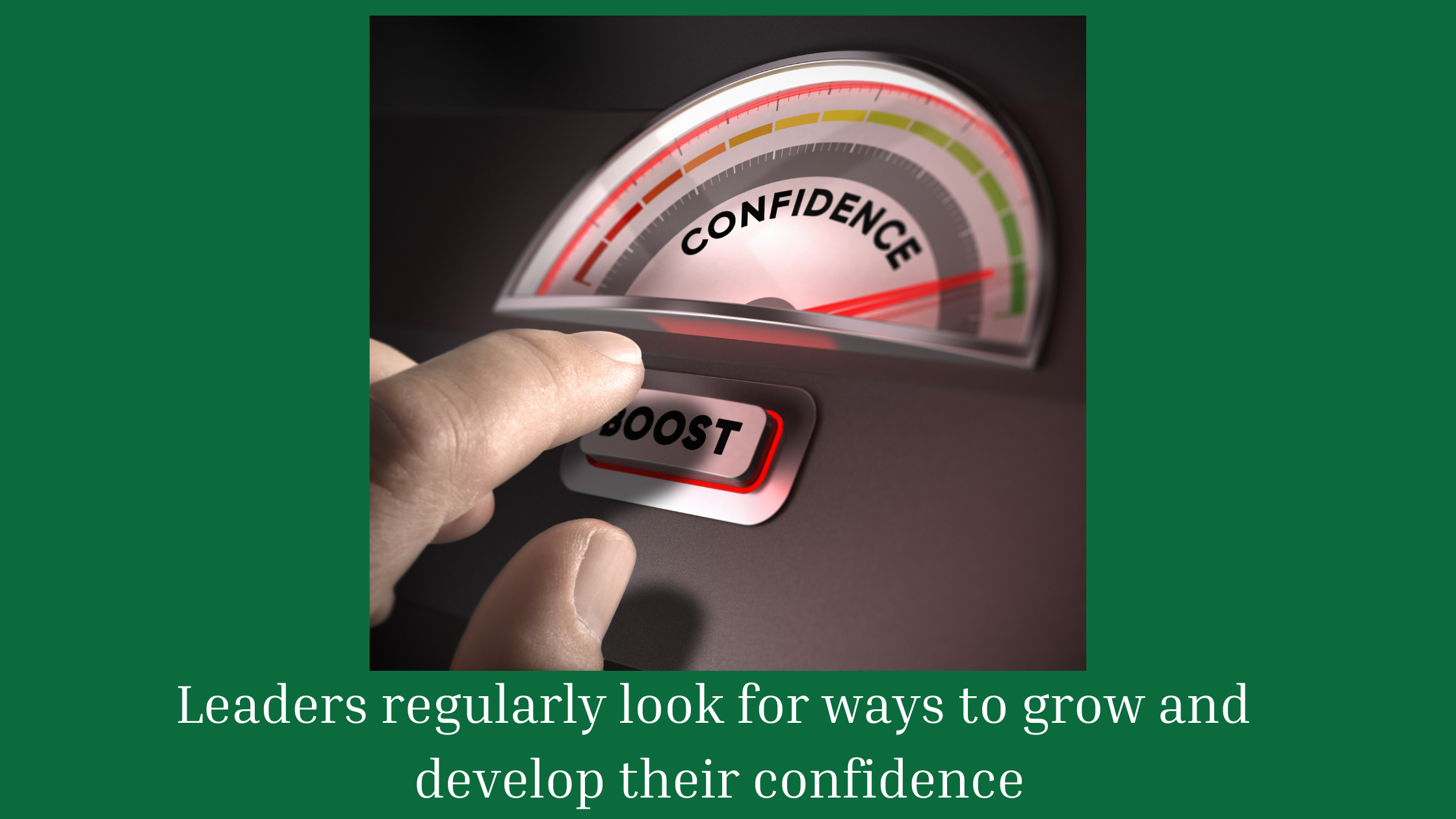
Developing Your Self Confidence

Confidence is essential to leadership. Indeed, it is virtually impossible to lead without it. Who would follow a leader who was unsure or always second-guessing themselves? Your self-confidence is evident in your voice, both spoken and written, when you propose a project. It is what helps you get out of your comfort zone and take on new challenges. It inspires others to follow you, secure in the belief that you know where you are going and will get there successfully.

This doesn’t mean leaders are arrogant or think they can never be wrong. Confidence is about the trust you have in yourself. You trust your Vision and your knowledge. You trust the relationships you have built with others, knowing they will tell you when you may have overlooked something important. According to Joel Garfinkle, you can become more self-confident by following the steps he presents in  Five Ways to Boost Leadership Self-Confidence.

1. Practice self-examination – Look at your history and the ideas and projects you launched. If you have been leading, there will be a number of them, including those that didn’t work. Garfinkle notes it may sound counterintuitive to look at failures in order to become self-confident, but we learn from our failures. What didn’t work on those projects? What did? What could have made them more successful? What should be repeated and built on? Recognize there will be failures in the future, but the knowledge you gain in this self-examination will contribute to more successes in the future, bolstering your self-confidence

2. Exercise your influence – Garfinkle urges participation in your “organization’s decision-making.” For us, this means being on committees that allow us to showcase that knowledge and expertise. It can also mean contributing at faculty meetings or offering sessions for teachers to help them use the library to support their work. When we see how others recognize our contributions, self-confidence is built. It may not seem like it, but you do have influence. You have proven knowledge and expertise in areas that others don’t have. In the relationships you have built, you have demonstrated it.

3. Motivate others – The combination of relationships and demonstrated expertise encourages others to listen to you. Garfinkle recommends developing gravitas – “the calm, open demeanor of a leader who both speaks and listens with respect and humility.”  As you live and share your vision, which should be inspiring to begin with, you will connect with others who will be motivated to become part of making it a reality.

4. Embrace personal development – As you learn and grow, so too does your self-confidence. Then you must take the learning a step further by putting it into action. Being on those committees and an active member of local, state, and national organizations serves two purposes. First, you grow professionally as you see the larger picture which affects you and your library. Second, your vocabulary changes as you incorporate your learning into how you explain an issue or project. You are now speaking with confidence and the gravitas Garfinkle discusses. It’s a process of “absorb and apply.”

5. Improve your workplace – This refers to something larger than redesigning your library. How can you make an impact on the social and emotional environment of your school? When you make the library a safe, welcoming space, you do the same with the educational community. This is a much larger and ongoing task, requiring a big vision. Garfinkle says to “work with colleagues to improve a process, reduce barriers, increase teamwork or enhance morale.” Certainly, the last is a big issue in our schools today. He notes “working with others for the good of others” will increase your sense of your self-worth and by extention, your self-confidence.

Garfinkle concludes by stating: Confidence comes from an unshakeable sense of self, which requires consistent and continued dedication to your values, goals and personal self-worth  These five steps are a progression. They won’t happen overnight but think of the rewards. Build your self-confidence and transform your community.

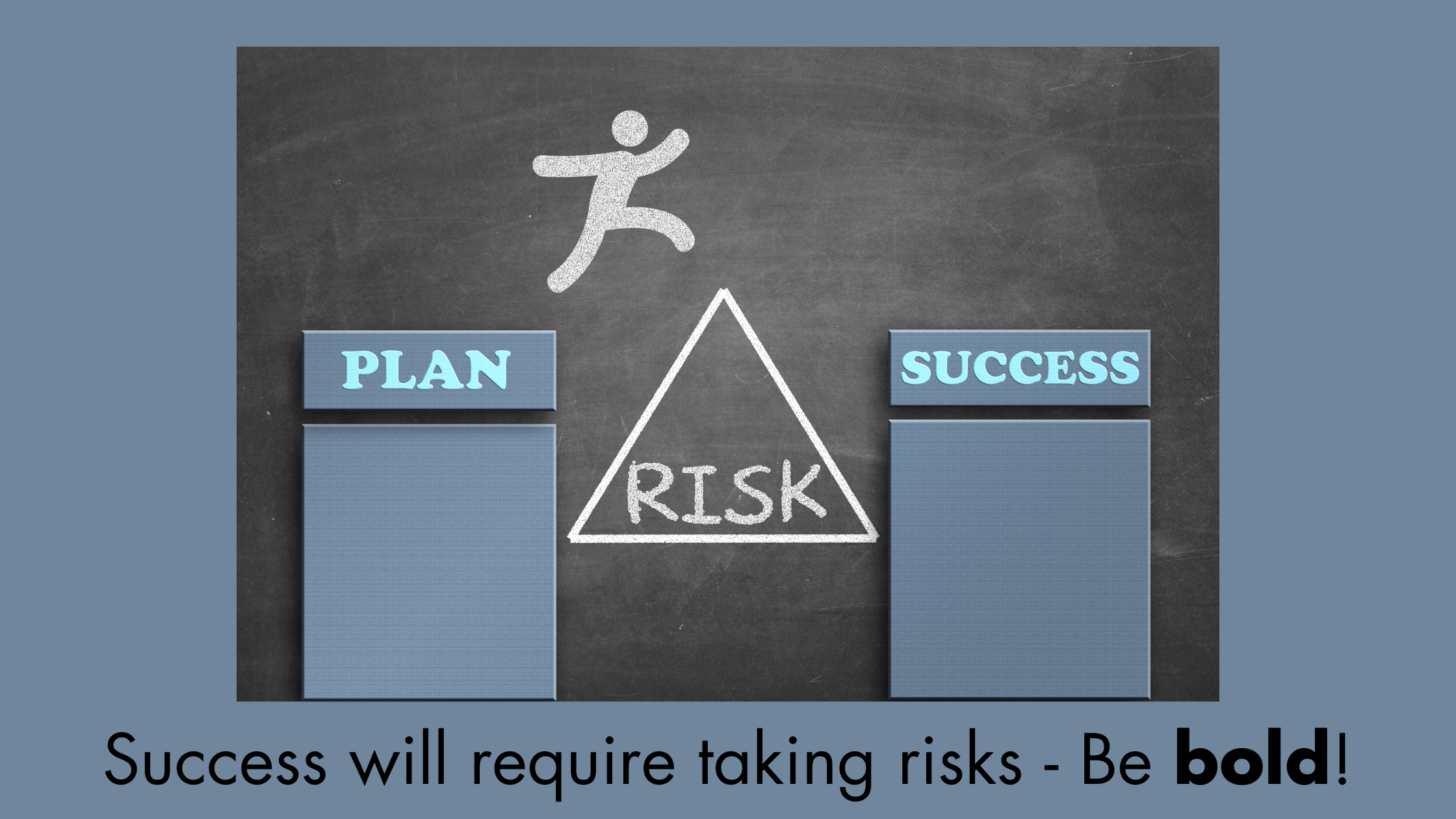
Be Bold

Being a leader requires risk-taking. How did reading that make you feel? Did your stomach drop? Did your mouth get dry? There is no question about it. By definition, taking a risk is scary. But you won’t ever get where you want to go unless you take some big risks along the way. And that’s going to mean leaving your comfort zone.

Here are some big risks I have taken in my career:

  • Planning a new library wing.
  • Automating my library in the very early years of library automation.
  • Leaving a job (and tenure) after more than two decades to take another.

Some risks you might be considering are:

  • Genrefying your library.
  • Giving a presentation at your state library association or at the national level.
  • Running for president of your state association.
  • Speaking at a Board of Education meeting.
  • Creating an Advisory Council of parents and teachers for your library.

Taking a risk means you might fail. Depending on where you are in your career, any one of those possibilities could cause you to change your mind several times before coming to a decision. How do you get unstuck and take a bold action?

Remind yourself of your Vision and Mission Statements. Then ask if the risk supports one or both of them. How would Genrefying your library support your goals? Would giving a presentation or running for president improve the position of your program? Would speaking at a Board meeting highlight the roles you play and the values you hold as a librarian? Can an Advisory Council give you the support you need for challenges to your collection?

Before taking the leap, Cheryl Strauss Einhorn recommends these five steps to help you Become More Comfortable Making Bold Decisions:

  1. Identify the decision you need to make. – Get as clear as you can on the decision you really need to make, risks aside. What is the reason you are doing this? How does it connect to your Mission and Vision? What will happen if you don’t do it? Once you’re clear, lean on your Professional Learning Community. Ask who has done this before or attempted it. What do they wish they had known before they started? Are they glad they did it? What do they recommend you do or not do?
  2. Examine your past bold decisions. – Take time to notice your previous successes. What made them successful? Identify the leadership qualities that helped you achieve your goals. What did you achieve as a result of taking the risk? Would you have done it the same way if you were making that decision now? We often don’t recognize we have grown on the job. Looking to the past will reveal your growth as a leader.
  3. Ask yourself what attributes or similarities are shared between the bold decision you are considering and your prior decisions. – This new step may feel risky, but it probably isn’t entirely new ground. For example, if you are considering genrefying your collection, notice that you’ve already created a section for professional reading or graphic novels. It is reassuring to recognize that not only have you been successful in the past, but also that you can draw on how you accomplished that success. You are not really starting from scratch. The bold decision you are considering may be bigger than what you have done before, but you have some past experiences to guide and support you.
  4. Consider whether there are attributes of your past bold decisions that might impede your ability to get to a good outcome for your current decision. What happened with past decisions (bold or not) that you wish you could have done differently? This is your chance to make that change. Where there things that kept you from being as successful as you hoped? What did you learn from missteps?
  5. Apply the lessons from your past data to your current decision. — Take what you know worked with what didn’t and apply it to the new success you’re looking to have. Don’t let those mistakes stop you because that is how we learn. (Don’t you tell your students this all the time? Apply it to yourself!) And remember – don’t only look at the negatives. You deserve the praise for what worked.

You need to be a leader. Leaders are visionaries who take risks and try new things. If it’s time for you to be bold, take time to be smart about how you do it.