Don’t Get Overwhelmed

You know you need balance in your life, but what about those times when your balance is so shaky you feel like you are going to tip over? You know what you are supposed to do: Identify the important tasks and start with those, working your way down the list to the items which a lower priority. But most of what’s on your plate is both important and urgent with deadlines looming?

Welcome to the club. Many of us are overwhelmed. When this happens, most of us keep our heads down and slog forward. This is probably why so many school librarians and other educators counted down to the last day of school with more fervor than ever before. And even though the school year is over or almost over, depending on where you live, you know Fall is lurking in the distance and will be here before you know it. Then it will begin all over again.

Unless you have a plan.

Kristen Hendrix knows well what it’s like when your “cup runneth over”. The phrase generally refers to abundance, but it has another meaning to her and to most of us. In her blog post Cup running over? It might be time to dump it out, Hendrix takes a hard look at the quotes and memes around those words. She notes we’ve been told you can’t pour from an empty cup but must keep it filled with self-care making it possible. But she acknowledges that self-care is harder to fit into an already crammed schedule. Hendrix prefers asking, “What goes in the cup? How can I know when it’s too empty or too full? How can I use these insights to anticipate or respond to burnout?”

To answer these questions, she suggests we look at these six ideas which flow into each other:

  • The Cup of Life – While we all have this cup, what we put into it is unique to us. We are the ones who are filling it. If we just keep adding water, the cup will overflow. You can’t keep pouring more into it than it can hold. As Hendrix says, we must be mindful of what we are putting into it before this happens. Which is why the next idea is….
  • Filling Our Cup – Whatever we put into our cup can be put into categories such as work, family, health, volunteering, etc. Her comment about including “adulting (eating, showering, dressing, brushing teeth, etc)” resonated with me. Somedays, I feel getting undressed at night is one more chore. To determine how we fill our cup, we need to recognize whether it’s draining or energizing.
  • Managing to the Brim – It’s our choice whether we fill our cup to the brin or leave a little space in case something needs to be added. I am a to-the-brim person, but what happens when there is a change, and there’s a new task or responsibility? Unless you recognize the effect it will have, you will quickly become overwhelmed. I’ve learned to consider whether the new commitment fits with my priorities, purpose, and passions. If it doesn’t, I don’t take it on. If I do take it on, I look to see what can be delayed, cut back, or even eliminated.
  • Dump It All Out – Hendrix recounts her own breakdown when it all became too much. She had to eliminate everything until she recovered. The object is to recognize when you are approaching this tipping point before it happens. You may have to withdraw from a volunteering job you took on or find someone who can help you with one or more of your tasks.
  • Preventing Burnout – Recognize all that you are doing and prioritize. Hendrix recommends using the 80/20 rule (the Pareto Principle), which says that 80% of your results comes from 20% of your work. Focus on the productive 20%. What are your goals? If what you are doing doesn’t move you toward it, consider eliminating it. And if elimination isn’t a possibility, it may be time for the next step – delegating it.
  • Getting Help – Help can come in many forms, from people to work with which lightens the load to speaking with a professional if you who have become depressed and feel the joy is gone from your days. You can also reach out for a mentor, a friend, or anyone who will listen. Keeping everything bottled up when your stress is bubbling up inside is a recipe for a serious problem.

I recently said to someone that I was “whelmed,” – one more drop and I would be overwhelmed. Leaders need to be honest with themselves and recognize when they have become over-committed. Too many people are counting on us. Abundance is great, but too much is too much.

Moving from Fear to Success

Leaders have to effect change and work towards making their Vision a reality. To do this, they must take risks. Risk and growth are the only ways to achieve success, but they carry with them the chance for failure. And knowing this creates fear.

Fear manifests in many ways including that inner voice that says you aren’t good enough. Or it says even though you were successful before, it was a fluke. Fear is what underlies the well-discussed Imposter Syndrome. At its worst, it has you believing every success is a precursor to failure the next time you try something, keeping you from enjoying what should be a triumph. In its lesser forms, it has a paralyzing influence on your willingness to attempt a new project.

How do you deal with the fear of failure?

In her Smart Brief article, Laura Gassner Otting writes about the impact of Imposter Syndrome and proposes you Leverage Your Fear of Failure for Success. Use one to reach the other. She offers these three approaches for doing it:

  1. Let’s not fake it ’til we make it – Otting rejects the “fake it till you make it approach.” She maintains that when we are faking it, we don’t use our own thinking but restate the consensus, and that doesn’t lead to success. Faking it also means you know you are pretending, which keeps you from feeling confident. You are always waiting to be “caught.” This leads to trying to control everything rather than leaving space for learning. Better to make mistakes and learn than to pretend they are never going to happen.   
  2. Re-categorize failure from finale to fulcrum – We teach our students to see “fail” as an acronym for “First attempt in learning.” Although we know the learning process includes failure, we don’t always apply it to ourselves. No one likes to fail. Once again, mindset is critical. Look back at your failures. What did you learn from them? What were you able to achieve because of that learning? Had you not failed, you wouldn’t have had that success. It’s a process. As long as you don’t let a failure be final, the more success you have to overshadow any failures.
  3. Take a lesson from the pros – Athletes are out there for all the world to see. When they “fail,” it’s obvious to all. When a pitcher loses a game, or a player misses a much-needed basket, they face jeers and negative comments made by fans, sportscasters, and coaches. It’s painful. But tomorrow is another day, another game. They will look at the video and see what they missed, then learn and move on. When an attempt fails, it’s the start of the next step on the road to success. We can all use this as an example of how to face setbacks and mistakes and keep moving forward.

Your brain is a powerful tool. As often as possible, leaders accept the challenge of keeping their mindset focused on their Vision and Mission – not on fear. Both failures and successes – and learning from each – are part of any leadership path.

The Art of Written Communication

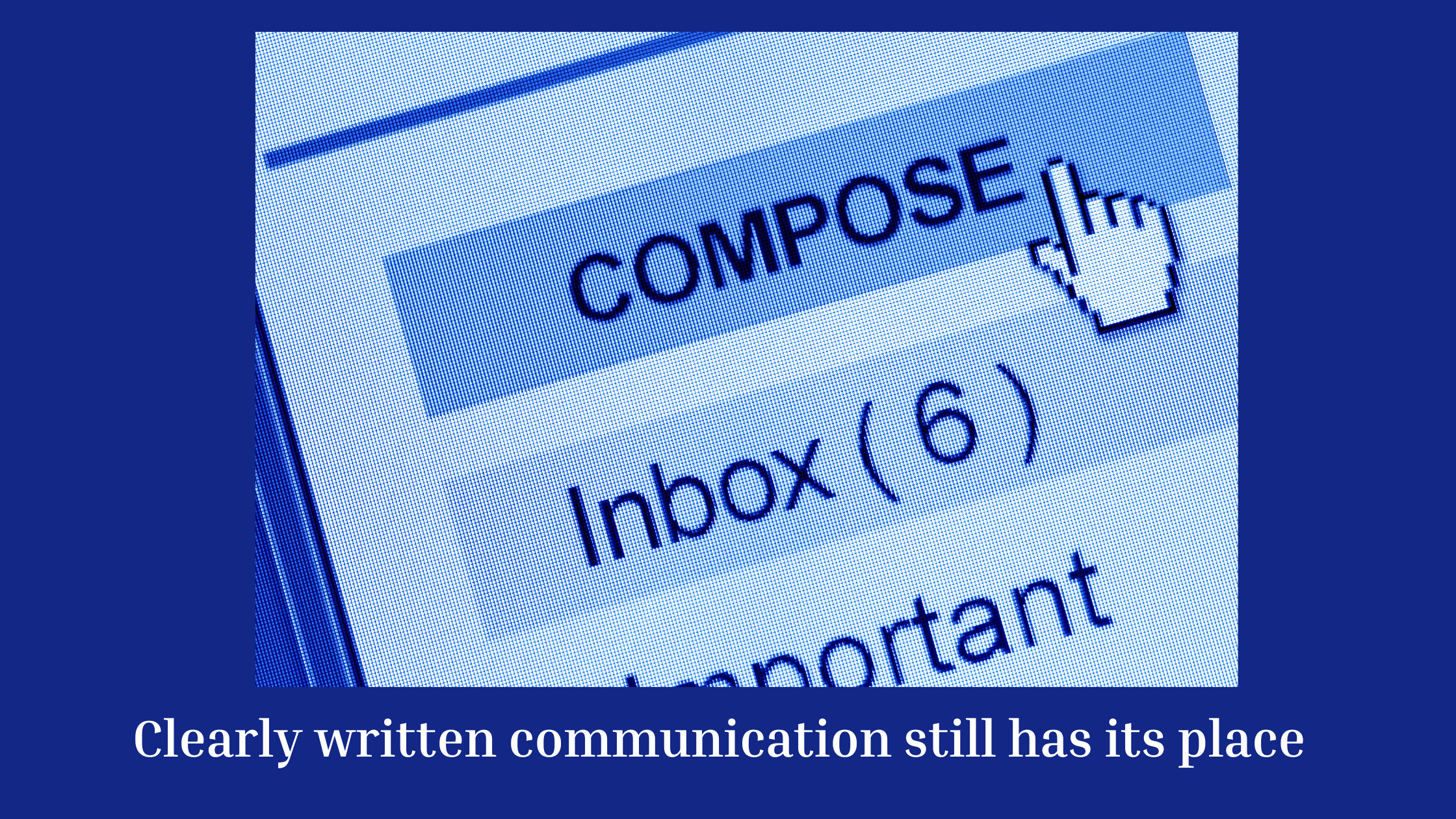
There was a time when written communication was confined to letters (and postcards) and memos. Today, text messages, emails, DMs, and posts on social media are an integral part of our lives. And it’s those current modes of written communication which have made the older ones more of a challenge.

Studies show that our spelling has distinctly deteriorated, and auto correct can make things even worse. In addition to the assorted acronyms we use (IMHO, ICYM, FYI, ASAP, etc.), we “shorten” the spelling of common words (U, UR, L8TR, NP).  When we do want to write something more formal, we must fight our new instinctive use of spelling shortcuts.

But there is still a place for a written letter or memo. Indeed, evidence shows a thank you letter means much more today than ever before, both because of its rarity and the recognition that it took extra time. What can you do to make sure you do the best job possible when you decide written communication is necessary?

Paul B. Thornton offers these 8 Ways to Improve Your Written Communication:

  1. Know your objective – What was your purpose for writing this? Keep in mind that by using this format, you are increasing its significance to the receiver. What do you want the receiver to know or do? Think this through before starting.
  2. Organize your message so it’s easy to follow – Thornton says to choose either the conclusion or the problem and state it in the beginning, so the receiver knows the purpose of the communication. Not only do we write in shortcuts, but we also read faster than we used to or we skim. The sooner the reader knows you point the better.
  3. Explain and support your ideas – This works best after you start with your desired outcome. Here is where you give examples of the effects of the problem or situation. Don’t use too many, just say “there are others I can detail,” and keep it brief.
  4. Use bullets or numbers – As you can see in the way this blog is written, this approach helps the reader get the information more easily. The logic or sequence of your thinking can be seen as well as the most important points. Also consider the use of bold and italic to make your focus clearer.
  5. Use short sentences – Most readers skim longer pieces of communication. Technology has significantly increased the practice. To keep the reader engaged, keep sentences short.
  6. Use precise words and phrases – To be certain your message gets through Thornton advises we be specific and avoid vague phrases such as “as soon as possible.” Be clear about the issue, your concerns, and/or your solutions.
  7. Use an active voice – Active voice makes for more powerful and clear sentences. “The problem was created by a lack of resources,” is not as strong as “A lack of resources created the problem.”
  8. Edit your writing – The more important the communication, the more it needs to be reviewed and polished. Thornton recommends having a trusted person read it before you send it out. If you can’t do that, build in some time to step away from what you wrote so that you can come back and review it later. (And yes, I have my blog posts professionally edited.)

Being a good communicator is a vital leadership quality. Work on your written communication as much as you do the other forms.  Because of their rarity, they are looked at more closely. Keep them short and clear, and you’ll make a memorable impression.

Managing Conflict

Wouldn’t it be great if we always got along? I’m not sure it would always be a good thing because everyone agreeing would mean we would explore new options less frequently. But for good or ill, we don’t have to worry about that. There will always be conflicts.

Handling conflicts requires two aspects of social intelligence: understanding your emotions and managing them. How do you normally respond when you feel attacked or judged? Do you go on the offensive? Do you try to prove you are not responsible? Or do you deflect and try to show how you were misunderstood, and that isn’t what you meant or intended?

As Socrates said, “To know thyself is the beginning of wisdom.”  You must be honest about your own behaviors to be able to manage the response. Remember, the conflict won’t be defused unless calm heads prevail, and it starts with you. A question to keep in mind is, “Do you want to be right, or do you want it to work?” Because, if you want to be right, it won’t work.

In her post, How Leaders Can Start Building Conflict Capacity, Marlene Chism defines conflict capacity as, the “ability to tolerate conflict without getting triggered into unconscious reactions.” She notes it requires self-awareness, which boils down to knowing yourself. Chism then offers four ways to develop the necessary capacity.

  1. Reframe Conflict – Mindset is always crucial. If you see conflict as two sides fighting each other, you are likely to focus on being right and winning. Instead, view it as a chance to explore where things aren’t working with the goal of improving the situation. A challenge almost always provides an opportunity. This disagreement provides the impetus to move forward in a better way.
  2. Get Curious – Rather than thinking some form of “Well, they’re wrong,” find out why and how they came to their viewpoint. Chism says you do this by inviting conversation with questions like “Will you walk me through your thinking?” or “I’m curious. How did you come to that decision?” This pauses the heat that is building. It also communicates your willingness to listen rather than drown out what they are saying.
  3. Expand Your Comfort Zone – When you are dealing with people with low conflict capacity, as defined by Chism, it is hard to resist interrupting them. Don’t. Let them go on. Eventually, they will lose steam. As the person keeps talking, keep your focus on listening for the core issue that set them off. It will help you respond when they get to the end of their rant, and it will also send a further message that you see them and their issue.
  4. Seek Mentoring – This recommendation is to build relationships before the crisis comes. You know which teachers have the reputation as complainers. In an organization, there are always some who don’t want to follow the leader. When you interact with these people, be sure to do your best to release what you’ve heard and connect. Get to understand them, and what motivates them. Any challenges that come – and they mostly likely will—will be less heated because of your pre-existing relationship. Don’t neglect the relationship with your principal. This connection shouldn’t wait for a crisis. Find reasons to ask for their advice and support  – and listen to it.

When you change your perspective, conflicts can become opportunities. The more you grow as a leader, the more of these you will need to deal with. Learning to manage yourself and handle these challenges are an important part of building strong relationships and part of your growth. Keep going.

When Less Is More

Are you one of those people who strive to give 100% every day – to everything? Where has that gotten you? More often than you’d like, you’re probably exhausted, somewhat cranky, and likely feeling unappreciated. And if self-care isn’t on your to-do list, it isn’t happening. When we stretch ourselves beyond our limits, we slip into a negative mindset while draining our abilities to keep going. We look at all we are doing, all that still needs to be done, and find ourselves coming up lacking.  

What if, instead, we worked to get the maximum return for the time allotted? Not necessarily, giving 100% all the time, but making smart, specific choices about what we do and when we do it – and how much it truly needs from us.

It starts by determining the level of importance of any task. Does it promote or advance your Mission and Vision? When you think about it being completed, what will be achieved as a result? Once you’ve gotten clear on these decisions and distinctions, do it as excellently as possible within the parameters you gave it.

Kristin Hendrix explains the concept of less is more in How an Athlete Mindset Helps Me Optimize My Work Performance. Thinking of our job in the context of an athlete makes the idea more understandable. No athlete trains or plays their sport at maximum level all the time. Basketball players don’t play the same way in the middle of the game as they do in the final minutes.

Hendrix makes 5 key points:

Top performance doesn’t come from constant 100% effort – What would a basketball player have left in the final minutes if they were playing full-out throughout the game? Hendrix notes this is true for our mental strength as much as for physical strength. As she observes, responding to the expectation that we will give our best all the time leads to “mental exhaustion, stagnation, and burnout.”

Plan for the surge – It’s easy for athletes to know when to draw on the reserves they have been saving. They have a time clock or other way to know the end is looming. We have deadlines. That’s when we need to be able to give our maximum effort. It is almost certain that every  project will have problems as the finish draws near. That’s when we need to have enough in reserve to go into overdrive to that we can see things through to a strong completion.

Case study: Mindful surges to avoid overwhelm – As librarians you have an inordinate number of jobs and tasks to accomplish. AASL’s National School Library Standards lists your 5 roles: Leader, Instructional Partner, Information Specialist, Teacher, and Program Administrator (pp14-15). On a daily/weekly basis you have things to do for each. Note where the deadlines loom for each and plan for those “surges” by cutting back on your other tasks as needed. Do you have several important tasks that have overlapping needs? Write them down, get clear on what’s needed, and what the deadlines are. Planning, will keep your energy levels where they need to be.

Building up our strength and stamina – As you take on new roles or increasingly more significant roles as a leader, whether in your building/district or on a state/national level there is much to learn. It can be hard initially to get a grip on what you need to do and in what order. The answer Hendrix recommends is scaffolding. Determine what you need to know and what you don’t know yet. Look for the people and sources that can help you learn it. Depending on the situation, social media groups, Professional Learning Networks (PLNs) or mentors can give you the support and information you need. With each step, you’ll know more and be stronger for the next time – and you’ll need less energy because you can better prepare.

Want to outperform?  Underperform first – Hendrix alludes to the story of the turtle and the hare, modifying it by recommending we be the turtle at the start and the hare as the finish line approaches. Compare your mood and mindset when you are taking short breaks as compared with when you do everything all day full-out. When do you accomplish the most? What about your mood? Learn what works, what helps, and how you can improve the next time.

Don’t let the work of being a leader bog you down. Learn to give less in order to give more. By managing your time, energy, and priorities, you will be better able to embrace your work and the enjoyment that leadership brings.

Building Trust – Redux

I wrote about this same topic in July 2022, so why am I repeating it? Because it’s of vital important to leadership and reinforcing what we know helps us to deepen our understanding

To reiterate the opening of my original blog post, Trust is the foundation of relationships, and as you know, we are in the relationship business. Either we keep our relationships strong, or we will soon find ourselves out of business. Trust takes time to build. And it can be easily lost.

As a leader your integrity needs to be unquestioned. You must be careful not to let slip things spoken to you in confidence or things you’re aware of because your work crosses grade level boundaries. What one teacher shares with you, you cannot share with another. And if you make a mistake – own it and correct it as soon as possible.

Take time to ask: How trustworthy are you? Have you ever broken trust? How good are you at building trust? In addition to the ways I discussed in the July blog, John Millen presents these Five Ways to Communicate as a Trusted Leader:

  1. Share Yourself – In addition to learning the interests of those with whom you are cultivating a relationship, don’t forget to let them know who you are. It requires you to be vulnerable in some ways, but the result is increased connections and sometimes, new understanding. Relationships need to be a two-way street.
  2. Change Your Mindset from ‘I’ to ‘We’ Don’t separate yourself from the teachers even if your goals and missions seem different. Find the places where there is overlap. Although it’s become cliché, there is truth to the adage, “There is no ’I’ in ‘Team.’ It’s not a case of “I would like to …” but rather “Together we can….”
  3. Admit your failuresThis is a tough one. Leaders are supposed to be confident. Admitting failure seems counterintuitive. But when a project misses its mark, accept and admit it. Discuss how “we” (see #2) can do it differently next time or tweak it to make it work better. And there’s another benefit. Admitting your failure gives permission to others to admit theirs. It will grow your relationships. Just remember to keep what was shared confidential.
  4. Ask open-ended questions – You do that when you ask how a project might have worked better rather than was it a success. When a fuller response is needed, you increase the depth of your communications. The more authentic your communications are, the better your relationships are. You will be amazed by what you can learn. Asking for a deeper response shows you value the other person’s ideas. When you value others, they respond in kind. It’s a win-win.
  5. Listen more than you speak –You’ve asked an open-ended question – listen to the answer. You can’t learn about someone else if you are doing most of the talking. If you are an extrovert like me, you may have to continually work at this. This is an area where introvert leaders have strength. You are not really listening if you are waiting for the other person to stop talking so you can say what’s on your mind. If necessary, quickly write down your thought and get back to focusing on what is being said.

As Millen says early in his post and in his conclusion, “Trust is everything.” It is the foundation of relationships which we need for our program’s success. Building relationships is a core component of what we must do as leaders. With whom do you want to build a relationship? Look for the ways you can build trust and those relationships will flourish.

Developing Your Self Confidence

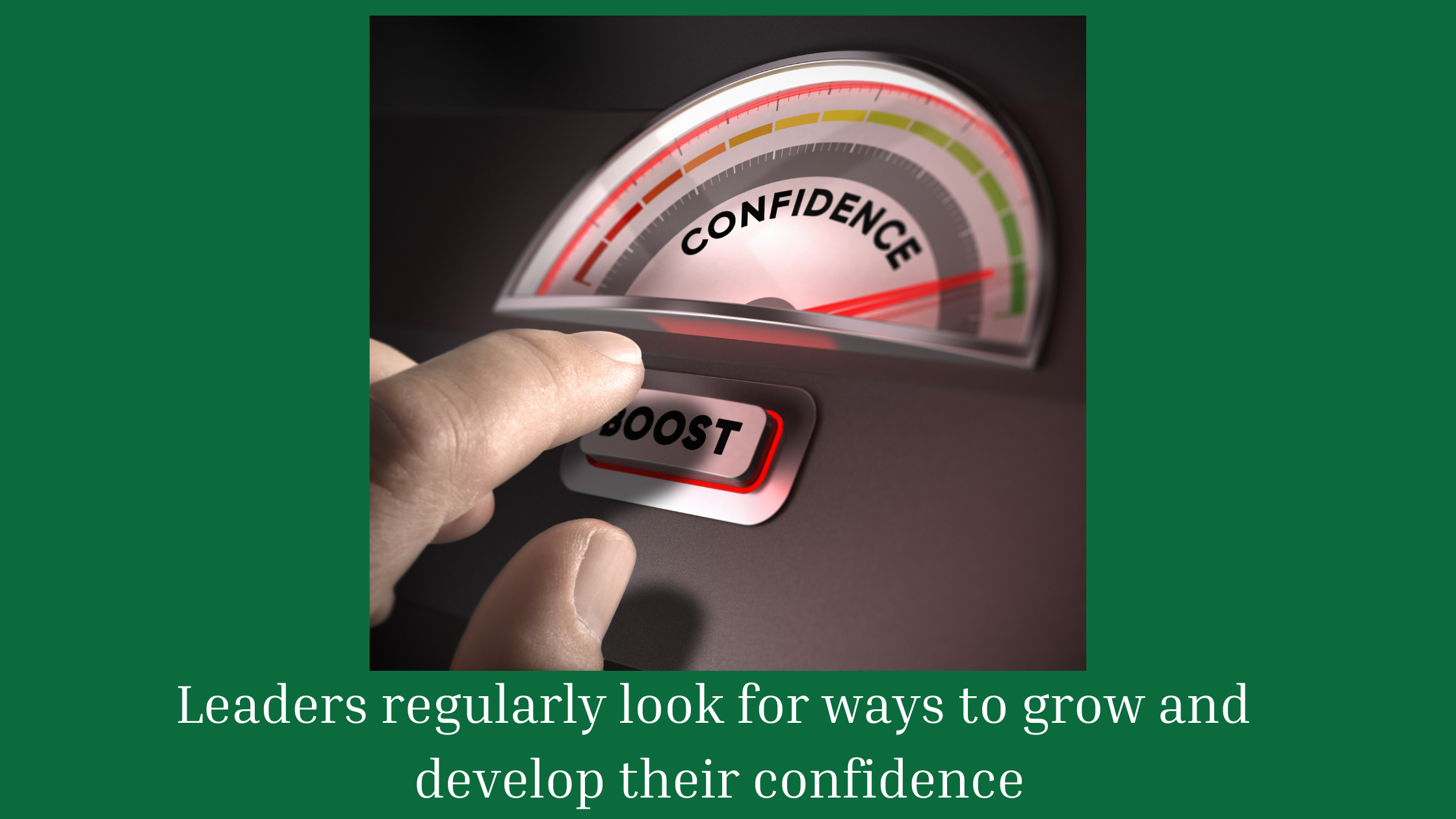
Confidence is essential to leadership. Indeed, it is virtually impossible to lead without it. Who would follow a leader who was unsure or always second-guessing themselves? Your self-confidence is evident in your voice, both spoken and written, when you propose a project. It is what helps you get out of your comfort zone and take on new challenges. It inspires others to follow you, secure in the belief that you know where you are going and will get there successfully.

This doesn’t mean leaders are arrogant or think they can never be wrong. Confidence is about the trust you have in yourself. You trust your Vision and your knowledge. You trust the relationships you have built with others, knowing they will tell you when you may have overlooked something important. According to Joel Garfinkle, you can become more self-confident by following the steps he presents in  Five Ways to Boost Leadership Self-Confidence.

1. Practice self-examination – Look at your history and the ideas and projects you launched. If you have been leading, there will be a number of them, including those that didn’t work. Garfinkle notes it may sound counterintuitive to look at failures in order to become self-confident, but we learn from our failures. What didn’t work on those projects? What did? What could have made them more successful? What should be repeated and built on? Recognize there will be failures in the future, but the knowledge you gain in this self-examination will contribute to more successes in the future, bolstering your self-confidence

2. Exercise your influence – Garfinkle urges participation in your “organization’s decision-making.” For us, this means being on committees that allow us to showcase that knowledge and expertise. It can also mean contributing at faculty meetings or offering sessions for teachers to help them use the library to support their work. When we see how others recognize our contributions, self-confidence is built. It may not seem like it, but you do have influence. You have proven knowledge and expertise in areas that others don’t have. In the relationships you have built, you have demonstrated it.

3. Motivate others – The combination of relationships and demonstrated expertise encourages others to listen to you. Garfinkle recommends developing gravitas – “the calm, open demeanor of a leader who both speaks and listens with respect and humility.”  As you live and share your vision, which should be inspiring to begin with, you will connect with others who will be motivated to become part of making it a reality.

4. Embrace personal development – As you learn and grow, so too does your self-confidence. Then you must take the learning a step further by putting it into action. Being on those committees and an active member of local, state, and national organizations serves two purposes. First, you grow professionally as you see the larger picture which affects you and your library. Second, your vocabulary changes as you incorporate your learning into how you explain an issue or project. You are now speaking with confidence and the gravitas Garfinkle discusses. It’s a process of “absorb and apply.”

5. Improve your workplace – This refers to something larger than redesigning your library. How can you make an impact on the social and emotional environment of your school? When you make the library a safe, welcoming space, you do the same with the educational community. This is a much larger and ongoing task, requiring a big vision. Garfinkle says to “work with colleagues to improve a process, reduce barriers, increase teamwork or enhance morale.” Certainly, the last is a big issue in our schools today. He notes “working with others for the good of others” will increase your sense of your self-worth and by extention, your self-confidence.

Garfinkle concludes by stating: Confidence comes from an unshakeable sense of self, which requires consistent and continued dedication to your values, goals and personal self-worth  These five steps are a progression. They won’t happen overnight but think of the rewards. Build your self-confidence and transform your community.

Leadership Must Be a Habit

When you are asked to identify your professional roles, in what order do you list them? Is leader the first? Is it second after librarian? Does it make your list at all? Being a leader is something you need to be each day. And yes, most of the time you are managing your program, but even as you are doing that, it’s important to keep the leader perspective present. In other words, you must make leadership a habit.

In the National School Library Standards (NSLS) (2018) the American Association for School Librarians (AASL) identifies the five roles of a school librarian (p.14). The first is leader. The AASL Vision is: Every school librarian is a leader; every learner has a school librarian. If you are not thinking of yourself as a leader, first and foremost, you are likely to miss opportunities to grow your library program and the recognition by the educational community of the vital role you play.

The good news is, you can make leadership a habit. In her blog post, Five Habits that Separate Good Leaders from Great Leaders Maile Timon explains what needs to be done. She begins with observation that “Most leaders are built, not born.” If you’d seem me at the beginning of my library career, you’d know it was true. No matter where you are, you can grow in to a leader – or a stronger leader.

Here are Timon’s Five Habits all great leaders have – with my comments on them:

1. Leaders motivate and inspire – If people don’t follow you, you are not leading. You are walking alone. It starts by having a clear and focused Vision. Keep yours in front of you and others by having it on a wall in your library for all to see and to remind yourself.

    “Inspiring” isn’t telling others what to do. It’s listening to them and helping them to see their own value and how what they are doing supports both your vision and likely that of the school. It supports them to become leaders, too, as they see you learn from them as much as they learn from you.

    2. Leaders develop focused, forward-thinking visions – Having your vision in front of you is important, but is it an inspirational Vision? Too often we short-change our vision by not allowing it go beyond what we think is attainable. What would your library be like if money or other factors weren’t an obstacle? The AASL Vision statement is a perfect example.

    As Timon suggests, start with your Mission. It’s your purpose, based on your core values. It’s what you do every day. Here’s one from my list of examples: The mission of the School Library Media Program is to ensure that students and staff are effective users and producers of ideas and information, promote literacy, and develop students’ competencies to be ethical participants in a global society. A sample Vision is: The School Library Media Program is a user-centered environment where up-to-date resources and technology and a responsive staff empower students and teachers to achieve their academic and personal goas.

    3. Leaders create relationships This works well for us as we are in the relationship business. Every day is an opportunity to create new relationships and/or to build on existing ones. It’s through these relationships that you develop collaborative learning opportunities that benefit your community and lead to the attainment of your Mission.

    4. Leaders promote a culture of coaching – We don’t usually think of it as coaching, but it’s what we do whether we are working one-on-one with a teacher or present a lesson at a grade or subject level meeting. We share our knowledge with them, helping them become more confident in applying a technique or learning a new resource. It’s being an Instructional Partner, our second role in National School Library Standards (NSLS).

    5. Leaders never stop learning – This is intrinsic to who we are. We are always role models of lifelong learning. We couldn’t be an Information Specialist, our fourth role in NSLS. It’s why our Professional Learning Networks and our membership in our state and national organizations are so important to us.

    We also learn as we help others find the information they need. As the saying goes, we may not know the answer, but we know where to find it. And in finding it, we add to our ever-growing knowledge. We learn every day.

    As you go through your day, be aware of when you are being a leader. Look for opportunities to do one or more of these leadership indicators so they are increasingly incorporated into your daily interactions. Make leadership a habit and you will lead your library with Vision.

    The Pursuit of Emotional Wellbeing

    I sometimes think the founding fathers of the United States set the country on the wrong track by including in the Declaration of Independence the words, “the pursuit of happiness.” Pursuing happiness can be problematic because not only are we often not clear on what makes us happy, but it isn’t a permanent state. To my mind, happiness is not a goal. Instead, it is the result of recognizing what the good is in your life most of the time.

    In her article on Smart Brief, LaRae Quy, author of Secrets of a Strong Mind, gives 3 Scientific Reasons Why Emotional Wellbeing Equals Success, and how to make each of them work for you. In the opening, Quy states that pursuing happiness didn’t help her. However, when she focused on her emotional wellbeing, she was able to avoid burnout.  In the process, she recognized what happiness truly is.

    Here are the reasons and Quy’s advice on making them work:

    1. Rethink HappinessAccording to a report she cites, America’s Happiness Index has been falling since 2008, noting that we tend to think of happiness as an uninterrupted state. Neuroscientists and psychologists believe emotional wellbeing is a better definition than happiness for our mental state. She states, “moments of happiness are necessary, but it should never be your goal in life. We also have to be prepared to handle adverse events and negative emotions.

    To make it work for you recognize that happiness is:

    • Temporary – Nothing lasts forever. Whatever is in the current moment will inevitably change.
    • Involves pleasing yourself – You are the one who defines your own happiness.
    • Lacks depth – Again, it is in the moment.
    • Feels good – And isn’t that wonderful. Savor it.
    • Something you chase after – Not because you are pursuing happiness, but because you are passionate and care about it.
    • Full of momentary connections with others – Those moments can create cherished memories, but they happen in moments.
    • 2. Embrace negative emotionsStop trying to put a good face on your feelings. They are signals to you to identify the source. When you are stressed or angry, attempt to recognize what is causing it. This not only minimizes the impact of the negative emotions, but it allows you to move forward.

    To make it work for you:

    • Recognize negative emotions as normal and an important barometer of what you’re experiencing in life – We all have them, and there are many good reasons for it.
    • Identify and name your emotions rather than trying to avoid them – Be honest about what you are dealing with. It’s easier to confront them that way.
    • Talk to people you trust about your emotions. Better yet, talk to yourself and write it down in a journal – Venting is healthy. Journaling is a great outlet for many.
    • 3. Practice awareness – Quy notes that when you are aware of the emotions you are feeling, you are less likely to make a decision based on them. You are then more likely to react with less bias and improve relationships – which are the heart of our business.

    To make it work for you the suggestions require self-reflection. Taking this pause will help you get to the reality of what is happening. Do this for both positive and negative emotions.

    • What event happened that made me feel this way? Or what person?
    • Where does the emotion show up in my body? Does this emotion express itself in my body language?
    • What was my first response to the emotion? Then, if I had to do it over again, would I repeat myself?
    • Is this an emotion I want to reinforce? If not, when could I have nipped it in the bud? If so, how can I repeat the experience?

    The better you become at doing this, the more you will recognize and enjoy the happiness in your life. You, and you alone, define what happiness is to you. And it’s you who recognize it and welcome it into your life. Pursuing emotional wellbeing will allow you to be more resilient and go after the goals that will lead to increased happiness both personally and professionally.

    Analysis Paralysis

    Leaders are decision-makers, which means they are risk-takers. Risk implies the possibility of failure. And therein lies the fear that stops many from taking action.

    When you leave your comfort zone, you are faced with potential positive and negative results. The fear of failure can have you focusing on all the negative possibilities and not taking action. And the longer you wait to get started, the more ways you will come up with as to why it won’t work or you’ll find things to do to delay putting your idea into operation until you get more information. You are not alone in this. Business leaders form focus group after focus group trying to get confirmation that a decision would be totally correct or totally wrong.

    The late General Colin Powell referred to this continuous waiting on sufficient information as “Analysis Paralysis.” He said,

    “Don’t take action if you have only enough information to give you less than a 40 percent chance of being right, but don’t wait until you have enough facts to be 100 percent sure, because by then it is almost always too late. Today, excessive delays in the name of information-gathering breeds “analysis paralysis.” Procrastination in the name of reducing risk actually increases risk.” (Lesson 15 https://ung.edu/institute-leadership-strategic-studies/_uploads/files/colin-powell-leadership.pdf )

    His 40/70 rule makes sense when you are involved in a war, but is probably too conservative in our work world. A more realistic rule for us is 50/80. If it’s under a 50% chance of success, don’t do it. If there’s at least an 80% chance of success, go with your gut.

    Lison Mage in Why Overthinking Costs Us Our Best Decisions? is writing for the business world, but, as usual, his advice is applicable to us as well. Using the analogy of basketball, Mage asks us to imagine playing the game with a teammate who froze every time you passed them the ball. There they are on the court unable to decide whether they should shoot, dribble to get closer to the basket, or pass the ball to someone else.

    Too often, we are like that basketball player. Mage says, overthinking comes from a learned trait dating back to the days when we were searching for cues that would lead us to water, food, and shelter while avoiding predators. The skill worked for us then as it helped us survive. Keeping the habit in a world with information overload works against us.

    Even skilled researchers that we are, we cannot gather every bit of data on every decision we are considering. Mage says when we can’t be sure we have all the information, we become anxious and have a paralyzing fear of not knowing what we should do. In our world we need to recognize “More Is Not Better. More Will Not Make It Perfect.”

    Back to the basketball analogy, Mage asks, “What is best? Attempting a shot and missing it, or not shooting and handing the ball over to the adversary after the 23-second shot clock has elapsed? He quotes the French national lottery slogan, “100% of the winners did buy a ticket.”

    According to Mage, the problem lies in focusing on clear success as the only favorable outcome. The focus needs to be on the process, looking at the success in achieving the small steps to getting the job done. No matter the outcome, there are things to be gained whether that’s from the collaborations you created, the learning that occurred, and maybe discovering that something doesn’t work.

    One more quote from Colin Powell, “Leadership is the art of accomplishing more than the science of management says is possible.” Overthinking may ensure that you won’t experience failure. It also guarantees you and your program won’t grow. You will never have a 100% success rate, no one does. We learn from failure. It’s part of life, and part of being a leader. Take the shot. It’s worth it.