ON LIBRARIES: Follow The Leaders


Leadership wordleAn ongoing challenge of our profession is keeping up with what is happening in technology and education and how they combine to transform teaching and learning.  It’s daunting for all of us, but you don’t have to do it alone.  Connect to the leaders and quickly identify the trends most likely to impact you and your students.  Use this knowledge to determine what and how you will incorporate into your program.

Who are the leaders?  It depends on what you are talking about. No one knows everything about school librarianship let alone is an expert in all its facets so you may need more than one.

The easiest place to start is your state association’s listserv.  Identify the librarians posting valuable information. What is their strength?  Technology?  Literacy? Global and digital citizenship? Instruction design?

When these leaders give links to information or answer a question someone posed, bookmark or save it to appropriate folders.  You rarely are going to use it immediately, but if you haven’t saved it you won’t be able to find it when you do need it.

Bloggers are another great source for finding information from leaders. My favorites, in alphabetical order, are:

Buffy Hamilton – The Unquiet Librarian – https://theunquietlibrarian.wordpress.com/ – Currently the librarian at Norcross High School in Gwinnett County (GA), her specialty areas include critical literacy, participatory learning and culture, ethnographic studies, critical pedagogy, and writing literacies. Although she brings tremendous erudition to her blog, everything connects to what she is doing with her students.  Most recent posts are:  Formative Assessments: Our Compass for Understanding Affective, Cognitive, and Physical Aspects of Information Search Processes and Write-Around + See-Think-Wonder + Gallery Walk-Big Group Share=Art Students’ Awesomeness. (Don’t be put off by the title of the first example. Check the post).  (Also @buffyjhamilton)blue skunk

Doug Johnson – Blue Skunk Blog – http://doug-johnson.squarespace.com – He is the Burnsville-Eagan-Savage (MN) Public Schools Director of Technology with a background in teaching K-12. He brings his technology strength and his perspective as an administrator to his blog.  Recent posts include: “Why technology is resisted” and “BFTP: What is an authentic question?”  (Also @blueskunkblog )

library girl2Jennifer LaGarde (aka Library Girl) http://www.librarygirl.net/ – She is Lead School Library Media Coordinator/Digital Teaching and Learning Specialist for New Hanover County Schools in Wilmington, NC Her blog is filled with inspiring ideas to motivate reading. Among her recent posts are: Your Students Need A Reading Champion | Giving Yourself Permission To Read and Learning To Read Alone Is Not Enough. Your Students Need A Reading Champion.  (Also Library Girl @jenniferlagarde)

Joyce Valenza http://blogs.slj.com/neverendingsearch/ – Currently at Rutgers School of Communication & Information but, she has a long history as a school librarian and is responsible for #TLChat, TLChat Live, and TL Virtual Café. She has several fields of expertise including social media, unconferences and global participatory culture. Among her recent blog posts are: several where she brings great ideas from other sources and PopBoardz: a media dashboard for instruction and presentation and How to host a hackathon (on the #sljhackathon breakfast) (Also @joycevalenza)

Specifically on Twitter, follow Shannon Miller (TLChat) @shannonmiller and Elissa Malespina @elissamalesphin (TL News Night Live Cohost).  Shannon has great global project ideas and Elissa is knowledgeable about augmented reality.

When you attend conferences, (as I suggested in last week’s blog) get the contact information of those who presented what you considered to be great possibilities for your library program.  This way you can follow up with questions.  They will help you.

And finally, you can also join my School Librarian’s Workshop Facebook group for regular posts from me and others about issues in school librarianship, ideas to share with teachers, or what might be next in technology.  On Saturday, I posted something about the possible impact of wearable technology on education.

By picking and choosing what interests you, you can learn quickly what is out there, and  make contact with those who can help you, When you bring it to your students and teachers, you are being a leader and making yourself indispensable.

ON LIBRARIES: Are You Getting Full Value from Your Library Associations?


Ivalue1 thought this would be a short blog.  I was wrong. This is important to your future as a librarian and the future of the programs for which we are responsible.

Most of you are members of your state association. A good number of you, although it should be much more, are members of ALA/AASL but only a small percentage of you are getting all you can from your membership.

Are you using the resources our state and national associations provide?  How often to you check their websites?  AASL has a wealth of information and resources—and for most you don’t even need to be a member.

Become an active member. Although AASL has paid staff, and your state association may have some paid positions, the organizations direction an accomplishments are powered by volunteers.  Even if for some reason you don’t feel ready to participate at the national level (and they welcome newbies), do contact your state association to find out how you can be of service.

I can hear you saying, “I agree those are great resources and I would really love to be more active, but I haven’t the time.”  That’s our favorite response to almost everything.  And as I said last week with the stories we tell ourselves, it’s grounded in truth.  You don’t have time, but when you recognize it’s a priority in your life, you are willing to make time.

I keep hearing librarians complain about irrelevant PD offered by their district.  Although I believe you can always get something from these offerings, AASL has webinars geared specifically to areas you need. Do you sign up for them?  AASL also offers e-Academy asynchronous courses lasting only a few weeks on topics of concern to school librarians. I give two six-week e-courses for ALA editions, one based on Being Indispensable and the other on New on the Job. You can’t take advantage of them if you don’t know they exist.aasl

Are you on your state’s listserv?  Their Facebook page if they have one? If you are an AASL member you can be on the AASLForum electronic discussion list.  It’s a great source for getting and sharing information you need every day on your job.  You will also get to recognize the leaders, those who know and use the latest in technology.  Because of my presence on my state’s listserv I had a librarian contact me and ask me to mentor her.  Of course I did so.  Although she is now well on her way to being a leader in her own right, every now and then she still checks in with a question.

Fall conference season is upon us. Several state library associations have already had theirs. In my state, the New Jersey Association of School Librarians will be holding its annual conference from November 15-17, and before that AASL will have its biennial conference November 6-8 in Columbus, Ohio.  I will be at both of these.  Will you be attending any?

Even if you can’t take professional days to attend the AASL and/or your state conference, it’s worth it to take personal days.  When you do, write up a brief report letting your administrator know what you learned and how it will affect what you are doing with students.  It shows you are a professional, and what you receive from your time at conference will inspire and rejuvenate you.  It’s the best PD you can get.

Looking further down the road, and registration has been open for some time, ALA’s Midwinter conference is in Boston this year from January 8-12. Book now since rates go up after November 12.  You needn’t attend the whole conference.  Arrive Friday after work and leave on Sunday in time to be back on the job on Monday.  There is no official programs at Midwinter, but the exhibits are far more extensive than all but the very largest state conferences. (I am thinking of Texas.)

While there you can sit in during AASL’s All-Committee meeting, which I believe will be on Saturday. Round tables are set up in a very large room for the various AASL committees to meet and conduct business.  Guests are welcome.  It’s an excellent opportunity to see whether you would like to serve on one.  If you find one to your liking, let the chair know to recommend you be appointed to it.  You needn’t get to every ALA Annual and Midwinter to serve on a committee.  Most of them have virtual members and a lot of business gets done in conference calls and through ALA Connect which is onlne.

ala midwinterI learned to be a leader thanks to my participation in my state association and ALA/AASL.  I was nervous when I was asked many years ago to run for president-elect of my state association. When I won, I had to figure out how to plan and run our annual conference.  Beyond that, I had to deal with budgets, agendas for meetings, dealing with conflicting views of board members and more.  In AASL I learned about long range planning, advocacy, and strategic planning.  The latter I also did at the state level.  I have been and am on ALA Committees and developed a deeper understanding of how all types of libraries connect and need to support each other.

Each committee, each task taught me more than I ever learned in library school or at my district’s PD offerings.  I became a much better librarian and one whom administrators and teachers respected for what I knew and brought to them and students.

Is that enough of a priority for you to consider becoming active?


ON LIBRARIES: The Stories We Tell Ourselves

storytellingAs librarians we love telling stories.  It’s story time at the elementary level, and we delight in entrancing students with tales new and old.  In the upper grades, we work hard connecting students to just the right book, knowing that is how we build lifelong readers.  We believe in the power of story… the power of fiction…. the power of a lie?

Because there’s another type of story – the ones we tell ourselves. The ones about why we do or don’t do certain things, and like the ones we bring to students, these have power.  When our stories are positive, it helps us do great things, but most often we cling to our negative stories.

I am most concerned with the stories you have about being a leader.  I have spoken with many librarians who recognize the value of being a leader but know they can’t be one.  And they all have a story.  Are any of these yours?

I don’t have the time.  I have a full schedule.  I work in two (or more) schools. I barely have time to breathe on the job.  I go home to more work.  It’s hard enough for me to complete all my responsibilities.  When would I find time to be a leader?

Leaders are born, not made, and I wasn’t born to be a leader. I can tell you countless stories of how I have never been a leader.  I was last picked for teams. I was always the nerdy girl (or guy). Whenever I did run for an office, I didn’t get elected.

I can’t talk in front of a large group. Teaching a class of students is not the same as speaking before my colleagues or parent groups. I am really an introvert.  If I have to get up before a group, my palms sweat and my voice gets shaky.  I don’t sound like a leader, I sound nervous and scared.what's your story

Even fairy tales have elements of truth. It’s why we can relate to them, and each of the stories I’ve mentioned above has an element of truth, but like those tales, there is quite a bit of fiction within them.  But let’s look more closely and see if it’s all true.

No time: Most of you are very busy, but the fact is in our world no one can find time.  You have to make time.  Which means look at what you are doing and determine priorities.  Yes, you must get your lessons taught but there is much you do within your school day that does not have as a high a priority.  Getting every book into the catalog as soon as possible.  Checking everything in before the end of the day. You have others depending on your job. Yes, they are important, but making your presence known in the building, leading the way with tech integration, and sending visual quarterly reports to your administrator featuring what students are learning in the library are more important in assuring your program and you are valued.  Pick on and add it to your “to-do” list.

Born Leaders: Sure, some people seem to be natural leaders from childhood, but as Shakespeare said, “Some are born great, some achieve greatness, and some have greatness thrust upon them.” The bottom line is, the need to be a leader has been thrust upon you.  You can do it.  You have achieved so much in your life by this time, you are more than capable of going those extra steps and taking the risk of stepping out as a leader.  Look for a mentor in the field, someone who you see as a leader and ask for advice and help.

get rid of the storiesPublic Speaking: It’s true that in countless surveys people put the fear of public speaking higher than death, but who said leaders must speak in front of large groups? That’s only one aspect of leadership and not everyone needs to do it.  Quiet leadership can be equally and sometimes more effective.  Be the person who teachers can count on to show them how to use a new tech tool.  Help your principal carry out a new administrative directive.  When rubrics first erupted on the educational scene, I had a few teachers come to me quietly to ask for help.  I had not made one for myself as yet, but they were confident I could help them—and I did.  I also worked with the administration when the decision was made to move to block scheduling, getting material for teachers and giving them advice based on my research.  That, too, is leadership.

What stories are you telling yourself that keep you from being the leader your student need you to be?

ON LIBRARIES: Grassroots Advocacy

library_word_cloudYour biggest supporters are right in front of you.

Many of you are uncertain about advocacy, feeling you don’t have the time and/or it’s too big a job. But doing it in a grass roots way – person-to-person – is quick, easy, and you get better the more you do it. Advocacy is a responsibility of all of us. You don’t have to do it every day, but you do need to get it into the habit. The future of our students is at stake.

Administrators and many teachers often don’t realize what you do; the general public is even more clueless. You can begin to educate them.

Start with your friends. Do they know what you do?  Yes, they are aware you are a school librarian, but do they have any idea what your job entails?  Make a point of sharing a story about a student (not giving names) and how you made a difference for the child that day. Or a project in which minds were stretched, curiosity nurtured, and a more sophisticated approach to searching online was learned.busy library 4

Some recommendations:

  • Always be positive. Focus on what is great about your job and why you love it. If you mention job cuts discuss how that will impact students, not you.
  • Don’t go on and on about your job. One story at a time is sufficient. You want to plant a seed and help it grow, not inundate and bore your listener.
  • Do include the public library in your conversations. I was recently talking with a friend from another state and mentioned how all libraries are being affected by budget cuts. I pointed out the services the public library provided from free internet to help with finding jobs. My friend was stunned. She had no idea, and shared that her boyfriend was out of work and becoming frustrated. Now, she is sending him to the public library. The two of them are likely to become strong library advocates.

And then there’s your elevator speech. Always be prepared for a quick library promotion. I usually focus mine on school libraries. Someone mentions local budget cutbacks and I say something like, “The cost to students has been drastic and it is will have a negative impact on their success on high stakes tests as well as their readiness for college and careers.”  With that bold statement, I usually get their attention and follow it up with, “Countless research studies have shown the relationship between student achievement and a school library with a certified school librarian.”  These days I close with, “Eliminating a classroom teacher is bad enough since it increases class size, but getting rid of a librarian eliminates the entire library program.”  When I still worked in a school I would also invite the person to come in and see a school library program in action.

Click for blog: Partnering for student success

One more way to build grassroots advocacy is by going to District Dispatch from ALA’s Washington Office. Sign up for their Legislative Alerts so you are aware of any pending legislation which will affect school and/or public libraries. You will be able to quickly contact your legislators to ask them to support important acts. It takes under a minute to complete. Your state association’s legislative chair will also send out messages about it on your association’s listserv. If you have parents or friends who have become library supporters, give them the link for when you want them to reach out to legislators. Legislators listen very closely to people who are not in the profession as they logically see us as having a vested (read: biased) interest.

One-on-one advocacy can be the most impactful, particularly if a relationship already exists between you and the other person, but even with a stranger it’s a great way to get the message out about libraries.

When Being Right Is Wrong

two sidesIn the past few days I have gotten e-mails from two librarians from different states with very different responsibilities but a similar challenge. Each is now coping with big challenges with their superiors stemming from the administrators’ strong belief that they are right. What should you do in a situation like this?  Cave in?  Accept an incorrect assessment?  Ignore being disrespected? Definitely not.  But it’s obvious that insisting on being right is not going to lead to the outcome you want.

In the first case, the librarian worked with one department in a large educational consortium. A relatively new administrator instituted procedures that worked against what the librarian was trying to accomplish and seemed unaware of the dynamics in coordinating practices and interests of the different members of this department.  A job performance review highlighted this disparate view and hinted at the administrator’s correct perception that the librarian disliked her. In the other case, an elementary librarian was copied on an email to a teacher (and hadn’t read it), telling her to bring her class to the library as part of schedule changes caused by testing.  The administrator had sent it without checking to see if any classes were already in the library, and the librarian felt disrespected.Relationship over ego

Having heard the details of what occurred, there is no question that both of the librarians are right—and therein lies the problem. We are in a relationship business, and in relationships, unlike with tasks, being committed to being right can create trouble.  When a librarian is critical of a directive or approach taken by an administrator, he or she invariably reacts negatively deciding, correctly, that the librarian is not a team player and is possibly a threat to what the administrator is trying to achieve—rightly or wrongly.

Consider this, “Do you want to right, or do you want to make it work?”  Because, if you focus on being right, it most certainly won’t work.  As I noted earlier, we are in a relationship business and maintaining your position will destroy not build relationships.

Here’s an example of how this works.  You are a middle or high school librarian and a teacher schedules his class for an upcoming research project.  You work on the lesson, find websites and apps, pull relevant print material and are fully prepared but the class doesn’t show.  You are angry with the teacher—and rightly so.  Do you go to the teacher and let him see you are furious? If you do, what will the results be?  Your ultimate goal is to reach the students.  Being right will prevent you from achieving this – and harm your working relationship with this teacher.

right or what worksIf you go to the teacher instead and say “I probably should have sent you a reminder, but your class was scheduled to come to the library.  Do you want to reschedule or should we cancel the project?”  The teacher will likely be contrite and the two of you can come up with a workable revision. You also have not alienated the teacher who will be glad to work with you in the future.

Letting go of being right is not easy.  It’s natural to guard our territory—and our emotions.  However, we are also big picture people.  When dealing with a situation where you know you are right, step back before you speak or email in response.  Consider whether being right will get you where you want to go.  Remember, “Do you want to be right, or do you want it to work?”


Shush?

stereotypeThe classic stereotype of a librarian is a plain female with hair in a bun and wearing a dowdy dress who shushes anyone speaking above a whisper.  This dated view of librarians is still very much with us, to a great extent because, sadly, it still occurs in many places.  Should libraries be silent?  Do you like it quiet?  Do your students?  I associate a hushed library environment with those large libraries with vast expanses of books visible on multi-levels with aging researchers buried over huge tomes.  Certainly not the picture of a modern school (or public library).

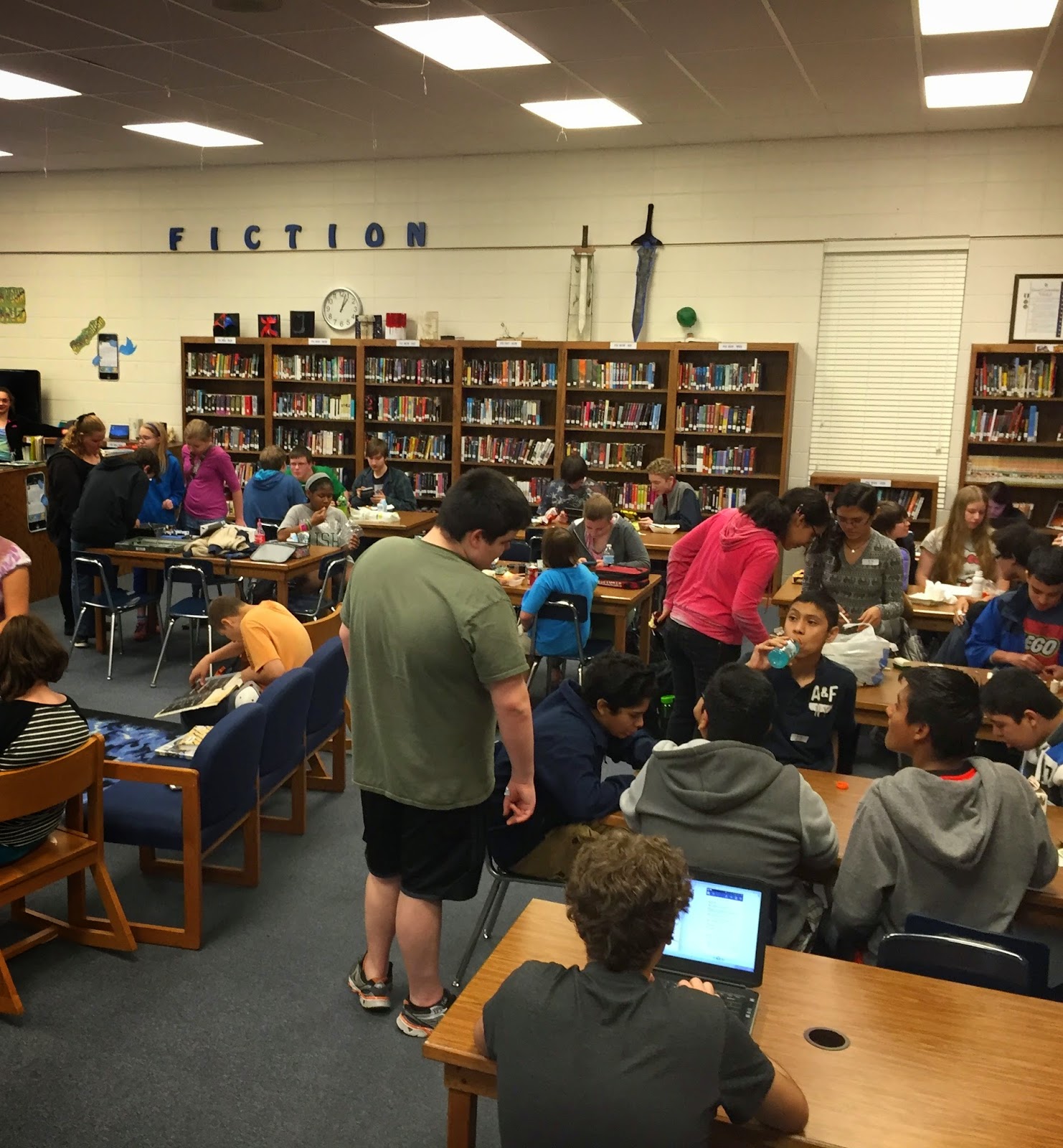
A 21st century library is a bee-hive of collaborative activity, with students moving seamlessly from electronic to print resources using multiple devices to access them.  True, not every library approaches this level, but it should be what we are aiming to achieve.  Students are comfortable learning from each other and sharing what they know.  In fact – they love it. It’s how they develop skills in video games and discover new tricks and apps on their smartphones.what society thinks

They are accustomed to a world of continuous information feeds whether audio or text. We need to capitalize on that inclination to learn by teaching them how to become global citizens, creating content, and building knowledge which they share in a participatory culture.  And that means, silent libraries are part of the past (or exist only in research libraries).

I am not advocating for a loud, out-of-control environment.  You should be able to be heard if you raise your voice just above normal speaking level. That’s a safety issue.  I am also not talking about a library where kids are horsing around.  On the other hand, all talk does not need to be work-related. Some socialization is acceptable and even important if they are to move from casual conversation to exploring their ideas, interests, and academic pursuits.

My libraries, both elementary and high school, were always a hubbub of activity – and the busy sounds – and energy – it entails.  A visiting superintendent was so impressed to see how engaged students were and how crowded the library was.  This was during lunch period (we were on block scheduling and managed a one-hour lunch for all 1,500 students simultaneously).  It was not a quiet place.  But learning was happening everywhere.

busy library 3Many of you already have this level of activity – and “noise” in your library.  Kids love coming there.  You have made your library the warm, friendly, environment that encourages questions, accepts diverse ideas and opinions, and promotes the desire to learn.

Elementary librarians are more inclined to keep noise levels down.  I suspect it’s caused by the fear that students would quickly become unruly and hard to rein in.  The answer is to change the culture of the library with their cooperation.

Students need to be a part of setting the rules and guidelines.  Talk about the difference between noise in the classroom and noise in the library.  What is good noise?  When does it become too much? What needs to be done if students become too loud?  I have found it best to talk to those students individually or the small group causing the disturbance rather than loudly addressing everyone.

Consider couching these guidelines under the heading of Respect.  Respect for yourself, respect for others, and respect for the library.  If at all possible provide a quiet area (much like trains today with their quiet cars) for those who need more silence to get work done.  Most often it’s the teachers who need it.

What do you think is the optimum level of noise vs. silence?  Is your library too quiet?  Too noisy?  What do your students think?   What do you want to change?  And what help do you need to get to this new level?

Reach Your Prime Audience – Back To School Night Suggestions

back-to-schoolThe parents who show up for Back-To- School Night and Parent Conferences are the ones who tend to be most directly involved in their children’s learning.  They are the ones who will fight for what their kids need. Too many librarians spend these events alone in the library catching up on work. You want them to recognize your contribution to student success in school and for their futures in college and beyond.  Once you do, they will do everything in their power to ensure your program thrives. Don’t miss out on reaching your prime audience.

To bring them in, have a sign or signs where parents check in and/or post them on the walls.  At the elementary level they may have little free time to wander so have a table set up at the main school entry with information for them.  Check with your principal to see if you can be there instead of in your library.  This gives you a chance to meet and greet them.Parents-orientation

In preparing material, consider what parents want most from the school library.  At the lower levels they want their children to learn to love reading.  So have a hand-out with the heading “A Book for Every Child—Every Child a Reader.”  Highlight any reading programs originating from the library.  Have a brief annotated bibliography and give links to your website where they can find more suggested titles.  If you can’t do that, list the URL for ALSCs Notable Books.

Are you looking for volunteers? Have a sign-up sheet, but just don’t have lines for their names and contact information.   What will parents get as a result of volunteering?  Seeing their child while they work in the library?  Learning more about the library program?  Access to borrowing material they can use at home with their children?  Helping the library be a welcoming environment for all students?  Put that first–then the lines for signing up.

At upper levels where parents move from class to class to meet teachers, they may have more room in the schedule to actually drop by the library. Again in preparing, think about what they want for their children.  This the time when they begin worrying about college, so spotlight how the library program prepares students.

A flyer or a running program entitled “What Students Don’t Know about Research” lets you showcase the information literacy skills you incorporate into students’ learning experiences.  Link to articles on the topic, such as this one from Huffington Post and point out why students in your school don’t need to wait until college to learn the skills.  Have your computers open to the databases you available and have a hand-out with the passwords for accessing them at home.  (Your students should have it, but the parents are probably unaware of it.)

library resourcesAt all grade levels, have your Mission Statement prominently displayed and include it on all handouts—and the Volunteer Sign-up Sheet.  Let parents know they can always contact you via school email.  If you have them, inform parents about LibGuides you created just for them and how they can see projects their children have done on your website.

The more parents learn about the value of today’s school library program, the more they will fight to keep it.  Don’t let your best potential advocates walk out the door without discovering what you do for their kids.

Reach Out – Find Your Larger Community

libraries transform learning
From ALA – click image for article

More and more of you recognize that no matter how busy you are in the library, the vital advocacy work that has administrators supporting your program happens outside it. While showing your own tech skills is a critical part of demonstrating how libraries have transformed over time, you still need to add a personal touch to make a true impact.

You know—or should know—your own town or city best.  Start thinking about ways you can reach beyond the educational community to send the message about how school librarians transform learning, boost student achievement, and prepare students for college, career, and lifelong learning in a constantly changing world.

In a world where so much communication is asynchronous, being with someone in person, in real-time adds much more meaning.  What this means, is that you have to get out of your library – and it’s on your own time. Up until now, your outreach for the most part is only directed to the school community including parents.  But you need to communicate with the much larger community.  They are voters and their attitudes toward school libraries is likely to be far more dated and entrenched than those of parents.facetime

Start by reaching out to your natural partners. Visit the public library. Introduce yourself to the children’s or YA librarian depending on the grade level of your school. Checking in advance with your principal to insure it is OK to do so, invite him or her to come to your library.  At the elementary level, you can work together on a story time with one or more classes.  At the middle and high school levels, you can get a cooperative English teacher to bring a class to the library and have your guest discuss upcoming programs at the public library.

Offer to promote public library programs in your library – and on your website.  See if the children’s or YA librarian is open to have you share student work in a display case or bulletin board at the public library.  This will reach community library users who don’t have children in the schools.

If you are a high school librarian, consider connecting with librarians in any college in your area.  An after school visit from a college librarian discussing college-level research with students (and possibly parents) will draw interest.  Try to get coverage from local press or cable TV station. High schools with TV stations can report on it as well.

special eventSome communities have a special day with various merchants contributing money and/or merchandise and food to bring out people.  The high school football field is often one of the venues for the day. Other places with a town green use that.  See if you can have a booth or table for the day.  Have flyers to hand out.  Display work by students and pictures you have taken showing library activity.  If possible, have students spend some time at the book talking with passers-by about what they love to do in the library.

Alternatively, or in addition, consider inviting community members into your library for special events.  Read Across America is a time when you can invite local officials to come and read to students. (Prepare them well –and prepare your students.)  Guests from Kiwanis or Rotary can talk to high school students about what they want to see and hear from those seeking part-time or summer work.

Your school library is part of a larger community that you need to be a part of. Get creative and have fun with these audiences you’ll find new resources and connections for your indispensable program.

How Large is Your PLN?

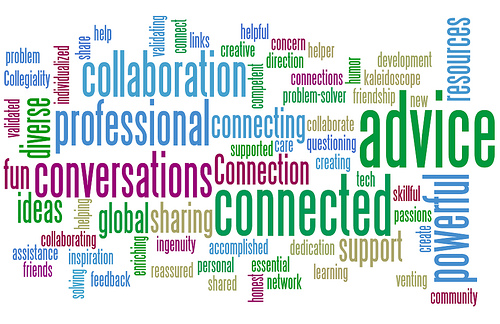
pln wordleYour PLN.

This acronym has two versions and both are important.  PLN can be either a Professional Learning Network or a Personal Learning Network. While it may seem to have arisen along with social networks, the concept has been in use long before the Internet, although the term didn’t exist.

Connecting with colleagues to seek their advice or help on a professional issue has always existed. At first it was within an office or school.  I can remember reaching out to a school librarian when I was planning to automate my library in 1993.  The telephone was my link.  I had already begun building a large Professional Learning Network by becoming an active member first in my state’s school library association and soon after in AASL.

Social networks have made extended these connections. Numerous library associations have Facebook pages.  National and state organizations also have listservs, and, of course, there’s LM_NET which has been a vital listserv for many school librarians who know how to manage the large amount of email messages.  Have a problem? A question? Just put it out on one or more of these and advice and help from experience practitioners will soon help you resolve it.

Sometimes you aren’t looking for anything, but a post gives you an idea.  I was just on the NYLA/SSL Facebook page and there was an illustration of Barbara Stripling’s inquiry model.  I will be teaching a course in the fall which will discuss inquiry-based learning.  I asked the person who posted, if she would send it to me for this purpose. She did, and I will be using it with attribution to her and Barbara Stripling.pln types

Members of Google+ TL Chat share what they are doing with software and other resources you may not have heard of.  Just click on the post and find out more. If necessary, post a question.  Twitter and LinkedIn groups offer other sources of information to grow your PLN.

Personal Learning Networks are a mix.  The greatest number of people in my personal learning network are fellow librarians who are also my friends.  I know them well even if I only see many of them at conferences.  We are always available for each other.  They are my friends on Facebook so I am always keeping up with their lives—professional and personal.

In person and online, we can get involved in discussions about issues arising in the profession.  Occasionally this leads to developing a project together or creating a workshop or presentation for a conference.  We know each other well enough to make drawing on each other’s specific area of expertise a natural part of the collaboration.

The remainder of the people in my Personal Learning Network are non-librarian friends.  Recently, I became interested in yoga for people with limited mobility.  I am a good librarian and researcher.  I could have spent time investigating this on my own.  Instead, I reached out to a friend who has been attending yoga classes for years.  She loved exploring this.  Soon she was sending me information about programs on television and chair yoga classes at a local Y and through the local park service.

yogaBecause she had a yoga PLN, she was able to let me know which had good teachers and the pros and cons of each option.  She also sent me illustrated directions for doing chair yoga at home. I now have a number of options without expending much of my own time.

Knowledge and information keep expanding at a rapid pace. You can’t do it all by yourself. Remember this is a two-way street.  Often you are able to respond to someone else’s query.  You are continually getting and giving in our participatory culture. Being a school librarian today requires you to keep up with the constantly changing technology landscape. PLNs – both professional and personal, are the way you can do it without feeling lost.  How big is your PLN?  How are you going to make it bigger?