ON LIBRARIES: (And life) Making Room for Joy

stressed-relaxedThe holiday cards remind us that this is the time for joy and peace – but I have a feeling that in truth, this season stresses us out more than it relaxes us.

So many of you are exhausted. Some districts didn’t close until Friday, December 23rd.  Not only were you dealing with kids – and faculty –  whose focus was on vacation and presents, your own focus was on keeping things from getting out of hand and figuring out how to get all your holiday tasks done.

Now the holiday is over.  Your house is almost back in order and you have a much lighter schedule until school resumes in January.  What are you going to do with this time?  Sleep may be a high priority, but there is something else you should take the time to do.pause

Pause and reflect.  Is this how you really want your life to go? Time is a gift and a finite commodity. How do you choose to spend it? Because no matter what you say about all the demands your job makes –and they are quite real – you are the one making choices.  Your choices tell other what you value.

I used to say my family was my highest priority, but that was not how I was living my life.  There was always another task that needed to be done, always another library committee that demanded my presence.  My family knows I love them.  But was I there for them?  How was I showing that?

Yes, there are times when you need to stay late.  Once in awhile you may go into work on a Saturday.  But if you are coming home late every night, you are cheating those you care most about and yourself.

You have been building relationships with your colleagues, learning enough about them so as to know what’s really going on for them. But are you doing the same with your significant other, good friends and whoever else is important in your life?  Are you accepting “I’mbalance fine” with a sense of relief because it means you don’t have to do anything?

If you are to survive and thrive as a leader you need to live a balanced life.  You can never get back moments you didn’t share with family and friends because you were too busy. If they are important, tasks always get done.  Moments not spent with those you care about are lost forever.

When you are home, be fully present.  Let school slip away from your consciousness. Don’t spend your time thinking about the job and your next project. Focus on the people around you.  Make time to have lunch or dinner with friends

When you pick your head up from the load of tasks you have and find the joy in being with those who matter to you, while still being a leader and an active member of the school library committee you will find you are less exhausted and stressed. The times with family and friends refresh and rejuvenate you.

Living a balanced life is also a gift to other librarians who are watching you.  As a leader you a role model.  You exemplify what leadership entails.  If all you are is a workaholic, reasonable people will not see the value in emulating you, and you do want to build more leaders. Tom Peters has said, “Leaders don’t create followers, they create more leaders.” (http://www.brainyquote.com/quotes/quotes/t/tompeters382508.html)

joyAnd in my efforts to be a role model for leadership, I am keeping this blog shorter than usual.  This is my time with family.

Are you leading a balanced life?  Where do you find joy?


ON LIBRARIES: What Type of Leader Are You?

leader-wordleAn odd question at first read.  A leader is a leader, right? From my past blogs you know there is a difference between managers and leaders, but how can there be leader types?

Step back a moment and reflect on the leaders you know or have worked with.   You may have had a principal or superintendent who was always coming up with new strategies to improve student performance and instruction.  Sometimes it seemed that the beginning of every school year an “exciting approach” was introduced.

Or you may have had one who made every feel respected and valued.  I had a superintendent who had to work with a district that kept school budgets as tight as possible.  She could get staff to go beyond requirements by knowing the right compliments to give people.  I was told I was a “true professional.”  I don’t know what she said to a Spanish teacher who had no problem teaching four different sections of Spanish. (Spanish IV and AP Spanish were included in one class.)  The union wasn’t happy at what teachers were “giving away,” but the district got an amazing return for very little money.leadership-archetypes

So what type of leader are you and how many types are there? Turning as I usually do to the business world for their answers I discovered there are quite a number. In his article on “Eight Archetypes of Leadership in the Harvard Business Review, Manfred F. R. Kets de Vries identifies and discusses them.  I will give you my “library” interpretation of these archetypes.

The Strategist: leadership as a game of chess – These librarians keep current with changes in education, technology, and the politics of the district.  They see how to position the library program in the forefront, sometimes before anyone else knows what is coming.

chessThe Change-Catalyst: leadership as a turnaround activity – Although this seems similar to the Strategist there are significant differences.  While the Strategist works best in orderly situations, the Change-Catalyst is a true Disrupter (see last week’s blog) and functions best in messy almost chaotic situations. They shine when a new superintendent or principal is hired and no one knows what to expect.  In the midst of the chaos, they make the needed changes and the library program helps others through the difficult time.

The Transactor: leadership as deal making – Rarer in school librarianship, this type of leader knows how to negotiate with administrators to eke out more funds.  For example, with ESSA coming they approach their principal with ideas for resources which will help teachers make the change-over.  They might ask for one-time funding to cover the cost, or if it’s an electronic resource an ongoing increase to maintain it.

The Builder: leadership as an entrepreneurial activity – The Builder envisions something new and knows how to create it.  Those librarians who have transformed their libraries into a Learning Commons (particularly the first ones) are the Builders.

The Innovator: leadership as creative idea generation – The first ones I knew were the librarians who automated their libraries when computers were in the early stages and you sent your shelf list to one company to create the electronic records, to another vendor to put them into the purchased system, and still a third for barcodes.  Today they are the ones who brought Makerspaces to the library, implement the latest tech into their program and know how to get teachers on board. They run the Twitter chats or a Google Hangout.

processorThe Processor: leadership as an exercise in efficiency – No matter how hard pressed these leaders are, they know how get to the heart of the matter, eliminate what no longer is working, and make running a busy library look easy.  (For me, this is the least important of the types from a library perspective.)

The Coach: leadership as a form of people development – These are leaders with high Emotional Intelligence. As with the superintendent I had, they know how to get the most out of people. They know their volunteers’ skill sets and make the best use of them.  They are charismatic and teachers love working with them resulting in much collaboration or cooperation and support for the library program from the staff and administration.

stage-managementThe Communicator: leadership as stage management – Librarians who have mastered how to get the right message in the most productive format to various target audiences get enthusiastic support for their program since Communicators are skilled at “marketing” their product to the appropriate stakeholders.

With this list in mind, which type of leader are you?  You might be more than one.  Is there a type you would like to become.

ON LIBRARIES: Are You a Distrupter?

distruption-aheadOf course you aren’t.  You are a team player.  You don’t rock the boat.  But maybe…you should rethink the question. Leaders are disrupters, and it’s time for more librarians to envision themselves this way.

The business world, which I turn to regularly, recognizes the importance of disrupters.  A Forbes article points out the difference between disrupters and innovators saying while all disrupters are innovators not all innovators are disrupters in the way that all squares are rectangles but not all rectangles are squares. Disrupters change how we think and behave.

The article links to a list of leading disrupters in business. Of course Bill Gates made the list as did the three founders of Kickstarter and the man who started Buzzfeed. You won’t recognize most of the names but they upended how we think of retail, get our television programs, and use social networking.

Okay, great for them.  But you can’t see how to “disrupt” your school – even if you wanted to take such a huge risk.  Let’s try a less scary term.  How about taking on the role of Change Agent?distrupt

Another Forbes article has the compelling title, “Every Leader Must be a Change Agent or Face Extinction.”  We have all seen how school librarians and libraries have been eliminated across the country.  Granted the economic crisis of 2008 caused much of the loss, but part of the reason was the perception that we didn’t make a sufficiently worthwhile contribution to be a good economic decision.

When confronted with widespread slashing of programs, what did many librarians do? They whined they weren’t appreciated.  They crossed their fingers and hoped their jobs wouldn’t be next on the chopping block.  What was and is necessary was to change the way we do business. There are numerous librarians who are doing that, but it’s incumbent on everyone to accept the challenge.

The second article has two quotes that stick with me. “Change is the new normal for leadership success, and all leaders must accept this fact,” and “Change is difficult; Not changing is fatal.” I have repeatedly said all librarians must become leaders or risk disappearing.  If you agree that is true, you need to accept the risk of becoming a change agent.change-is-difficult-not-changing-is-fatal-1

I had a Superintendent in the late 1990’s who alarmed everyone by saying, “If it ain’t broke, break it.”  This was when technology was rapidly expanding.  I am sure he got the quote from the title of a book by Robert J. Kriegel. It is a more confrontational statement but is aligned with the premise of another book, Good to Great by James C. Collins, which states as a premise, “Good is the enemy of great.”

Ranganathan, the father of modern library science, said “Library is a growing organism.”  But any organism either grows or it dies.  Now more than ever, the status quo is not sustainable. If you think your current situation is “good,” it’s time to make it great – even if you have to break it to do it.

What can you do to ensure you are growing?  Or what should you do as a Change Agent?  Librarians who are change agents are the ones who introduced Makerspaces and/or transformed their libraries into Learning Commons. If Makerspaces haven’t come to your district yet, that is one way to begin the change process. Makerspaces have had a dramatic impact on schools.

Creating a Learning Commons is more daunting, particularly in districts with small or nonexistent budgets, but you can move in that direction.  After researching various examples, consider what is possible through contributions.  You need a vision of course, and then, with the approval of your principal, consider developing a GoFundMe campaign.

A relatively simple change is to cover tables with whiteboard paper. This allows students working in groups to visually record their ideas as their project evolves. Anyone coming into the library will notice this dramatic difference instantly.  It alters how they see the library, which is what you need to have happen as a Change Agent—or a Disrupter.

Integrate the community into the library.  Just about every place has a local history and horticultural societies.  What else is available in your town or neighborhood?  Contact these groups and ask if they would like to set up an exhibit of interest to your students in the library. When they do, display resources you have on the topic.  Post everything to your website (or on a LibGuide on your website) and add online information.

Video and photograph students viewing the exhibit. Give them comment cards or record what they think.  Turn it into a presentation with Animoto or other similar resource and share it along with a thank-you note (from you and some of the students) to the society.  They may even display it in their location.  Suddenly their members are recognizing the library is not anything like the one they remembered.

agent-of-changeWith administration approval, reach out to the business community through Kiwanis and/or Rotary.  Ask for local business to share their “communications” with your library.  You can feature what they do and again create a supporting display.  Make a visual record and see if you can speak before the group and share what you did and how the kids reacted.

If we do what we have always done, we will get what we have always gotten. Ignored – for the most part.  Disrupt thinking.  Become a Change Agent.

Have you “disrupted” your school?  What have you done? What’s the craziest idea you’ve ever had for your library program?  Could it actually work?

ON LIBRARIES: Make Your Presence Known

we-are-here-whosToo many librarians still think if they work hard and do a great job, their teachers and principal will recognize their value.  It doesn’t work like that.  If you don’t start self-promoting you might find yourself ignored and possibly eliminated. My daughter tells me the same thing about selling books – if you write well there’s still a very good chance you won’t make the royalties you want. You have to connect with your audience first.

Self-promotion smacks of bragging and most of us shy away from anything resembling it.  It just isn’t “nice.”  Instead of thinking of self-promotion as self-praise regard it as positioning your program. self-promotion

How many people in your building are aware of all you do?  What does central administration know about your contribution to student achievement, integration of technology, and the host of other ways your program transforms the learning community?  How are they going to find out unless you tell them?

Saskia Lefertnk in an OCLC post references Ranganathan, known as the founder of modern library science.  He said, ““If you want to be a reference librarian, you must learn to overcome not only your shyness but also the shyness of others.” While he was speaking specifically of reference librarians, there is much in that quote for school librarians.

shyness-quoteRanganathan wanted to encourage librarians to transition from being preservers of books to actively serving users.  While we have been doing this for decades, how we do it has undergone a change as drastic as the one Ranganathan was advocating.  Shyness or reticence doesn’t work when the playing field has altered so dramatically.

It is easier to promote yourself and your program in writing rather than speaking or conversation.  So your first step is actively informing your stakeholders of what the library program is doing and achieving. Document visually what is occurring in your library.  Show students at work. If you video them, have them talk about what they are doing and learning.

Consider who needs to see this.  If you aren’t doing at least quarterly reports to your principal, start now. Use the writers’ mantra, “Show, don’t tell.”  It carries a greater impact. Do make mention of the teachers who you worked with collaboratively or cooperatively.

There are several web resources such as Piktochart that make telling your story easy. Your principal might like it enough to share with the Superintendent or even include it with a report to the Board of Education. Depending on what you have pictured and district’s rules for posting pictures of students show the activities on your website.  You can always have photos without kids and have them do a voice over.

When you are planning a lesson that demonstrates what you contribute to student learning, invite your principal or supervisor to see it.  Send the plan in advance.  Although there is no guarantee he or she will come, it is still self-promotion for your program and you. Let any teacher you are working with know there is a possibility an administrator will be present.look

Did you attend a conference or a workshop?  Whether it was an official professional day or something you did on your own time, send a brief report to your principal specifically explaining how you will integrate what you learned into working with students and teachers. This sends the message that you are transforming learning and are actively involved professionally.

Volunteer to serve on a committee.  Select one such as technology where you can demonstrate your expertise. If a subject or grade is working on curriculum, try to become a part of it in order to inform them about resources, but also to show how you can work with the teachers in creating units that engage learners and build critical thinking and other skills.

Offer to give a professional development workshop for teachers (or if you are willing to really step out of your comfort zone) with administrators.  Consider showing teachers AASL’s Best Websites for Teaching and Learning or Best Apps for Teaching and Learning. Particularly at elementary and middle schools you might offer to give a talk to parents.  What they should know about digital footprints or the latest social media their kids are on are possible topics.

Apply for a grant.  Start small with your local education foundation.  Let your principal know if and when the grant is approved. Getting free stuff is always appealing to administrators. Once you have some practice with grant-writing, try going for a larger grant.

Check out AASL’s Grants and Awards.  The deadline for most of them is February 1, so you have time over the Christmas break to work on it.  The PR that results from winning one, will showcase you and your program.  If all your efforts are resulting in your principal becoming a supporter of your library program, propose him/her for AASL’s Distinguished School Administrator Award.

If your community has a “day” when vendors and businesses exhibit, see if your school/district is part of it. Find out if you can be there to inform everyone about what school libraries are like today.  AASL has brochures and a great infographic on their Advocacy page.  You can find others by searching the Internet.

get-noticedUse your tagline on whatever you distribute.  Keep looking for ways to bring your program front and center.  Leaders know how to self-promote successfully.  And they aren’t bragging. They are telling it like it is.

What are you doing to make your presence known? Where do you need help, support or recommendations?


ON LIBRARIES: The Art of Communication

the-art-of-communucationI often say “We are in the relationship business” What goes along with this is without communication you can’t develop a relationship.  That shouldn’t be a challenge.  After all, we are always communicating, aren’t we?  Not necessarily the message we want.

Communication has three distinct elements:

  • the sender,
  • the message, and
  • the receiver.

If you remember the game of telephone you played as a kid, messages can easily become distorted, and in real life that distortion can occur within any of these three elements. In order to communicate effectively you need to be aware of how this happens and what you can do to prevent it. It is your responsibility to make sure the message is sent on a “clear channel.”Vector businessman online communicatiion connection business

Assume you are the sender.  Before you do anything you need to identify your receiver, your audience.  Is it your principal?  A teacher?  A parent?  Next you must consider what your message is.  Are you reporting something to your principal?  Offering help to a teacher? Responding to a parent query?

To be sure your message will not be garbled as it is received you must be sure it is in language the receiver understands.  Educators have jargon they use so frequently they are not always aware they are using it.  Scaffolding and differentiated instruction are quite specific terms for educators, but would parents understand them? Librarians have their own jargon as well.  We talk about information literacy and digital citizenship and don’t stop to think that not even our principals or teachers fully understand what we mean.

In communicating, it’s important you don’t make assumptions.  You might say, “Our teaching of information literacy ensures students are able to identify their need for information, locate relevant facts, evaluate them, and use them to communicate effectively.”  In essence you included the definition without either insulting someone who knows what it means or using a term they didn’t understand.

illusionYour next challenge is to select the right medium for the message. In the previous century, your choices were limited.  Do you want to talk to the receiver (in person or the telephone) or write to them (memo, report, or letter)? Today you have an array of options. To some extent it depends on what the message is, but there is a further consideration.  What is the users preferred source of communication?

If your principal wants e-mails, use that.  If he or she is a technophobe (getting rarer) schedule a meeting. Do the parents in your school use Twitter?  If they don’t it’s not a good medium for communicating with them. Do they go to your library website, your blog, or only like the print or emailed newsletters?  You need to take your message to where they are.

Besides language, the structure of the message is critical.  When you are tweeting you are limited to 140 characters. Conversations, emails, and memos have not such limit. It must be self-imposed.  Most of you are aware that text messages need to be fairly short and emails should also be brief.  If they are too long people skip some of the last part of the message. I work to keep these blog posts to a specific length and no longer, knowing they are being read on devices more than computer screen.

What isn’t as well recognized is how to craft a message, oral or written, to an administrator, and this works for others as well. We have a tendency to provide “background” so the receiver knows we are well versed in the topic and have done research, when appropriate, to be certain that what we are proposing is the best course of action. By the time the recipient gets your point, they have become lost in the verbiage.

As journalists have always known, “Don’t bury the headline.”  Lead with it. Give one or two supporting statements.  Particularly if the message is directed to your administrator let him or her know that if more information is needed, you will be glad to provide it. The same is true if you have a face-to-face meeting. Start with what you are seeking.

Note how this and all my blogs are written.  I keep paragraphs to a few lines.  Too large a block of text tends not to be read.  In my presentations I almost never have a PowerPoint slide with a lot of text.  It doesn’t work in today’s world.

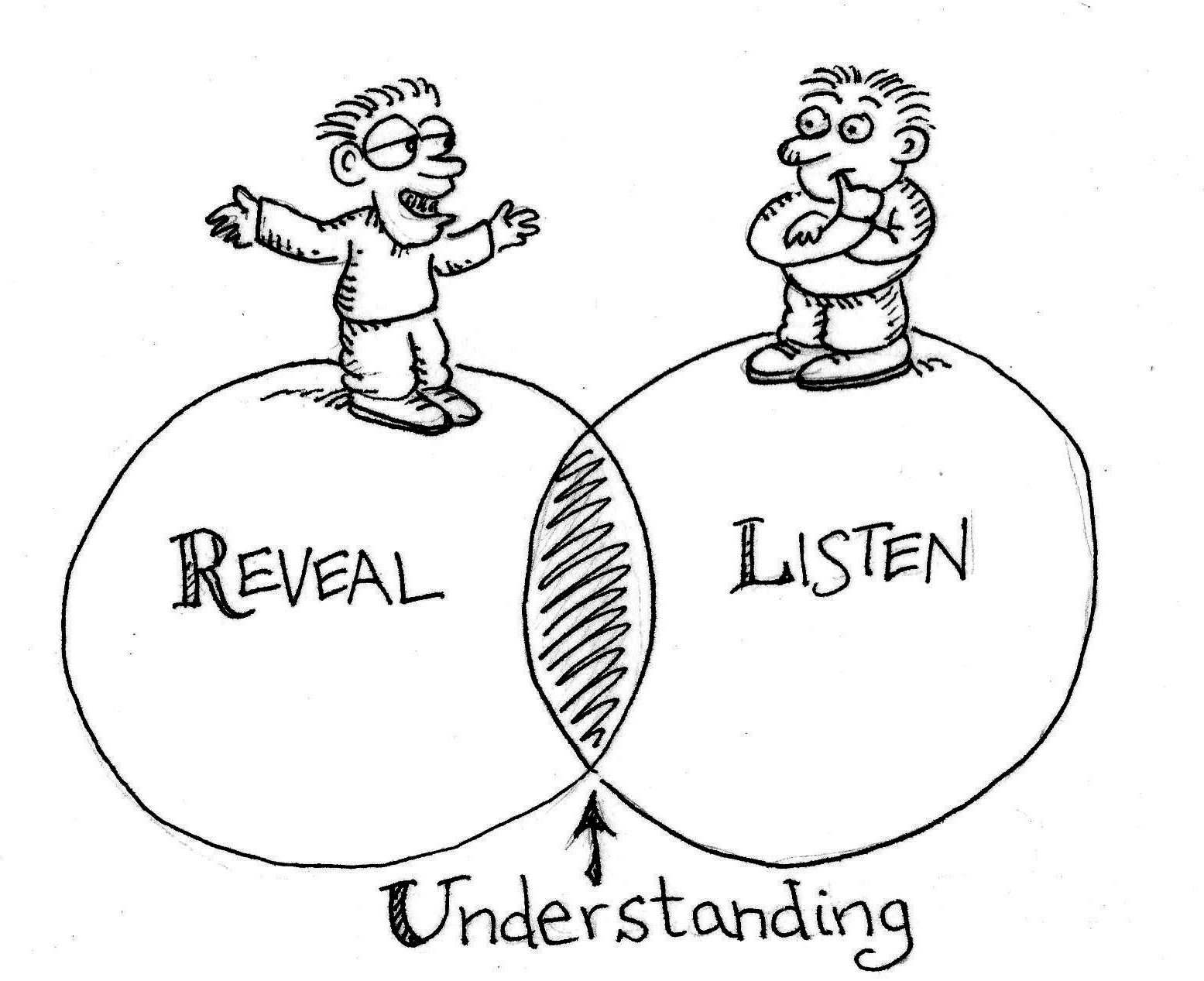
Once you have “sent” your message, you may become the receiver. When you are on the other end you must do what you can to be certain you heard the message correctly. This means engaging in active listening and restating in your words what you understood.understanding

Although the focus here is on verbal/written communication, never forget the presence of nonverbal communication. Any written messages should be proofread.  We hit send (or replay all!) too fast. It’s not serious when dealing with your friends, but when communicating with administrators, teachers, and parents it communicates a message about your skills and how much you care about what you are saying.  When it’s important, I create my emails in Word first and then do a copy/paste.

non-verbalWhen you are speaking to someone, watch their non-verbal communication.  Are they subtly checking the time? Are their eyes glazing over?  Do you need to rephrase for their understanding or is it time to bring the conversation to an end?  Stay aware.

Good communication skills can be learned and can always be improved.  Practice makes perfect – or at least better.  How well do you communicate?  What’s your best medium?  What do you need to work on?

ON LIBRARIES: Thankful for the Library as a Safe Place

Safe place2One of the most recurrent phrases in school library Visions (and sometimes in Mission Statements) is the library is a “safe, welcoming environment.” By implication we mean “for all.” We have read many testimonies to that truth from authors (especially, it seems) and others who found the library to be a refuge where they could escape harassment or the pressures of their lives in general whether a school or a public library.

While bullying has a long history, recent events have increased both bullying and fears in schools. In addition, the anonymity and overwhelming presence of cyberspace exacerbates the challenge. As librarians we have an obligation to ensure all our students feel safe—at least in our space, and as teachers to remind students the value in being their “better selves.”

A tall order at any time, but it’s one we can handle. At the elementary level, where you have more control over your lessons begin by using the Thanksgiving and holiday seasons to present a unit on thankfulness and giving. By reading appropriate stories and engaging students in discussions of what they are thankful for and how they would like to give to others, they begin to realize how kindness and generosity become gifts to themselves.be-kind

A member of the School Librarian’s Workshop Facebook group had a great idea.  Here’s what she posted:

                    After discussing, watching short videos, and reading books about kindness this week, my kiddos are writing and drawing one kind thing they promise to do to make the world a better place (kindergarteners drew themselves doing their kind act and told us what to write). I am covering our library windows with them to inspire kindness in our school. So far it’s looking pretty cool!

Besides books from your collection, look for stories of how kids have made a difference in the lives of others. What do they think of the possibility of doing the same?  What could they do?  It might become a class project done in cooperation with the teacher. If so – inform the principal.

Most elementary schools incorporate Character Education into the curriculum and you can easily work from that.  Take whatever theme of the month is being featured, then read and display books on the topic.  Challenge your students to share how they are incorporating that value into their daily life.

Character Education
Character Education (looks like Divergent factions, yes?)

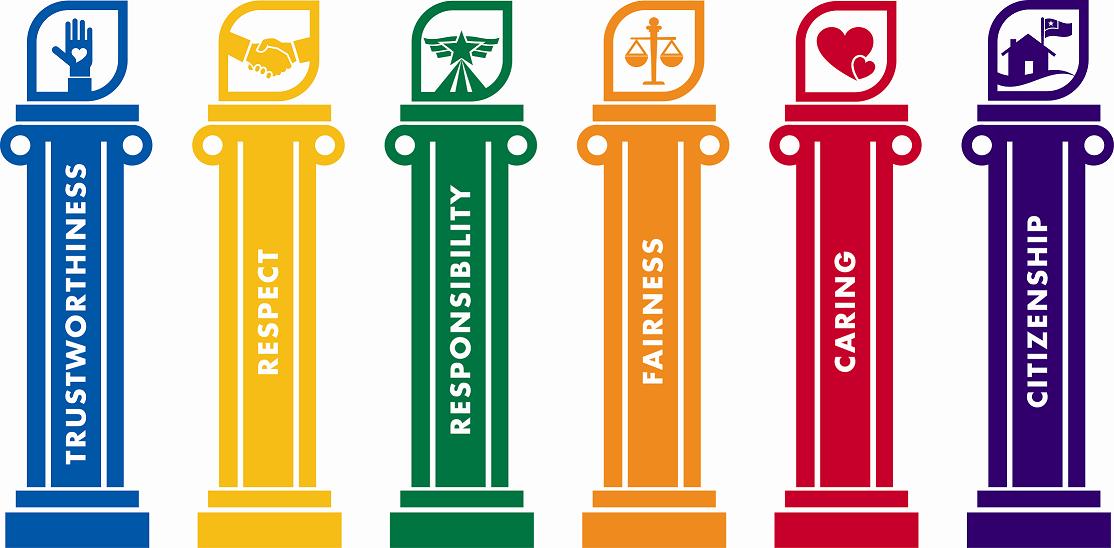
If your school doesn’t do that, you can work with the 6 Pillars of Character from the Character Counts website. The six are:

  • Trustworthiness – Be honest • Don’t deceive, cheat, or steal • Be reliable — do what you say you’ll do • Have the courage to do the right thing • Build a good reputation • Be loyal
  • Fairness – Play by the rules • Take turns and share • Be open-minded; listen to others • Don’t take advantage of others • Don’t blame others carelessly • Treat all people fairly
  • Respect – Treat others with respect; follow the Golden Rule • Be tolerant and accepting of differences • Use good manners, not bad language • Be considerate of the feelings of others • Don’t threaten, hit or hurt anyone • Deal peacefully with anger, insults, and disagreements
  • Caring – Be kind • Be compassionate and show you care • Express gratitude • Forgive others • Help people in need • Be charitable and unselfish
  • Responsibility – Do what you are supposed to do • Plan ahead • Be diligent • Persevere • Do your best • Use self-control • Be self-disciplined • Think before you act • Be accountable for your words, actions, and attitudes • Set a good example for others
  • Citizenship – Do your share to make your school and community better • Cooperate • Get involved in community affairs • Stay informed; vote • Be a good neighbor • Obey laws and rules • Respect authority • Protect the environment • Volunteer

With a few minor changes the examples of how to practice the six pillars come from the website. You don’t have to do them all, and certainly not in that sequence. Obviously a few of the examples are beyond what elementary students can do.  Choose what works in your situation or highlight one a month for the next six months.

It may be more difficult to introduce these themes at the middle and high school level where you need to connect with a teacher to be able to create an appropriate unit.  Social Studies is your primary target but you might be able to work with an English teacher having kids research and create a project. If you focus on harassment and bullying, Health teachers are another possibility.

You can find many helpful resources on Teaching Tolerance a project of the Southern Poverty Law Center.  Click on Classroom Resources for lesson plans that give the topic and grade level.  Southern Poverty Law Center also provides a free magazine to teachers and librarians that’s worth getting.teaching-tolerance

Much of this also comes under the heading of Social Justice, although I didn’t use the term because it has so many meanings and I wanted to focus on the importance of guiding students to becoming more caring people. Even without a unit on the subject, students should recognize through your modeling and behavior that the library is always a safe, welcoming environment for all.

What have you been doing to create that feeling in your library and your school?

ON LIBRARIES: Doing It Together

fishAre you a loner?  I don’t mean someone who doesn’t like to socialize. I am referring to the type of person who prefers getting a job done alone, without help from others. Since you are a librarian, you want to work collaboratively or, if you are on a fixed schedule, cooperatively with teachers. Doing it together would be the way to go.

For most teachers, their classroom is their kingdom and they run it the way they like.  Once they close the doors they are in charge. They are loners and they like it – and if they become librarians, they carry this outlook with them. Although librarians bemoan the difficulty they have in getting teachers to collaborate, the truth is, many teachers don’t like to collaborate with any one.

This is a generalization, of course. It doesn’t apply to all teachers, and with the formation of Professional Learning Communities (PLC) in schools, more of them are sharing their lesson plans and experiences with their colleagues, even if they don’t do so willingly.

I can remember when students hated to do a group project but today’s students by nature prefer to work with others.  They discover the latest app from their friends, game in partnership, and share information is their preferred learning style.  They are comfortable in the participatory culture.

I honestly believe most librarians are now this way as well but we need to recognize the presence of the secret loner within ourselves and the not-so-secret loner inside teachers. We often blame teacher reluctance to work with us on NCLB and the Common Core, but in reality it has always been this way.  The pressures have just made it more noticeable.together

How can you convince teachers that doing it together is better? (And convince some of you as well.).  Long before NCLB and the presence of computers in our lives, I struggled to get a science teacher to bring her students to the library.  She taught a special course called The Human Experience (THE) which connected science to everyday life.

THE was exciting and relevant. Among other things, kids learned about heart transplants and how they worked.  The course content was solidly packed and the teacher felt she had no time to “waste” in the library.  Sound familiar?

Because we had a good relationship, (you might remember how I have stressed the importance of building relationships), she grudging gave me one class period to work with her students on their current research assignment.  I discussed research strategies with them and showed them the resources (all print at the time) that would best meet their needs.

When the assignment was complete the teacher was extremely pleased. The kids had done a much better job than in the past.  What amazed her even more, was that the one day in the library had a positive effect on the rest of their projects during the year.  The next year, she sought me out to begin collaborating often.

together-2Not only did the students learn something valuable, the teacher did as well.  As a side note, the teacher went on to become a principal.  Her views on the value of the library and the librarian came with her on the administrative level.  It’s amazing how we affect our future positively and negatively by small actions.

I understand the inner resistance to working together.  Time is precious.  You know what has to get done.  Someone else might not bring the same commitment to the task.  It won’t come out the way you intended.  But that’s not all bad.

copyright Leo Lionni

In getting over my own “loner’ tendencies, I discovered some basic truths I think our students already know. No matter how smart you are, you don’t know everything.  And while someone else might not have as much knowledge as you on a given subject, the differing perspectives very often brings about a richer final product.  And like the teacher, we all learn and grow in the process.

Are you a loner or a natural collaborator?  How can you get passed any loner tendencies you have?  What have you learned as a result of collaborating?

ON LIBRARIES: Small Changes, Big Results, a More Welcome Library

welcomeWelcome to the Library

The words mirror the sentiment and the message you want everyone to receive when they step into your library, but words are not enough.  Some of you have signs outside your door or on a bulletin board just inside. Excellent.  But that won’t really convey the message. That’s telling, not showing and it doesn’t have the impact you want.

I blogged in December of last year about inadvertently sending mixed messages and spoke about posted negative rules and a library devoid of any student work.  Keeping rules positive – stressing what you are allowed to do and focusing on respect is important.  Displaying student creations does show the library is meant for them. But there is more.library-signage

In March of this year I blogged about transforming your library into a Learning Commons which I believe is ultimately the way to go. However, I am sure that many of you consider it too large a goal to tackle and I understand your constraints.  Split between schools, an overloaded schedule, and no help doesn’t give you time to take on big jobs.

You can make big changes in small ways, and you don’t have to do it all at once. To start, step outside your library.  Pretend you have never been in there before.  First impressions count, and although it really isn’t your first time to enter try to do so with fresh eyes.

Walk in the door and look around. What catches your eye?  Keep looking.  What message are you getting about what the library is about?  Is there anything off?  Is there something that is inviting you in for further exploration?

I once took over a library that was considered to be beautiful in its day, however the previous librarian had missed some things.  If you entered and looked to your left there was a wall of windows with counter height shelving just below them.  That’s what was beautiful.  The windows looked out on a scenic setting. Great idea by the architect.

But time and the exigencies of running a library had made some subtle changes.  Looking straight ahead from the entrance to the back wall, you could see the tall fiction book stacks.  Above them were an assortment of old shelving that had never been discarded. Libraries don’t have to be super neat. Those that are don’t have kids using them. (Mine were only at that “perfect” stage when the school year was over and the books were all neatly shelved and all magazines put away.)  But the clutter of the old book shelves was distracting.  They marred the attractiveness of the library.

What had happened was the librarian had stopped seeing her library. When you are in the library every day and have work to do, you no longer notice these things.  They have become part of your world.  Making time to see your library anew and spruce up what has been quietly disrupting the library environment will help you make some simple changes. You don’t need much time or money to do it.

When many librarians genre-fied their collection, they made sure to create great signage to help students and teachers find where the books were shelved. Signage is equally important if you are a Dewey library.  Remember signs are for your users, not for you.  You know that 500 is for Pure Science and 600 is for Technology, but they probably don’t.  Remember pictures are better than words and with clip art you can tailor them to what your students study and are interested in.learning-commons2

Counter height shelving is great for displaying books. Have different themes on different bookcases.  An appropriate sign will draw readers to the titles. Be sure to change them regularly or everyone will stop “seeing” them.

Some can displays can tie into your current bulletin board which should also change regularly. If you feel there isn’t enough time, try to get students to do some –under your direction.  If you are at the elementary level, contact a high school art teacher to find out if any of his or her students would like to take on the project for their portfolios

Next look at the “flow” of the library.  You naturally arrange your collection to follow the Dewey sequence (or alphabetical sequence if you genre-fied) but what about your floor plan.  How does traffic move when it enters your library.  Is this the way you want it to go?  If not, how can furniture be re-arranged to help it go in a better direction.  Do students have room to move around tables?  When your library is busy, step back for a few moments and consider whether the arrangement is working to help promote collaboration without creating unnecessary noise.  (I always had a fairly noisy library, but it was almost always under control—voices did not need to be raised to be heard.)

Do you like the way the computers are placed?  The printer(s)?  Does the arrangement work? If not, what needs to be changed?  You probably can’t do anything until school is out, but you need to know what you want done and you can start making and keeping notes.

Coffee and snack for break

Don’t forget about welcoming teachers. If you have the room, create a “teacher table.”  You can put a copy of a current education magazine such as Educational Leadership from ASCD and perhaps one or two new professional titles.

Keep the coffee pot on in your office and have snacks there.  It’s a tried-and-true way to bring teachers in. (It also brought in my IT people.) Once they are accustomed to hanging out there, you can show them some of your latest additions, mention a new website you think they’d like or want to use with students.  Start building new relationships with food and eventually you can branch out to collaboration or cooperation.

You have to show everyone that the Welcome Mat is always out at the library.

What are you doing to show the library is a safe, welcoming environment?


ON LIBRARIES: Show Me The Evidence

evidence-2 We live with assessment every day.  High stakes tests are used to determine what students know and whether you are doing a good job.  The tension it causes leads many of you to dislike the term, and yet it remains a critical part of teaching and leadership.

When you teach you are always assessing your students’ progress and that is the mark of a good teacher. But how often are you assessing your library program?  Is it as good as it can be?  What can you do to make it better?  That form type of assessment is necessary if you want your stakeholders to recognize your value and that of your program.

You are probably aware of Evidenced-based Practice (EBP) which started in the medical profession, but you may have dismissed it as too complicated to add into your already crowded day. Just because it sounds very academic doesn’t mean it’s difficult.  It’s as hard as you make it—or as easy.

To review for a moment. There are three aspects of EBP.

  • Evidence for practice involves using the research to determine best practices.
  • Evidence in practice is taking the research evidence coupled with your own evidence (possibly from your formative assessments with students) to identify what is necessary to improve your program. Here is where you want to connect what you are doing to the Mission and/or Vision you have for the library. It is how you transform learning.
  • Evidence of practice is the results you get. The data you collect from using evidence in practice showing the outcomes of what you put into practice.assessment

For more on the subject you can go to Ross Todd’s 2008 article in School Library Journal, “The Evidenced-Based Manifesto for School Librarians.” The article points out a number of ways you can gather evidence including student interviews, their reflective journals, and surveys.  While these may still feel like a lot of extra work, you need to build a portfolio documenting your accomplishments. To remind yourself of some of the significant research go to Scholastic’s School Libraries Work 2016.

Although the academics might not fully approve, you can also get your evidence in somewhat less formal ways.  If you are focusing on a specific change in practice, perhaps developing students’ ability to think critically or building their understanding of digital citizenship, you can create exit tickets to determine how close you came to achieving your goals.

Why is all this important?  Many years ago a principal came to me and asked if we could speak confidentially.  I had worked for him at the elementary level before transferring to the high school. He had a problem with his current librarian.  His difficulty was while he could go into any classroom and see whether the teacher was doing a good or poor job.  He was at a loss to do the same with the librarian.

This should sound familiar to those of you who say, “My principal doesn’t know what I do.” I took an hour to go over the many big and small ways a librarian impacts student learning and helps teachers, even good ones, do a better job. Feeling more capable of evaluating the librarian in question who was up for tenure, he went back to his school. (For the record, she wasn’t rehired.  He did have a sense that something was wrong, but he had no resources to substantiate his feelings.)

Action Research is very similar to EBP and you may find it easier to do.  First of all it is not research in the typical sense.  Rather you embark on a series of steps:

  • Identify a problem
  • Gather and interpret data on the problem
  • Create an action to address it
  • Put it the action into practice
  • Evaluate the results

portfolioIn many ways, you may already be doing this, but not formally.  For example, your students turn to Google all the time instead of using more helpful databases.  So you incorporate a mini-lesson on one or two databases in connection with a research project they are doing.  Then you observe them in action and check their work-cited page. All that work but you have no evidence to show for it.

Instead document it from the beginning.  You have identified the information.  Now gather evidence of them at work, even if its anecdotal record what you observe and date your observation.

Your lesson plan is the documentation of the action you put into practice. For the results you can record them in action and their work-cited.  You also use a survey (before and after if you like) to show their past practice in research, their change, and whether they found it worthwhile. You now have evidence of the efficacy of your instruction.

Bring a portfolio of your EBP and /or your Action Research to your annual evaluation.  Even better  – share it with your principal (and your board if you reach out regularly) as you complete it.  Included highlights on your quarterly reports.  Not only will you principal know what you are doing, he or she will value the contribution you are making to the educational community.

ON LIBRARIES: Tackling Controversy

election-2016We are two weeks away from the Presidential election. Social studies teachers usually respond with a short unit on the subject looking at past history and the process itself.  Normally, emotions and opinions run high as the election approaches particularly among older students, some of whom might be eligible to vote for the first time.  However, this campaign has been far from normal.  The level of acrimony coming from supporters on each side is creating stress and arguments within families and among friends.  It’s tempting to step aside and not deal with it.

Yet we have an obligation to tackle it.

We need to find a path that allows our students to learn from what is happening, develop a deeper understanding of this election in context of what has gone before, and discuss it without hostility.  A tall order when our own feelings are also heavily engaged.  To do so, it’s necessary to focus on what you want to achieve with the unit and set ground rules from the beginning.controversy

For all grade levels, formulate the Essential Questions you want students to explore. Possible ones are: Why do we have elections? Should we continue to have an Electoral College? What causes political parties to change their views over time?  Why has this election campaign been so different from previous ones? The first would work well at the elementary level and will have a deeper analysis with high school students.

Once you know the direction you are taking, set up ground rules to ensure the exploration and discussions don’t descend into the rancor that has typified this campaign. A number of indicators in the AASL Standards for the 21st Century Learner refer to being able to do such things as “Maintain a critical stance by questioning the validity and accuracy of all information” (1.2.4), “Consider diverse and global perspectives in drawing conclusions” (2.3.2), and “Use knowledge and information skills and dispositions to engage in public conversation and debate around issues of common concern.” (3.3.3).great-pumpkin

In your first meeting with students have a brief discussion as to why ground rules are necessary. Acknowledge the emotions common this year about the election and the candidates.  Ask students to raise their hand without any comment if they feel strongly in favor of one of the two major candidates.  Then let them know there will be no attempts to change anyone’s preference and there will be no criticism of the candidates. Unlike what is happening on television, social media, and news outlets, the discussions will stay on target.  There is to be no name-calling, shouting over each other, or accusations about the other candidate.  Be open to having students add any ground rules.

If students are exploring the candidates in this election, have them work in pairs to research the candidate they prefer.  Using a lesson plan that ties into your Essential Question(s) direct students to get started.  One resource to use is Scholastic’s website or check out Edutopia’s Election 2016: Lesson Plans and Digital Resources for Educators.

factsAlthough at a far higher level than usual, candidates and their supporters regularly accuse the other side of lying. News media do fact checking, but students should learn how to so on their own. Get Your Facts Right – 6 Fact Checking Websites That Help You Know the Truth has three to verify political statements plus other for email scams and hoaxes.

When your project is complete and students come together for a final discussion and sharing, review the ground rules which should be posted. For those old enough to use the political fact checkers, have them discuss what they learned from it.  As much as possible, ask if they have verified a statement. Wrap it up with their responses to the Essential Question(s).

How are you handling this election?  What are you teaching your students?