We are all busy. Too busy. And nothing suggests this is going to change. The question becomes: What can we do so that at the end of the day, we feel like we spent our time well?
In his article “The Great Busyness Delusion: Confusing Motion with Movement,” Brendan Keegan recounts a conversation with a friend. He’d asked her what she accomplished that day. After talking for fifteen minutes about the things she’d done, he asked again, “But what did you accomplish?” Like many of us, she’d confused being busy with being productive.
Keegan goes on to write: “Busy is sitting in meetings as the twelfth participant. Productive is structuring your day so you don’t need to. Busy is attending every meeting. Productive is questioning which meetings need to exist. Busy is multitasking. Productive is intentional tasking.”
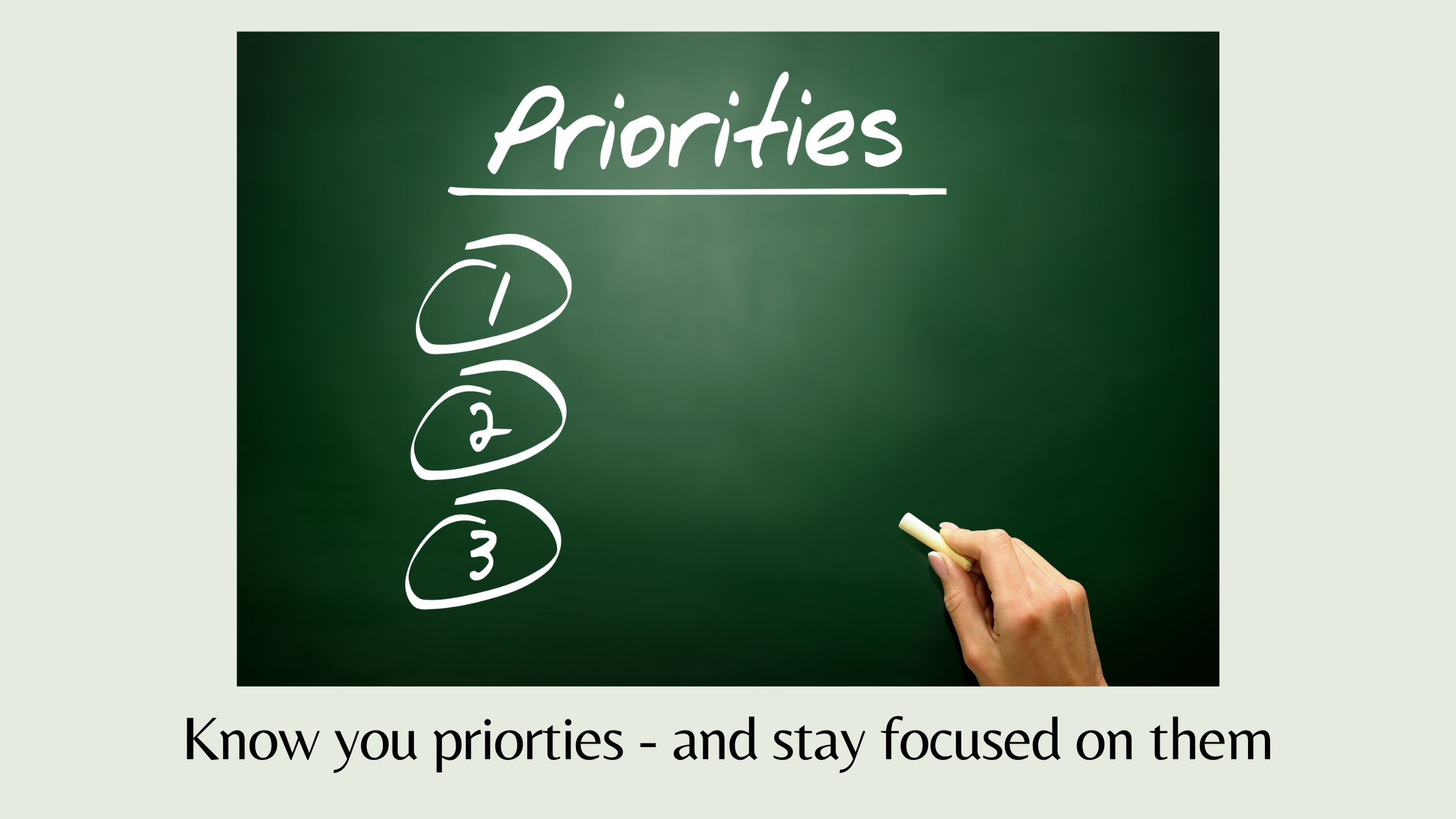
How do we switch busy to productivity? Keegan proposes a “Three Priority Rule.” At the beginning of each day – or whenever you’re doing your planning – Keegan says, “identify the three most important things you need to accomplish. Everything else is secondary. If you can’t complete those three things because you’re too busy with other activities, you’re not busy — you’re distracted.”
So how do you reduce the list of tasks you have been doing so you can focus on your three priorities? Here are his recommendations along with my usual comments:
The Unnecessary Email Flow – Does your inbox gets filled right after you finish going through and deleting stuff? Guess what? You don’t have to open every email before deleting it. You also don’t need to go back several times a day to see what has come in. Instead, if it’s a priority, do email first thing when you get in, otherwise, save it for the end of the day. Where can you cut back on this repetitive and draining task.
The Multitasking Myth – Keegan says, “Studies show that multitasking can reduce productivity by up to 40%.” When it comes to your priorities, don’t work distracted. Keep your focus on what needs to be done now. This is also true for non-priorities. For example, don’t review your email while you are on a call. It lowers your effectiveness and adds to your stress. How can you eliminate distractions so you do one thing at a tme?
The Urgency Trap – We tend to act as though every task is equally urgent. They’re not. As Keegan notes, “Real productivity isn’t about doing more things; it’s about doing the right things well,” and “It’s not about being busy; it’s about being effective.” Working with students and teachers are high priority. Knowing and focusing on our Mission are high priorities. What are you doing that’s taking you away from that?
Breaking the Busyness Cycle – Keegan recommends asking yourself different questions to help you see how you are moving forward: “What did you accomplish?” and “What problems did you solve?” Either of these will help you see where you may have gotten off track and help you get back to focusing on your Mission and priorities. You probably won’t like your answers to these when you first start, but over time you’ll see a change in how you use your time and focus.
Before starting on this, think about when you like to plan. Do you prefer to determine your priorities at the start of the day, before you leave or maybe as you commute (in either direction). Make sure you write them down in a place you can find them. Then, before making the next set, ask yourself if you accomplished what you set out to do. If not, what distracted you? What could you do differently the next time?
One of my three priorities for today was doing this blog. And now I’ve accomplished that.. What’s on your list?
 Hilda K. Weisburg