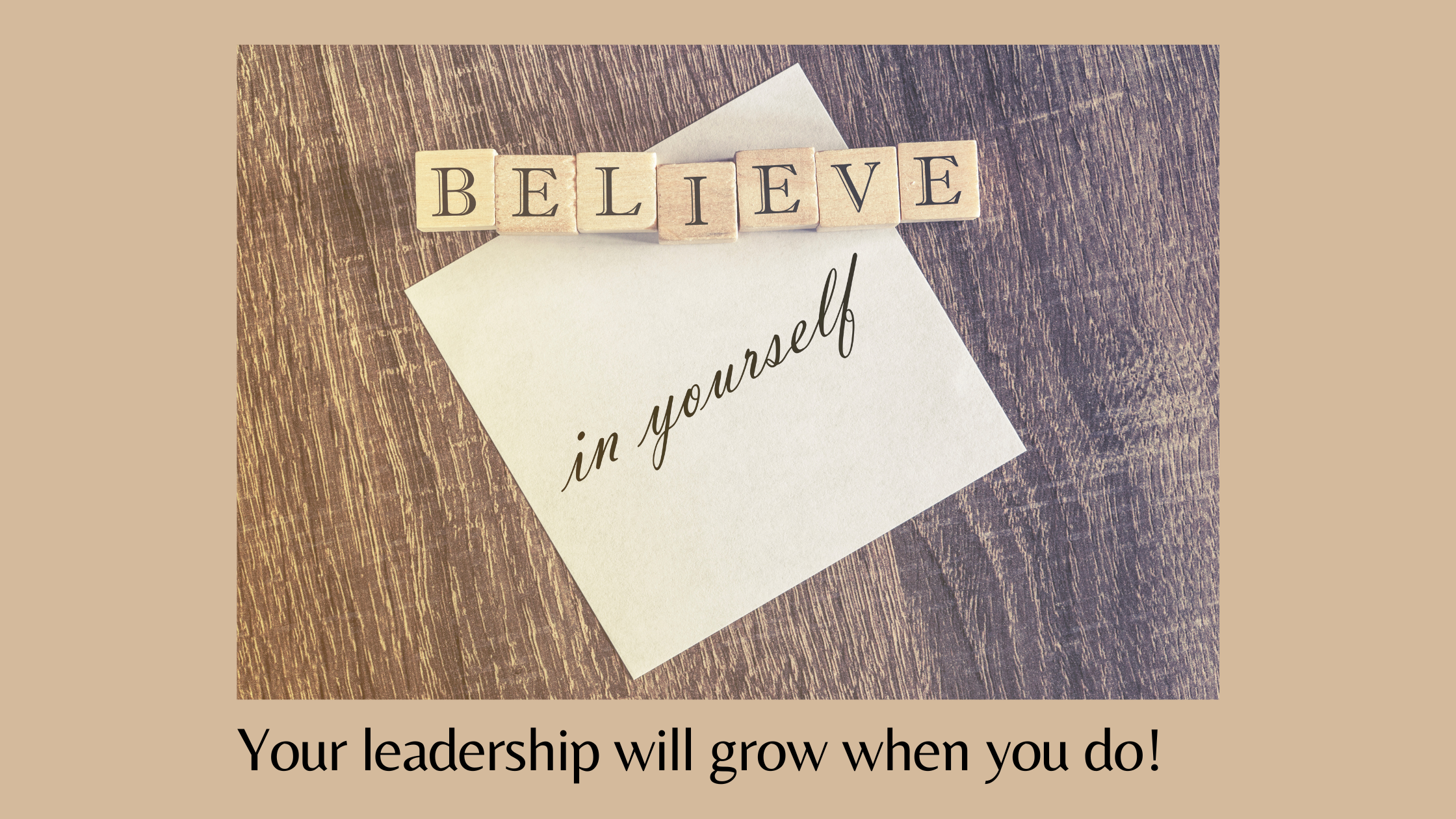
How did you fill in the next word? There are many good answers to that question. But you are likely not to have thought of the one you should. The sentence that will serve you best as a leader is, “I believe in Me.”
In my soon to be published book, I identify nine attributes we need to have and employ in our three communities to thrive in these (and even simpler times). The first of the three communities is ourselves. We live in our heads. What we think shows up in how we interact with others.
The very first of the attributes is Confidence which gives us the self-trust necessary to do everything else. In her Middle Web article (a website all about Middle Grades!), Self Trust: A Leader’s Most Valuable Tool, Jen Schwanke, Ed.D. concurs with my thinking and explains why this is so important. In her book Trusted she writes about how leaders need to be trustworthy and trust willing. “But the final chapter in the book deals with one relationship many leaders often neglect: the trust we have with ourselves…. Cultivating self-trust isn’t just a nice idea — it’s essential for our well-being.” She offers four ways to build it. Here they are with my usual tweaks:
- Lead with a mix of confidence and humility – Take an honest look at your knowledge of what your job entails. You know how to do it. Draw on that knowledge to build your confidence. Your students and colleagues recognize your ability and count on it. At the same time, self-confidence doesn’t mean you know it all. You can learn almost as much from your students and their projects as they do. Teachers will give you insight into their subject areas. Your principals, good and bad, can teach you much about leadership. When you recognize this, people are more comfortable working with you.
- Manage our emotions and don’t rush to react – Responding fast to a new issue doesn’t mean it’s the best approach or plan. The fires we are rushing to put out are not physical fires. We don’t need to save lives. Think first. Check with your PLN or mentors for more ideas. And as Schwanke points out, each time we successfully manage a crisis, we build our confidence and self-trust.
- Consider all perspectives when making decisions – Our world isn’t neat and tidy. Changing one thing will affect something or someone else. Schwanke cautions us to recognize, “we may not know the full story.” She further adds that remembering this “prevents impulsive judgment and allows us to gather more information. It builds trust with others because it sends the message that we won’t be impulsive, that we won’t always take one particular side, and that we care about all perspectives.” Notice your biases and be willing to learn.
- Give credit away – I deeply believe in this. When you give credit away, you get it back many times over. Remember, the job of a leader is to build more leaders. A teacher who now feels confident and comfortable with you will seek you out in the future and recommend you to other teachers. A principal who recognizes how you have strengthened their reputation with their bosses is more likely to listen to your requests for funding. As students see their own successes, they feel more confident in tackling more challenging explorations.
Confidence and self-trust are at the root of your ability to grow and thrive. You have what it takes. Believe in yourself and watch as others do, too!
 Hilda K. Weisburg