Feel Well – Do Well

The old expression “Make time to smell the roses” is about slowing down to enjoy what’s around us. It is also, in fact, a prescription for improving your mindset and your productivity. Much has been written about the importance of self-care and its effect on how you feel about yourself.

Have you noticed when you go outside, your body posture undergoes a slight change? Your shoulders go back, and your vision seems to expand as you leave the confines of indoors and screen viewing. These outward physical changes are the manifestation of the chemical changes going on in our bodies. The effects of the chemicals our bodies produce can be negative or positive. Having too many episodes of negative chemicals flooding out bodies can affect our short- and long-range health.

Not surprisingly, the converse is equally true. In her article Fuel Well-Being to Transform Your Leadership (email sign up required), Marlene Chism discusses different positive body chemicals and how we can produce them. She goes on to show how producing these chemicals regularly boosts the quality of our work.

It is wonderful to know that the following chemicals are within your power to produce:

Serotonin- keeps you calm and in a positive mood. It helps you as a leader by keeping you from mood swings and acting impulsively. You make better choices and stay focused. You produce Serotonin when you:

  • Exercise regularly – Choose something you like so you will do it. Incorporate it into your regular routine and enjoy the many benefits.
  • Practice gratitude – This can be a simple addition to include in your routines. It helps to maintain a daily record, digital or print, of what you are grateful for, but even taking a moment in your day can benefit your serotonin levels.
  • Walk in nature – Get out. Find a place to get outdoors, breathe fresh air and, hopefully, grass and trees. If this is a challenge because you live in a city, look for a park you can go to.
  • Get sunlight – Another challenge for workers with long commutes or during the short daylight hours (and cold!) of winter. Do the best you can when you can.
  • Eat serotonin-rich foods such as turkey, eggs, seeds and nuts – Yes, even your diet can support this. No wonder these are considered healthy foods.

Dopamine – The feel-good neurotransmitter. Low dopamine leads to a lack of motivation and tiredness. Feeling overwhelmed and easily distracted can be caused by low dopamine levels. When you have a good balance of dopamine, your creativity increases, and you have a sense of positive achievement. All so necessary for leaders in stressful times. You produce Dopamine when you:

  • Eat Omega-3 foods like fish – Once again, eating healthy is beneficial in more ways than you knew.
  • Exercise regularly – A double reward for exercising – dopamine in addition to serotonin. Your exercise needn’t be for very long. Consistency is what is important.
  • Get enough sleep Always a challenge in our over-filled days. Treat yourself as you do your children by developing a bedtime routine. Read yourself a story.
  • Listen to music – What music fills you up. Maybe lullabies can be part of your bedtime routine. Shift to music instead of news on your car radio, or at home. Or, after news…. This will give you that dopamine boost.  
  • Set and achieve small goals– Robert Collier said, “Success is the sum of small efforts repeated day and day out. Reaching small goals makes you feel successful. Poof —dopamine! When the goal seems out of sight, it feels unattainable and hard to sustain. See the small steps as the big win they are.

Oxytocin – Chism calls it the “bonding chemical.” It helps in making connections, feeling empathy, and building trust which are all essential for building relationships. You produce Oxytocin when you:

  • Spend time with friends – The importance of this explains why the isolation we experienced during the pandemic was so damaging to many.
  • Express appreciation – Say thank you and mean it. Send a text or email. Even better, send a handwritten message, being specific.
  • Get a massage – A great reason to treat yourself. You can be good to yourself and build your leadership bonding chemical at the same time.
  • Listening – We have recognized the importance of active listening. It’s hard for many of us. Practice it when you spend time with friends.
  • Share a meal – Go out for a meal with friends and include serotonin- and dopamine-rich foods to eat.

Knowing the importance of these chemicals in your body and how you can produce them can give new impetus to you and your leadership skills. It’s fun to think that being a great leader is a matter of chemistry – and feeling good.
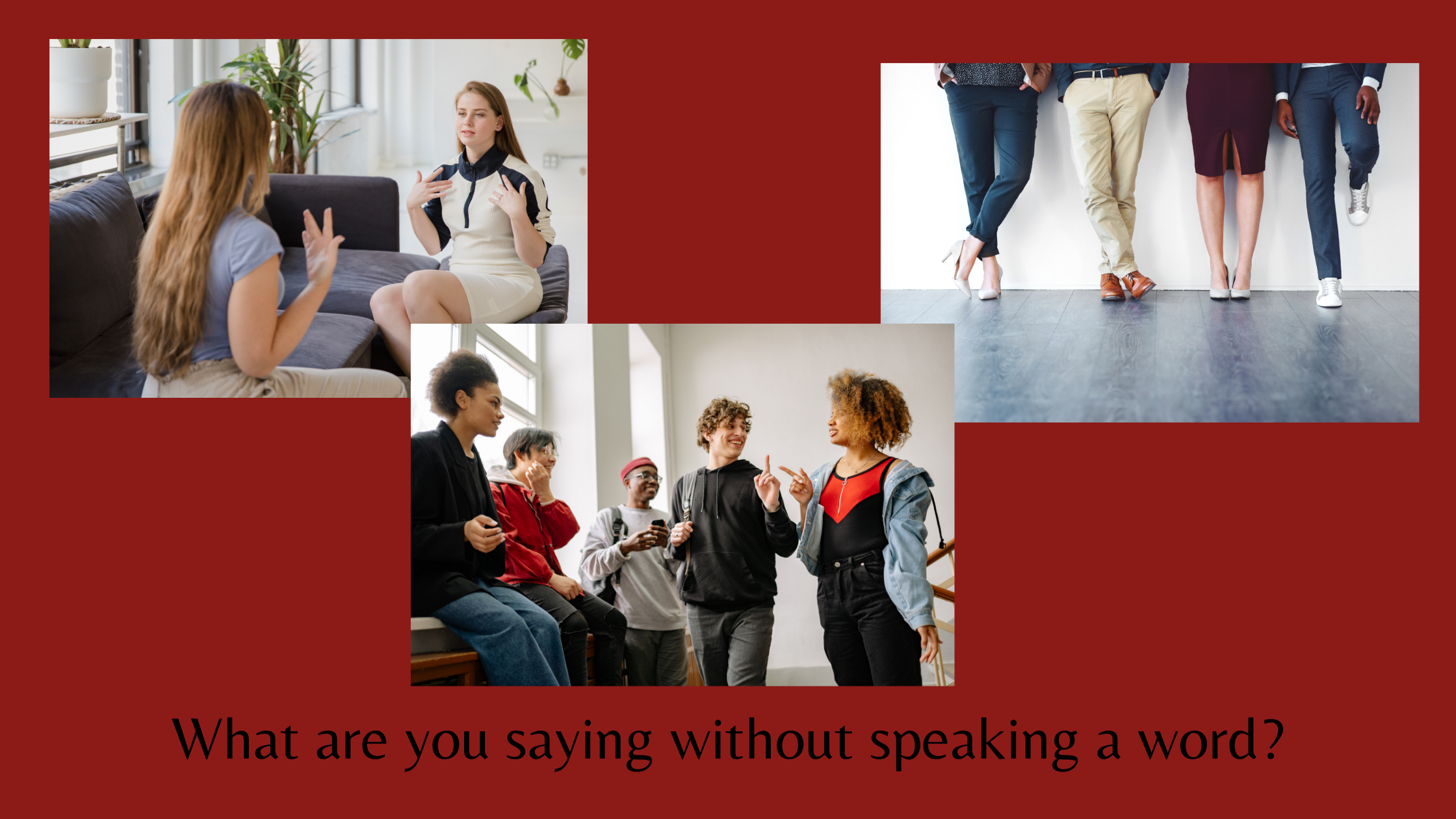

What is Your Body Saying?

We are in constant communication. When alone, we communicate with ourselves by what we’re thinking, whether it’s a negative assessment, a positive mindset reframing, or a review of what is next on our to-do list. But non-verbal communication happens as we interact with others. And all the time.

A teacher greets you in the hall. At a barely conscious level, you access your history with them. Do you have a good working relationship? Is there one you are trying to establish? Have they been resistant to your previous outreaches? You also note how they look. Upbeat and happy? Tired? Annoyed?

While you are receiving this non-verbal message, the teacher is receiving your non-verbal message. Do you know what your body is saying? All of this occurs mostly without conscious thought, but that doesn’t make it less impactful. And when you begin talking, these non-verbal messages affect the response you are likely to get.

 As a leader, it’s important to be aware of how and what you communicate. I wrote about the many types and ways we communicate in my book, The Art of Communication: A Librarian’s Guide for Successful Leadership, Collaboration, and Advocacy (Libraries Unlimited, 2022) (currently less expensive in print than in Kindle!). I addressed our library world, of course, but the business world is also discussing the importance of understanding the many channels of communication we use.

Cheryl Robinson tackles the topic in her article, “What Your Body Language Says About Your Leadership Impact.” She notes, “Research underscores that body language has a greater influence on perception than verbal language alone. Positive, consistent body language reinforces trust and authority, while incongruent or negative cues may lead to misinterpretation or distrust.” Robinson goes on to detail how and what you are communicating.

Key Elements of Leadership Body Language

  • Body Movement – How are you sitting and standing? Fidgeting doesn’t send a leadership message. Sit up. Hands relaxed. A meeting with your principal or an upset parent is the most likely time to stay aware of this.
  • Posture – Shoulders back. Don’t slouch. It sounds obvious, but if you are not conscious of where your body is in space, you may he hunched over or low in a chair without realizing it.
  • Facial Expressions – Looking interested is important, but don’t overdue do it. Be animated, but not false. Faking it can be seen and negatively interpreted.
  • Space/Distance – Each of us occupies a physical space that extends beyond our body based on our size and culture. Too near is intimidating. Too far shows disinterest. Be aware of what you are doing and the (dis)comfort of those around you.
  • Gestures and Eye Contact – Open gestures are inviting, but too much gesturing is distracting, taking away from your message. You’ll seem frenetic and anxious. Maintaining eye contact shows trust and confidence (although be aware of cultures that consider it intrusive). Smiling genuinely is always positive.

I’d also add to this list: Listen attentively. Pausing before responding shows you paid attention to what was said.

Think of the best leaders you know. What do they project? How do they do it? Robinson states, “Maintaining a strong yet inviting presence is essential to conveying leadership effectively.” As leaders and librarians, we are in the relationship business. Being aware of what we are communicating enhances our ability to build these relationships. Know what messages you are sending and become a more effective and connected leader.

Joy Creates Success Creates Joy

You are back to work after the winter break. Does it already feels like a long slog to the end of the year? It does for many of us. Your students are feeling the same way. So are the teachers. How are you going to get through this? The blog post title is the spoiler alert, but it sounds unbelievable. What are you supposed to do? Sprinkle fairy dust on everyone?

It’s not that remote an idea. Think of the times when a lesson in the library really clicked and you could see the joy on students’ faces or just one student. Recall those moments when a student thanked you for something. Those isolated moments can be cultivated, and it’s important to know how to do it.

Administrators are now discussing Joy as the secret ingredient in education. Indeed “Centering Student Joy” was the theme of the December 2024/January 2025 issue of EL (Educational Leadership), the journal of ASCD (Association for Supervision and Curriculum Development). While the articles are addressed to administrators many can be translated for the library. The article, Joy: The Oxygen for Learning by Katie Egan Cuningham and Kristin N. Rainville is one example. Here are some of their ideas:

The Joy of Connection – The pandemic taught us that humans are social animals and thrive best through connecting with others. Among the ways we can foster connections are:

  • Prioritizing the “We” – You may already do some of this in “pair and share” activities. Give students sentence starters that incorporate “we” so they know you’re with them. Look for ways use more “we” sentences when talking with teachers.
  • Strengthen Relationships – Check in with teachers and students to follow up on how things are going, particularly with personal challenges they may have shared with you. Where appropriate show your vulnerability by sharing the ones you are facing.
  • Celebrate Challenges – Point out where some element of accomplishment has made a student ready for the next step. In talking with teachers, note how much resilience they have shown in dealing with life’s difficulties.

The Joy of Engagement and Brain-Friendly Learning – Be mindful of how learning occurs in different cultures particularly those who do so through storytelling. Incorporate opportunities within a lesson where they can share their stories with others.

  • Activate and Assess Prior Knowledge – Go beyond KWL (What I know/ What I want to Know/ What I learned) charts. The authors suggest you use anticipation guides with statements about the topic. Have students agree or disagree then explain their response. This lets you know what their prior knowledge on the subject is. At the conclusion of the lesson, they can talk about what changes they would make to their original assessment.
  • Consider Working Memory Demands – We have only so much space in our brains to deal with ideas and move them around. The authors suggest you “provide a series of shorter deadlines for longer assignments, break down tasks into smaller chunks, help students prioritize what’s most important, and incorporate multiple methods for presenting information.”
  • Motivate with Mastery – Mark the successful accomplishment of steps along the way to the planned outcome. Acknowledging mastery increases self-esteem, confidence, leadership skills and more. Everyone wants to feel that they are making progress. Help them feel this.
  • Opening Up to Joy – Tune in to the small joyful moments in your day. Be aware of what makes you smile. Take time to enjoy the beauty, wonder, and grace you observe whether it’s a sunset or birds in flight. Savor your food, especially the dessert. There’s potential for joy all around you. You just need to open yourself to seeing it.

When you start seeing the results from incorporating joy into your practice, schedule a meeting with your principal to share what you have learned. They will hopefully be aware of the importance of joy. Now you can take joy from knowing the principal sees you as being knowledgeable about current educational thinking and a leader.