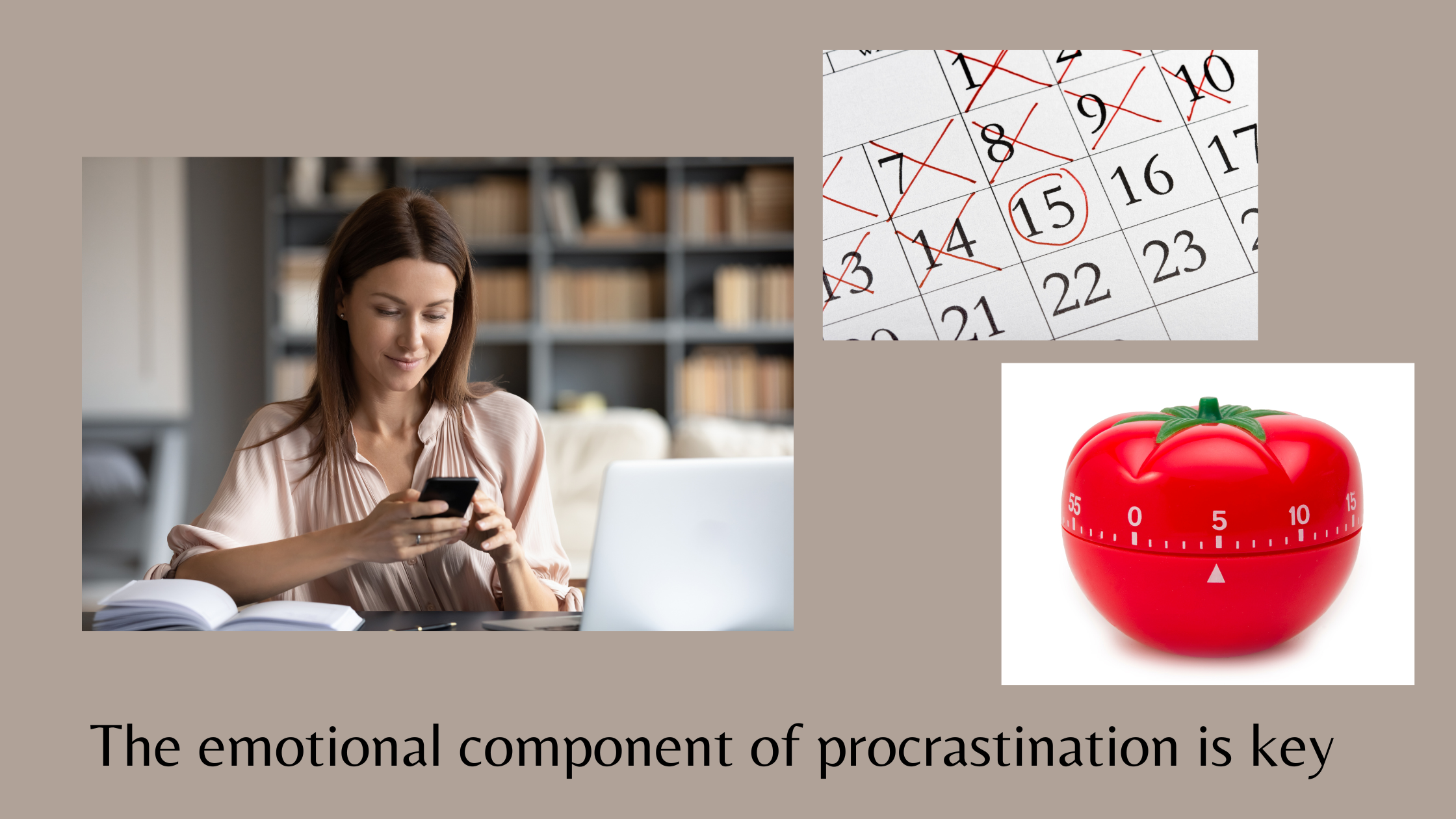
A few weeks ago, I wrote about how regardless of how busy we are, we still sometimes choose to procrastinate and do the tasks that aren’t the most important. But it’s hard to make a change if we don’t know what’s behind it. Not surprisingly, the root is emotional. No matter how well we plan, emotion tends to win over logic.
Whether you procrastinate by eating, doing non-essential tasks, or playing some online game, it’s our emotions that are responsible. Unfortunately, knowing that emotions are the root cause doesn’t mean you can simply stop procrastinating. Kathleen Davies offers some techniques for getting control of our self-sabotaging emotions in her blog post, Why We Procrastinate—And How to Stop, She notes that procrastination is an emotion-management problem so that is what needs to be managed.
To begin to understand where your emotions are pulling you off track, start by listing everything that needs to get done (or as much as you can) and note which of these tasks are causing you stress or other negative emotions. Then pick one of those to complete along with an easier one. Once you do these, you’re likely to feel successful enough to tackle the bigger ones.
This list will also help keep you from something Davies calls procrastiworking. This is when we spend time doing the things that make us feel busy, but don’t really help our to-do list. It’s when we clean up our desks or go through our endless emails. We tell ourselves it’s work so we are getting things accomplished. It’s not the thing that we needed to get done but we still do it.
If specific action steps will help you to change your choices, Davies has four tips for beating procrastination:
- Increase the room temperature – Research has shown that higher temperatures increase your focus.
- Sunlight– Working where you get natural sunlight has also been shown to increase productivity.
- Exercise during the workday – Doing it even for a short time improves memory and reduces stress while clearing your head and helping your focus more.
- Setting a timer – Give yourself a block of time, perhaps 20 minutes, to work and allow yourself to take a break at the end.
To make a shift away from procrastiworking, first recognize that you are doing it. Next, go back to your to-do list. Identify the priorities and what steps you can take to deal with them. At the end of the day, assess how you did. To prevent it happening in the future – plan. Know how often you do it, learn to recognize it, and decide what you will do when it occurs. And notice the emotions and stress that come up before and after you’ve completed the tasks. Hopefully positive emotions can guide your future choices.
It’s interesting to note that for some people, procrastination can be useful. If you are someone who works best under a deadline, then waiting until that deadline is looming – and the adrenaline that accompanies this– can help you to be more efficient and effective. When you reach the point that you can’t put it off until tomorrow, you can’t get distracted. You have to stay focused. This doesn’t work for everyone, but if it does for you, then go for it!
But in addition to learning about where our emotions are causing us to veer off course, Davies also writes about the importance of stepping away from the task that is causing our stress. She says, “Sometimes you just need to take a break. Go for a walk, talk with a friend, or do something that isn’t work. It’s not always worth just powering through.”
So, if reading this blog was procrastiworking for you (“But Hilda writes about libraries, so it’s work, right?”) then get back to your list. If one of the tools mentioned seems like it would support your success, go for it. Here’s to learning how to best use our time for our success.
 Hilda K. Weisburg