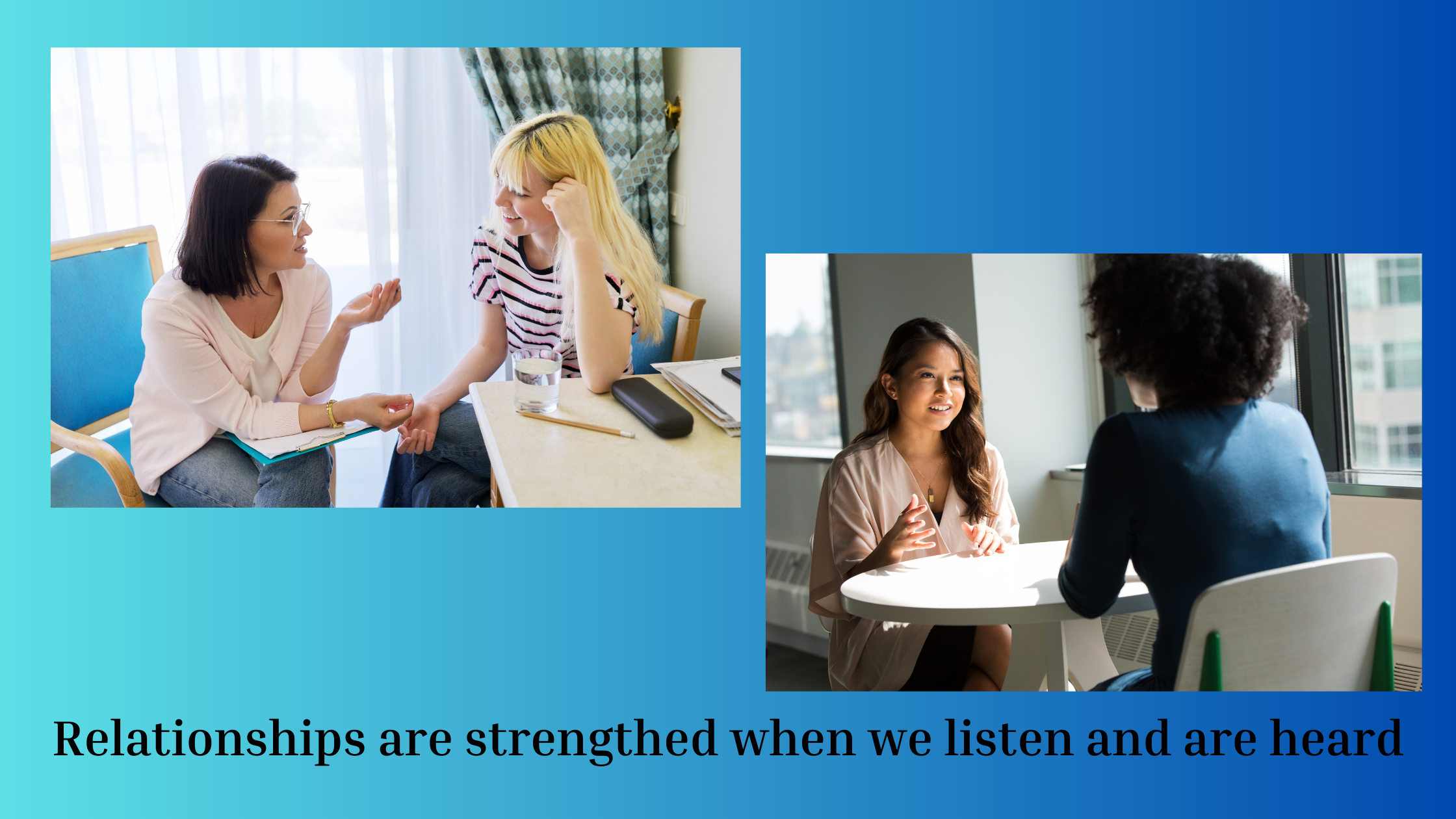
We know the importance of building relationships. While you can start making the necessary connections by emailing websites or apps that might interest teachers, the action that results in collaboration or cooperation doesn’t truly begin without face-to-face conversations. How we handle these in person interactions can speed or derail the process.
Just as a bad wi-fi connection can interfere with hearing what people are saying on a Zoom call, the way you respond to the teachers can prevent you from hearing them – and prevent them from reaching out to you in the future. You may think you are offering help and support, but that is not what is being communicated. What can go awry and how can you prevent it?
In my book The Art of Communication, I discuss the importance not only of active listening, but being aware of the non-verbal signals you are sending when you speak with someone. Similarly, in his blog post, How to Make People Feel Heard, David Burkus recommends four ways to improve your connections and relationships. He starts with active listening then offers three other usable skills.
- Model Active Listening – We know how important this is, but in the moment some of us, me included, get so caught up in wanting to respond, we plunge ahead. So much for active listening. Nodding and gesturing helps, but make sure your gestures aren’t expressing “Hurry up and finish, I have something to say.” Remember, our body language speaks volumes. What can help is summarizing what you think you heard them say. Give them the space to point out any parts you may have misheard or misunderstood. This ensures any further response doesn’t include false assumptions.
- Praise the Contribution –Burkus says, even if you disagree, let them know you appreciate their willingness to share the information or their opinion with you. Identify any points which you agree with. By showing you respect what they said, you open the way for them to take in your response. It also alleviates any tension that may be building up. This is especially powerful when the interaction occurs at a meeting, and we have an audience. Our interactions with the speaker, usually unconscious, show others how you treat people. You could be inadvertently preventing other relationships from building.
- Challenge Assumptions, Not Ideas – In these contentious times, it’s so easy to speak out against the ideas being stated. Instead, Burkus recommends you focus on the assumptions that underlie them. This way, you are more likely to discover the thinking process that lead them to develop their ideas. You can ask questions about the assumptions. If you can, point out where there is additional information that conflicts with those assumptions, but keep it factual and as emotion free as possible. Identify any areas where you have common ground, such as, “we all want our students to be successful.”
- Questions Before Advice – Just as we want our students to feel safe in the library, our relationships with teachers depend on how safe they feel with us. Asking questions to determine where they want to go shows we want to go on this journey with them. They might not be asking for advice. Once you know what they are looking for, then you can offer support. I once had a teacher who wanted her entire ninth grade class to research Galileo. Rather than say, “Are you kidding me?” I asked what she wanted by having the focus be on Galileo. Her response that she wanted them to see the scientific method in action led me to suggest the possibility of having them choose from a list of scientists to report on how scientists’ work showed the importance of the scientific method. Once she knew I was listening to and understanding her goals, she was willing to diversify the assignment and used Galileo as a model when she introduced the assignment.
These same rules apply when we’re building our relationships with students. We need to pay close attention to discover what they are saying if we want to truly respond to their request and make them feel safe and welcome. Be sure that the student who you thought asked for help in finding out about euthanasia wasn’t looking for information about youth in Asia.
Our leadership is always about relationships. We need to continually learn how to build and maintain them. It’s a skill that requires lifelong learning – with lifelong benefits.

 Hilda K. Weisburg