Take A Walk

Self-care has got to be one of the most frequently given pieces of advice to help us manage stress. Unfortunately, as with much good advice, we nod in agreement and then don’t do anything about it because we are too busy. The irony is almost comical. We need self-care because we are all too busy and we’re too busy to start a self-care routine.

While many forms of self-care are suggested, from yoga to bubble baths, walking shows up probably more often than any other. There is a reason for that. It results in an array of positive results even when you don’t put much time into it, and it requires next to no equipment to get going.

Need a few more reasons or benefits to add more movement to your routine? JiJi Lee presents this list of Reasons to Get Outside and Move Around During Your Workday along with some ideas to actually implement it. Their suggestions are all about going outside, but if that’s not possible, indoor locations (or a treadmill) still provide a boost. The benefits include:

  • A Good Night’s Sleep – According to Lee, getting early sunlight can lead to a good night’s sleep as the early sunlight affects your circadian rhythms. For those who need coffee in the early afternoon because their eyes are closing, try a walk instead. The residual caffeine can affect your sleep at night.
  • Boost Your Creativity – A walk outside f you just can’t turn on your creative juices and a deadline is approaching, go for a walk outside. I have found it to be almost magical. As soon as I hit the fresh air, it’s as though my thoughts unlock. You don’t have to walk far, although Lee reports that Charles Dickens supposedly walked as much as 20 miles a day. As you walk, take in the scenery. Even if you take the same route every day, you will notice something new. Your eyes focus on distance rather than the close-up work of your desk or even the library.
  • Reduce Stress – We are well aware of the negative effects stress has on our professional and personal life. We are irritable with people for big and little things, which affect our relationships. There are medical effects including weight gain, high blood pressure, and anxiety/panic attacks. Walking lowers cortisol, the stress hormone. When you get outside, you can feel it flattening out.
  • Enhanced Productivity – We tend to think of going out for a walk as taking away valuable time, but in fact it results in more work getting done and frequently a higher quality. As Lee says, “it will help you reset, improve your attention and memory, and put you in a better headspace for your work”

So how to start this practice? Lee has the following recommendations:

  • Go for a walk in the morning – Get up a little earlier and head outside. It will start your day off right.
  • Schedule your breaks – Put breaks on your daily calendar or to-do list. Set an alarm. You know your schedule. Look for small chunks of time, even 10 minutes, to walk.
  • Have lunch outside – Do it alone or with a friend. Lee suggests pairing it with a gratitude journal. You get the benefit of some positive thoughts along with the benefits of fresh air.
  • Get off at an earlier stop – This works for those who take a bus. For those of you who don’t, park your car at a distance when you shop. Walk along the strip mall. Five minutes more won’t cause a problem – but it may prevent one later.
  • Walk around your floor – Don’t use inclement weather as an excuse. If the weather is bad, walk around your building. You will notice things differently. It’s not as good as going outside, but it’s better than staying inside your library.

I cannot say enough about how walking has benefited me. I’ve come up with book concepts, blog ideas, and made neighborhood friends because of this habit. Each day as I begin my walk, I feel the difference in my breathing, my stress, and my thinking. I urge you to find something like this for you (maybe it’s yoga, playing piano, or coloring). You will feel better for it and the benefits will spread beyond you.

Giving Compliments That Matter

In Creativity Inc., Ed Catmull, one of the cofounders of Pixar, writes about Good Notes which was how staff members were trained to give feedback in a way that could be heard and used. Compliments are much the same. Being complimented always makes us feel good. And while some linger with us for a long time, other we can’t recall. Knowing what makes the difference can contribute to the ongoing success of your library by strengthening your relationships.

It starts with being specific. “You look nice” doesn’t have the same impact as, “You’re new haircut is terrific.” If you start giving specific compliments, you will see a difference in how people respond. Commenting about the design of a teacher’s bulletin board and what stood out to you can open a channel to start a conversation about a future unit. When you complete a learning project with a teacher and say something about how well they prepared their class, they are apt to return with another project.

This goes for students as well. If you say “good job” they will appreciate the recognition. But talking about what you notice them accomplish lets them see you really understand and appreciate what was involved. The more substantive compliments you give students, the better they will respond to you. This will have an effect on their behavior in the library and make a difference in how they approach you and tasks in the future.

To take this process further, Steve Keating has these seven suggestions to practice in learning How to Give a Sincere Compliment:

  • Be Genuine – Mean it. Honesty is an important leadership quality. You should always say what you mean and mean what you say. Most people can tell if you are saying something nice only because a compliment seems called for. This is why specific is more meaningful.
  • Timing Matters – When is the person in the best position to hear it? Most often it’s in the moment. But sometimes too much is happening to say anything. Look for a time soon after and try not to wait.
  • Use Positive Language – Keating says instead of saying “You’re not as bad as others at this.” What is heard is “you’re not really good at it,” Instead, consider something like, “I appreciate all the work you’re doing to improve.” Keep the focus on what is working.
  • Body Language – Not only can people usually tell if you don’t mean what you are saying – they can see it. Your body language should align with your words. This is one of the reasons being honest is important – your body generally agrees with what you are thinking.
  • Avoid Backhanded Compliments – This is worse than not complimenting. Like not using positive language, it inevitably is demeaning. Keating’s example is “You’re surprisingly good at this.” The receiver is left wondering how bad he actually is.
  • Personalize the Compliment – For a compliment people really remember, raise the specificity of it. It tells them you see them for who they are and what they are accomplishing. The example in the post is, “I’ve noticed your attention to detail in your work. It really sets you apart.”
  • Be Mindful of Cultural Sensitivities – Keating means, depending on the culture, a compliment may not be appropriate. Understand the context and your audience. Melinda Reitz has a list of compliments from other cultures that sound like insults. And of course, beware of giving “compliments” that display inherent bias.

Compliments are a powerful communication tool. Used properly, they give us an opportunity to connect while acknowledging the growth and achievement of the people around us. World Compliment Day is coming on March 1st. If you start practicing now, you will be comfortable with this new skill by then. And who knows… maybe you’ll even receive some meaningful ones as well.

Starting Fresh

What if today was actually your first day? No, not your first day back, your first day at your current position. Sometimes the things we “know” get in the way of seeing things as they are. So, I’m going to ask you to do a little exercise with me.

Pretend you are just starting as the librarian in your library.

No matter how many years you’ve been at your job, taking as fresh look at your library will allow you to see new ways to proceed. Tomorrow, pause before entering the library. As you go through the doors, look at it as if you were seeing it for the first time. Then ask yourself: What do you like about it? What needs changing or updating? What draws you in or makes you curious? What catches your eye first? Is that what you want others to notice? What might be missing? What are you looking for that you don’t see? Next, think about the role of your library? If you were new on the job, what would you do to make the library stand out?

In Leader First Impressions, Bill Whipple, speaking to someone in the business world who has just begun a new job, has seven suggestions we can also use in our practice:

  1. Learn about the culture – Culture controls much that occurs in a school or district. How is education in general and the library in particular viewed in your district? How is discipline handled? Have there been changes? New principals and superintendents can alter the culture. Certainly, the political situation has done so as well. What does this mean for the library? Consider whether you need to frame your requests differently. Is there something you can/need to do to put your library in a better position?
  2. Establish rapport one on one – Take stock of your relationships throughout the school. No, you wouldn’t have these if you were just starting, so think honestly about whether they are where you want them to be. If not – how can you change or strengthen this? Showing interest is always the first step. Start with your principal or supervisor. Ask about their holiday, and actively listen to their answer. Next, check in with your colleagues with whom you already have good relationships. The contact will strengthen them. Then think about if there is someone new or relatively new on the staff. Make a point of getting to know them better. Create connection. Then you are in a position for the next step.
  3. Build trust as early as possible – Trust is the foundation of relationships. Build on your interest in others by following up based on what you learned. This may mean supplying teachers with a resource that connects to something they are working on or sending them an article relating to one of their interests. You can do this with your principal as well and consider creating a plan to keep them updated on the library’s programs so they can show their superiors. Be aware of what you learn as your connections deepen. Note things that are creating stress. When you do this, you will also find they have an interest in what’s happening for you. By doing this you will have the advocates you may need in times ahead.
  4. Avoid pushing ideas from a former job – In this particular situation, this would mean not assuming that a project that worked with one teacher will do the same for another. Teacher styles are different. Start with where they are and work from there. With principals the same goes. Don’t assume that what worked with previous administrators (from this district or others) will be welcome. This connects to the last two – build on what you know about this administrator in this position, then show how your work and goals supports theirs.
  5. Observe the informal organization and cliques – Don’t miss the opportunity to see teacher interactions with each other. Yes, this means taking lunch outside of the library. Have there been new friendships? If it’s across subject or grade level, it may be an opportunity to do a multi-discipline project. The teachers would enjoy working with each other. Stay aware of and do your best to identify the underlying power structure? It’s not just someone’s title. Sometimes the principal’s secretary holds more than most people realize. Be cognizant of it and use what you discover with integrity.
  6. Practice management by wandering around extensively until you are a known quantity –Take walks around the building. What’s on the walls? How often are they changed? Who’s doing what? You will get ideas about projects to propose. And there is a chance for serendipitous meetings while you are walking. Let yourself be seen and then the school population won’t only think of you when they need the library. You’ll be an available resource.
  7. Check your body language – Always! Your body speaks as much as you do. People react mostly without being aware that they are factoring it into what you are saying. Open posture, relaxed shoulders, appropriate smiles all go a long way to creating connections. At the same time, learn to consciously read the body language of others. It will tip you off about much that is going on with that person and if their open to or concerned about what you’re saying.

Make this month a new beginning. Taking a fresh look at your library and your school will help you as you move forward throughout the year. As you focus on new ways to reach teachers and your principal, you will find new ways to step into your role as the leader you are and need to be.

Here’s to a great second semester and continuing the school year stronger than ever.

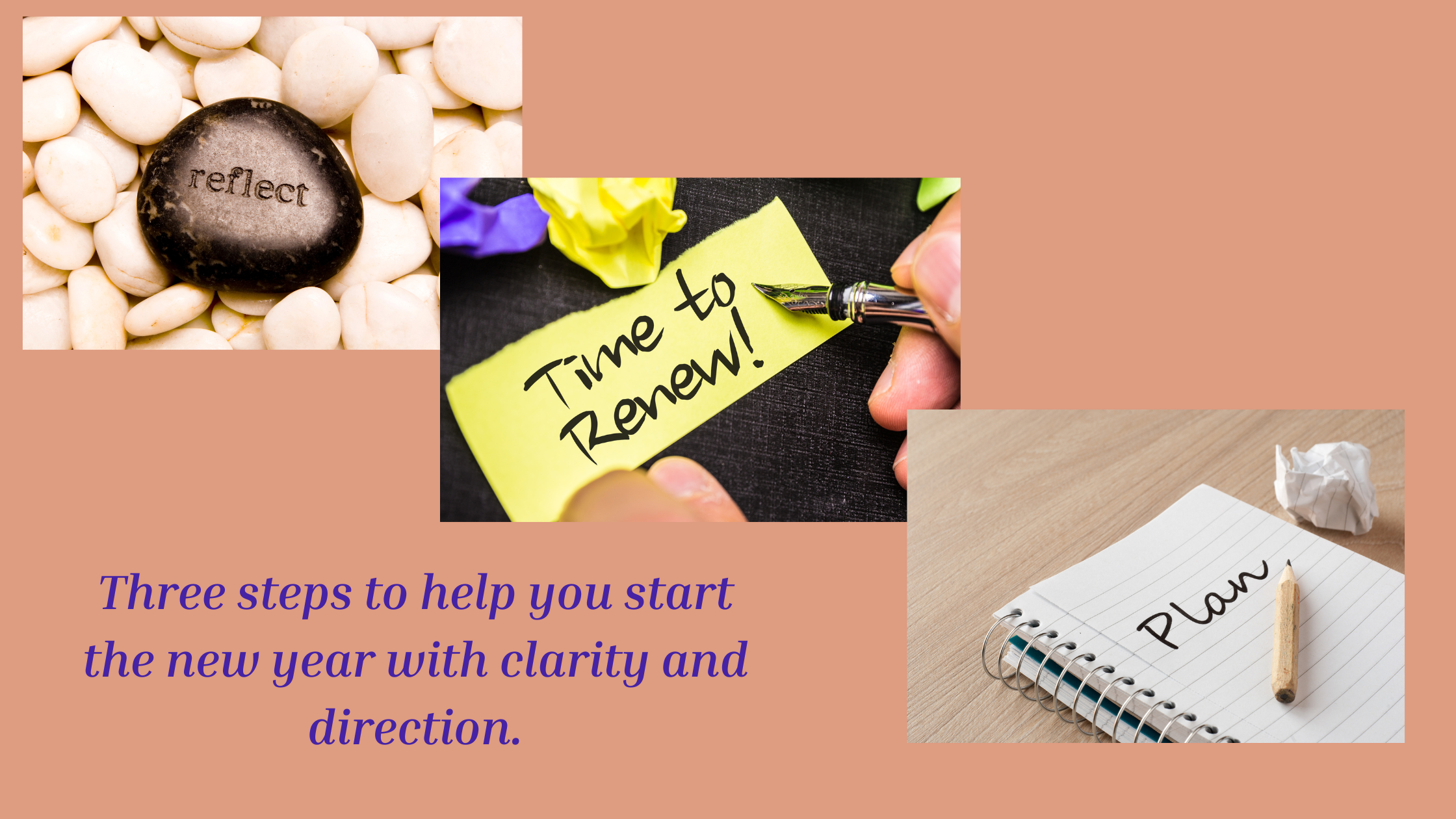
Reflect, Renew, Plan

Happy New Year! You probably aren’t quite ready to think about heading back to school yet, but before your super-busy work schedule takes over your life, I thought I’d offer some ideas for how use the remaining time to get the year started in the best possible way.

When there is so much pulling at you and demanding your attention, it is all too easy to push forward without giving yourself time to think. That way leads only to rapid exhaustion with no sense of what you have accomplished or where you want to go. If you can’t do it before, schedule time on or after your first day back to anchor yourself, and you will be more productive and more likely to achieve the results you want by the end of the school year. Helen Tupper and Sandra Ellis offer a musically oriented 3-step approach in explaining How to Create Your Own “Year in Review.”

  1. Press Pause – Although January 1 is not the beginning of the school year for educators, the first half is broken up by many holidays. Learning tends to go into high gear after the winter break. Pause is such an important step before starting anything, and it’s a critical step now.

The authors say to use this time to answer key questions. Ones that can work for us include:

  • What was my biggest success?
    • What made it happen? What can improve it?
  • What didn’t work?
    • What did I learn from that?
  • What can I realistically achieve by the end of the school year? (Make sure it connects to your Mission and/or Vision.)

Take the time to write down your answers. This is an important step as helps you to focus.

2. Play it Back This is where having a mentor really helps. If not a mentor, choose a librarian friend. Schedule a time when you can share your answers to further clarify your thinking. Did you minimize your successes? Miss a key success?

Add some questions. Among the authors’ suggestions are: What was most fulfilling? Most frustrating? You might also add:

  • Where was I afraid to step out of my comfort zone?
  • What was the most useful thing I learned from a print or digital source?
  • Who enjoyed working with me on a project?

3. Fast Forward –Review what you discovered in the first two steps. Use your results to create an action plan. Again, start with some questions. Two of the authors’ suggestions I like are: “What habit will I commit to? What is one mistake I won’t make again?”

I would add:

  • Who can I target for a cooperative project?
  • What do I need to do to inform stakeholders of what the library has accomplished?
  • What do I need to do to move the library’s vision closer to reality?
  • What’s my plan for it?

With the clarity this reflection gave you, you are now ready to start the last half of the school year. Be the leader your teachers and students need you to be, and I hope you have a great second semester.

Managing Emotions During Difficult Conversations

I recently gave a talk at my state’s School Librarian conference on managing difficult conversations. It doesn’t take much for a situation to get out of hand when intense emotions become involved. Our emotions are powerful forces, and if we’re not conscientious, they can work against us.

When we are having a difficult conversation, our emotions can reduce our ability to think logically, hear what the other person is saying, and manage the discussion. Since a negative outcome can hurt a relationship we worked hard to build, it’s critical that we keep our emotions out of these talks.

LaRae Quy recognizes the difficulty in managing your emotions and offers these four tips in her blog post, How to Have Hard Conversations Without Emotions Taking Over:

  1. Repeat the statement as a question – Take the statement that is creating a rise in emotion for you and reframe it as a question. You give yourself time to think as well as a chance to hear why the other person made the choice. For example, a teacher is using your desk while they are in the library. After you bring it their attention, and they say, “It’s the most convenient space available,’’ you can respond with, “Do you need a convenient space in the library?”  This does two things. You put a pause before you next speak and have turned your attention outward onto the teacher with an opportunity to hear what they need rather than venting your anger at your space being violated.
  2. Speak in soothing tones – This doesn’t mean a sweet, artificial tone, but rather speaking calmly. People can hear the tightness when anger creeps in. Consciously using a reassuring timber has the benefit of calming your emotions and that of the other party as well. Quy recommends noticing your tone of voice when you are stressed and working on calming it down. In regular conversations practice using different tones to convey your meaning. As you become more aware of how you use your tone of voice you will become better at it.
  3. Employ active listening – This works in all situations. People need to know you hear them – and see them. Be observant of body language and the many non-verbal ways the other person is communicating.  It helps you recognize what they are saying and develops your empathy. Quy explains that “Empathy is the ability to recognize, understand and share the thoughts and feelings of another person.” When we use this skill, relationships develop deeper connections, even during more difficult moments.
  4. Gather significant information – If you are initiating one of these conversations, you have time to find out more about the person and what might be happening outside of the circumstances that created the difficult situation.  You may discover there was a reason for whatever triggered their behavior. This is especially true for students, whose Emotional Intelligence is still developing. Student behavior is often triggered by issues out of your control – or your purview. If you are seeing something that concerns you, speak to teachers and seek out the guidance counselor to learn what you can.

Difficult conversations are going to happen. If we cannot avoid them, we have to know how to manage them. The more you learn about managing hard conversations, the better you become at building and maintaining relationships.  And as we know – we are in the relationship business..

Do You Know How To Read the Room?

Reading the room is a useful skill that is related to our ability to build and maintain strong relationships. It can mean knowing your audience when you make a presentation or understanding the person you are having a conversation with. In his post, Axios Finish Line: Read the Room, Jim VanderHei presents seven hacks to help you get better at this essential reading skill.

  1. Back to School – By this, VanderHei is referring to “fine tuning your situational EQ” and being a student of observing and listening to people in whatever setting you’re in. Notice the body language and tone of voice of the person (or people) you are talking to, as well as what and how they are expressing themselves. Are they relaxed or tense? Can you sense what they are feeling? Is the emotion very strong?
  2. Case the Room – Know who is there and who is listening to you. You don’t speak to teachers and students the same way, nor do you bring them the same information. The better you know who you’re speaking to, the better you can give them what they are looking for. You may find you change what you say when you know more about your audience.
  3. Shift Your Eyes – Whether in a group or with one person, train yourself to really look at people. Be aware of them and what they are saying and not saying. Don’t focusing inward. This is not the time to wonder about your dinner plans. Use what you are learning about them to make a connection. Practice at every opportunity.
  4. Watch Faces – Thanks to Zoom, many of us have gotten better at this. Whether online or in person, watch the actions and reactions of the people in front of you. Who seems to be paying attention? Who isn’t? If you are leading the meeting, you can ask questions of individuals to bring people back. But don’t start with those not paying attention. You’re not trying to call them out; you’re trying to get them involved.
  5. Let ’em Talk – Give space for others to speak. Be mindful of whether you are dominating the conversation. As VanderHei says, “if you are doing most of the talking, you are losing.” This is true even if you are the presenter. You need to involve your audience so they know their questions will be heard and answered. (This is my biggest challenge and one I continue to work on.)
  6. Diffuse Tension – In the daily interchange, don’t let conversations get heated. You are getting into a power struggle, and even if you win—you lose because you will have had a negative effect on the relationship. An effective cool-down sentence is “I appreciate your perspective on this.” You can add that you will think about what they’ve said and hope they will do the same and come back to talking about it later.
  7. Take Notes – VanderHei suggests you do this literally by jotting down your observations both during and when the meeting is over. It helps you stay focused as well as recall what happened. He also recommends taking mental notes while the interaction is occurring. This will aid you when you record what you “read” and make you better at doing it. He concludes by saying, “Think of the room like a book. Read the words – and between the lines.”

One of the most important times to read a room is when you are giving a presentation. Whether a faculty meeting or a conference, this can be a great way to increase your leadership visibility. To be effective, you’ll not only want to know your topic and what questions it will answer, but you need to be aware of your audience. This means knowing who is there to see you, why they might have come, as well as who you know – and who you don’t.

Reading the room is a powerful skill for leaders to master. It will help you avoid tension and misunderstandings because you will have taken the time to see and understand where your audience is and what they might need from you. When you consider your audience, you’ll look for and find ways to connect with the people you are talking to. And by doing this you will help them retain the ideas, techniques, and concepts you are bringing.

Questions Can Power Your Leadership

Good questions are more important than good answers. Sounds contradictory – we’re praised and lauded for the right answers. But answers only show you have mastered a body of knowledge; you know what is already known. Far more important is the ability to generate new questions which show the depth of your interest and involvement. It is the questions that lead to new knowledge.

Because of this, questions can strengthen your leadership. In Fred Ende’s post, 4 Questions to Make Leading and Learning More Effective, it is clear where this can be a valuable tool that also improves your relationships. Here are his questions, and why they work.

  1. What’s on your mind? – This gives you or the person you’re talking to a chance to reflect, which allows us to slow down. Far too often we have so much happening, we don’t take time to focus on what our concerns and goals are. We gain a lot when we ask it of others. To be considered as valuable and indispensable to someone, we need to be able to meet their needs and wants. Knowing the curriculum and the aims of the principal, we can help teachers attain these. Ask this of a teacher, and you are likely to find new ways to collaborate and connect.
  2. Why do you think this is urgent or important? – Ende says this is a great follow-up question because, “it builds the connection between the ‘what’ and ‘why.’ This also helps you understand where they are. You can then move forward on helping them address the need. It is the question beyond the Eisenhower Matrix which asks you to identify what things are urgent and which are important. Based on the response you receive, you can better decide what needs to be done next and have a better understanding of what is causing your teachers pressure.
  3. What do we think would happen if …?How you finish the question obviously depends on the first two answers. It encourages deeper thought about the issue. Ende says to note what is more important than the question is the word “we.”  After letting the other person share, you have now introduced yourself into the discussion. You are now showing your interest and support while quietly collaborating.
  4. How can I help? – With this last question, you have moved center stage. You have moved from “you” to “we” to “I.” This is where the gold is. You started by asking a simple, engaging question, and now because you have listened, you are positioned to respond to their need. One you might not have been aware of. It’s possible the person has no idea how you can help, but asking the question is an important start. You may have some suggestions you can share if they are open to it. Thus, the collaboration begins and you are becoming invaluable to the teacher.

You are not always asked for help. Many times teachers and administrators don’t know all we can do for them. These four questions open a vital dialogue and reinforce the premise that people don’t care what you know until they know you care. Where you build relationships, you create opportunities for leadership. Take the lead by asking questions and grow into the answer.

Build Your Self-Awareness

How self-aware are you?

Have you ever been out walking and caught sight of your reflection in a store window? Were you surprised to see what you looked like? As the English translation has it from Robert Burns’ To a Louse, “Oh, would some Power the gift give us/To see ourselves as others see us!” We have an image in our heads not only of how we look, but, more importantly, how others see us as a person. One of the challenges as a leader, is being okay with not blending in. A leader has presence and embraces values and vision that are part of who they are – and that makes them stand out.

Do you know how people see you? It’s important to know. LaRay Quy provides three techniques for developing self-awareness and becoming a more impactful leader in her post, How Self-Awareness Allows Leaders to Make a Greater Impact:

  1. Eliminate Inconsistency – Quy says, “how we see ourselves is often an illusion, and it can be dangerous if we misjudge how we come across to our colleagues and supervisors.“ In addition, when our actions are different from our thoughts/beliefs a cognitive dissonance is produced. This causes stress and leads to a lack of confidence. No one follows a leader who isn’t confident. To help, ask friends or colleagues you trust describe you. Does the description match your self-perception? Start noticing where/when the inconsistency shows up. Ask yourself what caused it? What would have been a better way to respond.
  2. Identify Triggers – You may have noticed in the past situations that caused you to respond inconsistently with your values or to hide your feelings. According to Quy, trying to use will-power to prevent yourself from reacting to these triggers doesn’t typically work because your emotions are involved. Again, she says to check in with those trusted friends about how your reactions impact others. If you want some external information, consider taking one of the personality tests such as Myers-Briggs to help you understand why you do it. Understanding yourself is at the heart of self-awareness and can lead to changes and new habits that better support you.
  3. Live Authentically – This is the ultimate goal – being the same person people meet, no matter where they encounter you. It does require courage at times. When you leave your comfort zone and want to succeed in a new situation, it is tempting to try to fit in. But you will be far more successful by being who you are. Yes, you make yourself vulnerable by being self-aware and authentic. But leaders are not wishy-washy. They are who they are. And that’s why people count on them.

Self-awareness is an underappreciated and powerful leadership tool. Your confidence in being the same person all the time inspires others to do the same. It empowers them to take risks and become leaders themselves. And as the saying goes, “A leader’s job is not to create followers. It is to create more leaders.” Be yourself – no one else can do it.

Tap Into The Power of Adversity

I have come to see that everyone has something stressful and negative going on. I hear of emotional, physical, or financial crises in the lives of friends and family. Professionally, librarians face scary and intimidating situations at work. So, what can we do?

We can slog our way through it. Use various techniques to keep a positive mindset. Work on self-care. While these are good ways of coping with what we face each day, we can take a step beyond them. Years ago, I learned the term “Chopportunity.” Blending the words Challenge and Opportunity, it serves as a reminder that a challenge can provide an opportunity. Knowing the term is great but translating it into action can be a challenge in itself.

LaRae Quy explains how we can accomplish this in This Is How Adversity Can Improve the Way You Think. She notes we tend to say, “when things return to normal,” but Quy asks if you really want to return to what was. This is what a Chopportunity it is. You have a chance to have things be better than they were. To do so requires focused thinking. Quy gives these four steps for doing so.

  1. Find the Philosopher Within – To do so, Quy says you need to know what is true, and how you should live your life based on what you believe to be true. As librarians we know how to find out what is true. Your core values tell you how to live your life based on that. Socrates said, “the unexamined life is not worth living.” If you are unsure of exactly what this means for you, consider writing your eulogy. What would you want people to say about the life you led? Are you living a life that would earn those words?
  2. Look for the Opportunity in Every Crisis – It’s the Chopportunity. Quy says the Chinese character for Crisis and Change Point are the same. Every crisis marks a change. What do you do about it?  Think of what you would want to change about your job and what you can do to make that a reality. In your school, this may be the moment you decide to step up to leadership because of the ongoing challenges in other libraries. You could start some monthly workshops for teachers.  On a larger level, you might marshal your resources from your state and national associations and make your presence known in the fight to defend intellectual freedom. As Gandi said, “Be the change that you wish to see in the world.”
  3. Take a Lesson from the Stoics – Quy explains the Stoics would consider every possible adversity. Senecca advised Romans to “Rehearse your adversity in your mind: exile, torture, war, shipwreck.”  It seems a scary thing to do, but it gives you the opportunity to prepare for the worst, at least mentally. Consider contingency plans for the possibilities. This gives you the ability to react rationally rather than in a panic when a crisis occurs. The idea Quy says is, “when you prepare for adversity, you diminish its bite when it happens.”
  4. Hunt the Good Stuff – Whatever your favorite news source is, the oft-quoted saying “if it bleeds, it leads,” is true. I have switched to music when I’m in the car because listening to the news makes me anxious. Apparently, research has shown that it takes five positive items of information to overcome a single negative one. You may have to work to find the good stuff, but it’s worth it.

Life is not easy, but it’s what we have. What we do with it, how we choose to react when things go wrong or the unexpected happens, is up to us. Consider what how you can grow as a leader – and a person – when you learn how to use adversity as a step to the next great thing.

Fighting Fatigue

Is there anyone out there who doesn’t feel tired – mentally and physically – most of the time? It seems we are all in a state of chronic exhaustion. It may have started with the pandemic, but since, it seems to be unending. And yet being tired is no more of a useable excuse than not having time. The subtitle of my book Leading for School Librarians is: There Is No Other Option. This means tired or busy – we must be leaders.

As pressures on school librarians increase, so does the amount of time required to do our jobs. Working while exhausted means it’s hard to give our best. Not to our students. Not to our teachers. And not to our family and ourselves.

We can’t afford to be in a state of perpetual fatigue, but how can we change that? Art Petty recognizes the challenge and presents seven ways for dealing with it in his blog post Leadership Fatigue Is a Thing –Make Time to Recharge. Here are his recommendations and my comments:

  1. Center on Your Purpose as a Leader – Think of this as your personal Mission Statement. Why are you doing what you do? Perry asks you to think of how you want to be remembered at your retirement party. Create your personal Mission Statement (different from your professional one) and print it out to remind you of the value you bring. Mine is, “I reflect the greatness I see in others and, when appropriate, help them manifest it.”
  2. Adjust Your Attitude Through Beginner’s Mind Thinking – Step back and look at what you are doing as though you were just starting on the job. Do you remember? That was a time when all was possible. One technique that can work is to walk into your library as though you had never been there before. What message is it sending? Is there anything that seems off? Does it reflect today or when your last organized it?
  3. Treat the Workplace as a Living Laboratory and Start Experimenting – Having seen the library with fresh eyes, what one small thing can you change or add? Look for ways to elevate what’s there, even if you like what you see. If you think everything is fine as is, you will never work for something better. Focusing on doing something different gives a lift to your mindset.
  4. Commit to Creating Value at Every Encounter – Ever have a quick encounter at the grocery story with someone in line that leaves you feeling a little more energized after? Maybe you gave or received a compliment. Maybe someone asked about a product you purchased. In addition, if you keep this in mind as you interact with others, you will be “seeing” them, which builds connections and makes your workload feel somehow less stressful.
  5. Get Physical to Rejuvenate the Mind and Body – This one is my favorite. If you’ve read this blog for a while you know – daily walks keep me going in so many ways. Pick your favorite way to move — dance, yoga, weight training or whatever you enjoy. If you like it, you will do it. And doing it brings all kinds of benefits.
  6. Reinvent Your Career Without Resigning – Instead of thinking a new job is the solution to the challenges you have, consider ways to improve or change what you are currently doing. Is there a new program you’ve been aching to launch? Is there a school activity you’d like to be a part of or a course you can teach? Or how about joining a state or national committee. Finding something new to look forward to has amazing regenerative properties.
  7. Do Something Completely Different – Petty took piano lessons. I know many librarians who quilt. I took a drawing course. Maybe it’s time to switch from being a reader to being a writer. Doing something solely and completely for you can be a freeing and energizing experience.

Will any of these magically give you energy? Probably not. Will you still be tired if you do all or most of these? Perhaps. But it won’t be that same draining fatigue that makes you feel you are on a planet with heavier gravity than Earth. Fatigued leaders are not serving themselves nor those that need them. Find things that give you a boost and keep you going.