Be Resilient and Persevere

It is a long-term truism that we live in a rapidly changing world. Keeping up with change is an ongoing component of a school librarian’s toolset. But the current speed of change is outrageous. From one day to the next there are so many changes from so many directions it is nearly impossible to keep up.

The stress level created by this is high and is a true test of your abilities as a leader.  Think of yourself as the captain of a ship dealing with safely navigating a ship in a wind-laced storm. As you weather these constant challenges, you must simultaneously review and sharpen your ability to persevere and draw on your resilience. These two in combination will help you to not only survive but thrive.

Danna Diaz in her article, Resilience and Perseverance: Keys to Effective Leadership in Schools, writes about the process of strengthening your abilities in these two areas by defining them then presenting strategies to do so. As always, I have added my comments to more firmly root them in the daily work life of school librarians.

Definition – According to Diaz, “Resilience is the capacity to recover quickly from setbacks, while perseverance is the steadfastness to stay committed despite difficulty.” We are all familiar with the pivoting that has been necessary in the past years. Fluctuating situations require us to be even more nimble in making changes to meet new requirements. Our perseverance is tested as we hold true to our commitments and Mission in the face of the ongoing challenges.

Building resilience in leadership – To build this necessary component, you need to have a growth mindset and a belief that a potential or possible crisis can be turned into an opportunity. A blog post I wrote on May 27, 2019, Crisis? No! It’s a Chopportunity, details the many ways you can use an apparent disaster into a chance to strengthen and grow the library. When presented with a challenge—look to your Mission and Vision to find possibility.

The role of emotional intelligence – Your ability to create a Chopportunity relies on your awareness and understanding of what motivates others (whether positively or negatively). For example, if you have been informed of a drastic cut in your budget, the opportunity you present to your principal needs to be based on how well you know your principal’s needs, wants, and goals and your ability to show them how your work supports what they are trying to do.

Perseverance: The long game of leadership – Diaz says, “While resilience helps leaders recover from setbacks, perseverance ensures they remain committed to their vision.” Your Mission Statement, combined with your knowledge of what a your school or administrator needs, guides you in creating the opportunity or recommendation you present. Your Vision keeps you fighting to see it through. It is why you write a Vision in the present tense. While it isn’t the current reality, it is the aspiration that should inspire you to hang in there and bring it closer to existence.

Strategies for building resilience and perseverance in schools

  • Foster a culture of collaboration and support – You are a relationship-builder. Use the relationships you have with teachers, students, and administrators to further your plan. They have come to count on you to deliver on your promises.
  • Model self-care and wellness – Never neglect to take care of yourself. Relying on Persistence and Perseverance without including self-care leads to burn-out. In taking care of yourself, you are showing others that much can be accomplished while not losing yourself. It’s another aspect of your leadership.
  • Develop a data-driven mindset – We always need the data, but I’d go one step further and remind you to look for emotional context to bring to the data. Decisions are rooted in emotion substantiated by data and logic. Give them a reason to care about the data you present.
  • Build strong community partnerships – Expand your thinking to find and work with others who can help you in strengthening the library in challenging times. Parents can be a good source. If you have parent volunteers, they know your value. Parent-Teacher associations can also be helpful as can relationships with the public library.

Diaz concludes by reminding us of the ripple effect of doing this work: We will inspire resilience and perseverance in others. Remember, the job of a leader is not only to have followers, but also to create other leaders. Times are likely to always be tough in one way or another, but so are you.  You have or are building a track record and can thrive. Be Resilient and Persevere. So many will benefit when you do!

Have You Found BlueSky?

The last day of February was a strange day for me. To fully participate in the Economic Blackout in the United States, I didn’t shop anyplace or go on social media. Depending on what you heard and your own feelings, some people didn’t feel the Blackout included social media. Others shopped only in locally owned locations. But overall, people opposed to what is happening nationally found ways to register their protest.

Although I stayed off all social media, including BlueSky, you should consider it. I have been there for over a year and have seen it evolve into an excellent alternative to X. Eventually, it may even become an alternative to Facebook. According to their own website: Bluesky is a social app that is designed to not be controlled by a single company. We’re creating a version of social media where it’s built by many people, and it still comes together as a cohesive, easy-to-use experience. We’ve done this by building Bluesky on the AT Protocol, an open source toolbox for building social apps that can all talk to each other.

In his Knowledge Quest Blog post, Why BlueSky: or, “So Your Favorite Social Media Site Is Owned By an Oligarch,” Steve Tetreault discusses reasons for leaving X and what BlueSky offers. These are his points along with my comments:

Departing the Troll Palace

Twitter was a great place to communicate and build your vital Professional Learning Network (PLN), but at some point you must accept what has happened over the past few months. We are known by the company we keep. Are you comfortable in being in Musk’s company? Tetreault notes when BlueSky opened to the public in 2024, it was limited in scope and abilities. “New features have been added. And Bluesky has recently seen a massive boom in users. Millions of folks have migrated over.”

You Can’t Take BlueSky from Me

As Tetreault says, “Bluesky is free for all users. And it is decentralized, which means it is incredibly improbable that anyone can come along and buy it to use as their own propaganda machine.” For me, these two are crucial benefits to me. I felt I could no longer be a part of an online community that spewed hatred and was opposed to the underlying principles of democracy. As a school librarian, I am committed to Intellectual Freedom and free speech. BlueSky appears, so far, to agree with this.

A Big Drawback

As noted earlier, BlueSky is still evolving and has some limitations. Unfortunately, as of yet, you can’t set your messages to “Private.” This may change in the future. Some people are concerned about that. Tetreault does point out that it is easy to block people and do so extensively. “It effectively erases any connection between you and the blocked user in the digital space. Once blocked, they won’t see your posts, not even if they quote you. Additionally, Bluesky allows you to remove any mentions of yourself from conversations, as well as your quotes from other users’ posts.” You can see someone’s blocked list, but if I block them, I don’t care if they know.

Moderation

This is one of BlueSky’s strong points. It’s easy to report problem posts and those who harass. Trolls who first went to BlueSky when they learned of people moving to it kept getting “reported, blocked and removed.” Eventually they left.

A Big Draw

The interface feels like the old Twitter. There were many features BlueSky didn’t have at first but in the last few months they’ve added the ability to post images, GIFs, and supports link embedding and video uploads. Most of what was available on Twitter is now at BlueSky. And I completely agree with Tetreault, part of the fun is watching it grow and being an early adopter. The team there is continually making upgrades.

No Algorithms

Love it or hate it, being without can be very freeing. Instead of having the site decide what you say, you make selections such as School Librarians and School Libraries feeds. You can also check your Following and Popular with Friends.

A Growing Community

Tetreault recommends BlueSky’s newest feature, Starter Packs. These help you make and share lists of users who have something in common. Try the ones for School Librarians and soon you’ll be connected to new folks with similar goals and challenges.

If you are as repulsed as I am by Musk and his minions, consider making your move to BlueSky. It’s kind of exciting being part of this growing online community.

Lessons in Leadership – From Drawing

Being a leader—and always learning to be a better leader—is an essential part of our job. In today’s world, we need to embrace AASL’s Vision, “Every School Librarian is a leader; Every learner has a school librarian.” When we aren’t leaders, our learners are more likely to lose their school librarian.

The stress school librarians are facing while trying to do their jobs is taking away their joy, replacing it with fear. It’s time to turn the page. We must be interwoven into our school community and the outside community as well. We must become like Velcro, totally attached. Someone who would be unthinkable to eliminate.

After spending too much time focusing on work and losing touch with what was most important, Joshua James, co-founder of 8 Bit Content, made the conscious decision to spend more time with his family and children. And while coloring… he learned important lessons about leadership. In his article, 5 Leadership Insights from Drawing with My Kids, James provides us with an idea of not only in how to be better leaders, but how to restore balance in our lives. These are his insights, with my thoughts on how we can best manifest them:

  1. Perfection Is the Enemy of Progress – James noticed that for his children “their best work isn’t the one with the most perfect lines or flawless details. The drawings they’re most proud of are the ones they finish.” We can’t be perfect. Neither can our students. Consistency and growth bring progress. You will smooth out the wrinkles later. Everything we complete, everything that goes well, if not perfectly, is a win. If you need help to see your progress, keep a Succes Journal to record all your wins, big and small.
  2. Frustration Is Part of the Process – Sometimes it feels as though you will never get it right. But that… is part of the process, part of learning and leading. James says, “How we respond to this frustration is critical to how we lead. By taking a step back, reflecting, and giving ourselves space to reframe a situation, we can model healthy coping strategies for our staff and students.” Being emotionally resilient means we are patient when needed and can adjust our perspective. We allow it in our students. We must allow it in ourselves.
  3. Plans Don’t Always Go as Expected—and That’s Okay – In my experience, if it’s a large plan, it will rarely go completely as expected. I end up learning – and growing – along the way. It’s getting to the desired outcome that matters. As Ursula LeGuin famously said in The Left Hand of Darkness, “It is good to have an end to journey towards; but it is the journey that matters, in the end.” Learning doesn’t occur in a straight line. We face a block, we pivot, we find a new way, a work-around and learn something new along the way.
  4. Unplug to Be More Present – We are attached to our devices and our to-do lists. If you are doing that at work and home, you have a higher chance of burn-out and overwhelm. On top of that, you are also likely to become short-tempered and miss important subtle messages we get from students, teachers, and our family. Make time to get away from your devices. My salvation is taking walks. Yours can be anything you enjoy. Block it into your schedule. You will be a better leader and person as a result.
  5. Surround Yourself with Passionate People – Being around his children, sharing what they loved was a game changer for James. While we work to have good relationships with everyone (teachers, students and administrators) because all are served by the library, you need to connect with people who are feeling positive about what we do and why. We don’t need to buy into the views who only see gloom and doom. Reach out to your PLN not to mention friends and family. My life Vision includes “living with passion and purpose.” I choose to be close with those who are passionate about what they do. It motivates me further, enriching my life and well-being.

Bring balance into your life. Reconnect into your passions and your purpose. Remember why you became a librarian and what you want to achieve. As you internalize these five lessons, you present a more positive face to the world, making it easier to build more connections and become that Velcro to your school and outside communities.

Don’t Kill Time – Use It!

Most of us have a full plate. Our responsibilities are continually being added to. Our to-do lists are long. As soon as you cross something off, two more items take its place. And what about all the moments when we can’t get to what’s next on our list? We have doctor’s appointments, cars that need repairs, and why are the lines at the supermarket so long? This was supposed to be a quick trip.

And it seems to take forever before it’s our turn. If it ever is.

These outside interferences with our workflow and attempts at time management are frustrating, but there is something you can do. In his article Three Better Ways to Think About Time, Mark Sanborn offers you a way to be more productive when they occur. These are his recommendations along with my usual tweaks for our world:

  • “Fill Time” to “Fill Minds” – The first shift is from going from thinking “How will I fill this time?” to “How can I fill their minds?” Our goal is to prepare students for the unknowable future by guiding them into becoming lifelong readers and critical thinkers capable of navigating a rapidly changing world. Think about the short- and long-range outcome for an upcoming lesson you are planning and how it will impact your students, help the teachers, support administrators. You’ve been giving the time – use it to fill their minds.
  • “Kill Time” to “Mine Time”– Instead of thinking of how to kill time in the pockets of time we suddenly have (sitting in traffic, waiting in line), take ownership of it. You get so little time for yourself. Use these unexpected—and unchangeable—moments as a time for self-care. Read a book. Call a friend. Reflect on what’s working in your life. Count your successes (this is a favorite of mine). If you’re able, consider taking a short nap. As Sanborn says, what is important is extracting value from what you were considering dead time.
  • “Make Up for Lost Time” to “Make the Most of Present Time” – Sanborn notes we often try to make up for lost time. Again, he suggests we shift our focus.  Since the past can’t be undone, what can we do in the future? Be aware of what distracted you or wasted time in the past (doom-scrolling, anyone?) and do things differently in the moment. Know what time of day you are most productive. If you are like me, the mornings are best for you. Come in a bit earlier – and don’t turn on the lights in the library. That way no one will know you are there. Get a lesson plan done or other such task that requires your best. Then turn on the lights and officially start your day. Making the most of the present lessens the stress of the future.

Sanborn ends his article with this, “Moments are the building blocks of time, and when we treat each one with care, we’re not just making better use of our hours—we’re creating a life of purpose and fulfillment.” And that is why we are librarians and leaders. We seek a life of purpose and fulfillment. Our time and attention are precious, and the more we can choose how we use them, the more successful we are.

Getting Others to Work With You

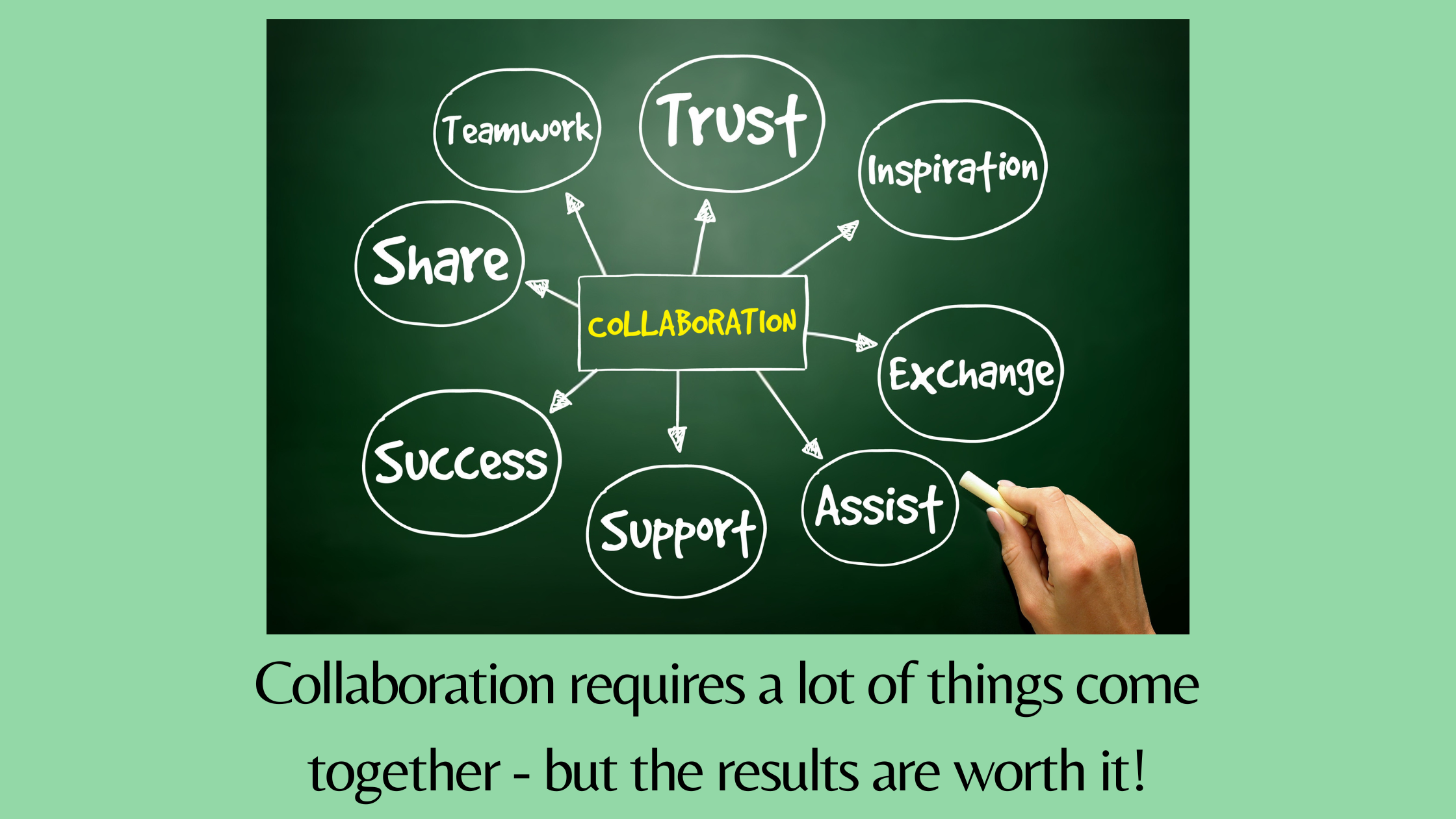
You are only recognized as vital to the school community when others know what you do – not what they think you do. And best way to make certain you’re better known and understood is to have a cooperative or, even better, a collaborative relationship with teachers. Then a peer becomes and ally.

With some faculty members, it’s easy. Others use the library as little as possible. In elementary school, they drop off their students and depart for their free period. In the upper grades, they bring their class to complete an assignment without you and don’t want your help. Somehow, you need to reach these uninterested teachers. If your past suggestions have been ignored, what can you do?

In her article, How to Get Genuine Cooperation from Difficult People, LaRae Quy provides a five-step approach for those in the business world to solving that challenge. Here are her steps, with my suggestions for those of us in education:

  1. Remember, our first reaction is to not collaborate – The teachers with whom you don’t have a natural connection likely feel they know their job and don’t need you to help them to do it. Quy’s suggests reaching them through a common interest. What do they care about? Email them about a resource or article that focuses on it. Follow up with one that says you hope it was helpful. Offer to work with them on a learning project on the topic. Ask them how they would like to structure it. Accept their approach, adding, as necessary, “we could also…” as a way to show how you can support them.
  2. Control facial responses – Not only do we communicate verbally, in print, and digitally, we also communicate silently with our body language. Our facial expression sends a message. Is your concern, disinterest or disdain visible? You don’t want your face to show that you think the teacher’s approach is not nearly as productive as it could be. Your negative silent message will carry a greater impact than your verbal positive one.
  3. Share personal stories – No one knows better than librarians how stories build connections. You might share memories about learning that topic when you were in school and any impact it had on your life. Figure out your story in anticipation of this conversation to keep it natural. Hopefully, your story will bring out one from the teacher. Now you have a new common interest and connection you can build your relationship on.
  4. Refuse to let it escalate – Should you get a strong negative response to any of your suggestions, keep from answering in the same manner. If you do, you have lost the possibility for any cooperation now or in the future. Quy offer saying this as an alternative, “I see how you feel (or think), but here is another way to look at the situation…” Start by acknowledging their reaction. It’s not easy to do in the moment, but knowing the importance of keeping your cool will help. (And work on controlling your body language and facial expressions.)
  5. Appeal to higher moral ground – Find a shared common value and speak to it. For example, you could say, “We both want our students to be successful not only in their studies but in becoming lifelong learners in an ever-changing world.” Common beliefs build connections, and connections build relationships.

The first time you try this with a teacher, it might not work and it may feel uncomfortable because it’s new. Collaboration might not come naturally for you either, but that’s not a reason to stop. Try again in a few weeks. Don’t give up. It’s too important. You can do it. You are a leader and have overcome obstacles before; you will do it again. The results – and the ripple effects to other teachers – will be worth it..

Get More Done in Short Sprints

It is great to have big goals, but when you try to take that first step, you may discover that instead of feeling excited, you are overwhelmed, exhausted, and drained. On a daily or weekly basis, it can be hard to believe you will ever get there. Once that belief gets hold of you, you may find yourself working less hard at achieving the goal, getting distracted or even giving up. So much for that goal, right?

Maybe not.

The secret to reaching that big goal is to break it down into manageable chunks and celebrate each step’s completion as you accomplish it. It’s how people write books, run marathons, make movies, compose symphonies, and start a new library program from scratch.

In his article, New Year, Strong Start: Launch 2025 With Momentum, Michael Watkins explains to a business audience how to put the Momentum Method of achieving goals in short sprints into practice. Much of his advice works well for us as we work on integrating our Mission into what we do each day and aim to see our Vision come closer to reality. His focus is planning by quarters. Given our schedules, I suggest monthly reviews.

These are some of his strategies along with some of mine:

Start by assessing your current situation and realities.

  • What do you ultimately want to achieve?
  • What small goal will be a step in that direction?
  • When can you realistically achieve it? One week? A month?

End of month assessment

  • How close did you get to your small goal?
  • Have any new opportunities and/or threats surfaced during the month? What can you do to address those?
  • What do you need to incorporate into your planning going forward?

Celebration

  • Remember getting stars for good work in elementary school? Find a way to celebrate your achievements. You can keep a chart and make notes on what worked (very helpful for seeing on tougher months), purchase flowers, or choose another treat you enjoy.
  • Make the star (or other memento) visible so you see it regularly. The reminder will leep you going.

Reflection

  • What did you do well? What spurred you on?
  • Where did you falter? Why?
  • What have you learned from this first sprint?
  • What is your next small goal.

Step by step you will work your way closer to that really big goal. Each small goal —and success—empowers you to keep going and helps you during the times when it feels too hard and you wonder why you set the goal in the first place. Because the goal is attainable, and you are getting there.

You set a goal because it matters to you. Yes, difficult times pull at our focus and big goals can feel daunting, but when you break it down, enjoy each success, you get closer and, like a true leader, inspire those around you. Short sprints can allow you to win the goal marathon.

Feel Well – Do Well

The old expression “Make time to smell the roses” is about slowing down to enjoy what’s around us. It is also, in fact, a prescription for improving your mindset and your productivity. Much has been written about the importance of self-care and its effect on how you feel about yourself.

Have you noticed when you go outside, your body posture undergoes a slight change? Your shoulders go back, and your vision seems to expand as you leave the confines of indoors and screen viewing. These outward physical changes are the manifestation of the chemical changes going on in our bodies. The effects of the chemicals our bodies produce can be negative or positive. Having too many episodes of negative chemicals flooding out bodies can affect our short- and long-range health.

Not surprisingly, the converse is equally true. In her article Fuel Well-Being to Transform Your Leadership (email sign up required), Marlene Chism discusses different positive body chemicals and how we can produce them. She goes on to show how producing these chemicals regularly boosts the quality of our work.

It is wonderful to know that the following chemicals are within your power to produce:

Serotonin- keeps you calm and in a positive mood. It helps you as a leader by keeping you from mood swings and acting impulsively. You make better choices and stay focused. You produce Serotonin when you:

  • Exercise regularly – Choose something you like so you will do it. Incorporate it into your regular routine and enjoy the many benefits.
  • Practice gratitude – This can be a simple addition to include in your routines. It helps to maintain a daily record, digital or print, of what you are grateful for, but even taking a moment in your day can benefit your serotonin levels.
  • Walk in nature – Get out. Find a place to get outdoors, breathe fresh air and, hopefully, grass and trees. If this is a challenge because you live in a city, look for a park you can go to.
  • Get sunlight – Another challenge for workers with long commutes or during the short daylight hours (and cold!) of winter. Do the best you can when you can.
  • Eat serotonin-rich foods such as turkey, eggs, seeds and nuts – Yes, even your diet can support this. No wonder these are considered healthy foods.

Dopamine – The feel-good neurotransmitter. Low dopamine leads to a lack of motivation and tiredness. Feeling overwhelmed and easily distracted can be caused by low dopamine levels. When you have a good balance of dopamine, your creativity increases, and you have a sense of positive achievement. All so necessary for leaders in stressful times. You produce Dopamine when you:

  • Eat Omega-3 foods like fish – Once again, eating healthy is beneficial in more ways than you knew.
  • Exercise regularly – A double reward for exercising – dopamine in addition to serotonin. Your exercise needn’t be for very long. Consistency is what is important.
  • Get enough sleep Always a challenge in our over-filled days. Treat yourself as you do your children by developing a bedtime routine. Read yourself a story.
  • Listen to music – What music fills you up. Maybe lullabies can be part of your bedtime routine. Shift to music instead of news on your car radio, or at home. Or, after news…. This will give you that dopamine boost.  
  • Set and achieve small goals– Robert Collier said, “Success is the sum of small efforts repeated day and day out. Reaching small goals makes you feel successful. Poof —dopamine! When the goal seems out of sight, it feels unattainable and hard to sustain. See the small steps as the big win they are.

Oxytocin – Chism calls it the “bonding chemical.” It helps in making connections, feeling empathy, and building trust which are all essential for building relationships. You produce Oxytocin when you:

  • Spend time with friends – The importance of this explains why the isolation we experienced during the pandemic was so damaging to many.
  • Express appreciation – Say thank you and mean it. Send a text or email. Even better, send a handwritten message, being specific.
  • Get a massage – A great reason to treat yourself. You can be good to yourself and build your leadership bonding chemical at the same time.
  • Listening – We have recognized the importance of active listening. It’s hard for many of us. Practice it when you spend time with friends.
  • Share a meal – Go out for a meal with friends and include serotonin- and dopamine-rich foods to eat.

Knowing the importance of these chemicals in your body and how you can produce them can give new impetus to you and your leadership skills. It’s fun to think that being a great leader is a matter of chemistry – and feeling good.

What is Your Body Saying?

We are in constant communication. When alone, we communicate with ourselves by what we’re thinking, whether it’s a negative assessment, a positive mindset reframing, or a review of what is next on our to-do list. But non-verbal communication happens as we interact with others. And all the time.

A teacher greets you in the hall. At a barely conscious level, you access your history with them. Do you have a good working relationship? Is there one you are trying to establish? Have they been resistant to your previous outreaches? You also note how they look. Upbeat and happy? Tired? Annoyed?

While you are receiving this non-verbal message, the teacher is receiving your non-verbal message. Do you know what your body is saying? All of this occurs mostly without conscious thought, but that doesn’t make it less impactful. And when you begin talking, these non-verbal messages affect the response you are likely to get.

 As a leader, it’s important to be aware of how and what you communicate. I wrote about the many types and ways we communicate in my book, The Art of Communication: A Librarian’s Guide for Successful Leadership, Collaboration, and Advocacy (Libraries Unlimited, 2022) (currently less expensive in print than in Kindle!). I addressed our library world, of course, but the business world is also discussing the importance of understanding the many channels of communication we use.

Cheryl Robinson tackles the topic in her article, “What Your Body Language Says About Your Leadership Impact.” She notes, “Research underscores that body language has a greater influence on perception than verbal language alone. Positive, consistent body language reinforces trust and authority, while incongruent or negative cues may lead to misinterpretation or distrust.” Robinson goes on to detail how and what you are communicating.

Key Elements of Leadership Body Language

  • Body Movement – How are you sitting and standing? Fidgeting doesn’t send a leadership message. Sit up. Hands relaxed. A meeting with your principal or an upset parent is the most likely time to stay aware of this.
  • Posture – Shoulders back. Don’t slouch. It sounds obvious, but if you are not conscious of where your body is in space, you may he hunched over or low in a chair without realizing it.
  • Facial Expressions – Looking interested is important, but don’t overdue do it. Be animated, but not false. Faking it can be seen and negatively interpreted.
  • Space/Distance – Each of us occupies a physical space that extends beyond our body based on our size and culture. Too near is intimidating. Too far shows disinterest. Be aware of what you are doing and the (dis)comfort of those around you.
  • Gestures and Eye Contact – Open gestures are inviting, but too much gesturing is distracting, taking away from your message. You’ll seem frenetic and anxious. Maintaining eye contact shows trust and confidence (although be aware of cultures that consider it intrusive). Smiling genuinely is always positive.

I’d also add to this list: Listen attentively. Pausing before responding shows you paid attention to what was said.

Think of the best leaders you know. What do they project? How do they do it? Robinson states, “Maintaining a strong yet inviting presence is essential to conveying leadership effectively.” As leaders and librarians, we are in the relationship business. Being aware of what we are communicating enhances our ability to build these relationships. Know what messages you are sending and become a more effective and connected leader.

Joy Creates Success Creates Joy

You are back to work after the winter break. Does it already feels like a long slog to the end of the year? It does for many of us. Your students are feeling the same way. So are the teachers. How are you going to get through this? The blog post title is the spoiler alert, but it sounds unbelievable. What are you supposed to do? Sprinkle fairy dust on everyone?

It’s not that remote an idea. Think of the times when a lesson in the library really clicked and you could see the joy on students’ faces or just one student. Recall those moments when a student thanked you for something. Those isolated moments can be cultivated, and it’s important to know how to do it.

Administrators are now discussing Joy as the secret ingredient in education. Indeed “Centering Student Joy” was the theme of the December 2024/January 2025 issue of EL (Educational Leadership), the journal of ASCD (Association for Supervision and Curriculum Development). While the articles are addressed to administrators many can be translated for the library. The article, Joy: The Oxygen for Learning by Katie Egan Cuningham and Kristin N. Rainville is one example. Here are some of their ideas:

The Joy of Connection – The pandemic taught us that humans are social animals and thrive best through connecting with others. Among the ways we can foster connections are:

  • Prioritizing the “We” – You may already do some of this in “pair and share” activities. Give students sentence starters that incorporate “we” so they know you’re with them. Look for ways use more “we” sentences when talking with teachers.
  • Strengthen Relationships – Check in with teachers and students to follow up on how things are going, particularly with personal challenges they may have shared with you. Where appropriate show your vulnerability by sharing the ones you are facing.
  • Celebrate Challenges – Point out where some element of accomplishment has made a student ready for the next step. In talking with teachers, note how much resilience they have shown in dealing with life’s difficulties.

The Joy of Engagement and Brain-Friendly Learning – Be mindful of how learning occurs in different cultures particularly those who do so through storytelling. Incorporate opportunities within a lesson where they can share their stories with others.

  • Activate and Assess Prior Knowledge – Go beyond KWL (What I know/ What I want to Know/ What I learned) charts. The authors suggest you use anticipation guides with statements about the topic. Have students agree or disagree then explain their response. This lets you know what their prior knowledge on the subject is. At the conclusion of the lesson, they can talk about what changes they would make to their original assessment.
  • Consider Working Memory Demands – We have only so much space in our brains to deal with ideas and move them around. The authors suggest you “provide a series of shorter deadlines for longer assignments, break down tasks into smaller chunks, help students prioritize what’s most important, and incorporate multiple methods for presenting information.”
  • Motivate with Mastery – Mark the successful accomplishment of steps along the way to the planned outcome. Acknowledging mastery increases self-esteem, confidence, leadership skills and more. Everyone wants to feel that they are making progress. Help them feel this.
  • Opening Up to Joy – Tune in to the small joyful moments in your day. Be aware of what makes you smile. Take time to enjoy the beauty, wonder, and grace you observe whether it’s a sunset or birds in flight. Savor your food, especially the dessert. There’s potential for joy all around you. You just need to open yourself to seeing it.

When you start seeing the results from incorporating joy into your practice, schedule a meeting with your principal to share what you have learned. They will hopefully be aware of the importance of joy. Now you can take joy from knowing the principal sees you as being knowledgeable about current educational thinking and a leader.

Time for a Reboot

New calendar, new planner, new month, new year. The start of a new year is the ideal time to take stock of where you are and where you want to go. You have completed about half of the school year and had your winter break. It’s time to return to work.

What will that work be? Will it be a daily slog till the end of the year? That doesn’t sound like a leader. When your computer gets sluggish, you reboot it. Now it’s your turn for a reboot.

In his article, Warning: Upgrade Your Personal Operating Model, Arne Gast opens with the statement: Effective leaders continually adapt their priorities, roles, time, and energy practices to stay ahead of new realities. He then goes on to present numerous steps to the business workers on how to move their career forward. Much of his advice can be applied to our work life. Here are some of the key steps along with my interpretations for the library program.

Assess your priorities – What is your main purpose? Look at your Mission Statement. Does it still capture the focus of what your program needs to be? Tweak it if it doesn’t. Remind yourself of what is at the core of what you do. Let these priorities inspire you.

Do you fully understand your mandates? – Who are your stakeholders? Do you fully understand their wants and needs and how the library meets them? Remember these 4 Truths:

  • Every library, regardless of its type, is part of a larger host system.
  • Every library, regardless of its type, gets all its funds and resources from this larger host system.
  • Those funds and resources depend on the value of the library to the larger host system.
  • That value is determined by the larger host system.

What can you quit doing now? – This is a tough but important one. How many projects do you have going? What’s in your daily routine that drains your time and energy? Can any be reduced or combined? Or still better – eliminated? If not, look to plan these things according to your energy. Tackle the least important (ex: emails) at your least productive/creative time of day.

Are you focused on the work that only you can do? – We bring greater breadth and depth to the educational program. What are you bringing to students? Teachers? Administrators? How are you implementing your Mission Statement on a daily basis? What, if anything, do you need to change? You are the only librarian in your building. Let your unique contribution shine.

Who has your back? – Which teachers collaborate or cooperate with you regularly? Does your principal know and support the work you do? The underlying question is how successfully have you been in building advocates for the library? After you answer this, determine what do you still need to do. Create an advocacy plan for the remainder of the year if you don’t have one in place.

Manage your time – We’re tired of hearing this, but there are only so many hours in a day. The skill of time management is to maximize what time is available. (And this goes back to “Whaht Can You Quit Now). Have a basic schedule for when you do certain tasks, recognizing there will always be incidents that require immediate attention. The schedule helps you get back on track. Know your most productive times. Use the least productive time for routine, almost non-thinking, tasks.

Optimize your energy – No one can keep going without draining their inner batteries. You need time to recover and restore your energy. Incorporate self-care and time for family and friends into your schedule (yes, put it in that new planner(. You will be more productive and bring a more positive mindset to your work day.

Who are your real friends? – Who are the people with whom you can safely and appropriately vent? Who do you talk to when you are stressed out? In addition to your PLN (professional learning network) you should have another PLN — a personal learning network which should include family members and good friends.

Gast’s steps will get you ready to return and be the leader you need to be. I have one more step.

Make time for gratitude – It’s easy to be negative. So much is wrong in education and in other areas of our lives and the world. Focusing on that gets us nowhere. Make it a point each day to find three things for which you are grateful. It can be as small as a teacher thanking you for a website or app you found for them. Or it can be as big as getting a grant. You’ll find your spirits lift when you notice these moments

Positive leaders attract others to them. Use these steps to recharge, recommit, and be ready to step into success.

Happy New Year.