Lessons in Leadership – From Drawing

Being a leader—and always learning to be a better leader—is an essential part of our job. In today’s world, we need to embrace AASL’s Vision, “Every School Librarian is a leader; Every learner has a school librarian.” When we aren’t leaders, our learners are more likely to lose their school librarian.

The stress school librarians are facing while trying to do their jobs is taking away their joy, replacing it with fear. It’s time to turn the page. We must be interwoven into our school community and the outside community as well. We must become like Velcro, totally attached. Someone who would be unthinkable to eliminate.

After spending too much time focusing on work and losing touch with what was most important, Joshua James, co-founder of 8 Bit Content, made the conscious decision to spend more time with his family and children. And while coloring… he learned important lessons about leadership. In his article, 5 Leadership Insights from Drawing with My Kids, James provides us with an idea of not only in how to be better leaders, but how to restore balance in our lives. These are his insights, with my thoughts on how we can best manifest them:

  1. Perfection Is the Enemy of Progress – James noticed that for his children “their best work isn’t the one with the most perfect lines or flawless details. The drawings they’re most proud of are the ones they finish.” We can’t be perfect. Neither can our students. Consistency and growth bring progress. You will smooth out the wrinkles later. Everything we complete, everything that goes well, if not perfectly, is a win. If you need help to see your progress, keep a Succes Journal to record all your wins, big and small.
  2. Frustration Is Part of the Process – Sometimes it feels as though you will never get it right. But that… is part of the process, part of learning and leading. James says, “How we respond to this frustration is critical to how we lead. By taking a step back, reflecting, and giving ourselves space to reframe a situation, we can model healthy coping strategies for our staff and students.” Being emotionally resilient means we are patient when needed and can adjust our perspective. We allow it in our students. We must allow it in ourselves.
  3. Plans Don’t Always Go as Expected—and That’s Okay – In my experience, if it’s a large plan, it will rarely go completely as expected. I end up learning – and growing – along the way. It’s getting to the desired outcome that matters. As Ursula LeGuin famously said in The Left Hand of Darkness, “It is good to have an end to journey towards; but it is the journey that matters, in the end.” Learning doesn’t occur in a straight line. We face a block, we pivot, we find a new way, a work-around and learn something new along the way.
  4. Unplug to Be More Present – We are attached to our devices and our to-do lists. If you are doing that at work and home, you have a higher chance of burn-out and overwhelm. On top of that, you are also likely to become short-tempered and miss important subtle messages we get from students, teachers, and our family. Make time to get away from your devices. My salvation is taking walks. Yours can be anything you enjoy. Block it into your schedule. You will be a better leader and person as a result.
  5. Surround Yourself with Passionate People – Being around his children, sharing what they loved was a game changer for James. While we work to have good relationships with everyone (teachers, students and administrators) because all are served by the library, you need to connect with people who are feeling positive about what we do and why. We don’t need to buy into the views who only see gloom and doom. Reach out to your PLN not to mention friends and family. My life Vision includes “living with passion and purpose.” I choose to be close with those who are passionate about what they do. It motivates me further, enriching my life and well-being.

Bring balance into your life. Reconnect into your passions and your purpose. Remember why you became a librarian and what you want to achieve. As you internalize these five lessons, you present a more positive face to the world, making it easier to build more connections and become that Velcro to your school and outside communities.

Don’t Kill Time – Use It!

Most of us have a full plate. Our responsibilities are continually being added to. Our to-do lists are long. As soon as you cross something off, two more items take its place. And what about all the moments when we can’t get to what’s next on our list? We have doctor’s appointments, cars that need repairs, and why are the lines at the supermarket so long? This was supposed to be a quick trip.

And it seems to take forever before it’s our turn. If it ever is.

These outside interferences with our workflow and attempts at time management are frustrating, but there is something you can do. In his article Three Better Ways to Think About Time, Mark Sanborn offers you a way to be more productive when they occur. These are his recommendations along with my usual tweaks for our world:

  • “Fill Time” to “Fill Minds” – The first shift is from going from thinking “How will I fill this time?” to “How can I fill their minds?” Our goal is to prepare students for the unknowable future by guiding them into becoming lifelong readers and critical thinkers capable of navigating a rapidly changing world. Think about the short- and long-range outcome for an upcoming lesson you are planning and how it will impact your students, help the teachers, support administrators. You’ve been giving the time – use it to fill their minds.
  • “Kill Time” to “Mine Time”– Instead of thinking of how to kill time in the pockets of time we suddenly have (sitting in traffic, waiting in line), take ownership of it. You get so little time for yourself. Use these unexpected—and unchangeable—moments as a time for self-care. Read a book. Call a friend. Reflect on what’s working in your life. Count your successes (this is a favorite of mine). If you’re able, consider taking a short nap. As Sanborn says, what is important is extracting value from what you were considering dead time.
  • “Make Up for Lost Time” to “Make the Most of Present Time” – Sanborn notes we often try to make up for lost time. Again, he suggests we shift our focus.  Since the past can’t be undone, what can we do in the future? Be aware of what distracted you or wasted time in the past (doom-scrolling, anyone?) and do things differently in the moment. Know what time of day you are most productive. If you are like me, the mornings are best for you. Come in a bit earlier – and don’t turn on the lights in the library. That way no one will know you are there. Get a lesson plan done or other such task that requires your best. Then turn on the lights and officially start your day. Making the most of the present lessens the stress of the future.

Sanborn ends his article with this, “Moments are the building blocks of time, and when we treat each one with care, we’re not just making better use of our hours—we’re creating a life of purpose and fulfillment.” And that is why we are librarians and leaders. We seek a life of purpose and fulfillment. Our time and attention are precious, and the more we can choose how we use them, the more successful we are.

Getting Others to Work With You

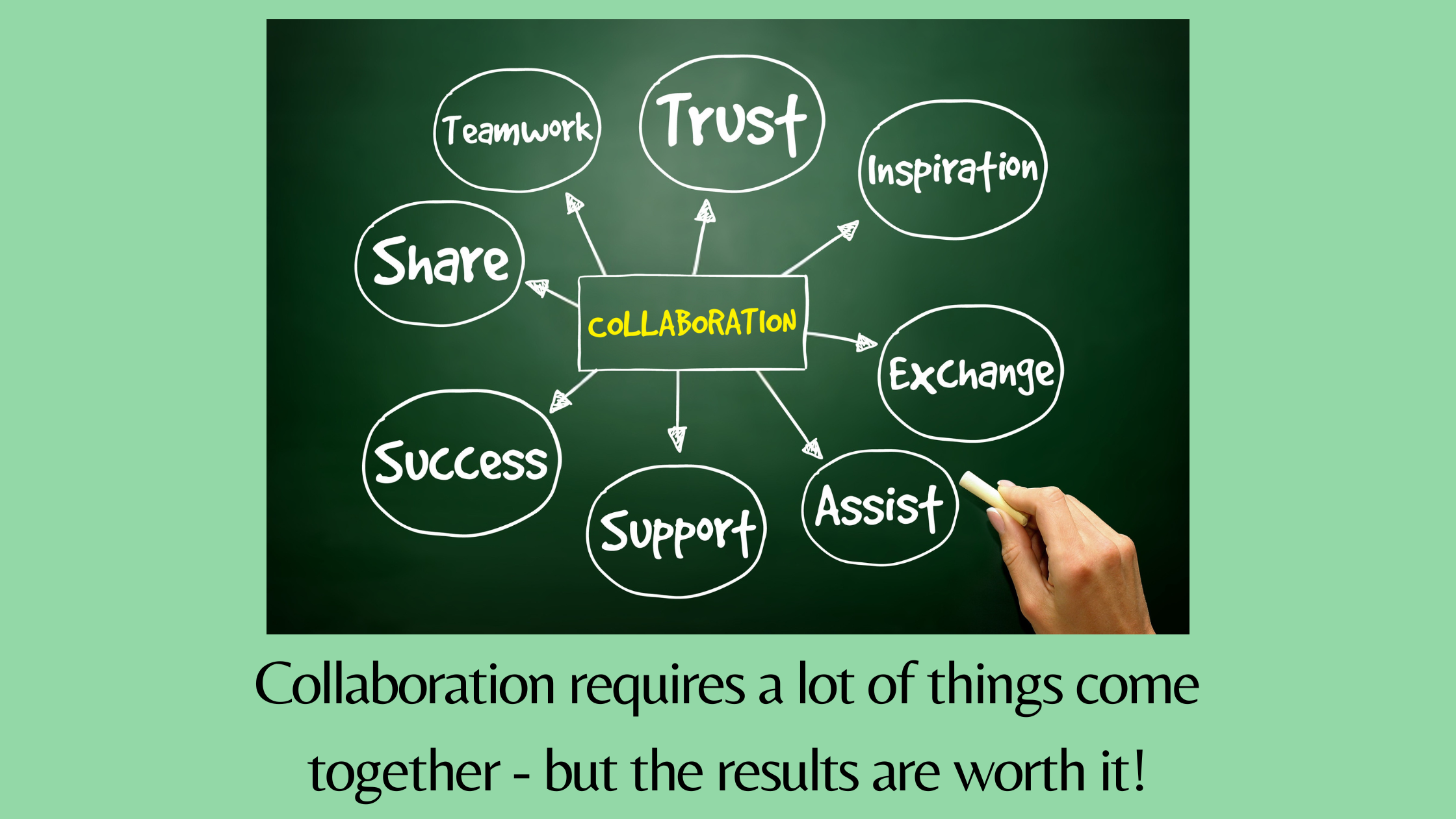
You are only recognized as vital to the school community when others know what you do – not what they think you do. And best way to make certain you’re better known and understood is to have a cooperative or, even better, a collaborative relationship with teachers. Then a peer becomes and ally.

With some faculty members, it’s easy. Others use the library as little as possible. In elementary school, they drop off their students and depart for their free period. In the upper grades, they bring their class to complete an assignment without you and don’t want your help. Somehow, you need to reach these uninterested teachers. If your past suggestions have been ignored, what can you do?

In her article, How to Get Genuine Cooperation from Difficult People, LaRae Quy provides a five-step approach for those in the business world to solving that challenge. Here are her steps, with my suggestions for those of us in education:

  1. Remember, our first reaction is to not collaborate – The teachers with whom you don’t have a natural connection likely feel they know their job and don’t need you to help them to do it. Quy’s suggests reaching them through a common interest. What do they care about? Email them about a resource or article that focuses on it. Follow up with one that says you hope it was helpful. Offer to work with them on a learning project on the topic. Ask them how they would like to structure it. Accept their approach, adding, as necessary, “we could also…” as a way to show how you can support them.
  2. Control facial responses – Not only do we communicate verbally, in print, and digitally, we also communicate silently with our body language. Our facial expression sends a message. Is your concern, disinterest or disdain visible? You don’t want your face to show that you think the teacher’s approach is not nearly as productive as it could be. Your negative silent message will carry a greater impact than your verbal positive one.
  3. Share personal stories – No one knows better than librarians how stories build connections. You might share memories about learning that topic when you were in school and any impact it had on your life. Figure out your story in anticipation of this conversation to keep it natural. Hopefully, your story will bring out one from the teacher. Now you have a new common interest and connection you can build your relationship on.
  4. Refuse to let it escalate – Should you get a strong negative response to any of your suggestions, keep from answering in the same manner. If you do, you have lost the possibility for any cooperation now or in the future. Quy offer saying this as an alternative, “I see how you feel (or think), but here is another way to look at the situation…” Start by acknowledging their reaction. It’s not easy to do in the moment, but knowing the importance of keeping your cool will help. (And work on controlling your body language and facial expressions.)
  5. Appeal to higher moral ground – Find a shared common value and speak to it. For example, you could say, “We both want our students to be successful not only in their studies but in becoming lifelong learners in an ever-changing world.” Common beliefs build connections, and connections build relationships.

The first time you try this with a teacher, it might not work and it may feel uncomfortable because it’s new. Collaboration might not come naturally for you either, but that’s not a reason to stop. Try again in a few weeks. Don’t give up. It’s too important. You can do it. You are a leader and have overcome obstacles before; you will do it again. The results – and the ripple effects to other teachers – will be worth it..

Get More Done in Short Sprints

It is great to have big goals, but when you try to take that first step, you may discover that instead of feeling excited, you are overwhelmed, exhausted, and drained. On a daily or weekly basis, it can be hard to believe you will ever get there. Once that belief gets hold of you, you may find yourself working less hard at achieving the goal, getting distracted or even giving up. So much for that goal, right?

Maybe not.

The secret to reaching that big goal is to break it down into manageable chunks and celebrate each step’s completion as you accomplish it. It’s how people write books, run marathons, make movies, compose symphonies, and start a new library program from scratch.

In his article, New Year, Strong Start: Launch 2025 With Momentum, Michael Watkins explains to a business audience how to put the Momentum Method of achieving goals in short sprints into practice. Much of his advice works well for us as we work on integrating our Mission into what we do each day and aim to see our Vision come closer to reality. His focus is planning by quarters. Given our schedules, I suggest monthly reviews.

These are some of his strategies along with some of mine:

Start by assessing your current situation and realities.

  • What do you ultimately want to achieve?
  • What small goal will be a step in that direction?
  • When can you realistically achieve it? One week? A month?

End of month assessment

  • How close did you get to your small goal?
  • Have any new opportunities and/or threats surfaced during the month? What can you do to address those?
  • What do you need to incorporate into your planning going forward?

Celebration

  • Remember getting stars for good work in elementary school? Find a way to celebrate your achievements. You can keep a chart and make notes on what worked (very helpful for seeing on tougher months), purchase flowers, or choose another treat you enjoy.
  • Make the star (or other memento) visible so you see it regularly. The reminder will leep you going.

Reflection

  • What did you do well? What spurred you on?
  • Where did you falter? Why?
  • What have you learned from this first sprint?
  • What is your next small goal.

Step by step you will work your way closer to that really big goal. Each small goal —and success—empowers you to keep going and helps you during the times when it feels too hard and you wonder why you set the goal in the first place. Because the goal is attainable, and you are getting there.

You set a goal because it matters to you. Yes, difficult times pull at our focus and big goals can feel daunting, but when you break it down, enjoy each success, you get closer and, like a true leader, inspire those around you. Short sprints can allow you to win the goal marathon.