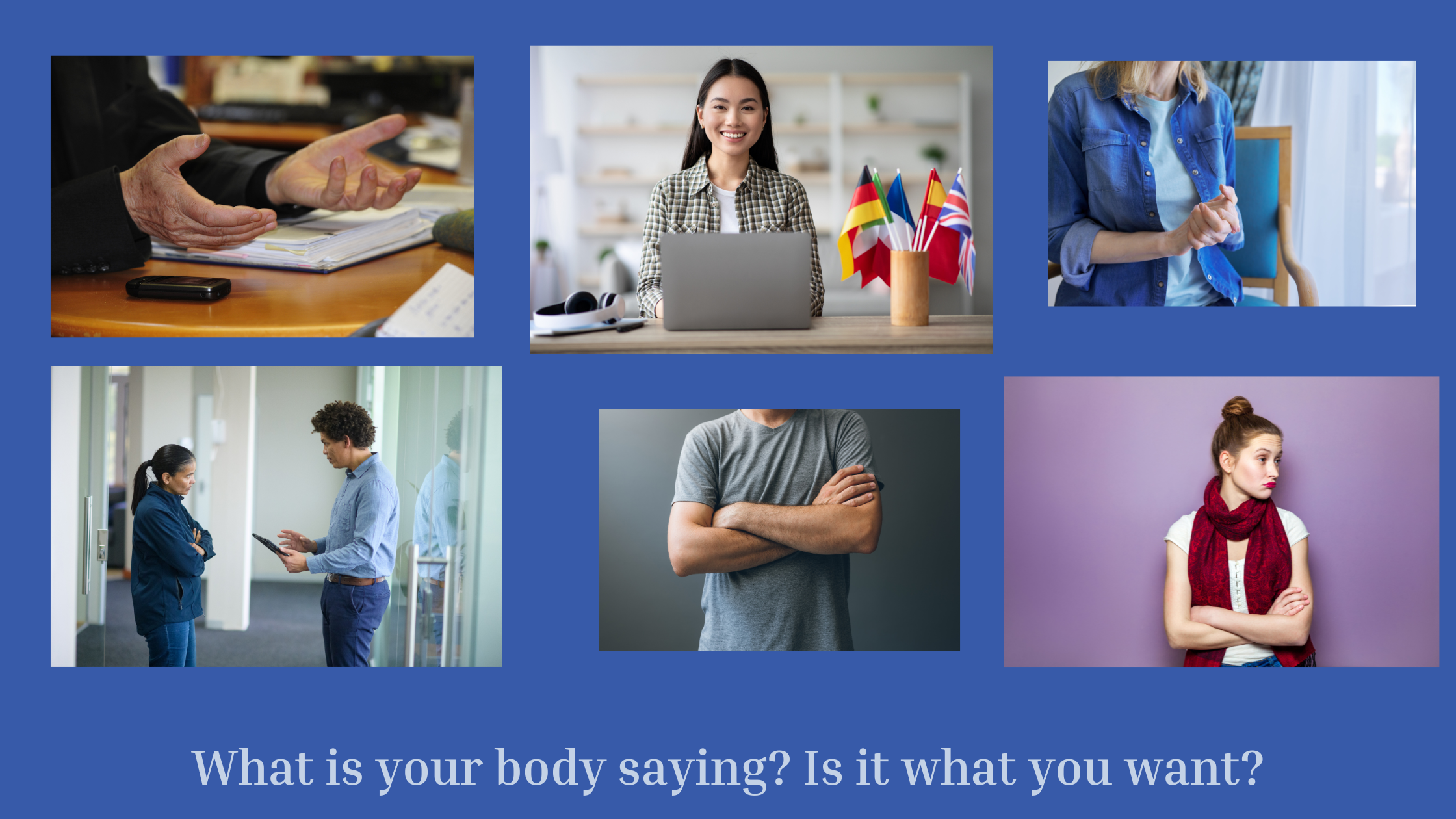
We are constantly communicating. Often, we are having multiple conversations at the same time (ever have two messaging apps open?). Even when we are alone, we have conversations in our head. Sometimes innocuous (what to make for meals for the week), other times critical (reviewing our goals and what steps to take next). And then there are the conversations we have that support or contradict what we are saying – even as we say it.
Body language is one of our most basic and effective communication tools. Animals use it to communicate fear, aggression, and attraction. They bristle, they intimidate, they puff up, they nuzzle, they cower in submission. And in many ways, we do the same. When you come in contact with someone, you immediately identify whether or not you know the person. Whether your connection is positive or negative, you read their body language and make some assessment of what is coming. You respond with your own body language. Not a word is spoken, but communication has occurred. And all of it happened below your conscious recognition. What is said next may reflect an accurate reading of the other person—or not.
And if your body is saying something you don’t want or mean to communicate, problems may result. As a leader, it’s important to be aware of the message your body is sending how almost all of your body is used in this conversation: your face (lips, eyes), arms (shoulders, fingers), posture, and, if you are seated, your legs.
Your body is doing a lot of communicating. In How Your Body Language May Be Causing Your Team to Disconnect, Stephanie Vozza reviews different ways you may be unknowingly communicating, and how to avoid sending the wrong message. Which of these might you be doing?
- Leaning in or leaning back – When we are seated and lean in to speak or listen, we show interest. If we lean back, it conveys dislike. Vozza says this behavior can reveal your unconscious biases. Take note of where your body is.
- Turning away – When you are standing and slightly angle your body away, you are sending the same message as leaning back. It can also suggests you want to leave the conversation. The reminder from Vozza is “respect is shown belly-to-belly” meaning front of the body facing the front of their body. Eye contact matters as well.
- Allowing interruptions – We often do this inadvertently with students. When an adult comes into the library needing something, do you turn from the student to deal with it? By asking the student to wait, even if it is to tell the adult you will be with them in a moment, suggests to the student that they are not as important. If the adult needs appear to be urgent, let the student know you will be back as soon as possible. Ask them to wait. Then, come back as quickly as possible. And apologize for the interruption.
- Doing the opposite of your words – When you are saying one thing and your body is saying something else, the mixed message will affect how others see you. For example, you can lose someone’s trust if you are saying you’re willing while your arms are crossed in front of you. Losing trust affects the relationship, and we always want to keep our relationships strong.
- The only way to control your body language – It’s all in your mind. Vozza says you can’t fake it till you make it. Change your mindset – and mean it. Forcing yourself to hold a positive thought won’t do it. You have to believe it. Focus on something about the person or issue you can believe. It will take practice, but the effort is worth it.
You have countless dealings with others in the course of your day. Each interaction is an opportunity to show you are a leader, and one important quality of leadership is Integrity. Keep your words and your body language in agreement. The stronger and clearer your communication, the more you will build trust and relationships.
 Hilda K. Weisburg