
Don’t Get Overwhelmed

You know you need balance in your life, but what about those times when your balance is so shaky you feel like you are going to tip over? You know what you are supposed to do: Identify the important tasks and start with those, working your way down the list to the items which a lower priority. But most of what’s on your plate is both important and urgent with deadlines looming?

Welcome to the club. Many of us are overwhelmed. When this happens, most of us keep our heads down and slog forward. This is probably why so many school librarians and other educators counted down to the last day of school with more fervor than ever before. And even though the school year is over or almost over, depending on where you live, you know Fall is lurking in the distance and will be here before you know it. Then it will begin all over again.

Unless you have a plan.

Kristen Hendrix knows well what it’s like when your “cup runneth over”. The phrase generally refers to abundance, but it has another meaning to her and to most of us. In her blog post Cup running over? It might be time to dump it out, Hendrix takes a hard look at the quotes and memes around those words. She notes we’ve been told you can’t pour from an empty cup but must keep it filled with self-care making it possible. But she acknowledges that self-care is harder to fit into an already crammed schedule. Hendrix prefers asking, “What goes in the cup? How can I know when it’s too empty or too full? How can I use these insights to anticipate or respond to burnout?”

To answer these questions, she suggests we look at these six ideas which flow into each other:

  • The Cup of Life – While we all have this cup, what we put into it is unique to us. We are the ones who are filling it. If we just keep adding water, the cup will overflow. You can’t keep pouring more into it than it can hold. As Hendrix says, we must be mindful of what we are putting into it before this happens. Which is why the next idea is….
  • Filling Our Cup – Whatever we put into our cup can be put into categories such as work, family, health, volunteering, etc. Her comment about including “adulting (eating, showering, dressing, brushing teeth, etc)” resonated with me. Somedays, I feel getting undressed at night is one more chore. To determine how we fill our cup, we need to recognize whether it’s draining or energizing.
  • Managing to the Brim – It’s our choice whether we fill our cup to the brin or leave a little space in case something needs to be added. I am a to-the-brim person, but what happens when there is a change, and there’s a new task or responsibility? Unless you recognize the effect it will have, you will quickly become overwhelmed. I’ve learned to consider whether the new commitment fits with my priorities, purpose, and passions. If it doesn’t, I don’t take it on. If I do take it on, I look to see what can be delayed, cut back, or even eliminated.
  • Dump It All Out – Hendrix recounts her own breakdown when it all became too much. She had to eliminate everything until she recovered. The object is to recognize when you are approaching this tipping point before it happens. You may have to withdraw from a volunteering job you took on or find someone who can help you with one or more of your tasks.
  • Preventing Burnout – Recognize all that you are doing and prioritize. Hendrix recommends using the 80/20 rule (the Pareto Principle), which says that 80% of your results comes from 20% of your work. Focus on the productive 20%. What are your goals? If what you are doing doesn’t move you toward it, consider eliminating it. And if elimination isn’t a possibility, it may be time for the next step – delegating it.
  • Getting Help – Help can come in many forms, from people to work with which lightens the load to speaking with a professional if you who have become depressed and feel the joy is gone from your days. You can also reach out for a mentor, a friend, or anyone who will listen. Keeping everything bottled up when your stress is bubbling up inside is a recipe for a serious problem.

I recently said to someone that I was “whelmed,” – one more drop and I would be overwhelmed. Leaders need to be honest with themselves and recognize when they have become over-committed. Too many people are counting on us. Abundance is great, but too much is too much.

Moving from Fear to Success

Leaders have to effect change and work towards making their Vision a reality. To do this, they must take risks. Risk and growth are the only ways to achieve success, but they carry with them the chance for failure. And knowing this creates fear.

Fear manifests in many ways including that inner voice that says you aren’t good enough. Or it says even though you were successful before, it was a fluke. Fear is what underlies the well-discussed Imposter Syndrome. At its worst, it has you believing every success is a precursor to failure the next time you try something, keeping you from enjoying what should be a triumph. In its lesser forms, it has a paralyzing influence on your willingness to attempt a new project.

How do you deal with the fear of failure?

In her Smart Brief article, Laura Gassner Otting writes about the impact of Imposter Syndrome and proposes you Leverage Your Fear of Failure for Success. Use one to reach the other. She offers these three approaches for doing it:

  1. Let’s not fake it ’til we make it – Otting rejects the “fake it till you make it approach.” She maintains that when we are faking it, we don’t use our own thinking but restate the consensus, and that doesn’t lead to success. Faking it also means you know you are pretending, which keeps you from feeling confident. You are always waiting to be “caught.” This leads to trying to control everything rather than leaving space for learning. Better to make mistakes and learn than to pretend they are never going to happen.   
  2. Re-categorize failure from finale to fulcrum – We teach our students to see “fail” as an acronym for “First attempt in learning.” Although we know the learning process includes failure, we don’t always apply it to ourselves. No one likes to fail. Once again, mindset is critical. Look back at your failures. What did you learn from them? What were you able to achieve because of that learning? Had you not failed, you wouldn’t have had that success. It’s a process. As long as you don’t let a failure be final, the more success you have to overshadow any failures.
  3. Take a lesson from the pros – Athletes are out there for all the world to see. When they “fail,” it’s obvious to all. When a pitcher loses a game, or a player misses a much-needed basket, they face jeers and negative comments made by fans, sportscasters, and coaches. It’s painful. But tomorrow is another day, another game. They will look at the video and see what they missed, then learn and move on. When an attempt fails, it’s the start of the next step on the road to success. We can all use this as an example of how to face setbacks and mistakes and keep moving forward.

Your brain is a powerful tool. As often as possible, leaders accept the challenge of keeping their mindset focused on their Vision and Mission – not on fear. Both failures and successes – and learning from each – are part of any leadership path.

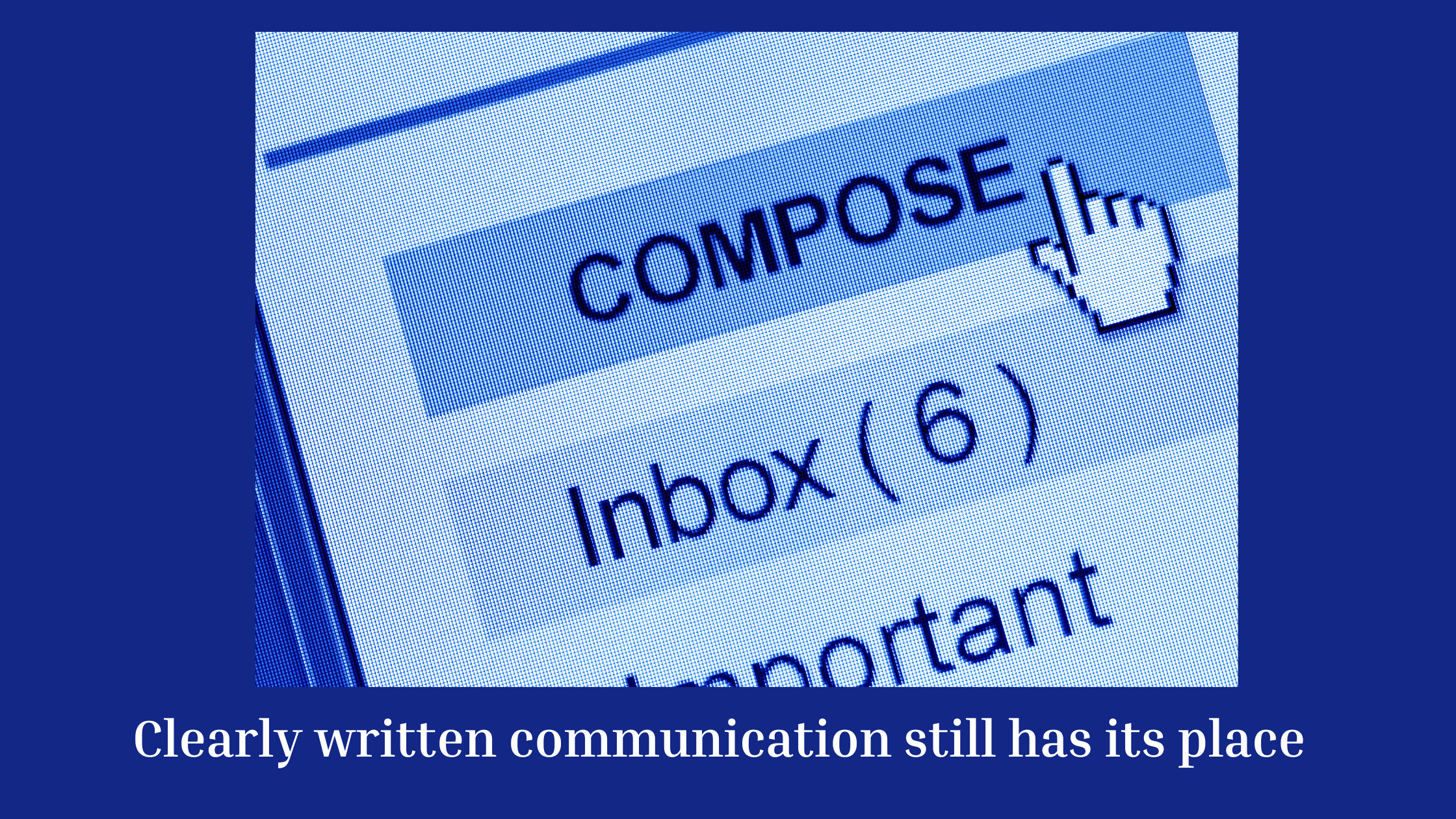
The Art of Written Communication

There was a time when written communication was confined to letters (and postcards) and memos. Today, text messages, emails, DMs, and posts on social media are an integral part of our lives. And it’s those current modes of written communication which have made the older ones more of a challenge.

Studies show that our spelling has distinctly deteriorated, and auto correct can make things even worse. In addition to the assorted acronyms we use (IMHO, ICYM, FYI, ASAP, etc.), we “shorten” the spelling of common words (U, UR, L8TR, NP).  When we do want to write something more formal, we must fight our new instinctive use of spelling shortcuts.

But there is still a place for a written letter or memo. Indeed, evidence shows a thank you letter means much more today than ever before, both because of its rarity and the recognition that it took extra time. What can you do to make sure you do the best job possible when you decide written communication is necessary?

Paul B. Thornton offers these 8 Ways to Improve Your Written Communication:

  1. Know your objective – What was your purpose for writing this? Keep in mind that by using this format, you are increasing its significance to the receiver. What do you want the receiver to know or do? Think this through before starting.
  2. Organize your message so it’s easy to follow – Thornton says to choose either the conclusion or the problem and state it in the beginning, so the receiver knows the purpose of the communication. Not only do we write in shortcuts, but we also read faster than we used to or we skim. The sooner the reader knows you point the better.
  3. Explain and support your ideas – This works best after you start with your desired outcome. Here is where you give examples of the effects of the problem or situation. Don’t use too many, just say “there are others I can detail,” and keep it brief.
  4. Use bullets or numbers – As you can see in the way this blog is written, this approach helps the reader get the information more easily. The logic or sequence of your thinking can be seen as well as the most important points. Also consider the use of bold and italic to make your focus clearer.
  5. Use short sentences – Most readers skim longer pieces of communication. Technology has significantly increased the practice. To keep the reader engaged, keep sentences short.
  6. Use precise words and phrases – To be certain your message gets through Thornton advises we be specific and avoid vague phrases such as “as soon as possible.” Be clear about the issue, your concerns, and/or your solutions.
  7. Use an active voice – Active voice makes for more powerful and clear sentences. “The problem was created by a lack of resources,” is not as strong as “A lack of resources created the problem.”
  8. Edit your writing – The more important the communication, the more it needs to be reviewed and polished. Thornton recommends having a trusted person read it before you send it out. If you can’t do that, build in some time to step away from what you wrote so that you can come back and review it later. (And yes, I have my blog posts professionally edited.)

Being a good communicator is a vital leadership quality. Work on your written communication as much as you do the other forms.  Because of their rarity, they are looked at more closely. Keep them short and clear, and you’ll make a memorable impression.